Getting Dwell Time Right: Balancing Heat, Moisture & Mix Design
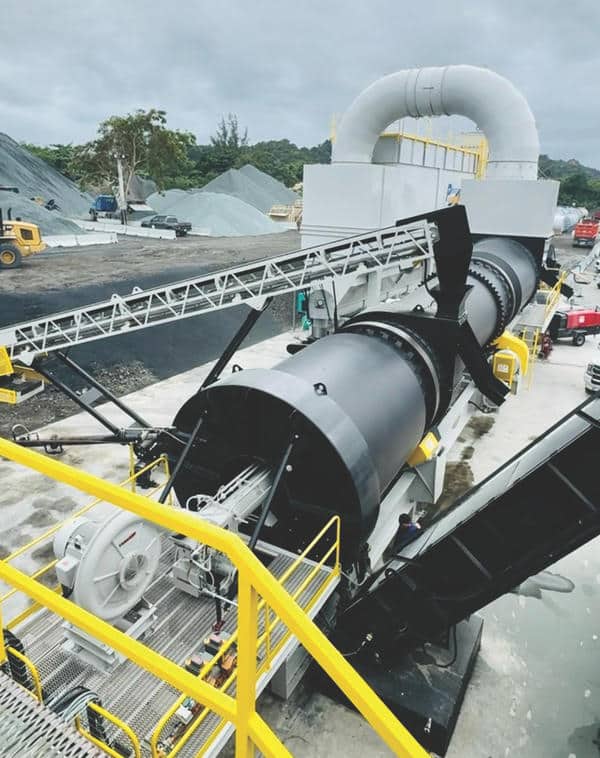
Properly heating asphalt and preparing food have more in common than you might think. Since I began reporting on the asphalt industry in 1998, I’ve embraced our penchant for using food analogies. Designing a mix is like baking a cake. Pneumatic-tire compaction action is like kneading dough. More recently, Travis Mick, vice president of CWMF Corp., Waite Park, Minnesota, used another cooking example for today’s heating discussion.
“If you cook a pizza in the oven per the instructions for 15 minutes at 425 degrees, it comes out properly cooked,” Mick said. “Alternately, if you cook the same pizza in the oven for 10 minutes at 525 degrees, the outside may get done or even burnt, but the center of the pizza could still be cold.”
“Oxidation of HMA is linear with time, but exponential with temperature.”—Greg Renegar
This relates directly to our topic of dwell time. As Carlos O. Cardenas, the Midwest area sales manager for Ammann America Inc., Orlando, suggested, “Too much retention time can overheat your mix, increase fuel usage and age the binder unnecessarily. Too little, and the materials may exit the drum under-dried or uncoated. The real value lies in the ability of the operator or control system to adjust and balance that time to fit each job’s demands.”
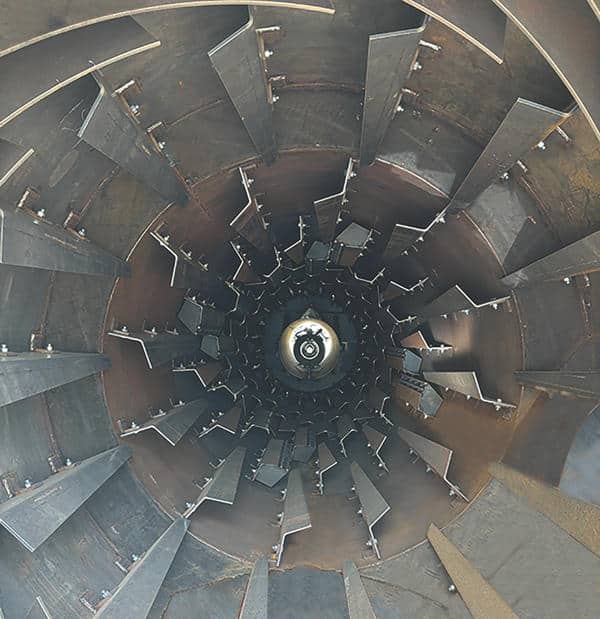
Hervé Riche, the business development manager for ADM/FAYAT Group, Huntertown, Indiana, shared, “Changing flight arrangement can be one of the most cost-effective and impactful upgrades for increasing dwell time and improving efficiency.” Both photos courtesy of ADM/FAYAT Group
We see the analogy relates directly to the removal of internal and external moisture. Greg Renegar, the vice president of customer success for Astec Industries, Chattanooga, shared, “The primary reason to change the residence time of aggregate in a rotary dryer is to enhance heat transfer.”
Renegar included education about the entrained moisture concept in his “What An Aggregate Dryer Does” presentation, sharing that internal moisture trapped in the coated aggregate not only affects mix temperature, but also affects storability, or the absorption of binder while mix rests in the silo. Producers want to remove internal moisture before liquid binder is introduced to the process, and that may require taking a look at retention times.
“An effective dwell time is not simply about how long material remains in the drum, but how efficiently that time is used to transfer heat, remove moisture and achieve uniform mixing.”—Steve Elam
“Another reason to make the aggregate spend more time in the dryer is moisture removal,” Renegar said. “External aggregate moisture is easy to remove, but internal moisture removal takes time. Time is required for the heat to soak into the aggregate and drive the internal moisture out.”
Hervé Riche, the business development manager for ADM/FAYAT Group, Huntertown, Indiana, shared, “When it comes to asphalt production, increasing dwell time in the dryer drum mixer plays a crucial role in ensuring the mix is both high quality and road-ready.”

Riche listed thorough drying of aggregates, better heat transfer, improved coating efficiency, consistent mix quality and consumption control as benefits of lengthening dwell time. He explained, “Especially for high-spec pavements (like airport runways or highways), consistency is everything. Extra time allows for better homogenization of aggregates, additives and bitumen. Oddly enough, a well-optimized dwell time can actually reduce consumption, by giving the lowest exhaust gas temperature but keeping [gas temperatures] high enough to be above the dew point in the gas ductwork.”
“The real value lies in the ability of the operator or control system to adjust and balance that time to fit each job’s demands.”—Carlos O. Cardenas
“As the asphalt industry advances, the heat transfer and coating challenges of different mix designs and technologies make understanding the fundamentals of heat transfer and coating an important topic,” Renegar said.
Multiple sources agreed increasing the time materials spend in the dryer drum can increase efficiency—but you must do it right. Most asphalt applications depend upon time and temperature, so let’s dive into the effects of time and temperature on mix quality.

The Right Retention
“In asphalt production, retention time refers to how long aggregate and other materials such as recycled asphalt pavement (RAP) and filler spend inside the dryer drum,” Cardenas said. “And getting that timing right is critical. While it’s common to focus on increasing retention time to improve drying or coating, there are also times when decreasing it can benefit plant performance.”
He emphasized controlled flexibility and defined that as the ability to “tune” retention time up or down depending on the material, production rate and environmental conditions.
“In my opinion, dwell time has always been critical for mix quality,” said Mike Mauzy of Reliable Asphalt Products Inc., Shelbyville, Kentucky. “I believe, like so many other areas of improvement over the years, it has been a learning process. RAP, and specifically higher RAP percentages, have highlighted the issue of poorly performing pavements. ‘Stiff mix’ has been an issue with RAP mixes.”
Mick listed additional benefits of increasing dwell time for producers, showing that increasing the dwell time, thus efficiency, offers fewer British thermal units (BTUs) per ton. “It allows the opportunity for optimal heat transfer from the burner into the materials,” Mick said. “It allows more time for virgin and RAP materials to comingle, optimizing heat transfer and potentially reducing excessive fuel energy from the burner. You get better moisture removal in the RAP with longer dwell times. Additional dwell time allows aged RAP binder to activate and blend with the new binder. And you get reduced emissions with reduced BTUs.”
Steve Elam of Stansteel Hotmix Parts & Service, Louisville, Kentucky, shared: “An effective dwell time is not simply about how long material remains in the drum, but how efficiently that time is used to transfer heat, remove moisture and achieve uniform mixing. Optimal lifter flight design creates a consistent veiling pattern for maximum heat transfer, while in counterflow drums and dryers, maintaining adequate exhaust temperatures above dew point is critical to protect the baghouse.”
Elam continued, “Dwell time should be considered in two parts: material exposure in the drying/heating zone (which includes the combustion zone), where efficient and consistent veiling is key; and the mixing zone, where longer duration improves coating, blending and allows for higher recycle content. Ultimately, dryer drum performance depends on balancing residence time with flight design, temperature and exit gas control, and mixing strategies to produce high‑quality, homogenous output. When we maintain focus on the quality of the final hot-mix product, we may work backwards through the existing equipment of any individual asphalt plant and determine what is required to achieve this outcome, including critical dwell times.”
How to Retain for Profit & Quality
After considering the reasons for lengthening mix dwell time, producers may wonder how to effect this change at the plant. It’s not as simple as slowing down the drum’s rotation and expecting everything to magically blend more perfectly. Depending on your flight pattern, slowing the drum’s rotation may cause a failure of material to veil properly, resulting in uneven heat distribution.
Mick shared that changing the dwell time on an existing application will have an impact on load in the drum. “This could result in high amps on the drive motors, which could impact starting the drum up from a hot stop.” Mick recommended recording data before and after any changes.
“This can also affect your AC inject timing,” Mick shared. He suggested, if an additional load in the drum causes material to leak or backfill out of the inlet, you may need to make tweaks to the flighting.
A Flighting Discussion
“Flight design has played a large part in retaining aggregates in the drying portion of the drum,” Mauzy agreed. “Utilizing restrictor dams to hold material in longer has been a common practice. More recently, variable frequency drives have been installed on dryers as a means to control dryer rotation speed, thereby holding material in the dryer commensurate with the percentage of RAP in the mix.”
Elam elaborated on drum modifications—both inside and in alignment. “The flight configuration can be a myriad of different designs based on specific production and condition demands. Flight pattern, number and size of flights, and placement of flights inside the drum determines how aggregates are lifted and showered, which promotes even exposure to hot gases and effective energy transfer as well as impacting material throughput travel. Maintaining the correct aggregate bed depth (live load) in the drum at veiling zones is also critical; an insufficient material pool can disrupt veiling, elevate exit gas temperatures, and cause premature flight wear, especially at lower production rates.
“Drum slopes and rotational speed matter,” Elam continued. “As an example, short drums with steep slopes operating at low RPM, or longer drums with shallow slopes at high RPM, may produce similar dwell times but differ in heat efficiency and wear implications.”
A spokesperson for an original equipment manufacturer (OEM) in the southeast, cautioned against making internal modifications to a drum without careful research and engineering, preferring a lengthened drum instead.
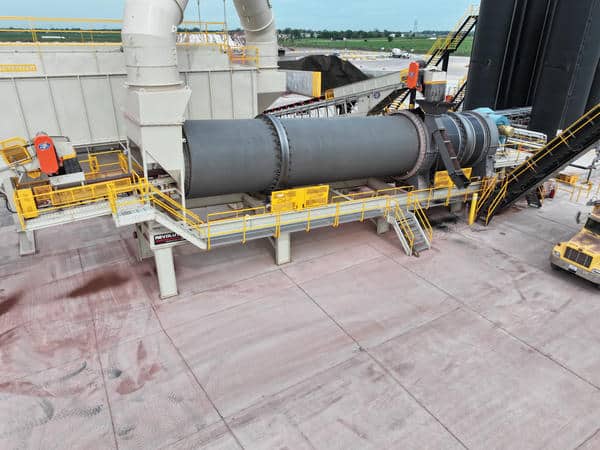
Mick also mentioned longer drums as an element some producers are putting into practice. “Traditional lengths are 50 feet long,” Mick said. “It is not uncommon to see 54- and 60-foot-long drums today. Changing the angle of the drum is another way to play with retention/dwell time. This is a bit easier to do on portable applications versus stationary.”
ADM/FAYAT Group’s Riche agreed the increased drum length offers more axial space for a longer material path, thus more time for drying and mixing. He shared this is best for new plant designs or major retrofits and cautions producers to watch out for the obvious cost and space constraints, but also to maintain proper heat gradients across the longer chamber.
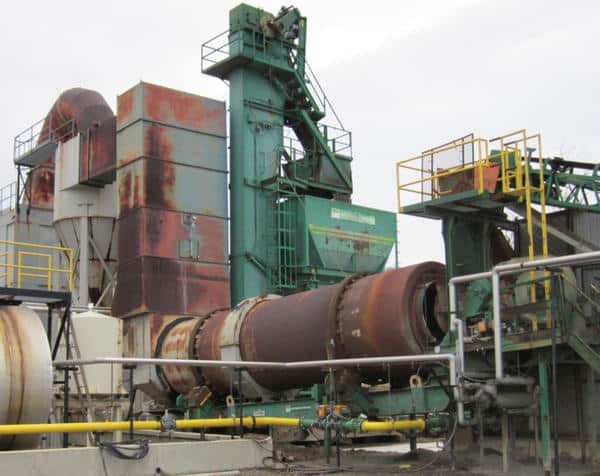
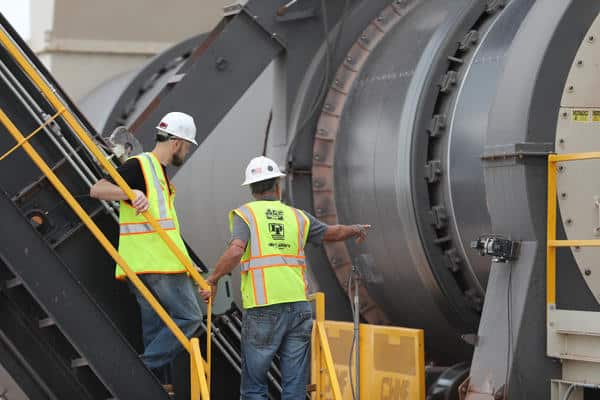
Elam suggested, when reviewing drums for dwell times and efficiency, pay close attention to any drum shell deformations in the central combustion area. (These might be hidden by insulation.) Deformations could be mitigated by proper flame adjustment/shaping, proper combustion flight design and integrity, the use of proper materials capable of withstanding high temperatures from varying fuels, and so on. Avoid catastrophic failure in the drum by monitoring for drum shell deformation. With winter maintenance season coming on, you have the perfect opportunity to assess this vital plant component.
Ammann’s Cardenas also discussed the importance of monitoring flight patterns within the drum. “Flights control how material flows inside the drum,” he said. “Replacing or modifying worn or poorly performing flights can dramatically change retention time and heat transfer, whether you need more or less retention.”
“Changing flight arrangement can be one of the most cost-effective and impactful upgrades for increasing dwell time and improving efficiency,” Riche agreed. “From my vantage point, the drying zone is the most advantageous section to target.”
Riche reminded producers that the drying zone, or front end, of the counterflow drum is where aggregates enter with high moisture content. “Flight design here directly impacts veiling. Optimized veiling equals faster, more uniform drying, which allows for gentler downstream temperatures. Upgrading to ‘high-lift’ or ‘shower-type’ flights here can vastly improve heat exchange, reducing required peak temps and enabling more control over residence time.”
Veiling = the cascading curtain of material that maximizes surface area for heat transfer
“Every showering flight design requires some fill level of aggregate to ‘sprinkle’ or shower the aggregate through the hot burner gases,” Astec’s Renegar said. “If the aggregate is not showered uniformly across the cross-sectional area of the drum, some of the hot gases will escape the drum without giving up enough of their heat. This energy (heat) that bypasses the aggregate becomes wasted energy as it exits the fan stack into the atmosphere. It is also possible for some of the aggregate to retain moisture if this occurs.
“Getting the right level of aggregate in the drum showering flights sometimes requires increasing or decreasing the residence time (or level) of the material in the drum,” Renegar continued. “This can be done by adding or removing showering flights, advancing or slowing down the aggregate by other mechanical means (easy), changing the slope of the dryer (difficult), increasing the length of the drum (rarely an option), or using variable frequency drive (VFD) technology to change the rotational speed of the dryer (best).”
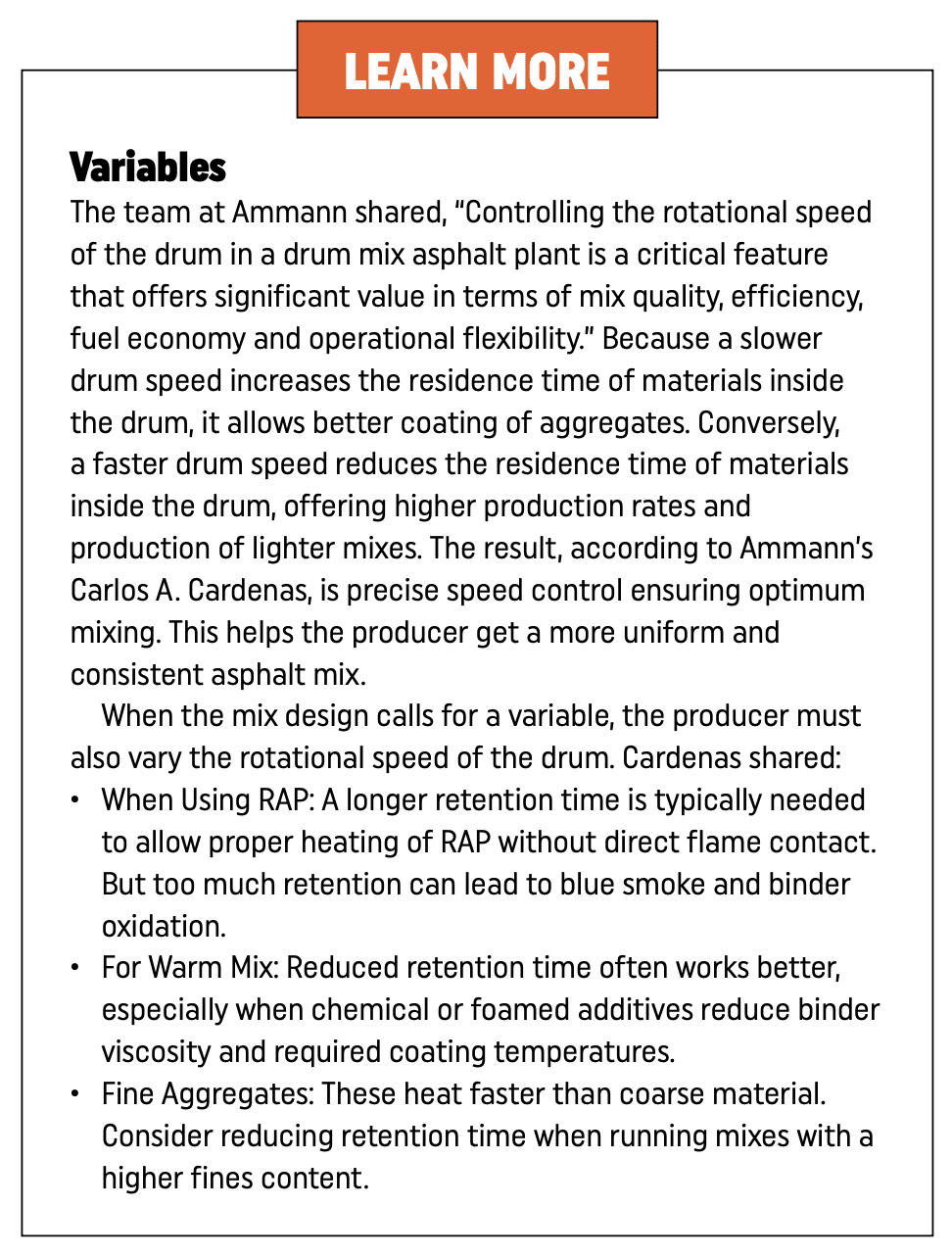
“Using a VFD to control drum speed gives you real-time flexibility,” Cardenas agreed. “Slow it down to increase retention time for wet materials or RAP-heavy mixes. Speed it up for drier aggregates or when running warm mix…But if you’re over-drying, you may benefit from smoother, faster-release flight designs. Combined with a variable speed drum, the right flight design can provide for the best control of material retention.”
Over-drying = adding unnecessary heat to the aggregate that does not add value to the mix
Another area where a producer might consider altering flighting is the combustion zone, and Riche offered some cautions about this. “This zone is where the burner flame directly interacts with incoming aggregates (in a counterflow setup), and it’s critical for initial moisture removal and heat transfer,” Riche said. “But it’s also where things can go very wrong if not managed properly, especially when playing with dwell time. It’s risky to tinker too much here because lots of times, the combustion zone length is minimized, but it is a critical choice. This area with a high density of energy and highest temperature spot needs to be properly designed to give enough space for a proper combustion on the whole range of burner capacity.”
He suggested if the combustion chamber design is too small for the burner size, equipment could be damaged, emissions could be heightened or other problems with efficiency could arise quickly. But he offered some smart ways to optimize the combustion zone without overexposure:
- Tune burner settings, adjusting flame shape, length and position to avoid direct flame impingement on aggregates while delivering high radiant heat;
- Refine flight design in the combustion zone; and
- Segregate mixing from combustion and if you’re increasing dwell time elsewhere, ensure the liquid AC is introduced far downstream from the combustion zone.
“While the combustion zone isn’t the primary level for extending dwell time, optimizing it ensures that any downstream gains aren’t undone by scorching material too soon,” Riche said.
Stack temperatures and emissions are early indicators of combustion zone misbehavior. A sudden rise in either could indicate over-drying or incomplete combustion.
An area where a producer can often slow the forward progress slightly, giving binder more time to coat without increasing exposure to flame or oxidation, is the coating/mixing zone downstream. “While not the best target for increasing dwell time per se, the coating zone is still worth attention,” Riche said. “Installing paddle-style or scoop-type flights helps with thorough mixing of bitumen and additives, preventing segregation.”
Craft a Recipe for Success
Riche suggested the plant operator is engaged in the fine art of mix craftsmanship. While dwell time is important, the temperature is vital to monitor.
“Longer dwell time only benefits the mix if temperature is properly controlled,” Riche shared. “Avoid the overheating conditions trap: overheat will cause binder oxidation.”
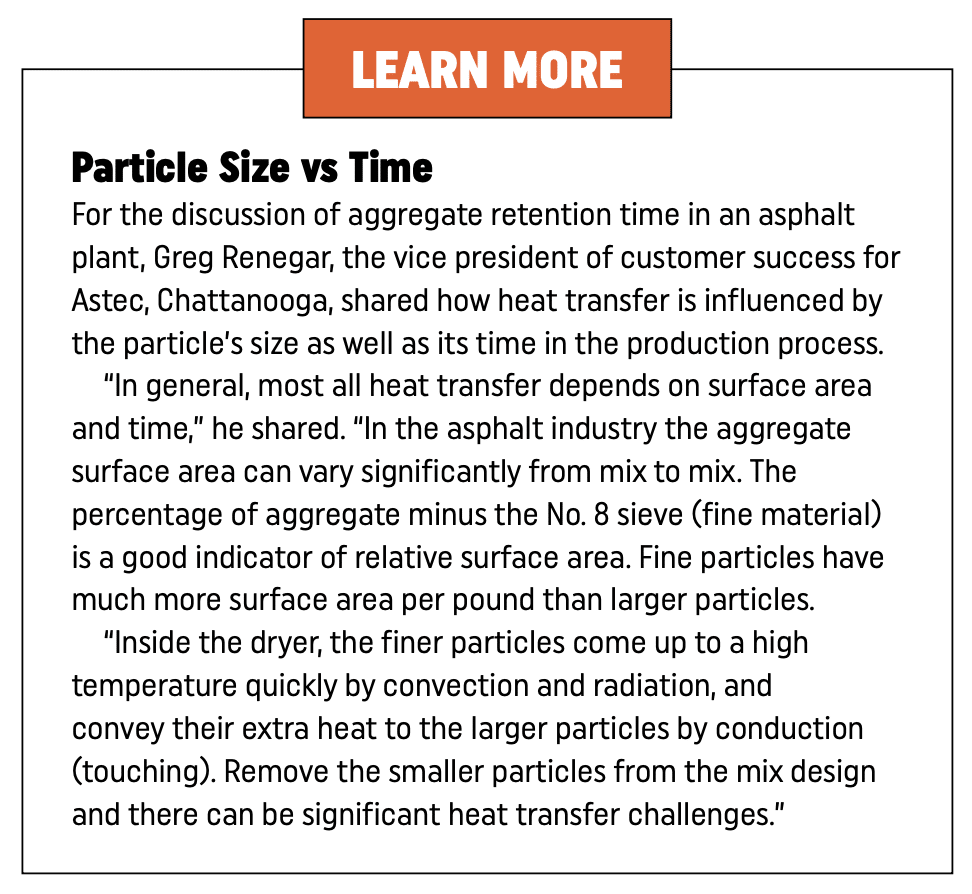
Renegar spoke to this craftsmanship in detail. “Every asphalt plant has a section or external device that coats the hot, dry aggregate with liquid asphalt. If the time of passage is too short, insufficient coating of the aggregate can occur. On the other hand, excessive time can theoretically oxidize the mix. The optimum situation is to make adjustments that provide sufficient coating in the minimal amount of time.
“A little-known fact is that the ‘quality’ of mix improves with time in a storage silo,” Renegar continued. “While in the silo in contact with each other, the aggregate particles, large and small, come to the same internal and external temperature, and the film of asphalt equalizes on all particles. Yes, some oxidation occurs with the air in the voids, but that will happen regardless. The most important thing to remember when storing mix is to make the mix at as low a temperature as possible.
“Oxidation of HMA is linear with time, but exponential with temperature, so if one is concerned about oxidation, managing the mix temperature will have a much greater effect than changing the mixing time by a few seconds. That is one reason warm mix is so advantageous; the oxidation reaction slows down significantly. This is good whether the WMA goes from the plant straight to the road, or if it is stored in a silo.”
Oxidation = hardening of the binder in HMA
As discussed in the August issue’s “Avoid Explosions and Oxidation when Preheating RAP,” adding RAP adds complexity. Cardenas said: “Imagine you’re running a high-RAP mix. You might need more residence time to ensure proper blending and to bring the RAP up to temperature. Reducing the drum speed helps accomplish this without needing to oversize the burner or intensely overheat the virgin materials.
“The optimal drum speed is a balance that ensures enough time to dry and mix materials thoroughly, efficient use of fuel and burner energy, allows for proper handling of recycled materials (like RAP), and has minimal wear and environmental impact,” Cardenas continued. “Having too little or too much drum speed can have different effects on production. Finding the right speed is crucial for the best performance.”
Cardenas reminded producers, “The most common mistake is making drum speed changes without adjusting the rest of the system. For example, slowing the drum without considering burner output or flight action can create bottlenecks or hotspots. Speeding it up too much can allow under-dried aggregate to pass through to the mixing zone.” You guard against this by monitoring stack temperatures and the discharge moisture content. “Make small adjustments and give the system time to respond.”
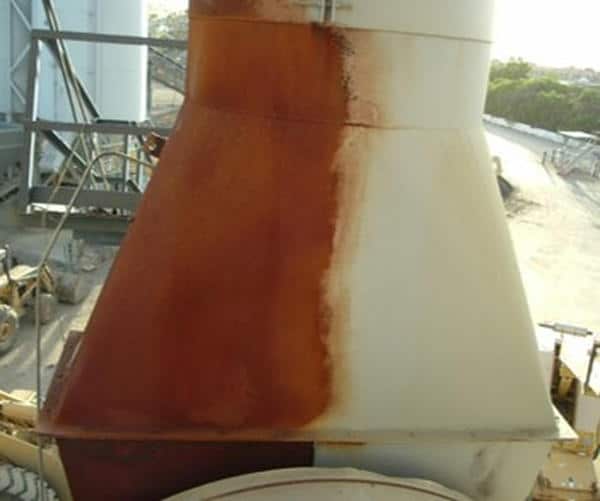
Address Drum Exteriors Now to Prevent a Breach During Production
Reliable Asphalt Products’ Mauzy said, “Even more recently, I believe the industry is understanding the benefit of longer dwell time for mixing the RAP and virgin aggregates prior to injecting liquid asphalt. In most conventional counterflow drum mixers, there is very little time between the RAP inlet to liquid injection. Two issues regularly surface. One, the RAP is not completely dry prior to coating the mix with liquid AC, which traps moisture in the mix. Two, the RAP AC and virgin liquid AC are less likely to mix at the differing viscosity. Several producers have figured out that increasing aggregate dwell time by utilizing flight modification, aggregate dams and dryer VFDs has resulted in better quality.”
One of the challenges Mauzy has seen and wanted to warn against is neglecting to achieve proper mix quality with dry enough or hot enough RAP when favoring a higher production rate.
CWMF’s Mick reminded producers that location affects the timing and temperature, too. “Efficiency equals profitability,” Mick said. “Your baghouse exhaust stack temperature is the measuring stick of efficiency. The closer you can keep this temperature to 212 degrees, the better. Given the multitude of mix designs, specifically at stationary plants, a VFD is a fantastic way to adjust dwell times and temperatures to achieve optimal efficiency. Plant results vary from one geographical location to the next. Achieving optimal efficiency takes some trial and error.” He recommended producers take the time to experiment to bring all the elements together.
“In the real hot-mix world, no asphalt plant operates at a single production rate (TPH), fixed moisture content, constant recycle usage percentage and single mix design,” Elam said. “Production demands fluctuate, materials vary and production requirements change daily. That’s why designing for flexibility and performance is not just preferred—it’s essential.”
Ultimately, you’re mixing a specific measure of time, heat, motion and material inputs. The best plant operators treat that process like a MICHELIN-star restaurant recipe with each ingredient (flights, valves, burner, controls, slope and speed of the drum) blending in harmony.