
Best Practices for Pugmill Inspection
BY Rick Rees

Here’s how to inspect the pugmill for best cold central plant recycling service
Assessing components at the hot-mix asphalt (HMA) plant is only one step in the overall picture of plant health. The cold central plant recycling (CCPR) site or batch plant has its best chance at optimum, clean, most efficient production when all components and electronics are functioning properly without signs of wear or damage. If an injection line, motor, end liner or other component develops a small leak, electrical issue, shiny surface or other problem, more than production suffers. Because this is the annual recycling issue of AsphaltPro Magazine, let’s begin this new series of assessing the asphalt plant for maintenance purposes with the pugmill that’s integral to the CCPR process.
Ensure you have complete power disengagement before performing any inspections or repairs.

Stansteel Hotmix Parts & Service engineers provided a closer look at the elements that make up the pugmill.
Safety Notes
The first step with any plant maintenance is to make sure all inspections, markings or repairs happen while using proper OSHA Lockout/Tagout procedures. Ensure you have complete power disengagement before performing any inspections or repairs. For observations that require motors or other components to be operating, listen or watch for vibration and noises from a safe distance or rely on controls systems to provide feedback on specific parameters.

Some items will need immediate replacement, such as broken tips or excessive wear you notice when inspecting the pugmill shaft and mixer shanks.
For this series on assessing your asphalt plant for upcoming repairs and to avoid unplanned downtime, plant owners are reminded that only fully trained personnel should be allowed to conduct work on or around the equipment. For safety’s sake, the worker(s) should be fully trained on and act in accordance with all federal, state, county and local laws and regulations, and that includes OSHA and MSHA laws. You want your workers to be familiar with and act in accordance with the equipment specifications and manuals as well as your site-specific safety rules and regulations.
Workers have to take responsibility for their own actions, inactions, consequences and results, but you can ensure the best possible outcome for their safety and your operation’s success when you take the time to train and educate each worker who has access to the equipment and material at your facility.
Always use OSHA Confined Space procedures.
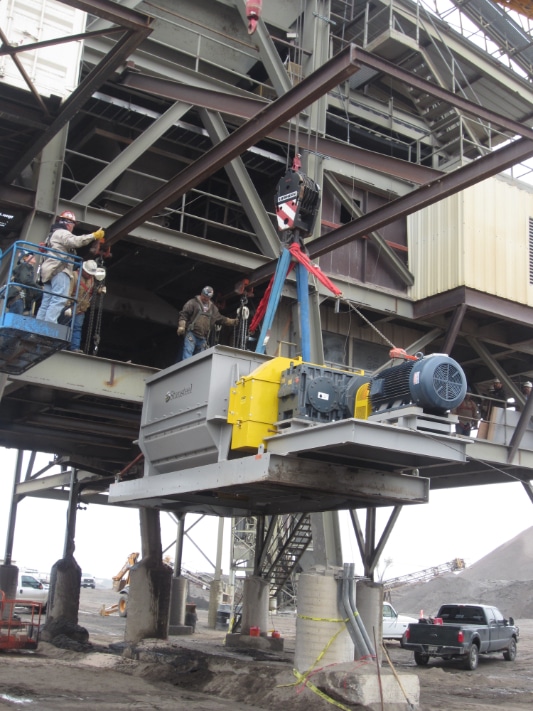
After the pugmill is installed and working, don’t take production for granted. Keep your best production numbers going by performing routine, scheduled maintenance. All photos courtesy of Stansteel Hotmix Parts & Service, Louisville, Kentucky
Pugmill Parts
Starting with the exterior of the unit, make a note of any wear areas. Write down what you’ve noticed or type that into your inspection document and make a note to double-check when the repair is completed.
Next, remove the inspection doors to access the drive components. You’ll be looking specifically at the motors, reducers, sprockets and guards.
- Check that motors have been operating at normal temperatures.
- Has there been excessive noise or vibration during motor operation?
- Are there any unusual odors from motors during operation?
- Make sure all wiring connections are tight. (you don’t want loose wires)
- Make sure all motors are properly ventilated.
- Make sure all motors are connected to drive coupling.
- Check and, if necessary, achieve proper oil levels in motors/reducers.
- Make sure oil samples have been taken and make a note to have the results checked.
- Inspect the pugmill shaft bearings.
- Inspect the timing gears.
Moving away from the motors, let’s look at the heart of mixing.
- Inspect the pugmill shaft and mixer shanks. Check for excessive wear and/or broken tips. Note this for immediate replacement.
- Inspect the pugmill end liners. Check for excessive wear and note it for repair or immediate replacement.
- Inspect the pugmill bottom liners. Check for excessive wear and note it for repair or immediate replacement.
- Inspect the pugmill gate.
- Inspect the air cylinder.
- Inspect the air lines.
- Inspect the solenoid valves.
- Inspect the filter, regulator, lubricator (FRL) system.
- Inspect the limit switches.
- Inspect the gate slide rails.
- Inspect the gate liners. Check for excessive wear and note it for repair or immediate replacement.
- Inspect the liquid AC injection line. Check for leaks and note this for immediate repair.
- Inspect all spray nozzles to make sure none are in danger of clogging.
If you have comments on any of the elements you’ve inspected, make those notes for your grounds crew or mechanic and set a date by which you’ll check back on the progress of repairs. A well-maintained and properly functioning pugmill is integral to the success of your batch plant or CCPR facility. Keeping it in good working order keeps your operation safe as well as efficient.