Why You Still Need a Good Rotary Depth Crank in Paving

Asphalt paving training tips to level out your paving performance

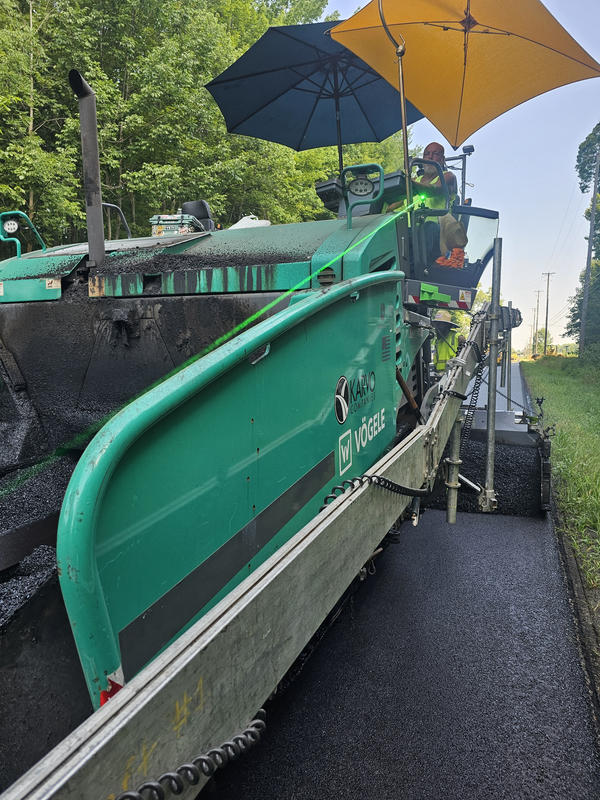
There is an adage: “If we always do what we always did, we’ll always get what we always got.” Now this subject is all about the reason (as I see it) for the screed rotary depth cranks (or screws) and why they’re included on U.S. style screeds but not on European screeds. Why does one European paver and screed manufacturer not even install threaded adjusting screws on the screed at all? Let’s look at why these are important and when and why you should use them. There are a lot of fundamental misconceptions around the above, which I would like to use to stimulate conversation.

Fresh Pavement for Pago Pago

Balance the Screed

To clarify my thoughts, I am not suggesting that there shouldn’t be a manual, rotary depth crank on the screed. I absolutely believe there should be as it is essential for balancing the screed and keeping the nose in the ideal attitude.

I like to think of the depth cranks as being very similar in operation and theory to the rear horizontal stabilizer and elevator that you find on the tail of most modern jet airplanes. Basically, the elevator is adjustable (just like a rotary depth crank) and is the method that the pilot uses to maintain the optimum, slight nose-up attitude or horizontal pitch of the airplane during flight. It’s always slightly nose-up to give lift; just like a screed.

A motorboat is usually fitted with a similar device called trim tabs. These are right at the rear end of the hull and are also used to adjust the planing angle of the craft to also create a slight nose-up attitude. This is the same principle a screed requires to float.

Control the Feed to Control the Screed

We require a means to adjust and dial in the optimum angle of attack to provide a tight, dense mat texture. I believe though, once you have established this optimum angle of attack (1/8-inch to ¼-inch slight nose-up typically), you shouldn’t start messing with that setting during normal paving operations. This procedure should be done at the start, then left alone.

Because if you use the depth crank instead of the tow point, invariably you will upset and change that initial, ideal slight nose-up angle of attack. This can lead to the screed planing on a less than ideal angle of attack (either nose-up too high or low), which can result in a variable mat texture, transition lines and in extreme cases, excessive and uneven wear to the leading edge or rear tail of the screed with uneven compaction. This will often create issues like the screed being difficult to control and a poor mat texture.

I had this discussion with a well-known industry expert from a leading original equipment manufacturer (OEM) at World of Asphalt in 2024. He basically agreed with me and believed the reason so many operators use the depth cranks to adjust mat depth, rather than using the tow points, comes down to tradition; or “we’ve always done it that way.”

Auger Prototype to Prevent Segregation

Instill Best Paving Practices

I don’t advocate removing the depth cranks (as one OEM does on the European tamping screeds it makes) or taking the handle off and leaving an adjustable threaded rod (like most E.U. screeds have), as that creates other problems. I’ve seen people using the screed at an incorrect angle of attack for a certain mat depth it was not set up to achieve because adjusting the threaded rod was difficult or they didn’t have the wrenches on site to make adjustments. That’s just as bad as playing with the cranks and changing the pitch during paving.

Also, I absolutely agree with using the depth cranks to “buy back cylinder” in certain situations such as when following a variable grade or using slope on one side. I do that myself when required so it’s important to have depth cranks for this.

What I’m suggesting is once the operator has established and dialed in the correct angle of attack, after checking the screed is planing at an ideal angle and the screed pivot point is fairly parallel to the tow point pin, he or she will use the tow points to adjust mat depth after that (in both manual and automatic) and leave the cranks alone. After all, if you carefully think about the concept and practice of correctly setting the screed pitch or angle of attack, you want to maintain that ideal setting, not change it.

Top Tips to Nail Your Paver Start‑Off Every Time

Changing Practices

I appreciate that some folks will almost certainly have strong views either way about this, and that’s a good, healthy subject to discuss.

I recall about 15 years ago, I first obtained a copy of the asphalt “Bible” I regularly consult. This is the same U.S. Army Corps of Engineers’ “Hot-Mix Asphalt Paving” handbook 2000 (AC 150/5370-14A Appendix 1) I referred to in my previous article “Control the Feed to Control the Screed.” At that time, I had been full time in the asphalt industry for around 25 years, and I had been taught in the mid ’80s how to compact asphalt in the “old school way.”

This procedure involved “nipping the joint” or basically rolling the longitudinal joint match first by about 1 to 2 inches to push the joint down so it looked nice. I thought that was the only way and the right way.

However, upon reading this handbook, I discovered in the compaction section that the old method was no longer a best practice. It was not a recommended procedure due to quality issues that methodology often created. Well, it caused me a great deal of personal angst, and I struggled with the concept that what I had done for 25 years was now “wrong.” And it took me about three years to accept the idea. It was kind of like I was thinking to myself, “You mean to tell me I’ve been doing it wrong for the past quarter century?!”

How to Set Up For a Perfect Paver Start Every Time

But sometimes you have to reconcile yourself to realizing that as time passes, often new knowledge, learning and understanding of evolving processes can come to light. Now, I’m a complete convert in the current U.S. best practice compaction methodology. I realized eventually that what I had been doing for all that time wasn’t “wrong” for that time. Instead, knowledge evolves over time, and we all must be prepared to re-evaluate some things if new lessons come to the fore.

After all, it was George Bernard Shaw who so accurately stated: “Progress is impossible without change, and those who cannot change their minds cannot change anything.”

Let me know what you think about the use of rotary depth cranks and tow points and other long-held paving practices. It’s a challenging vocation we share, and it’s not for everyone, but I wouldn’t trade it for anything.

Benjamin Everett is the owner of About Asphalt Ltd., and has worked in the asphalt industry for nearly four decades. For more information, contact him at bjeverett@aboutasphalt.co.
6,000  Feet Above Sea Level: How Contractors Rehabbed a Military Runway

Nestled high on the saddle between Mauna Kea and Mauna Loa mountains on Hawaii’s Big Island is the Pohakuloa Training Area (PTA). Located over 6,000 feet above sea level, PTA is the largest U.S. military training ground in the Pacific. The base is also home to Bradshaw Army Airfield, which has an asphalt runway (designated 9-27) approximately 3,700 feet long and 108 feet wide.

Originally constructed in the mid-1950s, the aging runway required upgrades to meet the evolving needs of the U.S. military. To address this, the U.S. Army undertook the effort to rehabilitate the runway and upgrade key airfield infrastructure. The project was awarded to Hawaii-based Elite Pacific Construction, Inc. (EPC), who served as the general contractor. EPC partnered with Jas. W. Glover, Ltd. (JWG)—also a Hawaii-based general contractor, construction materials supplier, and paving contractor—to perform the runway rehabilitation work.

While the project addressed many aspects of the airfield’s infrastructure, this article will focus specifically on the runway’s condition prior to rehabilitation, as well as the challenges and successes encountered in the mix design, production, and placement.

How to Stripe an Airfield

Runway Condition Prior to Rehabilitation

Before rehabilitation began, the runway was assessed for both smoothness and the extent and severity of cracking. Smoothness was measured using the Profile Ride Index (PRI) with a California-type Profilograph. Results showed that the center portion of the runway had a PRI of approximately 20 inches per mile. However, PRI values increased significantly toward the edges, reaching up to 70 inches per mile in some areas.

The project scope included the full removal and reconstruction of the outer 24 feet on each side of the runway, while the center 60 feet in width was slated for an asphalt overlay. However, this central portion exhibited extensive surface cracking that required proper repair to ensure a stable and long-lasting finish.

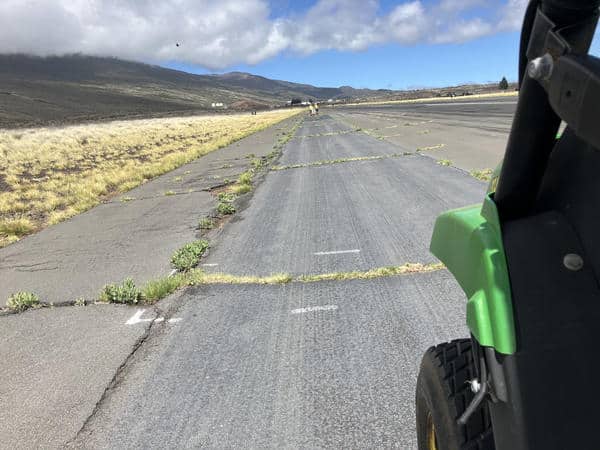
Due to site conditions, the contractor was unable to collect complete Profilograph data in certain sections. Heavy vegetation, potholes, and loose chunks of asphalt along the profile path prevented accurate measurements in those areas. Regarding cracking, there were numerous small (up to ¾ inch wide) to medium (up to 1½ inches wide) cracks running both longitudinally and transversely along the full length of the runway. Near the runway edges, extensive vegetation had grown through a dense network of cracks, extending roughly 20 to 25 feet toward the centerline. In some areas, the cracking was so severe that large sections had broken away, leaving gaps exceeding 5 inches wide. In total, over 15,000 linear feet of small cracks, 13,000 linear feet of medium cracks, nearly 1,500 square feet of large cracks, and more than 27,000 square feet of full-depth pavement repair were identified within the main runway. There were also several sunken areas within the primary landing zone, likely caused by subbase issues due to the aged runway and shifting or compacting under the repeated load of large aircraft using the airfield.

The project site was about an hour from the asphalt plant, so accurately accounting for asphalt absorption during the mix development phase was critical to ensuring the volumetrics of the mix met the project-specific requirements.

Crack Repair and Milling

The project scope included the full removal and reconstruction of the outer 24 feet on each side of the runway, while the center 60 feet in width was slated for an asphalt overlay. However, this central portion exhibited extensive surface cracking that required proper repair to ensure a stable and long-lasting finish. The repair process began with the removal of the existing crack sealant, followed by thoroughly cleaning the cracks to allow for proper bonding of the new sealant—a combination of asphaltic resin and polymer rubber.

The more severely damaged areas were milled down to the subgrade using a cold planer. A new base course layer was placed and compacted to 100% of the modified-proctor density and then paved with the approved asphalt mix. With the repairs completed, the runway was finally ready for the full overlay.

Cherry Point Airfield Project Success Story for S.T. Wooten

Mix Design and Production Challenges

The Hot-mix asphalt (HMA) and paving operations were required to comply with the guidelines outlined in UFGS Section 32 12.15.13. This specification imposes rigorous standards for HMA design and during production to ensure long-term performance and durability.

Designing HMA with volcanic aggregates—commonly available in Hawaii—came with unique challenges. The aggregates used in the mix design were highly absorptive, leading to high asphalt binder absorption. Further, the project site was about an hour from the asphalt plant, so accurately accounting for asphalt absorption during the mix development phase was critical to ensuring the volumetrics of the mix met the project-specific requirements. Factoring all these concerns, the contractor’s quality control department submitted a proposed mix design for the asphalt plant in Waimea, located on the west side of the Island. The mix design was approved after a thorough review by the United States Army Corps of Engineers’ (USACE) Transportation Systems Center (TSC).

Longitudinal joints were carefully constructed after cutting back the existing pavement edge to promote strong bonding, with joint surfaces thoroughly cleaned and tack coated before placing new asphalt. The completed project’s PRI showed a significant improvement of 57% to 90%, reflecting the collaborative efforts of the paving and quality control teams in overcoming tough conditions to deliver a high-quality runway.

The paving contractor faced challenges managing the dust-to-binder ratio in the mix during production, mostly due to changes in the sand compared to what was used when the original mix design was developed, leading to a few weeks of paving delays. Adding to the complexity, the asphalt plant in Waimea was scheduled to be relocated around the same time for another paving project. To maintain progress, a new mix design was developed using aggregates from a different source for the asphalt plant located in Hilo, located on the east side of the Island. After a careful review by USACE’s TSC, the new mix received the green light, and paving quickly resumed with minimal disruption.

Although not required by the project specifications, the proposed mix designs were also verified for optimum asphalt content using a simple analytical procedure published in the ASTM’s Journal of Testing and Evaluation, titled “Simple Analytical Procedure to Estimate Optimum Asphalt Content.” This additional verification produced results that closely matched the optimum asphalt content of the proposed mix designs, offering further validation and confidence in the final design asphalt content and the procedure.

Reconstruct Airfield Runway Pavement

Ensuring Effective Paving

The project site, situated at approximately 6,000 feet above sea level between two mountains, presented the working crew with unique challenges—including scorching heat and persistent gusty winds. These winds were intensified by the valley’s geography, which seems to act like a natural wind tunnel, accelerating airflow between the two mountain peaks. This not only complicated paving but also created mix cooling challenges.

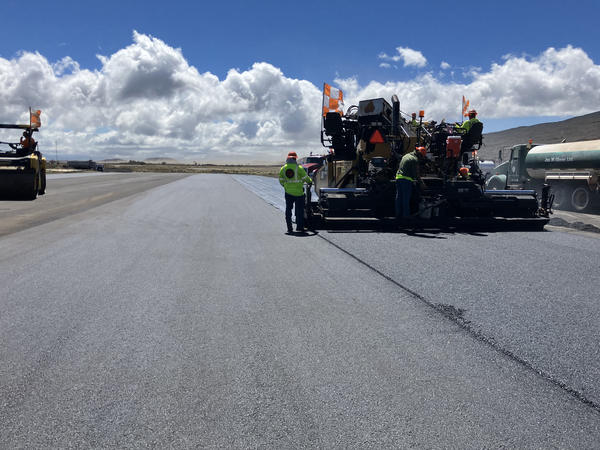
Despite the roughly one-hour hauling distance from the plant, the hauling of mix was well managed throughout. Mix temperatures stayed mostly within the target range, with only a few minor exceptions. Paving was done in 18-foot-wide passes at variable depths, mostly between 2 and 3 inches, using a standard rolling sequence of breakdown, intermediate, and finish rollers to ensure proper compaction. Longitudinal joints were carefully constructed after cutting back the existing pavement edge to promote strong bonding, with joint surfaces thoroughly cleaned and tack coated before placing new asphalt.

The paving crew, aware of the field conditions and the stringent specification requirements, approached and executed the paving operation to meet the project’s demanding standards. The quality control department provided critical support in continuously monitoring mat and joint densities. Cores drilled for thickness and density testing met specifications. Final profiling after paving revealed some areas needing grinding, and the quality control department worked closely with the grinding crew to address all must-grind bumps. The PRI showed a significant improvement of 57% to 90%, reflecting the collaborative efforts of the paving and quality control teams in overcoming tough conditions to deliver a high-quality runway.

Military Airfield Testing Introduces December Lab Equipment Gallery

Conclusion

Despite a few minor hurdles along the way—ranging from material adjustments to environmental and logistical challenges—the success of the runway rehabilitation at Bradshaw Army Airfield was a direct result of strong communication and coordination between EPC and JWG. While each team operated within its scope of responsibilities, it was our shared commitment to quality, problem-solving, and teamwork that ensured the project stayed on track.

The end result is a significantly improved runway that meets rigorous military standards and is ready to support the ongoing mission at the PTA for years to come. To mark the completion of this important effort, a ground blessing ceremony for the newly rehabilitated runway was held on Sept. 23, 2025, honoring local tradition and as a gesture of respect for the land.

From Cages to Cameras: Field-Tested Paver Safety Upgrades

Augment your equipment some more to make the paving crew’s job safer, more efficient

In the November issue, we looked at a variety of ways to augment the paver delivered from the dealership or auction house, so it might offer its most efficient environment for the paving crew when handling, storing and using auxiliary equipment. Crew members need a safe, uncluttered workspace where they can access an increasing number of tools and tablets during the shift. Let’s take the discussion a step further this month with a deeper dive into safety and trucking, starting with a patent-pending design from N.B. West Contracting Co., Pacific, Missouri.

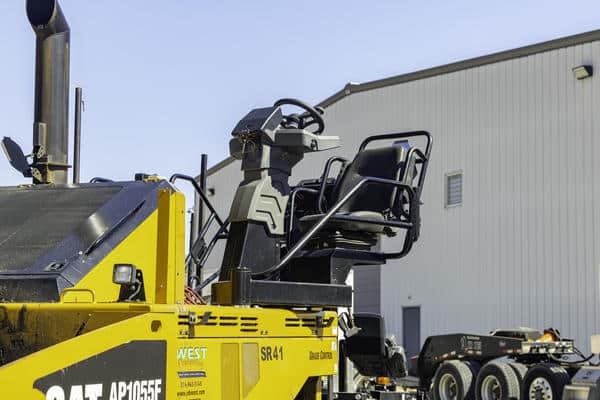
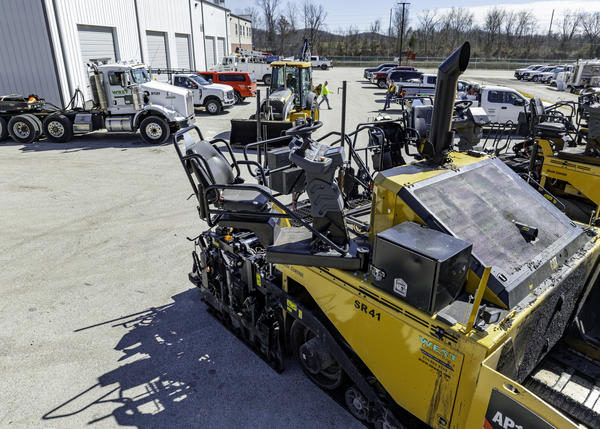
As of November 2024, all seven of N.B. West’s pavers had the safety cages installed. Now paver operators have added protection against struck-bys when they need to position seats for improved visibility. Photo courtesy of N.B. West

Award-Winning Aftermarket Safety Cages

The National Asphalt Pavement Association (NAPA), Greenbelt, Maryland, awarded N.B. West the 2024 Asphalt Operations Safety Innovations Award during a ceremony at the association’s 70th annual meeting, for its protective guards for paver operators. While original equipment manufacturer (OEM) standard guards protect operators in fixed positions, N.B. West’s custom-fabricated guards, welded to the operator’s seat frame, provide protection regardless of seat position. Since the first installation in May 2024, the company had reported zero incidents or near-misses and, as of press time, had received approval to move forward in the patenting process.

NAPA stated in a press release, this worker safety initiative fills a void in commercially available paving equipment protection and offers a replicable solution for other paving companies. N.B. West Safety Director Tim Swaringam confirmed this concept, stating all seven of the company’s pavers, which include various makes and models, had the safety cages installed as of November 2024.

Logistics Manager Noah DeRousse and Shop Manager Nick Brewer worked with Swaringam on the company’s safety committee and helped design and build the protective guards.

Before he took on the role of logistics manager, DeRousse spent six months working directly with Swaringam in the safety department as the field safety coordinator. “During that six-month period, we really worked on these cages and tried to improve the safety of our operators here at N.B. West,” DeRousse said. “Prior to the six months in the safety department, I ran one of these machines…for 21 years. I’ve seen a lot of incidents happen over the years, a lot of operators injured, a lot of really close calls.”

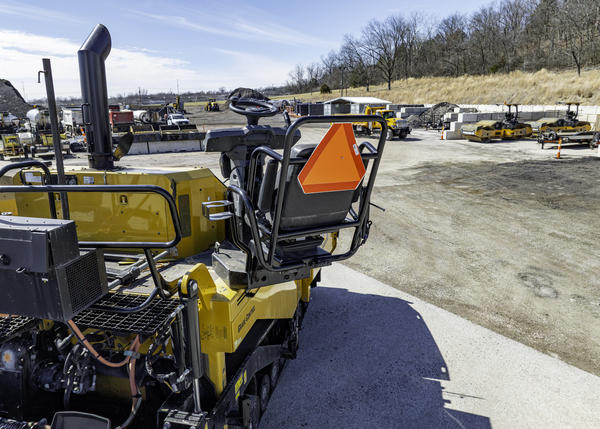
Another aspect of N.B. West’s award-winning safety cage design was to add the slow-moving vehicle triangle as a visual safety factor to the back of the operator’s “seat.” Photo courtesy of N.B. West

Brewer explained that his team in the shop helped design and install the safety cages. He shared that whenever the paver operator’s seat is positioned right along the inside of the confines of the paving machine, there’s protection for the operator with the OEM’s platform structure. This position is typically used when transporting the machine.

“This is more for transportation of the machine out on the highways to and from the job sites,” DeRousse shared. “If I’m sitting here and my asphalt hopper is lifted up…I can see just fine.” If the hopper wings are down for paving, “you can’t see your line. You can’t see where you’re trying to pave. So, you end up kicking this seat out the second or third click. Once you kick it out where you can see down the hopper, then you’re exposed out here if you don’t have a safety cage. Over all my years of running an asphalt paver, I was hit several times—one time causing some nerve damage in my elbow that never has gone away. And every operator that I’ve known that’s been a paver operator for any substantial amount of time has been hit or had a really close call. I would say over my 20-year career, probably 15 times I had trucks hit the back of my seat. Not all of them have hit me, but it would only take one to be a really big injury for someone.”

The safety cage design includes signage to alert drivers that the seat has been kicked out from the confines of the operator platform. Swaringam and Brewer spoke of adding the slow-moving vehicle triangle to the back of the operator’s seat.

When the operator moves the seat “out” to get a better view for paving, his upper torso is exposed. “The only thing protecting him is the back of that seat, which doesn’t really provide any protection at all,” Swaringam said. “Anything that hits that seat could possibly harm the operator. At nighttime whenever there’s low visibility, you can see there’s nothing on the back of that seat to visually see the operator sitting out there. The only thing is [the operator’s] Class 3 vest, but that’s really all that a passing motorist would see is his sleeve sitting there.”

Augment Your Paver to Make the Crew’s Job Easier

The team began problem-solving by considering administrative controls—such as how to adjust truck driver behavior. But a truck pattern can’t always be perfected in a tight work zone, and passing motorist behavior is an uncontrollable variable. The next step was engineering controls—that’s where the safety cages began. The last step is personnel protective equipment (PPE), but the team focused on an engineered solution.

“That safety cage provides a lot of protection for the upper torso, the neck and back and head area, the sides. Whenever Nick designed this, he designed it where the side flanges actually will deflect anything away from the operator, not allow it to come in.”

“It was kind of a different aspect for me,” Brewer said. He shared that oftentimes, when different department heads approach the fabrication shop to make equipment modifications, the purpose is to increase production or functionality. This was one of the few times he’d been involved in a project with the sole purpose of increasing safety for the operator. “So, it was a little bit of a different kind of scope, but I wanted to design something that gave the operator a lot of protection, but didn’t disrupt the communication between him and the screed or anybody else working behind the paver or any trucks while using the paving machine. So, it started as just a simple sketch. I went around and took measurements because we own several different models and several different brands of machines. I wanted [the cages] to be somewhat universal, easy to install, and provide the protection needed…It seems to provide a lot of protection for the operator with no downfall of communication visually or verbally.

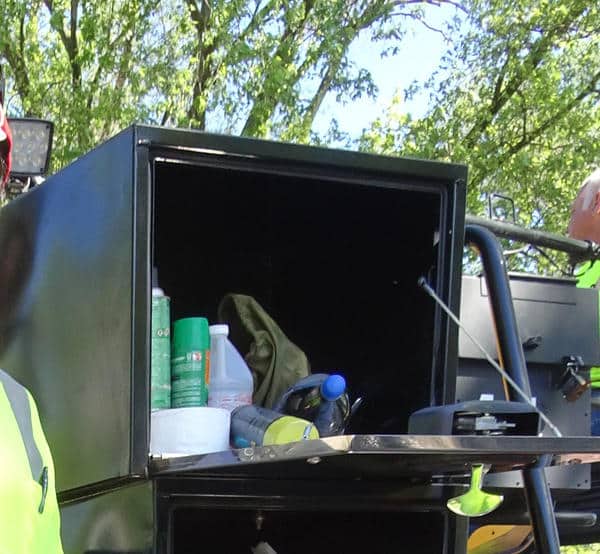
This crew has affixed an 18- by 24-inch box on the back of the paver to store pavement marking paint, headsets, measuring tape, release agent spray and other smaller items you don’t want to trip over or lose track of at the side of the project. The box can include a lock to protect the expensive items like headsets or sensors overnight. Photo courtesy of Ball

“Another aspect of the design was to add a visual safety factor as a slow-moving vehicle triangle to the back of the operator’s protection.”

The award committee for NAPA helped N.B. West create a video announcing their achievement in which Swaringam said, “It really helped propel our safety culture to a more collaborative safety culture where everyone wants to be involved in making safety innovations and looking at ways that we can improve our safety out in the field, for our workers that are working out there every day.”

Not only the collaborative nature of the project, but the winning of an award for the effort has brought renewed energy to the safety culture. “This really brought a lot of energy to our field workers to be bringing up safety innovative ideas to us…we’re all a team, we’re all trying to achieve the same goal, and that’s to make sure that the employees working out in the field make it home safely to their families every night.”

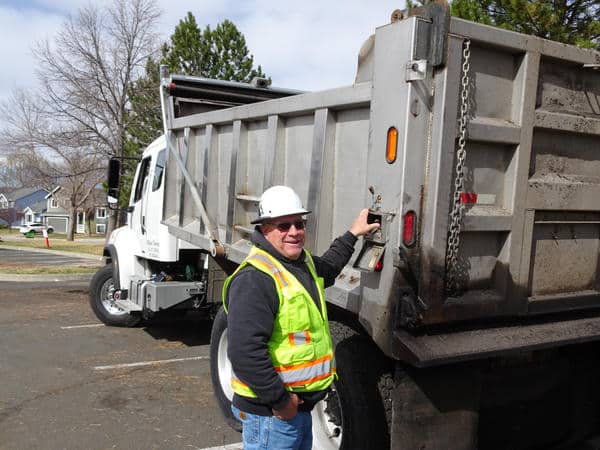
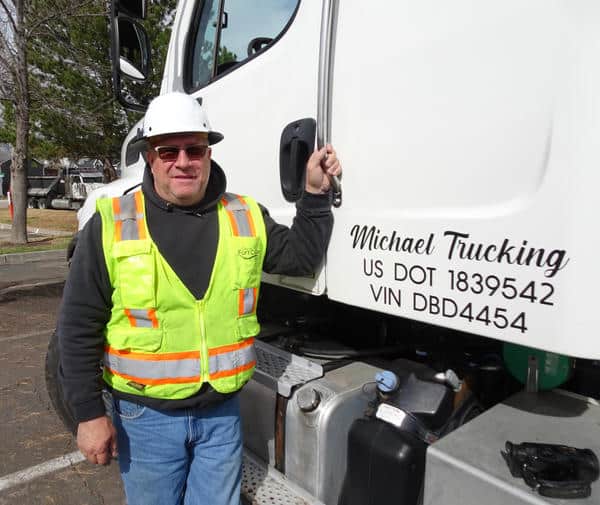
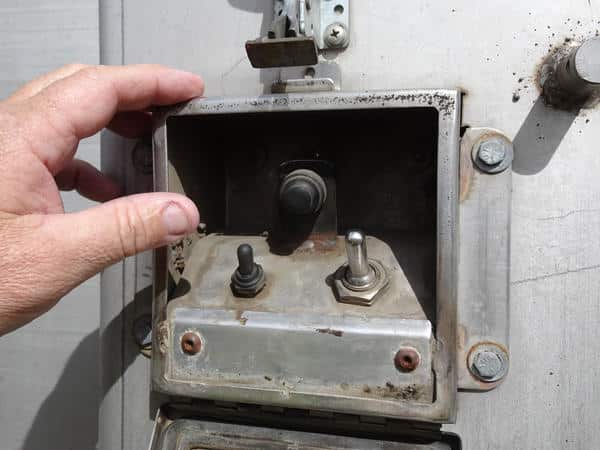
To help the paving crew when doing handwork, Dwight Michael of Michael Trucking, Ft. Collins, Colorado, installed a covered switch at the back of the haul truck. Now, from outside the cab, he can toggle the switches to hydraulically raise and lower the truck bed. The round button above the two switches turns the hydraulics on. Photos courtesy of John Ball, Top Quality Paving & Training, Manchester, New Hampshire

Safe Hauling

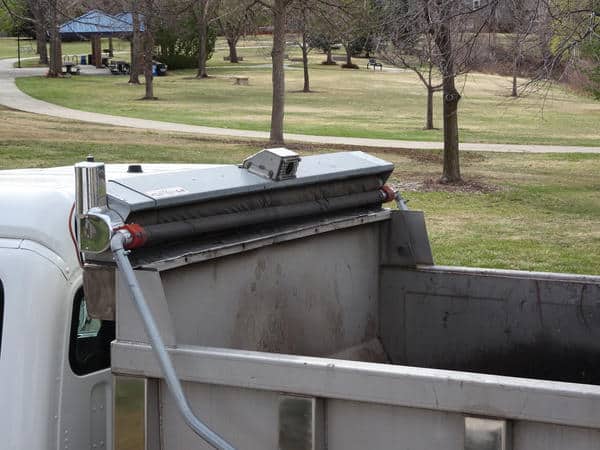
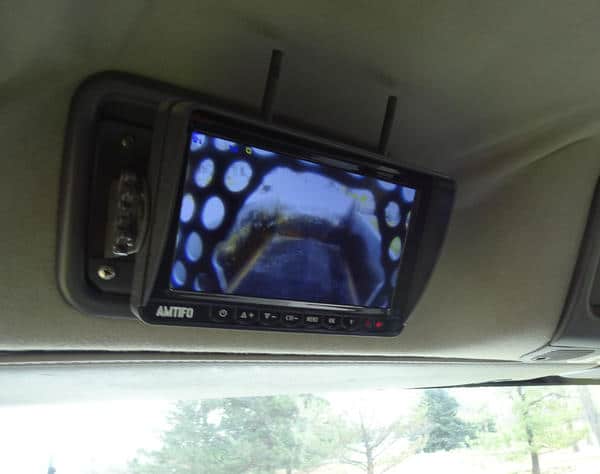
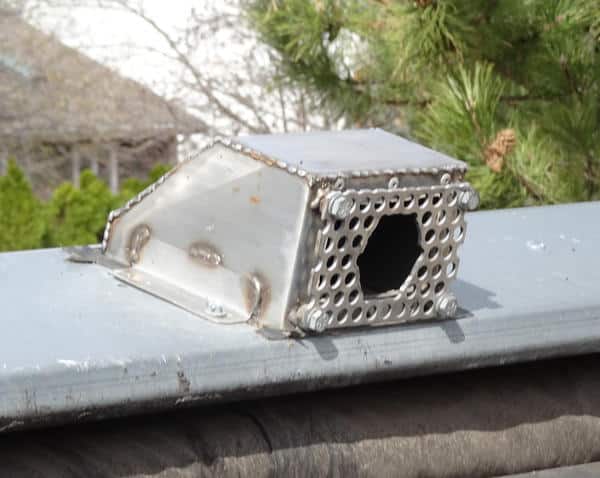
Dwight Michael of Michael Trucking, Ft. Collins, Colorado, has taken safety and efficiency a step further by installing a camera atop his haul truck cab and directing its feed to a screen above his driver’s seat. This helps with safety because, from inside the cab, he can monitor what’s happening in the truck bed. The camera lens is protected by a steel-mesh screen bolted around the camera’s housing.

The camera Michael installed is protected by a steel mesh cage. Photos courtesy of Ball

When sharing mix delivery and loadout articles, AsphaltPro Magazine reminds haul truck drivers to stay inside the safety of the haul truck cab at all times. We’ve stressed the importance of building systems at the asphalt plant and cleanout areas near the work zone to enable drivers to do all the stages of their jobs without having to wander around dangerous areas. Keep in mind, there are exceptions to every rule.

Dwight Michael of Michael Trucking, Ft. Collins, Colorado, installed a camera atop the cab of his haul truck. The camera gives him a view of the haul truck bed on a monitor while he’s in the driver’s seat. Photos courtesy of John Ball, Top Quality Paving & Training, Manchester, New Hampshire

Michael is an entrepreneur who has devised a way to safely and efficiently help the paving crew that performs extensive handwork. In this case, he has built a hydraulic control at the back of his truck for lifting and lowering the bed when he’s outside the cab.

Dwight Michael of Michael Trucking, Ft. Collins, Colorado, installed a camera atop the cab of his haul truck. The camera gives him a view of the haul truck bed on a monitor while he’s in the driver’s seat. Photos courtesy of John Ball, Top Quality Paving & Training, Manchester, New Hampshire

The control is housed in a protected box on the side of the truck. Inside is a button to turn on/off the hydraulics and two toggle switches to raise or lower the truck bed. In the image in this article, you can see the chute in the center of the tailgate, which will feed material to the wheelbarrow as Michael gently lifts the bed with the toggle switch. You can also see in that image that Michael has parked the truck on a solid, level surface for this work.

The camera Michael installed is protected by a steel mesh cage. Photos courtesy of Ball

Because he has built this hydraulic system and can control it from this safe vantage point, he can watch and control the material flow without running back and forth from the cab to start the truck, raise the bed, etc. He has made the operation more efficient for the laydown crew he works with as well as himself.

To help the paving crew when doing handwork, Dwight Michael of Michael Trucking, Ft. Collins, Colorado, installed a covered switch at the back of the haul truck. Now, from outside the cab, he can toggle the switches to hydraulically raise and lower the truck bed. The round button above the two switches turns the hydraulics on. Photos courtesy of John Ball, Top Quality Paving & Training, Manchester, New Hampshire

As we saw in the November issue and here, many crews in the field devise those extra systems and clever contraptions to give equipment in the work zone that additional edge when it comes to safety and efficiency. Tell us about the unique device or setup your crew has built to make the job easier, faster or safer. You can share on our social media channels or send an email to our editor, sandy@theasphaltpro.com.


Watch a video from N.B. West Contracting on the creation of the safety cages at the company’s YouTube channel.

Night Shift Against the Backdrop of a German Fairytale Castle

Neuschwanstein Castle gets new carriageway surface course with the SUPER 1800-5 X Vögele paver

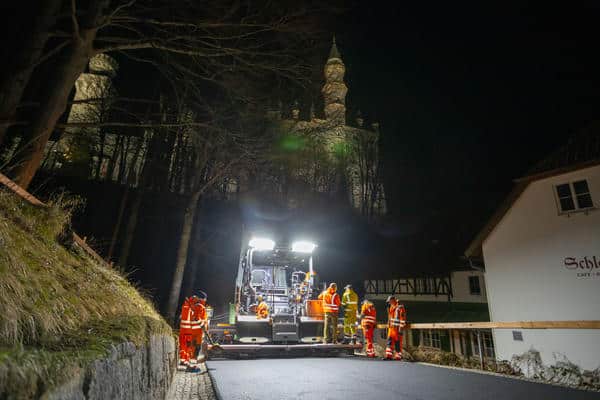
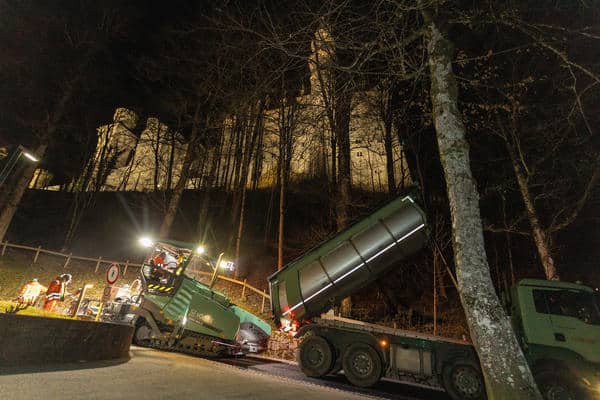
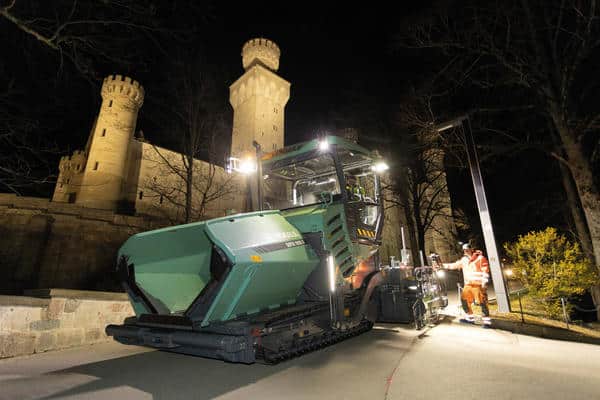
Steep inclines with hardly any room to maneuver and darkness made up the conditions for rehabilitating the surface course in front of Germany’s most famous castle. In order not to disrupt visitor operations, work could only be carried out at night. The contractor opted for the Vögele SUPER 1800-5 X paver and new Dash 5 technologies such as the integrated Light Package Plus.

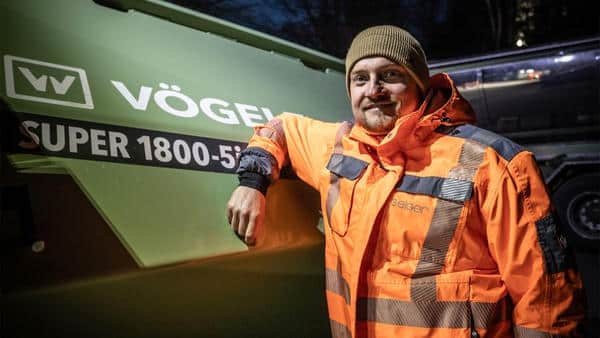
“With Light Package Plus, we were able to illuminate all relevant paver and work areas in a targeted manner, thereby ensuring maximum safety, even in the dark.”—Stefan Keller, senior site manager, Geiger Hoch- und Tiefbau Gmbh & Co. KG

Neuschwanstein Castle is a UNESCO World Heritage Site and arguably the most famous tourist attraction in Germany. A good portion of the approximately 1.4 million visitors each year make the climb to the castle by horse-drawn carriage. This is because, apart from emergency and maintenance vehicles, only they are allowed to drive on the steep, winding road. However, the horses’ iron-shod hooves put a unique strain on the asphalt. (See a similar situation with a mix design response in “Fuel-Resistant Asphalt Binder Resists Asphalt Breakdown in St. Augustine” from the June 2019 AsphaltPro issue.)

Fuel-Resistant Asphalt Binder Resists Asphalt Breakdown in St. Augustine

The Bavarian Palace Administration therefore commissioned Geiger Hoch- und Tiefbau GmbH & Co. KG to rehabilitate the surface course along the entire length of 1.3 km, which features a winding, uphill road leading to the castle.

Given the steep incline and twists and turns, the high traction of the crawler track and the new SmartWheel steering system came in handy. The rotary control on the ErgoPlus 5 paver operator’s console enables particularly sensitive control.

First, around 7,000 m² of asphalt surface was milled off using a W 100 CFi Wirtgen cold milling machine.

The light output of the integrated LED spotlights is comparable to that of light balloons, but they do not need to be transported or assembled separately. “This saved us a lot of setup time here on the job site,” said Senior Site Manager Stefan Keller.

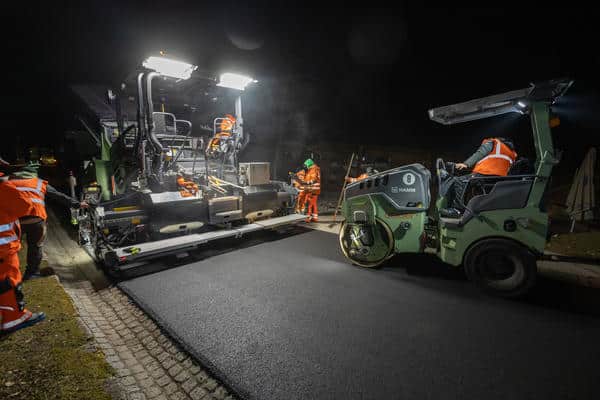
This was followed by paving with the SUPER 1800-5 X. In three nights, the paver laid approximately 800 tonnes of surface course material in a width varying from 5 to 6 m and a thickness of around 4 cm.

“With Light Package Plus, we were able to illuminate all relevant paver and work areas in a targeted manner, thereby ensuring maximum safety, even in the dark.”—Stefan Keller, senior site manager, Geiger Hoch- und Tiefbau Gmbh & Co. KG

The assignment presented the team with another challenge: To minimize disruption to visitors, work had to be carried out at night. The team used the Light Package Plus lighting. This package, offered by Vögele for all Dash 5 pavers, includes LED lighting integrated into the hardtop and crossbar of the control panel, which illuminates the driver’s workstation as well as all service points accessible from the platform. In addition, the tow point rams are equipped with LEDs. Three LED spotlights, which can be flexibly positioned thanks to magnetic mounts, illuminate any desired work area, such as the side plate of the screed or the hopper wall.

Light Package Plus, which was used during paving at Neuschwanstein Castle, features powerful LEDs integrated into a specially developed hardtop extension. They are designed to ensure optimum illumination across a paving width of up to 10 m and up to 4 m behind the screed. The light output of the integrated LED spotlights is comparable to that of light balloons, but they do not need to be transported or assembled separately.

In combination with the latest generation of the AB 600 extending screed, the SUPER 1800-5 X was ready to give a relatively quiet paving performance.

“This saved us a lot of setup time here on the job site,” said Senior Site Manager Stefan Keller. “With Light Package Plus, we were able to illuminate all relevant paver and work areas in a targeted manner, thereby ensuring maximum safety even in the dark.”

In combination with the AB 600 Dash 5 extending screed and its compacting systems of tamper and vibrators, the paver also achieved high pre-compacting. All components that come into contact with the material are constantly heated, which ensured a homogeneous surface structure. Compared to the previous model, the new extending screed can be heated more efficiently and is quieter in operation thanks to structural optimizations. Together with the noise-optimized drive concept of the SUPER 1800-5 X, the paving team was able to ensure that nighttime operation was as quiet as possible.

Augment Your Paver to Make the Crew’s Job Easier

You can achieve precision paving when everyone has what they need, safely at their fingertips

Once the crew gets the new paver to the job, each person has his or her preferred way to place the mat correctly behind it. Assuming everyone is trained on the best practices to achieve a smooth and well-compacted finish, let’s look at some ways to implement those practices in the most efficient and comfortable manner. Let’s look at ways to augment the paver delivered from the dealership or auction house.

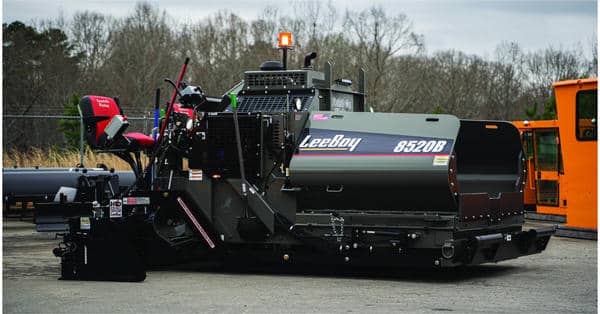
The special edition Raised on Blacktop paver from LeeBoy not only included the creature comforts Bill Stanley described for the article, but it also featured a distinctive paint job to make it stand out from the crowd. Photo courtesy of LeeBoy

A Precise Machine

We don’t want to imply original equipment manufacturer (OEM) factories don’t build something powerful and smart. Every paver out there has been designed to build specific pavement systems from golf cart paths to driveways to parking lots to city streets to airport pavements to highways. These machines are, after all, the original 3D printers.

The people working on and around these pieces of equipment have their preferences for how auxiliary equipment should be handled, stored and used. Those same people need a safe, uncluttered workspace where they can access an increasing number of tools and tablets during the shift.

We asked our social media followers how they augment the paver, and a variety of responses came in focusing on convenience. One respondent shared they place a cooler full of iced drinks on the paver deck. Blayze Oyster wrote, “We like to build custom racks for our pavers for shovels, lutes, brooms, depth sticks, etc. Makes it a lot more efficient to have all tools on board with us.”

That need to organize hand tools is a common theme and one contractor in the Northeast took it to the next level through collaboration and communication with the OEM directly.

Pavers aren’t the only machines American Pavement Specialists and Raised on Blacktop work to improve in the industry. The Stanleys worked with Trout River Industries to turn two live bottom trailers into trucks that could auger asphalt mix into trenches. Check out the quick story at https://theasphaltpro.com/articles/partnering-on-the-perfect-truck/. Photo courtesy of APS

Collaboration for Precision

One of the more notable collaborations that took place in the paving industry a few years ago involved Raised on Blacktop, Danbury, Connecticut, and LeeBoy, Lincolnton, North Carolina. The two entities worked together to trick out a special edition Raised on Blacktop paver, which was available as of February 2021.

Bill Stanley, the owner of American Pavement Specialists, Danbury, and partner in Raised on Blacktop, explained they’ve worked with LeeBoy, Mauldin, X-Broom, Wirtgen Group and others to modify and adjust what he defines as “creature comforts” of equipment for the contractor’s benefit.

“I think my son said it best when he said he spends more hours a day on the paving machine than he does in bed,” Stanley shared.

With this truism across the paving industry, it was important to the Stanleys to get the creature comforts right.

“We didn’t re-engineer anything,” he said. Instead, the family offered ideas that brought an existing machine up a notch, like adding a complete tool-carrying kit to the LeeBoy 8520B commercial paver. “When you’re paving, especially if you’re doing large commercial areas, a lot of tools get carried on the paving machine. We designed something where we have a secure spot for everything that we need, whether it’s our paint cans, our tape measures, our razors that we use to scrape our tools with, additional shovel holders and rake holders. So, everything has a secure location.”

This ensures hand tools are within the workers’ grasp at all times and don’t fall off the machine as it moves around the project. “We did a cell phone holder. We did a USB port because the operator can track the trucks. We did a cup holder.”

Another enhancement the Stanleys suggested for the Raised on Blacktop edition of the 8520B was a lighting package. “We also did a lighting package with safety lighting, putting LED lighting in areas that were probably not known to the manufacturer that needed it, like inside the tunnel to the paver. We needed lights along the back of the screed, we needed lighting in front of the paver.”

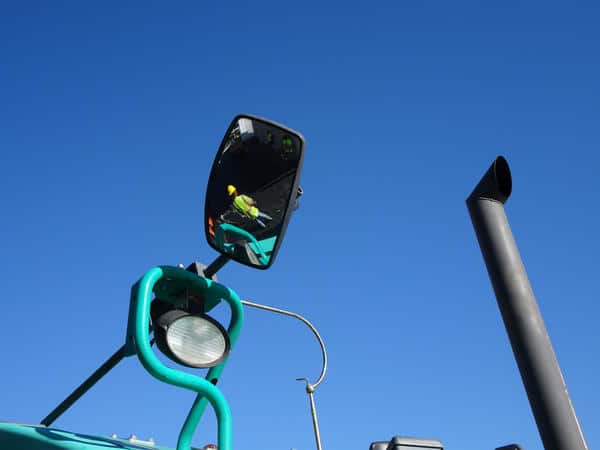
This is a convex mirror affixed to a light bracket. The team from APC, Golden, Colorado, has used a u-joint, which allows them to move the mirror forward and back, as needed. They’ve put one on either side of the hopper. The knob atop the u-joint allows them to loosen and tighten the grip on the mirror’s handle for ease of adjustment. The genius of this mirror placement is it gives the paver operator a better view of the entire material movement process from either operator platform. Photo courtesy of Ball

Stanley explained that the collaboration involved sitting down with the LeeBoy team to communicate what they were looking for openly and kindly. “When we sat down with the engineers with LeeBoy, the first thing I told them was, you know, we’re not here to redesign your paver. Actually, we’ve owned 20 of them. We love your paver. These are just things that the operator needs.”

Now that LeeBoy has offered these augmentations since 2021, Stanley has seen similar changes with other OEMs’ offerings. As he walks the floor at events like World of Asphalt, he notices other paving equipment OEMs have adopted cup holders, tool-carrying cages and other “creature comfort” elements on their equipment as well. It’s a positive development to see as OEMs have taken the operator’s work environment into consideration when designing and updating equipment.

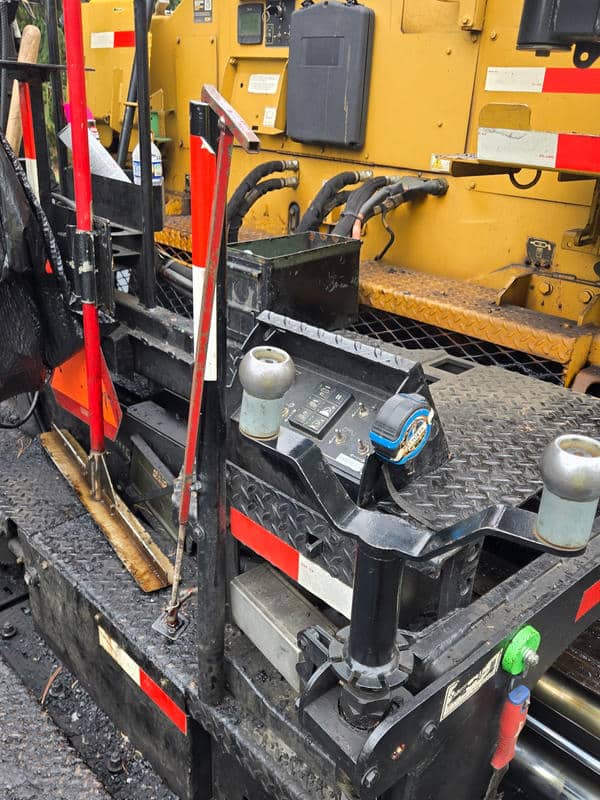
For this crew working in a small housing development, the measuring tape and depth gauge are kept close at hand with brackets they’ve installed on their 8-foot Weiler 385B paver. Photo courtesy of Ball

Straight Precision

Frank Foore, the proprietor of PaverLaser.com, formerly Asphalt Pokers, headquartered in Akron, Ohio, also came up with an aftermarket item to help the paving crew. He developed the asphalt paver laser for his own use in paving a consistent, straight line a few seasons ago. It’s a device that attaches to the asphalt paver to “point” out a line for the operator to follow.

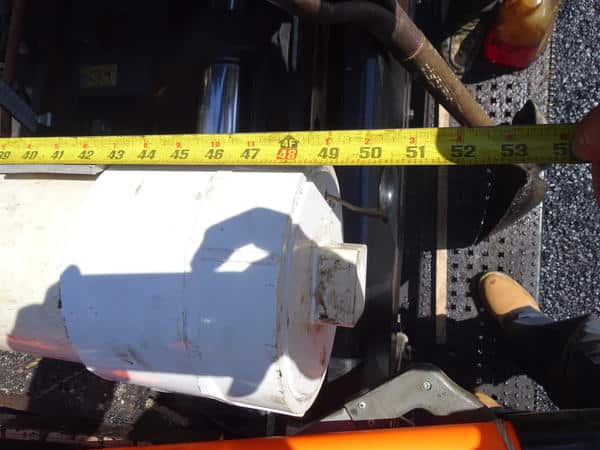
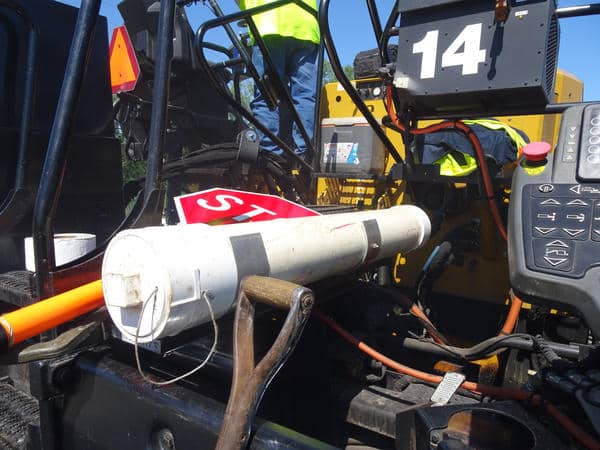
This PVC snorkel tube, with its cap tethered by a string, is about 4 feet long to house the smart levels. In these pictures, you can see how far it reaches beyond the paver deck, which doesn’t allow it to trip workers or get in the way of the screed operators. Both photos courtesy of Ball

“I made this for the paver to follow or else you’re painting lines all day,” Foore said. “We’ve had them for a couple years now.”

Each paver laser includes a 12-volt plug and a DC plug, so the crew can select how best to power it. The device also comes with either a magnetic mounting bracket or clamp-style mount, depending on which you need for your model of paver. It also helps to reduce trip hazards, contributing to a safer job site. It’s even equipped with a built-in cooling fan so it can handle the intense heat of paving operations.

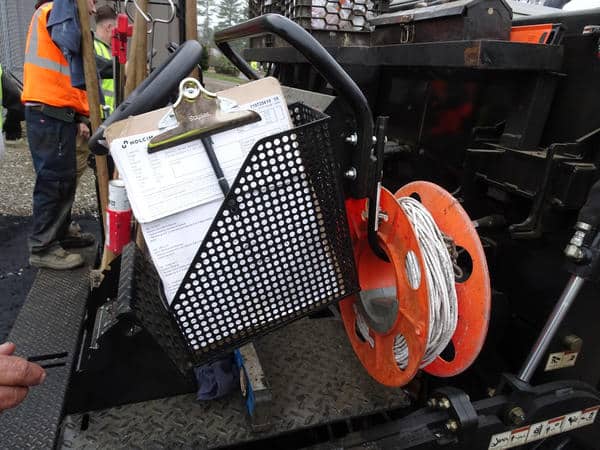
This left-hand screed operator pedestal includes modifications the T&K Asphalt Services Inc. crew in Whitman, Massachusetts, has made. They’ve added a basket to hold the work order and truck delivery slips. They’ve also attached a j-bracket where they keep the spool of string for lining out jobs. Photo courtesy of John Ball, Top Quality Paving & Training, Manchester, New Hampshire

Augment Your Precision

In the text to follow, we showcase some tried-and-true and new-to-you ideas for augmenting the paver on your job site. You probably have some ideas of your own to share with the industry. Maybe you have a photo of the brackets you’ve built to hold smart levels in place behind the tractor. Maybe you have a better way to cook lunch on the screed. Let’s see what kind of “better mousetrap” you’ve built to get a precise paving job.

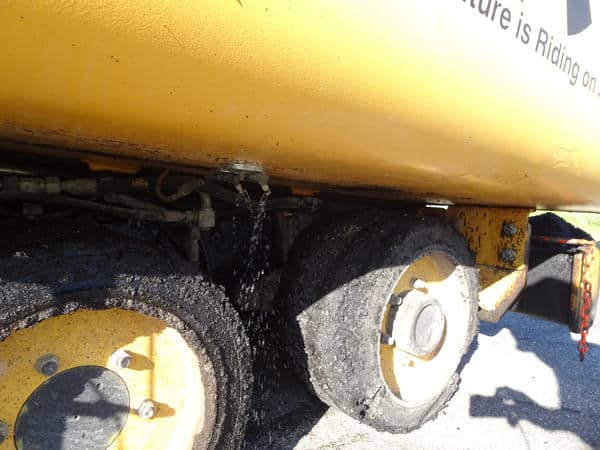
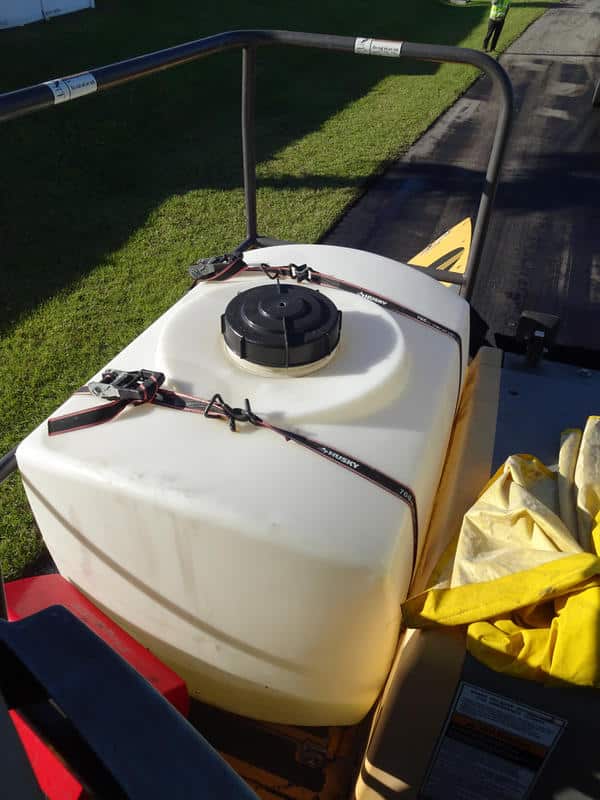
A plastic water tank holds 250 gallons of water with a small amount of dishwashing soap as a surfactant and nestles between the engine hood and safety railing. Husky nylon cables secure it in place on this Volvo 7170, rubber-tired paver. Typically, the steering tires would pick up tack and bring up mix. Laying a 7/8-inch mat means any pickup would be a problem. Using the spray system from a roller, the water is delivered via brass pipe, which is attached to 60-pound magnets on the underside of the hopper. The magnets saved the mechanic from drilling into the hopper or welding this setup together. Clamps hold the tubes. Notice the 30-degree angle of the nozzles direct the water onto the drive wheels only. For this job, you can see the Ajax Paving crew is using a shut-off valve on the hose coming out of the tank to ensure proper water control. The setup includes a pump. Photos courtesy of Ball

Training in the Age of Technology

As automation transforms the paving industry, American Pavement is proving that smarter machines need smarter crews (not smaller crews)—and training has never mattered more.

Training used to mean showing a guy how to use a rake, feed the hopper, or set up the screed. These days, it means learning GPS, understanding automation and keeping up with changing specs. Some folks in our industry worry that jobs are going to disappear as more and more of what we do gets automated. I don’t see it that way.

Look at the construction of the American railroad. It started with picks and shovels. Then came the bulldozer, and people thought, well, there go the jobs. But the guy who dropped his shovel, climbed into that dozer, and learned how to run it? He didn’t just stay employed. He made more money, worked safer and built a better future.

It’s no different today. Anyone who knows this business knows paving in 2025 looks nothing like it did 10 years ago. The real MVP on any crew is the one who knows both—the one who can run the old-school work by feel, but also knows how to make the most of what the new tech can do.

That’s what this article is about. How we train our MVPs at American Pavement—not just to know the fundamentals, but to embrace the fact that the learning never stops.

Estimate Smarter: 6 Steps Before You Bid a Job

1. Smarter Crews, Not Just Smarter Machines

You can spend a million dollars on the best tech out there, but if your crew doesn’t understand what it’s doing, you won’t get a quality job.

At American Pavement, we don’t just train guys to push buttons. We train them to understand what the machine is doing and why. If you don’t know how slope control works—or what the slope is supposed to be—then all the tech in the world won’t save you the second something goes wrong.

That’s why we focus on fundamentals. How to read a plan. How to think about drainage. How to understand pattern and material flow. Because once you know that, then automation becomes a tool, not a crutch.

Bill Stanley’s Top Tips for Estimates, Part 2

2. You Can’t Automate Common Sense

Automation can guide a machine, but it can’t read a job site. It doesn’t know if a truck is late, if the sun’s moving on your compaction window, or if the site plan doesn’t match what’s in front of you. That still takes a crew that knows how to think on their feet.

We teach our team to pay attention. Watch the mix. Watch the trucks. Watch each other. Because the model might say one thing, but if the conditions change, the crew has to know how to adapt.

3. Train Beyond the Spec Book

Some jobs come with a full set of specs. Others don’t. And if your crew only knows how to follow directions, they’re going to struggle on the second kind.

At American Pavement, we break jobs into two buckets. There’s spec work—like state, county or municipal paving—where everything’s written down: grades, depths, temperatures. That stuff’s actually easier to train. It’s like baking a cake from a recipe: follow it step by step and any cook who knows their way around a kitchen will get a quality result.

But for the second set of jobs you need a chef with enough experience to write their own recipes. That’s where you need a crew that knows how to think on their feet. This requires experience, instincts and attention to detail.

Stop Struck-Bys, the American Pavement Specialists Way

4. There’s No Graduation Day

In this line of work, graduation day never comes. There’s no final exam, no diploma that says, “You know it all.” Because the second you think you’ve got it all figured out, the job changes.

We pave in towns, counties, and states—all with their own specs, their own inspectors, and their own way of doing things. You might train a guy for weeks on one type of job, but then you move on to the next site and they’ve got to start learning all over again.

How to Get New Workers to Stick With It

5. Technology Will Keep You On Your Toes

Another reason why there’s no graduation day in this business is because the curriculum keeps changing. The spec books get updated. New technologies are invented. You can master what’s out there today, but tomorrow, there’ll be something new.

At American Pavement, we do our best to keep up. This is why I read AsphaltPro magazine, go to trade shows and continue to ask questions. We may not always be the first to implement new technology, but you can bet we won’t be the last.

6. Retain Who You Train

Paving’s not a trade. It’s a skill that you refine over time. It takes time in the seat. Time on the ground. Time seeing different jobs and learning what works. And that kind of experience only comes if you can keep your crew around long enough to build it.

At American Pavement, we try to offer more than just a job. We give folks a chance to build a career. We keep as many people as we can working through the winter. We invest in the employees who are invested in us.

Skill doesn’t show up on day one. It’s built with time and pressure. That’s how you make diamonds.

Know Your Worth to Get Paid Your Worth

The Bottom Line

At the end of the day, training isn’t something you check off a list—it’s something you build one day at a time. That’s what we’ve done at American Pavement. We train the new hire and the guy with 30 years on the paver. We train for the blueprint jobs and the curveballs. We train for the job today, and we train for the one coming tomorrow.

Because the best crews—the ones that are still standing 10 years from now—will be the ones who never stopped learning.