
Augment Your Paver to Make the Crew’s Job Easier
BY Sandy Lender
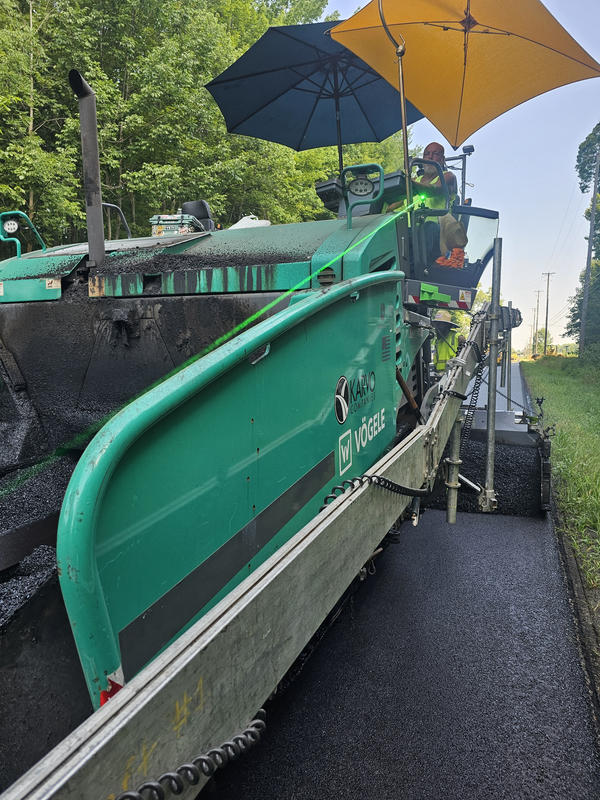
You can achieve precision paving when everyone has what they need, safely at their fingertips
Once the crew gets the new paver to the job, each person has his or her preferred way to place the mat correctly behind it. Assuming everyone is trained on the best practices to achieve a smooth and well-compacted finish, let’s look at some ways to implement those practices in the most efficient and comfortable manner. Let’s look at ways to augment the paver delivered from the dealership or auction house.
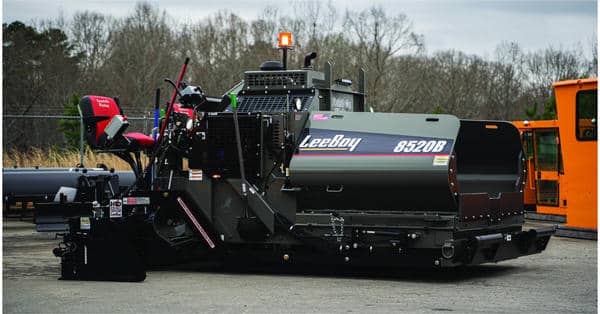
The special edition Raised on Blacktop paver from LeeBoy not only included the creature comforts Bill Stanley described for the article, but it also featured a distinctive paint job to make it stand out from the crowd. Photo courtesy of LeeBoy
A Precise Machine
We don’t want to imply original equipment manufacturer (OEM) factories don’t build something powerful and smart. Every paver out there has been designed to build specific pavement systems from golf cart paths to driveways to parking lots to city streets to airport pavements to highways. These machines are, after all, the original 3D printers.
The people working on and around these pieces of equipment have their preferences for how auxiliary equipment should be handled, stored and used. Those same people need a safe, uncluttered workspace where they can access an increasing number of tools and tablets during the shift.
We asked our social media followers how they augment the paver, and a variety of responses came in focusing on convenience. One respondent shared they place a cooler full of iced drinks on the paver deck. Blayze Oyster wrote, “We like to build custom racks for our pavers for shovels, lutes, brooms, depth sticks, etc. Makes it a lot more efficient to have all tools on board with us.”
That need to organize hand tools is a common theme and one contractor in the Northeast took it to the next level through collaboration and communication with the OEM directly.
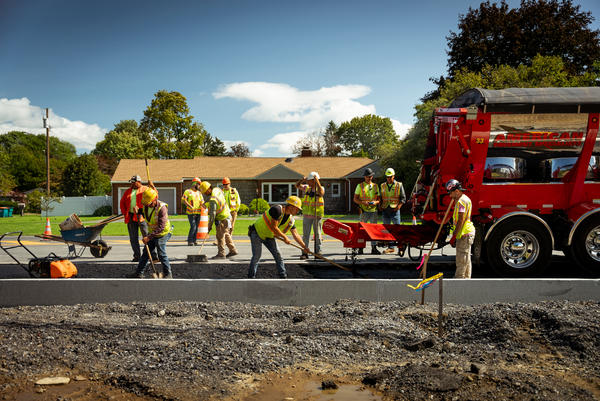
Pavers aren’t the only machines American Pavement Specialists and Raised on Blacktop work to improve in the industry. The Stanleys worked with Trout River Industries to turn two live bottom trailers into trucks that could auger asphalt mix into trenches. Check out the quick story at https://theasphaltpro.com/articles/partnering-on-the-perfect-truck/. Photo courtesy of APS
Collaboration for Precision
One of the more notable collaborations that took place in the paving industry a few years ago involved Raised on Blacktop, Danbury, Connecticut, and LeeBoy, Lincolnton, North Carolina. The two entities worked together to trick out a special edition Raised on Blacktop paver, which was available as of February 2021.
Bill Stanley, the owner of American Pavement Specialists, Danbury, and partner in Raised on Blacktop, explained they’ve worked with LeeBoy, Mauldin, X-Broom, Wirtgen Group and others to modify and adjust what he defines as “creature comforts” of equipment for the contractor’s benefit.
“I think my son said it best when he said he spends more hours a day on the paving machine than he does in bed,” Stanley shared.
With this truism across the paving industry, it was important to the Stanleys to get the creature comforts right.
“We didn’t re-engineer anything,” he said. Instead, the family offered ideas that brought an existing machine up a notch, like adding a complete tool-carrying kit to the LeeBoy 8520B commercial paver. “When you’re paving, especially if you’re doing large commercial areas, a lot of tools get carried on the paving machine. We designed something where we have a secure spot for everything that we need, whether it’s our paint cans, our tape measures, our razors that we use to scrape our tools with, additional shovel holders and rake holders. So, everything has a secure location.”
This ensures hand tools are within the workers’ grasp at all times and don’t fall off the machine as it moves around the project. “We did a cell phone holder. We did a USB port because the operator can track the trucks. We did a cup holder.”
Another enhancement the Stanleys suggested for the Raised on Blacktop edition of the 8520B was a lighting package. “We also did a lighting package with safety lighting, putting LED lighting in areas that were probably not known to the manufacturer that needed it, like inside the tunnel to the paver. We needed lights along the back of the screed, we needed lighting in front of the paver.”
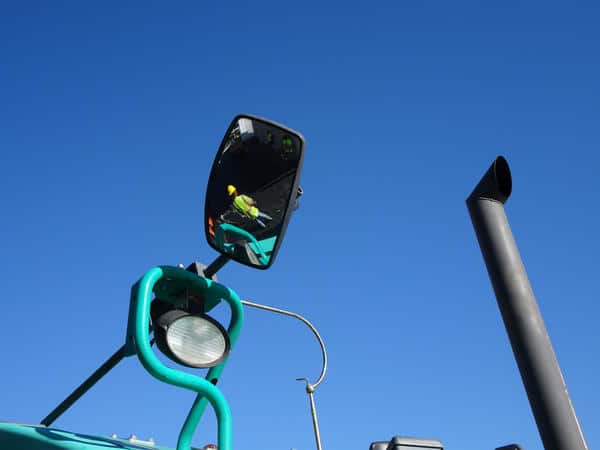
This is a convex mirror affixed to a light bracket. The team from APC, Golden, Colorado, has used a u-joint, which allows them to move the mirror forward and back, as needed. They’ve put one on either side of the hopper. The knob atop the u-joint allows them to loosen and tighten the grip on the mirror’s handle for ease of adjustment. The genius of this mirror placement is it gives the paver operator a better view of the entire material movement process from either operator platform. Photo courtesy of Ball
Stanley explained that the collaboration involved sitting down with the LeeBoy team to communicate what they were looking for openly and kindly. “When we sat down with the engineers with LeeBoy, the first thing I told them was, you know, we’re not here to redesign your paver. Actually, we’ve owned 20 of them. We love your paver. These are just things that the operator needs.”
Now that LeeBoy has offered these augmentations since 2021, Stanley has seen similar changes with other OEMs’ offerings. As he walks the floor at events like World of Asphalt, he notices other paving equipment OEMs have adopted cup holders, tool-carrying cages and other “creature comfort” elements on their equipment as well. It’s a positive development to see as OEMs have taken the operator’s work environment into consideration when designing and updating equipment.
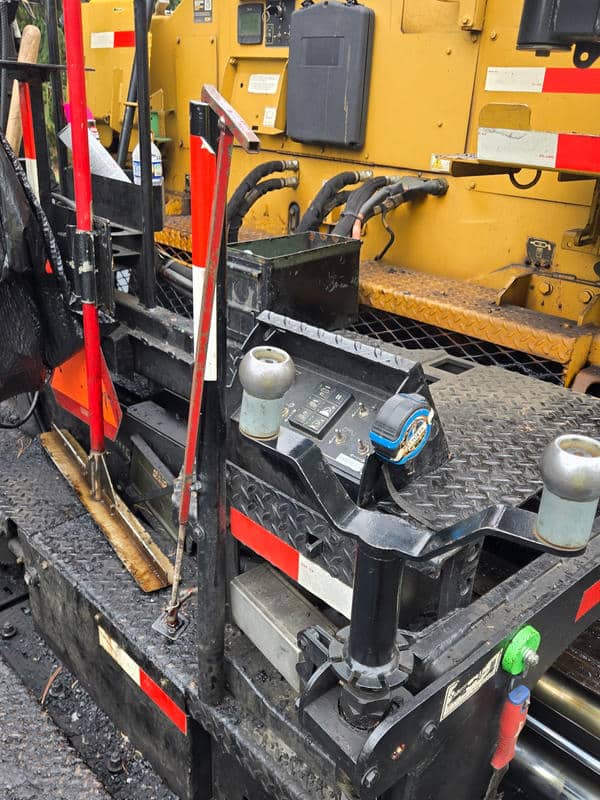
For this crew working in a small housing development, the measuring tape and depth gauge are kept close at hand with brackets they’ve installed on their 8-foot Weiler 385B paver. Photo courtesy of Ball
Straight Precision
Frank Foore, the proprietor of PaverLaser.com, formerly Asphalt Pokers, headquartered in Akron, Ohio, also came up with an aftermarket item to help the paving crew. He developed the asphalt paver laser for his own use in paving a consistent, straight line a few seasons ago. It’s a device that attaches to the asphalt paver to “point” out a line for the operator to follow.
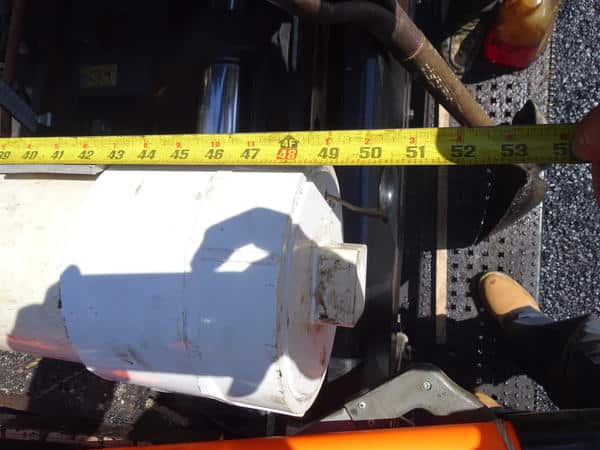
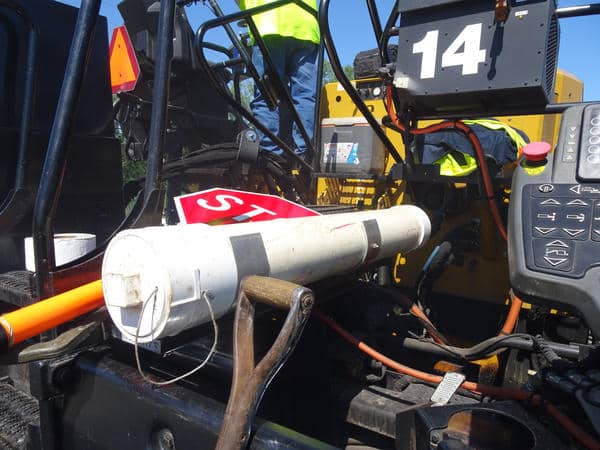
This PVC snorkel tube, with its cap tethered by a string, is about 4 feet long to house the smart levels. In these pictures, you can see how far it reaches beyond the paver deck, which doesn’t allow it to trip workers or get in the way of the screed operators. Both photos courtesy of Ball
“I made this for the paver to follow or else you’re painting lines all day,” Foore said. “We’ve had them for a couple years now.”
Each paver laser includes a 12-volt plug and a DC plug, so the crew can select how best to power it. The device also comes with either a magnetic mounting bracket or clamp-style mount, depending on which you need for your model of paver. It also helps to reduce trip hazards, contributing to a safer job site. It’s even equipped with a built-in cooling fan so it can handle the intense heat of paving operations.
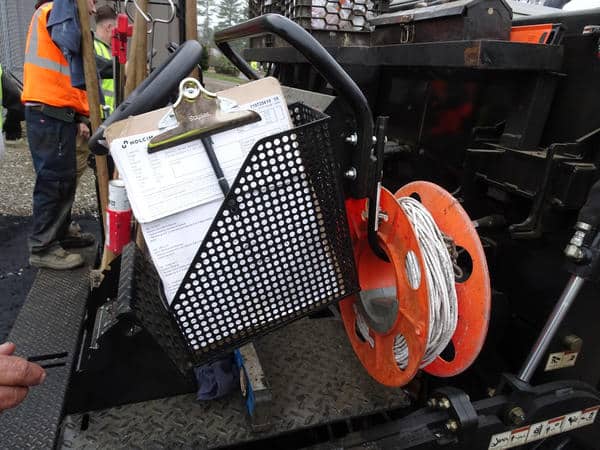
This left-hand screed operator pedestal includes modifications the T&K Asphalt Services Inc. crew in Whitman, Massachusetts, has made. They’ve added a basket to hold the work order and truck delivery slips. They’ve also attached a j-bracket where they keep the spool of string for lining out jobs. Photo courtesy of John Ball, Top Quality Paving & Training, Manchester, New Hampshire
Augment Your Precision
In the text to follow, we showcase some tried-and-true and new-to-you ideas for augmenting the paver on your job site. You probably have some ideas of your own to share with the industry. Maybe you have a photo of the brackets you’ve built to hold smart levels in place behind the tractor. Maybe you have a better way to cook lunch on the screed. Let’s see what kind of “better mousetrap” you’ve built to get a precise paving job.
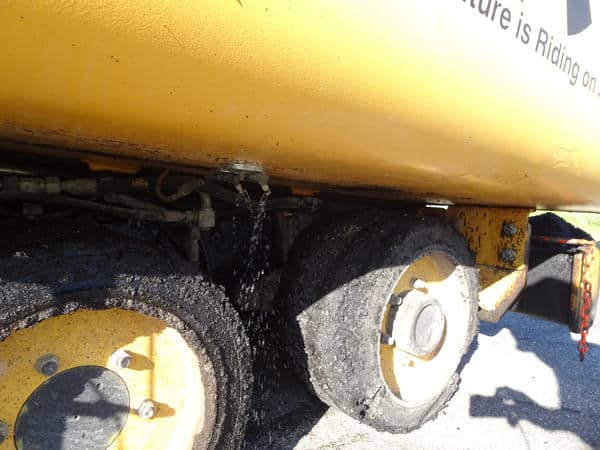
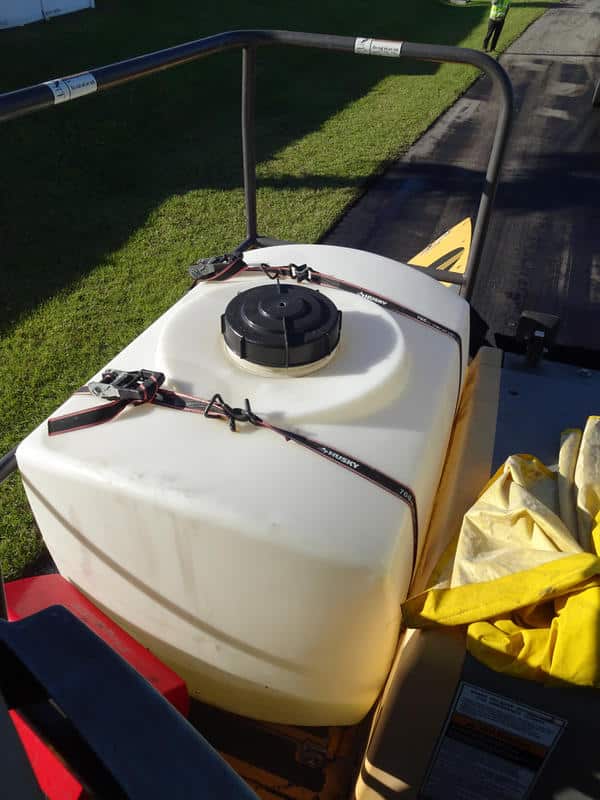
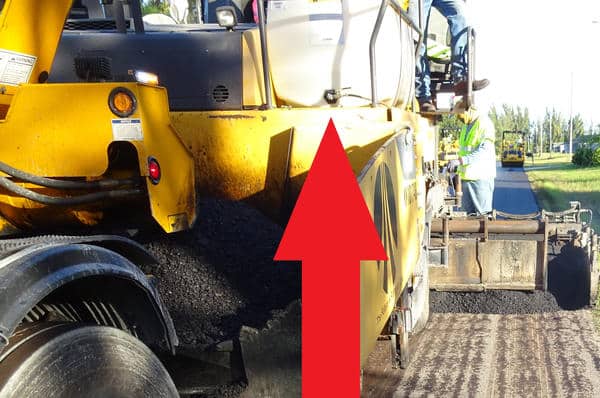
A plastic water tank holds 250 gallons of water with a small amount of dishwashing soap as a surfactant and nestles between the engine hood and safety railing. Husky nylon cables secure it in place on this Volvo 7170, rubber-tired paver. Typically, the steering tires would pick up tack and bring up mix. Laying a 7/8-inch mat means any pickup would be a problem. Using the spray system from a roller, the water is delivered via brass pipe, which is attached to 60-pound magnets on the underside of the hopper. The magnets saved the mechanic from drilling into the hopper or welding this setup together. Clamps hold the tubes. Notice the 30-degree angle of the nozzles direct the water onto the drive wheels only. For this job, you can see the Ajax Paving crew is using a shut-off valve on the hose coming out of the tank to ensure proper water control. The setup includes a pump. Photos courtesy of Ball