
Update Your Existing Batch Plant: Part 1
BY Sandy Lender
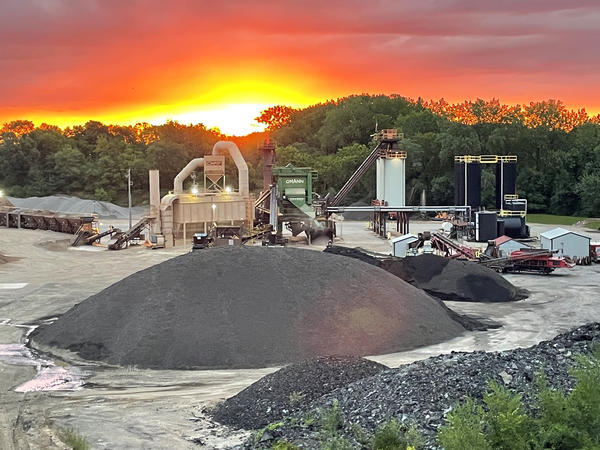
From components to controls, experts offer solutions to update the grandfathered batch plant for efficiency, RAP production, flexibility
Both batch and drum hot-mix asphalt (HMA) plants have their purposes in North America. Even the combination batch/drum plant, which you may have heard referred to as a dratch, has its advantages in certain markets. For those producers who have an older batch plant grandfathered into an area where disturbing the local regulatory authority could be a negative experience, making updates to run more efficiently or to run recycled content doesn’t have to be a frightening proposition.
While we will discuss upgrades that require alterations to your permit, there are actions you can take for efficiency that won’t require changes to your permit, such as performing routine maintenance and modernizing electrical components. Llew Williams, general manager, operations for Stansteel Hotmix Parts & Service, Louisville, Kentucky, spoke to this concept.
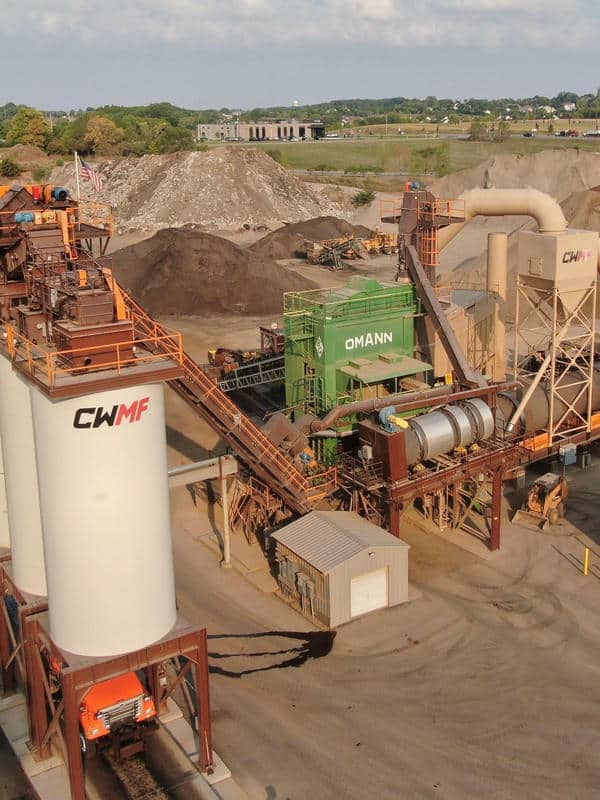
Over the past decade, Oman Brothers, Inc., St. Michaels, Minnesota, has added recycle capability when upgrading their long-time batch plant to a combination facility. This represents one of many upgrades producers can consider for bringing older batch infrastructure up to date. Photo courtesy of Motion Engineering
Consult Your Permit
“We would encourage owners to consult all applicable local, state and federal requirements before making modifications to their facilities,” Williams cautioned. “Every plant and jurisdiction is different. That said, many owners can realize meaningful improvements through maintenance, replacement of worn components, and operational optimization projects that improve reliability, consistency, and efficiency without significantly altering the fundamental operation of the plant.”
Some examples the Stansteel team listed include:
- Using the customers’ right to repair by replacing worn drag conveyor components, bucket elevator parts, flights, liners, bearings, bin level indicators, load cells, weighing systems, instrumentation, and other high-wear or serviceable items.
- Modernizing motor controls, VFDs and electrical components.
- Retrofitting individual plant components such as cold feed systems, AC pumping systems, silos or material handling equipment.
- Installing updated plant controls and data reporting capabilities.
Sraloong Construction Builds Thai Highways, with Help from Ammann EasyBatch Plant
“In many cases, these types of projects can extend the useful life of a batch plant while improving uptime, mix consistency and operator visibility into production,” Williams continued.
Then there are some changes that require alerting your regulatory agency, and are likely to be met with immediate approval, such as improving air quality with a more efficient dust collection system or burner. T.J. Young, the proprietor of T2ASCO LLC, Overland Park, Kansas, shared that you should double-check what you want to change with the existing permit’s fine print.
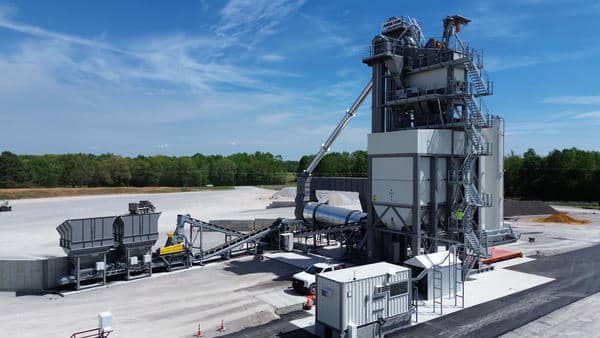
The Ammann UniBatch tower is designed to drop onto your existing footprint without moving your foundation, your permits or your production schedule, according to the manufacturer. Photo courtesy of Ammann Group
“Generally, you should be very careful of making any changes in your plant involving your burner, your exhaust fan, your dust collector or your drier without checking your permit rules first; unless it is a direct replacement as to size, make and model, even when installing more efficient equipment. If you find your equipment is listed in specificity, it is wise to let the regulatory people know that you are making changes.
“This also includes changing fuels,” Young continued. “When making changes to equipment or fuel source that is more efficient from a dust collection or emission standpoint, changes are typically welcomed.”
Catherine Sutton-Choate, director of product compliance for Astec Industries, Chattanooga, also offered words of reassurance. You want to start with full transparency and a review of the existing permit, but you’re communicating the benefit for the community and environment.
“As for replacing a burner, it is never okay to not tell the regulatory agency,” Sutton-Choate said. “You must keep them informed of any changes to the main source of emissions at a facility. However, this does not mean that the permit will be opened or revised in any way. As long as the burner has the same capacity as the one being replaced and the anticipated emissions are the same or less, the agency will merely document the change. This is more critical in some states than it is in others.
“As for changing fuels, it really depends on what fuels are included in the existing permit,” she continued. “If multiple fuels are listed, the plant can switch back and forth as needed. The only requirement is that they maintain the appropriate documentation per the permit. However, they cannot switch to a fuel that is not specifically listed in the permit without contacting the permitting agency to obtain approval first. I worked on several permit revisions years ago for customers to add the ability to combust recycled oils to their permit.”
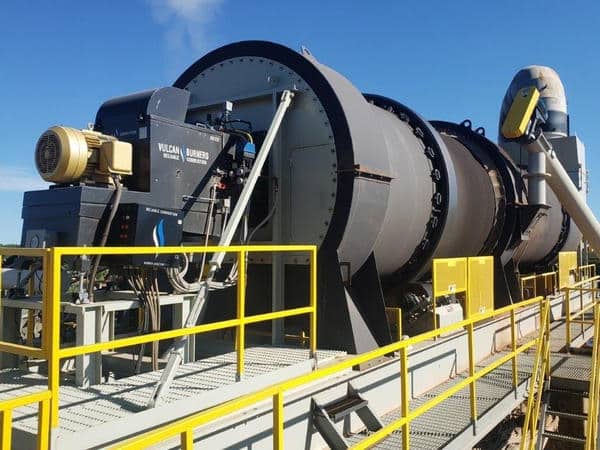
Converting to a newer, more efficient burner should be seen as an environmental improvement and will likely be met with approval from the permitting authority. Photo courtesy of Reliable Asphalt Products
Add RAP Systems
The addition of recycled material that Sutton-Choate references is a common theme for batch plant owners. Specifically, owners are often interested in adding the ability to run reclaimed asphalt pavement (RAP), which the original batch towers weren’t engineered to do. Jeff Meeker, CEO of Meeker Equipment Company, Belleville, Pennsylvania, and David Garrett, regional sales manager for Meeker, spoke of the history behind adding RAP systems to batch plants over the years and echoed Sutton-Choate’s optimism.
“Most batch plants were not designed to run RAP when built,” Garrett said.
The Meeker solution is the RAP Pak, which controls the flow of the RAP into the tower to minimize steam explosion. “We were delivering 15% RAP back when the systems were designed; now plants call for higher percentages and, depending on the customization, the system can do 40% in some towers,” Meeker said. “Each plant is different.”
The challenge of material temperature differentials is one the industry had to address when it came to introducing RAP to the batching system. We all recognize that RAP is prized not only because it’s a great recycling story, but also because it replaces a percentage of costly virgin materials. It contains residual asphalt binder. It also contains moisture. Both the binder and moisture contribute to blue smoke and steam concerns when added to the batch mixer, thus OEMs have assisted producers in finding custom solutions to introducing the material.
For Ammann Group, Langenthal, Switzerland, this is answered in the manufacturer’s UniBatch tower. A spokesperson for the OEM provided: “RAP usage is now easier than ever.” With the Unibatch tower, producers add RAP to the mix design via Ammann’s RAC system. “This cold addition of RAP…can be integrated into any layout, easily allowing up to 30% RAP.” For higher percentages of RAP in the mix, the OEM can add its RAH50 drum to the Unibatch tower to preheat the RAP before introduction.
“It’s been an evolution,” Garrett concurred. “When we started using RAP the goal was often 10% and we would weigh it in the aggregate weigh hopper. In order to incorporate the higher percentages expected today, we use a stand-alone weigh hopper for the RAP and enter it directly into the mixer.”
The McCrossan Process | “From the historical perspective, one of the first people to use RAP on a batch plant was C. S. McCrossan in Minnesota. This was a 10,000-pound Stansteel batch plant that was producing in a major metropolitan location. With the introduction of the milling machines and maintaining many roads in the area, they were accumulating RAP. Why not incorporate it? This system utilized a recycle bin feeding to a long belt conveyor that elevated the material up to the batch tower level, then the material was fed down the chute into the weigh hopper and utilized just like weighing up another material in the batching process. They would weigh up the various materials from each hot bin and then weigh up the RAP, dump in the pugmill and mix it up. There was a lot of experimentation, but a tremendous amount of success.”—Llew Williams
Michael Petrie, the president of Motion Engineering, Caledonia, Wisconsin, shared how a customer in St. Michaels, Minnesota—Omann Brothers, Inc.—added recycle capability when upgrading a long-time batch plant to a combination facility. “Omann Brothers introduced RAP into their mix production by having a RAP collar on their aggregate dryer and running a two-conveyor system to be able to add RAP or RAS.”
Sutton-Choate reminded readers of another vital component: “I have personally worked on batch plant scavenge systems, which are a necessity to run appreciable amounts of RAP through a tower based on most existing configurations.”
Whichever configuration turns out to be the most advantageous for your batch plant depends upon your specific plant. Mike Raasch, controls engineer at WEM Automation, Pewaukee, Wisconsin, stated, “The highest-priority upgrade will vary by plant.” He’s speaking not only in terms of adding RAP or changing a burner, but in terms of updating the controls for all of the above.
“A system with obsolete controls but accurate scales has different needs from a plant with a supportable PLC and unreliable weighing equipment,” Raasch continued. “The best starting point is a field assessment that identifies the systems creating the greatest production and support risk.”
To assist in receiving approval for a change in the batch plant’s operation, Garrett suggested telling the township or regulatory agency how the new feature is the best or newest available technology, how the new component offers improved heat efficiency, how the change is facilitating the use of recycle, and so on. Communication and full transparency are key, especially when our industry has new technology to improve aging infrastructure. Let’s discuss some more of those options.
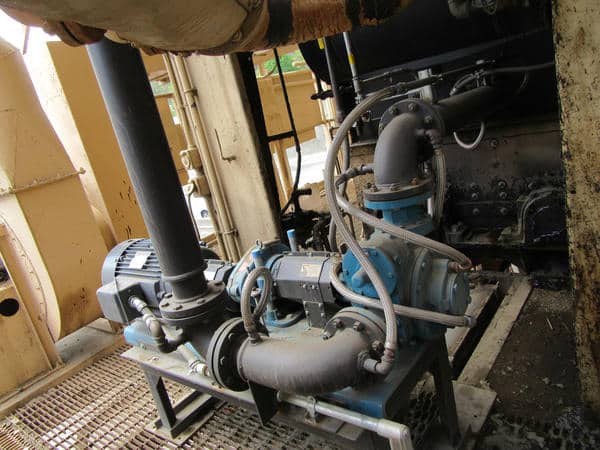
One of the options for updating the batch plant is to add warm-mix asphalt (WMA) and other specialty mix production. A dynamic foaming system allows the producer to meter and blend water and liquid asphalt cement (AC), creating a foamed product that enhances the coating of aggregates at lower production temperatures. This reduces fuel consumption and reduces the potential for blue smoke. Photo courtesy of Stansteel Hotmix Parts & Service
Modernize the Older Batch
Williams shared that modernizing the older batch plant could be as simple as finding the right combination of replacement parts, controls upgrades, material handling improvements, combustion technology and engineering support to extend plant life and position owners for future production demands.
“Many batch plants operating today still have significant useful life remaining,” Williams said. “Owners are increasingly focused on strategic modernization rather than wholesale replacement. Whether the objective is improved reliability, higher production rates, increased RAP utilization, better automation or lower operating costs, customized upgrades often provide a highly attractive return on investment.”
The team at Ammann shared, “Plants built in the 1970s and ’80s are still standing across North America, but the tower—the screens, hot bins, weigh systems and control—is the part that’s fallen behind. Parts get harder to source. Uptime gets harder to guarantee. There’s no sound way of utilizing RAP. Every year, the gap to modern output and emissions standards gets wider. The UniBatch tower is built to drop onto that same footprint. It’s modular by design…[and] also built to interface cleanly with plant components from other manufacturers, so a full rebuild isn’t the only path to modern technology.”
For owners who seek the more complete makeover, the framework is already there. Mike Mauzy, sales manager for Reliable Asphalt Products Inc., Shelbyville, Kentucky, spoke of converting the batch plant to a combo batch/drum. He mentioned this option as a major upgrade that would likely require permitting, no matter what state or municipality you’re working in, “but the benefits far outweigh the headache of permitting.”
For this type of upgrade, Mauzy suggested adding a mixing drum while keeping the batch tower so you can use the batching capabilities. Or you could remove the batch tower and use the existing elevator to feed an elevated mixing drum. “In either case, this major overhaul, which has been performed hundreds of times over the past 40 years, requires updated controls, screening equipment, belt scales, liquid metering upgrades, etc., to convert to drum mix plant capabilities,” Mauzy said. “Oftentimes, updated larger dryers, baghouses and increased silo capacity accompany these improvements. Utilizing existing equipment greatly reduces the investment over purchase of a new plant and likely reduces the permitting exposure while accomplishing some of the same benefits, like increased RAP usage, increased production, reduced emissions, etc.”
Petrie explained how Omann Brothers accomplished this task. Jim Omann had been a long-time batch plant owner, but within the last decade, had made upgrades to the existing batch plant that now allow the introduction of continuous mix production while switching between batch and continuous production as needed.
“It is absolutely possible to modernize an existing batch plant without replacing the entire plant,” Petrie said. “Rather than scrapping a functioning batch plant, owners can strategically upgrade controls, automation and production capabilities while extending the plant’s lifespan. Jim’s operation is a good example of converting a traditional batch plant to a flexible system capable of both continuous (drum) production and batch production, which has significantly reduced wear on the equipment while maintaining the ability to produce specialty mixes on demand. He upgraded his controls and automation first, allowing for expansion for future growth, then started upgrading equipment on the plant to avoid using the batch plant unless absolutely necessary for the specialty mix production, minimizing waste and wear on equipment.”
One of the areas batch plant owners might overlook when making an upgrade like this is the screen deck capacity. Petrie explained what Omann Brothers did.
“If looking to integrate an operation that involves switching from batch production to continuous mix, it is important to evaluate the screen deck,” Petrie said. “The screen deck often becomes the biggest production bottleneck. Smaller screen decks begin creating carryover once production exceeds their capacity. As an example, at Jim’s plant, their screen deck is limited to approximately 120 tons per hour; above that, carryover occurs. Also, efficiency drops and production suffers.
“Another thing to consider is bypassing the screen deck,” Petrie continued. “What Omann Brothers did is maintain their original screen deck, and extend their hot elevator to install a bypass that routes aggregate directly into the mixing drum. They then use a flap door/diverter to switch between continuous drum production and traditional batch production. This allows them tremendous flexibility. It reduces waste and significantly reduces wear parts, which are one of the costliest items for a manufacturer.”
Williams detailed this combination concept as the next “phase” in the history of accommodating RAP in batch plant production. Modifying the plant to have the best of both worlds allows the producer to keep the batch tower and the batch process for special mix designs and custom requirements while installing continuous drum mix capability that facilitates RAP introduction. Not every facility is a candidate for this combination.
“Each plant was individually evaluated and custom engineered to be able to operate still as a batch plant and as a continuous drum mixing type plant,” Williams said. “In this arrangement, all of the process had to be set up just like a drum plant with variable speed drives, belt scales, and scalping screens in the process and a comprehensive control system to alternate between running batch tower and the continuous drum mix process.”
Given the efficiencies of newer componentry, the producer may be pleasantly surprised by the environmental “wins” he can offer to his region. The burners of today have engineering advantages that air quality boards prefer to the burners of the 1970s. But not every region is looking for the same thing.
“Each state has its own permit regulations for the air operating permit for the plant,” Young said. “In fact, it is not always called an air operating permit. The state must follow federal guidelines, and can be more stringent than the guidelines, but not more lenient…You really have to know your local requirements.”
Mauzy spoke of this as it relates to the burner, specifically. “I would not carte blanche state that changing a burner requires a permit. That is likely the case. I believe in many cases, improved emissions, improved efficiency and reduced noise make the permitting process simpler. However, in some cases, as long as you are not increasing BTU or plant productivity, I am not certain that a new permit is required. In any event, converting to a newer, more efficient burner, especially if converting from an open air burner to a totally enclosed burner, should be seen as a major environmental improvement.”
It’s not just the addition of RAP capability or a more fuel-efficient burner that will delight the environmental boards. Also consider dynamic foaming technologies, which some OEMs call mechanical. Williams spelled out the exact reasons air quality authorities would look favorably upon this update to your facility: “By mechanically blending precisely metered water with liquid asphalt, the foaming process dramatically expands the asphalt binder and enhances coating of aggregates, RAP, RAS, and fines, creating a more homogeneous mix,” Williams said. “This improved blending allows producers to lower mix temperatures, reducing fuel consumption while helping cut blue smoke emissions and odors at the plant.”
A common theme from sources showed batch plant upgrades not only increasing efficiency, but doing so for the purpose of increasing production. Many upgrades and additional systems designed for the older batch plants are bringing those plants closer to the combination concept, and we’ll look more closely at that in part two.
No matter which upgrades you make, ensure all components and systems continue to operate cohesively. As hinted throughout this article, updating the electronics and controls is an important step for the batch plant owner, and that will be covered in depth in part two of this series in the October edition.
Screen for Upgrades
If you plan to introduce continuous mix production at your batch plant facility to allow yourself flexibility between both, don’t forget to assess the screen deck. You may need to upgrade it to accommodate continuous mix production.
The screen deck often becomes the biggest production bottleneck. Smaller screen decks begin creating carryover once production exceeds their capacity. Consider this example from Omann Brothers. Their screen deck was limited to approximately 120 TPH. If capacity exceeded 120 TPH, carryover would occur, efficiency would drop and production would suffer.
If you can’t upgrade the screen deck, one solution is to bypass it. This is what Omann Brothers did. They maintained their original screen deck and extended the hot elevator to install a bypass that routes aggregate directly into the mixing drum. They then use a flap door/diverter to switch between continuous drum production and traditional batch production. This allows them flexibility while reducing waste and reducing wear.
Modernize Your Batches
Sources offered a number of upgrades batch plant owners/operators can consider for bringing older facilities up to date.
For simple maintenance and one-to-one component replacement, owners have the right to repair and don’t have to alert regulatory authorities to their activities. But when it comes to upgrading or upscaling components, adding capacity, switching burner fuels or changing hours of operation, the proper governing bodies must be notified. Make sure you have a competent person assigned to assess the permit and assist in filing the proper paperwork. Then consider which of these upgrades can help you extend the life and efficiency of your older batch plant.
- Replace worn components and high-wear items such as drag conveyor and bucket elevator parts, bearings, bin level indicators, load cells, and the like.
- Update/recalibrate weigh scales.
- Modernize motor controls and electrical components.
- Add variable frequency drives.
- Retrofit individual components such as cold feed systems and AC pumping systems.
- Add a storage silo as well as material handling/transfer equipment.
- Install updated plant controls and data reporting capabilities.
- Upgrade to a modern, LoNOx or Ultra LoNOx burner.
- Upgrade your exhaust fan and add a VFD.
- Update your dust collector.
- Upgrade your dryer/dryer flighting
- Incorporate modern drum control systems to optimize drying efficiency.
- Assess your screen deck’s capacity and consider bypass options.
- Consider adding warm-mix asphalt technologies, including dynamic foaming systems.
- Consider an external RAP or another RAP system to facilitate recycle.
- Update obsolete relay logic or an unsupported PLC architecture.
- Install blue smoke scavenging systems around the loadout area.
- What would you add to this list? Share online!
Upgrade for RAP
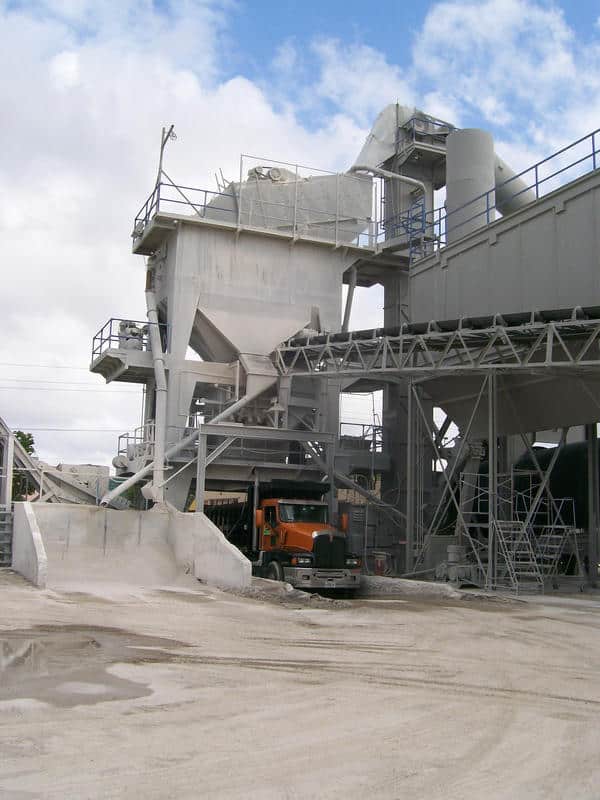
BEFORE: This belt conveyor was feeding 5% RAP directly to the weigh hopper.
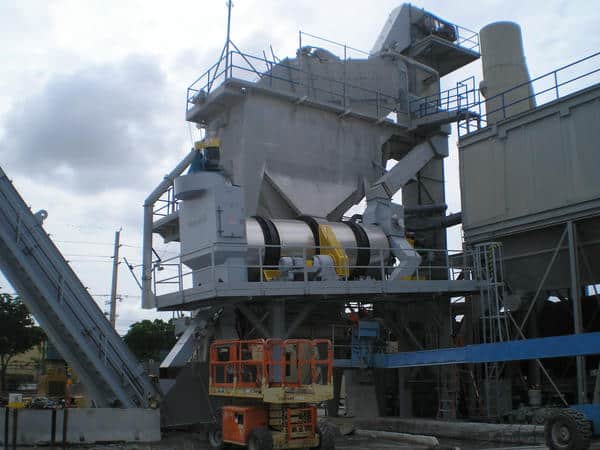
AFTER: Upgrading with a custom rotary mixer allows more than 40% RAP.
Both photos courtesy of Stansteel Hotmix Parts & Service
Ask the Experts
The experts who took the time to contribute to this article ascribe to The Asphalt Pro theory that all boats rise with a rising tide. They have years of experience to share and can be reached:
Kiel Stead at Ammann Group NA | (407) 634-7703, Kiel.Stead@ammann.com
Catherine Sutton-Choate at Astec Industries | (423) 618-9545, csutton@astecindustries.com
Jeff Meeker at Meeker Equipment | (215) 828-2651, jmeeker@meekerequipment.com
David Garrett at Meeker Equipment | (888) 333-0323, davidgarrett@meekerequipment.com
Michael Petrie at Motion Engineering | (414) 510-6097, mike@motionengineering.net
Mike Mauzy at Reliable Asphalt Products | (502) 529-9043, M.Mauzy@ReliableAsphalt.com
Llew Williams at Stansteel Hotmix Parts & Service | (502) 860-2997, lwilliams@stansteel.com
T.J. Young at T2ASCO LLC | (913)-634-4967, tjyoung2@att.net
Mike Raasch at WEM Automation | mraasch@wemautomation.com