Increase Tons in 2026 with Strategic Plant Tech and Pre-Checks
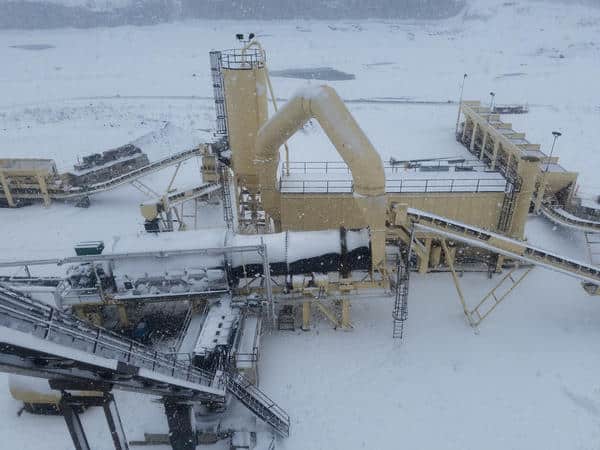
Get your winter plant upgrades and spring pre-check list to increase 2026’s production success

January is the right time of year for most North American asphalt producers to handle updates and upgrades at the hot-mix asphalt (HMA) plant. Maintenance activities that were too cumbersome to schedule during the height of construction season when a shutdown would mean a costly delay to production can be executed now.
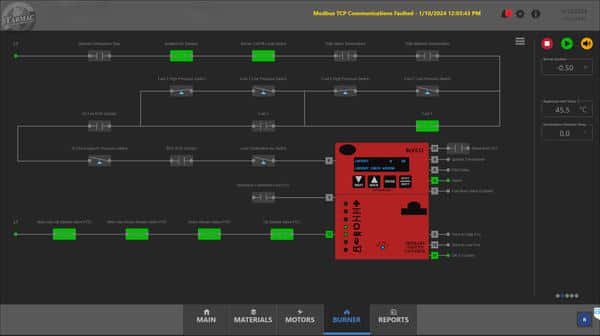
Here’s an example of the limit stream on a burner controller and the self-diagnosis screen immediately showing the operator a failed interlock. This screen shows the plant operator the limits that must be met before the burner can function. Photo courtesy of Tarmac International

Five original equipment manufacturers (OEMs) and plant service providers took time prior to seasonal shutdown to offer their top tips for making the most of your winter schedule. Starting with ideas for upgrading to enhance your 2026 production, these gentlemen offer non-branded advice you could implement before season startup. They also dive into the top maintenance issues you should be watching out for in today’s asphalt mix production climate.

“A plant dry run not only verifies equipment’s operational capacity but gives a team a baseline for typical plant noises and vibrations they can expect during operation. This gives the team a head start on keying in on new noises or smells that may indicate looming issues.”—Ted Hope

The 2026 Pre-Checklist for Your Plant

Check and Control the Burner

More than one source wanted to remind asphalt professionals of the burner at the heart of your HMA plant. Terry Elbert of Commercial Asphalt Plant Services, Minneapolis, Minnesota, suggested inspecting and performing maintenance on the burners prior to spring startup.

“Both the hot oil heater burner and rotary dryer burner have fans that suck in dust throughout the year,” Elbert said. “This dust can collect in and on areas such as impellers, dampers, pressure switches and lines, pilot valves, ignitors, and scanners. Buildup of debris on dampers can affect air-fuel ratios, resulting in inefficiency. Buildup on impellers can cause balance issues, resulting in premature bearing failure. Buildup of debris in pressure switch lines, ignitors and pilot valves/plumbing can result in the dreaded misfire. Just a little cleaning in these areas can save you a lot of trouble later.

“It is also a good idea to test burner safeties at this time,” he continued. He cautioned that some burners in the field might have safety switches that have failed or weren’t wired or adjusted properly.

Make Plans for Plant Maintenance this Winter

But don’t stop there. “While you’re at it, have your combustion gases analyzed. This will tell you if you are burning efficiently throughout the firing range. Sometimes small air-fuel adjustments can result in big savings.”

Ron Heap, the president of Tarmac International, Inc., Kansas City, Missouri, spoke of investing in burner control technology for remote monitoring and troubleshooting. He started with a financial scenario.

“Let’s say mid-year, a burner goes down and the plant cannot make repairs and bring the dryer back online,” Heap theorized. “It will cost $2,000 to get a burner tech to the site and $2,000 for him to return home. If there is one day of work, that brings the cost to $6,000. Add to that the lost revenue from being down. My suggestion is to invest in a burner control that allows the operator to see the instrument limit stream that caused the failure and allow a serviceman to get online and see the burner, negative pressure at the burner faceplate, and the ID fan function. 90% of the onsite service calls can now be via a phone call and an internet connection to the burner control.”
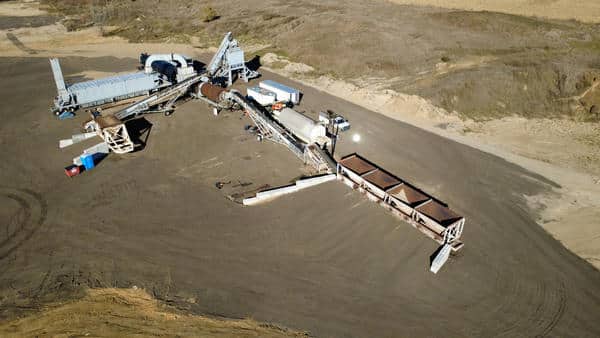
This plant was retrofitted in fall 2025, with Commercial Asphalt Plant Services repairing the components and making the connection points for the customer. Terry Elbert explained his team designed the layout to set the tanks at least 300 feet from a creek and to facilitate a northern exit road due to a blind intersection on the south side of the plant site. These are the types of overhauls and big projects you may be saving for winter downtime. Photo courtesy of CAPS

Iván Fernández Hevia, international sales director of Intrame, Valladolid, Spain, also highlighted the importance of investing in various controls, stating this will depend heavily on the specific plant being evaluated.

“Generally speaking, for an older plant, I would suggest upgrading the controls and automation systems, including a full set of sensors,” Fernández Hevia shared. “This allows operators to monitor and control every parameter, generate comprehensive reports, and ultimately reduce operating costs while detecting potential failures in advance.”

Does it snow on your plant? “For customers in cold regions with snow during the winter such as Greenland, Switzerland, United States and Poland, we usually recommend covering all the motors, allowing ventilation,” Intrame’s Fernández Hevia shared. “When snow slowly melts, moisture can get inside and damage the motors, so this helps prevent that.”

How Lubrication Strategies Cut Costs at the Plant

Analyze the Parts

“Each year it is required that a NFPA® (National Fire Protection Association) test be performed on the burner and the fuel train,” Heap said. “This can check the double block valves for leaks, which can reduce the risk of an explosion if both stay open when they should be closed. The review will also point out other instruments that have failed. Finally, the burner can be tuned for lower CO which saves money on fuel and reduces emissions of CO to the atmosphere.”

Michael Petrie, the president of Motion Engineering, Caledonia, Wisconsin, also addressed analyzing the burner’s efficiency prior to season startup.

“I recommend firing up the burner, lighting it, and cycling it up and down while making some test mix if possible,” Petrie shared. “Be sure to use an analyzer during this process as it is the only way to confirm proper fuel efficiency and reliable burner performance. Running test mix helps confirm that every component is ready for a smooth, productive asphalt season.”

Winter Asphalt Plant Greasing: What to Know and Avoid

The team at Astec Industries, Chattanooga, Tennessee, agreed with the importance of using an analyzer to double-check burner and fuel efficiency. They also recommended the use of another type of analyzer all over the plant. Ted Hope, the director of service at Astec, suggested plant personnel perform a thermographic electrical inspection.

“A thermographic electrical inspection helps reveal electrical issues with the equipment such as: Loose connections, which can be from installation, overtime due to vibrations, or even thermal cycling; undersized components; and failing or damaged breakers and starters. These catches early in the season can help avoid costly downtime and last-minute repairs. A thermographic electrical inspection can be done with just the equipment running but will reveal the best results under a load.

“The start of a season would be a great time to do an inspection,” Hope continued. “These inspections can help operators across all regions and plant sizes find and repair issues before they create downtime. It is always less costly to do the repairs on your schedule than the equipment’s.”

Get Clean Production Next Season

The inspection isn’t something your plant personnel will necessarily do on their own. Hope explained: “A thermographic electrical inspection requires an infrared thermal camera (major brands being FLIR or Fluke), but the inspection is almost always sold as a service. The reason for this is due to certifications and training the inspector must have to provide an adequate report and results. There are many providers across the world that provide this service.”

Along with investing in a thermographic electrical inspection, plant personnel should consider investing in an inline flow meter on the main gas line to track fuel consumption.

Petrie suggested this technology “provides precise tracking of fuel consumption, which is critical for optimizing plant efficiency. As the industry moves toward transparency and accountability of a plant’s carbon footprint, accurate tracking will likely at some point no longer be optional. This technology is one way to start collecting meaningful data to understand how your asphalt plant is performing to benchmark energy use. I think that in time, regulatory agencies will require documentation of fuel consumption per ton of asphalt produced. Adopting this technology early would allow for a strategic advantage.”
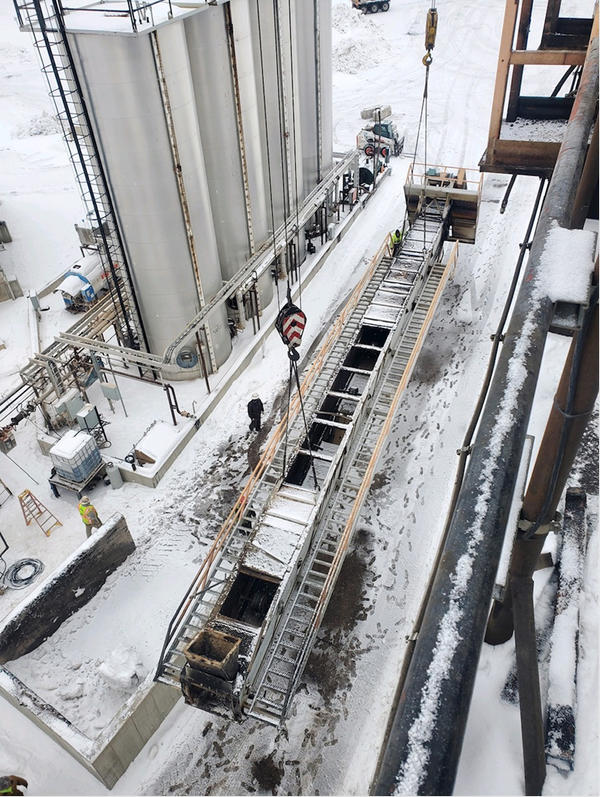
Replacing the floor of the drag slat conveyor is one of the large projects you may have saved for winter downtime. Photo courtesy of Motion Engineering

Get Strategic

Elbert suggested another technology that can add a strategic advantage as we head into 2026.

“As far as adding a new technology, my first choice as an operator would be license plate identification for trucks coming onto the scale,” Elbert said. “Information for that truck can be saved and auto populated on the scale ticket. This may not make sense for a smaller operation that utilizes the same small group of trucks but, for a larger operation selling multiple mix types to multiple customers, this can free up unnecessary CB chatter, reduce ticket errors and save data entry time. Any technology that allows your operator more time to focus on the plant will pay dividends.”

It will also pay dividends to run some strategic tests during the off season when performing maintenance doesn’t require an interruption in production.

“Run a rotational test on veiling,” Heap suggested. “Here you would run a plug of material into the drying section and watch the veil as it moves through the drying zone. Misadjusted drying flights can be easily seen, and a movie taken with a phone. Doing [such testing] improves safety and reduces dollars spent.”

Mix-and-Match Asphalt Plants

“Complete a dry run before starting up,” Astec’s team suggested.  “A trial run of the equipment can give the team on site time to test all the motors, belts and rotating steel—all before it is used to make asphalt. A plant dry run not only verifies equipment’s operational capacity but gives a team a baseline for typical plant noises and vibrations they can expect during operation. This gives the team a head start on keying in on new noises or smells that may indicate looming issues.”

Petrie recommended getting the tank farm hot and circulating liquid asphalt cement (AC) throughout the system.

“Circulation of the hot oil system is paramount to ensure that the meter pump is functioning properly and that there is proper flow without restriction in the system,” Petrie said. “It is important to check that valves and pumps are working properly and there are no blockages throughout the system. If this is not checked, it could lead to a multitude of problems including changing out valves and pumps, replacing or cleaning strainers, flow problems, and leaks.”

“This technology is one way to start collecting meaningful data to understand how your asphalt plant is performing to benchmark energy use.”—Michael Petrie
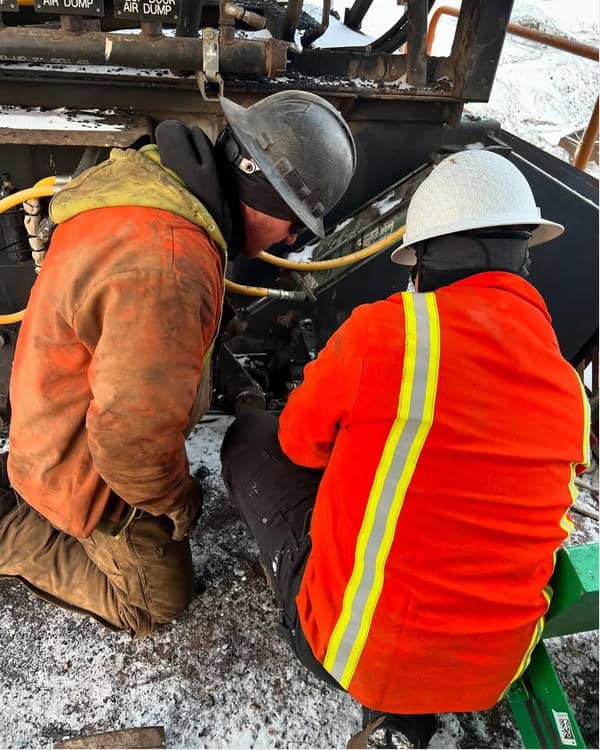
These workers are completing a bearing and pin inspection on batcher gates. Photo courtesy of Motion Engineering

Back to Basics

Along with the guidance offered here, don’t forget the foundational concepts of good plant operation. If your plant has been running for a few years, the winter downtime is the right time to get back to basics with maintenance and inspection.

“I would encourage them to inspect the entire plant for buildup,” Elbert said. “Inspect the baghouse for buildup. Baghouses tend to condensate more at the end of the season as temperatures drop; this can lead to ‘mudding’ on the baghouse walls or on the auger grates if you have them. You will want to clean this so it doesn’t continue to build.

“Inspect the ductwork between the dryer and baghouse,” he continued. “Oftentimes, dust can settle out and build up in the bottom of the ductwork. This causes higher velocity and premature wear. Clean or chisel the recycle scoops and the drum mixing area. Check the silos. Buildup on the cones will not go away when you put hot mix on top of it; it will only continue to grow. Start the season out free of buildup throughout your plant.”

Top Plant Fixes to Plan for Winter Downtime

Hope also spoke of general housekeeping. “A clean and organized plant site greatly enhances the chance of catching issues before they turn into lost production time,” he shared. “Clean equipment can show leaks potentially long before the seal or bearing completely fails. This gives the plant personnel time to get the item replaced before its inevitable failure. This extends well beyond mechanical as a clean electrical cabinet or panel is not only safer but prevents potential issues caused by dust and greatly decreases troubleshooting time if an issue arises.”

By using this winter’s downtime to install meaningful upgrades and prepare your pre-startup checklist, you’re strategically planning for a prosperous 2026 and guarding against unpleasant surprises in the spring. At the end of the winter day, the guidance and ideas mentioned above are the top tips to help enhance your bottom line.

Resources for More Information

The original equipment manufacturers (OEMs) and service providers who responded to questions for this article took time to share their expertise with the readers of AsphaltPro and provided excellent information. To address additional questions you might have, reach out to them, or your specific OEM, directly.

Astec Industries

Ted Hope

thope@astecindustries.com

Office (423) 827-1591

Commercial Asphalt Plant Services

Terry Elbert

Terry@caplantservices.com

Office (763) 910-0051

Intrame

Iván Fernández Hevia

ivan.fernandez@intrame.com

Office (954) 865-9627

Motion Engineering

Michael Petrie

Mike@motionengineering.net

Office (414) 510-6097

Tarmac International

Ron Heap

Rheap@tarmacinc.com

Office (816) 220-0700
CRH’s Sustainable Practices Give Preferred Results

Preferred Materials, A CRH Company exemplifies circularity with award-winning I-75 project

As CRH’s footprint has grown in the United States, the operating companies in its portfolio have brought a wealth of ideas and innovations to the multinational group. The team from Florida highlighted herein has added a host of quality paving awards alongside its contributions. President of CRH’s Americas Materials business, Jason Jackson, sat down with AsphaltPro to discuss Preferred Materials Inc., A CRH Company, Tampa, and the overall progress award-winning projects help bring to light.

The Dale Mabry Highway project was a resurfacing of a major thoroughfare with numerous businesses, side streets, signalized intersections, median turn lanes, acceleration and deceleration lanes, and high traffic count.

From Aug. 4, 2022, to July 21, 2023, the Preferred Materials team handled a range of technical and logistical challenges to repave the Dale Mabry Highway (State Road 597) in Tampa. The resurfacing of the busy urban corridor handling traffic to and from Tampa International Airport demanded coordination with MacDill Air Force Base, the Raymond James Stadium® ongoing event schedule, a dense network of local businesses, as well as the Florida Department of Transportation (FDOT). In the end, Preferred Materials achieved an average International Roughness Index (IRI) of 32 on this project and was awarded the 2024 A.P. Bolton Award and Florida’s Smoothest Pavement Award from the Asphalt Contractors Association of Florida, and FDOT’s 2023 Best in Construction Award.

Let’s examine the Dale Mabry project and the mindset that brings innovation and excellence to individual CRH companies.

Within its Americas Materials business alone, CRH has 1,660 locations and about 29,000 employees. CRH is comprised of hundreds of established local operating companies. Notable brands include MidSouth Aggregates, Preferred Materials, Tilcon, Mulzer Crushed Stone, Texas Materials, Staker Parson, Dufferin Construction, Callanan Industries and Bodean. According to the company’s 2024 Annual Report, CRH’s Americas Materials Solutions business reported $16bn in revenue in 2024, achieved an adjusted EBITDA of $3.7bn, up 22% year-over-year, with an adjusted EBITDA margin of 23.2%.

Meet a Woman of Aggregates: Capital Materials’ Ericka Baxter

Opening the AI Envelope

One of the ways CRH is innovating for the future is through leveraging digital technology, which the company sees as a key enabler of enhancing the way it does business and delivers for customers. This includes the exploration and adoption of Artificial Intelligence (AI).

“When we look at AI or we look at technology and innovation, we do that with an enterprise lens,” Jackson said. “When we think about innovation, it’s important that we leverage our scale.”

He listed asphalt, aggregates, ready mixed concrete, below-grade infrastructure solutions, water management and other elements of the construction industry where piloting AI technologies offer exciting options. The size and scale of the company means it’s well positioned to explore AI’s benefits.

One of the ways CRH is optimizing mix design is by focusing on next-generation surfaces to stand up to extreme temperatures, heavy traffic weights and erosion. They’re designing specialty asphalt mixes that help reduce the road’s impact on the environment.

“CRH has been in this space in roads, in water, in aggregates and cementitious materials for many decades,” Jackson said. “We have a massive amount of expertise and data and so the big question that we challenge our teams and ourselves with is how do we take all that expertise that may exist in thousands of locations and leverage technology as a whole? Or, more specifically, how do we push the envelope to drive improvements utilizing technology?”

One of the areas where the company is leveraging that depth of knowledge is in mix design. “We’ve got a few things going on that are very exciting,” Jackson said. “Number one is around mix optimization.”

How to Make Your Plant Efficient, Part 1

With the decades of experience and thousands of locations, Jackson believes CRH stands out for the company’s ability to deliver both performance and quality through its approach to materials science. “This includes creating new attributes for products and materials that have been in place for many years. So, it’s about evolution, which is something we take very seriously in and around materials science.

“When we bring new businesses in, we’re consistently learning from folks that join our company through acquisition,” he continued. “We want to leverage what they’re working on, what their knowledge base is and when we combine that at scale, we have the opportunity to do wonderful things in and around materials science.

A Preferred Materials asphalt plant produced HMA for the Dale Mabry Highway project. The paving crew achieved an IRI of 32 placing and compacting it.

“We make sure to bring these teams together to really reimagine the art of the possible. When you think about new mixes—and that goes for asphalt mixes in particular—we’ve probably made the most significant strides in those areas by bringing those experienced, localized teams together to leverage high levels of technical knowledge.”

It’s not only CRH operating companies innovating, as Jackson mentions above. The company welcomes and encourages outside collaboration for problem-solving too.

“When you think CRH, we’re the largest building materials player in the market,” Jackson said. “And while our reach is international, we’re deeply committed to operating at a very local level.”

Consider how climate needs and geography influence state specs. Not only is this the foundation for making our industry’s asphalt mix designs more resilient, but it also gives companies like CRH the opportunity to work on solutions to local challenges.

Where You Process Your RAP Affects Your EPD

“Our local folks are very engaged in their local markets,” Jackson said. At the corporate level, CRH can take the connected portfolio of knowledge to prepare solutions “at scale,” but it takes boots on the ground at the local level to know where different solutions are best applied.

“CRH leverages its scale and connectivity to deploy innovation—whether it’s a higher percentage of RAP or innovative mixes with recycled shingles. But importantly, there is no one-size-fits-all approach. We pride ourselves on engaging with local authorities, DOTs and the traveling public to truly understand their challenges and design a solution specific to their needs. Scale is important, but customer connectivity, local knowledge and relationships are paramount.

One of the hallmarks of the Dale Mabry project for Jason Jackson, President of CRH’s Americas Materials business, was its circularity. The team maxed out the percentage of RAP allowed in the mix designs and still achieved an award-winning pavement with an IRI that spells resilience and longevity for FDOT.

“It’s really a team approach in problem identification and then we’re developing solutions in partnership with our customers. And I think that’s how you change specifications, that’s how you increase adoption. That’s how we’ve really taken a lot of these new and innovative solutions forward through a partnership approach—starting with the problem statement and then working to a solution.”

“I think we’ve probably made the most significant strides in the area of mix design by bringing those experienced, localized teams together to leverage high levels of technical knowledge to reimagine the art of the possible.”—Jason Jackson

Protecting the Team at the Speed of Business

Another area of AI implementation important to Jackson is that of safeguarding CRH’s most valuable asset: its workforce.

“The other area we focus on in terms of AI, and it’s important and near and dear to my heart, is the people and safety element,” Jackson shared. “If we think about how we make our locations safer, jobs easier, more efficient and therefore safer, AI is another way we have implemented new measures.”

CIR Revitalizes Colorado Mountain Pass

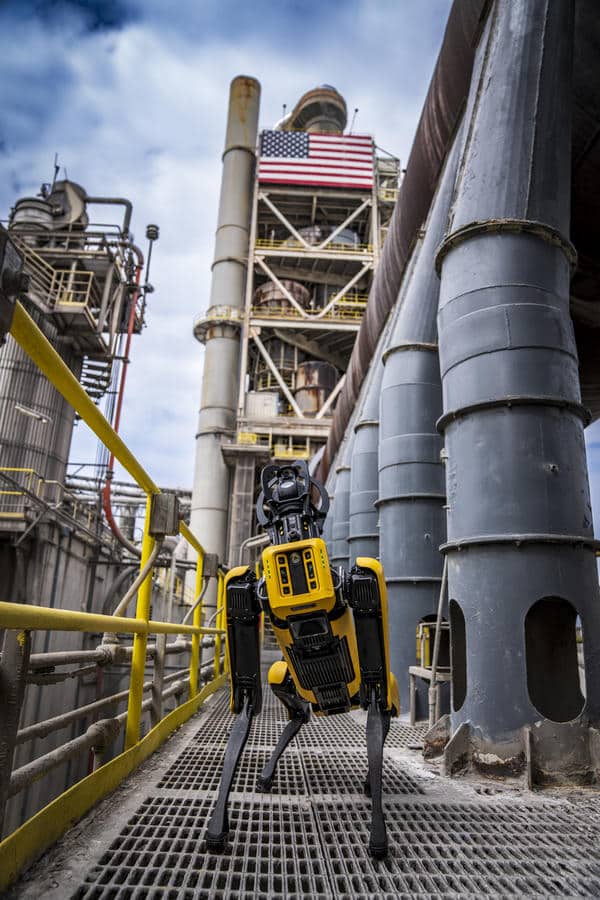
We see this in action in the trial of smart robotics. One of CRH’s first uses of Spot, the agile mobile robot from Boston Dynamics, Waltham, Massachusetts, was at the Ash Grove Cement Plant in Seattle, Washington. In a year-long pilot, the robodog performed proactive yet repetitive inspection routines. According to CRH, this sophisticated robot can operate in hot and dusty conditions, improving safety and freeing up skilled teams to solve complex issues elsewhere on site.

Jackson went on to say, “Spot helps do inspections at our cementitious plant locations, taking thousands of readings. The bot knows if there’s a motor running too hot or if a there’s a trip hazard or something that’s an upset condition, etc.”

According to CRH, this state-of-the-art machine is capable of navigating treacherous industrial terrain, taking on hazardous tasks, while its human counterparts stay safely at a distance. For example, at Ash Grove Cement, Spot uses laser scanning to take brick measurements inside the kiln, eliminating potential safety incidents among the workforce. In the early stages of the trial, the robot was able to detect a failing bearing in part of the site’s rotating equipment, which might have eventually led to unplanned downtime. This AI technology eliminates unnecessary downtime, decreases manufacturing site costs and drives efficiencies. Meanwhile, the data collected can be used to better enhance the overall efficiency of critical assets and maximize their uptime.

A Preferred Materials asphalt plant produced HMA for the Dale Mabry Highway project. The paving crew achieved an IRI of 32 placing and compacting it.

If Spot can handle the temperatures at a cement plant, imagine what it can handle at an asphalt plant to assist ground personnel and plant managers in assessing operations.

The implementation of AI for CRH is “taking the data and the expertise that we have over many, many decades of experience to try to optimize and create higher performing mixes and solutions that we can take to our customers to improve a number of things,” Jackson said. “But it’s also leveraging AI to help protect our teams and ensure that we’re producing the highest quality materials.

“I believe there’s a perception by some that our industry is slow to adopt change. I disagree with that. I think we are making improvements across [the construction industry]. This industry is implementing change at a very good pace, and leveraging these new technologies is something we should all be proud of. Whether it’s a bot that can help do inspections and identify issues that may cause safety or quality problems or it’s leveraging data to improve efficiency, we’re taking significant steps across our industry. CRH is positioned very well—having the size and scale—to lead the way in these new innovative ways of thinking.

“The beauty of our connected portfolio allows us to leverage data at varying positions of the construction value chain and when we do that right, we’re able to help solve our customers’ and our customers’ customers’ most pressing challenges.”

One of CRH’s first uses of Spot, the agile mobile robot from Boston Dynamics, was at the Ash Grove Cement Plant in Seattle. In a year-long pilot, the robodog performed proactive yet repetitive inspection routines, operating in hot and dusty conditions that freed up skilled teams to work elsewhere on site.

Satisfying the FDOT Customer

For the Dale Mabry project success story shared herein, FDOT is the customer whose pressing challenge was the resurfacing of a major thoroughfare with numerous businesses, side streets, signalized intersections, median turn lanes, multiple acceleration and deceleration lanes, and high traffic count. The Preferred Materials team stepped up to the task of protecting nesting eagles in the area and businesses along the route with ingenuity, smart equipment choices and the innovative mix design mentioned next.

Preferred’s Tampa plant is an Astec Double Barrel with 500 TPH capacity, located about 15.7 miles from the job. The crew ran three mixes for the project using a significant amount of reclaimed asphalt pavement (RAP) for each:

  • A structural course of SP12.5 with 40% RAP and PG52-28
  • A surface course of FC12.5 with 20% RAP and PG76-22 polymer-modified
  • A surface course of OGFC FC5 with PG76-22 polymer-modified

An anti-strip was added to each binder to help with mix properties and as a compaction aid. They used the oscillation technology of their Sakai rollers in place of traditional vibration. This technique is known to:

  • minimize vibrations that would otherwise affect nearby structures and underground utilities;
  • reduce disturbance to local wildlife; and
  • lower noise levels for surrounding neighborhoods.

The team achieved an average of 92.7% compaction on the structural mix; the friction course mixes were placed in density exception areas (intersections) and did not require density testing.

Preferred Materials Executes the Plan to Get the Best IRI in Florida

Jackson also shared his thoughts on the Preferred Materials crew. “This gives me an opportunity to highlight the most important element of CRH, which is our people and our teams. The Dale Mabry project example doesn’t happen without our teams.

“Across CRH, when we look at what we’re able to accomplish, it’s all because of our people. I mean, the project had its own unique challenges, including some of the things they had to contend with—the MacDill Air Force Base that was right there and Tampa International Airport. Don’t forget the Buccaneers. We had Raymond James Stadium right there, and we didn’t shut down during football season or game days. The amount of coordination and our team’s ability to partner with FDOT, who is an amazing customer and partner of ours, is so important to highlight.

“The awards are great, and I know our teams appreciate them and they’re very proud of them. And they should be because the elements of safety, quality, on-time delivery and performance, are hallmarks of what make CRH companies and crews so great. On the front lines, the team leaders and supervisors and the folks in the back office that are making sure everything’s coming together in the right way. I couldn’t be prouder of that team.”

Amid the accolades Preferred Materials received for a job well done, there is also a positive environmental component that should not be overlooked.

Scenic Mountain Road Gains Smoothness with CIR

“We are only scratching the surface when we talk about circularity,” Jackson said. “We can’t emphasize circularity enough through the broader construction value chain and specifically in and around roadway design and asphalt. I like to look at the roadway as an ecosystem that has a number of parts and pieces that come together to create that finished surface that the people in our communities drive on every single day.

“In 2024, we’ve recycled over 44 million tons of waste and byproduct that has been sourced either internally or from other industries,” Jackson continued. “This makes us the leading recycler in North America. If we think about what we’ve integrated from a recycled asphalt pavement and a recycled asphalt shingle aspect, we’ve used over 13 million tons of RAP and RAS just in 2024 alone and we are expanding this in 2025.

“Dale Mabry is a great example of how that came together. Not just the results and some of the awards that were won on that project, which are already amazing, but the fact that, just looking at the circularity element of what went into that roadway. That’s what gets me excited. We’ve built these positions where we are able to lead the way and really reinvent the way we look at circularity in road projects. We can 100% do more with less.”


One of the ways CRH is optimizing mix design is by focusing on next-generation surfaces to stand up to extreme temperatures, heavy traffic weights and erosion. “We design specialty asphalt mixes that help extend the lifespan of the road, reduce its maintenance costs, improve its strength and resilience, and reduce traffic noise, which reduces its impact on the environment,” Jackson shared. Examples include:

  • Super Sand Mix (SSM), which is a custom blend incorporating RAP, infused fibers, waste sand and used tire rubber;
  • A low-carbon, high-percentage RAP asphalt mix used on the Dale Mabry highway project;
  • Self-healing asphalt or warm-mix asphalt, which is engineered to repair cracks automatically.

Self-healing asphalt trials are still in early stages of maturity across the United States. The company is routinely using bio-based rejuvenators to improve asphalt mixture flexibility, which provides for a more durable, long-lasting pavement.

“Additionally, we are innovating with fibers (synthetic and natural) to distribute stress more evenly throughout the asphalt mix, helping to reduce fatigue cracking under heavy traffic loads. For example, Texas Materials, A CRH Company, has successfully pioneered the first large-scale use of an asphalt mix we call Super Sand Mix (SSM) in the city of Fort Worth. It’s an innovative, highly durable, fiber-reinforced asphalt, specially formulated to enhance the surface texture of city streets and rural country roads. With proper maintenance, SSM is expected to achieve double the lifespan of a traditional asphalt product.”

70% More Storage—No Shutdown Necessary

All Roads Construction expands its Vancouver asphalt plant capacity without missing a shift—balancing growth, environmental performance, and nonstop customer service.

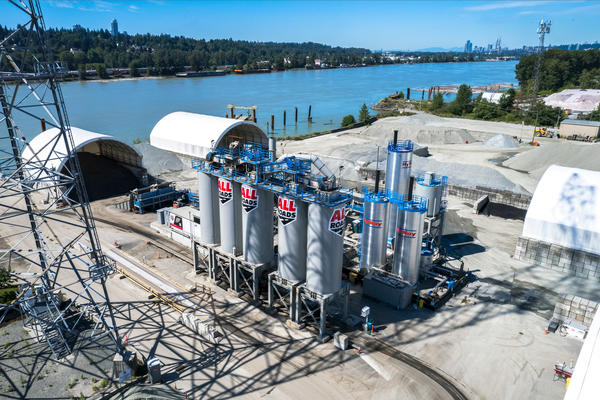
When All Roads Construction opened its asphalt plant in Vancouver, British Columbia, in 2020, it set a new local standard for efficiency and environmental performance. Now, after a major upgrade completed in spring 2025, the company has increased its storage capacity by almost 70% while maintaining full production and the same clean-air results that defined the original facility.

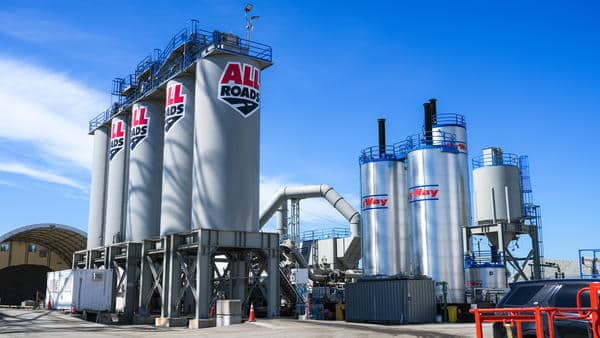
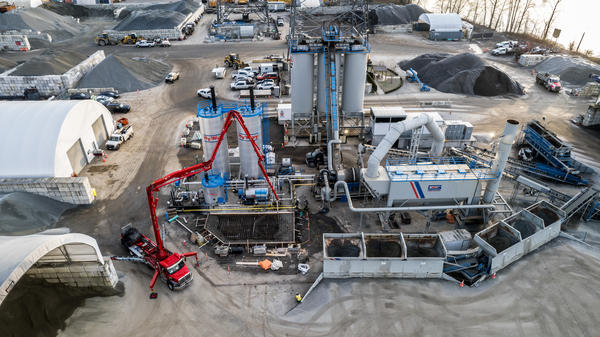
All Roads Construction’s Vancouver asphalt plant stands complete after its 2025 expansion, featuring five 200-ton storage silos and a new 45,000-gallon AC binder tank.

All Roads President and CEO Rod Stephens said the decision to expand was about staying ahead of demand while protecting what made the plant successful from the start. “We wanted to grow our capacity without losing the reliability and environmental integrity we built this operation on,” he said.

The project reflects both market growth and All Roads’ long-term strategy: to meet higher material demands, adapt to new mix specifications, and keep the doors open to third-party customers 24/7. From planning through installation, the expansion showcases how careful coordination, in-house expertise, and a focus on service can turn a logistical challenge into another example of continuous improvement.

All Roads Construction Tests Out Topcon Smoothride Technology

Why the Expansion Happened

When All Roads Construction decided to expand its Vancouver asphalt plant, the move was driven by production realities, not speculation. “We have about 400,000 tons of Highway 1 Trans-Canada paving to do,” Stephens said. “And over the last five years, our third-party sales have skyrocketed.”

The dual demand of major infrastructure work combined with strong third-party growth put pressure on the plant’s capacity and flexibility. “Not only were we coming up short on volume, but we also needed capacity for a broader variety of mix designs,” said All Roads Plant Manager Dennis Eby.

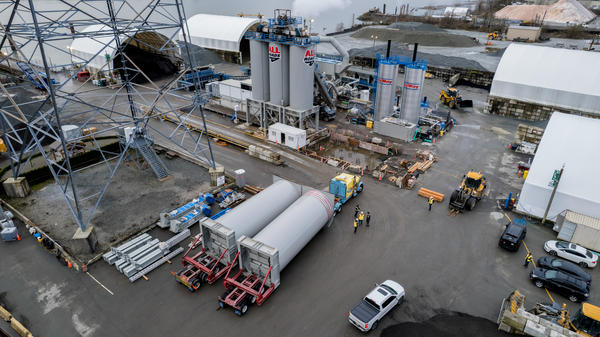
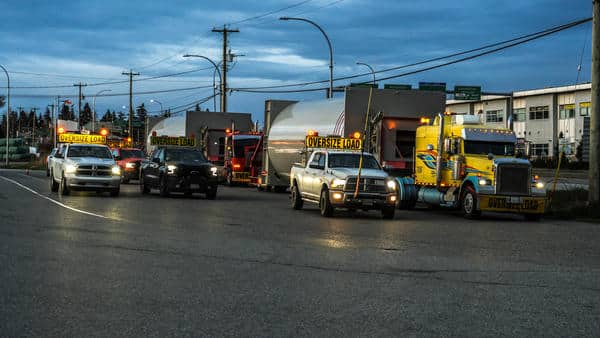
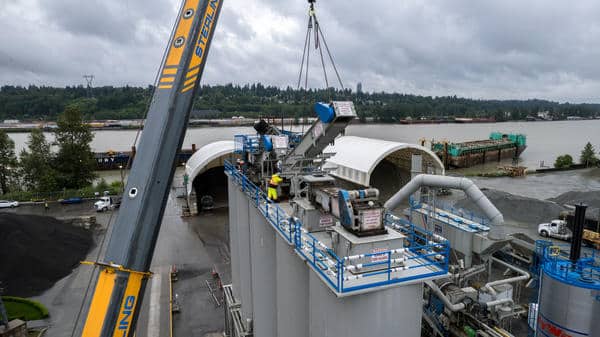
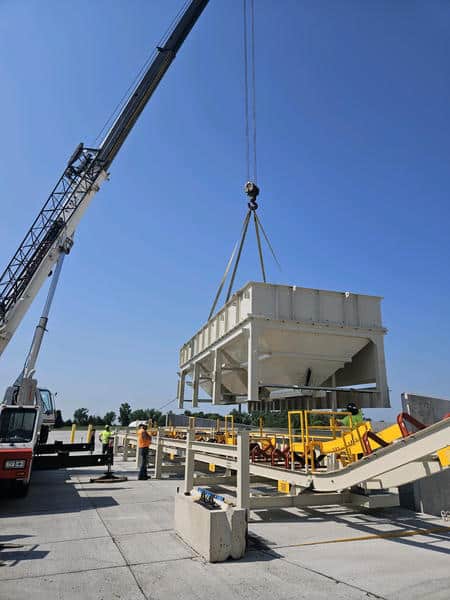
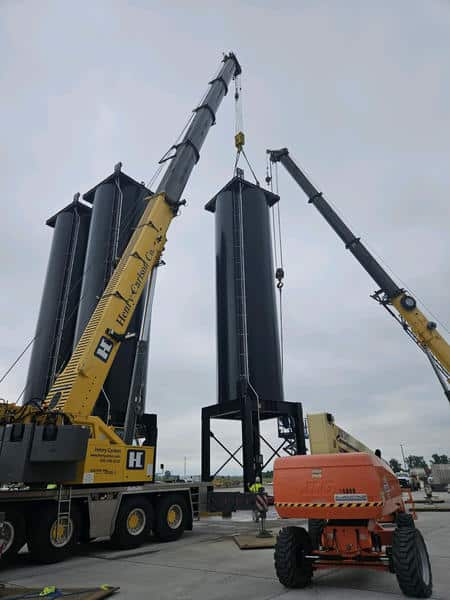
The new 200-ton silos make their way to All Roads Construction’s Vancouver asphalt plant in spring 2025.

That last point became even more important when government specifications changed to require polymer-modified asphalt in top-lift paving. The new spec meant the plant needed additional binder storage and more room to handle multiple AC products without disruption. As Stephens later explained, those evolving requirements were a key driver behind adding both new silos and a larger binder tank—ensuring All Roads could meet every mix design its customers demanded.

With more work ahead and more contractors relying on them, All Roads needed a way to produce multiple mixes at once while maintaining the customer service that helped drive that growth. “We run three plant crews so that we can run 24 hours a day and seven days a week,” Stephens said, adding that the company’s round-the-clock availability and commitment to customer service have been key to building customer loyalty.

Despite All Roads’ need to expand, they didn’t want the customer service so responsible for their growth to suffer. They needed to figure out how to expand production capacity while keeping the plant fully operational—and just as clean and efficient as the day it opened.

All Roads’ High-Efficiency Approach to Cut Repair

Building While Operating

Expanding a continuously running asphalt plant required both precision and restraint. All Roads’ goal was clear: stay open, stay safe and finish on schedule.

“We started the planning process in November when we met with Gencor,” Eby said, adding that they began the upgrades the following January. “Our goal from the beginning was to keep the plant open full time and accessible while these improvements happened.”

The project added two 200-ton silos and a 45,000-gallon AC binder tank, supported by 20 piles to make the new structures earthquake-resistant. “There was a lot of groundwork involved initially,” Eby said. “And that all happened simultaneously while we produced asphalt.”

The new 200-ton silos make their way to All Roads Construction’s Vancouver asphalt plant in spring 2025.

Every bit of work from excavation to setup was handled by All Roads’ own crews, without a single injury or incident.

“During construction, we made minor tweaks in the yard to ensure that our customers could be loaded in conjunction with our crews,” said All Roads COO Mike Darby, who led the on-site construction work. “This included having internal and third-party sales truck lines and yard coordinators during busy times. We determined in advance that we wanted our customers to be impacted the least and typically sacrificed our own crew productions to accommodate this service orientated goal”

Construction wrapped up just in time for the 2025 paving season. “This is the year of fives for our asphalt plant. It’s now five years in the making, with a recent upgrade to five storage silos, in the year of 2025,” Darby said. Eby added, “The tank came online first in the middle of May, and then the silos were up just in time for our busy season.”

A key decision early in the project ensured the plant would be ready for that surge. “I was originally just going to order one silo, not two,” Stephens recalled. “But Dennis just phoned me one day and challenged me, ‘Why are you wasting time? Let’s just get both going right now.’ And I accepted that challenge.” The choice to complete the full expansion at once proved essential to meeting production targets.

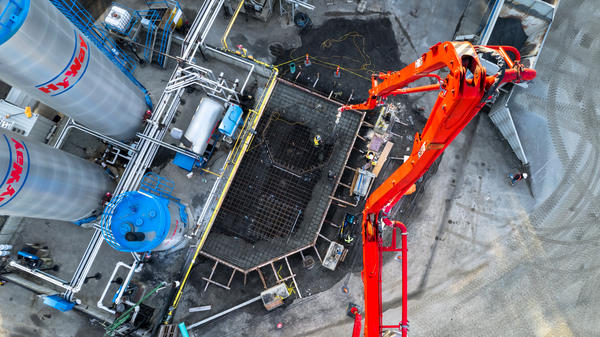
Crews pour the reinforced concrete foundation for All Roads Construction’s new 45,000-gallon asphalt-cement (AC) binder tank at the company’s Vancouver plant.

Unpredictable tariffs briefly complicated equipment delivery. “We ended up by getting two of our silos through with no tariff,” Stephens said. “And then when our AC tank came through a week later, they hit us with a $75,000 tariff.”

Even with that setback, the team refused to cut corners. “We wouldn’t have sacrificed the sustainability performance of our tank for the sake of the $75,000,” Stephens said. “We wanted the product to be consistent with everything else we have.”

When the final pieces came online, All Roads had gained almost 70% more storage capacity without interrupting production—a rare feat for any continuous-run facility.

With the new infrastructure in place, the focus turned to performance: how the upgraded systems improved efficiency, environmental control, and the plant’s already-strong emissions record.

All Roads Exceeds Environmental Expectations

Performance and Environmental Results

When the upgraded systems came online, the impact was immediate. All Roads produced more than 400,000 tons of mix in 2025—about 15% more than the previous year—without increasing emissions or energy use.

The new silos and binder tank have streamlined production and reduced downtime between mix changes, allowing operators to keep materials hot, organized, and ready for dispatch around the clock.

“The additional silos also allowed us to fill orders for the day shift immediately after the night shift projects were complete,” Darby said. “This gave us more room to better service our day shift projects and our smaller third-party customers.”

Crews install the conveyor atop All Roads Construction’s new silos at the company’s Vancouver asphalt plant.

Stephens said the improvements also prepared the company for the province’s evolving binder requirements. “Now, nothing can stop us,” Stephens said. “There’s no mix we can’t make.”

Just as importantly, the expansion preserved the plant’s environmental performance—a cornerstone of All Roads’ identity. The company, which describes its facility as the greenest asphalt plant in Canada, continues to post its emissions data publicly. “Our particulate is not even a tenth of what we’re allowed to be able to produce,” Stephens said. “We blow the specs right out of the water and we’re proud of that, so proud we post those results online.”

That strong environmental record also made the permitting required for the expansion easier. “The [city] could do quick calculations to determine that with this upgrade we’re still way below permitted levels,” Stephens said.

Crews pour the reinforced concrete foundation for All Roads Construction’s new 45,000-gallon asphalt-cement (AC) binder tank at the company’s Vancouver plant.

Performance gains have come not only from technology, but also from experience. “It’s almost like our plant is getting greener and cleaner,” Stephens said. “Part of that is because our guys are actually learning the plant better… and it makes it burn more efficiently, which means we emit less.”

Five years after commissioning, the Vancouver plant continues to perform cleaner and more efficiently than when it was first built—a testament to both its design and the team operating it.

That same team—the operators, maintenance staff, and managers who keep the facility running 24/7—remains central to All Roads’ success and to sustaining those performance gains.

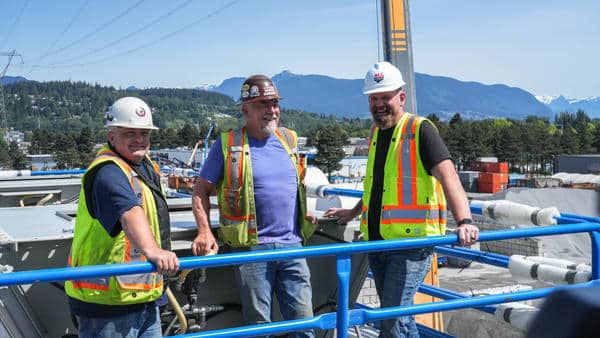
Dennis Eby, Brent Balluff and Mike Darby stand atop the series of five silos at All Roads plant in Vancouver.

The People Behind the Plant

Behind All Roads Construction’s around-the-clock operation is a team that keeps the plant running smoothly, safely, and continuously improving.

“We don’t wait until the winter months to perform all our maintenance,” Eby said. “We’re constantly repairing and upgrading, and improving on the fly.”

All Roads Plant Superintendent Jordan Shepell skillfully lays out all maintenance projects in advance. “If we get a rain day or a couple hours, they know how long that maintenance task is going to take and they hammer it out fast.”

That responsiveness proved essential during the expansion and remains part of daily life at the Vancouver plant. Tight coordination between loadout crews and truck drivers ensures the site runs like clockwork even at peak capacity. Stephens credited the on-the-ground teamwork that allows materials and traffic to flow safely through a compact site without delay.

Investing in training has also strengthened the operation. Each year, All Roads sends plant personnel to Gencor’s training facility in Florida to sharpen their technical skills and deepen their understanding of the system. “They actually light a burner and show the guys there what a perfect flame is,” Stephens said. “The guys get so much out of that training. They get to understand the drum’s internal flighting system and all the plant’s major operating components.”

That emphasis on development has given All Roads more bench strength than most single-plant operations. “We have five plant operators,” Stephens said, “whereas most competitors can hardly find one.”

Stephens said a culture where learning, teamwork, and respect are daily values makes the company a sought-after workplace. “When you have people reaching out to you to want to come to work for you, instead of you trying to find these people, that’s a huge advantage.”

That sense of pride and camaraderie runs deep. As Stephens put it, “We’re here to have a lot of fun and hopefully make a little bit of money.”

Crews pour the reinforced concrete foundation for All Roads Construction’s new 45,000-gallon asphalt-cement (AC) binder tank at the company’s Vancouver plant.

The Road Ahead

Five years after opening what the company calls the greenest asphalt plant in Canada, All Roads Construction continues to prove that clean operation and high production can go hand in hand.

Looking ahead, All Roads plans to document its environmental performance even more formally. “We don’t have [an Environmental Product Declaration] yet, but it’s on my hit list to be able to achieve in 2026.”

For Stephens, that next step is part of the same philosophy that guided the expansion—continuous improvement, backed by investment in people and technology.

“Asphalt plants are necessary to service the industry and the roads we travel on,” he said. “At All Roads, we’re going to continue to do that in the greenest way possible.”

Make Plans for Plant Maintenance this Winter

Editor’s Note: The Focus on Performance series from AsphaltPro Magazine allows OEMs and service providers to highlight professionals in the industry who have improved efficiencies and the bottom line through best practices and performance. This month’s installment from Motion Engineering, Inc., focuses on plant maintenance strategies during the off season.

When the last ton of mix goes out the gate for the paving season, it’s tempting to close shop and call it a season well done. But for the forward-thinking asphalt producer, winter isn’t downtime. It’s go-time for planning, inspecting and maintaining the critical equipment that keeps production rolling the other nine months of the year. Asphalt plants are complex systems of mechanical, electrical and combustion equipment—each with their own wear patterns, failure points and maintenance needs.

Many of the failures we see in peak season—burner malfunctions, seized valves, worn-out drag slats, failed sensors—are entirely preventable. The culprit is often deferred maintenance and a lack of thorough winter inspections.

When you fail to inspect and maintain during the off-season, you’re rolling the dice on everything from your drum bearings and flighting to your silo gates and burner systems. In most cases, early detection means a simple repair; ignored, it becomes a catastrophic failure.

“What I continue to see out in the field is that we are nearing a time when a significant number of plant operators who have extensive experience are retiring.”—Michael Petrie

Winter is the perfect storm for hidden damage as moisture intrusion causes rust and electrical issues. Also, thermal cycling can cause stress cracks and reduce the strength of welds. As with all mechanical equipment, periods of inactivity can result in seizing, corrosion or undetected mechanical failure.

At Motion Engineering, Inc., we’ve been in the guts of hundreds of plants, and we’ve seen what works, what breaks and what costs producers serious money. If you’re wondering what you should inspect this winter, here’s your prioritized guide, system by system, with insider tips on what to look for and how to address potential issues before they turn into operational nightmares.

Top Plant Fixes to Plan for Winter Downtime

Drum/Dryer System

I have personally seen entire drum sections separate from excessive wear and lack of proper inspection. With a new drum costing upwards of $1 million, it is critical to extend the life of your current drum by properly inspecting it and completing the necessary repairs.

Here are the key areas that you should be evaluating once production stops for the season.

  • Drum shell and tire wear: Look for excessive scarring, pitting or ovality. Uneven wear on tires or trunnion surfaces often indicates misalignment. It’s also important to inspect the thickness of the drum shell looking for cracks and separation.
  • Flighting: Check for broken or severely worn flights that affect aggregate veil and drying efficiency. Check for worn out hardware.
  • Trunnion rollers and bearings: Look for flat spots, vibration, excessive noise and leaking seals.
  • Gearboxes: Check all gearboxes for oil leaks or unusual noises that may indicate failure.
  • Thrust rollers: Inspect for proper positioning and contact pressure.

What to Do:

  • Realign the drum if there’s abnormal wear.
  • Install replacement liners if thickness testing comes back at a level reaching anything less than ¾ of the manufacturer’s original thickness.
  • Replace broken or worn flighting to maintain proper drying.
  • Grease and test roller bearings. If they’re noisy or have play, replace them before failure occurs.

Drag Slat Conveyor Checklist for Winter Maintenance

Burner System

As a distributor for multiple combustion manufacturers, I have witnessed the catastrophic failures and the impact they have on producers when these systems fail at the most crucial of times. Particularly when spring hits and the first batch of mix is on the schedule, the last thing you need is a burner malfunction.

Just this past spring, I had a customer that waited until their first job to fire up their burner only to realize the control system was having intermittent failure that would not allow them to run. This cost them unprecedented downtime and hundreds of thousands of dollars to try to diagnose and correct the problem. A simple test run earlier in the season could have prevented this from occurring.

Here are things to inspect on your test run.

  • Combustion zone and flame shape: Look for evidence of soot, poor combustion or flame impingement.
  • Blower motors and controls: Check the amperage draw, noise and contactor condition.
  • Fuel lines and filters: Inspect for leaks, clogs or degradation.
  • Ignition systems: Check spark plug condition, transformer performance and timing controls.

What to Do:

  • Clean and calibrate the burner. A proper tune-up can significantly improve fuel efficiency and reduce emissions.
  • Replace any aging or cracked fuel hoses.
  • Make sure all safety components are working properly: Pressure switches, safety shut-off valves, flame supervision and limit switches.
  • Schedule an inspection for the fuel filtration system.
  • Make sure your burner management system is functioning properly. It’s not enough just to turn it on. You need to make a test batch and ensure your burner ramps up and down properly.

Quick Tips for Wintering Equipment

Electrical and Control Systems

Any electrical or control failure at your plant is a sure guarantee of downtime at your facility. It is critical to ensure the functionality of all the equipment prior to your first scheduled job for the season. I have witnessed countless occurrences where producers have encountered electrical issues due to corrosion or water intrusion and simple weather proofing during the downtime could have prevented those issues.

Here is what I recommend inspecting and preparing for in the off season.

  • Wiring and junction boxes: Look for water intrusion, corrosion and loose connections.
  • Sensors and thermocouples: Test signal consistency and placement accuracy.
  • Control panels and PLCs: Update software, test relays and backup settings.

What to Do:

  • Replace compromised wiring and weatherproof enclosures.
  • Calibrate all critical sensors.
  • Perform a full system simulation before startup season.
  • Have a backup CPU with your burner control program loaded.

9 Tips for Asphalt Plant Maintenance

Baghouse & Dust Collection

Lack of proper maintenance on dust collection systems can lead to decreased efficiency, increased operating costs as well as safety hazards for your employees. The last thing you need is for a fire to start because of lack of inspecting your baghouse bags. Clogged or damaged filters are a primary cause of environmental issues and higher energy costs.

Here is what I recommend inspecting once your team winds down production for the season.

  • Filter bags: Check for holes, abrasion or oil contamination.
  • Dampers and ductwork: Ensure smooth operation and check for buildup or corrosion.
  • Pulse valves: Listen for consistent operation and monitor differential pressure.

What to Do:

  • Replace damaged or blinded bags. Dust carryover leads to environmental issues and reduced efficiency.
  • Clean ducting and realign dampers.
  • Replace worn diaphragm valves for consistent pulse cleaning.

Neutralize Odors at Your Asphalt Plant’s Stack and Baghouse

Drag Conveyor & Silo System

One of the primary areas of expertise for Motion Engineering, Inc., is the installation of silo liners. Whether they are ceramic or steel liners, proper installation of these liners will extend the life of the equipment for many years. Also, there are safety concerns if structural integrity is not sound. I’ve seen the silo tub wall settle or “beer can” on numerous plants over the years due to neglect.

I recommend inspecting these critical areas on the Drag Conveyor/Silo System.

  • Slat chains and sprockets: Check for elongation, cracked links and worn teeth.
  • Floor liners and troughs: Inspect for excessive wear, warping or holes.
  • Discharge gates and cylinders: Look for leaks, delayed action or bent rods.
  • Batcher Gates: Make sure batcher gates are operating properly. A batcher stuck open can allow a hole to wear right through the tub wall.
  • Silo Thickness: Check the thickness of the cone and tub wall to ensure structural integrity.

What to Do:

  • Measure chain stretch and replace if beyond spec (usually 2–3% elongation).
  • Weld or replace worn liners—holes become heat loss zones and safety risks.
  • Rebuild or replace gate actuators that fail under load.
  • Use a thickness tester to properly map the cone and up the tub walls to ensure structural integrity as well as identify if liners are needed.
  • Properly install ceramic or steel liners on any silo cones/tub walls that have a thickness of < ¾ of the original manufacturer’s thickness.

Keep Silo Maintenance Safety a Top Priority

Asphalt Tank & Pump Systems

When it comes to annual maintenance, it’s important not to overlook your tank farm system.  Just this year at three different asphalt plants, our service team removed and replaced liquid asphalt cement (AC) pipes due to restricted flow. After inspection, we identified that the pipes were clogged due to buildup that had been overlooked. This caused supply and return issues as well as offload issues.

Here are a few key areas to be focused on when it comes to inspection and repair for your tank farm system.

  • Circulating pumps: Check for seal leaks, bearing play and pump performance.
  • Heaters and lines: Inspect lines for coking and buildup. The most vulnerable lines are the AC lines that oil sits in for long periods of time. Make sure you understand what the max flow of your pump is. When you know that, you will know when your lines are starting to clog.
  • Valves: Ensure valves are operating correctly and identify any valve stem leaks or seal leaks.

What to Do:

  • Rebuild pumps if bearings or seals are suspect.
  • Flush lines and test heater operation at full temperature. Repair and replace any pipes where flow is restricted.
  • Repair and replace any valve leaks.
  • Insulate exposed lines to prevent cold-weather failures.

Do Your AC Tank Inspection Procedures Pass the Test?

What I continue to see out in the field is that we are nearing a time when a significant number of plant operators who have extensive experience are retiring. Less experienced plant operators are taking over those roles and they lack the proper knowledge of what to look for. This is causing problems for producers. Your team might be capable, but winter inspections are the time for precision, not assumptions. Hiring experienced maintenance professionals to assist ensures your plant is not only inspected thoroughly, but also that small issues are corrected before they snowball.

Michael Petrie is the president of Motion Engineering, Inc.

Myrl & Roy’s Harrisburg Plant Sets the Standard for Sustainable, Smart Growth

Collaboration and conservation: Myrl & Roy’s new HMA plant raises the bar

In South Dakota’s construction corridor, a new hot-mix asphalt (HMA) facility has come online. The recently completed Myrl & Roy’s asphalt plant in Harrisburg is a layered story of more than aggregate, asphalt and tons per hour. It’s about visionary planning, deliberate environmental stewardship, and a team that treats the job as a legacy.

The new 500-ton-per-hour (TPH) facility from CWMF Corp., Waite Park, Minnesota, is a shining example of what’s possible when engineering, environmental planning and collaborative partnerships align.

Myrl & Roy’s is a division of the fifth-generation, family-owned L.G. Everist, Inc., Sioux Falls, South Dakota.

Eric Leverson explained an overarching goal was to build a plant with higher production capabilities. That meant plenty of silo storage, with multiple loadout scales, and plenty of liquid AC storage. The team at Meeker Equipment supplied the tanks for the tank farm. Photo courtesy of Motion Engineering

An Idea Set in Asphalt and Stone

From the beginning of the project, Eric Leverson, VP construction materials, L.G. Everist, and his team at Myrl & Roy’s envisioned more than just their second plant. The new facility was designed to exceed their customers’ expectations, streamline material handling, and meet future market demands. The design includes a counterflow drum of 10 feet, 6 inches by 60 feet, four 300-ton silos, dual truck scales, and a fully paved traffic circle to eliminate bottlenecks and improve safety.

“The entire plant is designed to handle maximum production if needed,” Leverson shared. “The most important part of our business is customer service. Being able to handle their needs daily is critically important to us and them. We produce multiple mixes daily so having two scales and multiple silos coupled with the capacity of the plant allows us the flexibility to switch between mixes and customers’ needs and not sacrifice service. Our focus is to move the customers in and out in an orderly fashion and not slow them down.”

It was all hands on deck for installation of components to bring the Harrisburg plant to life. Both photos courtesy of Motion Engineering

Leverson noted that this new site had to fulfill the dual function of ready-mix and asphalt operations and prepare for future expansion, including recycling capabilities. The one-way truck traffic pattern minimizes cross-traffic and confusion, helping to protect drivers and plant personnel while accelerating loadout. According to Leverson, minimizing wait times and maximizing service is vital, as 75% of the mix will go to external customers.

“When we first laid out the site plan, it was very important that we understood the different activities that would be taking place on site,” Leverson explained. “We originally developed the site for the installation of a dual lane ready-mix plant, but we also wanted to have plans in place for a future asphalt plant and recycle yard.

It was all hands on deck for installation of components to bring the Harrisburg plant to life. Both photos courtesy of Motion Engineering

“My main concern was to make sure we identified not only the current needs, but also the potential future needs. With the amount of incoming and outgoing materials along with accommodating employee and public activities, traffic flow was one of the important and critical things that needed to be thought through and addressed. The original plan had a high-level conceptual idea of traffic flow, but the final plan was not developed until much of the site was completed. Temporary traffic control was used while the new ready-mix plant was operational. This allowed us to monitor traffic patterns for the operating season and identify what the final plan would look like. Striping, delineation and signage was the last activity to take place.”

“In the end, we did have a successful lift off. With only being in operation for a couple of weeks, the initial planning, execution and overall operation has been successful.”—Eric Leverson

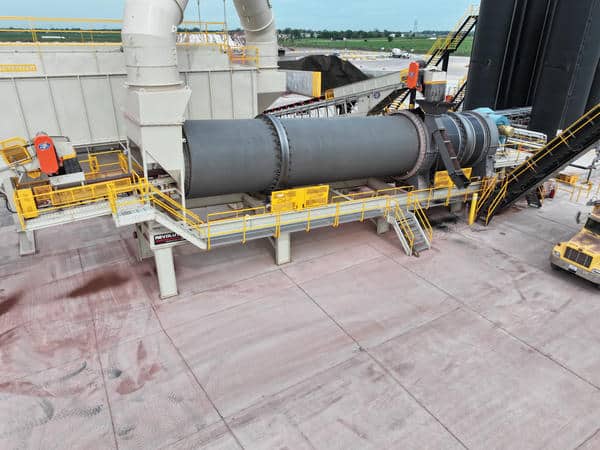
The CWMF Revolution D™ drum mixer offers counterflow drum technology and features the company’s adjustable Wedge-Lok™ tire suspension system. Both photos courtesy of CWMF

Planning with Environmental Purpose

From concept to execution, environmental stewardship was key. Leverson and his in-house engineering staff designed the site to function as a self-contained ecosystem. “We have an in-house engineering staff that put together a rough outline of the layout and what we wanted for the site,” he said. “A local civil engineer assisted in putting together the site plan.”

Every paved surface has drainage leading to a storm sewer system that channels water into two deep retention ponds that serve multiple on-site functions.

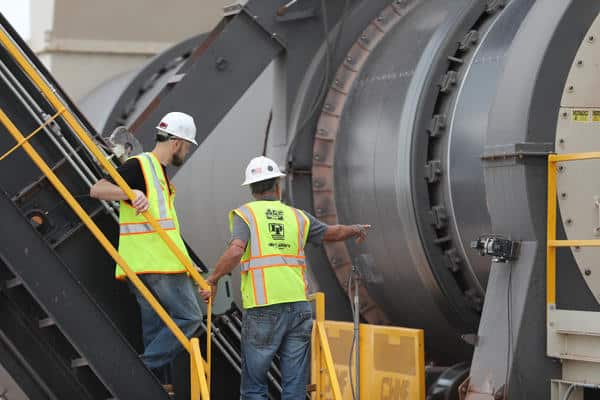
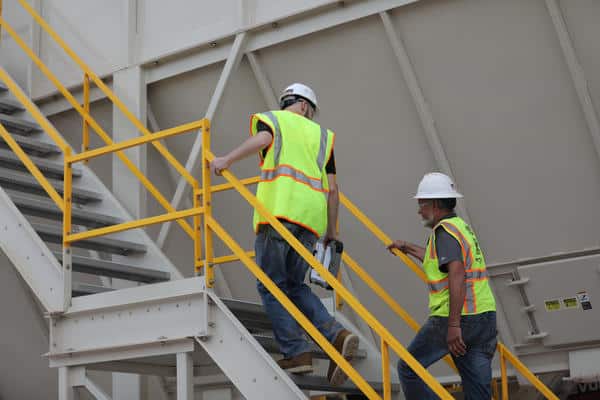
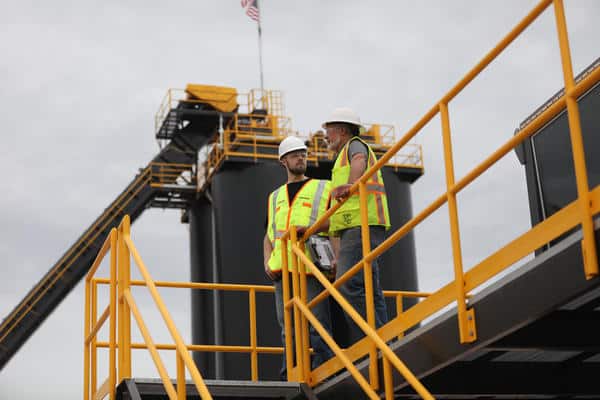
This image of crew members ascending the baghouse stairs highlights the company’s commitment to safety with full stair access around the plant. In the adjacent photo, at left, CWMF Sales Technician Steve Schmitz and, at right, Myrl & Roy’s Asphalt Operations and Performance Manager Brian Heger discuss startup from behind the safety railing prevalent around the plant. Both photos courtesy of CWMF

With 75% of the site paved in concrete or asphalt, according to CWMF’s Vice President Travis Mick, airborne dust is greatly reduced. “There is drain tile under the concrete paved surface of all the material storage areas, allowing moisture to optimally drain from the stockpiles,” Mick shared. “There is a massive truck staging area out of the busy area of the plant, keeping things safe and orderly. Berms and trees surround the perimeter to keep an upscale appearance and to match the beautiful, gated entrance and exit points of the site.” These elements were installed intentionally to ensure the site would be an environmentally responsible addition to the community.

“The entire site is self-contained and has its own storm sewer system,” Leverson said. “The storm sewer drains into a network of drainage ponds which ultimately end up in two large retention ponds. The site has a network of water hydrants at various locations that are used for not only dust control, site wash down, water truck fill stations, aggregate stockpile control but also ready-mix truck wash out ponds. All the stockpile areas are paved with positive drainage that allows the moisture to drain away and get captured by the storm sewer and recycled for onsite use.

The 12-foot by 34-foot elevated control house features the advanced technology of Systems Equipment. Photo courtesy of CWMF

“It was important to us that we understood the impact a site like this would have on the area, not only for the traveling public but also the natural habitat. This was all taken into consideration when the site was built. We feel we have addressed not only the concerns of the public but also impacted the natural environment and habitat in a positive way.”

Leverson described how the team took extra steps to address local impact. LG Everist worked with the local governments to accommodate traffic increases and upgraded a portion of the farm-to-market road servicing the site—out of pocket. Leverson said it was part of being “good stewards of the land and the community.”

This image of crew members ascending the baghouse stairs highlights the company’s commitment to safety with full stair access around the plant. In the adjacent photo, at left, CWMF Sales Technician Steve Schmitz and, at right, Myrl & Roy’s Asphalt Operations and Performance Manager Brian Heger discuss startup from behind the safety railing prevalent around the plant. Both photos courtesy of CWMF

Seamless Collaboration Among Experts

CWMF served as the primary equipment provider, supplying the counterflow drum, slat conveyors, silos and control systems. CWMF’s Mick noted that this project, though not the first interaction with Myrl & Roy’s, was the first large-scale partnership with the company under LG Everist ownership. He spoke highly of the contractor’s planning and attention to neighborly details.

ARC Fabricators supplied the bins and scale conveyors. From there, CWMF contracted with Motion Engineering to install the plant and piping for the tank farm, and with Meeker Equipment to handle the tank farm.

Jeff Meeker described the intricate and safety-focused AC tank system: “Our part of the project was to supply the AC tank farm, which consists of six 40,000-gallon asphalt tanks, AC piping, hot oil heater, mass flow meter, a 10,000-gallon emulsion tank and associated pumping and loading equipment.”

Bowes Construction Buys Uptime, Security, Production

Meeker elaborated on the automation technology, sharing: “All the valves on the piping system are controlled by Meeker’s Liquid Vision valve control system and tank monitoring control. Inside the control room, we provided an Allen Bradley plc control and HMI. The plc has the logic done for normal operations and also unique situations. All scenarios are taken into consideration with the Liquid Vision.”

Motion Engineering was responsible for installation aspects. Mike Petrie, operations manager at Motion, clarified: “Motion Engineering was responsible for the mechanical installation of all equipment as well as mechanical installation of all hot oil and AC piping in the tank farm.” He pointed out the Motion Engineering team handled the insulation for the entire plant and spoke proudly of his team. “Our team did an incredible job with the insulation…and it’s becoming more important to emphasize the advantages of insulating equipment.”

“It was very clear to us at the beginning that Myrl & Roy’s was going to take the lead on exactly how they wanted everything designed,” Petrie continued, but that was no challenge for a team working in concert. Trust among the team was crucial and worked in everyone’s favor.

Palmetto Completes Successful Builds

“There is a great relationship that exists between Motion Engineering, Myrl and Roy’s, CWMF and Meeker,” Petrie said. “We all want to get it right at the end of the day to ensure longevity of the plant.”

Getting everything right at the end of the day requires coordination. “There is an intense amount of final fitting and changes that come with a new asphalt plant build,” Petrie emphasized. “All the AC piping/valving was prefabbed but the hot oil piping was something that we helped design in the field. We had to make sure that we built the hot oil piping according to what the OEM’s specifications are.”

ASCO Invests in Decreasing Down Days

Pre-Planning for Success

Mick shared that the quoting/conversation with CMWF and Myrl & Roy’s started in November of 2022. “We were awarded the job in August of 2023. This project hit production in March of 2024. The first components were delivered in the month of May. Equipment installs started with the tank farm. From there, we continued with the silos/slat.” By Labor Day, the plant was structurally in place. Final electrical work continued through the fall and winter.

When the team fired up the plant on May 28, 2025, Leverson said they targeted 2,000 tons on the first day—and exceeded it.

Leverson acknowledged the startup came with a learning curve. The team spent about three weeks identifying and resolving issues. Still, all underground electrical and mechanical systems installed prior to the winter performed as expected.

The planning, including conduit burial and early groundwork, was vital. Leverson and his in-house team oversaw months of activity long before the drum or silos went up—grading, paving, trenching, pouring footings—all choreographed for a seamless equipment installation.

Looking ahead, Leverson sees the Harrisburg plant as a blueprint for future-ready operations. “It’s about building something responsible, scalable, and respectful of the land and the community,” he said. “That’s what we set out to do, and I believe we achieved it.”

The CWMF Revolution D™ drum mixer offers counterflow drum technology and features the company’s adjustable Wedge-Lok™ tire suspension system. Both photos courtesy of CWMF

Technology in Action

Even in its earliest weeks of operation, the Harrisburg plant’s design choices are proving their worth. Leverson shared that the facility exceeded production expectations on opening day and has shown consistent reliability since.

The advanced systems supplied by CWMF, Meeker Equipment and ARC Fabricators play a pivotal role in this performance. With multiple silos and dual truck scales, the plant can handle several mix designs in a single day without disruption to customer service.

The Liquid Vision system from Meeker Equipment is already simplifying operations. The plant operator can manage tank flows and monitor levels without stepping foot outside the control room. Drivers unloading asphalt can access real-time tank data, reducing the risk of overfills and improving efficiency.

GMI Asphalt Maximizes Trucks, Fuel, Labor

“If a driver is in control, he can choose the tank he is delivering to,” Meeker said. “He knows the amount of liquid AC already in the tank, and it will alarm him if the tank is getting too full.

“All of the Meeker AC tanks come with a hi-level float—what we call a stainless steel basketball,” Meeker continued. “It’s a final safety measure to stop the flow of AC into a tank.”

That emphasis on automation and safety extends across the site. From automated truck spray-downs that reduce dust and eliminate the need for drivers to leave their vehicles, to traffic signage and scale lane separation, the site is focused on safety-first productivity.

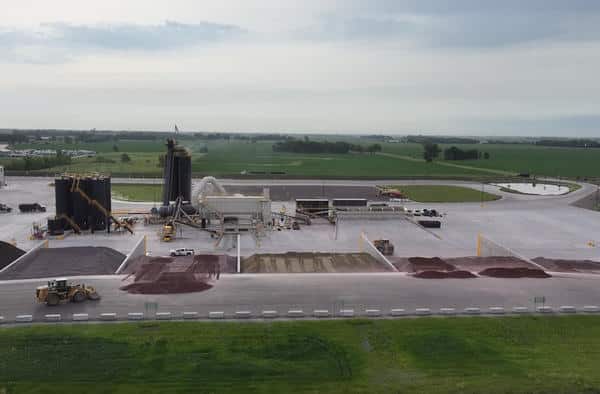
The team planned and built the Harrisburg plant with the future in mind. Leverson pointed out that meant production and sustainability. “We wanted this to be a benchmark facility, one that reflects who we are as a company and how we want to serve this community.” Photo courtesy of CWMF

Team Pride

Throughout every phase of the project—from site selection and early grading to the final wiring and commissioning—the Myrl & Roy’s team operated with precision and a strong sense of ownership. Their in-house crews coordinated infrastructure, utility trenching and poured critical foundations while managing the complexities of a multi-vendor installation.

Leverson noted how the team’s proactive attitude made the difference. Whether troubleshooting complex mechanical systems, refining traffic flow or accommodating last-minute layout adjustments, the crew never faltered. “The main objective was to build a plant that had [higher] production capabilities if we needed it, plenty of silo storage with multiple loadout scales and plenty of liquid AC storage. We have not been in operation very long, but those choices have proved themselves already.”

JM Fahey Celebrates 50 Years with CWMF’s Stationary Full Plant Build

He added that the Myrl & Roy’s staff took personal pride in the facility throughout the build. Employees guarded exposed conduit installations during active phases to prevent damage and monitored subcontractors to maintain site integrity. Their commitment ensured that no detail was overlooked. “All of the conduits, wiring and airlines survived the winter. They have performed as anticipated. We spent approximately three weeks in start-up mode, troubleshooting problems and eliminating issues. With the amount of electrical and mechanical parts that are involved, this was probably not unrealistic. We had plenty of trial and error, frustration and other emotions that we fought through, but in the end, we did have a successful lift off. With only being in operation for a couple of weeks, the initial planning, execution and overall operation has been successful.”

The team’s hands-on approach created an asphalt plant that blends high production with environmental responsibility, technology integration and site safety. Leverson emphasized that the people behind the work are the plant’s greatest asset.

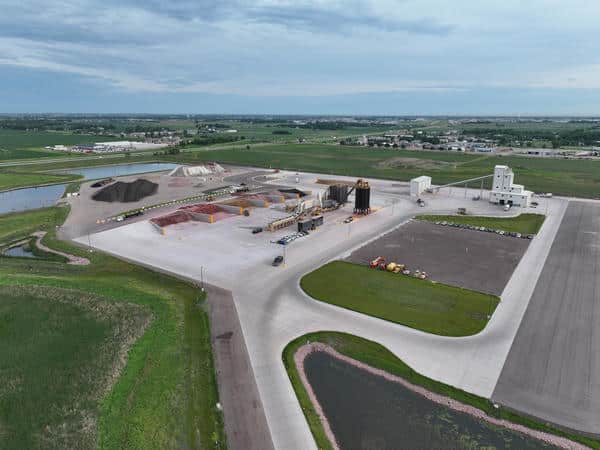
Myrl & Roy’s, a division of family-owned L.G. Everist, Inc., Sioux Falls, South Dakota, planned and built its new asphalt plant in Harrisburg with CWMF Corp., Waite Park, Minnesota. Additional vendors joined the team to facilitate delivery and installation of all systems for an environmentally friendly facility poised to meet market demands now and into the future. Photo courtesy of CWMF

Looking Ahead at a Sustainable Legacy

With the new plant now fully operational, Myrl & Roy’s has laid the groundwork for a long-term model of environmental stewardship. Leverson and his team continue to monitor and fine-tune systems to optimize efficiency and minimize impact.

Future goals include increasing the use of recycled materials. Leverson reflected on the larger mission: to build infrastructure responsibly, not just for business, but for the region and the environment. “Every aspect of the Harrisburg plant was built with the future in mind—not just in terms of production, but also sustainability,” he said. “We wanted this to be a benchmark facility, one that reflects who we are as a company and how we want to serve this community.”

The facility may have only recently opened its gates, but it already stands as a powerful symbol of what a responsible, forward-looking plant build can achieve.

Echelon Paving Powers APEX Motor Club Expansion

Sunland Adds to APEX Motor Club with Quality Echelon Asphalt Paving

The high-speed world of motorsports demands world class precision, performance and durability. At Sunland Asphalt & Construction, LLC, Phoenix, we embraced these principles when we took on the development of the second circuit at the APEX Motor Club track in Maricopa. Spanning from August 2024 to February 2025, this project represents an incredible milestone in Arizona’s racing landscape.

The transformation of undeveloped farmland into a high-performance racetrack required extensive engineering and meticulous attention to detail in planning. Phase two took place from August 2024 to February 2025.

Transforming Dream Into Reality

The transformation of undeveloped farmland into a high-performance racetrack required extensive engineering and meticulous attention to detail in our planning. Grading was a critical component, with 138,960 cubic yards of material cut and 121,163 cubic yards of fill placed to shape the building pads, retention basins, multiple track sections, runoff areas and paddocks.

Huron Capital’s Platform Sunland Asphalt Acquires Georgia Paving

For the track’s foundation, an 8-inch layer of Aggregate Base Course (ABC) was placed and finish graded before receiving a 2.5-inch application of ½-inch asphalt—meaning ½-inch nominal maximum aggregate size (NMAS). The track itself was surfaced with 1.5 inches of a 3/8-inch Special Mix for the wearing course, ensuring superior grip and durability. Our use of echelon paving—simultaneously running three pavers—was key to achieving a seamless, high-quality racing surface.

A binder course of 2.5 inches of ½-inch material required 100% of the aggregate should pass through the ¾-inch sieve. The surface course of 1.5 inches of 3/8-inch Special Mix required 100% should pass through the ½-inch sieve.

“During echelon paving, we utilized three material transfer vehicles (MTVs): two Weilers and one Roadtec Shuttle Buggy,” said Greg Hughes, our project manager – Public Works. “Paving operations were carried out using three Vogele Super 2000-3i pavers. Paving this way almost eliminates any joint and acts as one continuous mat. The slope of the track was minimal, so additional support equipment was not required during rolling operations.”

“At the transverse joints, we used a 12-foot straightedge to check for flatness and made necessary adjustments to maintain levelness. Along the outer edge tie-ins, we aligned the screed to match the elevation of the existing asphalt for a seamless transition.”—Greg Hughes

Race to Resurface F1 Track

A Track Built for Enthusiasts

APEX Motor Club, now owned by RJT Capital, is more than just a racetrack; it’s a haven for speed enthusiasts. Strategically located to serve Phoenix, Tucson, and even cities like Los Angeles and Albuquerque, this circuit caters to drivers who demand the best. Every detail, from the material selection to the construction techniques, was geared toward delivering a world-class racing experience.

The two sections of the track Sunland has now completed can be run independently or combined into a single 4.7-mile configuration for racing.

The track’s continuity with Phase 1, which we paved in 2018, was another highlight of this project. Ensuring seamless integration required exceptional precision in tie-in joints and elevations. The result is Arizona’s longest motorsports track—a continuous circuit designed to push limits and set new standards in high-performance driving.

“The original track measured 2.27 miles, while Phase 2 added an additional 2.43 miles,” Hughes shared. “These two sections can be run independently or combined into a single 4.7-mile configuration.”

Traffic Control Success on Mesa’s US-60 Corridor

Precision Paving at it’s Best 

One of the most demanding aspects of this project was achieving the track’s stringent surface tolerance. That quality started at the base.

“To ensure grade tolerance, our blade utilized GPS technology to follow the project-specific model accurately,” Hughes explained. “At the transverse joints, we used a 12-foot straightedge to check for flatness and made necessary adjustments to maintain levelness. Along the outer edge tie-ins, we aligned the screed to match the elevation of the existing asphalt for a seamless transition.”

Echelon paving, which was crucial to ensuring consistent quality across the track’s 42- to 50-foot width, can have many complex logistical challenges in coordinating multiple paving machines and maintaining uniform asphalt application.

Project Foreman Isidro Lopez was one of the key figures in bringing the project to life. He stated, “Spending time with family is my favorite way to unwind,” but on the job, he played a vital role in delivering the precision the track required.

“Since GPS technology was used to establish the desired grade during preparation, we paved using a 2D control system,” Hughes explained. “Each paver was equipped with 30-foot paving skis, which helped maintain consistent depth and alignment. The skis function as a leveling system by averaging the surface over their full length, effectively smoothing out minor grade variations. Additionally, the second lift served as a corrective layer, addressing any imperfections remaining in the base course.”

Additionally, Sunland installed 4,850 feet of concrete curbing designed specifically for APEX, improving both functionality and aesthetics. Our team also constructed a 100-foot by 85-foot box culvert and 1,020 feet of cut-off walls to manage water flow and enhance track stability, ensuring optimal performance under diverse conditions.

A binder course of 2.5 inches of ½-inch material required 100% of the aggregate should pass through the ¾-inch sieve. The surface course of 1.5 inches of 3/8-inch Special Mix required 100% should pass through the ½-inch sieve.

Key Partners

This project was a collaborative effort, made possible by our trusted subcontractors:

  • Solterra Materials supplied the high-performance, polymer-modified asphalt, ensuring superior grip, durability, and smoothness. Led by Michael Thompson, Solterra’s expertise in asphalt production and logistics was instrumental in maintaining project timelines and quality.
  • Vital Contracting, under the leadership of Stephen Boyd, executed all earthwork operations, delivering near-perfect tolerances essential for racetrack construction.
  • CMT Technical Services, headed by DJ Peters, ensured compliance with rigorous material testing standards, performing geotechnical evaluations, density testing, and asphalt mix verification.

A truck has completed loadout at the Solterra Materials plant and is ready to take a load of mix to the APEX Motor Club track project.

Spotlight on Isidro Lopez

One of the key figures in bringing this project to life was Isidro Lopez, project foreman at Sunland Asphalt. With years of experience in the industry, Lopez played a vital role in delivering the precision required for a world-class track. He stated his favorite aspect of this job was, “Seeing the owner’s excitement when we finished—it was like kids opening Christmas gifts.”

Project Foreman Isidro Lopez was one of the key figures in bringing the project to life. He stated, “Spending time with family is my favorite way to unwind,” but on the job, he played a vital role in delivering the precision the track required.

The most memorable day for Lopez was, “Reaching the end of the track on that final day of paving—everyone was thrilled to achieve the end goal.”

“Seeing the owner’s excitement when we finished—it was like kids opening Christmas gifts.”—Isidro Lopez

A Legacy of Excellence 

On this issue’s front cover, from left to right, Will Morrison is the asphalt plant operator for the Coolidge site and Matt King is an asphalt plant foreman for Solterra Materials, the company that supplied the high-performance, polymer-modified asphalt for Sunland’s APEX project.

Sunland Asphalt & Construction’s commitment to precision and innovation continues to drive our success. The completion of APEX Motor Club Phase 2 marks yet another milestone in our legacy of delivering top-tier asphalt solutions. From engineering complexities to flawless execution, this project exemplifies our expertise in high-performance paving—ensuring that APEX remains the premier destination for automotive enthusiasts across the Southwest.

For those who live life in the fast lane, APEX Motor Club is ready. And Sunland Asphalt & Construction is proud to have paved the way.


Immanuel Martinez brings 20+ years of experience managing complex construction projects, pioneering 3D paving innovations, and leading high-performing teams across public and private sectors. To learn more about Sunland, visit sunlandasphalt.com and check out past articles on TheAsphaltPro.com.