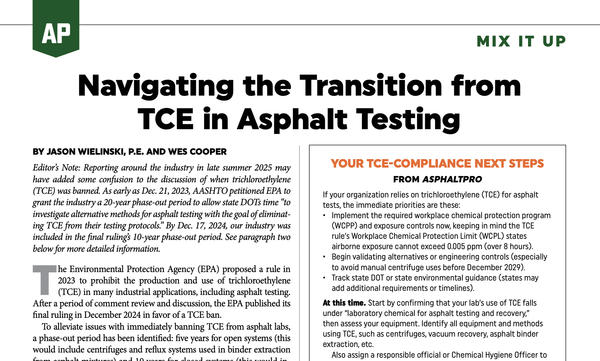
What Asphalt Labs Must Do to Comply With the TCE Ban

If your organization relies on trichloroethylene (TCE) for asphalt tests, the immediate priorities are these:

  • Implement the required workplace chemical protection program (WCPP) and exposure controls now, keeping in mind the TCE rule’s Workplace Chemical Protection Limit (WCPL) states airborne exposure cannot exceed 0.005 ppm (over 8 hours).
  • Begin validating alternatives or engineering controls (especially to avoid manual centrifuge uses before December 2029).
  • Track state DOT or state environmental guidance (states may add additional requirements or timelines).

At this time. Start by confirming that your lab’s use of TCE falls under “laboratory chemical for asphalt testing and recovery,” then assess your equipment. Identify all equipment and methods using TCE, such as centrifuges, vacuum recovery, asphalt binder extraction, etc.

Also assign a responsible official or Chemical Hygiene Officer to oversee your TCE phase-out and worker-protection compliance.

When implementing your WCPP, develop and maintain written records that cover:

  • Engineering controls (fume hoods, closed-loop extraction systems, solvent recovery enclosures);
  • Administrative controls (restricted access, time limits, cleaning schedules);
  • PPE program (respirators with organic vapor cartridges, gloves, chemical-resistant lab coats);
  • Exposure monitoring and medical surveillance; and
  • Recordkeeping (SDSs, exposure logs, training records).

By December 2029. Discontinue TCE use in manual centrifuges for asphalt recovery. Replace it with closed-loop or automated extraction systems using alternate solvents (like those approved in ASTM D8159). Make sure you document your conversion or discontinuation.

By December 2034. All TCE use for asphalt testing and recovery must end. Identify and validate alternative solvents or solvent-free recovery methods. Validate new methods through ASTM or AASHTO standards and your client/state DOT specs. And make sure you document it all. Maintain records of solvent substitution testing and approvals, notifications to clients or DOTs about method changes, and all equipment modification and/or decommissioning.

As every good lab should do, follow your ongoing best practices, too.

  • Keep up with your emergency procedures: Maintain spill kits, eyewash stations, and first-aid plans specific to chlorinated solvents.
  • Double-check your ventilation systems: Inspect and certify hoods or local exhaust every six months.
  • Manage waste: Dispose of TCE waste as RCRA hazardous waste (F002 listing).
  • Communicate: Ensure vendors are aware of the EPA ban timelines. 

Read next: Navigating the EPA’s TCE Phase‑Out for Asphalt Labs

New Testing Lab Handles Asphalt and Concrete Fibers

FORTA’s new testing lab will handle asphalt and concrete fibers in Grand Rapids

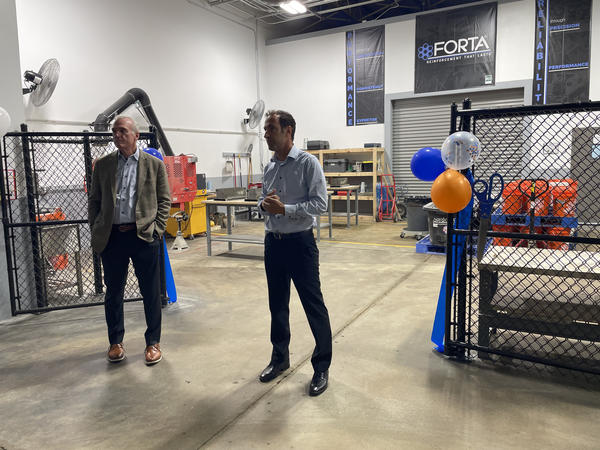
FORTA LLC, Grand Rapids, Michigan, held the grand opening of its Grand Rapids Testing Lab on Sept. 11, 2025.

Speaking at the ribbon-cutting ceremony, Peter Ferris, CEO of FORTA, highlighted the significance of the new lab: “Today marks a historic moment, not just for our company, but for the entire industry. This facility is the world’s first asphalt and concrete fiber lab, and it stands as proof of FORTA’s role as the world’s leading innovator in fiber reinforcement. From the very beginning, we’ve led the way in strengthening asphalt and concrete, and this lab allows us to continue setting new standards for the future.”

The Grand Rapids Testing Lab is ISO 17025 certified, ensuring the highest levels of quality, accuracy and reliability. The facility can run over a dozen separate ASTM, AASHTO and EN tests, providing a range of testing and validation capabilities. More than a testing center, the lab represents a promise that every result and every innovation is backed by rigorous science and integrity.

This investment underscores FORTA’s long-standing commitment to Reinforcement That Lasts™. With infrastructure playing such a critical role in communities across the globe, the lab’s work will focus on ensuring that roads, bridges and other critical facilities are safer, stronger and built to endure for decades.

Looking forward, the lab will serve as a hub for research and development, driving innovation in fiber reinforcement technology and bringing next-generation solutions to market. A spokesperson explained this emphasizes the company’s ability to test a wide range of products within its own portfolio. But engineers at FORTA aim to test new products and innovations within the industry as a whole.

“The Grand Rapids Lab is a testament to our commitment to excellence, to innovation, and to building a stronger, more resilient future—with FORTA leading the way,” Ferris added.

For more information, visit https://fortacorp.com/.

Polishing the Asphalt Surface: Tennessee Researches Aggregate Frictional Properties

University of Tennessee report offers guidelines for aggregate polishness in asphalt surface mixtures

The final report titled “Investigating the Long-term Frictional Properties and Establishing Aggregate Polishness Guidelines for Asphalt Surface Mixtures in Tennessee” from the Department of Civil and Environmental Engineering at the University of Tennessee, Knoxville, explores innovative methods and technologies for evaluating the frictional behavior of aggregates used in asphalt, with a strong focus on Reclaimed Asphalt Pavement (RAP). This summary highlights the research findings related to technology application in assessing and improving asphalt aggregate performance, especially in terms of long-term friction and skid resistance.

Combining chemical and physical parameters provides a reliable method for estimating long-term pavement skid resistance.

The State of Flat and Elongated Aggregate Requirements for SMA

Context and Problem

The authors, Baoshan Huang, Jingtao Zhong, Kai Huang, Yuetan Ma and Pawel Polaczyk, explained the project was conducted in cooperation with the Tennessee Department of Transportation (TDOT) and the Federal Highway Administration (FHWA) under project number RES2023-15. They acknowledged highway safety is closely tied to pavement skid resistance, which largely depends on the frictional and textural properties of aggregates.

In Tennessee, where certain high-quality aggregates must be imported, ensuring long-term pavement friction is both a safety and economic concern. Although RAP has been used extensively in the state, its role in surface mixes has been limited due to unknown frictional characteristics. Traditional mix design methods don’t incorporate performance-based friction testing, which has prompted the need for research.

Aggregate Morphology Offers Recommendations for SMAs

Technological Methods and Tools Used

This study employed a range of tools to evaluate the long-term frictional performance of asphalt aggregates, especially in mixes containing RAP.

X-ray Fluorescence (XRF) was used to measure silica dioxide (SiO₂) content—a key indicator of polish resistance. Testing focused on uniformly sized aggregate particles (passing the 3/8-inch sieve, retained on No. 4) to ensure consistent results. RAP samples were processed chemically (using Trichloroethylene, TCE) or mechanically (with a hammer) to expose aggregate surfaces. TCE treatment proved more accurate and consistent.

Aggregate Image Measurement System (AIMS) assessed surface angularity and texture, which reflect micro-texture and friction potential. Materials with higher SiO₂, especially slag and granite, retained their texture better under abrasion, supporting the link between chemical makeup and skid resistance.

The Micro-Deval (MD) test evaluated aggregate durability through rotational abrasion. Results confirmed that aggregates with higher SiO₂ content suffered less wear, correlating with better frictional performance.

Economic Aggregate Quality Requirements for Pavements

To simulate traffic wear, the Three-Wheel Polishing Device (TWPD) polished asphalt specimens in controlled lab settings. This enabled assessment of how surface friction degrades over time.

Friction was measured with the Dynamic Friction Tester (DFT), which recorded the coefficient of friction (COF) at various speeds under wet conditions. DFT results were reliable for both lab and field use and are recommended for performance-based mix design.

The Circular Track Meter (CTM) measured macro-texture via Mean Profile Depth (MPD), complementing the DFT’s micro-texture data. Together, they supported the calculation of the International Friction Index (IFI).

The Locked-Wheel Skid Trailer (LWST) validated DFT results by measuring friction directly in the wheel path. While LWST values were often lower due to heavy polishing, they confirmed DFT’s broader applicability.

Lastly, the study tested gyratory-compacted pills as a practical alternative to large slab specimens. These “rings” provided similar friction and texture results, offering a cost-effective option for lab testing.

Overall, the integration of chemical analysis, image-based texture evaluation, and friction simulation tools provided a comprehensive system for assessing and designing asphalt mixes with durable frictional performance.

Michigan DOT Tests Friction Aggregates

Key Findings

The study found that both slab and pill-shaped asphalt specimens yielded similar friction and texture results when measured with the DFT and CTM, making ring-shaped samples a practical alternative for lab testing. Accurate measurement of SiO₂ content using XRF depended heavily on aggregate size and uniformity; using particles retained on No. 4 sieves produced the most consistent results for both virgin aggregates and RAP. SiO₂ content showed a strong correlation with key friction indicators such as Polished Stone Value (PSV) and surface texture loss, confirming its usefulness as a predictor of polish resistance.

The DFT proved to be a reliable tool for evaluating friction in both lab and field settings. It tends to report higher friction values than the LWST because it measures a broader area that includes both polished and unpolished pavement zones, whereas the LWST measures directly in wheel paths. Field testing revealed consistent friction properties between left and right wheel paths across most segments, suggesting uniform polishing effects under traffic.

Crush for Cubical Aggregate

A multiple regression model combining silica-iron mineral content (SiO₂ + Fe₂O₃) with the percentage of polish-resistant aggregate successfully predicted terminal COF with high accuracy, explaining 88% of the variation. This indicates that combining chemical and physical parameters provides a reliable method for estimating long-term pavement skid resistance.

The deployment of advanced technology such as XRF, AIMS, TWPD, DFT and CTM in this research represents a leap forward in understanding and predicting the long-term frictional behavior of asphalt aggregates. These methods allow for quantitative, reproducible and efficient assessment of aggregate polish resistance and offer a framework for performance-based mix design that enhances safety and sustainability. Particularly, the strategic use of RAP can now be better managed through accurate chemical analysis, making this research instrumental in evolving Tennessee’s asphalt pavement specs.

Lab Products for Mix Design

With the increased interest in cold central plant recycling (CCPR), the asphalt industry turns again to the concept of “foaming” asphalt and what reduced emissions benefits this technology offers. To assist in the design and testing of mixes using foamed asphalt, a handful of companies manufacture lab equipment for quality control/quality assurance (QC/QA). In this month’s product gallery, we focus specifically on lab equipment, and we include those devices that address foaming excellence.

Below, also take a look at those pieces of equipment that assist with balanced mix design (BMD) and other important performance testing. While many shops and platforms sell or distribute lab devices, it takes a little sleuthing to find the facts from the entities who designed and tested the original equipment—even some who branch out to include “friendly rival” products in their offerings.

In the January issue, we’ll return to listing new and updated products for paving, pavement maintenance and mix production professionals in alternating editions of AsphaltPro. Check out the product gallery tab on www.TheAsphaltPro.com for past listings you may have missed!

Product Gallery: Applied Test Systems Launches SIGMA Series 2610

Product Gallery: Forney LP Offers Centrifuge Extractors for Asphalt Testing

Product Gallery: Humboldt Mfg. Co. Penetrometers for Asphalt and Material Testing

Product Gallery: Warm Mix Asphalt Foaming System by Pavement Technology Inc.

Product Gallery: WLB 10 S Laboratory Plant for Foamed Bitumen Testing

Combining Tech Helps with AC Transloading

Automated scraper strainers paired with macerators eliminate high volumes of large, suspended solids from slurries for a “set it and forget it” approach. All photos courtesy of Acme Engineering

Automated scraper strainers paired with macerators eliminate high volumes of large, suspended solids from slurries

In the asphalt industry, industrial strainers are used to separate unwanted suspended solids from liquids and slurries for efficient transloading, in which asphalt is heated to a liquid form and transferred from tank cars to trucks or from trucks to tank cars at rail facilities. However, conventional strainer methods can be improved upon to keep debris or solids of substantial size or quantity out of the liquid.

A novel blend of industrial wastewater technologies now allows for the efficient removal of solids without the need for extensive manual labor and so on. Specifically, the design involves the combination of a macerator, which breaks down large solids into smaller fragments, and an automated scraper strainer flexible enough to filter out larger debris along with tiny particles. This innovative solution is even designed to accommodate high solids loading without clogging.

The combination of these two established technologies is already being applied to some of the toughest straining applications including asphalt transloading, wastewater debris, power plant boiler water slag and meat processing waste streams. Our interest here is asphalt transloading.

“Although the macerator cuts up the biggest solids, the strainer must still be able to separate both relatively large pieces and tiny particles while handling high solids loading without becoming obstructed.”—Robert Presser

Overcoming Traditional Limitations

Duplex strainers are often used in continuous flow processes that cannot be shut down for cleaning purposes. Duplex basket strainers employ two distinct chambers that function independently. When one chamber needs cleaning, the flow is diverted to the alternate chamber, enabling the removal and cleaning of the first basket.

Cleaning is a laborious process that involves equalizing pressure between the baskets, diverting flow to the off-line chamber, opening the cover, manually removing the clogged basket, and cleaning it before refitting the basket, ensuring the seal and tightening the fasteners.

An automated scraper strainer like that from Acme Engineering is designed to continually remove both large and small suspended solids from liquids and slurries.

If an operator fails to adequately clean the basket strainers for any reason, both strainers can become clogged at the same time. This compromises the filtration process, resulting in quality issues or unexpected downtime until the problem is resolved. For many processors, this can occur simply due to having insufficient personnel to keep basket strainers clean along with their other duties.

“As an alternative, a combination of established complimentary technologies such as a macerator and an automated scraper strainer can essentially ‘knock out’ even the toughest problems related to large solids and high solids loading in an automated way,” said Robert Presser, vice president of Acme Engineering Prod. Inc., a North American manufacturer of industrial self-cleaning strainers. The company is an ISO 9001:2015 certified manufacturer of environmental controls and systems with integrated mechanical, electrical and electronic capabilities.

In this configuration, a macerator would be installed upstream to reduce large solids down to a manageable size. The capabilities of the automated strainer are crucial to the process as well, according to Presser.

“Although the macerator cuts up the biggest solids, the strainer must still be able to separate both relatively large pieces and tiny particles while handling high solids loading without becoming obstructed,” Presser explained.

Adapting strainers for the specialized filtration of uncommon liquids and slurries requires not only expertise but also collaboration with the processor as well as some design iterations.

In the case of Acme, the OEM’s automated scraper strainer is designed to continually remove both very large and very small, suspended solids from liquids and slurries. Cleaning is accomplished by a spring-loaded blade and brush system, managed by a fully automatic control system.

Four scraper brushes rotate at 8 revolutions per minute (RPM), resulting in a cleaning rate of 32 strokes per minute. The scraper brushes get into wedge-wire slots and dislodge resistant particulates and solids. This approach enables the scraper strainers to resist clogging and fouling when faced with large solids and high solids concentration.

Blowdown typically occurs only at the end of the intermittent scraping cycle when a valve is opened for a few seconds to remove solids from the collector area. Liquid loss is well below 1% of total flow.

If additional pressure is required to clean the screen, Acme Engineering can add an inexpensive trash pump to the blowdown line to assist in removing the solids from the strainer sump.

How to Perform Pressure Aging of New Mix in the Lab

“Since the solids are small, a little trash pump can pressurize the blowdown line to evacuate solids from the strainer. The combination provides quick ROI because operators no longer have to monitor and clean out heavily loaded basket strainers, resulting in substantially less labor and downtime,” Presser said.

Alternatively, the sump can be replaced by a cylinder bracketed by two gate valves that open and close as needed to remove the solids waste.

“When you are ready to empty the cylinder, you close the top gate valve momentarily and open the bottom one by depressing a button to dump the accumulated solids into a receptacle like a dump truck or a conveyor bucket so there is no manual handling required,” Presser said.

According to Presser, Acme has worked with operators and managers at rail facility intermodal terminals to implement a wide range of specialized straining systems for difficult applications with exceptionally large solids or very high solids loading.

How to Perform Degassing of New Asphalt Samples in the Lab

In one example, the OEM installed equipment to strain asphalt slurries at intermodal terminals providing rail-to-truck and truck-to-rail transloading services. One application involved using multiple cylinders with gate valves to appropriately strain liquid asphalt to the correct specification for rail-to-truck loading.

According to Presser, adapting strainers for the specialized filtration of uncommon liquids and slurries requires expertise and collaboration with the processor and some design iterations.

“For unusual applications, it may take a few attempts to get it right. You may have to adjust the timing and frequency of cleaning as well as adjust the screen slot size. There are quite a few variables involved,” Presser concluded.

For more info, visit Acme Engineering Prod. Inc. at acmeprod.com.

How to Be the Plant Everyone Buys From

Editor’s Note: For 2024, AsphaltPro Magazine allows experts in the industry to share how to expand your operations to the next phase of business. Are you ready to start making your own hot-mix asphalt? Let’s turn to some professionals who have equipment, services, software and tenure to help you expand to mix design, production, hauling and more. This month’s installment looks at the best practices you can employ with the storage silo to offer customers quick, quality asphalt mix for their paving projects.

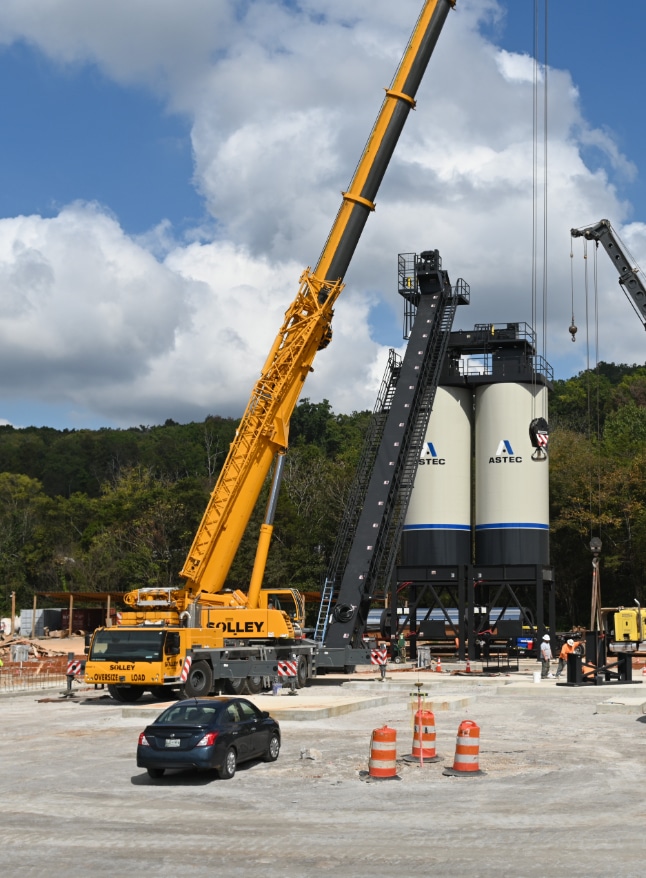
If you’re in the hot-mix asphalt (HMA) industry, you know one of the game-changing inventions of last century was the storage silo. During his “Asphalt Plant Efficiency” presentation during a World of Asphalt People, Plants and Paving session in Nashville in March 2024, Greg Renegar, the vice president of customer success for Astec Industries, Chattanooga, discussed the benefits of planning ahead with your storage silos in mind.

If your “why” is to provide mix for both customer and in-house crews, you’ll want to plan ahead for overnight storage of appropriate mixes as you build your new plant. During his presentation to the World of Asphalt audience in March, Astec’s Greg Renegar reminded attendees the plant that can start loading out customers first thing in the morning will be the plant everyone flocks to.

As he explained, even if you have older components you’ve been unable to update the past few years, you can operate efficiently if you maintain those parts, tighten up your environmental footprint, and follow best practices, such as optimizing the use of storage silos.

Notice that’s “optimizing” the use of storage silos. Not every mix design is ideal for the suggestions to come, and we’ll talk about those.

“If you are using very low absorption aggregates, it may lead to a high film thickness and the mix is more prone to drain down.”—Steve Jackson

Solve Asphalt Plant Odor Issues

Store It for Fast Startup

Renegar’s presentation included a side-by-side comparison of operations you might be able to share with your production team to showcase what’s optimal and what’s not.

Amazing Producer ABC

Using old technology

  • Starts loading out of prefilled silos at 6 a.m.
  • Starts up the plant at 8:30 a.m.
  • Runs two to three mixes on various jobs, with enough trucks for the day
  • Runs all day with changeovers but no mid-streams
  • Fills the silos at the end of the day for tomorrow’s early customers

Expand into Production: Plant Ticketing Software Basics

Struggling Producer XYZ

Using new technology

  • Starts making mix at 6 a.m.
  • Runs two to three mixes on various jobs, short of trucks
  • Mid-streams at 8:30 for 45 minutes
  • Runs another 300 tons and finishes for the day!
  • Cleans out
  • Gets a call at 10:15 a.m. for a 150-ton parking lot job
  • Fires back up at 11 a.m., runs 147 tons, then mid-streams while paving foreman figures the last bit needed

One of the two producers in our examples is using new technology for its efficiency and sustainability but isn’t using best planning strategies. Renegar shared plants that start and stop more than three times per shift use up to 20-35% more fuel than they do when they run steadily. These percentages are published in the National Asphalt Pavement Association (NAPA) publication QIP-132.

You can probably monitor the effect of starting and stopping on your own fuel use. By using the storage silo to take up the slack and prevent starts and stops, you keep a steady, even production. Renegar stated Astec’s most successful customers are the ones who use long-term storage capabilities to become more profitable.

Think about it.

Because 95% of breakdowns occur at startup, you have a leg up on the day even if unplanned downtime hits you at first light. You also have a leg up on your competition on the other side of the county if your plant already has mix in the silo while Producer XYZ is still getting fired up.

Renegar explained it this way: “Storage in multiple silos plus planning allows FOB customers to get in and out quickly in the morning. Serving the FOB customers better than your competition will result in more business.”

Expand Into Production: Navigate the Permit Process

Design Your Storage

This isn’t rocket science. But it does require forethought. Renegar cautioned producers on some reasons you might not want to store mix overnight. For example, lack of planning from your customers could result in wasted mix. There’s no point in producing a hundred tons of state mix at 300 degrees if your top five customers will show up wanting a less-pricy mix produced at 340 degrees.

If you don’t have proper heating systems in place, you run the risk of losing mix temperature. There are companies making electric heating elements that can be placed in silo cone packages to take the fear out of overnight storage. These entities might not make the silo itself, but are experts in the manufacture of electric heating components and provide these to OEMs like CWMF Corp., Waite Park, Minnesota, who then assemble the complete silo.

Even with the concern of temperature under control, you want to consider the mix design you’ll store. Renegar listed the “fear of storing polymer” as one of the reasons producers shy away from filling up the silo overnight or over a weekend. Folks in the field echo his concern when it comes to open-graded mixes due to a phenomenon known as drain down. This is when gravity pulls the liquid asphalt cement (AC) away from the aggregate and down toward the silo cone.

Steve Jackson, the vice president of plant operations and sustainability for NB West Contracting, Pacific, Missouri, spoke of this phenomenon in stone matrix asphalt (SMA) mixes. “The worst mix that I have seen for drain down is SMA,” Jackson shared. “That is why some agencies are reluctant to remove the cellulose fibers even when you add ground tire rubber or reduce the mix temperature.”

He gave an example. “I remember an SMA project where we filled a silo, and that was all the mix that we made for the night. The first sample, from the bottom of the silo, had high AC and 1.5% air voids. The second sample, toward the top of the silo, had low AC and 7% air voids. We made the mix extra hot because it was going to spend a long time in the silo.” The expensive lesson he shared was having to mill out that tonnage and replace it.

How to Become Your Own Hot-Mix Supplier

“SMA, open-graded friction course and other gap-graded mixes are the worst for this phenomenon,” Jackson continued. “They also usually have specified minimum asphalt contents. If you are using very low absorption aggregates, it may lead to a high film thickness and the mix is more prone to drain down. When Joe Schroer (NB West’s construction materials engineer) worked at MoDOT, he evaluated some of those mixes, and started calculating the volume effective binder, and approved some of the SMA mixes with less than the minimum spec requirement AC content of 6.0%.”

In other words, there’s hope for “fixing” the gap-graded mix so it can be stored overnight for quick loadout in the morning, if you’re willing to work with it.

Malcolm Swanson, industry consultant and president of e5Engineers LLC, Chickamauga, Georgia, shared his thoughts. “Coarse graded mixes, SMAs, any mix with little surface area will tend to drain down. That is a major reason for adding fiber to a mix. Fiber adds surface area without changing gradation. The added surface gives the AC a place to hang on.”

“If the state allows the contractor to design their own non-gap-graded mixes, then the mix has the absolute minimum asphalt content, so they are less likely to drain down,” Jackson said. “If there are mixes that specify a minimum asphalt content, then I would be careful. Take a look at the aggregate absorption as well. We typically use aggregates with 1% or lower water absorptions in our high type mixes, these are mixes that we try to drop the mix temperature as low as possible to prevent drain down.”

For producers looking to optimize the use of the storage silos, it’s possible to adjust the mix design and temperature to ensure you have exactly what your customers are looking for first thing in the morning. It might take a little forethought and planning, but the producer who plans ahead is the producer who can optimize all the components for a tight environmental footprint, an efficient operation and a plant that all the customers flock to.