
Repairing Little Things on the Paver Saves Big
BY AsphaltPro Staff

Focusing on the paver, we look at tips to clean and maintain the iron to achieve top quality paving every season
This is the time of year when crews are rushing to fit in as many projects as they can before snow flies and even daytime temperatures could prevent top quality paving. As much as your team wants to dive in and start paving at the beginning of the shift to get the job done, you must ensure all the equipment is in working order first.
There’s no point in paving with a warped screed. There’s no point in spraying tack with a distributor that has gummed up nozzles. Instead, let’s look at a few routine maintenance items that can keep your crew working efficiently into this hurry-it-up part of the construction season.
As Sandy and I pointed out in the September article “Increase Quality on Any Job,” we should start with the all-important paver. And we should start with adjusting the attitude of the workers who are responsible for its upkeep.
There are members of the workforce who don’t yet understand why we’re telling them to take time out of their day to clean a machine. They don’t yet know why it’s important to wipe down vital components with release agent and a rag while the paver is still warm. We have to educate them so they understand:
- a clean machine will work better;
- a clean machine will make their job tomorrow easier;
- a clean machine will make it possible to notice if a component is out of order;
- a clean machine is safer to work around; and
- a clean machine will help them get better quality for full pay on the final job.
All these things come into play because the equipment is clean enough to work properly. It’s up to each crew member to help keep it clean and in good working order.
Get Smooth Forward Motion
Starting at the very front of the tractor, if you see material buildup on the push rollers, you want to get at that and scrape it off. When the push rollers stick or fail to roll smoothly against the haul truck tires, the tractor will experience a jerking or shuddering motion as it drives forward. Even when this shuddering is slight, it affects the performance of the screed, thus the smoothness of the mat.
If you have globs of material built up anywhere else on the tractor or screed, this jerking motion might knock some of that loose, causing it to drop onto the surface and create cooled areas of material segregation. Your roller operators won’t be able to roll that out and you’ll have potholes in your finished project some day or you’ll have an inspector deducting your pay.
All of this can be avoided if you clean the push rollers at the end of each paving shift. While they’re still warm, take a rag and some release agent and wipe them off. It’ll only take one or two minutes to do while the components are warm. If you wait until morning when the paver is cool and stray material has hardened, it’ll require a putty knife, more release agent, more elbow grease and more time.
Another area to watch for material buildup to maintain smooth forward motion is the wheels—or track—of the tractor. We’ve talked about this in AsphaltPro before, but it bears repeating. Check the bogies and track at the end of the shift and clean out any asphalt you see starting to get caked in there. Do it while the components are still hot to make the job easier on yourself.
Ways to prevent the material from getting into the bogies include:
- avoid overfeeding the head of material;
- avoid flooding the endgates; and
- avoid driving over piles of spilled material.
Let’s talk about driving over piles of spilled material for a moment. One way to prevent spills is through haul truck management and communicating with drivers. A good dump man who can get drivers to employ brakes, raise beds and charge the hopper properly is worth his weight in gold. See the article “Save on Costs with Your Professional Guide to Asphalt Mix Delivery—An Independent Look at Best Haul Truck Practices Part 3” for a tutorial on mix delivery.
Another way to prevent spills is to maintain the front of the hopper properly.


Look at the front left and right side of the hopper in these pictures. In the main picture, you can see that the rubbers have been replaced from what you see in the inset picture. The center panel will also be replaced but must come from the Caterpillar parts distributor. The conveyor belt material had become worn and torn, allowing mix to consistently fall out of the hopper during the paving day. This made extra handwork for the laborers to shovel material out of the way and often resulted in segregated areas in the mat. This does not lead to top quality paving results. On a state job, it could lead to failed lots or deducts.
By replacing torn or missing rubbers on the hopper, you can prevent some of the spillage that causes extra handwork for your crew and piles of mess that your tractor’s wheels end up running over. When the bogies pick up that material, it’s a mess to remove later.
Your roller operators won’t be able to roll that out and you’ll have potholes in your finished project some day or you’ll have an inspector deducting your pay.
Focus on the Screed
The areas between the front and the screed are important to clean at the end of the shift, of course, and I’m not trying to minimize them by jumping to the back of the tractor. But let’s concentrate on the screed, nose and plates for a few minutes. The screed is your hot iron that will smooth the material into a flat, gorgeous mat. If you have material stuck to the bottom of the screed or caked against different elements, you lessen your chances for success.
In the picture at right (0571 gapping from warping), we can see a gap between the endgate and screed. We see mess and material all over the warped metal. This has happened for a number of reasons, including poor loading onto and off of the lowboy, but also because built up material was allowed to prevent good extension and retraction of the endgate and tunnels.
The result is warped metal that can’t line up correctly. If the endgates aren’t flush with your screed, you can’t build a good joint. That spells disaster for a pavement and deducts for your pay.
The buildup of material on the screed or its nose can change your angle of attack. It can degrade the wiring or disrupt the electronics. For example, if the electric heat is disrupted, the screed will not heat evenly all the way across, leaving you with uneven paving results. Look at this picture for some of the problems we’re talking about.

On the right side of the picture, the white stones indicate the endgate is too tight. That causes the shadow you’re seeing halfway into the main screed. The screed is cold there and it’s too high, causing the line.
The second area of shading is occurring because the endgate is forcing pressure on the extension. The mis-matched screed sections between the extendible and the main angle of attack isn’t the same, either. You can see this in the mat behind the paver.
The center section is tight and is screeding off correctly. This is good and offers the nice, left-hand side of the picture, which is what we’d like to see across the entire width of the mat. Instead, we’re seeing the uneven results of a screed that hasn’t been maintained properly or double-checked prior to the day’s paving start.
Your crew can prevent this uneven performance by:
- maintaining all components of the screed;
- cleaning the different elements of the screed and the underneath side of the screed/screed plate;
- removing asphalt material from the nose of the screed at the end of the paving shift;
- check to ensure the screed and extensions are parallel;
- checking the straightness of the screed plate with a straightedge prior to paving; and
- double-checking the electronics to ensure even heating all the way across.
When you see this article appear online, share some of your screed cleaning and maintenance tips, too.
Catch Up Over Winter
With the end of paving season upon us in many parts of North America, now is the time to schedule winter maintenance for all our paving equipment. You can download a paver maintenance checklist from TheAsphaltPro.com white paper repository and make a plan for your mechanic to address this all-important machine before season start-up 2025.
Also make a plan to incorporate equipment cleaning in your new-hire training and worker refresher training over the winter. I worked on an online training course with AsphaltPro a few years ago—Asphalt Paving 101, available here and one of the modules in that course outlines each worker’s job on the paving crew.
Don’t let your downtime go by without encouraging workers to do their jobs to the fullest. Some of these men and women come to our industry without any knowledge of the equipment or basics of paving. If we let them flounder and fail, allowing their daily performance to be hindered by gummed-up machines, they’ll have no pride in either the work or the equipment. They’ll leave as soon as something more enticing comes along.
To help the newcomers feel valued, we must show them the “why” behind the things we do. We must help them understand that the task of cleaning a machine at the end of the shift today saves them time and energy tomorrow, makes their job easier and more productive tomorrow, and gives them a top quality paving job with a better chance at full pay tomorrow.
We’ll dive into more equipment upkeep and tips in future articles, so keep an eye out for that in upcoming issues of AsphaltPro.
This Should be Covered
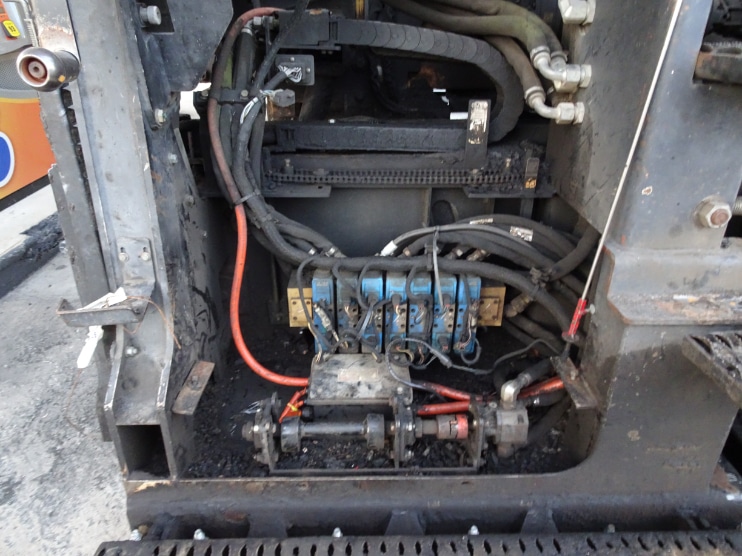
Make sure the mechanics and the crew members not only understand their jobs but also care about what they’re doing.
In this picture, we see an uncovered electrical section on the back of a paver, which was sent out to the field for a day of paving. You’ll notice the eccentrics at the lower center of the “box” are caked with asphalt and unable to spin, but what’s worse is this uncovered area is a shock hazard for the screed operator and any other worker who reaches into it. The seven blue boxes are 240-volt electrical connections for the screed.
There’s no excuse for this to go into the field without its panel cover. Don’t let mistakes like this cost someone their life. Instill care and knowledge in your crew.
John Ball is the proprietor of Top Quality Paving & Training, Manchester, New Hampshire. For more information, contact him at (603) 493-1458.