
Turn Operator Ideas into Iron
BY Bill Stanley
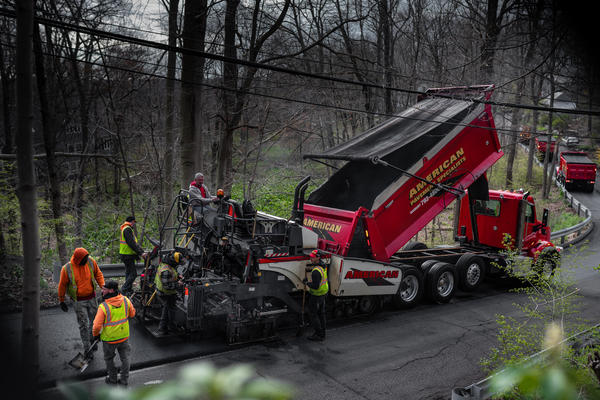
How a small Connecticut paving crew collaborates with dealers and manufacturers to turn everyday job site ideas into the next generation of asphalt equipment.
We’re not some giant company buying 30 machines at a time. We’re a small, family outfit in Connecticut. And yet, we’ve been lucky enough to work with some big-name manufacturers to help build the exact machines our crews need.
The reason our voice carries is because people see how much time we spend in the seat—and social media helped with that. Folks in the industry know we’re dedicated. They know we live this work.
We’ve sat in on design meetings, shared ideas from our crews, and seen little job site tweaks turn into real factory upgrades.
In this piece, I’ll walk you through how we built those relationships—from the dealer counter to the design room—and why that kind of collaboration is the key to running better, safer, and more productive crews.
Start With the Dealer, Not the Brand
Everybody likes to brag about what brand they run. But the truth is, the name on the hood doesn’t keep you working. Your dealer does.
We work in what I call a three-part system: contractor, dealer, manufacturer. That middle piece makes or breaks the whole thing. You can spend top dollar on a new roller, but if you can’t get it serviced when it quits on a Friday afternoon, that pretty color on the grill won’t save you.
I care less about the paint and more about the people behind it. We’ve got brands we like, sure, but I don’t buy on looks. I buy on service.
A lot of guys chase the cheapest deal. “Bill, I can get that roller ten grand cheaper down south.” Yeah, and when it breaks, who’s coming to fix it? Because my dealer in Connecticut knows me by name. He’s the one who’ll send a mechanic in the rain at midnight. That’s worth more than any discount.
Loyalty Pays Off When Things Go Wrong
We bought a machine in 2025 that cost just shy of seven figures. Brand new, supposed to be top of the line. From day one, it was a problem. Spent more time on a trailer than it did on a job.
That’s the kind of thing that’ll test your patience. But I never lost my cool. Didn’t scream. Didn’t threaten. Because my dealer had my back from the start. They pulled the manufacturer in right away, and both stood with us through the whole mess.
While they worked the bugs out, the dealer dropped off another machine—bigger, newer, more expensive—and said, “Keep it till we figure this out.” That’s not something you get from a cold call or a one-time sale. That’s years of loyalty paying you back.
Beyond the Spec Book: Bill Stanley’s Standards for Blue-Collar Quality Control
Turning Feedback into Factory Upgrades
Once we built that trust with our dealer, doors started opening. The dealer connected us to manufacturers, and now we’ve been in the room with the people who actually design the machines. That’s when it gets fun.
We’ve seen ideas go from a wish-list of little features for our crew to standard on a whole product line. The tool racks and storage setups on the LeeBoy pavers came straight out of a conversation about wasted time—crews walking several blocks back to grab a tool they need. Now, everything has a place on the machine.
At Mauldin, we helped with some improvements on their MX15 grader/maintainer, including lighting under the mold boards, a storage area for the operator, manual guides on the grader blade, in-cab heating and improved insulation—stuff that sounds small but makes a big difference for the operator. They listened and made changes.
And X-Broom—that’s a great one. Their road broom is designed specifically to pick up millings. The guy who builds them came right to our shop. We stood over the broom, talking mirror angles and camera placement to develop a special Raised on Blacktop edition of their broom. Now, that edition of the broom is what you might call their ‘Cadillac’ broom with all the optional add-ons.
That’s what happens when an operator and a builder actually work side by side. You end up with a better machine.
How to Talk So Manufacturers Listen
When you finally get in front of the people who build the machines, remember, you’re not there to tell them what they did wrong. You’re there to tell them what the guy in the seat needs.
I always start with the same line: “You already build a damn good machine. We just want to make it easier for the operator who’s in it all day.” That breaks the ice. You can see the arms uncross.
Then you keep it simple. Be straight. “The heater doesn’t keep my feet warm.” “The camera angle could be better, if only…” “It’d be great to have dedicated tool storage on the paver.” That’s what they want—real talk from real users.
The Future Belongs to Collaborators
When I started in this business, most equipment was built for big highway jobs. If you were a smaller contractor like us, you made do. We built things ourselves, ran hand tools, or used machines that were bigger than we needed.
Then a few manufacturers saw that there was a whole world of small and mid-size paving work that needed the same quality equipment as the big jobs. They sold 10 of those for every one of the big pieces of machinery. Before long, everybody was building compact gear and we finally had the right tools for the work.
That same kind of shift is happening again, only this time it’s about technology. Sensors, automation, GPS controls, AI—it’s all coming fast. But the best machines will still be the ones built with input from the people who actually run them.
That’s why collaboration matters more than ever. When manufacturers, dealers, and contractors work together, the whole industry moves forward. The technology gets smarter, the work gets better, and the operator stays right where he belongs—at the center of it all.