
How to Dial in Efficiency for Maximum Production
BY Bill Stanley
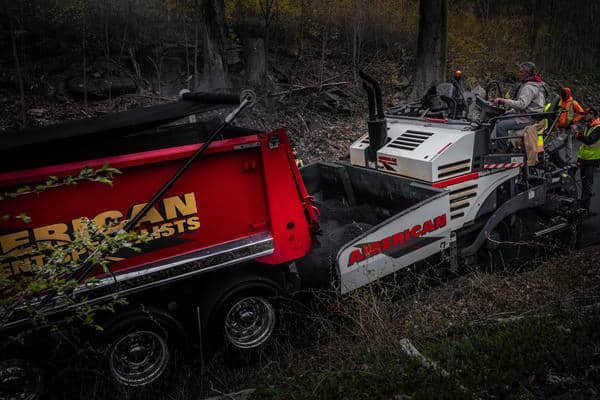
Bill Stanley of American Pavement Specialists shares how he squeezes maximum efficiency out of fall paving with smart scheduling, plant choices, and eliminating dead time.
I can accomplish more in one day in September than I can in a week in April. In spring, the new crew is still learning, you’ve got equipment bugs to shake out, and customers are juggling other deliveries that bump your schedule.
By fall, it’s the opposite. The crew and machines are running smoothly and customers are motivated to get their projects finished before winter. That combination makes September through November the most productive stretch of the year.
But, to really capitalize on the fourth quarter, you’ve got to go beyond those natural gains and manage the details that squeeze every bit of production out of each day. Here are three ways I gain more time for every fall day, when every minute matters.
The way I fight dead time is by paving the job in my head before we ever show up. I run it step by step.
Schedule to Maximize Efficiency
In the spring, I’ll bend to a customer’s schedule. If they say Tuesday, I’ll make Tuesday work—even if it means hauling machines across the county. We’re moving slower anyway, fighting weather, and the customers who are ready that early usually have stronger preferences on timing.
By the fourth quarter, everything’s running hot. Every wasted hour on the road is an hour we’re not putting asphalt down. Last week I had a client who wanted Tuesday, but we were working in another part of town that day. If I gave him Tuesday, we’d lose three hours moving iron around. The customer grumbled when I told him we’d have to come to him on Wednesday, but I don’t regret it. Come fall, those three hours could allow us to complete one more job that week!

Minimize Mix Waiting Times
We’re busy this time of year, and so are the plants. Their production is dialed in just like ours, but the lines can get long because every contractor is trying to finish before winter. Nobody ever wants to wait on mix—but come fall, we’re moving too fast to waste production efficiency on truck delays.
For a job coming up tomorrow, I called three local plants to see which one would have the fastest cycle times. That’s the one we’re using. It doesn’t matter if it’s my preferred plant or not—what matters is keeping trucks turning.
By this time of year, our drivers know the prevailing traffic patterns of the area so we can optimize their routes. They know where to enter and exit our sites and where to clean out their beds, so we avoid on-site traffic jams. Managing those details—plant choice, haul route, on-site traffic—is what keeps the whole train moving at playoff speed. (Read more about how Bill approaches ‘paving playoffs’ in the article “Prepare for Playoffs to Start Next Season Strong” on theasphaltpro.com.)
When the season ends, I finally get the chance to step back and work on the business instead of in it.
Eliminate Dead Space in the Day
Downtime is one thing. Dead time is another. A tailgate talk that should take two minutes cannot turn into a long coffee and chat like it could earlier in the season. Equipment cannot show up late because it wasn’t staged wisely the night before. Our water and fuel cannot end up ¼ mile from the paving train as we move down the road because we didn’t plan ahead.
Cutting out that kind of wasted time can save us six to eight hours in a week. When you’re already working 60-hour weeks to beat winter, that might mean saving my crew a whole shift or knocking out another job or two that week.
The way I fight dead time is by paving the job in my head before we ever show up. I run it step by step. Where’s the water coming from when we start the job vs. when we finish the job? Where are employees parking? How can we best stage our equipment for a fast start-up?
If I can spot the friction ahead of time, I can fix it before the crew ever hits the ground. It’s like an athlete visualizing success before a big game—you see it enough times in your head, and it runs smoother in real life.
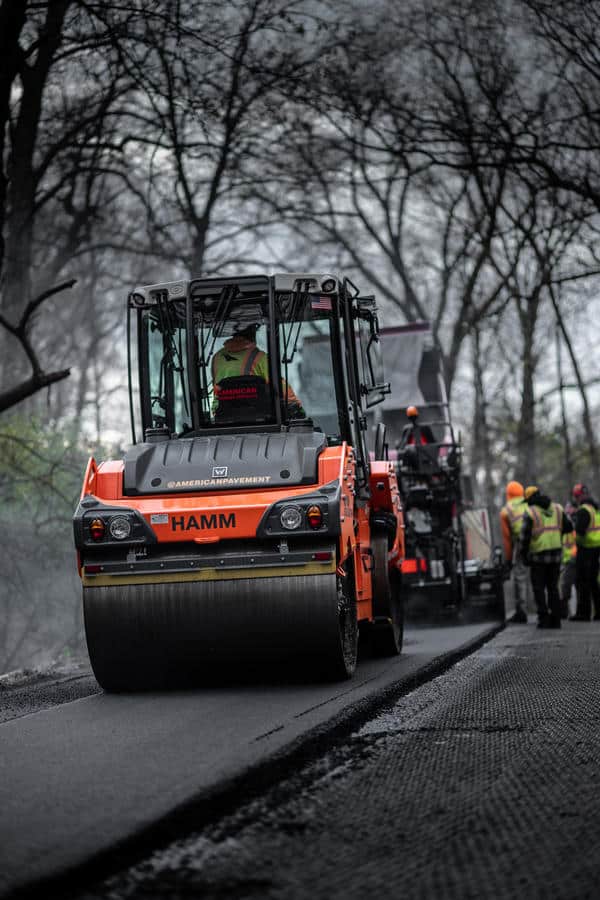
Keep Rollers Staggered | One place dead time shows up fast is at the rollers. If both machines run out of water at the same time, the paver has to stop. In hot weather you might get away with it, but in the cooler temps of fall the compaction has to stay close to the mat. So I tell operators to stagger their fills—if one’s at half a tank and the other’s at a quarter, the guy at a quarter goes now. Then when he’s full, the other one goes. That way, there’s always a roller on the mat and the paving train never breaks rhythm.
The Bottom Line
You might look at how efficiently we run in the fall and think, if only we moved at that pace all year… No slow winters, no spring start up—just steady production. There’s truth to that. But I’ve come to see the bright side of this slower time of year.
When the season ends, I finally get the chance to step back and work on the business instead of in it. We go over the equipment—what got beat up, what needs replacing, where we need to invest. We look at the numbers—which jobs made money, which didn’t, which customers pay too slow. And we evaluate the crew—who’s ready for more responsibility, where we need to add, where we can tighten.
That off-season planning is just as important to our fourth-quarter success as the daily details. It’s like a team watching film after the season’s over. You study what went right and what went wrong, and you make a better game plan for next year. By the time September comes again, we’re not just back in rhythm—we’re sharper than before.
Bill Stanley owns American Pavement Specialists, Danbury, Connecticut, with his wife, Colleen. Stanley has more than 50 years of experience in the asphalt industry.