
Beyond the Spec Book: Bill Stanley’s Standards for Blue-Collar Quality Control
BY Bill Stanley
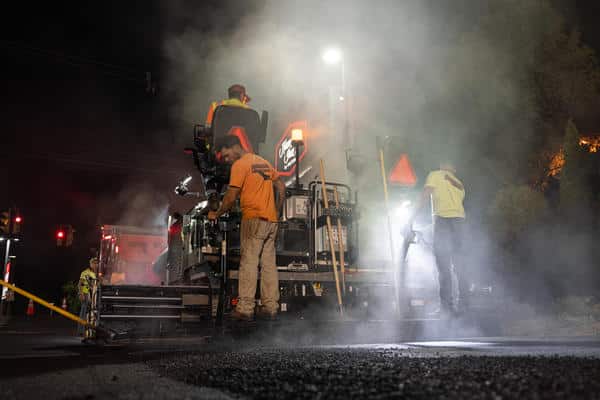
In this no-nonsense guide, the owner of American Pavement Specialists lays out the habits and standards his crew follows to deliver blue-collar quality you can see, not just measure.
When people talk about asphalt quality, they usually mean numbers. They’re talking density, profile, smoothness. And that stuff matters. We hit those numbers every day.
But there’s another kind of quality that’s just as important. I call it blue-collar quality. It’s what the crew sees. It’s what the customer remembers. It’s the broom lines, the edges, the finish. It’s whether you showed up ready, laid it down right and left the job looking like it should.
At American Pavement, we don’t just hit the numbers. We make sure the whole job reflects the pride we put into it. If you want to build that kind of quality, here’s where it starts.
1. Quality Starts at Clock-In
Quality control doesn’t start with a test or a spec sheet. It starts the minute your boots hit the ground.
At American Pavement, most of the crew clocks in at 6:15. But I’ve got guys who roll in at 5:45 to start loading trucks, checking tools and making sure we’re not chasing down missing gear when we should be paving. Every shovel, broom, rake and tape measure has a place—and it better be there.
If you show up to the job and realize you forgot something simple, like a transit or the chalk box, you’ve now delayed your start, pulled someone off task to go get it, or worse, you’re stuck without it. And when you don’t have the right tool for the job, quality takes the hit.
If you want to lay down a quality mat, it starts with showing up ready with tools in hand, mind on the mission. That’s how you set the tone for the day. That’s how you build quality from the ground up.
2. Run Your Race, Your Way
At American Pavement, we have a certain way we do things and everybody on the crew knows it. Whether it’s how we prep equipment in the morning or how we leave a site at the end of the day, there’s a standard. And when everyone’s pulling in the same direction, quality becomes the norm, not the exception.
That doesn’t mean our way is the only way. I was helping another contractor recently, jumped in a machine, and started working how I usually do. He politely stopped me and said, “We have a certain way we do things around here.” And I respected that. His crew knew their system, they followed it, and they got the job done right. That’s what matters.
You don’t need to copy what the next guy’s doing. You need to know your own process and make sure your team sticks to it. That’s how you keep quality consistent. That’s how you build trust, job after job.
3. Don’t Cowboy the Equipment
At American Pavement, we expect full production out of every machine we own. But we also expect our operators to respect that machine. That’s what I mean when I say, “Don’t cowboy the equipment.”
That means no driving too fast, no rough handling, and no running a machine harder than it’s built to be run. When you push a machine past the point of smart operation, you’re not helping the team. You’re risking the job, the schedule and the equipment we rely on to achieve quality.
And it’s not just the big iron. It’s the shovels, rakes, brooms—every tool on that truck matters. If you run over a broom and now we can’t sweep the job, that’s not a small mistake. That’s a direct hit to our finish.
4. The Foreman Walk-Through
Before the first ton hits the ground, our foreman walks the site. We treat that walk-through like it’s part of the work. It’s our chance to make sure nothing’s going to get missed, broken or misunderstood before the machines fire up. That includes checking access, spotting utility covers, planning truck routes and making sure nobody’s tracking asphalt into the porta-john and back across the jobsite.
We’ll also confirm with the customer that we’re on the same page about what quality means for this specific job. For example, some customers want the smoothest finish possible. Others want a little texture for traction. Either way, we get clear on expectations before we lay a single foot of mat.
The walk-through also gives us a chance to flag any other customer concerns—don’t drive on the lawn, don’t block the driveway, don’t scare the dog. Ignore those small details, and you’ve already damaged the customer’s perception of our commitment to quality on the big things.
5. Perception Is Quality
Asphalt is a visual trade. We’re not pouring footings or running conduit underground. We’re the last ones in, and our work is what everyone sees. You can hit every number on the spec sheet—grade, compaction, temperature—but if the site looks sloppy, the customer’s going to think the work is sloppy.
To the untrained eye, a well-swept site with straight joints and crisp transitions looks like a quality job. And to most customers, that is the definition of a quality job. That’s why we pay attention to the finish. Clean lines, swept edges, no stray piles of mix, no tire tracks where they don’t belong. Those details matter, even if they don’t show up on a test result.
How to Grow Your Paving Business in the Golden Age of Opportunity
6. Use the Right Equipment for the Job
You don’t just grab whatever machine’s available and hope it works. If you want a quality result, you’ve got to match the equipment to the job.
At American Pavement, we run three different pavers, three different mills, and several sizes of rollers and trimmers. We do this because a tight cul-de-sac doesn’t want the same paver you’d run on a big commercial lot. And if you try to muscle a 28-foot paver into a 150-foot section of winding roadway, you’re going to fight that job all day—and your finish is going to show it.
Having the right equipment doesn’t guarantee quality, but it makes quality possible. The wrong setup, no matter how skilled your crew is, will work against you.
7. Know Your Craft
Not every job comes with a stack of specs to meet. In fact, about half the asphalt we lay doesn’t require any density testing at all. That might mean we don’t bring out the density gauge or use PaveScan tech on that particular job. But that doesn’t mean we’re not paying attention.
Asphalt was laid for hundreds of years before we had all this technology. What did folks do before they had all this technology at their fingertips? They relied on their experience! And that’s exactly what we do when the tech’s not on the job. We rely on experience, just like the folks who came before us.
8. Revisit Your Work
We’re lucky that we’re a local contractor. That means I pass a lot of our jobs just going about my day—weeks later, months later, sometimes years. And I pay attention. I want to see how it held up. I want to know what worked, what didn’t, and what we can do better next time.
That’s how we get better. Sometimes we change our pattern. Sometimes we adjust which direction we pave. Sometimes we flag a mix that didn’t perform the way we hoped. But we don’t learn any of that unless we go back and look.
Quality isn’t just about the job you finished yesterday. It’s also about the job you’re going to do better tomorrow.
9. Know When to Say No
At American Pavement, we know what kind of work we’re set up to do well and we try to stay in that lane. When we chase projects that don’t match our equipment, our schedule or our crew’s strengths, quality suffers. Not because the team isn’t trying hard, but because the job throws them curveballs they shouldn’t have to deal with.
You can have a great crew and still end up with a bad result if the project isn’t a fit. That’s why sometimes the smartest thing you can do is say no.
Overcoming Common Fears: Why Asphalt Companies Avoid Social Media
10. Quality Is a Moving Target
What passed for a quality job 10 or 20 years ago might not pass today. Standards change. Expectations change. You’ve got to be willing to change with them.
You’ve got to be open to the idea that there might be a better way than how you learned it. That doesn’t mean the old way was wrong. It means we know more now. And if you’re not willing to adapt, you’re going to get left behind.
Quality isn’t a fixed point. It’s something you have to keep chasing.
I’ve had cars drive over a fresh mat and wreck a lane before we could even get the roller on it. That’s why we plan traffic like we plan everything else—because once that paver starts moving, we don’t want to stop.
The Bottom Line
The spec book tells you what quality looks like on paper. Blue-collar experience tells you what it looks like in the field. You need both. One proves the work. The other gives it pride.
And pride doesn’t come from checking a box. It comes from how you prep, how you pave and how you leave the site when it’s done. That’s what quality means to me.