
How Gaming Skills Translate to Asphalt Plant Operator Roles
BY Ellie Gabel
Gaming for an asphalt plant operator could close the construction industry skills gap
The industrial sector has undergone drastic changes in recent years. Has your workforce followed suit? Decision-makers must overhaul their sourcing and training programs before the skills gap grows too wide to bridge.
Many are looking to younger generations to compensate for the swath of industry veterans set to retire. This approach has its merits, but is very broad. Instead, hiring managers could zero in on a highly skilled yet untapped population of gamers.
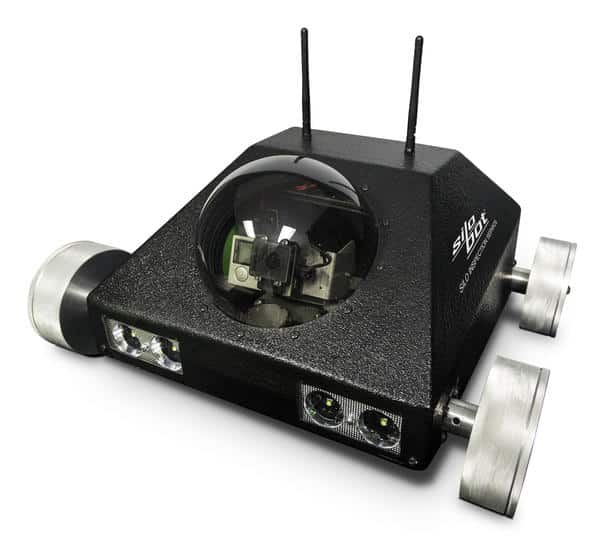
The SiloBot from Astec Industries is an example of robotics and humans working together to make a task at the plant go more quickly and safely. With the SiloBot service, confined space inspections are performed by the robotic device, keeping workers out of harm’s way.
The Problem: The Asphalt Industry Needs Plant Operators
As seasoned industry professionals retire, almost 4 million manufacturing jobs will become available. However, experts project approximately half of those roles will go unfilled.
Editor’s Note: Given the approximately 350,000 workers in the highway construction and maintenance industry overall include individuals who anecdotally share they intend to delay retirement or “never retire,” it’s hard to put a number on how many asphalt plant operators are retiring and how many are moving up the skills ladder.
With the skills gap widening, the need to scout and retain top talent is urgent. The best solution may require looking at unconventional talent pools such as the video gaming community.
Gamers have a reputation for being lazy and lonely, but that’s not always a fair assessment. Most are sociable, ambitious and tech-savvy. And the gaming population offers a sizable talent pool. According to the Pew Research Center, 85% of teenagers play video games, and over 50% of them agree that doing so has enhanced their problem-solving skills.
A Solution: Some Gamers Would Make Good Plant Operators
Gamers’ technology skills go beyond the basics. They can quickly and independently troubleshoot technical issues. Many are familiar with the digital solutions plants will soon utilize, such as virtual reality (VR) or Internet of Things (IoT) devices. For instance, VR users could easily adapt to on-the-job VR training.
Astec Industries, Chattanooga, Tennessee, is one of several OEMs developing virtual, augmented or mixed reality solutions. At this time, Astec customers can use its Astec Digital extended reality solution to view an entire plant or a single piece of equipment at scale, allowing customers to “see” the plant footprint with new or “moved” components.
In 2024, Stockpile Reports®, Redmond, Washington, demonstrated the world’s first mixed reality stockpile measurement tool with its SR Measure, utilizing Apple Vision Pro. It made navigation intuitive, requiring only hand and eye movements—the wearer merely looks at the pile to create a three-dimensional reconstruction.
The emergence of collaborative robots (cobots) and artificial intelligence (AI) necessitates workforce-wide upskilling. One example from 2017 is Astec’s Silobot, which performs inspections inside the asphalt silo, using magnetic wheels and ultrasound technology. It shortens inspection times from days to hours, keeping crews out of the confined space.
Consider Spot, the robodog from Boston Dynamics, discussed in the recent article, “CRH’s Sustainable Practices Give Preferred Results.” This cobot performs repetitive tasks, like inspections, where it’s less than ideal for humans to work.
Gamers have interacted with AI for decades longer than the general population; many have backgrounds in programming, so they are positioned to adjust to such technologies quickly.
The Fifth Industrial Revolution focuses on how the relationship between humans and machines can help facilities increase output while decreasing errors. Those who have grown up gaming, programming and developing have probably explored this connection personally.
Which Skills Translate
Just because a young adult is a digital native doesn’t mean he or she possesses technical literacy. Millennials and Generation Z were born into a world where technology was optimized for a seamless user experience. Many passively consume content without understanding how all the tools work.
This is why focusing on the gaming population is more strategic than targeting young working adults as a whole. Those who grew up actively utilizing, exploring and troubleshooting technology are better equipped to perform well amid AI technology.
Gaming helps individuals develop a broad range of transferable skills, including problem solving, active recall, teamwork, pattern recognition, time management, deductive reasoning and leadership.
Recruitment and Training
The gaming population is large, but recruiting these individuals is not as easy as updating some language in the job description. There is little visible overlap between industrial operations and gaming, so these people may not be actively seeking an asphalt plant operator position. Hiring professionals should get creative. Advertising on video game blogs, posting VR training marketing material or leveraging social media may help.
These tech-savvy candidates will thrive if training is tailored to their skill sets. Gamified learning and upskilling—such as scoring, leveling, tiered rewards—would be familiar and engaging.
Long-term Strategies
Many young people play video games, and the market is only growing. Experts project the video game market will increase from $292.4 billion to $977.4 billion between 2025 and 2035. This bodes well for those rethinking the sourcing and hiring processes to target this segment.
With a swath of seasoned workers nearing retirement, facilities will want to update their talent pools. Gamification could be the key to attracting gamers and updating people’s outlook on the industry. As public perception shifts, more may start viewing asphalt plant careers as more than just lucrative—they’ll see them as competitive.
Ellie Gabel is the associate editor at Revolutionized.com.