European Show Crushes Production

Hillhead 2026 brings new crushing tech to global audience

Hillhead, which took place June 23-25, 2026, in Buxton, England, is the largest quarrying, construction and recycling equipment exhibition in the United Kingdom. It takes place every two years in a working Derbyshire quarry and brings together 600 exhibitors and nearly 20,000 visitors for three days of demonstrations, big iron and new technology.

Some of those exhibitors are, naturally, based in the European Union and offer services to our European colleagues. Some of those exhibitors display and demonstrate innovations that cross the Atlantic. They all showcase advances in construction for the aggregates and asphalt industries’ edification.

New for 2026, Hillhead introduced a new way to experience the latest big kit in action at the Quarry Face demonstration area. Three each day, leading manufacturers showcased their machines as part of a dynamic curated live show hosted by broadcaster and technology presenter Nikki Dean. Combining live machine operation with expert commentary and manufacturer interviews, all the action was streamed onto a giant LED screen set against the dramatic quarry face backdrop.

Visitors were able to see exactly what the machines could do in real working conditions, while learning more about the latest product developments, technologies and innovations directly from the experts operating them. Curated live demonstration sessions took place with the following participants: JCB, Hitachi, LiuGong, Hyundai, CASE, McHale, Komatsu, SANY, Develon, XCMG, SBM and Corgin.

OEMs exhibiting at Hillhead 2026 included, but were not limited to, the following:

ASTEC

Astec’s leadership team was on site throughout the event to work directly with customers and partners.

Astec put customer performance, productivity and profitability at the center of its presence at Hillhead 2026, unveiling eight new innovations for the European market across crushing, screening, washing and material handling. Astec’s Hillhead showcase was focused on solving real operational challenges reducing downtime, improving throughput and lowering cost per tonne. Attendees experienced eight key launches and innovations, including:

  • The global launch of the Kolberg® Eco-Scrub modular washing solution, delivering efficient wet processing with a design especially suited for semi mobile locations.
  • The global launch of the Telestack® LF527 low feed hopper feeder, reducing double handling and ensuring smooth, controlled material flow.
  • The European launch of the new Frontier™ tracked mobile crushing and screening range and the European launch of the patented Vari-Frequency Technology, designed to minimize blinding and maximize output, which was showcased on the Pioneer 6203LPV horizontal screen.

ERIEZ
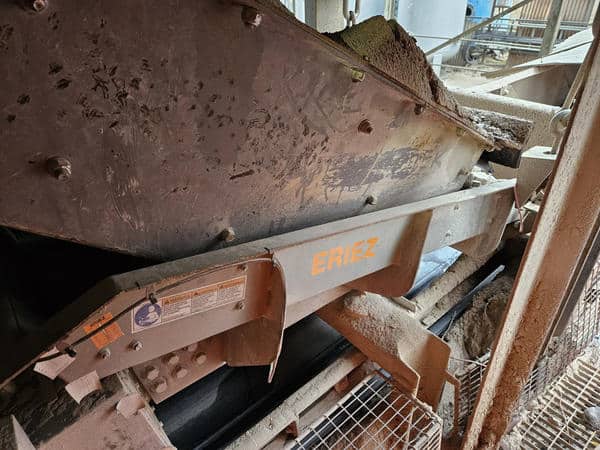
Eriez exhibited its 75B‑HC high-capacity electromagnetic vibratory feeder at Hillhead 2026, as well as a conveyor system equipped with an Eriez metal detector, along with a suspended magnet and additional material handling solutions.

Eriez®, Caerphilly, United Kingdom, featured its latest material handling technology, including the B‑HC high-capacity electromagnetic vibratory feeder. Designed to extend the capabilities of the Eriez B-Series range, B‑HC feeders offer high-capacity electromagnetic feeders for demanding bulk material handling applications. The feeder incorporates a high-power electromagnetic drive with a rare earth armature, applying force in both forward and reverse directions of the tray to produce controlled, linear material flow.

EVOQUIP
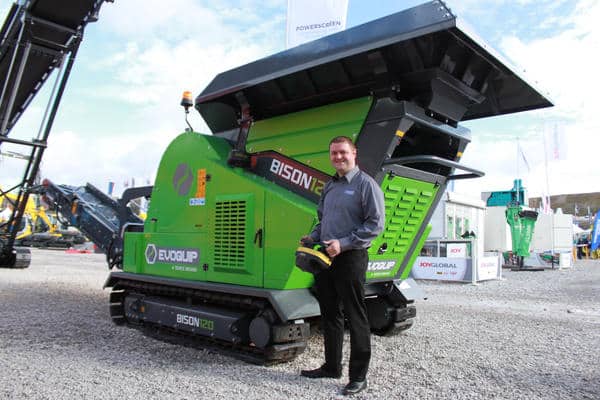
In 2016, EvoQuip made its debut at Hillhead with the introduction of the Bison 120 jaw crusher, a compact machine designed to simplify crushing operations for smaller contractors and recycling applications. Since that launch, EvoQuip has steadily expanded its portfolio from a single jaw crusher into a broad range of compact equipment covering crushing, screening, shredding and conveying.

EvoQuip®, a Terex Corporation company, celebrated 10 years since the brand was officially launched at the show. EvoQuip made its debut at Hillhead 2016 with the introduction of the Bison 120 jaw crusher for smaller contractors and recycling applications. The EvoQuip stand included:

  • a new digital element, providing visitors with interactive access to product information, application insights and a snapshot of the brand’s global reach over the last 10 years
  • TRAC, a multi-sensor solution to improve screening equipment performance and durability
  • INNEX, a new digital brand to improve end user experience through consolidated tools and AI-driven capabilities
  • a fundraising effort for cystic fibrosis charities

FINLAY
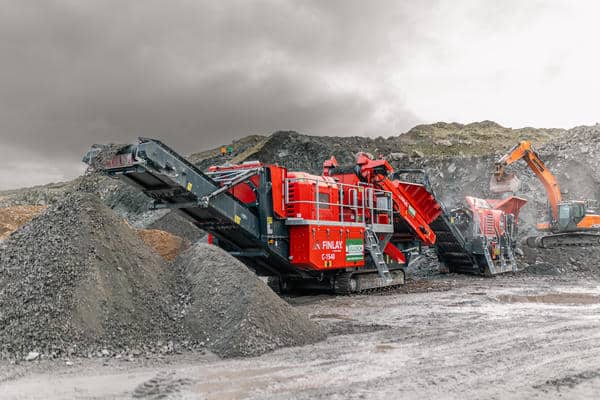
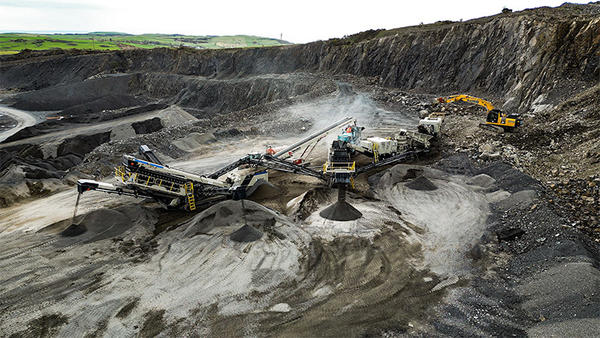
Finlay’s C-1540, in the foreground, and J-1170 were part of the live demonstrations.

Finlay®, a Terex brand, exhibited a wide‑ranging line‑up of crushers and screens at Hillhead 2026, including prototype previews and first public sightings of new impactors.

  • The I‑130RS impact crusher made its first public showing, offering ease of transport and configuration across a wide range of applications.
  • The C‑1540+ cone crusher prototype worked in the demonstration area as a preview ahead of its planned production launch in 2027, featuring an upgraded cone chamber.
  • The J‑1170+ jaw crusher worked in the live demonstration area, delivering high production capacity with large reduction ratios and configurable operation for quarrying or construction and demolition recycling.
  • The Finlay J‑1280 jaw crusher with independent pre-screen, extended feeder and jack leg options, was shown publicly in the UK for the first time since its launch in 2025.
  • Additional machines and technologies such as Finlay’s telematics platform, Ask Finlay, were also on display.

INTRAME

INTRAME, a Spanish manufacturer of asphalt plants with more than 60 years of experience, presented its latest asphalt plant technologies focused on efficient aggregate handling, accurate dosing, high RAP processing capacity and reliable production of high-quality asphalt mixes.

INTRAME personnel were available to discuss:

  • new asphalt plant projects,
  • retrofits,
  • RAP upgrades,
  • plant modernization, and
  • customized technical solutions to improve efficiency and sustainability in asphalt mix production.

MAGNA

MAGNA™, a Terex brand, made its Hillhead debut with the MT400C large cone crusher and MT6S heavy‑duty scalping screen. The MT400C cone crusher features:

  • cubical product shape for aggregates producers and contractors,
  • a large capacity 8m3 (10.4yds3) hopper and feeder,
  • an automated metal detection system and purge chute,
  • full hydraulic closed side setting adjustment with electronic monitoring,
  • a fuel‑efficient direct drive system through a wet clutch, and
  • a hydraulic tramp relief system with automatic reset.

MAJOR
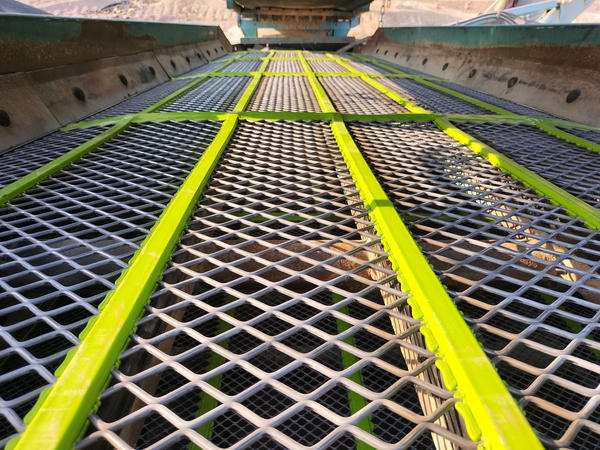
FLEX-MAT Tensioned Screen Media is available in both side-tensioned or end-tensioned configurations with optional side seals, overlaps and crown deck adapters.

Major exhibited its FLEX-MAT® screen media and woven wire screens at Hillhead. The samples of its screen media solutions on display included:

  • The FLEX-MAT® Modular Screen Media series, which offers a high open area, efficient stratification, no blinding and pegging;
  • The high-vibration FLEX-MAT® Tensioned Screen Media, which uses lime-green polyurethane strips that allow each wire to vibrate independently from hook to hook; and
  • Woven Wire Screens, which feature OPTIMUMWIRE® engineered with extremely tight crimps and a precise weave pattern.

MDS
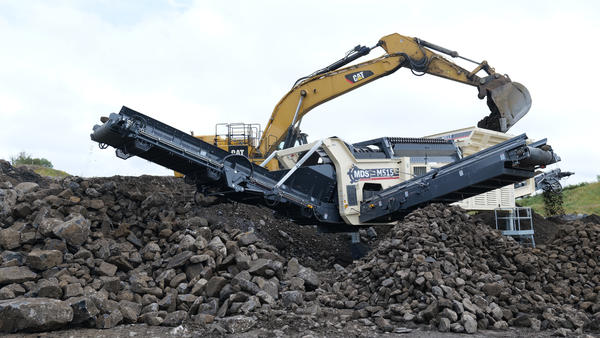
The latest iteration of the M515 trommel from MDS incorporates several design improvements focused on transportability, accessibility and output.

MDS® returned to Hillhead with a live working demonstration of its flagship M515 trommel and a static display of the M300 scalping grid. The M300 is a compact, heavy-duty scalping grid, built for challenging materials such as blasted rock and construction and demolition waste. It features:

  • a fully hydraulic setup,
  • a heavy-duty double-deck grid incorporating a T-Bar cassette top deck and mesh bottom deck,
  • 1,400-mm wide collection conveyor with variable speed,
  • 1,400-mm wide product conveyor, and
  • a compact footprint for ease of transport.

POWERSCREEN
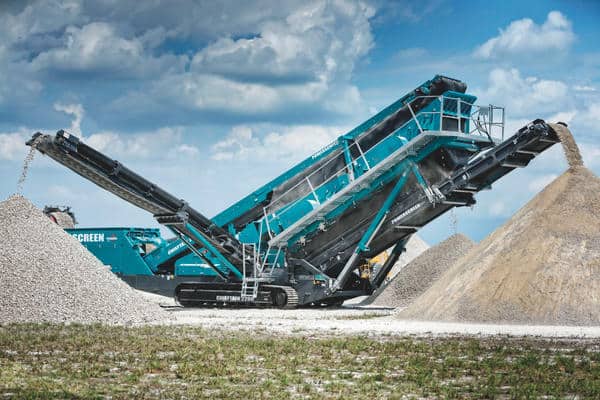
The Chieftain 2200 triple deck screen is the largest inclined screen in the Powerscreen range.

Powerscreen®, a Terex brand, marked its 60th anniversary at Hillhead 2026 alongside long-standing UK distributor Blue Group. A focal point of the booth was the fully refurbished MK1 screening unit, the original machine that launched the Powerscreen story and helped establish the concept of mobile screening. Also on display was:

  • a prototype version of the 1000X Maxtrak cone crusher;
  • the Chieftain 2200 triple deck screen, the largest inclined screen in the Powerscreen range, featuring a patented configurable drive system and dual screenbox design;
  • the Premiertrak R450 jaw crusher, developed for quarrying, recycling, demolition and mining applications;
  • TRAC; and
  • INNEX

TEREX MPS

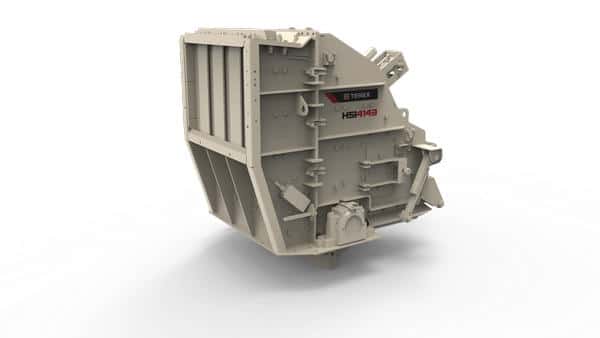
For added flexibility, an optional blowbar jib crane is available to assist with handling during maintenance of the TI4143 horizontal shaft impactor (HSI) from Terex MPS.

Terex® MPS exhibited the TI4143 horizontal shaft impactor (HSI) at Hillhead 2026. The TI4143 is engineered to support quarrying and recycling applications. It features:

  • hydraulic assist system for quick apron adjustment;
  • four inspection doors, along with a hinged side door, that provide direct access to the rotor, blowbars and aprons;
  • hydraulically-opening crushing chamber; and
  • a quick-release wedge-lock system to simplify blowbar changes.

TEREX WASHING SYSTEMS
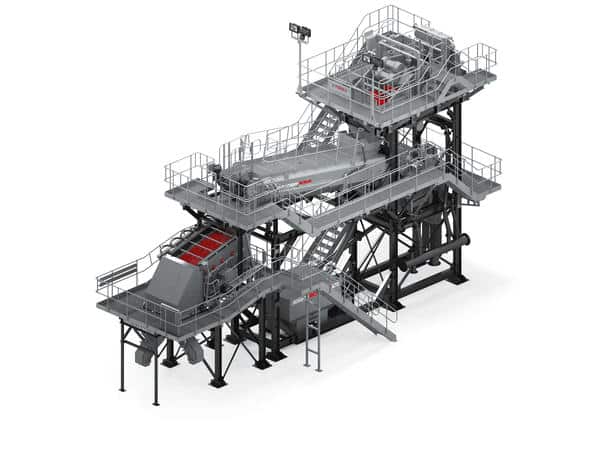
Mounted on a single modular chassis, the AggreScrub P80 from Terex Washing Systems combines pre-screening, logwasher scrubbing, post-screening, contaminant removal and slurry management within one integrated system.

Terex® Washing Systems introduced the new AggreScrub™ P80 Logwasher with PreScreen at Hillhead 2026, where the new wet processing solution was shown publicly for the first time. The AggreScrub P80 is engineered for construction and demolition waste, excavation material and aggregate applications and features:

  • a compact layout for fast transport, installation and commissioning;
  • the PowerScrub™ twin‑shaft logwasher, which has spiral‑arranged blades to deliver stone‑on‑stone attrition and continuous material movement;
  • post‑scrub sizing;
  • a 2.4-m x 1.2-m triple deck inclined aggregate screen;
  • a dedicated 1.8-m x 0.6-m trash screen; and
  • an integrated sump tank and pump.

WIRTGEN
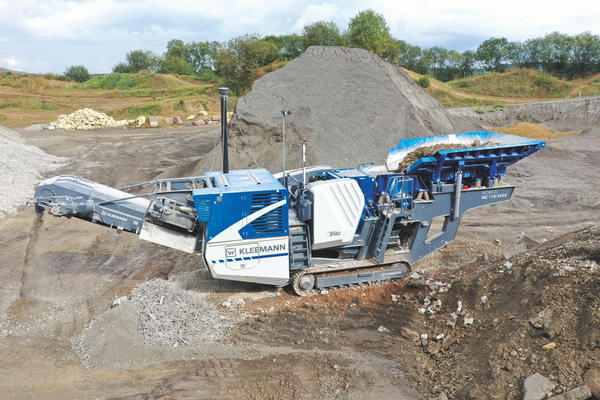
The MOBICAT MC 110 EVO2 jaw crusher from Kleemann, which is designed to pre-crush almost all kinds of quarried stone and a whole range of recycling tasks, was on display in the Wirtgen Group booth.

Under the motto “You’ll never crush alone,” the Wirtgen Group set its focus at Hillhead 2026 on end-to-end solutions for the materials processing sector with five Kleemann crushers and screens. Also appearing at the booth was a purely battery-electric production system for road rehabilitation with zero operating emissions.

For the materials processing sector, Wirtgen displayed:

  • the MOBICAT MC 110 EVO2 jaw crusher, which is suitable for pre-crushing almost all kinds of quarried stone and a whole range of recycling tasks;
  • the compact MOBIREX MR 100 NEOe impact crusher, which offers a wide range of potential applications in the processing of demolition material, concrete, reclaimed asphalt, and soft to medium-hardness quarried stone; and
  • the MOBISCREEN MSS 502 EVO and MSS 802 EVO scalpers and the MOBISCREEN MSC 702 EVO classifying screen, with Dual-Power drive option, allowing them to be operated entirely with electric power.

For the road construction sector, Wirtgen displayed:

  • the Wirtgen cold milling machine W 50 Re;
  • the Vögele SUPER 1300-5e road paver;
  • the Hamm HX 70e tandem roller;
  • the new MULTI JET burner from Benninghoven, which the company stated is the world’s first burner for asphalt mixing plants that can also be fired with 100% green hydrogen, making the drying and heating process for virgin material and recycled asphalt pavement (RAP) CO₂ emission-free; and
  • the new 2.7 t HD 12 G VV tandem roller and the HC 70i VIO compactor from Hamm for the rental market.

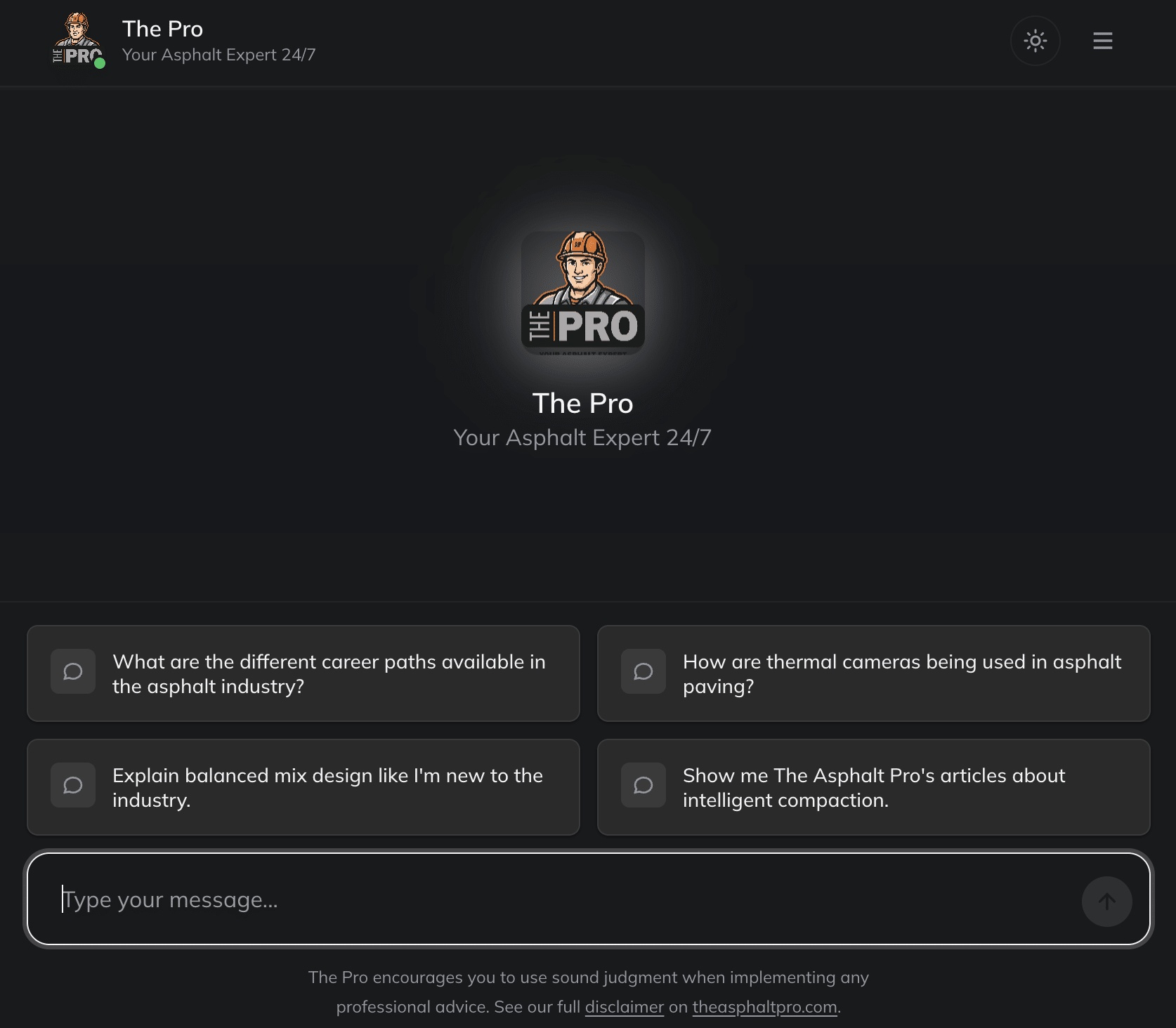
Ask The Pro: Putting 20 Years of Asphalt Expertise at Your Fingertips

Built exclusively on The Asphalt Pro’s archive of vetted industry content, The Pro gives contractors, producers and pavement professionals a faster way to access two decades of technical knowledge, best practices and project experience.

For nearly two decades, asphalt professionals have turned to The Asphalt Pro for technical guidance, best practices, project insights and expert perspectives.

Beginning August 1, they’ll have a new way to access that knowledge.

“It’s important to us that we created The Pro to pull exclusively from The Asphalt Pro content because we know we’ve vetted this information over the years.”— Sandy Lender, Editor, The Asphalt Pro

The Pro is a new AI-powered assistant built exclusively on The Asphalt Pro’s published content, allowing users to ask questions in plain language and receive answers drawn from the magazine’s extensive library of articles, archives and industry resources. Available through both an embedded website widget and a dedicated full-screen experience, The Pro is designed to help contractors, producers and pavement professionals find information faster while maintaining the trust and credibility that have defined The Asphalt Pro for 20 years.

Whether the goal is understanding a new technology, troubleshooting a plant issue, researching a specialty paving project or training the next generation of workers, The Pro transforms decades of vetted industry expertise into an interactive resource that is available whenever questions arise.

Why We Built The Pro

Since 1993, The Asphalt Pro staff has worked alongside contractors, producers, consultants, engineers and industry experts to document best practices, showcase innovative projects and share technical knowledge with asphalt professionals. During that time, the magazine has built an extensive library of articles, digital magazine archives and educational resources covering nearly every aspect of asphalt production and paving.

That depth of knowledge has always been one of The Asphalt Pro’s greatest strengths. But as the library continued to grow, finding the right information at the right moment became increasingly challenging. Valuable answers often existed within the archive—they just weren’t always easy to locate when a contractor needed them.

“The Asphalt Pro has been committed to bringing the latest innovations to the asphalt industry for the last 20 years,” said Chris Harrison, publisher of The Asphalt Pro. “Investing in The Pro continues that tradition by positioning the magazine as a technology leader with the mission of helping our readers run their businesses better.”

The opportunity, Harrison explained, wasn’t simply to organize information differently, but to make decades of proven industry knowledge immediately accessible. Rather than spending time searching through articles, professionals can ask a question and quickly find answers, best practices, equipment insights and business guidance drawn directly from The Asphalt Pro’s trusted editorial archive.

“The Pro transforms decades of trusted industry knowledge into an instant, interactive resource that will help contractors, business owners and industry professionals get answers faster, discover relevant content and make better decisions,” Harrison said. “It’s a strategic investment in delivering the next generation of industry expertise.”

Try ‘The Pro’ today at ask.theasphaltpro.com or via the widget in the bottom right corner of this page.

How It Works

Using The Pro is designed to be as simple as asking a question.

Users can access the tool through an embedded widget on The Asphalt Pro website or through a dedicated full-screen experience, available both on desktop and mobile devices. From there, they can ask questions in plain language, whether they’re looking for information on a new technology, troubleshooting a plant or paving issue, researching a project or helping train a new employee.

The Pro then provides an answer based exclusively on information from The Asphalt Pro’s published content and includes links to the source material used to generate the response. Users can review the original articles, explore related resources and continue asking follow-up questions to dig deeper into a topic.

“I did some trials against ChatGPT and found [The Pro] to be more accurate, due to the fact that The Asphalt Pro team is more knowledgeable in this field.”— Rod Stephens, President & CEO, All Roads Construction

Early users have already found practical applications for the tool. During testing, paver operator Dusty Bailey (@asphalt_space_ranger) asked The Pro to calculate trucking logistics on a project.

“I asked [The Pro] to calculate how many trucks I would need to put down 1,500 tons of asphalt within 10 hours being 35 minutes away from the plant, and it gave me a full breakdown of the logistics of that,” Bailey said. “That’s a huge time saver.”

Whether users are searching for best practices, learning about emerging technologies or looking for information buried within two decades of archives, The Pro is designed to make finding answers faster and more intuitive.

Built on Trusted Industry Expertise

One of the most important distinctions between The Pro and general-purpose AI tools is the information it relies on to generate answers. Rather than searching the broader internet, The Pro draws exclusively from The Asphalt Pro’s published content, ensuring responses are grounded in information that has been developed, reviewed and shared by industry professionals over the past two decades.

“It’s important to us that we created The Pro to pull exclusively from The Asphalt Pro content because we know we’ve vetted this information over the years,” said Sandy Lender, editor of The Asphalt Pro. “We’ve worked with industry experts to create, fact-check and present the content in the most accurate format possible for the education of an industry.”

The distinction is especially important in a technical industry where decisions are often based on specialized knowledge, established best practices and real-world experience. By limiting responses to The Asphalt Pro’s vetted content, The Pro is designed to provide users with answers that are both relevant and traceable to original source material.

“Our audience already trusts what they find in our pages and on our site; now they can apply that trust to what our chatbot is providing to them,” Lender said.

That approach resonated with early users who compared The Pro’s responses with those generated by other AI platforms.

“I did some trials against ChatGPT and found [The Pro] to be more accurate, due to the fact that The Asphalt Pro team is more knowledgeable in this field,” said Rod Stephens, president and CEO of All Roads Construction. “ChatGPT just cross-references the internet, and with some inaccurate information out there, its results are not as reliable.”

Industry consultant, technologist and Pavewise CEO Bryce Wuori reached a similar conclusion after testing the tool with a series of challenging questions.

“Overall, I put a series of difficult questions through [The Pro] and was pleasantly surprised with its accuracy and references,” Wuori said. “I even tried to stump it a bit and get biased answers, and it passed.”

For asphalt professionals making decisions in the field, the trust and transparency behind The Pro may be just as valuable as the speed of the answer.

8 Ways to Put ‘The Pro’ to Work

Sharing Knowledge Across Generations

While The Pro can help experienced professionals find information more quickly, it may have an even greater impact on those who are newer to the industry.

Whether someone is learning the basics of asphalt production, stepping into a new role on a paving crew or trying to understand a technical concept for the first time, access to reliable information can help shorten the learning curve while building confidence.

“I see The Pro helping all levels of the asphalt industry,” Lender said. “From filling in training gaps to helping an operator get best practices sorted out to reminding techs about lab procedures, this is a niche tool that gathers multiple decades of industry experts’ knowledge from The Asphalt Pro data and hands specific answers to the new guy; or to the veteran worker who wants to double-check a technique.”

Lender believes one of the industry’s greatest opportunities is making technical knowledge easier to access and share.

“Since I began covering the asphalt industry, I’ve noticed that some veteran operators tend to gatekeep knowledge, and some company owners tend to gatekeep information,” Lender said. “By providing a chatbot like The Pro where decades of knowledge can be called on to answer specific questions for the user, The Asphalt Pro has made it possible for everyone to learn and use technical, how-to information more easily.”

That idea resonated with Bailey, who sees The Pro as a way to help newer workers gain access to knowledge that might otherwise take years to acquire.

“It’s nice because I see a lot of older generations gatekeeping knowledge and tricks of the trade out of fear of being replaced, so I see younger people struggle to get established in this industry,” Bailey said. “But [The Pro] gives people of all ages access to knowledge and shatters the barriers that prevent them from being successful.”

By putting decades of best practices, technical guidance and industry experience within reach of anyone willing to ask a question, The Pro has the potential to make learning easier for both the next generation of asphalt professionals and the people helping train them.

The Bigger Opportunity

For Wuori, one of the most compelling aspects of The Pro is its ability to make The Asphalt Pro’s vast library of knowledge easier to access and apply.

“Having access to fast and reliable paving knowledge through the AI chatbot is transformative when seeking insights on best practices or relevant information through The Asphalt Pro’s vast resources,” Wuori said. “Combining this wealth of shared experience, articles, knowledge and resources into a chatbot is revolutionary for those looking to enhance their daily paving practices or expand their expertise.”

By bringing together decades of trusted industry expertise in a single conversational tool, The Pro creates new opportunities for asphalt professionals to learn, solve problems and build on the collective knowledge that continues to drive the industry forward.

Save Costs: Connect the Job Site

Centralized project data is essential to modern project management

Construction projects generate enormous amounts of information. Estimates, production logs, equipment data, safety reports, schedules and change orders all shape how work progresses each day. Yet in many organizations, that information still lives in separate systems, creating an operational lag between the field and the office. Project managers may be working from outdated reports while crews respond to changing conditions in real time. By the time discrepancies surface, small issues may have already turned into costly delays or rework.

A connected job site closes that gap, forming a continuous loop between the field and the office. Instead of relying on delayed updates, project stakeholders share a common view of the work as it happens.

As margins tighten and project complexity increases, contractors are placing greater value on technology, including centralized project data and shared operational tools. When information flows continuously between field crews and office teams, companies can identify problems earlier, make faster decisions, and maintain better control over outcomes.

Fragmented Data Erases Profit Margins

Many contractors still rely on separate platforms for estimating, scheduling, safety documentation and field reporting. Even when those individual roles are functioning well, poor integration creates blind spots. A change order approved in the office may not reach the superintendent in the work zone quickly enough to affect daily work. Safety updates, production rates or equipment issues may take hours or days to move through traditional reporting channels.

These gaps create ripple effects across a project. Miscommunication can lead to rework, delays and safety risks. Disconnected systems also make it harder for leaders to see how a project is really performing. Without centralized data, companies struggle to compare actual performance against estimates, identify trends across job sites or respond early when productivity begins to slip. In an industry already facing labor shortages and tough deadlines, that lack of visibility puts added strain on operations.

Turn Data Into Action

Centralizing project data allows contractors to turn raw information into actionable insight for up-to-date reporting. When real-time field reports, equipment usage, safety documentation and cost tracking feed into a unified system, teams gain a clearer picture of project performance in real time.

One of the biggest advantages is early trend detection. Production dips, equipment inefficiencies and cost overruns can be identified before they escalate. Instead of discovering problems weeks later during accounting reconciliation, teams can respond within days or even hours.

For many contractors, this shift requires a field-first mindset. Tools must be designed around the realities of crews, foremen and operators, not just office workflows. When field teams can capture time logged, production quantities, photos and notes through purpose-built mobile tools, the data becomes more accurate and more useful. In turn, reporting, forecasting, and job costing become more dependable.

This visibility also improves long-term planning. When field performance feeds back into estimating, contractors build stronger historical data for future bids. Forecasts become more reliable, and estimating teams can develop more competitive proposals based on real operational performance.

Build Alignment Between the Field and Office

True data alignment requires more than new software. It depends on consistent processes across the organization.

One foundational step is standardized cost coding. When office teams and field crews use the same cost structures across projects, financial and production data can be tracked more accurately and compared from job to job.

The goal is not simply to collect more data, but to make sure the data is accurate, timely and accessible across roles. When doing this, field workflows need to be practical. Crews work in demanding environments where efficiency matters. Tools that let foremen quickly record time, production and equipment usage in the field help make reporting part of the workflow rather than an added burden.

The Future of the Connected Job Site

Connected job site technology is already moving beyond dashboards and reporting toward predictive decision support. The advent of AI can increasingly analyze project data alongside weather forecasts, scheduling constraints and supply chain variables.

The next step is agentic AI: systems that not only surface information, but also recommend or initiate the next best action. A platform might detect an incoming storm, recognize what work is scheduled during that window, notify the crew and the plant, and recalculate the impact on the schedule.

However, the effectiveness of these AI systems depends entirely on the quality and consistency of the data behind them. For contractors managing increasingly complex projects with distributed teams, the ability to centralize, interpret and act on project data will become more important.

Matt McClung is the vice president of professional services, HCSS

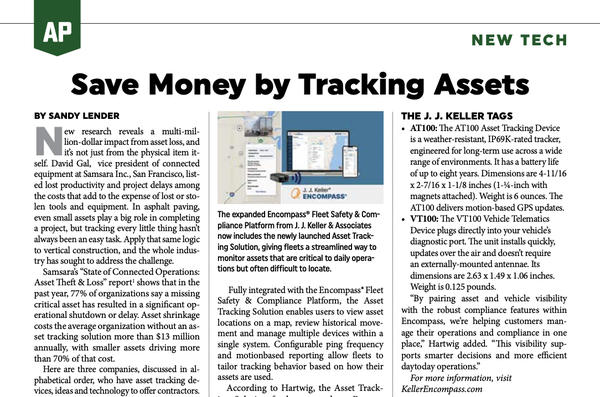
Save Money by Tracking Assets

Companies offer new tags and technology to help asphalt professionals track tools, equipment, costs

New research reveals a multi-million-dollar impact from asset loss, and it’s not just from the physical item itself. David Gal, vice president of connected equipment at Samsara Inc., San Francisco, listed lost productivity and project delays among the costs that add to the expense of lost or stolen tools and equipment. In asphalt paving, even small assets play a big role in completing a project, but tracking every little thing hasn’t always been an easy task. Apply that same logic to vertical construction, and the whole industry has sought to address the challenge.

Samsara’s “State of Connected Operations: Asset Theft & Loss” report1 shows that in the past year, 77% of organizations say a missing critical asset has resulted in a significant operational shutdown or delay. Asset shrinkage costs the average organization without an asset tracking solution more than $13 million annually, with smaller assets driving more than 70% of that cost.

Here are three companies, discussed in alphabetical order, who have asset tracking devices, ideas and technology to offer contractors.

Footnote1 “State of Connected Operations: Asset Theft & Loss” report methodology: This survey was conducted by the independent research firm, Wakefield Research, between Feb. 5 and 17, 2026. This was a general market survey of 1,500 executives across seven countries. Respondents are not necessarily Samsara customers and were surveyed online. Global results have been aggregated across all responses to provide an average. Full report information here.

J. J. Keller Encompasses Full Visibility

The expanded Encompass® Fleet Safety & Compliance Platform from J. J. Keller & Associates now includes the newly launched Asset Tracking Solution, giving fleets a streamlined way to monitor assets that are critical to daily operations but often difficult to locate.

The expanded Encompass® Fleet Safety & Compliance Platform from J. J. Keller & Associates, Inc., Neenah, Wisconsin, now includes global positioning. In April, the company launched its new Asset Tracking Solution, giving fleets a streamlined way to monitor assets that are critical to daily operations but often difficult to locate, such as:

  • Trailers
  • Dumpsters
  • Construction equipment
  • Other mobile assets

“For many fleets, knowing where vehicles are is only part of the picture because it’s the equipment and assets around them that can be hardest to manage,” said Jason Hartwig, associate director of product management at J. J. Keller. “Our new Asset Tracking Solution helps customers maintain visibility into those assets. This allows them to reduce time spent searching, improve utilization and keep operations moving.”

Fully integrated with the Encompass® Fleet Safety & Compliance Platform, the Asset Tracking Solution enables users to view asset locations on a map, review historical movement and manage multiple devices within a single system. Configurable ping frequency and motion‑based reporting allow fleets to tailor tracking behavior based on how their assets are used.

According to Hartwig, the Asset Tracking Solution further strengthens Encompass as a central hub for fleet visibility and becomes even more valuable when paired with the company’s recently released Vehicle Tracking Solution featuring J. J. Keller’s VT100 Vehicle Telematics Device. Together, they allow customers to track both assets and vehicles within a single platform, delivering a more complete operational view and supporting improved efficiency across the fleet.

The Encompass® Vehicle Tracking helps the customer:

  • Ensure employee productivity through mapping, engine status, and GPS speed;
  • Plan trips effectively using current traffic and weather;
  • Automate IFTA fuel tax reporting;
  • Communicate with shippers using geofencing features;
  • Recover stolen or abandoned vehicles; and
  • Optimize vehicle use.

The J. J. Keller Tags

  • AT100: The AT100 Asset Tracking Device is a weather-resistant, IP69K-rated tracker, engineered for long-term use across a wide range of environments. It has a battery life of up to eight years. Dimensions are 4-11/16 x 2-7/16 x 1-1/8 inches (1-¼-inch with magnets attached). Weight is 6 ounces. The AT100 delivers motion-based GPS updates.
  • VT100: The VT100 Vehicle Telematics Device plugs directly into your vehicle’s diagnostic port. The unit installs quickly, updates over the air and doesn’t require an externally-mounted antennae. Its dimensions are 2.63 x 1.49 x 1.06 inches. Weight is 0.125 pounds.

“By pairing asset and vehicle visibility with the robust compliance features within Encompass, we’re helping customers manage their operations and compliance in one place,” Hartwig added. “This visibility supports smarter decisions and more efficient day‑to‑day operations.”

For more information, visit KellerEncompass.com

Motive Maximizes Bluetooth Alerts

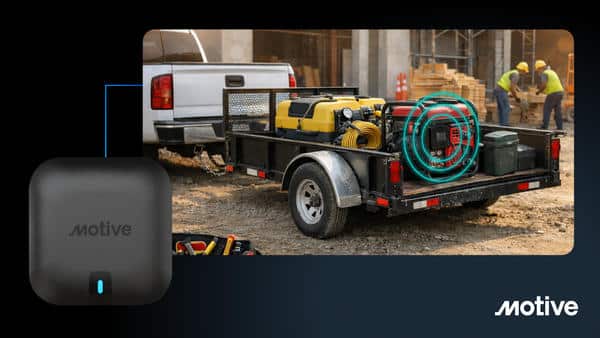
Motive Beacon is a compact tracking device that can help operations teams quickly locate containers and small equipment often overlooked by traditional GPS tracking devices.

Motive, San Francisco, is an AI platform offering the Motive Beacon, which is a compact device powered by the Motive Mesh Network. This network uses Motive Vehicle Gateways and devices running the Motive Fleet App and Driver App to detect the devices via Bluetooth and help securely report their last seen location. Motive Beacon is designed to support industries including construction, landscaping, roadway maintenance and more.

Robert Higdon, director of product at Motive, said, “With Motive Beacon, we’re helping give customers the visibility they need to locate equipment and assets within the Motive platform, the same platform they’re already using to manage the most critical pieces of their operations including vehicles, drivers, fleet-related spend, and heavy equipment.”

Higdon introduced the Motive Beacon to AsphaltPro during CONEXPO-CON/AGG, sharing the device provides visibility for smaller or lower-value assets that typically aren’t tracked by GPS devices. He listed some key features and benefits as:

  • Asset tracking: The beacon is detected by Motive Vehicle Gateways and apps, reporting its last known location to a dashboard.
  • Comprehensive visibility: It allows companies to track essential assets like signage, air compressors or portable generators, as well as larger equipment and vehicles, within a single interface.
  • Operational efficiency: By knowing the location of all assets, companies can prevent underutilization, misallocation, misrouting, and equipment being left behind.
  • AI Vision integration: Motive leverages an AI-powered platform to empower people in the physical economy, helping to make their work safer, more profitable and more productive. Additionally, Motive enhances many layers of its operations with AI Vision.

The Motive Tag

  • Motive Beacon: Beacon’s waterproof design and flexible mounting make it simple to attach to the equipment teams rely on most. It offers organizations a cost-effective way to track assets that were previously too small or too costly to track. It has a four-year replaceable battery and offers seamless integration into the Motive Fleet Dashboard.

For more information, watch the AsphaltPro interview with Higdon at YouTube and visit: https://gomotive.com/products/beacon/.

Samsara Doubles Network, Releases Compact Tag

The Asset Tag and Asset Tag XS from Samsara offer a six-year and three-year battery life, respectively.

Samsara Inc., San Francisco, announced ahead of CONEXPO not only its latest-generation Asset Tag and new Asset Tag XS, but also the expansion of its Connected Operations® Platform. Over the last two years, Samara’s industrial-grade Bluetooth network has doubled in density. This expansive mesh network leverages millions of Samsara-connected devices that travel on 99% of major U.S. roads, according to the manufacturer. By using industrial-grade Bluetooth signals to continuously “listen” for Asset Tags, a single Asset Tag can be detected in real time.

Samsara has integrated Hubble’s terrestrial network, comprised of 90 million consumer smartphones. This integration builds on Samsara’s presence on roads, at job sites and in residential areas by extending visibility into buildings.

“This integration with Hubble complements Samara’s existing network,” Gal said. “The Samsara Network leverages millions of gateways on assets from construction sites to highways to garbage trucks, while Hubble’s network uses primarily consumer smartphones, ensuring no lost or stolen asset can hide, even inside buildings.”

The new tags Samsara launched this year are equipped with an AI-powered theft and loss workflow to help customers identify, investigate and recover mission-critical assets in record time. One of Samsara’s customers spoke to their efficacy.

“Since we started using the Asset Tags, our recovery rate on thefts of everything from $1,000 gas-powered saws to $2.8 million heavy machinery is 100%,” said Rich Poppoff, the equipment superintendent for DeSilva Gates. “I didn’t think the devices could be better than they were, but the enhanced features on the Asset Tags, like the even more precise ‘find nearby’ capabilities, make finding assets in congested areas even simpler.”

Benefits include:

  • Proactively identify at-risk equipment: With the new Left Behind Incident feature, managers are immediately notified when an asset is separated from its vehicle outside a trusted geofence.
  • Investigate with real-time information: Customers can mark an asset as missing and see critical context, such as photos of who last had the asset, which vehicle it was last seen with, and more, powered by StreetSense. This rich context helps determine the most efficient recovery method and allocates the resources needed for retrieval.
  • Rapidly recover assets: Customers can coordinate quick asset recovery by dispatching a driver or sharing asset location with law enforcement. Once dispatched, crews can quickly pinpoint an asset’s exact location using Compass Mode.
  • Demonstrate return on investment: The new Asset Tag Overview page analyzes asset photos with AI to calculate the value of the assets protected and recovered.

Two Samsara Tags

The new Asset Tags are ruggedized devices engineered to operate in extreme and remote environments. With the compact Asset Tag and ultra-compact Asset Tag XS, equipment managers can mix and match devices based on the equipment’s size and shape.

  • Asset Tag: Designed for both large and small equipment, the Asset Tag provides up to six years of maintenance-free battery life—a 50% increase over the previous generation.
  • Asset Tag XS: Designed for smaller, high-value handheld tools or specialized equipment like density gauges, the ultra-compact Asset Tag XS offers three years of battery life and flexible mounting options for the most obscure equipment.

“The scale of equipment loss in physical operations goes far beyond the cost of the tools themselves—it’s about lost productivity and project delays,” Gal said. “To solve this, we’re doubling down on innovation, laying the foundation for new use cases. We’ve supercharged the network, the hardware, and the recovery workflow, and with the Asset Tag XS, now even the smallest assets stay within reach.”

For more information on Samsara’s offerings, visit https://www.samsara.com/products/equipment-tracking/asset-tag.

How Gaming Skills Translate to Asphalt Plant Operator Roles

Gaming for an asphalt plant operator could close the construction industry skills gap

The industrial sector has undergone drastic changes in recent years. Has your workforce followed suit? Decision-makers must overhaul their sourcing and training programs before the skills gap grows too wide to bridge.

Many are looking to younger generations to compensate for the swath of industry veterans set to retire. This approach has its merits, but is very broad. Instead, hiring managers could zero in on a highly skilled yet untapped population of gamers.

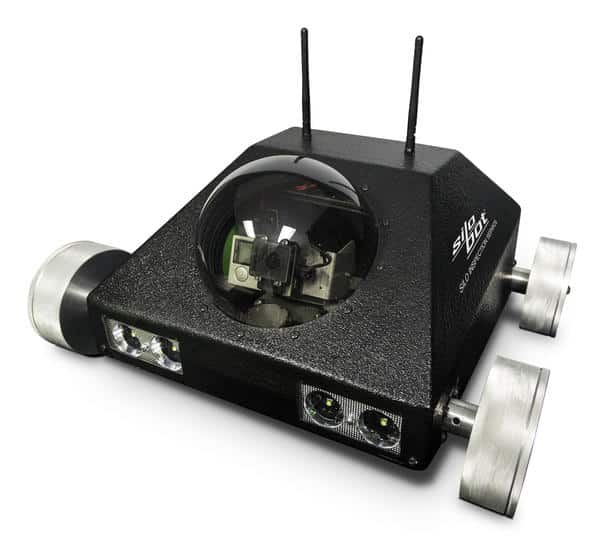
The SiloBot from Astec Industries is an example of robotics and humans working together to make a task at the plant go more quickly and safely. With the SiloBot service, confined space inspections are performed by the robotic device, keeping workers out of harm’s way.

The Problem: The Asphalt Industry Needs Plant Operators

As seasoned industry professionals retire, almost 4 million manufacturing jobs will become available. However, experts project approximately half of those roles will go unfilled.

Editor’s Note: Given the approximately 350,000 workers in the highway construction and maintenance industry overall include individuals who anecdotally share they intend to delay retirement or “never retire,” it’s hard to put a number on how many asphalt plant operators are retiring and how many are moving up the skills ladder.

With the skills gap widening, the need to scout and retain top talent is urgent. The best solution may require looking at unconventional talent pools such as the video gaming community.

Gamers have a reputation for being lazy and lonely, but that’s not always a fair assessment. Most are sociable, ambitious and tech-savvy. And the gaming population offers a sizable talent pool. According to the Pew Research Center, 85% of teenagers play video games, and over 50% of them agree that doing so has enhanced their problem-solving skills.

How to Get New Workers to Stick With It

A Solution: Some Gamers Would Make Good Plant Operators

Gamers’ technology skills go beyond the basics. They can quickly and independently troubleshoot technical issues. Many are familiar with the digital solutions plants will soon utilize, such as virtual reality (VR) or Internet of Things (IoT) devices. For instance, VR users could easily adapt to on-the-job VR training.

Astec Industries, Chattanooga, Tennessee, is one of several OEMs developing virtual, augmented or mixed reality solutions. At this time, Astec customers can use its Astec Digital extended reality solution to view an entire plant or a single piece of equipment at scale, allowing customers to “see” the plant footprint with new or “moved” components.

In 2024, Stockpile Reports®, Redmond, Washington, demonstrated the world’s first mixed reality stockpile measurement tool with its SR Measure, utilizing Apple Vision Pro. It made navigation intuitive, requiring only hand and eye movements—the wearer merely looks at the pile to create a three-dimensional reconstruction.

The emergence of collaborative robots (cobots) and artificial intelligence (AI) necessitates workforce-wide upskilling. One example from 2017 is Astec’s Silobot, which performs inspections inside the asphalt silo, using magnetic wheels and ultrasound technology. It shortens inspection times from days to hours, keeping crews out of the confined space.

Consider Spot, the robodog from Boston Dynamics, discussed in the recent article, “CRH’s Sustainable Practices Give Preferred Results.” This cobot performs repetitive tasks, like inspections, where it’s less than ideal for humans to work.

Gamers have interacted with AI for decades longer than the general population; many have backgrounds in programming, so they are positioned to adjust to such technologies quickly.

The Fifth Industrial Revolution focuses on how the relationship between humans and machines can help facilities increase output while decreasing errors. Those who have grown up gaming, programming and developing have probably explored this connection personally.

A New Value Proposition for Leaders

Which Skills Translate

Just because a young adult is a digital native doesn’t mean he or she possesses technical literacy. Millennials and Generation Z were born into a world where technology was optimized for a seamless user experience. Many passively consume content without understanding how all the tools work.

This is why focusing on the gaming population is more strategic than targeting young working adults as a whole. Those who grew up actively utilizing, exploring and troubleshooting technology are better equipped to perform well amid AI technology.

Gaming helps individuals develop a broad range of transferable skills, including problem solving, active recall, teamwork, pattern recognition, time management, deductive reasoning and leadership.

Recruitment and Training

The gaming population is large, but recruiting these individuals is not as easy as updating some language in the job description. There is little visible overlap between industrial operations and gaming, so these people may not be actively seeking an asphalt plant operator position. Hiring professionals should get creative. Advertising on video game blogs, posting VR training marketing material or leveraging social media may help.

These tech-savvy candidates will thrive if training is tailored to their skill sets. Gamified learning and upskilling—such as scoring, leveling, tiered rewards—would be familiar and engaging.

Stephens College Prepares Women for Asphalt Workforce

Long-term Strategies

Many young people play video games, and the market is only growing. Experts project the video game market will increase from $292.4 billion to $977.4 billion between 2025 and 2035. This bodes well for those rethinking the sourcing and hiring processes to target this segment.

With a swath of seasoned workers nearing retirement, facilities will want to update their talent pools. Gamification could be the key to attracting gamers and updating people’s outlook on the industry. As public perception shifts, more may start viewing asphalt plant careers as more than just lucrative—they’ll see them as competitive.

Ellie Gabel is the associate editor at Revolutionized.com.

Leveraging AI for the Asphalt Industry Still Requires a Personal Relationship

Know when to use AI versus common sense: We still need relationships in the asphalt business

Many in the asphalt industry have been looking for more ways to leverage the artificial intelligence (AI) revolution. From estimating to scheduling to plant operations to stockpile inventory and more, there are more uses coming online for asphalt professionals each week.

One area we can’t overlook is sales. Whether your title includes the word, you’re part of an industry that’s “selling” a resilient and sustainable product to agencies and taxpayers alike, and AI can help us do that more confidently and without losing the in-the-field relationships we still need to nurture.

When I thought about this topic and the content that I should use to write this article with my friend Sandy Lender, a story about my wife’s Jeep® Wrangler came to mind. Here’s how it went.

Artificial Intelligence Affects Heavy Equipment Performance, Maintenance, Safety

AI Versus the Eye Test

Laurie Wallace was driving home one day when her Jeep stalled in the middle of an intersection. The note on the dash suggested to go someplace safe and restart the engine. How can you do that when the vehicle is stalled? So, she restarted in the middle of the intersection and drove to our local dealer. At the dealership, she asked them to check the battery, but the young service rep suggested it was likely in need of a software upgrade. He “plugged in it” and the Jeep started.

The next day, the same thing happened at a different intersection. She followed the dashboard instruction, restarted, and drove the Jeep back to our dealer. She again asked if they should check the battery, but the same service rep said, “We’ll just plug it in.” This time, AI said that a new circuit or something was needed. They made the repair, and she brought the Jeep home.

The next day, Laurie went to start the car in our garage, and it did not start. I called AAA and the first thing the driver asked was, “Did anybody look at the battery?” He lifted the hood and, sure enough, the battery was corroded. He ultimately towed the Jeep to the dealer, and the service manager apologized, said Laurie was right all along, and provided us with a new battery at no cost.

Brigade Backsense Solutions Make Job Sites Safer

Humans Selling with AI Authenticity

And that leads us to the paradox that Sandy and I are wrestling with in this article: When to AI and when to shake hands? That is the question. It’s especially relevant in the construction industry, which, in Del Keffer’s words, “is a high contact sport. People meet over the hoods of their work trucks.”

Keffer is the vice president and general manager for the Wisconsin division of Roland Machinery Company. He’s been handling heavy equipment sales plus the management of sales teams for five decades. What he sees with the arrival of AI in the industry is a technology that’s leveling the playing field.

“AI is the CliffsNotes version of life itself,” Keffer said. “When we were in school, all we wanted was the answer so we could take the test. And that’s what AI is doing today…It’s making people lazy.”

That laziness, or CliffsNotes shortcut, is creeping into the sales experience. “You no longer have to study a spec sheet when you’re selling a piece of equipment,” Keffer said. At first blush, that sounds like the salesperson could save time by letting an AI scour the spec sheet and deliver an answer for a client. “Yet some of these spec sheets are really detailed, and those details are teaching you things.”

Keffer offered the example of an excavator, but we can easily see how this applies to right-sizing a wheel loader for the asphalt plant or selecting a tracked versus wheeled paver for mainline paving. He shared, when you study the spec sheet, seeking something specific like dig depth, your mind will pick out the dig depth you seek, but your mind is also “looking” at other information along the way. You’re also noticing things like swing speed and so on.

Brigade Electronics Launches AI Detection Cameras in U.S. Market

The sad thing is, if the salesperson is using AI to teach himself the top 10 bullet points from the spec sheet that he thinks a customer’s going to ask about, he or she isn’t gathering the information around those 10 bullet points.

“The customer is asking for a reason,” Keffer said. “He’s not asking just to know the knowledge. He’s asking [because] he knows how that’s going to be used.”

If the salesperson doesn’t take the time to investigate it all, learning what makes up the whole machine, he or she will be less effective in the eyes of the customer. He or she damages the personal relationship with the customer by damaging his or her credibility and authenticity.

That authenticity is about more than taking time to read a spec sheet, of course. The salesperson is showing the customer that he or she can assimilate and verify data, but also cares about solving the pain points of the person who will be using the data.

“Authenticity is when you have a guy who can feel your emotion,” Keffer said. “A guy who can feel your passion, a guy who can feel your pain. So, authenticity is huge. It’s eye to eye, belly to belly communication.”

Not every asphalt professional is a natural when it comes to sales or projecting authenticity. Not only are we selling and trading equipment, as Keffer discussed, but we’re also “selling” a product to materials engineers, “selling” our industry to entice a new workforce, “selling” pavement maintenance methods to residential property managers, and so on. Keffer explained that the sales conversation requires you to speak clearly and concisely to communicate truths, fears, goals and passions, to establish trust. If you aren’t already an expert with that communication, AI can step in to help with the training.

Kespry Announces Aerial Intelligence Platform Updates

AI As a Training Partner

Even in the construction industry, sales training can get assistance from AI. We sought help from Lynn DiBonaventura, learning and development expert with certifications in AI, to share foundational steps to use AI as a sales rep’s business partner. She began by suggesting we can use AI as a personal tool or as a coach. The coaching stood out considering Keffer’s concerns about remaining authentic. Either way, learning to prompt AI is the key to success, according to DiBonaventura.

“Prompting is just the way that you talk to the AI engine to get the most accurate response,” she said. “The whole interface of AI is based on getting it to [act] as a thought partner, not just give you an answer.”

You want the AI to help you think clearly, DiBonaventura explained, but you must use the right prompts for that result. When prompting an AI correctly, one result is that you can use it to train a salesperson in conducting better sales calls. Keep in mind, if your sales team members are unable to learn from other humans, you may have bigger problems than “how to sell” your product, but companies can now consider using AI as a tool when travel to sales conferences is not manageable.

During the discussion, DiBonaventura shared that the AI could not only handle the back-and-forth sales meeting conversation, but could then offer tips and guidance for improving the conversation, improving the call to action, improving follow-up, and so on. She shared that role-playing with the AI is one way to treat it as a training partner. Again, prompting it correctly is the key to success.

Broadloop, a Paving Intelligence Platform

There are four essential steps to preparing a prompt for ChatGPT and DiBonaventura outlines those here.

  1. Tell ChatGPT what role it will play. Whether that’s the role of a chef when asking for a chicken salad recipe or the role of a property manager when asking it to train a salesperson, you tell the AI what role it will play.
  2. Provide context for a scenario.
  3. State the goal that you, as the user, wish to achieve.
  4. State the task that you wish for the AI to perform.

Check out the sidebar at the bottom of this article to see a detailed example of using this prompt method to facilitate a training session in ChatGPT.

DiBonaventura joined Keffer in stressing the importance of keeping business relationships authentic while leveraging the use of AI. She lists “technology enablement” as a foundational step in that leverage.

“AI in sales isn’t about replacing people,” she shared. Instead, adding this technology should be about streamlining everyone’s efforts. When automation takes care of forecasting, lead scoring, and other repetitive tasks, sales reps can focus on building authentic relationships, she explained. “The key is communication and integration: making sure teams understand what’s changing and how AI fits naturally into their workflow.

“Ultimately, the goal is a human–AI partnership where technology empowers people, people trust technology, and both evolve together,” she continued. “That’s when sales performance moves from reactive to predictive, and organizations see real cultural transformation, not just technological change.”

In conclusion, after speaking with Keffer and DiBonaventura, and our own experiences and research to date, we have the following takeaways for this phase of AI’s impact on the sales side of the asphalt industry:

  • Salespeople within the asphalt industry and without, can use AI as a business partner and training tool
  • Members of the asphalt industry must strike a balance between “meeting over the hood of an F150” and never leaving the computer screen
  • We must continue to humanize every interaction, whether it originates from AI or with a handshake
  • The key to getting the best results out of the AI “partnership” is learning the nuanced art of prompting

“The advice for AsphaltPro’s audience is that everyone, no matter what your age, no matter what your experience with computers, no matter what you do, you have to learn the basic prompting to engage with AI appropriately,” DiBonaventura said. “That is the first step for anybody. Now, some people will go faster, some people will fumble around with it, but that example that we did [see sidebar] is the baseline for anybody.”

As the AI revolution continues, regardless of technological upheaval, the only thing that cannot be commoditized or digitized is the sales rep’s relationships. Relationships will continue to have a rhythm and soul that technology will never be able to replicate, and we can only hope that salespersons, mechanics at the local car dealership, materials specifiers at the DOT, inspectors on our projects, and others in our industry will continue to meet over the hood of the work truck to develop human connection. That authenticity is up to each one of us to maintain.

Ed Wallace is the managing director at AchieveNEXT and a regular speaker at World of Asphalt. His most recent #1 best seller is “The Relationship Engine.”


Use AI to Strengthen Your Client Conversations

Are you interested in how AI can enhance your sales conversations? One effective method is to use ChatGPT to build an interactive tool that helps you get ready for customer meetings. All you need is the right prompt. There are four essential steps to working with ChatGPT. In this example, we’ll create an interactive tool using those four steps, but you can use this prompting approach for any objective you have.

Step 1. ROLE: Tell ChatGPT what role it will play.

“Act as a residential property manager who makes decisions for multi-family buildings. I am a salesperson for an asphalt repair company specializing in sealcoating, crack filling, and pavement maintenance.”

Step 2. CONTEXT: Provide detail about the situation (or the client) and yourself.

“From my perspective, the competitor is not doing a good job for the property manager, and my company could, but may be overpriced.”

Step 3. GOAL: Tell ChatGPT what you want to accomplish.

“My goal is to get a meeting with the property manager’s board of directors so I can pitch a five-year pavement preservation program to them.”

Step 4. TASK: Tell ChatGPT exactly what you want it to do and how—be as detailed as possible.

“To help me prepare for the meeting with the PM, create an interactive role play exercise, allowing me to make one decision at a time, while addressing common obstacles the PM may present.”

This prompt creates a simple way to rehearse objection handling, refine your consultative positioning, and prepare for high-stakes conversations with property managers, facility leaders, and community boards. Now let’s look at how it played out with ChatGPT serving as a trainer with this sample excerpt from the simulation.

Round 1—Initial Outreach

PM Response: “Hi, thanks for stopping by. I’ve seen your company’s name before, but to be honest, we already have a vendor we’ve been using for years. They’re not perfect, but they get the job done and the board likes their pricing. What can I help you with today?”

The AI trainer suggested the following…

Your Move: Present your opening statement or question. Choose ONE approach:

1. Value-Focused Approach: Emphasize asset preservation and long-term cost avoidance.

2. Risk-Focused Approach: Highlight the risks of deferred maintenance and inconsistencies.

3. Diagnostic Approach: Ask questions to understand pain points and build credibility.

4. Soft Ask: Position the interaction as advisory, not sales-driven.

Reply with the number of your chosen approach and your statement. I will respond as the PM and introduce a realistic obstacle for you to navigate.

You said: 1

Round 2—Obstacle Introduced

PM Response (Obstacle Introduced—Cost Sensitivity + Loyalty): “Okay, asset preservation sounds good in theory, but I’ll be honest with you — the Board is extremely budget-conscious. They prefer to do the bare minimum each year because it keeps owners happy in the short term.

“Our current vendor is cheap, and while their work isn’t perfect, it’s ‘good enough’ in the Board’s eyes. They don’t really see the value in spending more now to save later.

“So if your pricing is higher — and I’m guessing it probably is — I’m not sure how I could even justify bringing you in for a pitch.”

The AI trainer suggested the following…

Your Move: You need to respond in a way that keeps the conversation moving toward securing a Board meeting. Choose ONE of these strategic responses:

1. ROI Reframe: Shift the conversation from upfront cost to long-term capital protection.

2. Evidence Play: Offer data, benchmarks, or examples showing how cheaper work accelerates deterioration.

3. Low-Risk Intro: Propose a no-commitment assessment or pavement health report.

4. Pilot Project: Suggest a small test section to demonstrate value before a full switch.

5. Board-Focused Leverage: Position the meeting as a way to give the Board a comparison so they can make an informed decision.

Reply with the number and your exact response.

QUICK TIP: If you’d like feedback on your responses, you can add this prompt: “Please analyze the conversation from a coaching perspective, highlighting my strengths and areas where I could improve.”

ChatGPT also lets you revisit and change your answers, so you can experiment with different scenarios and see which approach works best for you.

This exercise shows how AI can help salespeople prepare for client meetings and improve their skills. It enables you to:

  • Develop sales abilities more quickly
  • Get ready for client meetings more effectively
  • Receive instant coaching and feedback
  • Practice handling objections and refining your sales approach
  • Build strong relationships, even with challenging or loyal clients

Try it yourself: Copy the prompt above, paste it into ChatGPT, and customize it to run your own simulation. Use it before your next client meeting to improve your approach, sharpen your messaging, and boost your credibility with property managers and decision makers.


Ed Wallace is the managing director at AchieveNEXT and a regular speaker at World of Asphalt. His most recent #1 best seller is “The Relationship Engine.”
Sandy Lender is the editor of AsphaltPro Magazine. Her most recent business book is “Capture Your Dream.”