
CRH’s Sustainable Practices Give Preferred Results
BY Sandy Lender
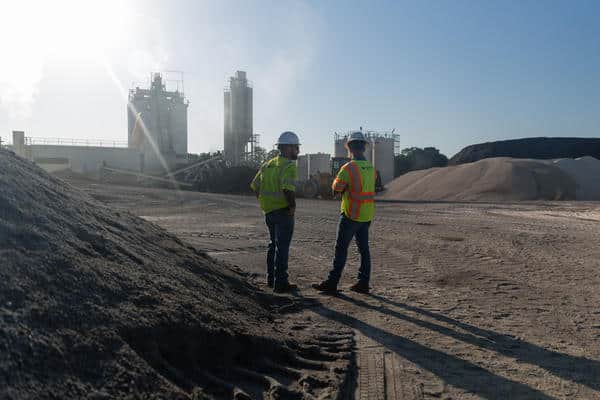
Preferred Materials, A CRH Company exemplifies circularity with award-winning I-75 project
As CRH’s footprint has grown in the United States, the operating companies in its portfolio have brought a wealth of ideas and innovations to the multinational group. The team from Florida highlighted herein has added a host of quality paving awards alongside its contributions. President of CRH’s Americas Materials business, Jason Jackson, sat down with AsphaltPro to discuss Preferred Materials Inc., A CRH Company, Tampa, and the overall progress award-winning projects help bring to light.
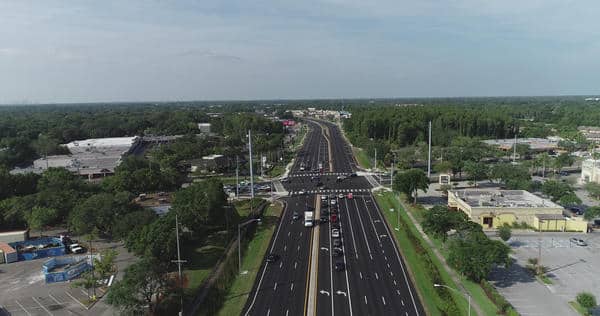
The Dale Mabry Highway project was a resurfacing of a major thoroughfare with numerous businesses, side streets, signalized intersections, median turn lanes, acceleration and deceleration lanes, and high traffic count.
From Aug. 4, 2022, to July 21, 2023, the Preferred Materials team handled a range of technical and logistical challenges to repave the Dale Mabry Highway (State Road 597) in Tampa. The resurfacing of the busy urban corridor handling traffic to and from Tampa International Airport demanded coordination with MacDill Air Force Base, the Raymond James Stadium® ongoing event schedule, a dense network of local businesses, as well as the Florida Department of Transportation (FDOT). In the end, Preferred Materials achieved an average International Roughness Index (IRI) of 32 on this project and was awarded the 2024 A.P. Bolton Award and Florida’s Smoothest Pavement Award from the Asphalt Contractors Association of Florida, and FDOT’s 2023 Best in Construction Award.
Let’s examine the Dale Mabry project and the mindset that brings innovation and excellence to individual CRH companies.
Within its Americas Materials business alone, CRH has 1,660 locations and about 29,000 employees. CRH is comprised of hundreds of established local operating companies. Notable brands include MidSouth Aggregates, Preferred Materials, Tilcon, Mulzer Crushed Stone, Texas Materials, Staker Parson, Dufferin Construction, Callanan Industries and Bodean. According to the company’s 2024 Annual Report, CRH’s Americas Materials Solutions business reported $16bn in revenue in 2024, achieved an adjusted EBITDA of $3.7bn, up 22% year-over-year, with an adjusted EBITDA margin of 23.2%.
Meet a Woman of Aggregates: Capital Materials’ Ericka Baxter
Opening the AI Envelope
One of the ways CRH is innovating for the future is through leveraging digital technology, which the company sees as a key enabler of enhancing the way it does business and delivers for customers. This includes the exploration and adoption of Artificial Intelligence (AI).
“When we look at AI or we look at technology and innovation, we do that with an enterprise lens,” Jackson said. “When we think about innovation, it’s important that we leverage our scale.”
He listed asphalt, aggregates, ready mixed concrete, below-grade infrastructure solutions, water management and other elements of the construction industry where piloting AI technologies offer exciting options. The size and scale of the company means it’s well positioned to explore AI’s benefits.
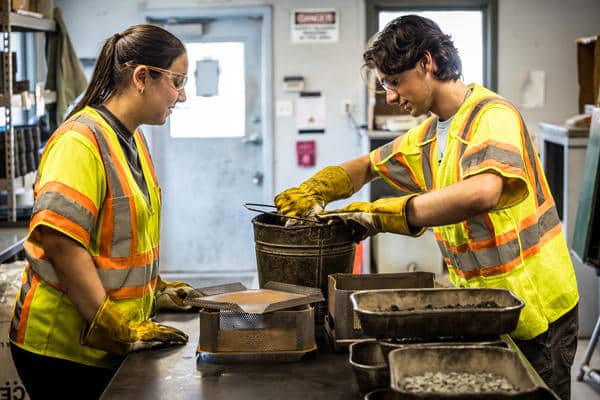
One of the ways CRH is optimizing mix design is by focusing on next-generation surfaces to stand up to extreme temperatures, heavy traffic weights and erosion. They’re designing specialty asphalt mixes that help reduce the road’s impact on the environment.
“CRH has been in this space in roads, in water, in aggregates and cementitious materials for many decades,” Jackson said. “We have a massive amount of expertise and data and so the big question that we challenge our teams and ourselves with is how do we take all that expertise that may exist in thousands of locations and leverage technology as a whole? Or, more specifically, how do we push the envelope to drive improvements utilizing technology?”
One of the areas where the company is leveraging that depth of knowledge is in mix design. “We’ve got a few things going on that are very exciting,” Jackson said. “Number one is around mix optimization.”
With the decades of experience and thousands of locations, Jackson believes CRH stands out for the company’s ability to deliver both performance and quality through its approach to materials science. “This includes creating new attributes for products and materials that have been in place for many years. So, it’s about evolution, which is something we take very seriously in and around materials science.
“When we bring new businesses in, we’re consistently learning from folks that join our company through acquisition,” he continued. “We want to leverage what they’re working on, what their knowledge base is and when we combine that at scale, we have the opportunity to do wonderful things in and around materials science.
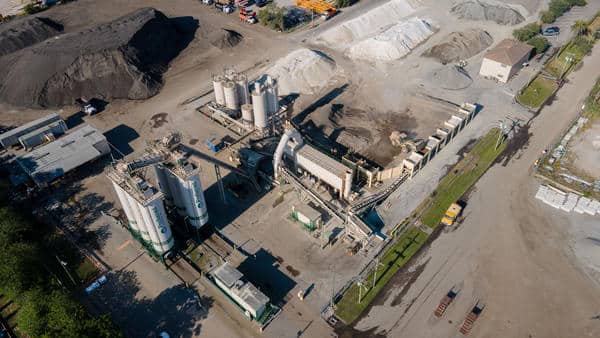
A Preferred Materials asphalt plant produced HMA for the Dale Mabry Highway project. The paving crew achieved an IRI of 32 placing and compacting it.
“We make sure to bring these teams together to really reimagine the art of the possible. When you think about new mixes—and that goes for asphalt mixes in particular—we’ve probably made the most significant strides in those areas by bringing those experienced, localized teams together to leverage high levels of technical knowledge.”
It’s not only CRH operating companies innovating, as Jackson mentions above. The company welcomes and encourages outside collaboration for problem-solving too.
“When you think CRH, we’re the largest building materials player in the market,” Jackson said. “And while our reach is international, we’re deeply committed to operating at a very local level.”
Consider how climate needs and geography influence state specs. Not only is this the foundation for making our industry’s asphalt mix designs more resilient, but it also gives companies like CRH the opportunity to work on solutions to local challenges.
“Our local folks are very engaged in their local markets,” Jackson said. At the corporate level, CRH can take the connected portfolio of knowledge to prepare solutions “at scale,” but it takes boots on the ground at the local level to know where different solutions are best applied.
“CRH leverages its scale and connectivity to deploy innovation—whether it’s a higher percentage of RAP or innovative mixes with recycled shingles. But importantly, there is no one-size-fits-all approach. We pride ourselves on engaging with local authorities, DOTs and the traveling public to truly understand their challenges and design a solution specific to their needs. Scale is important, but customer connectivity, local knowledge and relationships are paramount.

One of the hallmarks of the Dale Mabry project for Jason Jackson, President of CRH’s Americas Materials business, was its circularity. The team maxed out the percentage of RAP allowed in the mix designs and still achieved an award-winning pavement with an IRI that spells resilience and longevity for FDOT.
“It’s really a team approach in problem identification and then we’re developing solutions in partnership with our customers. And I think that’s how you change specifications, that’s how you increase adoption. That’s how we’ve really taken a lot of these new and innovative solutions forward through a partnership approach—starting with the problem statement and then working to a solution.”
“I think we’ve probably made the most significant strides in the area of mix design by bringing those experienced, localized teams together to leverage high levels of technical knowledge to reimagine the art of the possible.”—Jason Jackson
Protecting the Team at the Speed of Business
Another area of AI implementation important to Jackson is that of safeguarding CRH’s most valuable asset: its workforce.
“The other area we focus on in terms of AI, and it’s important and near and dear to my heart, is the people and safety element,” Jackson shared. “If we think about how we make our locations safer, jobs easier, more efficient and therefore safer, AI is another way we have implemented new measures.”
We see this in action in the trial of smart robotics. One of CRH’s first uses of Spot, the agile mobile robot from Boston Dynamics, Waltham, Massachusetts, was at the Ash Grove Cement Plant in Seattle, Washington. In a year-long pilot, the robodog performed proactive yet repetitive inspection routines. According to CRH, this sophisticated robot can operate in hot and dusty conditions, improving safety and freeing up skilled teams to solve complex issues elsewhere on site.
Jackson went on to say, “Spot helps do inspections at our cementitious plant locations, taking thousands of readings. The bot knows if there’s a motor running too hot or if a there’s a trip hazard or something that’s an upset condition, etc.”
According to CRH, this state-of-the-art machine is capable of navigating treacherous industrial terrain, taking on hazardous tasks, while its human counterparts stay safely at a distance. For example, at Ash Grove Cement, Spot uses laser scanning to take brick measurements inside the kiln, eliminating potential safety incidents among the workforce. In the early stages of the trial, the robot was able to detect a failing bearing in part of the site’s rotating equipment, which might have eventually led to unplanned downtime. This AI technology eliminates unnecessary downtime, decreases manufacturing site costs and drives efficiencies. Meanwhile, the data collected can be used to better enhance the overall efficiency of critical assets and maximize their uptime.
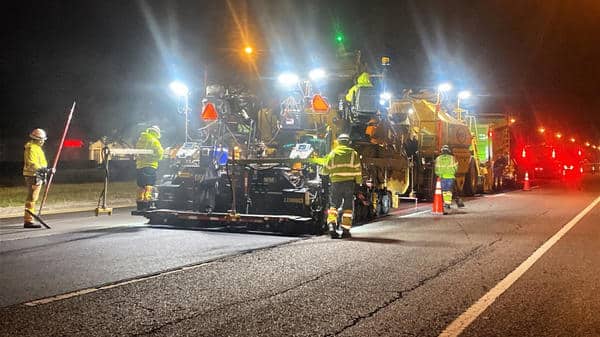
A Preferred Materials asphalt plant produced HMA for the Dale Mabry Highway project. The paving crew achieved an IRI of 32 placing and compacting it.
If Spot can handle the temperatures at a cement plant, imagine what it can handle at an asphalt plant to assist ground personnel and plant managers in assessing operations.
The implementation of AI for CRH is “taking the data and the expertise that we have over many, many decades of experience to try to optimize and create higher performing mixes and solutions that we can take to our customers to improve a number of things,” Jackson said. “But it’s also leveraging AI to help protect our teams and ensure that we’re producing the highest quality materials.
“I believe there’s a perception by some that our industry is slow to adopt change. I disagree with that. I think we are making improvements across [the construction industry]. This industry is implementing change at a very good pace, and leveraging these new technologies is something we should all be proud of. Whether it’s a bot that can help do inspections and identify issues that may cause safety or quality problems or it’s leveraging data to improve efficiency, we’re taking significant steps across our industry. CRH is positioned very well—having the size and scale—to lead the way in these new innovative ways of thinking.
“The beauty of our connected portfolio allows us to leverage data at varying positions of the construction value chain and when we do that right, we’re able to help solve our customers’ and our customers’ customers’ most pressing challenges.”
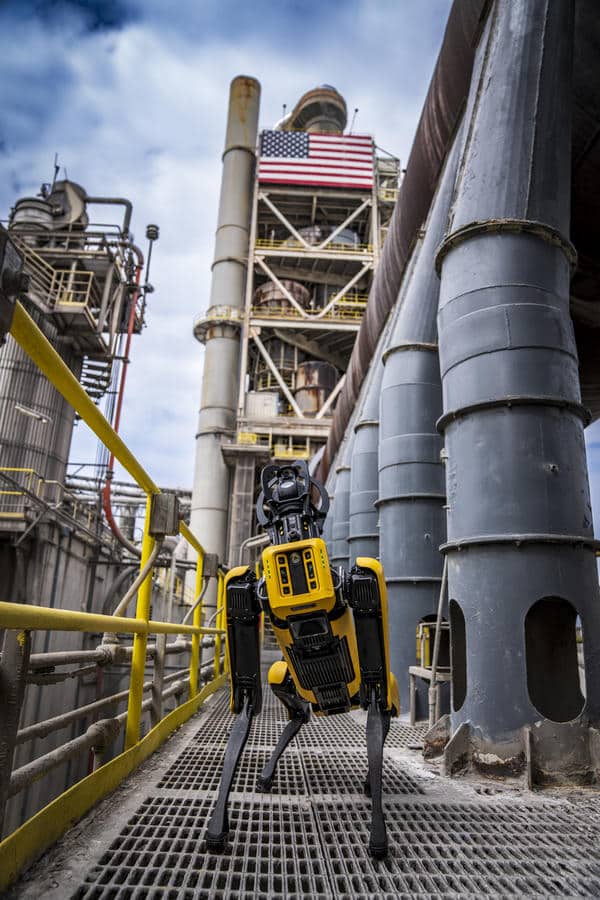
One of CRH’s first uses of Spot, the agile mobile robot from Boston Dynamics, was at the Ash Grove Cement Plant in Seattle. In a year-long pilot, the robodog performed proactive yet repetitive inspection routines, operating in hot and dusty conditions that freed up skilled teams to work elsewhere on site.
Satisfying the FDOT Customer
For the Dale Mabry project success story shared herein, FDOT is the customer whose pressing challenge was the resurfacing of a major thoroughfare with numerous businesses, side streets, signalized intersections, median turn lanes, multiple acceleration and deceleration lanes, and high traffic count. The Preferred Materials team stepped up to the task of protecting nesting eagles in the area and businesses along the route with ingenuity, smart equipment choices and the innovative mix design mentioned next.
Preferred’s Tampa plant is an Astec Double Barrel with 500 TPH capacity, located about 15.7 miles from the job. The crew ran three mixes for the project using a significant amount of reclaimed asphalt pavement (RAP) for each:
- A structural course of SP12.5 with 40% RAP and PG52-28
- A surface course of FC12.5 with 20% RAP and PG76-22 polymer-modified
- A surface course of OGFC FC5 with PG76-22 polymer-modified
An anti-strip was added to each binder to help with mix properties and as a compaction aid. They used the oscillation technology of their Sakai rollers in place of traditional vibration. This technique is known to:
- minimize vibrations that would otherwise affect nearby structures and underground utilities;
- reduce disturbance to local wildlife; and
- lower noise levels for surrounding neighborhoods.
The team achieved an average of 92.7% compaction on the structural mix; the friction course mixes were placed in density exception areas (intersections) and did not require density testing.
Preferred Materials Executes the Plan to Get the Best IRI in Florida
Jackson also shared his thoughts on the Preferred Materials crew. “This gives me an opportunity to highlight the most important element of CRH, which is our people and our teams. The Dale Mabry project example doesn’t happen without our teams.
“Across CRH, when we look at what we’re able to accomplish, it’s all because of our people. I mean, the project had its own unique challenges, including some of the things they had to contend with—the MacDill Air Force Base that was right there and Tampa International Airport. Don’t forget the Buccaneers. We had Raymond James Stadium right there, and we didn’t shut down during football season or game days. The amount of coordination and our team’s ability to partner with FDOT, who is an amazing customer and partner of ours, is so important to highlight.
“The awards are great, and I know our teams appreciate them and they’re very proud of them. And they should be because the elements of safety, quality, on-time delivery and performance, are hallmarks of what make CRH companies and crews so great. On the front lines, the team leaders and supervisors and the folks in the back office that are making sure everything’s coming together in the right way. I couldn’t be prouder of that team.”
Amid the accolades Preferred Materials received for a job well done, there is also a positive environmental component that should not be overlooked.
“We are only scratching the surface when we talk about circularity,” Jackson said. “We can’t emphasize circularity enough through the broader construction value chain and specifically in and around roadway design and asphalt. I like to look at the roadway as an ecosystem that has a number of parts and pieces that come together to create that finished surface that the people in our communities drive on every single day.
“In 2024, we’ve recycled over 44 million tons of waste and byproduct that has been sourced either internally or from other industries,” Jackson continued. “This makes us the leading recycler in North America. If we think about what we’ve integrated from a recycled asphalt pavement and a recycled asphalt shingle aspect, we’ve used over 13 million tons of RAP and RAS just in 2024 alone and we are expanding this in 2025.
“Dale Mabry is a great example of how that came together. Not just the results and some of the awards that were won on that project, which are already amazing, but the fact that, just looking at the circularity element of what went into that roadway. That’s what gets me excited. We’ve built these positions where we are able to lead the way and really reinvent the way we look at circularity in road projects. We can 100% do more with less.”
One of the ways CRH is optimizing mix design is by focusing on next-generation surfaces to stand up to extreme temperatures, heavy traffic weights and erosion. “We design specialty asphalt mixes that help extend the lifespan of the road, reduce its maintenance costs, improve its strength and resilience, and reduce traffic noise, which reduces its impact on the environment,” Jackson shared. Examples include:
- Super Sand Mix (SSM), which is a custom blend incorporating RAP, infused fibers, waste sand and used tire rubber;
- A low-carbon, high-percentage RAP asphalt mix used on the Dale Mabry highway project;
- Self-healing asphalt or warm-mix asphalt, which is engineered to repair cracks automatically.
Self-healing asphalt trials are still in early stages of maturity across the United States. The company is routinely using bio-based rejuvenators to improve asphalt mixture flexibility, which provides for a more durable, long-lasting pavement.
“Additionally, we are innovating with fibers (synthetic and natural) to distribute stress more evenly throughout the asphalt mix, helping to reduce fatigue cracking under heavy traffic loads. For example, Texas Materials, A CRH Company, has successfully pioneered the first large-scale use of an asphalt mix we call Super Sand Mix (SSM) in the city of Fort Worth. It’s an innovative, highly durable, fiber-reinforced asphalt, specially formulated to enhance the surface texture of city streets and rural country roads. With proper maintenance, SSM is expected to achieve double the lifespan of a traditional asphalt product.”