European Show Crushes Production

Hillhead 2026 brings new crushing tech to global audience

Hillhead, which took place June 23-25, 2026, in Buxton, England, is the largest quarrying, construction and recycling equipment exhibition in the United Kingdom. It takes place every two years in a working Derbyshire quarry and brings together 600 exhibitors and nearly 20,000 visitors for three days of demonstrations, big iron and new technology.

Some of those exhibitors are, naturally, based in the European Union and offer services to our European colleagues. Some of those exhibitors display and demonstrate innovations that cross the Atlantic. They all showcase advances in construction for the aggregates and asphalt industries’ edification.

New for 2026, Hillhead introduced a new way to experience the latest big kit in action at the Quarry Face demonstration area. Three each day, leading manufacturers showcased their machines as part of a dynamic curated live show hosted by broadcaster and technology presenter Nikki Dean. Combining live machine operation with expert commentary and manufacturer interviews, all the action was streamed onto a giant LED screen set against the dramatic quarry face backdrop.

Visitors were able to see exactly what the machines could do in real working conditions, while learning more about the latest product developments, technologies and innovations directly from the experts operating them. Curated live demonstration sessions took place with the following participants: JCB, Hitachi, LiuGong, Hyundai, CASE, McHale, Komatsu, SANY, Develon, XCMG, SBM and Corgin.

OEMs exhibiting at Hillhead 2026 included, but were not limited to, the following:

ASTEC

Astec’s leadership team was on site throughout the event to work directly with customers and partners.

Astec put customer performance, productivity and profitability at the center of its presence at Hillhead 2026, unveiling eight new innovations for the European market across crushing, screening, washing and material handling. Astec’s Hillhead showcase was focused on solving real operational challenges reducing downtime, improving throughput and lowering cost per tonne. Attendees experienced eight key launches and innovations, including:

  • The global launch of the Kolberg® Eco-Scrub modular washing solution, delivering efficient wet processing with a design especially suited for semi mobile locations.
  • The global launch of the Telestack® LF527 low feed hopper feeder, reducing double handling and ensuring smooth, controlled material flow.
  • The European launch of the new Frontier™ tracked mobile crushing and screening range and the European launch of the patented Vari-Frequency Technology, designed to minimize blinding and maximize output, which was showcased on the Pioneer 6203LPV horizontal screen.

ERIEZ
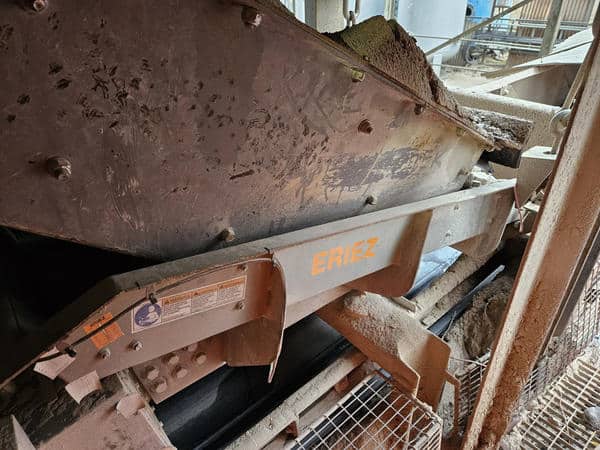
Eriez exhibited its 75B‑HC high-capacity electromagnetic vibratory feeder at Hillhead 2026, as well as a conveyor system equipped with an Eriez metal detector, along with a suspended magnet and additional material handling solutions.

Eriez®, Caerphilly, United Kingdom, featured its latest material handling technology, including the B‑HC high-capacity electromagnetic vibratory feeder. Designed to extend the capabilities of the Eriez B-Series range, B‑HC feeders offer high-capacity electromagnetic feeders for demanding bulk material handling applications. The feeder incorporates a high-power electromagnetic drive with a rare earth armature, applying force in both forward and reverse directions of the tray to produce controlled, linear material flow.

EVOQUIP
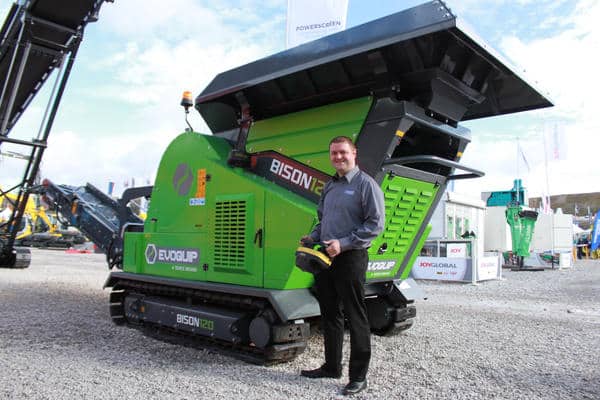
In 2016, EvoQuip made its debut at Hillhead with the introduction of the Bison 120 jaw crusher, a compact machine designed to simplify crushing operations for smaller contractors and recycling applications. Since that launch, EvoQuip has steadily expanded its portfolio from a single jaw crusher into a broad range of compact equipment covering crushing, screening, shredding and conveying.

EvoQuip®, a Terex Corporation company, celebrated 10 years since the brand was officially launched at the show. EvoQuip made its debut at Hillhead 2016 with the introduction of the Bison 120 jaw crusher for smaller contractors and recycling applications. The EvoQuip stand included:

  • a new digital element, providing visitors with interactive access to product information, application insights and a snapshot of the brand’s global reach over the last 10 years
  • TRAC, a multi-sensor solution to improve screening equipment performance and durability
  • INNEX, a new digital brand to improve end user experience through consolidated tools and AI-driven capabilities
  • a fundraising effort for cystic fibrosis charities

FINLAY
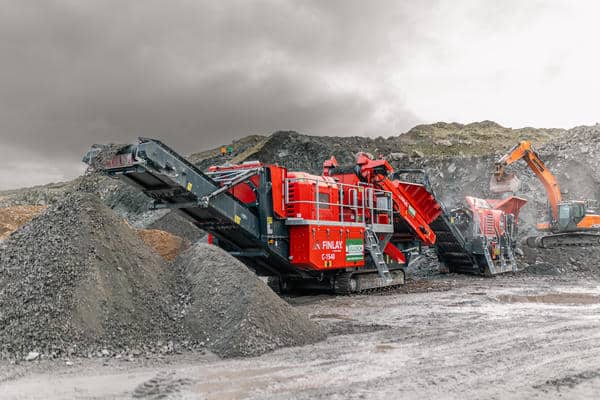
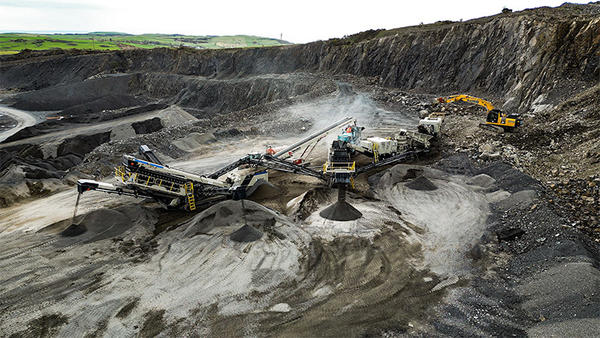
Finlay’s C-1540, in the foreground, and J-1170 were part of the live demonstrations.

Finlay®, a Terex brand, exhibited a wide‑ranging line‑up of crushers and screens at Hillhead 2026, including prototype previews and first public sightings of new impactors.

  • The I‑130RS impact crusher made its first public showing, offering ease of transport and configuration across a wide range of applications.
  • The C‑1540+ cone crusher prototype worked in the demonstration area as a preview ahead of its planned production launch in 2027, featuring an upgraded cone chamber.
  • The J‑1170+ jaw crusher worked in the live demonstration area, delivering high production capacity with large reduction ratios and configurable operation for quarrying or construction and demolition recycling.
  • The Finlay J‑1280 jaw crusher with independent pre-screen, extended feeder and jack leg options, was shown publicly in the UK for the first time since its launch in 2025.
  • Additional machines and technologies such as Finlay’s telematics platform, Ask Finlay, were also on display.

INTRAME

INTRAME, a Spanish manufacturer of asphalt plants with more than 60 years of experience, presented its latest asphalt plant technologies focused on efficient aggregate handling, accurate dosing, high RAP processing capacity and reliable production of high-quality asphalt mixes.

INTRAME personnel were available to discuss:

  • new asphalt plant projects,
  • retrofits,
  • RAP upgrades,
  • plant modernization, and
  • customized technical solutions to improve efficiency and sustainability in asphalt mix production.

MAGNA

MAGNA™, a Terex brand, made its Hillhead debut with the MT400C large cone crusher and MT6S heavy‑duty scalping screen. The MT400C cone crusher features:

  • cubical product shape for aggregates producers and contractors,
  • a large capacity 8m3 (10.4yds3) hopper and feeder,
  • an automated metal detection system and purge chute,
  • full hydraulic closed side setting adjustment with electronic monitoring,
  • a fuel‑efficient direct drive system through a wet clutch, and
  • a hydraulic tramp relief system with automatic reset.

MAJOR
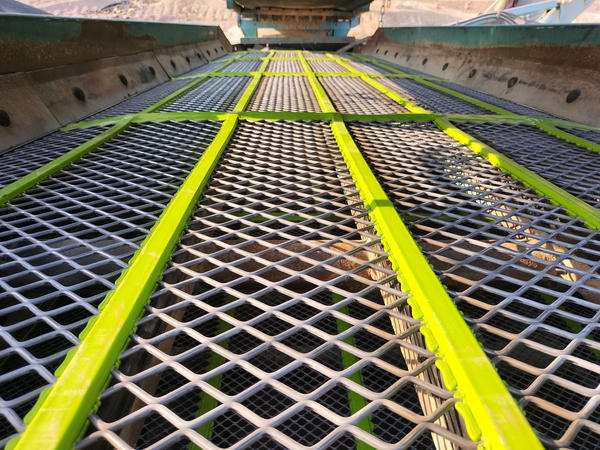
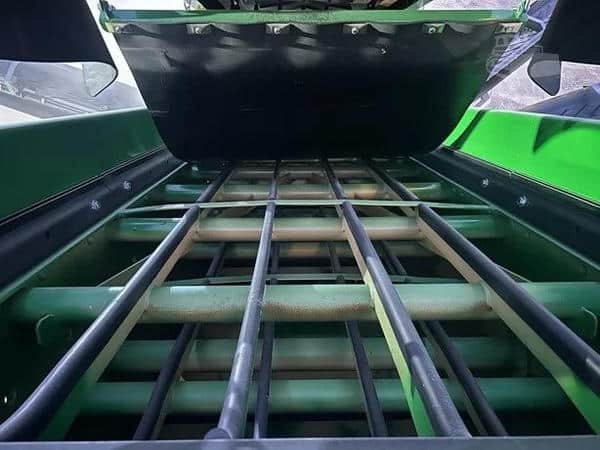
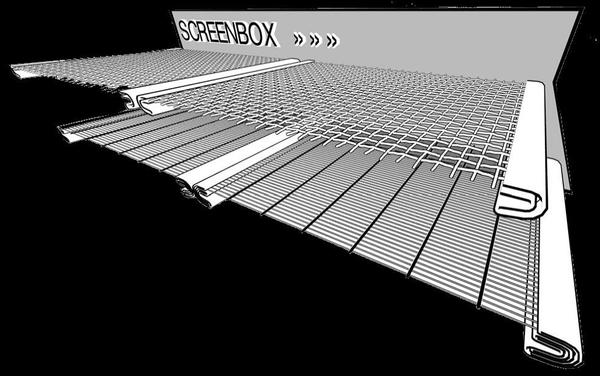
FLEX-MAT Tensioned Screen Media is available in both side-tensioned or end-tensioned configurations with optional side seals, overlaps and crown deck adapters.

Major exhibited its FLEX-MAT® screen media and woven wire screens at Hillhead. The samples of its screen media solutions on display included:

  • The FLEX-MAT® Modular Screen Media series, which offers a high open area, efficient stratification, no blinding and pegging;
  • The high-vibration FLEX-MAT® Tensioned Screen Media, which uses lime-green polyurethane strips that allow each wire to vibrate independently from hook to hook; and
  • Woven Wire Screens, which feature OPTIMUMWIRE® engineered with extremely tight crimps and a precise weave pattern.

MDS
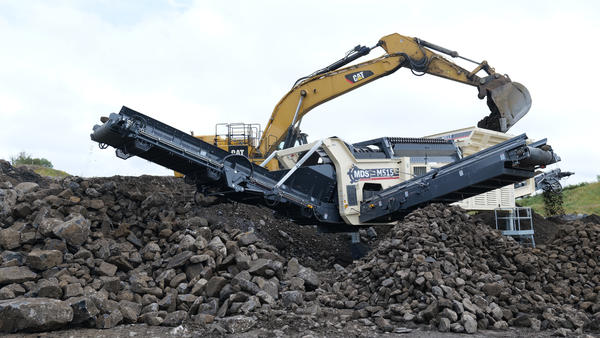
The latest iteration of the M515 trommel from MDS incorporates several design improvements focused on transportability, accessibility and output.

MDS® returned to Hillhead with a live working demonstration of its flagship M515 trommel and a static display of the M300 scalping grid. The M300 is a compact, heavy-duty scalping grid, built for challenging materials such as blasted rock and construction and demolition waste. It features:

  • a fully hydraulic setup,
  • a heavy-duty double-deck grid incorporating a T-Bar cassette top deck and mesh bottom deck,
  • 1,400-mm wide collection conveyor with variable speed,
  • 1,400-mm wide product conveyor, and
  • a compact footprint for ease of transport.

POWERSCREEN
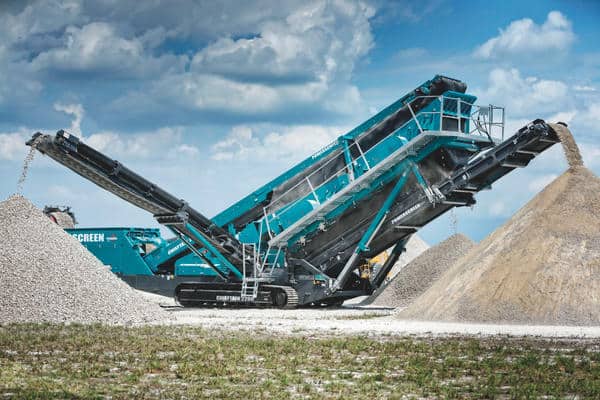
The Chieftain 2200 triple deck screen is the largest inclined screen in the Powerscreen range.

Powerscreen®, a Terex brand, marked its 60th anniversary at Hillhead 2026 alongside long-standing UK distributor Blue Group. A focal point of the booth was the fully refurbished MK1 screening unit, the original machine that launched the Powerscreen story and helped establish the concept of mobile screening. Also on display was:

  • a prototype version of the 1000X Maxtrak cone crusher;
  • the Chieftain 2200 triple deck screen, the largest inclined screen in the Powerscreen range, featuring a patented configurable drive system and dual screenbox design;
  • the Premiertrak R450 jaw crusher, developed for quarrying, recycling, demolition and mining applications;
  • TRAC; and
  • INNEX

TEREX MPS

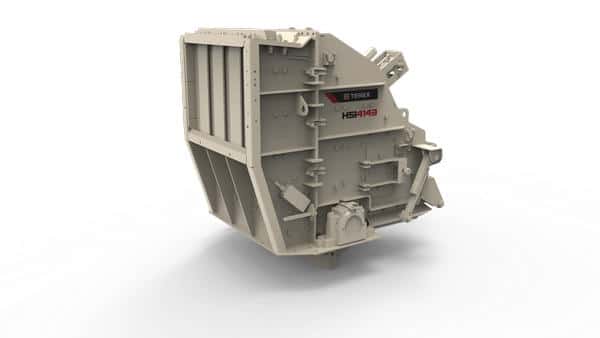
For added flexibility, an optional blowbar jib crane is available to assist with handling during maintenance of the TI4143 horizontal shaft impactor (HSI) from Terex MPS.

Terex® MPS exhibited the TI4143 horizontal shaft impactor (HSI) at Hillhead 2026. The TI4143 is engineered to support quarrying and recycling applications. It features:

  • hydraulic assist system for quick apron adjustment;
  • four inspection doors, along with a hinged side door, that provide direct access to the rotor, blowbars and aprons;
  • hydraulically-opening crushing chamber; and
  • a quick-release wedge-lock system to simplify blowbar changes.

TEREX WASHING SYSTEMS
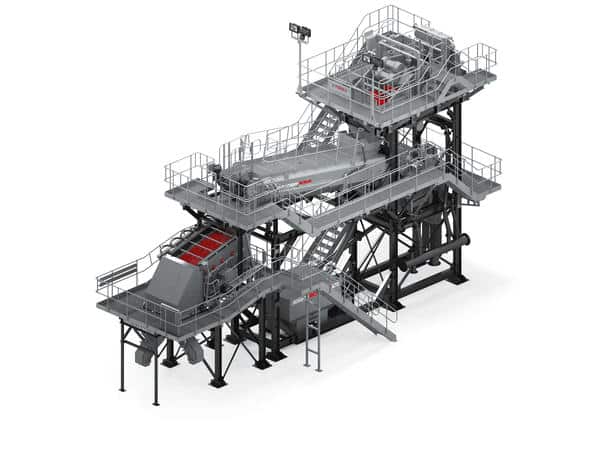
Mounted on a single modular chassis, the AggreScrub P80 from Terex Washing Systems combines pre-screening, logwasher scrubbing, post-screening, contaminant removal and slurry management within one integrated system.

Terex® Washing Systems introduced the new AggreScrub™ P80 Logwasher with PreScreen at Hillhead 2026, where the new wet processing solution was shown publicly for the first time. The AggreScrub P80 is engineered for construction and demolition waste, excavation material and aggregate applications and features:

  • a compact layout for fast transport, installation and commissioning;
  • the PowerScrub™ twin‑shaft logwasher, which has spiral‑arranged blades to deliver stone‑on‑stone attrition and continuous material movement;
  • post‑scrub sizing;
  • a 2.4-m x 1.2-m triple deck inclined aggregate screen;
  • a dedicated 1.8-m x 0.6-m trash screen; and
  • an integrated sump tank and pump.

WIRTGEN
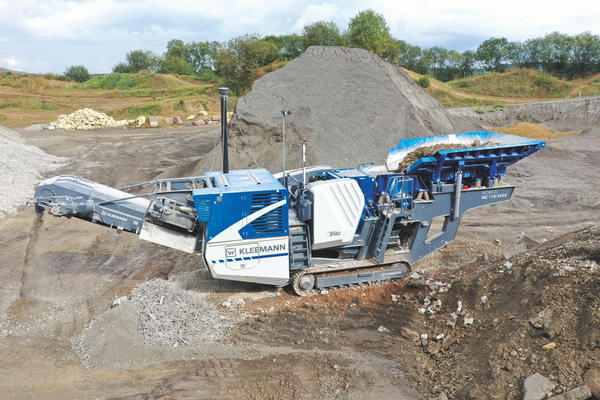
The MOBICAT MC 110 EVO2 jaw crusher from Kleemann, which is designed to pre-crush almost all kinds of quarried stone and a whole range of recycling tasks, was on display in the Wirtgen Group booth.

Under the motto “You’ll never crush alone,” the Wirtgen Group set its focus at Hillhead 2026 on end-to-end solutions for the materials processing sector with five Kleemann crushers and screens. Also appearing at the booth was a purely battery-electric production system for road rehabilitation with zero operating emissions.

For the materials processing sector, Wirtgen displayed:

  • the MOBICAT MC 110 EVO2 jaw crusher, which is suitable for pre-crushing almost all kinds of quarried stone and a whole range of recycling tasks;
  • the compact MOBIREX MR 100 NEOe impact crusher, which offers a wide range of potential applications in the processing of demolition material, concrete, reclaimed asphalt, and soft to medium-hardness quarried stone; and
  • the MOBISCREEN MSS 502 EVO and MSS 802 EVO scalpers and the MOBISCREEN MSC 702 EVO classifying screen, with Dual-Power drive option, allowing them to be operated entirely with electric power.

For the road construction sector, Wirtgen displayed:

  • the Wirtgen cold milling machine W 50 Re;
  • the Vögele SUPER 1300-5e road paver;
  • the Hamm HX 70e tandem roller;
  • the new MULTI JET burner from Benninghoven, which the company stated is the world’s first burner for asphalt mixing plants that can also be fired with 100% green hydrogen, making the drying and heating process for virgin material and recycled asphalt pavement (RAP) CO₂ emission-free; and
  • the new 2.7 t HD 12 G VV tandem roller and the HC 70i VIO compactor from Hamm for the rental market.
Beyond the Stockpile: Why Material Visibility Matters More Than Ever

Managing the stockpile: material visibility impacts your bottom line

Every aggregate producer has experienced an inventory management nightmare. The schedule is set. Customer orders are lined up. Trucks are moving. Then someone realizes the material everyone thought was available is not where it needs to be. Instead of focusing on production, the operations, plant and inventory managers are under pressure to find and transfer inventory.

This kind of uncertainty affects plant flow, truck movement, customer service, month-end reconciliation and operating cost. The inventory problem may show up when a stockpile runs low. But it usually starts earlier, when the information that teams rely on no longer matches what is happening in the field.

Epiroc and Luck Stone Deploy First Fully Autonomous Drill in U.S.

The hidden cost of uncertainty

In many aggregate operations, inventory management still depends on a mix of physical measurements, spreadsheets, manual updates, periodic reconciliations and team knowledge. Those methods have supported producers for years. But they can become harder to manage as material moves across more sites, more products, more customers and more operational handoffs. Every movement changes the inventory picture. The challenge is making sure those changes are visible soon enough to support decisions in the moment.

When visibility lags, uncertainty spreads across the operation. Operations teams lose confidence in the numbers. Plant teams make decisions based on what they believe is available. Inventory teams spend more time investigating discrepancies. Transfers happen at the last minute. Purchasing decisions get delayed because no one is fully confident in current stock levels.

For many teams, the biggest frustration is not simply the shortage itself. It is the time spent reacting to a problem that could have been easier to manage with earlier visibility.

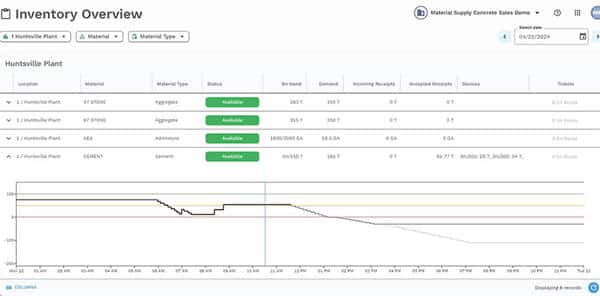
This screen capture shows an inventory overview in the Material Supply platform.

Inventory visibility is not just about knowing how much material is on the ground. It is about knowing what is available, where it is available, how quickly it is moving and what action may be needed next.

Material visibility matters differently depending on the role.

  • For an operations manager, visibility supports better coordination across plants, trucks, materials, and customer demand. It helps reduce last-minute scrambling and gives teams a clearer view of bottlenecks before they disrupt the day.
  • For a plant manager, visibility helps keep the site moving. When material availability is unclear, the plant may lose time waiting for answers, adjusting loads or working around issues that should have been caught earlier.
  • For an inventory manager, visibility supports accuracy, reconciliation and confidence. Inventory teams need to know what material has moved, what has been consumed, what remains available and where discrepancies need attention.

These roles may look at the problem from different angles, but they are connected by the same need: reliable material information that reflects operational reality.

Getting Dwell Time Right: Balancing Heat, Moisture & Mix Design

From reconciliation to operational control across the material supply chain

Historically, inventory management has often centered on reconciliation. Teams measure stockpiles, compare numbers against records, investigate discrepancies and work backward to understand what changed. Reconciliation still matters, but it is no longer enough on its own.

Aggregate producers are operating in an environment where labor is tight, material costs are under pressure and customer expectations continue to rise. Waiting until the end of a cycle to discover a discrepancy can leave teams with fewer options and higher costs. That is why many producers are shifting their focus from simply reconciling inventory to improving material visibility throughout the operation.

Visibility means understanding how material is moving across sites, plants, tickets, transfers and consumption points. It means giving teams a clearer view of what is happening sooner, so they can act before a shortage or discrepancy becomes a larger operational issue.

One of the biggest challenges aggregate producers face is that material data often lives in different places. Aggregate shipments may be tracked in one system. Asphalt consumption may be tracked somewhere else. Purchasing, production, scale operations, dispatch and inventory teams may each have a different view of material movement.

When information stays disconnected, no one has a complete picture. That creates friction for the people closest to the work. Command Alkon’s Material Supply is designed to help organizations gain a clearer view of inventory movement, consumption and availability across operations. Rather than relying only on manual updates and periodic reconciliation, Material Supply can help teams better understand how materials are flowing through the business, so inventory information is more aligned with operational activity.

The goal is not to create more administrative work for plant or inventory teams. It is to help reduce the time spent chasing numbers, checking disconnected records and reacting to surprises.

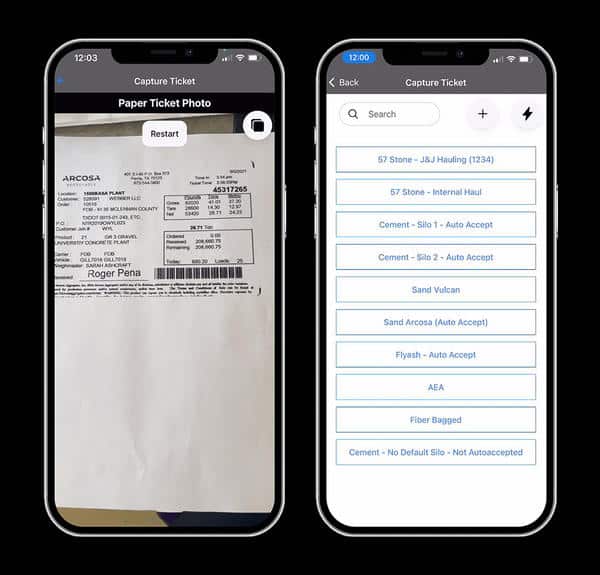
Capture and feed information to gain stronger visibility.

A real-world example: Heidelberg Materials

The value of connected material visibility becomes clear when aggregate and asphalt operations depend on each other.

Heidelberg Materials is currently using Material Supply within its New York and Pennsylvania markets to support the flow of ticket data between aggregate and asphalt operations. By connecting information across both sides of the business, teams can gain a more complete understanding of material movement and consumption. Instead of relying only on separate inventory records, operational data can help provide a clearer picture of how materials are being used and where replenishment decisions may be needed.

The goal is to help reduce the time spent chasing numbers, checking disconnected records and reacting to surprises.

For operations, that can support better planning. For plant teams, it can reduce uncertainty around material availability. For inventory teams, it can create a more connected trail of material movement.

As producers look for ways to improve efficiency, examples like Heidelberg Materials point to a larger shift: inventory can no longer be managed as a standalone function. It is part of the broader material supply chain, and the teams responsible for production, plant performance, and inventory accuracy all need a shared view.

When and How to Add a Magnet to Your Crushing Circuit

Moving from reactive to predictable

Every producer knows some challenges are unavoidable.

The weather changes. Equipment breaks down. Customer demand shifts. Job sites get delayed.

But inventory shortages often provide warning signs before they become emergencies.

The problem is not that operations lack data. Most aggregate producers generate large amounts of information every day through tickets, transfers, sales, production, consumption and purchasing activity. The challenge is turning that information into visibility that teams can use while there is still time to act.

When visibility improves, operations become more predictable. That predictability matters because many costly inventory problems start with a simple lack of awareness. By the time a shortage becomes obvious, options may be limited. Earlier visibility changes the conversation.

The producers that perform best are not always the ones with the largest stockpiles. They are often the ones with the clearest understanding of what material is available, how quickly it is moving and what decisions need to happen next. That level of visibility helps teams operate with more confidence. In an industry where every ton matters, knowing what is available—and knowing it with confidence—can make all the difference.

Maria McNeil is the solutions specialist at Command Alkon. For more information, visit www.commandalkon.com/products/material-supply/.


Stronger Visibility Gives the Aggregate Producer an Edge

  • Purchasing decisions can happen before inventory reaches a critical point.
  • Transfers can be planned before they become urgent.
  • Plant teams can adjust with more confidence.
  • Inventory teams can identify discrepancies earlier.
  • Operations leaders can make decisions based on current activity instead of assumptions.

The result of better material visibility and management is not just cleaner inventory data. It is a more predictable operation.

Select End Tension or Side Tension Screens

How to select the right tensioning fit for your screening operation

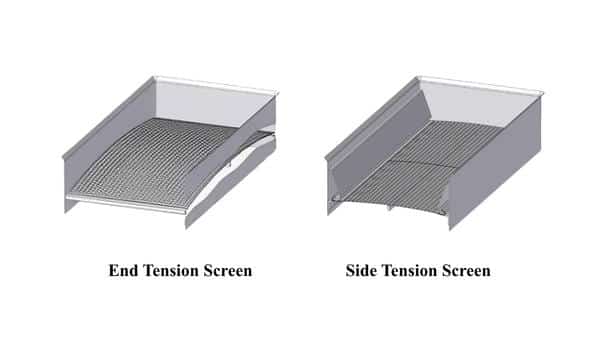
End tension and side tension screens serve the same purpose: to separate and classify material. However, the way they are mounted and tensioned makes all the difference in performance, maintenance and screen life.

Side tension screens are clamped along the side walls of the screen box, secured by tension rails and carriage bolts. This horizontal orientation distributes pressure evenly across the deck, allowing for greater surface contact and enhanced stability when processing heavy or abrasive materials.

End tension screens are clamped at the ends, running perpendicular to the side walls. The screen is anchored at the bottom with a fixed bar, while the top edge can be pulled tight and secured with bolts, allowing operators to adjust and tension the screen for a cleaner material flow path. With less frame contact, these screens allow lighter or finer materials to pass more efficiently.

The choice between the two often depends on the machine’s configuration, but it also has major implications for how material moves across the deck and how the screen holds up over time.

End tension systems thrive in setups that require speed, precision or compact design. Their smaller footprint allows for multiple decks to be stacked vertically, making them ideal for plants with limited space.

Tensioning Affects Material Flow and Efficiency

While installation is important, the real determinant of screen performance is effective tensioning. A properly tensioned screen stays flat and taut, ensuring consistent vibration and even material movement across the surface. If a screen is too loose, it flexes and sags, causing material to settle into the openings instead of flowing through them. This leads to reduced throughput and premature wear. Overly tight tensioning can be just as problematic, potentially tearing the screen or damaging the frame.

Side tension screens, with their increased contact points along the deck frame, are particularly well suited for heavier, high impact materials such as crushed stone, gravel and aggregates. Their design helps absorb vibration and resist the abrasion that comes with handling coarse material.

End tension screens, on the other hand, create a smoother and faster material trajectory. With fewer obstructions in the flow path, they’re ideal for fine, lightweight or high-speed applications where precision and output consistency matter. Industries like food processing, mulch, topsoil and recycling benefit from this setup.

Mills Construction Accelerates Project, Transforming an Aging Asphalt Site in Austin

Two of the most common issues in screening are pegging and blinding, which can often be traced back to poor tensioning. Pegging occurs when larger particles wedge into the screen openings, while blinding happens when fine particles build up and clog the mesh.

When screens are loose, they flex under vibration, giving material a chance to settle and plug openings. A properly tensioned screen, however, vibrates uniformly, shaking loose lodged particles before they can build up. In this sense, good tension acts as a self-cleaning mechanism, keeping the screen surface open and extending the time between cleanings. Because tension plays such an important role in performance, regular maintenance is critical. After initial installation, operators should retighten bolts once the screen has run for a few hours, since new screens often loosen slightly during break-in. Doing so not only improves throughput but also extends the life of the media, preventing both unnecessary wear and unplanned downtime.

End tension and side tension screens serve distinct purposes, but both can deliver exceptional results when properly tensioned, correctly matched to the application and regularly maintained.

Maintenance, Replacement and Ease of Handling

Maintenance time and accessibility can heavily influence which tensioning method makes sense for a particular operation. With end tensioned screens, only one end needs to be unbolted during a changeout, allowing for faster turnaround. This simplicity is a key advantage in industries where production schedules demand frequent screen swaps to accommodate different material sizes or cleanliness requirements.

By contrast, side tension screens require disassembling the side rails. While this is a more time-consuming process, the tradeoff is durability. The additional contact and clamping surface make them more secure in high impact environments, such as mining or aggregate plants. These are typically stationary operations that prioritize long-term wear life and stability over changeout speed.

Selecting between side and end tension screens often comes down to the type of material and the operational goals. In heavy duty applications like aggregate or mining, where throughput and abrasion resistance are key, side tension screens provide sturdiness. These screens also tend to be used in larger, stationary units with extensive clamping area, ensuring stability under intense load.

In contrast, end tension systems thrive in setups that require speed, precision or compact design. Their smaller footprint allows for multiple decks to be stacked vertically, making them ideal for plants with limited space. They are common in portable or modular screening units that need frequent reconfiguration, as well as in industries where the material characteristics, lighter weight, finer particles or moisture content, favor smooth, uninterrupted flow.

Best Practices for Mobile Asphalt Crushing

Material, Alloy and Hook Style Options

The choice of screen material and hook style further refines performance. In wet or corrosive environments, stainless steel offers superior resistance and promotes smoother material flow, while high carbon steel is preferred for its hardness and wear life.

Hook styles vary by machine type and manufacturer. The C-style hook is popular for both side and end tension configurations. The correct hook profile ensures proper fit, tension distribution and minimal risk of slippage during operation. For producers replacing screens in existing setups, matching hook type and alloy to the machine’s design and material stream ensures optimal performance and longevity.

Compass Wire Cloth has helped producers make these material and design decisions since 1982. From stainless and high-carbon wire cloths to specialty alloys such as Inconel and Monel, as well as synthetics, nylons, and polyurethane or rubber panels, Compass delivers tailored solutions for both end tension and side tension systems.

Step Up Hot-Mix Production with Your Facility’s Own Crushing Plant

Understanding Performance and Uptime

Achieving consistent screening performance depends on more than choosing between end or side tension; it requires understanding how tensioning, material selection and maintenance work together to influence throughput and screen life. Both side tension systems and end tension designs can perform exceptionally when properly installed and regularly retightened to maintain uniform tension across the deck.

In practice, producers often refine these choices over time, balancing production speed, wear life and ease of maintenance according to their process needs. The most effective screening setups are those that pair the correct tensioning method with the right alloy, hook profile and vibration pattern for the material being processed.

This results-oriented approach ensures every customer gets the most out of their screen media investment, reducing unplanned downtime and increasing overall throughput.

Ultimately, optimizing a screening operation comes down to understanding how every variable, such as tensioning method, screen material, hook style and maintenance practice, interacts within the broader process. End tension and side tension screens serve distinct purposes, but both can deliver exceptional results when properly tensioned, correctly matched to the application and regularly maintained. Producers who approach these factors as an integrated system rather than isolated choices will see the greatest gains in efficiency, screen life and product consistency, turning precision tensioning into a long-term advantage for their operation.

David Gentilini is a national account executive for Compass Wire Cloth.


Take Screen Management Back to Basics

  • Properly tension the screen to keep it flat and taut: This ensures consistent vibration and even material movement across the surface.
  • After initial installation, and after the screen has run for a few hours, retighten bolts. New screens often loosen slightly during break-in.
  • When replacing screens, match the hook type and alloy to the machine’s design and the material stream to get optimal performance.

Building the USA’s Tallest Asphalt Core Dam

Barnard Construction and partners use an on-site quarry, crushers and plant to build a 350-foot-tall asphalt core dam for Northern Water in Colorado as part of the Chimney Hollow Reservoir Project

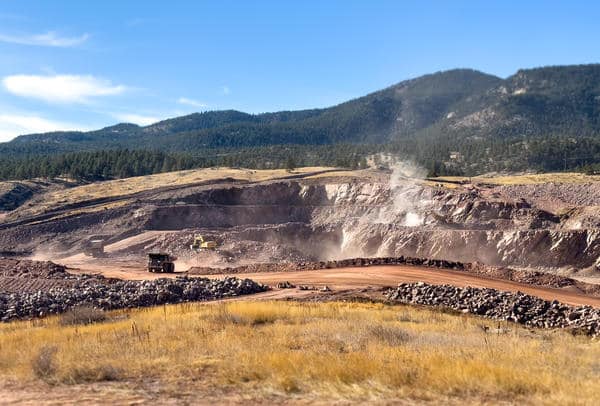
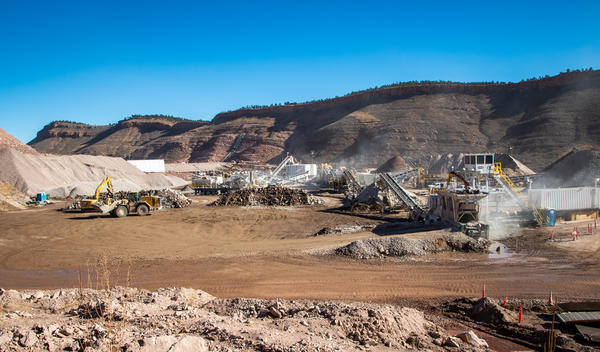
At peak production between 2021 and 2025, an on-site rock quarry supplied an average of 62,000 tons of material per day for the construction of the Chimney Hollow Reservoir main dam, making it one of the largest mining operations in Colorado. On Friday, July 18, 2025, crews had completed paving the core of the rockfill gravity dam, thus completing the largest asphalt dam in the United States.

In a video produced for the Chimney Hollow Reservoir website, Joe Donnelly, who is the principal project engineer for Northern Water, Berthoud, Colorado, shared the purpose of this monumental undertaking.

“We have eight of the ten fastest growing cities in northern Colorado in our service area, and Chimney Hollow is part of our regional solution to our water supply gap,” Donnelly explained on camera. “We have the Windy Gap Reservoir and Windy Gap water rights on the West Slope. Those are existing water rights that have been in place since 1967. To make the most out of our Windy Gap water rights and to ultimately see the yield that we need from those water rights, we needed dedicated storage. The Chimney Hollow Reservoir project provides that dedicated storage for those Windy Gap water rights so that we can reliably provide 30,000 acre-feet per year to people in northern Colorado.”

Each day that a 9-inch lift of asphalt was placed in zone 1 and stone placed in zones 2, the teams also brought up the rock embankment at the same time. In total, there were 512 lifts of asphalt to complete the main dam.

To that end, Northern Water facilitated the construction of a reservoir with 90,000-acre-feet capacity covering 740 acres and its attendant infrastructure. While the main feature of the Chimney Hollow Reservoir project is the 350-foot-tall asphalt core dam, Barnard Construction Company Inc., Bozeman, Montana, which served as the general contractor, and the other teams tracked many moving parts over the four years of active construction.

The Teams

General contractor = Barnard Construction Company

Engineering team = Stantec

Construction management team = Black & Veatch

Owner = Northern Water

R.J. Roos, Barnard operations manager and vice president, told The Asphalt Pro of those moving parts. “The dam gets a lot of recognition, as it should, but the complexity of this project and other work associated with it should not be understated,” Roos shared. “We constructed a tunnel to transfer water in and out of the reservoir, over 2 miles of large-diameter steel pipeline to transfer water, a valve house structure that consisted of over 50 valves to control the water movement in/out of the reservoir along with other BOR facilities, and a clay core Saddle Dam at the Southern point of the property.”

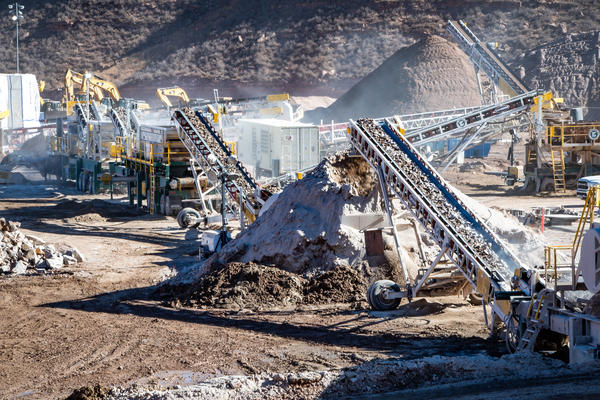
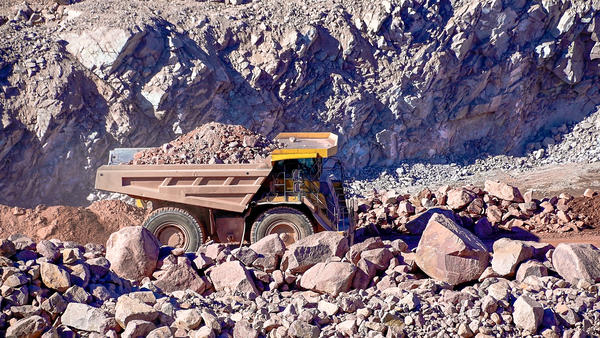
Material was blasted from the on-site quarry and processed on-site via cone, jaw and VSI crushers. The last quarry blast took place in April 2025. By July 2025, final testing wrapped up and the crusher was demobilized.

Every detail required on-site expertise and equipment, starting with the quarry operation.

Stones for Zones

Barnard set up and operated the rock quarry operation while their subcontractor Fred Weber set up a material processing plant, both south of the main dam, yet still within the reservoir footprint. The material processing plant included a jaw crusher, cone crusher, vertical shaft impactor (VSI) and wash plant. The sized material was used in the mix design for the asphalt core, in hydraulic filters and aggregates for the structural concrete, and in different zones of the main dam.

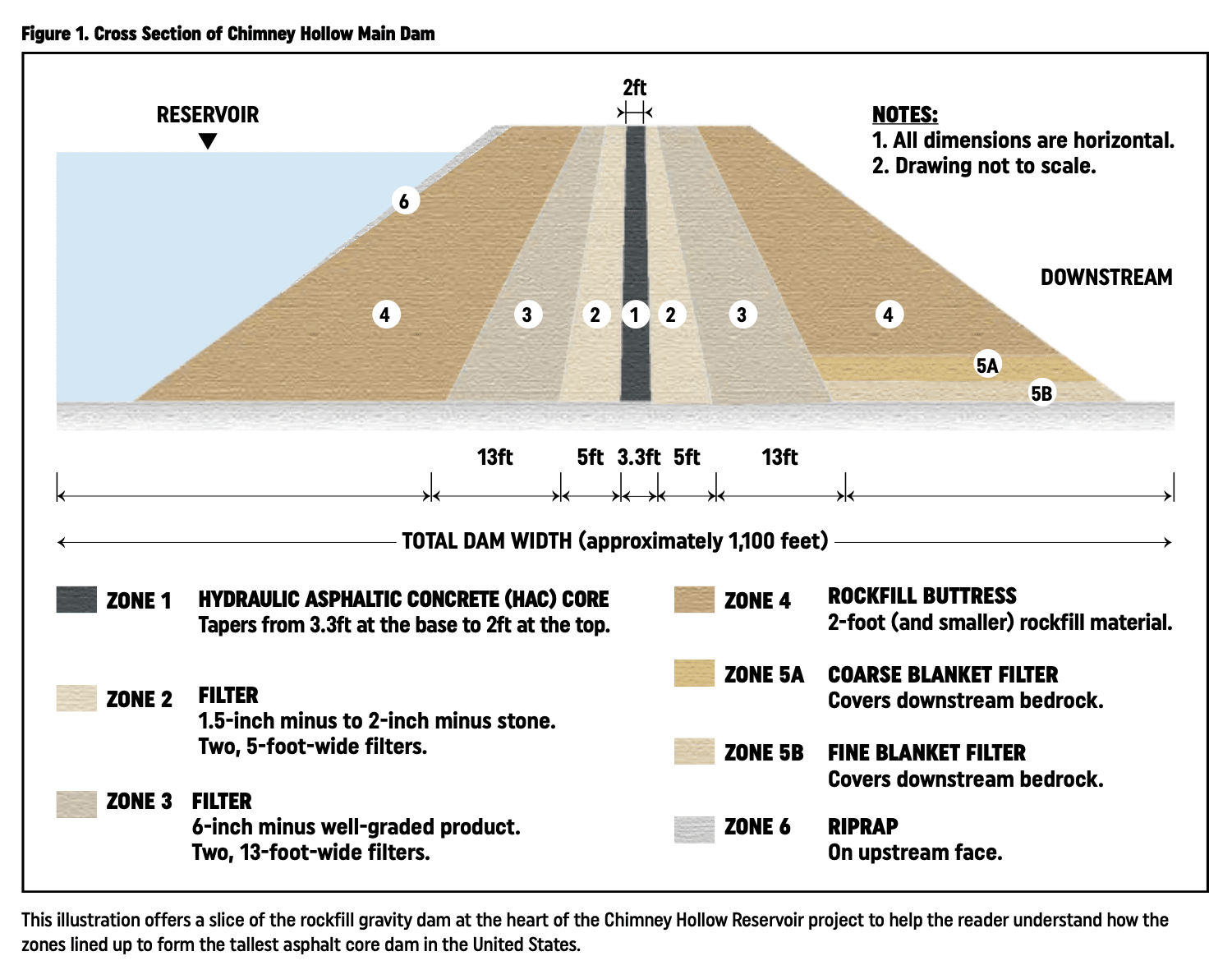
We can identify the zones by placement. Zone 1 was the vertical asphalt core in the center of the dam, which we’ll discuss in detail later. Five-foot-wide zone 2 filters were built against either side of zone 1, using a 1.5-inch minus to 2-inch minus stone all the way from the bottom of the dam to the crest. Thirteen-foot-wide zone 3 filters were built on either side of zone 2, using a 6-inch minus well-graded product. The two zone 4 sections were the buttress of rockfill material and the largest amount of material placed on the main dam. The downstream bedrock was covered with blanket filters that featured a coarse and fine filter of zones 5a and 5b. Zone 6 consisted of riprap placed on the upstream face from elevation 5790′ up to the top of the embankment. (See Figure 1.)

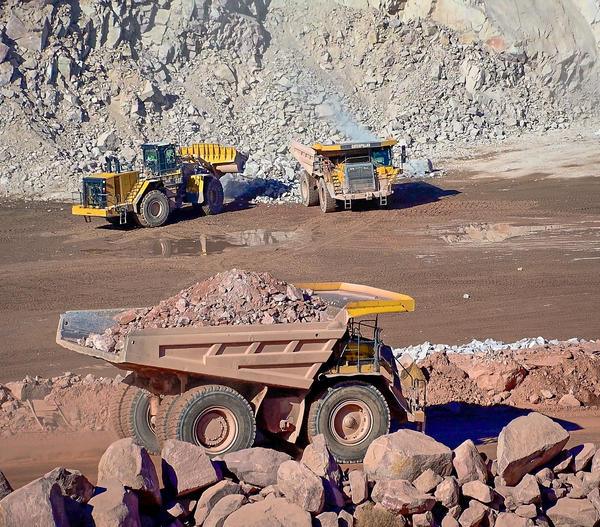
The quarry equipment was also used to produce 2-foot and smaller material that was distributed in two ways: some went to the crushers to become aggregate, and some was hauled to the zone 4 rockfill portions of the main and saddle dams to surround and support the cores.

For the construction of the main dam, crews dumped a 100-ton load every two minutes, 20 hours a day, six days a week, for two-and-a-half years.

Considering the workers were moving so much material per day, the wisdom of having an on-site quarry is clear. It not only minimized construction traffic and disturbances to the local community, but also minimized hauling emissions and fuel use that would otherwise have stacked up over the course of the project if material had to be brought from any distance. And now that the project is complete, the quarry site serves as a portion of the reservoir.

Of course, completing the project took more than blasting and moving rock. Multiple thousands of tons went into asphalt.

Material was blasted from the on-site quarry and processed on-site via cone, jaw and VSI crushers. The last quarry blast took place in April 2025. By July 2025, final testing wrapped up and the crusher was demobilized.

Vertical Asphalt Design and Creativity

This was no ordinary asphalt mix design. Instead of the typical paving mix readers are familiar with, the project required a hydraulic asphaltic concrete (HAC) that could adhere to the concrete plinth at the base of the dam, flex to accommodate settling and deformation, and create an impermeable barrier. To that end, Barnard’s Roos said the aggregate gradation included a dense, ¾-inch nominal maximum aggregate size (NMAS) and a high proportion of fines passing 0.075 mm.

The asphalt binder made up 6.7% to ensure full coating of the aggregate and near-zero air voids. The binder type, a PG58-28, was selected for temperature stability, resistance to aging and ductility at low temperatures.

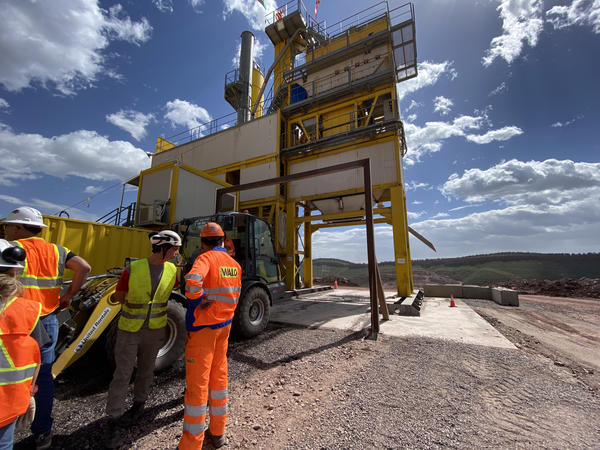
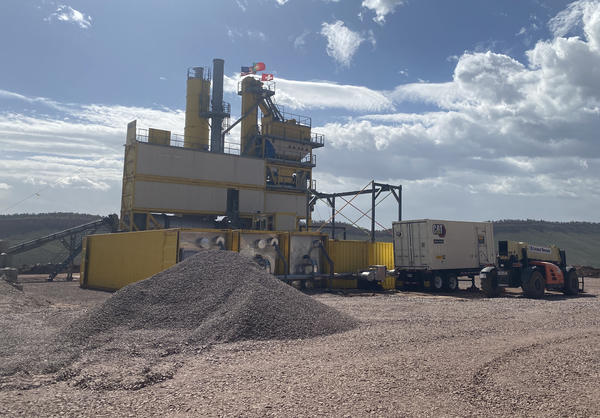
To produce and place the mix, Barnard subcontracted this work to Walo Bertschinger (WALO), Dietikon, Switzerland. With 21 locations in three countries, the contractor offers a variety of engineering specialties, including hydraulic asphalt engineering, and has constructed asphalt-core dams worldwide. The WALO team set up its asphalt batch plant on-site and used the aggregate produced from the quarry and crushing facilities to make the HAC for the main dam’s core.

The WALO team produced and placed 68,809.62 cubic yards of asphalt, which equaled about 200 miles (placed in 9-inch lifts), for the dam.

Placing an asphalt core took creativity, and WALO had the answer. The crew brought a modified paving machine from Switzerland for the job. Northern Water Project Engineer Becky Brush described how it functioned.

“It’s a specialty machine that was custom-built to place zone 1 and zone 2 at the same time with two separate hoppers that are loaded from either side,” Brush explained. “It had blowers and an infrared heater on the front to clean off and heat up the previous lift of asphalt before paving on top.”

The first lift, 3.3-feet wide (1 meter), was placed by hand. Then, an operator drove the WALO paver back and forth along the site to build up the core that would become the dam. A spokesperson for Barnard explained, “WALO was able to change the width of the paver utilizing steel forms within the paver itself. In the past, WALO has utilized ‘machine control,’ coupled with their GPS guidance system, to automate the change in width. However, this process slows the machine…WALO and Barnard worked together to identify elevations in which each form needed to be changed out to ensure the proper width was placed. Ultimately, the asphalt core is shaped like a stacked cake.”

WALO set up its batch plant on-site.

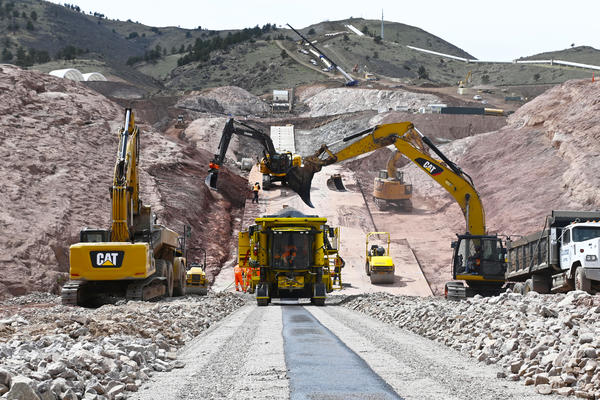
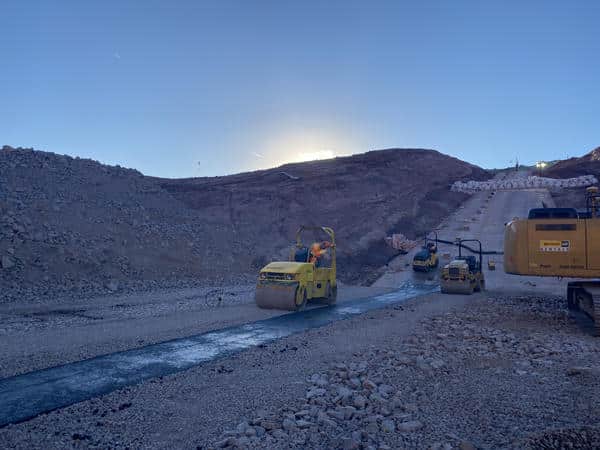
Roos clarified that as the machine worked, a Cat 336 excavator delivered HAC mix from the beds of tandem haul trucks to one hopper while another Cat 336 excavator delivered the 2-inch minus stone from the back of Cat 740B haulers. The HAC paver placed the zone 1 and the two 5-foot-wide zone 2 sections concurrently in 9-inch lifts. Cat 740Bs and Cat 777s also delivered zones 3 and 4 material, respectively, to build up the dam as the paver traveled. Small rollers compacted behind the modified paver.

At the outset, moving equipment along the rising crest required building a simple crossover bridge over the zone 1 core to prevent dust and rock contamination from hauler tires transferring to the asphalt layer, but as the dam rose toward its 350-foot height, the crest became narrower and more difficult for equipment to traverse. The base or maximum section, according to Brush, is about 1,100 feet wide whereas the crest is only 30 feet wide.

Near the end of paving, haulers were reversing much of the time and finally the team switched from Cat haulers to Morooka tracked dumpers, which can “spin” in place. The Morooka operator could drive to the top, spin the chassis around, dump their zone 3 material where needed, spin around again, and drive back down.

WALO set up its batch plant on-site.

WALO placed the first lift of asphalt on Oct. 15, 2022. It was 1,000 days (or 3.3 million work hours) later, when they completed lift number 512. Roos stated all that paving came to 135,000 tons of the special asphalt mix. Next, the team topped the dam with a protective roadway built out of road base and lined with boulders.

While completing the main dam wasn’t the end of the whole project, it signified a huge milestone amid the many moving parts requiring so much advance planning and setup.

Additional Temporary Infrastructure

An on-site materials testing lab provided real-time testing results for work. It was outfitted with all of the testing equipment necessary to test geotechnical, concrete and asphalt materials used during construction.

Barnard set up its own on-site concrete batch plant to eliminate the need for concrete deliveries by truck. Grant Jamison, the project close-out manager for Barnard, shared for a Chimney Hollow Reservoir video: “To make up all the structures and foundations on the job site, our batch plant has produced over 80,000 cubic yards of concrete.”

Small rollers compacted behind the modified paver.

Another temporary structure during the project was the cofferdam, which was built in about five months, to prevent water from entering the reservoir before the main dam was complete. The Northern Water site states: “A temporary clay-core, earth embankment, 50-foot-tall, 1,000-foot-long cofferdam was constructed upstream of the main dam to block runoff and stormwater from entering the dam site during construction. It was sized to hold a 25-year, 24-hour storm event. In any other project, a dam this size would be a main component. To put it in perspective, the saddle dam at the south end of the reservoir is 10 feet shorter than the cofferdam.” Before the initial fill of approximately 488 million gallons in April 2026, the cofferdam was removed.

A Proud Safety Record

The initial fill is being used to analyze and address a situation Northern Water discovered during construction. In July 2025, Northern Water teams found naturally occurring uranium in the granite rock that was quarried for the project, and all the appropriate scientists and engineers have been studying and monitoring the levels and implications since.

“After the discovery of naturally occurring uranium at Chimney Hollow Reservoir, many avenues of data collection have been initiated to learn more about this situation and inform management decisions,” Brush said. “Northern Water moved approximately 1,500 acre-feet of water into Chimney Hollow Reservoir in April [2026]. Water quality data is being collected and used to evaluate the performance of model simulations that have been used to predict uranium concentrations in the reservoir. We will not place more water into the reservoir until more data has been collected with the water in the reservoir now.”

About 22 million tons of embankment rock buttress the asphalt core.

Northern Water and the Chimney Hollow Reservoir participants are working to finalize a uranium management plan. No water will be delivered from Chimney Hollow Reservoir until assessments are complete, and a management plan is developed to ensure a safe water supply for downstream water delivery. There is a list of frequently asked questions on the Chimney Hollow website. But another facet of safety to be celebrated is what took place over the course of the project.

The Chimney Hollow Reservoir website spelled out perfectly how the general contractor performed: “Barnard demonstrated an unwavering commitment to safety throughout four years of construction on Chimney Hollow. With over 3.4 million work hours logged, the project achieved an average Total Recordable Incident Rate (TRIR) of 1.4, significantly lower than the industry average of 2.6. Impressively, Barnard maintained a TRIR of less than 1.0 for the last two years, with no fatalities and only one lost-time injury during the entire project. These results reflect a culture where safety is not just a priority—it’s a core value.”

It’s easy to see the safety and quality culture at Barnard in the way Roos spoke of not only the project, but also of the people involved.

“The success of this project is a direct reflection of the men and women who worked in the field to construct it,” Roos shared. “As one of the first high hazard hydraulic asphalt core dams in the United States, the safety and quality of the construction activities were at the forefront of all the work completed. During the peak of construction season, we had the largest operating quarry in the state of Colorado. Once the foundation excavation and preparation were completed, the dam was constructed in 26 months, which is a major undertaking for such a project of this size.”

The team at Northern Water also spoke with pride about this monumental infrastructure development project.

“Being part of this world-class project is both an honor and a responsibility,” Brush shared. “It is incredibly rewarding to see our work positively affect the community I grew up in and still call my home today, while also laying the groundwork for the future. Knowing that our work will have a lasting impact is something I take great pride in.”


Milestones

Over the four years of construction, the project hit several milestones worth celebrating:

  • 5 million cubic yards of material from the quarry (that’s four times the volume for the Hoover Dam)
  • Over two miles of steel pipe installed and welded
  • 80,000 cubic yards of concrete produced at batch plant
  • 512 lifts of asphalt laid to create the main dam’s impermeable barrier
  • At peak production, over 500 employees on site per day
  • An average Total Recordable Incident Rate (TRIR) of 1.4 over the 3.4 million work hours logged, which is significantly lower than the industry average of 2.6

Mills Construction Accelerates Project, Transforming an Aging Asphalt Site in Austin

Mills Construction recycles at Texas asphalt site

Mills Construction has undertaken a major cleanup project focused on reclaiming and processing recycled asphalt from an old asphalt plant site in Austin, Texas. Leading the operation was Steven Muse, site operations manager, who oversaw the daily workflow, production goals, and equipment performance onsite. The mission was to crush and transform the existing recycled asphalt into a clean, uniform material that is being resold and reused across the region into March 2026.

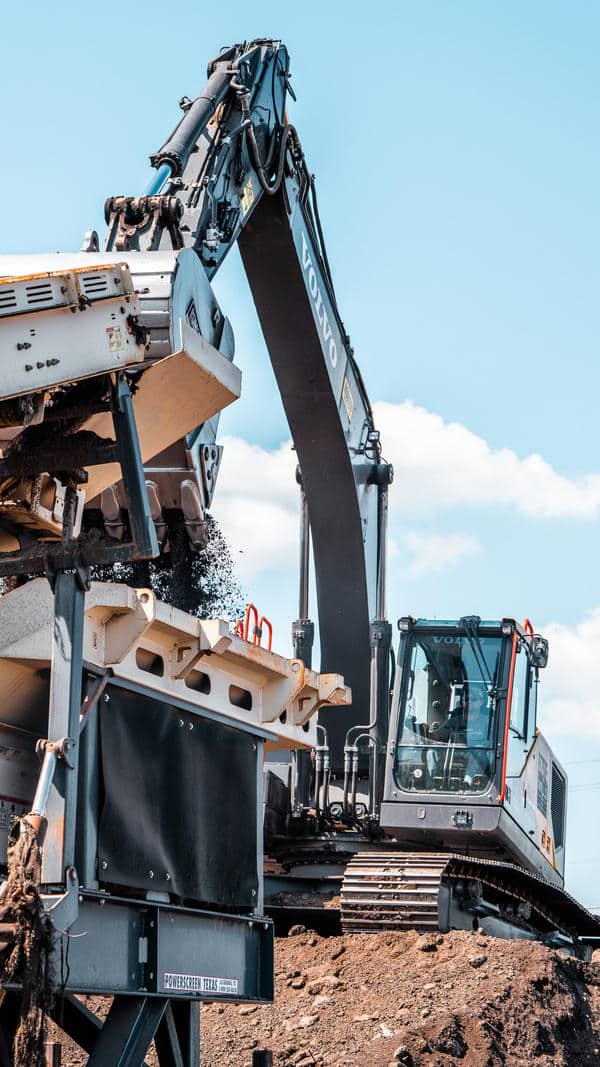
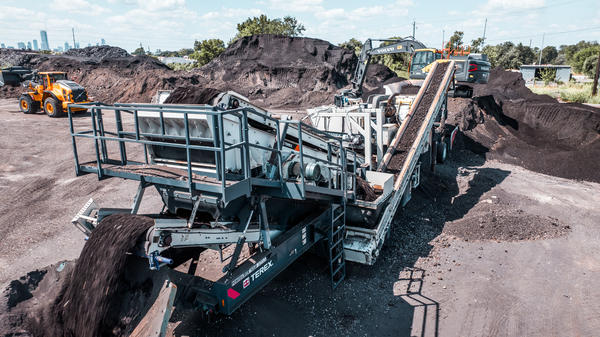
The Cedarapids CRH1111R proved to be exceptionally capable in producing clean and consistent 1-inch minus product, which was exactly the size the team was targeting. Here the product comes off the MGL 836 stacking conveyor.

Closing a Plant, Sizing the Product

To accomplish this, Mills Construction rented a Cedarapids CRH1111R, a portable closed-circuit plant known for its impact crushing power and screening capabilities. They also used their MGL 836 stacking conveyor. Both pieces of equipment were sourced through Powerscreen Texas. The combination allowed the company to streamline the process of turning weathered, inconsistent material into something refined, usable and sought after.

They were working at the Texas Materials South Plant on Bolm Rd., which has been shut down now. Typically, recycled asphalt comes in with oversized chunks that are difficult to reuse in their initial form. However, once fed into the Cedarapids CRH1111R, the transformation is dramatic. According to Muse, the material went through the machine efficiently and emerged as a clean, consistent 1-inch minus product, which was exactly the size the team was targeting.

Step Up Hot-Mix Production with Your Facility’s Own Crushing Plant

Muse shared that “the CRH1111R chews up the material pretty good,” emphasizing how effective the machine was at breaking down even the toughest recycled asphalt chunks. From the first weeks of operation, the team noticed that the output was not only consistent but also ready for sale immediately upon discharge.

“We are very pleased with the high production rates we are seeing with the CRH1111R,” he noted. The machine’s integrated screen and recirculation system ensured that the final material was uniform, clean and ready for distribution to customers who needed asphalt for driveways, country roads and small construction jobs in the region.

Workers fed RAP of various sizes into the Cedarapids CRH1111R for processing.

Timeline Changes

When Mills Construction originally estimated this cleanup project, they projected a longer timeline than actual. However, just two and a half months into the job, the team found themselves ahead of schedule.

A spokesperson shared: “We started crushing in January 2025 and completed crushing in June 2025. We will be selling material through March 2026.”

The speed and consistency of the CRH1111R played a major role in accelerating their progress, reducing the expected duration of the entire operation.

Best Practices for Crushing, Screening RAP for HMA Production

The ability to complete the work months earlier than anticipated not only saved time but also reduced costs and opened the door for Mills Construction to take on additional projects sooner than expected.

For Muse and his crew, the increased production is one of the most valuable benefits the Cedarapids plant has delivered.

The plant features a large 5-foot x 16-foot, two-deck inclined screen for precise separation and sizing of material. The integrated recirculating conveyor is designed to maximize screening capacity, thus allowing the machine to deliver a more consistent finished product without requiring additional handling.

Getting Production and Support

Several features of the CRH1111R have stood out to Muse and his team during this project. The machine’s strong impact crushing capabilities gave it the ability to break down recycled asphalt effectively, while the large 5-foot x 16-foot, two-deck inclined screen ensured precise separation and sizing of the material. The integrated recirculating conveyor maximized screening capacity, allowing the machine to deliver a more consistent finished product without requiring additional handling.

Muse was impressed by the plant’s low maintenance requirements, which were essential in maintaining steady production. Throughout the duration of the project, Powerscreen Texas played a key role in supporting Mills Construction. Muse shared that their rental experience was excellent, emphasizing the flexibility Powerscreen Texas offers in both equipment availability and rental terms.

Muse expressed strong confidence in the support team, stating, “I would absolutely recommend Powerscreen Texas to anyone. It’s been great. Whenever we have an issue, they have been quick to get back to us and sending a mechanic. Parts are easily accessible… we haven’t had a lot of downtime with these machines, and we are pleased overall.”

Best Practices for Mobile Asphalt Crushing

Market-Ready Material

One of the standout results of this project was the consistent quality of the final product. Mills Construction’s project in Austin showcases how the right equipment, combined with reliable support, can dramatically improve productivity and outcomes. With the Cedarapids CRH1111R and the trusted backing of Powerscreen Texas, Muse and his team have turned a lengthy cleanup into a success story, delivering high-quality recycled asphalt faster than anticipated and with exceptional consistency.

Terex Launches MAGNA Crushing Brand in European Market

European launch celebrated for Terex brand expansion

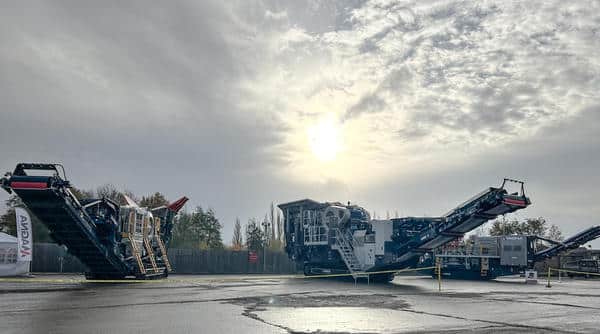
MAGNA™, a Terex brand specializing in large-scale crushing and screening solutions, celebrated its official European launch at the Terex Coalville facility in collaboration with UK distributor Blue Machinery in Q4 2025. The event welcomed over 60 attendees. The day began with an introduction to the MAGNA brand and overview of the Terex Coalville facility, with attendees learning about the site’s history and recent investments in robotics,

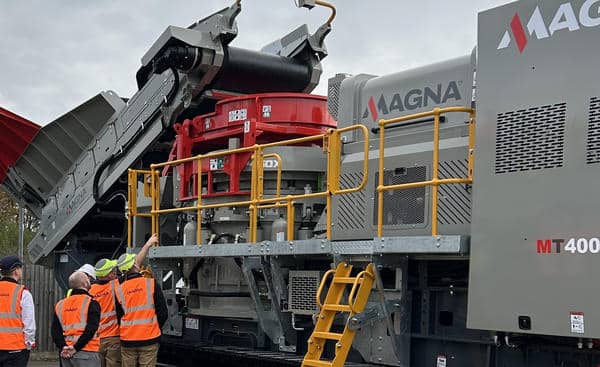
advanced tooling, boring and milling machines, and cutting-edge chamber technology. A guided plant tour and walkaround gave guests the opportunity to see finished MAGNA products, including the 135-tonne MT130J Jaw Crusher and the MT400C Cone Crusher.

The MT130J is the largest tracked jaw crusher in the MAGNA lineup to date, designed for large-scale operations with a 13,000 mm x 1,000 mm opening, high-powered electric drive and split-transport capability. The MT400C is a high-output mobile cone crusher offering large reduction ratios, automated metal detection, hydraulic adjustment and fuel-efficient transmission.

A guided plant tour and walkaround at the Coalville facility gave guests the opportunity to see finished MAGNA products, including the MT400C Cone Crusher.

Terex Financial Services (TFS) was also present to explain its flexible finance options.

Blue Machinery, the authorized distributor for MAGNA across Great Britain, will lead sales and support for the brand’s extensive product line in the region, which includes crushers, screening solutions such as horizontal, trommel and scalping screens, and heavy-duty conveyor systems for material processing industries.

Sean McGreary, sales director for Blue Machinery, said, “Hosting this event at Terex Coalville was a fantastic opportunity to bring our customers closer to the heart of manufacturing for the MAGNA brand. Seeing the scale of the facility, meeting the engineering teams, and experiencing the MAGNA range firsthand gave our customers real confidence in the quality and innovation behind these products. It’s not just about introducing a new brand—it’s about building trust and showing the depth of expertise that supports every machine.”

Neil McIlwaine, business line director for MAGNA added, “Building on our successful U.S. introduction earlier this year, this launch represents a major milestone in our global growth strategy. Bringing MAGNA to the UK and European market, supported by Blue Machinery’s extensive parts network and tailored financing solutions, gives customers the confidence and capability to scale their operations. Together, we’re creating a foundation for sustainable, high-volume production.”