
Training in the Age of Technology
BY AsphaltPro Staff
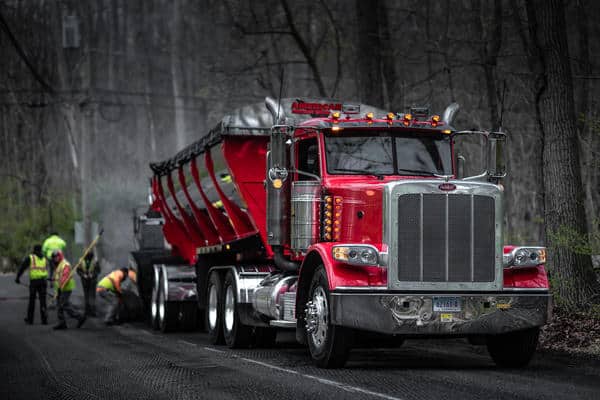
As automation transforms the paving industry, American Pavement is proving that smarter machines need smarter crews (not smaller crews)—and training has never mattered more.
Training used to mean showing a guy how to use a rake, feed the hopper, or set up the screed. These days, it means learning GPS, understanding automation and keeping up with changing specs. Some folks in our industry worry that jobs are going to disappear as more and more of what we do gets automated. I don’t see it that way.
Look at the construction of the American railroad. It started with picks and shovels. Then came the bulldozer, and people thought, well, there go the jobs. But the guy who dropped his shovel, climbed into that dozer, and learned how to run it? He didn’t just stay employed. He made more money, worked safer and built a better future.
It’s no different today. Anyone who knows this business knows paving in 2025 looks nothing like it did 10 years ago. The real MVP on any crew is the one who knows both—the one who can run the old-school work by feel, but also knows how to make the most of what the new tech can do.
That’s what this article is about. How we train our MVPs at American Pavement—not just to know the fundamentals, but to embrace the fact that the learning never stops.
1. Smarter Crews, Not Just Smarter Machines
You can spend a million dollars on the best tech out there, but if your crew doesn’t understand what it’s doing, you won’t get a quality job.
At American Pavement, we don’t just train guys to push buttons. We train them to understand what the machine is doing and why. If you don’t know how slope control works—or what the slope is supposed to be—then all the tech in the world won’t save you the second something goes wrong.
That’s why we focus on fundamentals. How to read a plan. How to think about drainage. How to understand pattern and material flow. Because once you know that, then automation becomes a tool, not a crutch.
2. You Can’t Automate Common Sense
Automation can guide a machine, but it can’t read a job site. It doesn’t know if a truck is late, if the sun’s moving on your compaction window, or if the site plan doesn’t match what’s in front of you. That still takes a crew that knows how to think on their feet.
We teach our team to pay attention. Watch the mix. Watch the trucks. Watch each other. Because the model might say one thing, but if the conditions change, the crew has to know how to adapt.
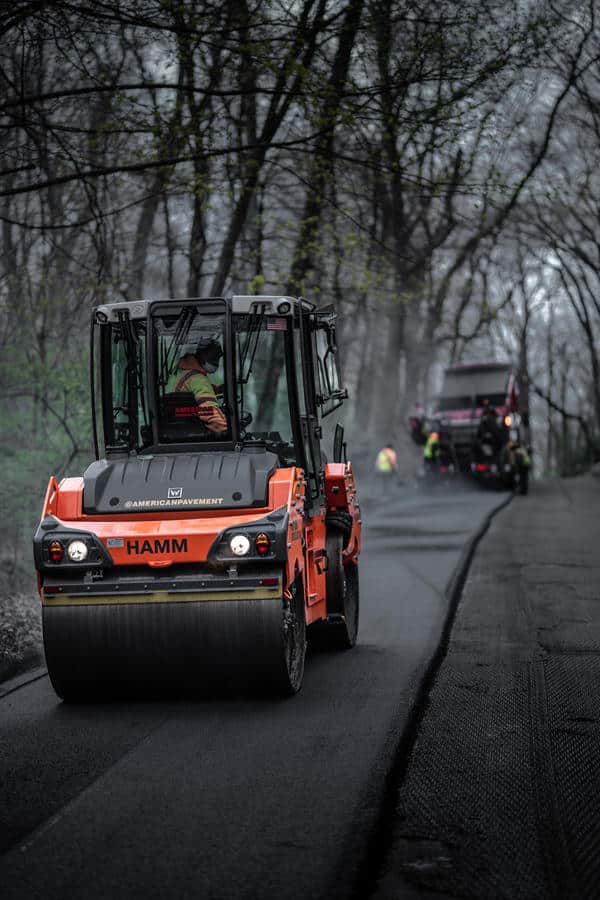
3. Train Beyond the Spec Book
Some jobs come with a full set of specs. Others don’t. And if your crew only knows how to follow directions, they’re going to struggle on the second kind.
At American Pavement, we break jobs into two buckets. There’s spec work—like state, county or municipal paving—where everything’s written down: grades, depths, temperatures. That stuff’s actually easier to train. It’s like baking a cake from a recipe: follow it step by step and any cook who knows their way around a kitchen will get a quality result.
But for the second set of jobs you need a chef with enough experience to write their own recipes. That’s where you need a crew that knows how to think on their feet. This requires experience, instincts and attention to detail.
4. There’s No Graduation Day
In this line of work, graduation day never comes. There’s no final exam, no diploma that says, “You know it all.” Because the second you think you’ve got it all figured out, the job changes.
We pave in towns, counties, and states—all with their own specs, their own inspectors, and their own way of doing things. You might train a guy for weeks on one type of job, but then you move on to the next site and they’ve got to start learning all over again.
5. Technology Will Keep You On Your Toes
Another reason why there’s no graduation day in this business is because the curriculum keeps changing. The spec books get updated. New technologies are invented. You can master what’s out there today, but tomorrow, there’ll be something new.
At American Pavement, we do our best to keep up. This is why I read AsphaltPro magazine, go to trade shows and continue to ask questions. We may not always be the first to implement new technology, but you can bet we won’t be the last.
6. Retain Who You Train
Paving’s not a trade. It’s a skill that you refine over time. It takes time in the seat. Time on the ground. Time seeing different jobs and learning what works. And that kind of experience only comes if you can keep your crew around long enough to build it.
At American Pavement, we try to offer more than just a job. We give folks a chance to build a career. We keep as many people as we can working through the winter. We invest in the employees who are invested in us.
Skill doesn’t show up on day one. It’s built with time and pressure. That’s how you make diamonds.
The Bottom Line
At the end of the day, training isn’t something you check off a list—it’s something you build one day at a time. That’s what we’ve done at American Pavement. We train the new hire and the guy with 30 years on the paver. We train for the blueprint jobs and the curveballs. We train for the job today, and we train for the one coming tomorrow.
Because the best crews—the ones that are still standing 10 years from now—will be the ones who never stopped learning.