
Feb 17, 2026
When to Choose the Tamping Screed
BY Ben Everett
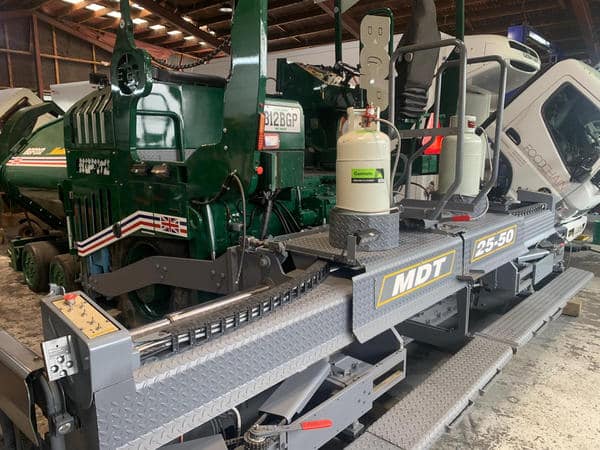
You may be in a region or province where you’re faced with the choice of a tamping screed design versus vibratory screed design for your next project. There are advantages and disadvantages to both, depending on the work you do. This guide for choosing starts with looking at what type of work you perform most often.
- Does 75% or more of your work require you to pave in lifts of 3 to 4 inches compacted depth?
- Are you consistently placing predominantly large size asphalt mix, such as ¾- to 1-inch nominal maximum aggregate size (NMAS)?
- Are you primarily placing roller compacted concrete or concrete-treated base? (Maybe you place unbound granular base such as railway ballast or 1.5-inch size subbase with an asphalt paver instead of using a grader.)
- Have you been struggling to achieve target density or air voids from a standard vibratory screed?
- Do you avoid bidding commercial and residential paving and thinlay projects?
If you answer “yes” to these, the tamping screed may be the right candidate. Otherwise, a vibratory screed suits most North American paving operations.
Read Ben Everett’s article Using the Screed Effectively: Part 1.
More information regarding the tamping screed is presented in the first installment of the “Using the Screed Effectively” series on TheAsphaltPro.com. The next installments feature the rear mount vibratory and front mount vibratory screeds.
Also stop by the AsphaltPro booth GL30901 during my Ask the Expert session at CONEXPO-CON/AGG, Wednesday, March 4, from 1:30-3:30, to discuss more paving topics.