How to Exceed the Long Joint Density Spec
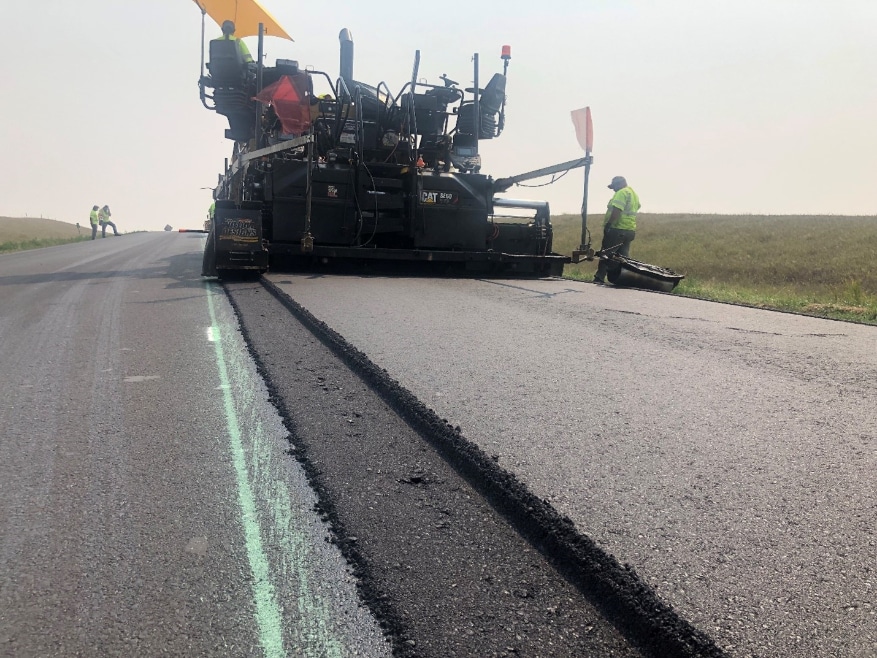
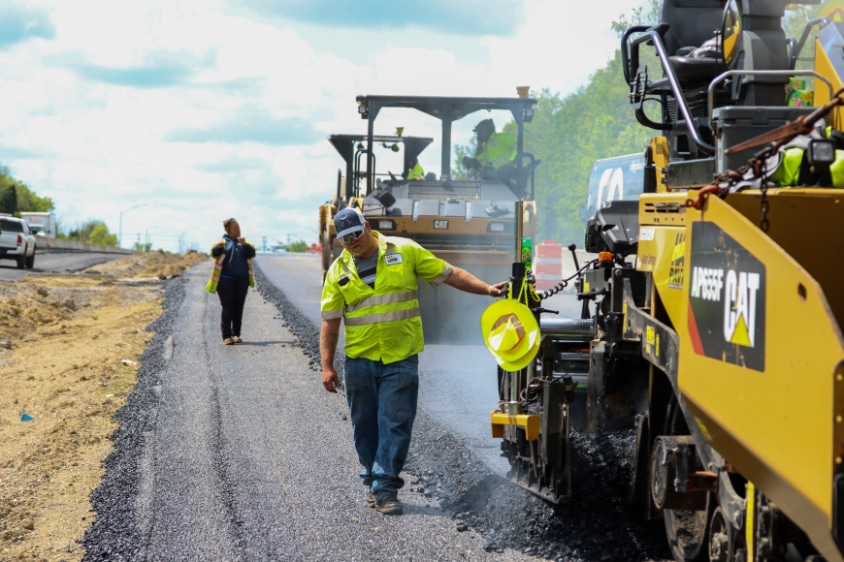
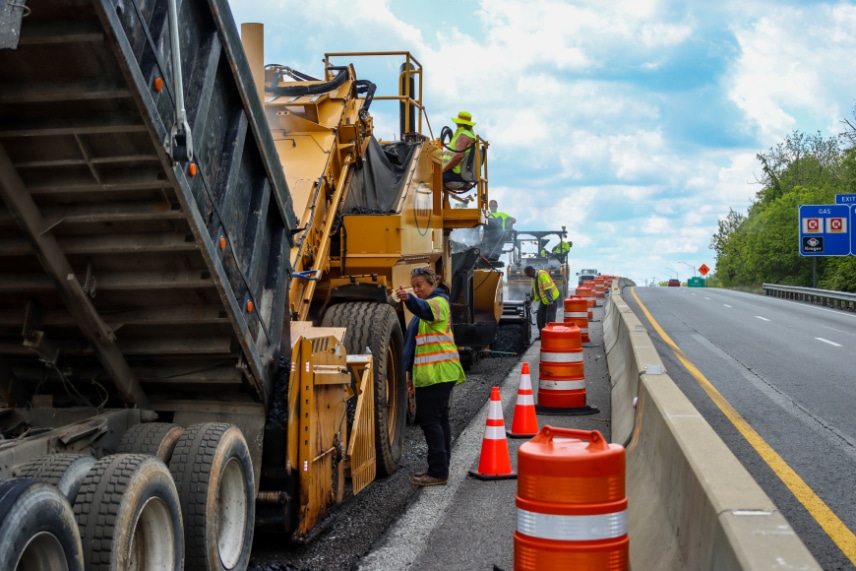
Northern Improvement Company, Dickinson, North Dakota, completed a cold in-place recycle (CIR) and paving project on Highway 8 in Dickinson County Sept. 17, 2021, with impressive density numbers. Their secret to success is wrapped up in proper equipment and best practices with the state’s new joint density spec. Let’s take a look at how Northern Improvement built a 26-mile notched wedge joint and achieved an average of 94.8% density on the longitudinal joint with 93.9% average density on the mainline.

To begin work on the Hwy. 8, JCT ND 12 to W JCT ND 21 project in early August 2021, Northern Improvement performed CIR to a depth of 3 inches.

The paving consultant on the project, Bryce Wuori of Wuori Consulting LLC, Bismarck, North Dakota, observed, “The existing road surface prior to the CIR was so rutted and had such deep transverse cracks it was almost unsafe to travel down the road at the designated speed limit. There was no ride incentive included on the project for Northern due to how rough the existing road surface was prior to construction. After the CIR and before the asphalt paving, the road surface rode very nicely, almost comparable to that of a common low-volume asphalt highway.”
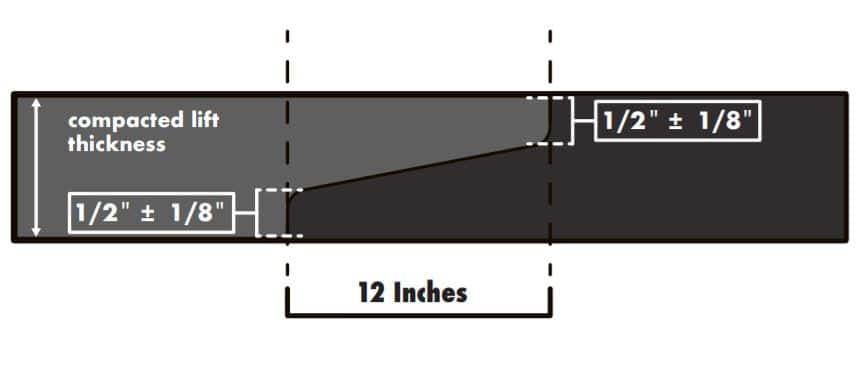
The North Dakota Department of Transportation released a special provision Jan. 5, 2021, detailing the manner in which contractors would be paid for density of longitudinal joints for hot-mix asphalt pavements. If a notched wedge joint is used, it is to be constructed according to the diagram in Appendix A of the special provision. Illustration by Maranda Wilbanks for AsphaltPro

Paving began Aug. 9 and involved two lifts of 1.5 inches of Superpave FAA 43 with a CHS 58S-28 AC for a total design lift thickness of 3 inches. As required by the Jan. 5, 2021, NDDOT longitudinal joint for hot mix asphalt pavements special provision, the team built a notched wedge longitudinal joint, which had a required average density of 90.5 on the joint. The project called for at least a 92.5 required density on the mat. They used the Notch Wedge System from Willow Designs LLC, East Berlin, Pennsylvania, attached to a CAT SE60 screed. The system consists of the Willow Designs notch wedge joint maker and notch wedge pneumatic roller.

“Something unique about Bryce is that he uses ground penetrating radar (GPR) as quality control to improve density consistency in the mat and, more specifically, the longitudinal joint,” Jerod Willow said. “We share a lot of the same clients in that region and we often converse on how to improve a contractor’s ability to get density in the mat and joint. He has some pretty impactful data from this season.”

Wisconsin Job Exceeds Longitudinal Joint Density Expectations

Wuori explained how Northern Improvement built the joint with quality control as part of the process. “We used the Notch Wedge System from Willow Designs to construct a ½-inch notch. The key part of this system is rolling the wedge properly to set the joint in for optimum density. The density on the joint is measured with a combination of a Troxler nuclear gauge and the PaveScan 2.0 GPR.”

The technology he references is from Geophysical Survey Systems Inc. (GSSI), Nashua, New Hampshire, which makes the PaveScan RDM 2.0 continuous, non-destructive, asphalt density assessment tool described in the May 2017 Here’s How It Works department. Wuori explained that he can walk the entire length of the project with the PaveScan device, taking readings along every inch of the joint. If he were to receive a reading indicating a weak area, he could inform the paving crew immediately, rather than waiting until after construction is complete to return to the field to address possible failures.

“In the event of reading below the 90.5 requirement, I would advise Northern to look at rolling patterns and what rollers are being used for compaction, then inspect and evaluate the setup of the notch wedge system as well,” Wuori said. “Typically, if the notch wedge is being constructed properly and rolled correctly the contractor will pass joint density requirements on every paving day. I have been on over six projects this year where the addition of the Willow notch wedge and correct rolling procedures brought the paving contractor from failing required density specifications and getting deducts on the joint density to passing with incentives with the addition of the notch wedge and correct rolling procedures.”

The construction of notched wedge joints to achieve a quality end result is catching on. Jerod Willow shared: “I have heard Wyoming and South Dakota are in the process of implementing a joint density spec. It also sounds like Illinois is starting to dabble with notch wedge joints on their J-band projects. Arkansas has fully specified a joint density spec now after working with it the past 18 months. I have also heard some limited talk in West Virginia and Ohio.” Photos courtesy of Bryce Wuori, Wuori Consulting

The PaveScan, coupled with density gauges, played a hand in setting up the rolling procedures. Wuori explained: “Average mat density is recorded with the combination of destructive coring, nuclear testing and the PaveScan GPR. We use the PaveScan GPR and nuclear gauge to set up rolling patterns and develop a paving process for success and compare this data to the results performed in the destructive coring process. Northern Improvement also used intelligent compaction on this project to give roller operators temperature zones for optimum compaction and roller pass counts for efficiency and accuracy in the rolling process.”

The rollers they used were a CAT CB 16 with an oscillating front drum in the breakdown position, a CAT CB 66 with dual vibratory drums in the intermediate position, and a CAT CB 68 set in static only in the finish position. The operators stayed aware of temperatures and rolling zones, which fluctuated for this mix.

Schellinger Construction Hits Notch Wedge Joint Density Specs

“The average temperature the mix was delivered to the paver ranged from 250 to 280 degrees depending on the weather that day and the distance we were paving from the asphalt plant,” Wuori explained.

“Notch wedge joints work because they confine the asphalt mix in the joint better than a butt or vertical joint, meaning that there is 85% less loose mix in the joint,” Willow explained. “Loose mix in the joint means a failure. Notch wedge joints are also stronger joints due to the increased surface area of the joint; this style of joint and similar forms of this joint have also been used in other construction materials from wood, metal and stone dating back hundreds of years.”

“This mix had a very good design and was an average mix to achieve density with when compared to the FAA 43 mix designs,” Wuori said. “Due to the high amounts of aggregate absorption in the aggregate used in the design, the AC content was higher than what is normally seen on this type of mix design (6.8 percent). The one drawback of this mix in the field was its ability to turn tender on the hotter days of paving.

The quality control team was able to run the PaveScan 2.0 ground penetrating radar device along the joint to take continuous density measurements. The device is available through InstroTek Inc. as of Q1 2021.

“On these days, we would have to get most of our compaction up front on the hot mat with steel drum rollers before the mix cooled to 200 degrees. At 200 degrees the mix would develop a tender zone that would hold until about 160 degrees. This was only on days that the ambient temperature was above 85 degrees with very little wind on the project.”

On the hotter days, when the tender zone appeared, the rolling train switched out the CB66 steel drum with a Sakai GW750-2 vibratory pneumatic roller. “We would also introduce a pneumatic roller into the train to get through the tender zones because a steel drum would tear and fold the mat if used when the mat was tender.”

Despite the tender zone challenges, the roller operators achieved higher-than-required results. “The overall average joint density for the project was 94.8%,” Wuori shared. “One day’s average joint density was a 95.7 on 13 core locations. The roller operators do an exceptional job of holding patterns and understanding when the mix would become tender or what would need to be done to battle this issue. Having good, trained roller operators that understand their equipment and how important their skill is to the finished asphalt product is key in producing successful projects. These roller operators have been trained very well and have been put through some of the most difficult projects out there and have shown how a skilled roller operator can make or break a project.”

Willow Designs’ Notch Wedge Pneumatic Roller

The roller operators included Raquel Davis on breakdown, Kim Bumgardner on intermediate, and Luellen Johnson on finish. The Hwy. 8 CIR and pave project was a team effort that included the skills of roller operators and the entire quality-minded crew. Superintendent Joshuah Davis shared: “The crew from front to back were Brad Barnick dump man; Alyssa Polanski paver operator; Mac Cook screed operator; Amber Hoots and Ron Comon QC; fill in roller operators were Deryk Drew, Cody Bellon; plant operator and foreman Tom Stickel; supervisors were Jason McIntosh foreman and myself. Also a huge part of all this is Bryce Wuori. Because of his training and vast knowledge, he has helped me make this crew into what they are today. Without them we would never be able to achieve this. They do such a good job with the flow and consistency to achieve the compaction and ride.”

Wuori also commented on some of the best practices he saw in the field.

“Their best practices for quality included paver setup/ and consistency. By eliminating paver stops and keeping the paver at a consistent speed throughout the day. Then roller consistency using Intelligent Compaction as a tool to keep operators in designated temperature and pass count efficiency. And proactive quality control to ensure paving and rolling techniques being performed during paving operations produced the desired results.”

By the time Northern Improvement was ready to turn the pavement over to the stripers Sept. 17, they had a new roadway made safe for motorists in Dickinson County.
Hall Moves on I-Move in Kentucky

I-Move Kentucky is a $180 million investment that will widen and improve interstates, as well as revamp congested interchanges, to improve safety along three busy interstates in Jefferson and Oldham counties: Interstate 64, Interstate 71 and Interstate 265 (Gene Snyder Freeway).

The four-year project will be the largest single construction project in Kentucky since the Ohio River bridges project was completed in 2016. Hall Contracting, Louisville, Kentucky, began work on the project in May 2020.

“I-Move Kentucky will improve safety and mobility on three major interstates that join together in eastern Jefferson County and will allow travelers and freight to move freely through the region,” said Greg Thomas, secretary of the Kentucky Transportation Cabinet (KYTC). “These were among the most important projects identified during last year’s SHIFT prioritization.”

SHIFT, or Strategic Highway Investment Formula for Tomorrow, is KYTC’s data-driven approach to compare capital improvement projects to prioritize transportation funding. The project consists of a number of improvements, including reconfiguring interchanges at I-71/I-265 and I-64/I-265 for better safety and traffic flow. The widening of I-71 adds one 12-foot lane of traffic in each direction, for a total of six lanes between Interstate 265 and KY 329. I-265 will also be widened with an additional 12-foot lane in each direction to create a total of six lanes between KY 155 and I-71.

The widening of I-265 was SHIFT’s number one transportation priority, the I-71/I-265 interchange was ranked sixth, and the widening of I-71 was ranked eleventh. “By tackling [these projects] together, we’re saving Kentucky taxpayers time and money,” Thomas said.

The Design-Build Dash

In 2018, the Kentucky General Assembly passed HB 385, which authorized KYTC to use design-build methods of project delivery for major projects like I-Move. Kentucky has already begun using the design-build approach for two projects in northern Kentucky, including the I-65 bridge project over the Ohio River.

“It seems that KYTC wants design-build to be the new normal on large projects,” said Hall’s Quality Control Manager Jordan Sandquist. “Once one section [of the design] is approved by the state, we can start constructing that section instead of waiting for the whole design all at once.”

Kentucky is also looking into balanced mix design (BMD). Sandquist said both design-build project methods and BMD are indicative of a greater trend within Kentucky’s transportation agencies. “The idea is to give contractors flexibility to meet KYTC’s standards,” Sandquist said. “If you can produce a mix that meets their specs on various tests, how you get there is up to you.”

In total, the project will require between 400,000 and 450,000 tons of asphalt.

Roscoe Willis, manager at Hall Paving, a division of Hall Contracting, added, “I think [balanced mix design] is an example of the direction the state is headed in, not only for materials but also for the bid process. It’s results oriented, versus process oriented.”

With the design-build method, Hall will be able to complete the project more quickly. The I-Move project is expected to be broken up into more than 50 buildable units, nine of which are asphalt-related.

Last fall, Hall finished the mill and fill work on I-265, a total of 3 miles or 12 lane miles. In August, the company milled and filled the existing lanes on I-71, a total of 5.5 miles and 22 lane miles. Although I-71 was in pretty bad shape, the construction was more about handling growth and improving safety, said Roscoe Willis, manager at Hall Paving, a division of Hall Contracting.

“This plant gives us a lot of opportunity to add new features down the road,” Willis said. “From injecting additives at the drum to blowing in different products, this plant has the ability to grow with us.”

Hall performed variable depth milling with its Wirtgen mill. The paving crew then placed 3 inches of Class 4 base mix with PG76-22 asphalt cement on the existing lanes.

By the end of the 2021 construction season, Hall anticipates finishing a substantial amount of the asphalt base for the widening of I-71 and all the base for the road widening on 265, completing both the I-71 and I-265 interchanges, and finishing the drainage blanket from Shelbyville Road to Avoca.

The project, totaling 25 contiguous miles, including ramps, is roughly 40 percent asphalt, plus an asphalt drainage blanket beneath the concrete. New lanes along the concrete sections of the pavement will also have an asphalt drainage blanket beneath. The new lanes in the asphalt segments of the project will have a 4-inch drainage blanket, then a 4.5-inch lift Class 4 asphalt base 1.50D with PG64-22, a 3.5-inch lift of Class 4 mix with PG76-22 and 3 inches of Class 4 base mix with PG76-22 to match the existing pavement. The entire span of road will then be topped with 1.5 inches of a Class 4 surface mix.

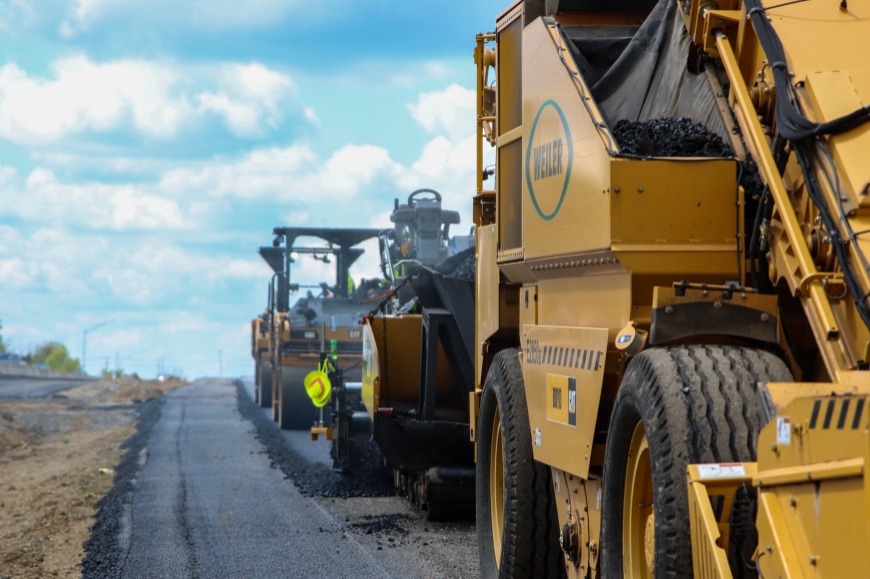
The crew also used the Pave-IR quality control system from MOBA, Limburg, Germany, to record asphalt temperatures immediately behind its Cat paver.

In total, the project will require between 400,000 and 450,000 tons of asphalt. “From an asphalt standpoint, we’re only just getting kicked off,” Sandquist said. Willis estimates they are 20 percent complete.

New Project, New Plant

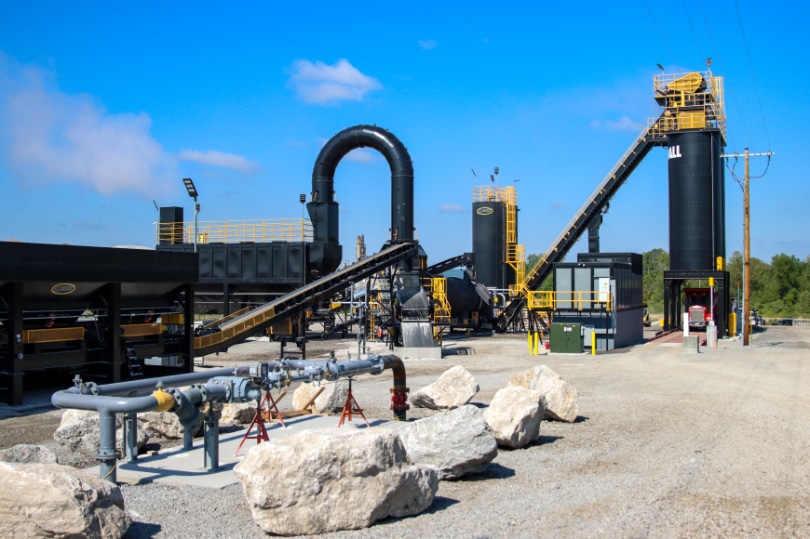
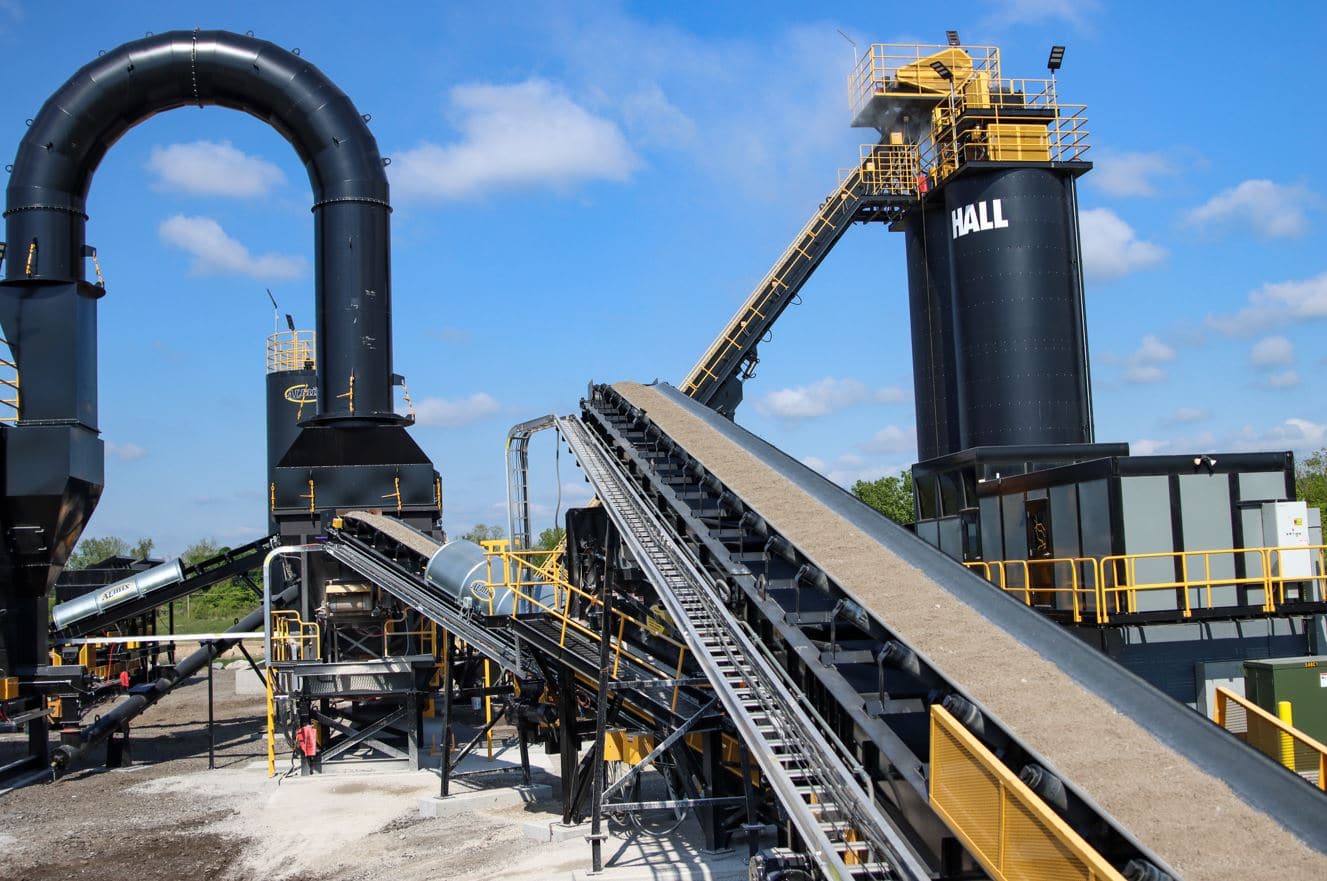
The I-Move project was a catalyst in Hall’s decision to invest in a new 400 ton-per-hour asphalt plant in Charlestown, Indiana, from ALmix, Fort Wayne, Indiana. They purchased the plant in February 2020 and planned to have it running for last year’s paving season.

“We were close to full capacity at our other plant, so this project put us over the edge,” Willis said. However, the pandemic resulted in planning and zoning delays. “It’s not that they were fighting us on it, but simply that the committees weren’t meeting.” They weren’t able to have the requisite meetings until July 2020, finally getting the new plant fired up in May 2021.

Kentucky Puts Low Gyration Mix to the Test

Those delays meant Hall had to rely on its existing asphalt plant south of Louisville, a 400-tph Cedar Rapids plant with three 200-ton silos, for the first segments of the I-Move project. “Since we only had one plant and we couldn’t lose access to it for our daytime projects, we did a lot of night work last year,” Sandquist said.

The new plant currently has two 250-ton silos, but Hall has already laid the foundation for future growth. “This plant gives us a lot of opportunity to add new features down the road,” Willis said. “From injecting additives at the drum to blowing in different products, this plant has the ability to grow with us.”

That was one of several reasons Hall chose the ALmix plant. “ALmix is a great company to be able to add pieces as needed,” Willis said. “We didn’t buy anything we didn’t need, but there are sure to be things we’ll need in the future that we plan to add.”

The I-Move project was a catalyst in Hall’s decision to invest in a new 400 ton-per-hour asphalt plant in Charlestown, Indiana, from ALmix, Fort Wayne, Indiana.

Although the company’s Cedar Rapids plant “has been a blessing to us and has held up very well,” its age confines the company to certain limits in terms of innovation, Sandquist said.

“The new one gives us the opportunity to try things we weren’t able to try before,” Willis added.

For example, they’ve been working with aramid fiber for its anti-cracking properties. “We’ve been using it on jobs with the city and showing our customers the advantage of it for asphalt flexibility and strength,” Sandquist said. “Now that Kentucky is moving toward balanced mix design, it will be one more tool we can utilize.”

Hall got its new ALmix asphalt plant up and running in May 2021.

New Project, New Technology

In addition to its new plant, the I-Move project has also propelled Hall Paving to invest in several technologies that are new to its crews, including e-ticketing, intelligent compaction, thermal mapping and 3D paving.

“The state is interested in the ability to do forensics if something goes wrong with the pavement in the future,” Willis said. “By accumulating that data, they can go back and analyze it to see temperature and compaction data for problem areas.”

The technology that Willis has found most useful is e-ticketing. “The ability to manage trucks differently, track materials and improve efficiency is very exciting,” he said. They use a tool called Broadloop, which was created locally and allowed them to customize the tool to suit their needs. “The ability to see where our asphalt is in real time is amazing.”

Willis found the use of e-ticketing, a technology new to the company, very useful during the I-Move project. “The ability to manage trucks differently, track materials and improve efficiency is very exciting,” he said.

The crew also used thermal mapping and intelligent compaction on last year’s segments of the project. It used the Pave-IR quality control system from MOBA, Limburg, Germany, to record asphalt temperatures during paving. To ensure the crew was ready to use this technology on its I-Move projects, Hall had its crews trained by the technology provider and also had them use the tech for several weeks prior to the start of the project.

The last new piece of technology on the project is 3D paving, which they will use on future segments of work on I-71, I-265 and I-64 to ensure the final surface elevation of the pavement is correct.

“We’re not afraid to try new things and be on the cutting edge,” Willis said. “This project is propelling us to continue to grow.”

Although Hall Contracting was founded in 1954, its asphalt division wasn’t established until 2013. “On day one, we were starting from square one, and now we’re working on one of the largest projects in Kentucky state history,” Willis said. The division started out with 22 employees and now has a staff of 65. “And we’re looking for more,” he added.

In addition to its new plant, the I-Move project has also propelled Hall Paving to invest in several technologies that are new to its crews, including intelligent compaction.

As an employee-owned company, everyone at Hall Contracting has a feeling of ownership of the company and its projects. “We have the type of team that wants to move the industry forward,” Sandquist said.

Willis added, “We’re really pushing this division of the company to do great things. We’re constantly learning and growing and want to be on the forefront. We want to change the world, one ton of asphalt at a time.”

Kentucky Takes Micro Surfacing to the Taxiway


Logistics in Louisville

According to research platform Macrotrends, the population of Louisville is growing faster than the national average (respectively 0.83 percent and 0.58 percent in 2021). However, it isn’t necessarily population growth that is driving infrastructure demand in and around Louisville.

“Although population growth has something to do with it,” Willis said, “I think it’s mostly a result of improved connectivity with southern Indiana and the growing logistics sector.”

According to the Lane Report, a monthly business magazine covering central Kentucky, Louisville is within a one-day drive of roughly 50 percent of all U.S. markets. Louisville’s website, louisvilleky.gov, states Louisville’s logistics sector is more than twice as dense as the U.S. average.

Furthermore, Louisville is the primary hub of UPS Airlines, a wholly owned subsidiary of United Parcel Service (UPS) and the world’s fourth-busiest air cargo hub in terms of freight volume flown, according to UPS, according to the Lane Report.

ST Bunn Compacts School Parking Lot with Varying Turning Speeds

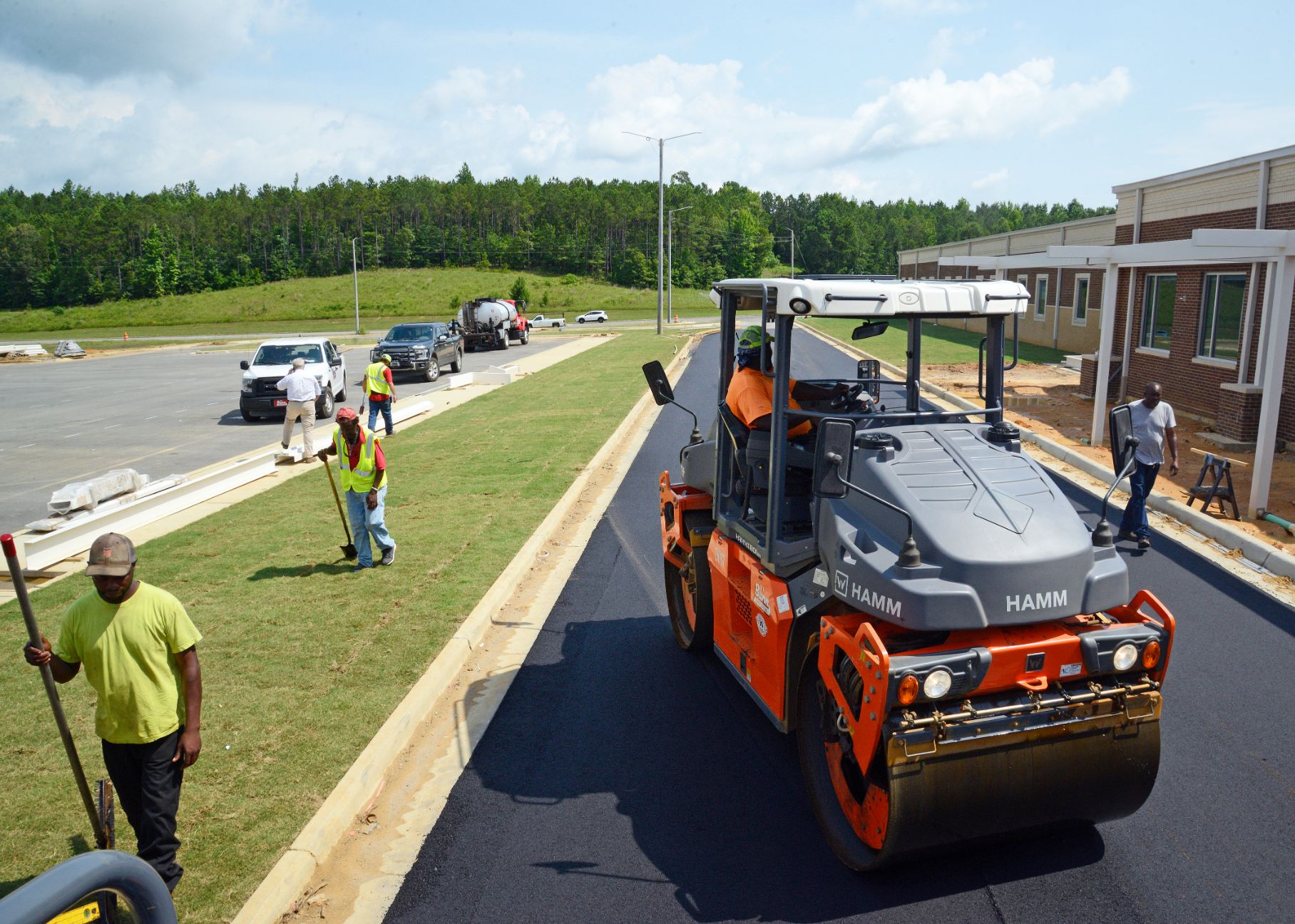
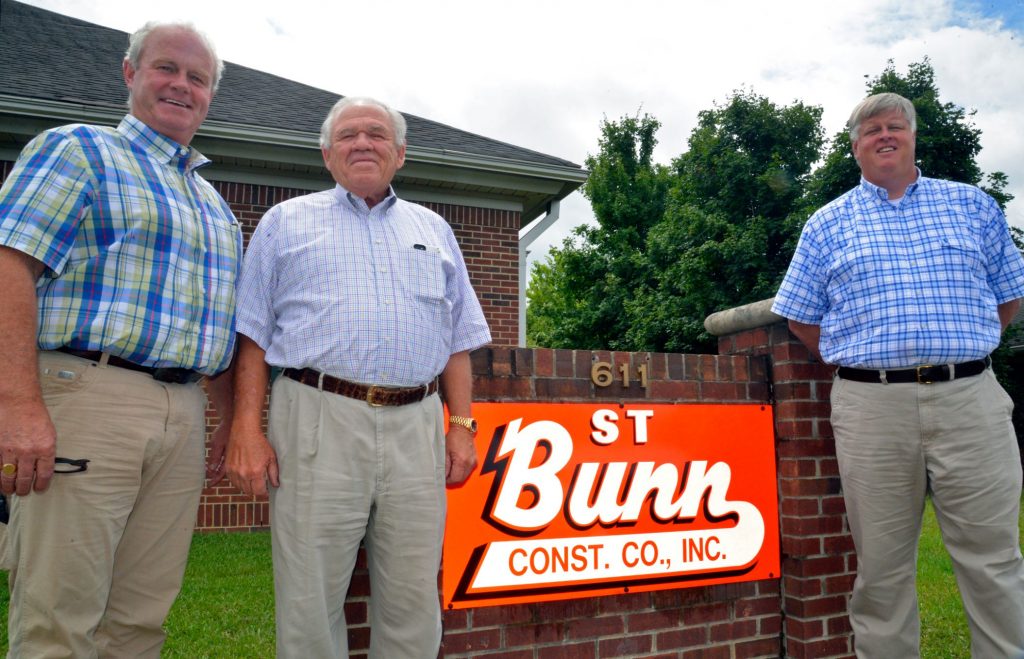
ST Bunn Construction Company Inc., Tuscaloosa, Alabama, just marked 80 years of business. However, the asphalt contractor and producer is anything but old-fashioned in its pursuit of new technology to improve pavements.

ST Bunn Construction has five asphalt plants within a 150-mile radius of Tuscaloosa. Numerous crews in west central Alabama place asphalt from these five plants using, among other equipment, two 10-foot Super 2003-3i and one 8-foot Super 1703-3i wheeled asphalt pavers from Vögele.

At ST Bunn headquarters are Operations Manager Guy Watkins; President ST “Sonny”
Bunn, Jr.; and Jody Thomason, the branch manager for Tractor & Equipment Co.

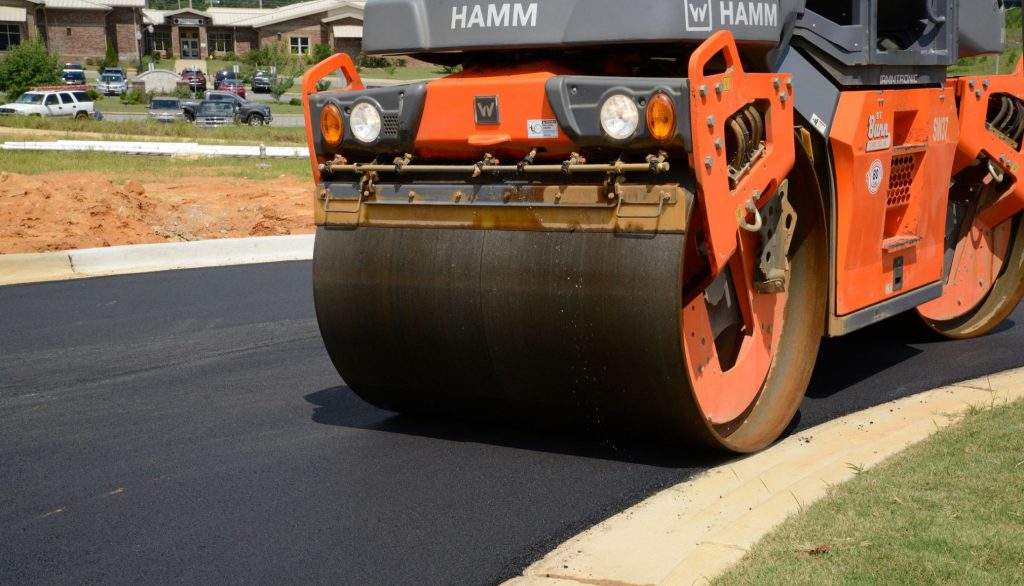
The company also has unique Hamm rollers, including two HD+120 VO tandem rollers, and an H13i VIO soil compactor incorporating both vibration and oscillation compaction in a single drum. In July 2018, ST Bunn Construction’s president, ST “Sonny” Bunn, Jr., acquired a new DV+70i VV-S roller. It features all-wheel steering with two smooth vibratory drums, but with a twist: both front and rear drums are split into halves, which can turn at different rates when negotiating tight curves or radii as seen in cul-de-sacs or parking lots.

As an added plus, the roller swaps steering via conventional articulated joint for all-wheel steering that permits precise movement on mats, including “crab” steering.

The split drums of the DV+70i VV-S enable compaction of tight radii without tearing the mat on the tight curves typical of parking lot construction such as this new school’s lot outside Tuscaloosa, Alabama.

“We do a lot of jobs where we go around cul-de-sacs, or commercial parking lots and are rolling around islands. Turning the machine has a tendency to tear the mat,” Bunn said. “Normally, we would run a rubber tire roller on one of those jobs to close the mat back up.”

“I remember years ago, when rollers turned with the drums instead of an articulated joint, we didn’t have near the problems we have now with tearing of the mat. I started trying to find a new roller that turned with the drums instead of articulation.”

He tells the story of going to the Hamm factory in Germany and getting to see the DV+ roller there, and then seeing a DV+70i VV-S demonstration on a cul-de-sac a few months later. “Sure enough, it didn’t break the mat, or leave a roller mark,” Bunn said. “One of our senior operators was able to show the rest of the crew how it would perform in the field. We acquired the roller and use it nearly every day.”

Because the DV+ series turns via drums, rather than an articulated joint, it can meet some difficult compaction challenges. When the opportunity presents itself, the “crab” steering offset enables the machine to compact a wider area than the roller drums themselves. However, ST Bunn Construction crewmembers like the drum-steering for a different reason.

“Crab steering works for us when we are working right up against a stand-up curb, or curb and gutter,” Bunn said. “The operator can put the front drum right up against the curb and not worry about the back drum getting up on the curb.”

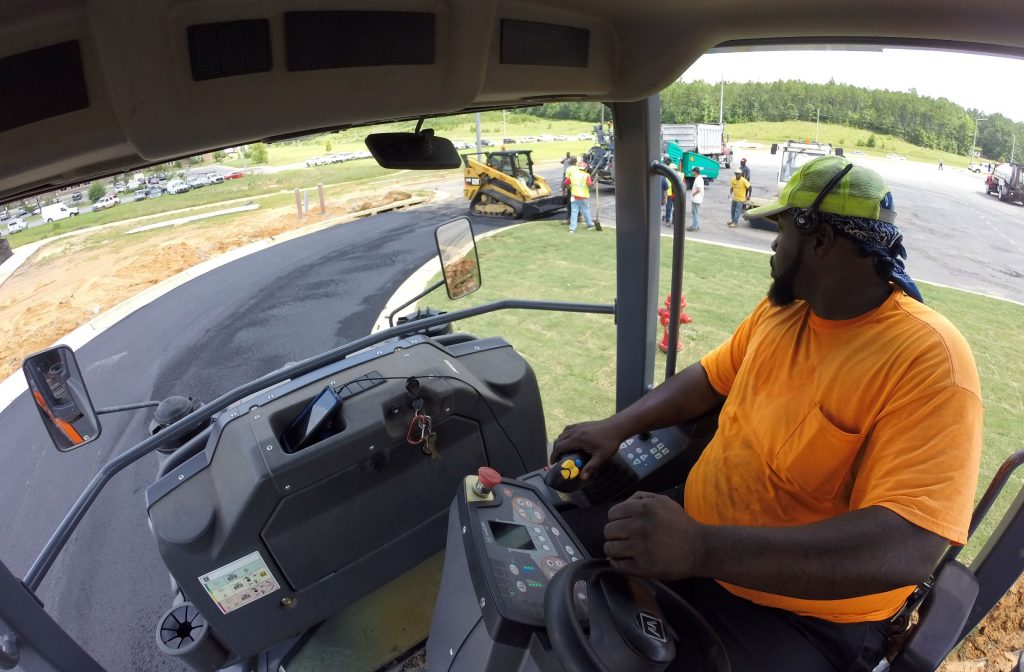
The Hamm EasyDrive operation simplifies operation around tight curves.

Front-and-back slat windows in the floor of the DV+ series rollers permit a clear view of the drums from the operator’s platform. “If he can see his drum, he can see if it’s picking up asphalt,” Bunn said.

“The floor windows allow our operators to see the drums, and in particular, whether the water system has stopped working,” said Guy Watkins, operations manager. “The split drum keeps the mix from tearing on tight curves, and the crab steering gives the operator better visibility while compacting a wider area than the roller itself, especially in getting rid of roller marks.”

ST Bunn Construction also uses oscillation compaction in its two Hamm HD+120 VO tandem asphalt rollers and Hamm H13i VIO soil compactor.

How to Pave a Tennis Court

A specialty project such as a tennis court can make or break a contractor with the enormity of its details. The project manager wants to take the time to get everything planned out ahead of Day 1 so all goes well. For the recreation services of a fancy hotel in a popular tourist destination, the crew I helped did a fantastic job of planning ahead and executing the plan. Let’s use their good practices to learn some good specialty project management tips.

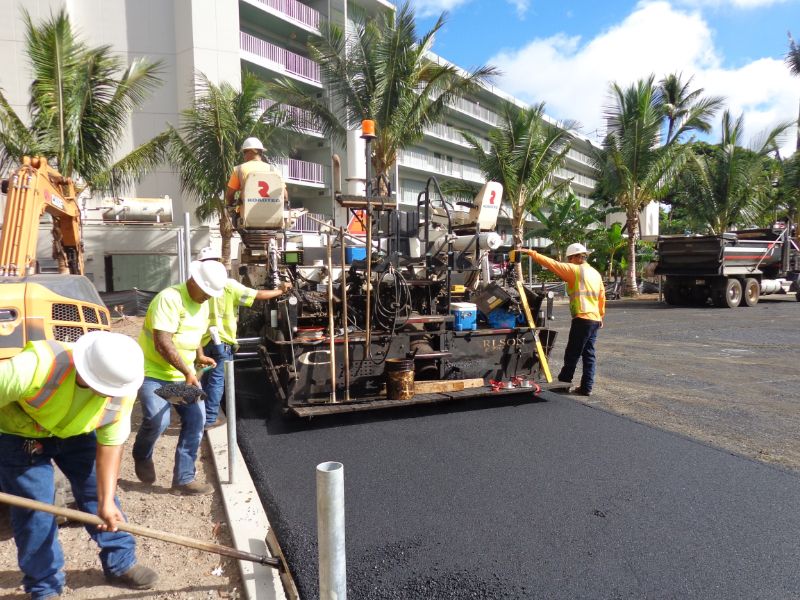
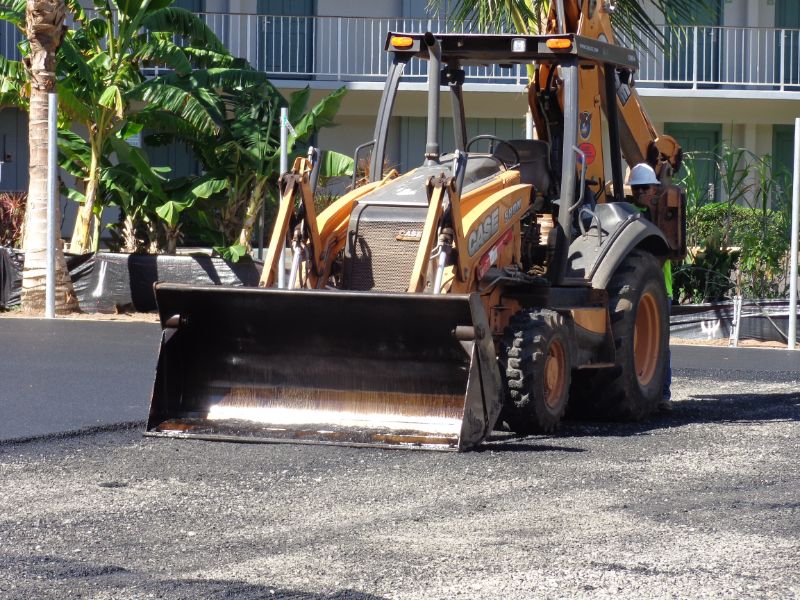
The crew used a loader with a clamshell bucket to cut the joints because they let the paver run fully loaded all the way through the end of each pull. The screed took care of striking off instead of letting mix dribble out and having workers shovel material into place. This gave each pass its best chance for optimum density and resulted in a gorgeous, top quality pavement.

One of the items to keep in mind for tennis court paving is to make sure the subgrade is rock solid. The trucks coming in to the job had 20 tons of material on them, so we had to be confident in our subgrade.

Check slope before and after paving to make sure your yield is on target.

Then, we only allowed one truck in at a time to the area where we were going to pave.

There’s no reason to stack up a line of trucks on the court. That means we made a plan for truck traffic, and we communicated that plan to each and every driver. As we were paving west to east, the truck had to come in from the west, drive past the site, and then back up to the paver smoothly and gently. We didn’t want any drivers making any turns on the subgrade.

To determine truck traffic and direction, we first had to know how we were going to pave.

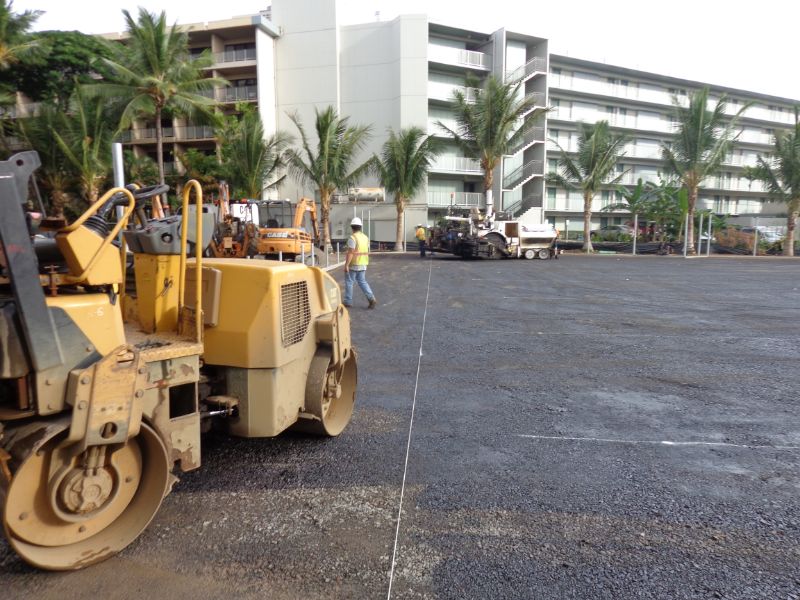
The first pass ran along the top edge of the tennis court parameter.

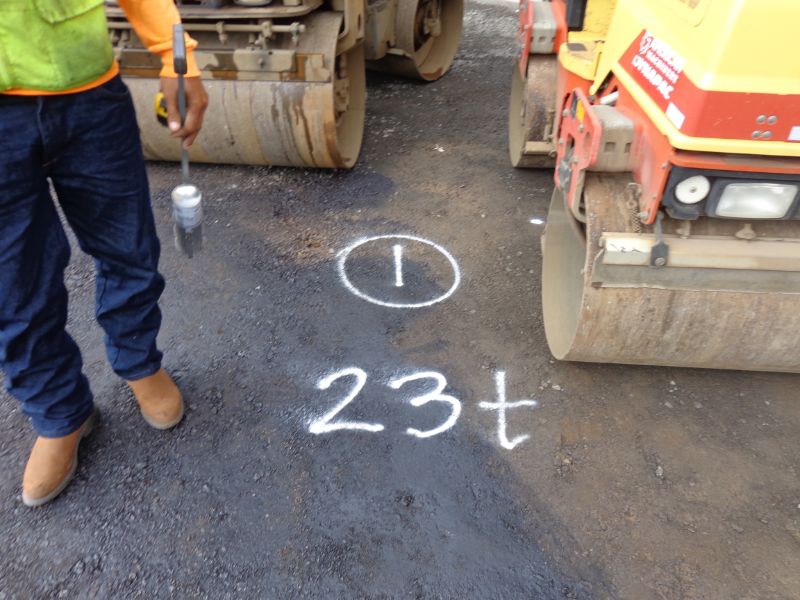
We drew a schematic and figured the layout with a total of 11 passes (see figure 1). To make sure everyone in the crew knew exactly how those passes would be pulled, we painted them on the ground and numbered them. In addition to the number for the pass, we painted the tonnage expected for each pass in a circle right there on the ground. This let each crew member stay aware of exactly what we were doing as a team throughout the paving process.

How to Pave a Sport Court: Practice Really Does Make Perfect

We used a Roadtec RP190 eight-foot paver with a Carlson screed and MOBA automation to place the material. We used the automation on both sides—one to match the joint and one to match the ski. We had a 1 percent pitch so we had to make sure we had that grade perfect. On the endgate, we placed a grade gauge model 1000 made in Airdale, Iowa.

Normally for a tennis court project like this, the specification will call for two 1.5-inch lifts of asphalt pavement. For this particular project, the crew was tasked with placing one lift of 3 inches. On one hand, this forced them to give special attention to temperature and joint construction, which we’ll talk about next. On the other hand, this allowed them to blend in any loose or large stones. The deeper lift let them fine-tune stones into the mat.

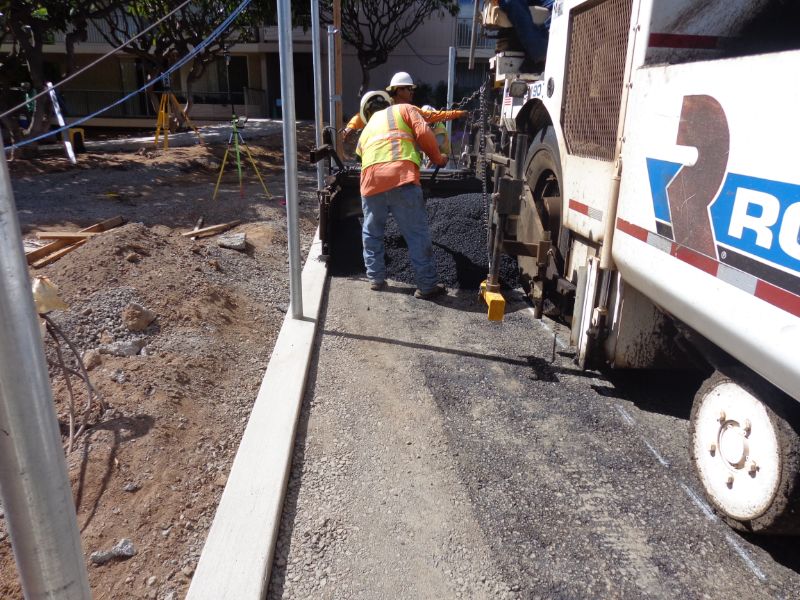
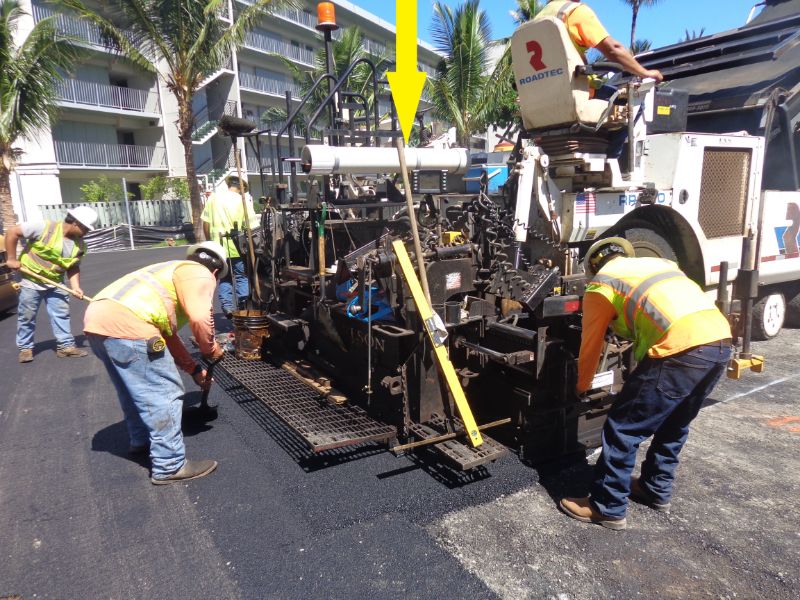
The crew worked quickly and efficiently to take care of any handwork that was necessary on the joints to get a smooth, seamless mat. Notice in this picture the arrow points to an easy addition you can make: a PVC pipe makes simple storage for hand tools.

For a compacted depth of 3 inches, the crew placed the mat at 3.75 inches. Remember that you want a quarter of an inch of fluff factor for each inch of finished depth. They paved at a speed of 20 feet per minute at most so they could stay consistent with their quality.

To build the joints, we kept them hot, matched them flush and rolled them last. We had a Cat CB224 and a Dynapac 5-ton roller on the job. The operators kept the rollers off the joints about a foot. Both rollers have dual vibratory drums so we could get the joints pounded down. When we took off from the joints, we matched with the lutes and rakes.

The laborers were careful to tap the material, touching it gently. They know how to work it without casting it over the mat.

In this pass, the paver will place 23 tons. If there’s any variation, the crew will know immediately that something is off because the guidance is written on the ground, like a map.

Another technique this crew used was limiting the handwork to the corner of the first pass.

We wanted to match everything up without shoveling back and these guys really did a wonderful job. Sometimes crews will run the paver out and you can get compaction and a decent joint by shoveling mix and working an area by hand. For this job with just one lift to work with, the crew ran the paver through while it was full. We cut the joints with the backhoe. The screed did the striking off at the same depth as the mainline. We cut joints with the backhoe, which had a clamshell bucket on it.

For this type of project, everything has to be staged from the get-go. Because we were doing one lift, we had to be sure the mix was at the right temperature. We had to have the rollers hot and ready to go. We had to have the guys ready to lute and pick up any loose stones. Within a minute of them completing their luting, the roller is on top of the joint. You don’t see segregation.

Before making the traffic plan, line out how you will pave the job.

The thing that impressed me most was the way they went from that kind of efficiency with the handwork and rolling to taking their time with the automation. Doing a tennis court and matching those joints, if you don’t have the right fluff factor, you will be back to fix it later. They used tamp shoes for walking around and depth checkers to double-check their work. The screed was smooth and flat, well-maintained. There are no lines in that mat and it ended with beautiful roll work because of their top quality mindset.


John Ball is the proprietor of Top Quality Paving, Manchester, N.H. For more information, contact him at (603) 493-1458 or tqpaving@yahoo.com.

Trouble-Shooting Tips for Roller Operators

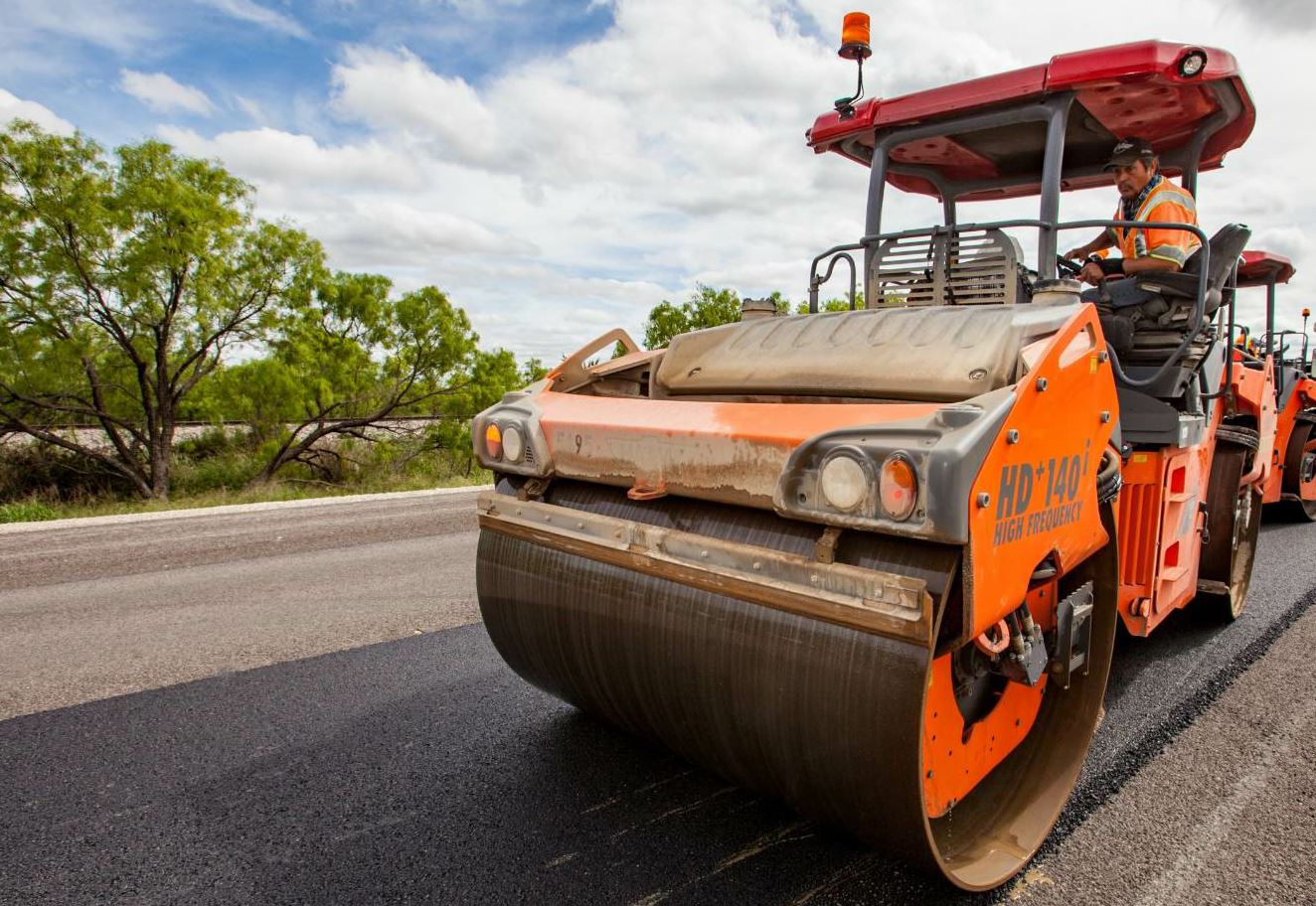
Every piece of equipment in the paving train—the truck delivering the asphalt, the paver laying it and the rollers compacting the mat—must work at optimum efficiency to keep the train rolling, achieve spec densities, and finish the job on time and within budget. If just one machine in that train isn’t working properly, it can cause downtime or delays that potentially cost the contractor thousands of dollars a minute.

Today’s asphalt rollers are some of the most advanced and reliable ever built. Technology can map a jobsite, tell the operator if “soft spots” exist in the mat and alert key service personnel of upcoming maintenance requirements before they are due. Even with all this technology built into a roller, there still is potential for things to go wrong in the field.

Bert Erdmann, product manager—heavy compaction for BOMAG Americas Inc., talks about the importance of having back-up plans and redundant components on rollers, so a problem in the field doesn’t affect compaction results. He mentioned working in an area where GPS-based systems don’t work, specifically.

Having a back-up compaction measurement system in place can help determine progress, he explained.

When buying a roller, he recommends looking for redundancies of critical system components to reduce the chance of a downtime occurrence. “Some mainline rollers are built with a back-up water pump for the spray system, since water is critical in preventing asphalt material pick-up on drums or tires,” Erdmann said.

Thinking beyond designed machine redundancies, there are several practices the roller operator can implement into his or her daily routine to prevent or reduce downtime at the jobsite. One key practice begins before the roller even makes it to the jobsite.

Prepare for Success

It cannot be stressed enough that establishing and conducting daily routine maintenance checks at the start of the shift will go a long way in preventing roller downtime. From the engine oil to the water tanks, operators should ensure all the fluids are topped off.

“Water tanks, especially those in rollers with pressurized spray systems, should have enough capacity to operate a full shift if filled prior to starting, which reduces downtime to refill while paving,” Erdmann said. “The operator should test the water pumps to ensure they are working properly to reduce the chance of both going down in the field and stopping the train.”

Operators of pneumatic tire rollers should check the release agent tank level and make sure the water spray system is operating correctly, as these systems prevent material pick-up before the tires heat up. The ballast compartments should be inspected and filled with the correct type and amount of ballast material to meet specified tire pressure loading. Also, if equipped, the roller’s tire inflation system compressor should be checked for proper operation.

The articulation joint and pivot points on many older rollers will require daily greasing. Operators should ensure that the proper amount of grease is applied, so material build-up doesn’t occur at the joint, which can lead to excess wear and premature failure. “Alternatively, companies can purchase rollers that have no “grease daily” fittings like BOMAG tandem rollers, allowing crew members to reduce daily maintenance requirements and get to work faster,” Erdmann said.

Flip It Up

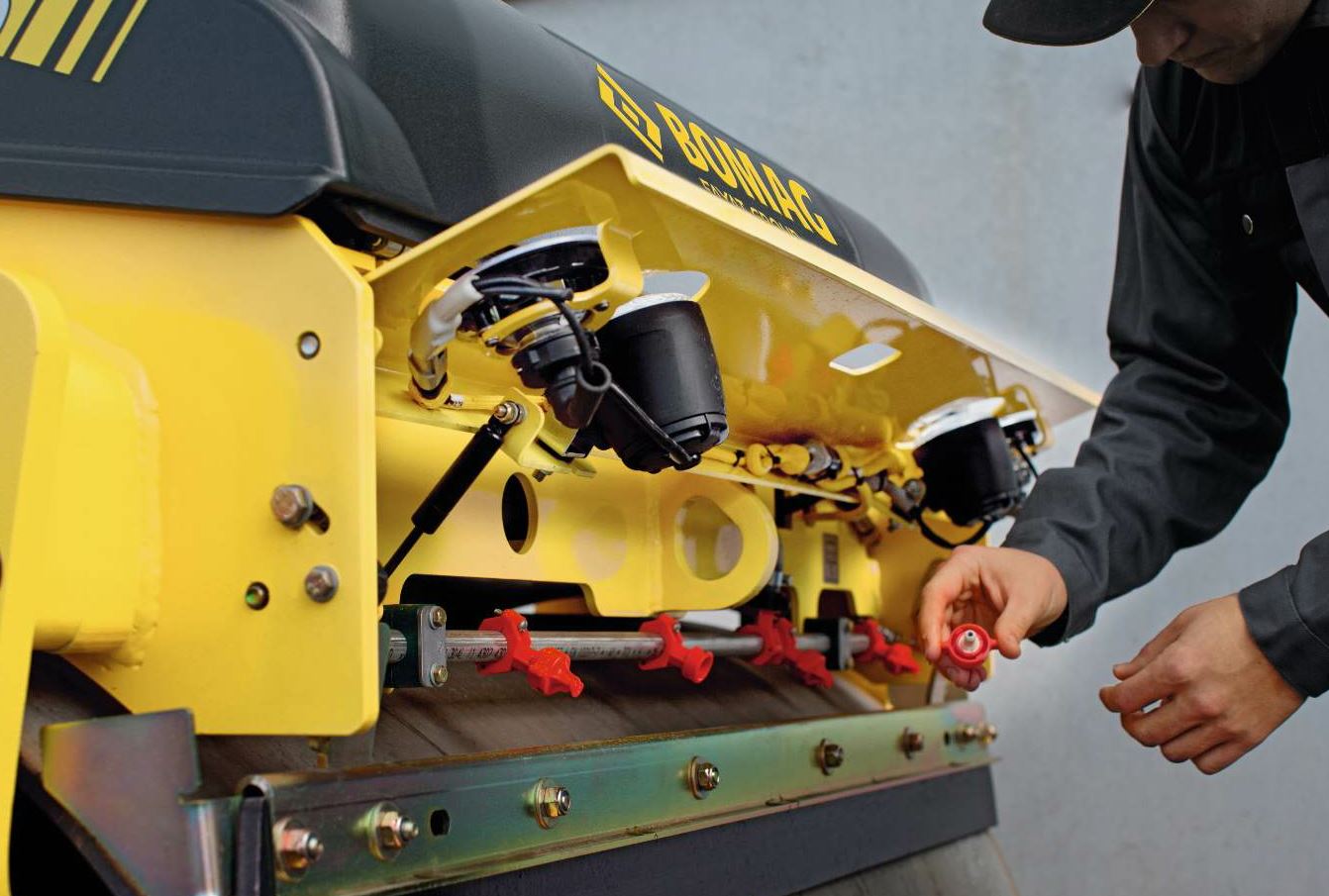
The roller operator should have on hand spare small parts such as spray nozzles and fuses.

The roller operator should have on hand spare small parts such as spray nozzles and fuses.

One common item to slip the operator’s mind when roading a roller, according to Erdmann, is leaving the scraper bars against the drum. This bar is an integral part of the spray system, evenly spreading water on the drum to prevent material pick-up. Not pivoting the bar away from the drum when roading longer distances can lead to premature wear, uneven water distribution, or, in the extreme, “the bar could be sucked back into the drum, which will require the scraper bar to be replaced,” he said.

Spray bar and nozzle clogging can occur during operation. This will lead to uneven water distribution across the drum and asphalt material pick-up. If the operator notices a clog in the water system, most of today’s bar designs include a quick-disconnect nozzle that can be removed and reconnected at the jobsite. End caps on the spray bar can be removed by the operator to flush larger pieces of debris that get stuck in the bar.

To reduce system obstructions, a best practice is to fill the tank with clean water. Be sure to regularly inspect the water tank and remove any debris. Also, make sure the screen at the fill cap is in place and in good condition to strain out any particles transferred by the water truck.

Keep It Clean

Today’s engines operate at much higher pressures and temperatures to meet environmental regulations. As part of roller design, manufacturers have worked with engine suppliers to ensure there is enough cooling capacity for reliable operation, even during extreme summer heat while compacting mats in excess of 250 degrees Fahrenheit.

Checking the air filter’s condition at the start of the day will go a long way to keeping the engine running within the designed temperature operating range. Also, if the operator notices the temperature gauge rising while compacting the mat, the radiator should be checked for debris to prevent overheating.

“Especially when working during the fall harvest on county highways or at dry and dusty jobsites, the operator should pay close attention to the temperature gauge,” Erdmann said. “Clean the radiator immediately to prevent overheating and damage to engine components.”

Got a Spare?

Rolling in the elements. Advancing machine age. Higher levels of technology. More electronic components. Today’s roller relies and puts more pressure on the electrical system more than at any time in the past.

While roller manufactures like BOMAG design the system for years of dependable operation, machine age and harsh operating conditions can take their toll.

This is why Erdmann recommends keeping spare fuses within the operator’s reach. “Having a few spare fuses on the roller can allow the operator to perform a quick-fix versus waiting for a service truck to make it to the jobsite,” he said. This simple practice could save thousands in lost-time productivity.

Companies should consider having spares of other small parts that could be conveniently stored on the roller and quickly replaced by the operator to avoid a downtime event. “I recommend having a handful of extra spray nozzles on board as well,” Erdmann said. “That way if a nozzle cannot be cleared or gets damaged, it’s a quick and easy replacement.”

Eagle Eye

The operator spends the most time on a roller and probably knows it best. Therefore, he or she will know when the machine is working properly and when something isn’t quite right. As soon as the operator notices something not working right, he or she should notify the service department, so it can be addressed during off hours or before a small repair turns into a major downtime issue. This practice is especially critical if the roller isn’t equipped with a telematics system that offers early detection of operating issues.

To aid the operator’s eye of the machine’s condition, roller manufacturers equip the dashboards with multiple gauges for critical components. These gauges provide a quick-glance of critical operating parameters such as engine temperature, oil pressure and charge control.

Fluid level indicators and gauges inform the operator when items like the fuel, water or DEF tanks need to be filled. “This allows the operator to signal someone, so the tank can be topped off at a convenient time to keep the paving train rolling,” Erdmann said.

Solve: Refilling the Roller

Is your roller running out of water too often during the paving shift?

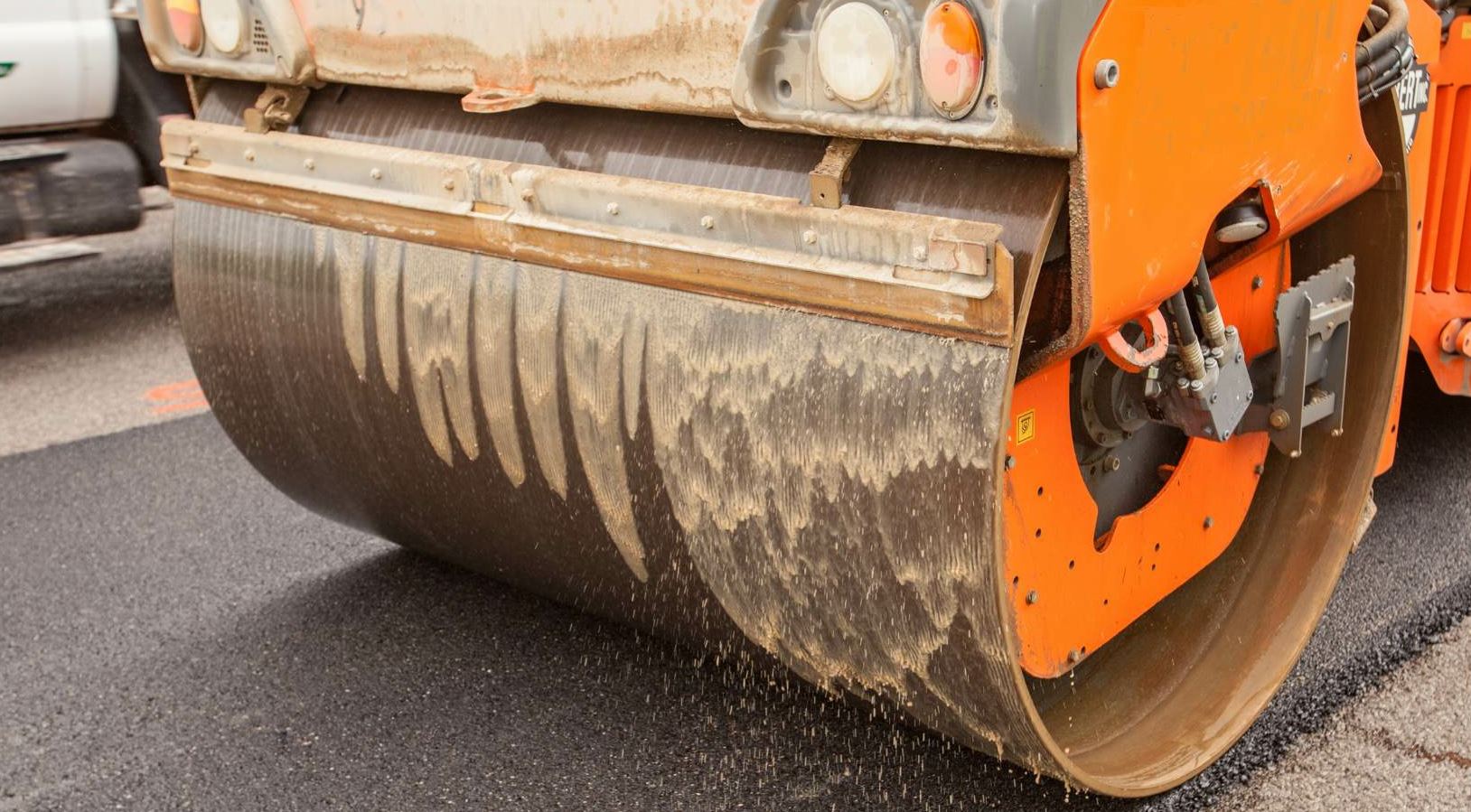
When a spray nozzle is plugged or when the scraper bar is not held against the drum properly, you will get poor water coverage on the drum.

It costs time to refill water tanks again and again. Letting the roller run with dry drums is not an option, so you must pay laborers to drive water trucks around the job site and refill frequently. Stop the madness.


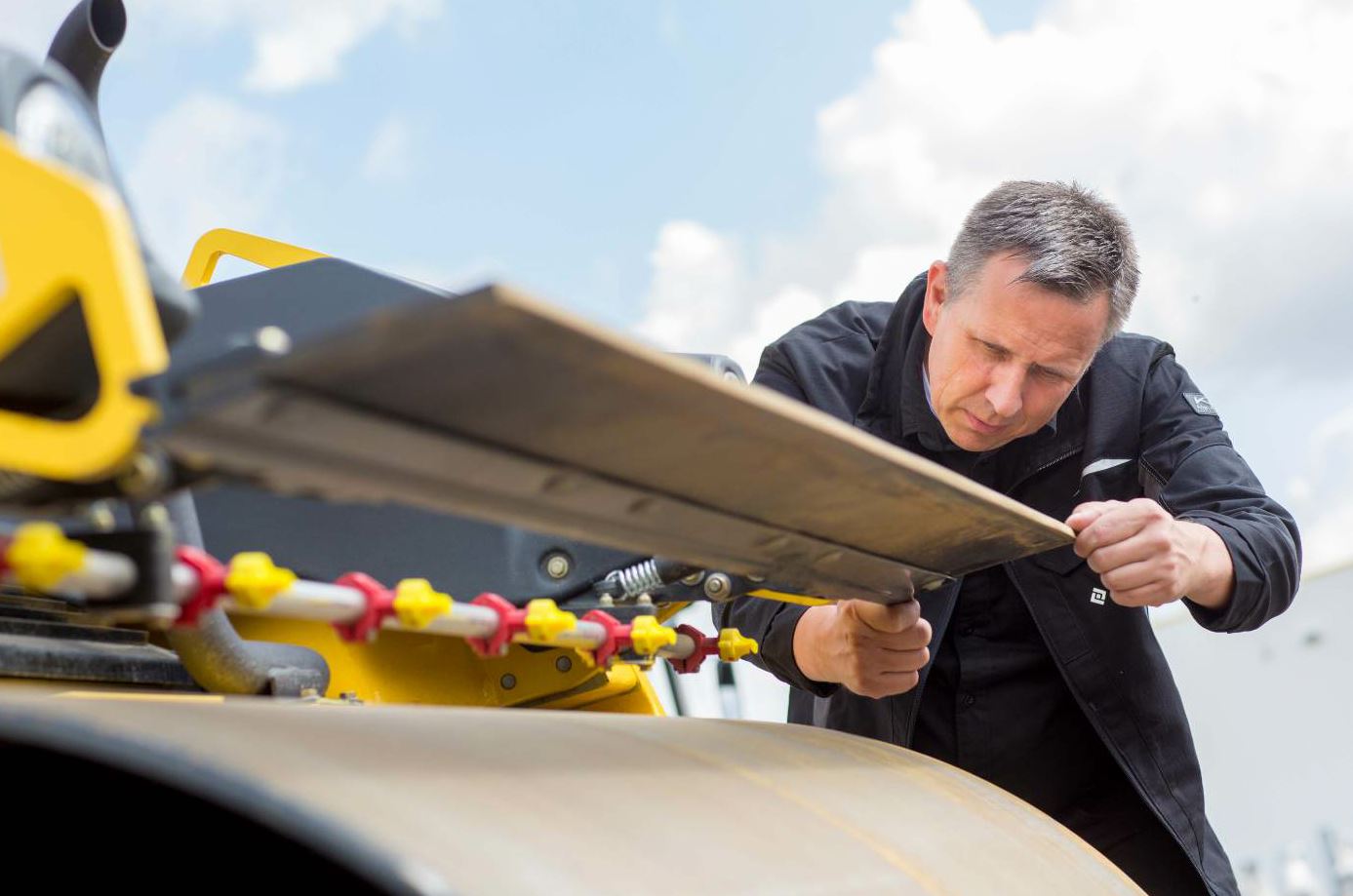
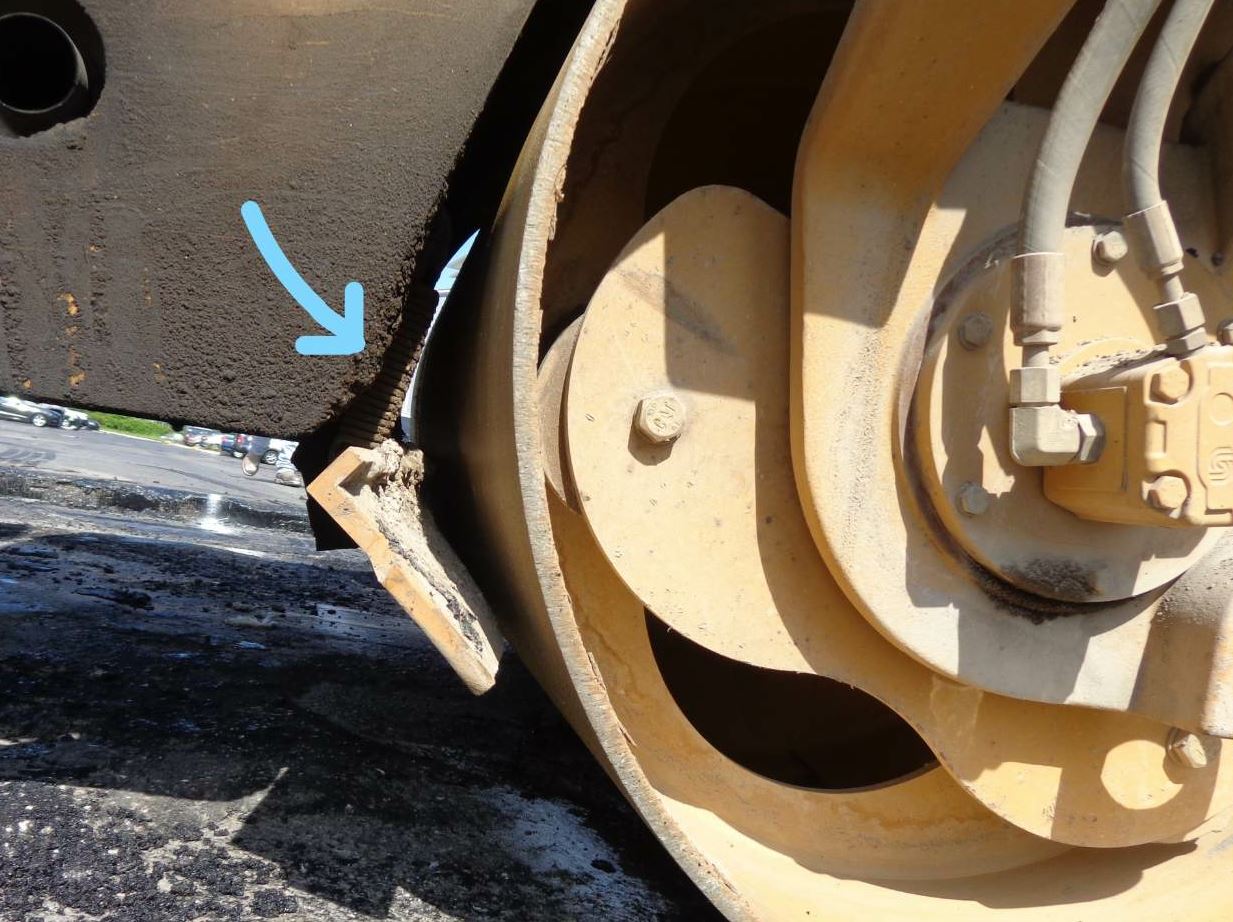
Check the spring to ensure it holds the scraper bar against the drum correctly. Photo courtesy John Ball of Top Quality Paving & Training, Manchester, New Hampshire.

When the water spreads across the drum properly, it lubricates the drum to prevent material pickup.

Solution: Look at the position of the scraper bars.

Are the scraper bars positioned optimally against the drums? Ensure the springs have proper tension to hold the bars in place to spread water across the surface of the drum properly. If the scraper bars are loose or positioned off the drum during operation, you’re wasting water. You’re probably getting poor performance with material pickup as well. Solve this problem by replacing broken springs and worn scraper material, and then positioning bars to trough water optimally.