Naloxone is the New AED in Workplace First-Aid

Workplace opioid risk and overdose prevention includes naloxone kits in your first-aid response

Editor’s Note: A version of this article first appeared in the Fall 2024 Colorado Public Works Journal. This article was updated for the national readership of AsphaltPro. AsphaltPro has been a longtime supporter of Cal Beyer’s efforts in workplace mental health and suicide prevention. He was first featured in AsphaltPro in 2017 and many times thereafter, as he has been a leading force in workplace mental health, suicide prevention, addiction treatment and recovery, opioid risk reduction and overdose prevention.

In today’s ever-evolving work environment, the concept of safety has expanded far beyond hard hats, high visibility vests and steel-toed boots. There’s a new tool that’s quickly becoming essential in first-aid kits on job sites and in workplaces: naloxone. Just like an automated external defibrillator (AED) is used to revive a person during sudden cardiac arrest, naloxone is the lifesaving medication used to reverse the effects of an opioid overdose.

As the opioid crisis continues to affect communities nationwide, the inclusion of this life-saving medication in workplace first-aid kits is a crucial step toward protecting lives. It’s a small addition that could make a major difference in the construction and aggregates industries, where the opioid epidemic has taken a significant toll.
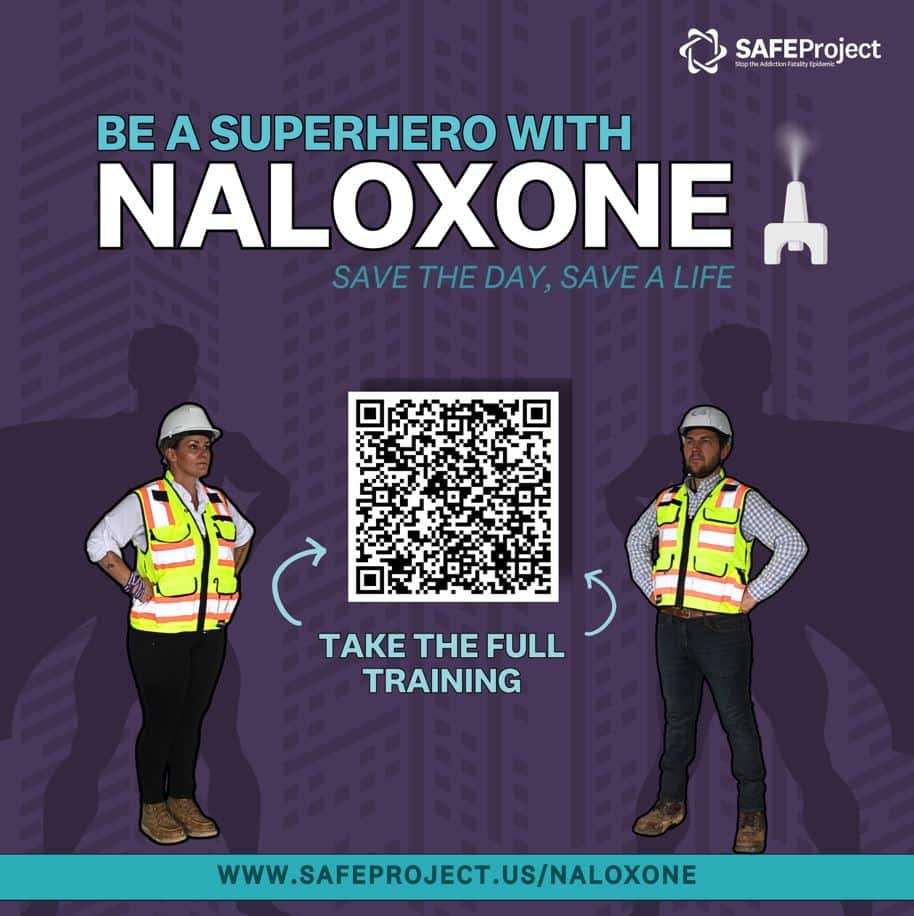
What is Naloxone and Why Does It Matter?

Naloxone, often referred to by the brand name Narcan, is a medication designed to reverse an opioid overdose. Naloxone works by quickly binding to opioid receptors in the brain, displacing the harmful substances and reversing their effects. Naloxone is simple to administer—with minimum training, anyone can use it effectively in an emergency.

Having naloxone readily available in first-aid kits is critical because overdoses can happen anywhere, including the workplace. This is particularly true in physically demanding industries like aggregates mining, asphalt production and paving operations. These operations have experienced higher rates of opioid use due to the potential for injury and subsequent pain management.

Episode 5: Build a Caring Culture | Cal Byers Shares Strategies to Approach Employee Substance Abuse with Care

Construction and Mining Battle Against the Opioid Crisis

The opioid crisis is in its third decade. This crisis cuts across every demographic of society. This author has described opioids as an “equal opportunity destroyer” of lives, families and hope. The construction and mining industries have been hit hard by the opioid crisis sweeping the nation.

According to the National Vital Statistics Reports, affiliated with the Centers for Disease Control and Prevention (CDC), the combined construction and extraction industries have the highest rate of fatal overdoses among 22 major industries analyzed. Specifically, the overdose death rate for the combined construction and extraction industries is 162.6 per 100,000 workers.

The rate for construction alone was reported as 130.9 per 100,000 workers compared to 60.9 per 100,000 workers for mining functions. One possible explanation for the difference is that mining uses heavier machinery, automation and conveyors to move materials more than construction, which relies on more human effort to perform heavy work operations and material handling tasks.

For industries like construction, mining, manufacturing and transportation, the risk of musculoskeletal injuries is particularly pronounced. Workers in these fields often face physically demanding tasks that increase the likelihood of injury and, subsequently, opioid prescriptions. The line between treatment and dependency can be thin, making the workplace a critical setting for overdose prevention. That’s where naloxone comes in—equipping first-aid kits with this medication could mean the difference between life and death in an emergency.

Candid Safety Promotes Mental Health and Prevents Suicide

Why Naloxone is a Game-Changer in Workplace Safety

The availability of naloxone as an approved over-the-counter medication since March 2023 rapidly expanded its availability. Moreover, there are laws in all 50 states and the District of Columbia pertaining to the accessibility of naloxone and/or Good Samaritan provisions that generally reduce the liability of administering naloxone in the workplace. It is always prudent to check with legal counsel if questions remain.

The major benefits of stocking naloxone in the workplace include the following considerations:

  1. Quick Action Can Save Lives: In the event of an opioid overdose, time is everything. Naloxone can restore normal breathing within minutes, providing a critical window for emergency responders to arrive. Having naloxone in first-aid kits ensures that workers can act quickly, potentially saving a life right there on the job site.
  2. Empowering Your Team: When employees are trained to use naloxone, they’re equipped to act decisively in a crisis. This training not only saves lives but also fosters a culture of safety and responsibility in the workplace. It shows that everyone has a role to play in keeping the workplace safe.
  3. Challenging Stigma: By including naloxone in your first-aid kits, you send the powerful message that your workplace is a safe space where employees’ health and well-being are prioritized. This move helps reduce the stigma around opioid use and encourages workers to seek help without fear of judgment or reprisal.
  4. Staying Ahead of Regulations: As awareness of the opioid crisis grows, a selected number of states are considering enacting regulations allowing or even requiring naloxone availability in certain settings. Being proactive in adding naloxone to first-aid kits not only prepares your workplace for potential regulations but also shows your commitment to employee safety.
  5. Reducing Human Capital Risks: In the unfortunate event of an overdose at work, having naloxone on hand demonstrates that you took reasonable steps to protect your employees, which can enhance your company’s reputation as a responsible and caring employer.

Construction Safety’s Next Frontier: Suicide Prevention

 Spotlight on SAFE Project: A Partner in Workplace Safety

SAFE Project, a national nonprofit dedicated to ending the addiction fatality epidemic, is leading the charge in making naloxone accessible in workplaces across the country. Through the SAFE Workplaces initiative, SAFE Project provides businesses with the resources, training and support needed to tackle substance use issues head-on.

SAFE Project offers tailored solutions that help businesses create safe and supportive environments for their employees. Whether it’s providing naloxone kits, offering training on how to use them or helping companies navigate the complex landscape of substance use prevention, SAFE Project is a crucial ally.

Their approach isn’t just about reacting to overdoses—it’s about creating a culture of prevention and care. By partnering with trade associations, businesses, unions and other related organizations, SAFE Project ensures that workplaces are better prepared to handle the challenges posed by the opioid crisis.

Children’s Book Reinforces Company’s Safety Culture

How to Implement Naloxone in Your Workplace

Adding naloxone to your workplace first-aid kits is a small step that can have a huge impact. By taking this proactive approach, you’re protecting your employees, reducing your risk and contributing to the larger fight against the opioid epidemic.

If you’re considering adding naloxone to your first-aid kits, the process is straightforward but essential. Here’s how to get started.

  1. Assess Your Needs: Evaluate your workplace environment, considering factors such as the number of employees, locations, distances between worksites and expected response time by emergency first responders. This will help determine how many naloxone kits you need and where to place them.
  2. Train Your Team: Make sure your employees are trained to recognize the signs of an overdose and know how to administer naloxone. SAFE Project offers customizable training programs that can fit the needs of any organization.
  3. Communicate Clearly: Let your employees know that naloxone is available and encourage open conversations about substance use and overdose prevention. This can help reduce stigma and ensure that everyone feels supported.
  4. Maintain Your Kits: Regularly check your naloxone kits to ensure they are in good working order and have not expired. Establish a protocol for replacing used or expired kits promptly.
  5. Partner with Experts: Consider working with organizations like SAFE Project to access additional resources and support. Collaboration with experts can enhance the effectiveness of your naloxone program and ensure that you’re taking all the right steps.

Naloxone in first-aid kits isn’t just about compliance; it’s about caring for your team and making sure everyone goes home safe at the end of the day.

Cal Beyer, CWP, is the senior director of SAFE Workplaces for the national nonprofit SAFE Project. He’s been dedicated to construction risk and safety management since 1996. From 2014-2020, he was director of risk management for a paving contractor in the Pacific Northwest. He is a member of the executive committee of the National Action Alliance for Suicide Prevention. Cal was instrumental in the launch of the Construction Industry Alliance for Suicide Prevention. For more information, contact Beyer at cal@safeproject.us or (651) 307-7883.

References for More Information

Beyer, Cal. (Sept/Oct 2024). Reversing Opioid Overdoses in Construction: A Jobsite Imperative. Construction Financial Management Association (CFMA). Building Profits.

Beyer, Cal. (August 17, 2024). Overcoming Challenges to Stocking Naloxone in Workplaces & Jobsites.

Beyer, Cal and Kubiszewski, Scott. (January 15, 2024). Forming the Alliance for Naloxone Safety In The Workplace.

Billock RM, Steege AL, Miniño A. Drug Overdose Mortality by Usual Occupation and Industry: 46 U.S. States and New York City, 2020. National Vital Statistics Reports; vol 72 no 7. Hyattsville, MD: National Center for Health Statistics. 2023. DOI.


Traffic Control Success on Mesa’s US-60 Corridor

Sunland Asphalt performs mill-n-fill with large-scale work zone safety setup

In the sprawling city of Mesa, Arizona, where roads and highways are the arteries of daily life, upgrading a key stretch of the US-60 corridor was no small task. Thanks to a strong collaboration between Sunland Asphalt, AWP Safety and the Arizona Department of Transportation (ADOT), the project transformed into a true success story—ultimately benefiting the entire community and elevating the region’s infrastructure.

With 22 traffic interchanges to upgrade, the project demanded meticulous planning and execution.

Sunland Asphalt, a contractor with operations in six states, was tapped by ADOT to lead the 8-mile mill and pave project along the US-60 corridor, stretching from Loop 101 to Loop 202. The goal: to deliver a smoother, safer highway that would stand the test of time, reducing long-term maintenance costs and enhancing the overall driving experience for the thousands who traverse the route daily.

As a critical artery for the Phoenix metropolitan area, the US-60 corridor serves both daily commuters and commercial traffic. Sunland Asphalt’s established track record in managing large-scale infrastructure projects reassured ADOT that the company could not only meet the rigorous paving demands but also expertly handle the complex traffic control requirements that accompany work of this magnitude.

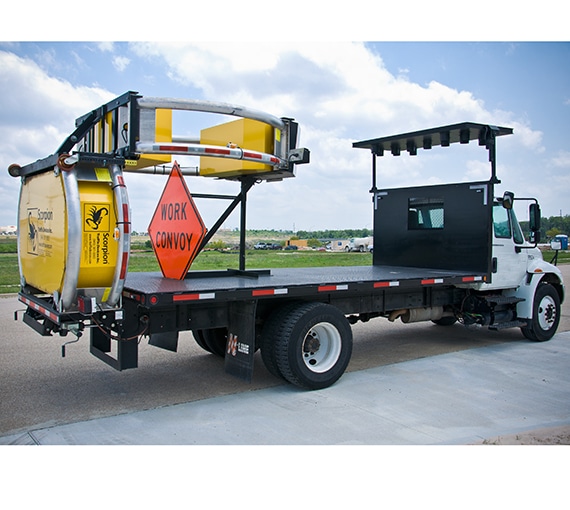
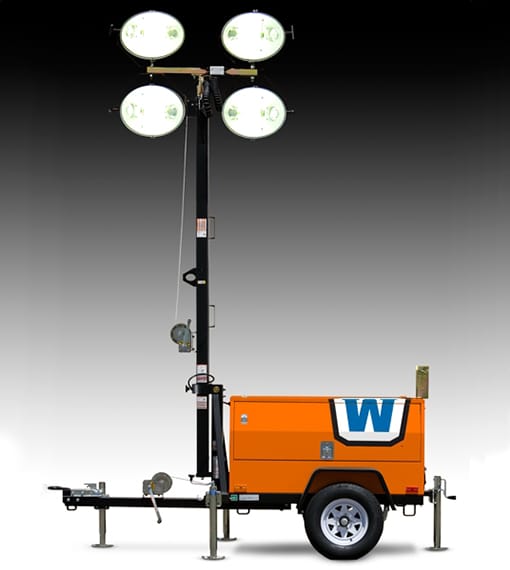
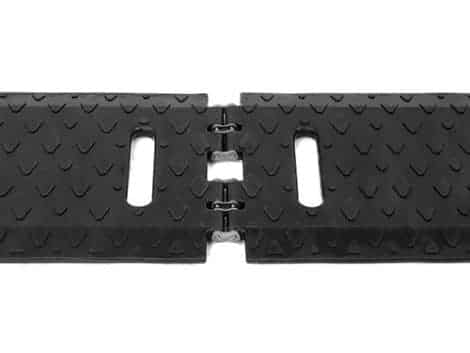
The tools of the trade for work zone safety setup include clean, reflective safety cones, rumble strips to alert drivers to slow down, and light towers to illuminate the work area, equipment and all-important workers.

The Challenge: Manage Multiple Interchanges and Stakeholders

With 22 traffic interchanges to upgrade, the project demanded meticulous planning and execution. Each interchange was treated as its own mini-project, complete with distinct contracts and unique challenges. ADOT and the local municipalities, all of whom had a vested interest in ensuring public safety and minimizing disruption, imposed stringent traffic control standards.

The work was largely carried out at night, adding another layer of complexity. Sunland Asphalt needed a traffic control partner that could handle the challenge head-on.

After 12 weekends of focused work, the US-60 corridor project reached completion without a single major safety incident.

The Solution: Precision Traffic Control

AWP Safety played an integral role in managing traffic control for the US-60 corridor project, ensuring that the complex operation ran smoothly and safely from start to finish. Right from the outset, the company leveraged its experience to develop tailored traffic control plans for each of the 22 interchanges.

These plans were not one-size-fits-all; rather, they were carefully crafted to address the unique infrastructure, traffic patterns and local conditions at each specific location. By accounting for the nuances of each interchange, the plans worked to minimize disruptions to traffic flow while maximizing the safety of both workers and motorists.

Rieth-Riley Controls Traffic with iCones

Beyond the initial planning, AWP Safety also took charge of the critical permitting process, navigating the complex web of regulations and requirements imposed by various municipal and state authorities. This proactive approach secured all necessary approvals in advance, preventing delays and ensuring that traffic control measures were precisely implemented according to the project’s demanding timeline.

A key element of the project’s success was the ability to adapt to the dynamic and often unpredictable conditions at each work site. Whether it was adjusting to unexpected weather changes, responding to fluctuations in traffic volume or accommodating last-minute modifications in the work schedule, each plan allowed for a high degree of flexibility and responsiveness. This adaptability was crucial in maintaining the project’s momentum and avoiding costly interruptions.

To further enhance safety, particularly during the more hazardous nighttime operations, AWP Safety deployed off-duty law enforcement officers at each location. Their presence not only added an extra layer of security but also provided a visible deterrent to potential safety risks.

The tools of the trade for work zone safety setup include clean, reflective safety cones, rumble strips to alert drivers to slow down, and light towers to illuminate the work area, equipment and all-important workers.

The Results

After 12 weekends of focused work, the US-60 corridor project reached completion without a single major safety incident. This success was the result of seamless coordination between Sunland Asphalt, AWP Safety, ADOT and the local municipalities. Despite the challenges posed by working across multiple interchanges, the project stayed on schedule and within budget, with minimal disruptions to the public.

Immanuel Martinez, division manager of public works for Sunland Asphalt, emphasized the importance of customer collaboration at every level: “This project demonstrates how detailed planning, transparent communication and robust partnerships can lead to the successful delivery of large-scale infrastructure improvements. The fact that we had no major safety incidents throughout the project speaks to the careful coordination and shared commitment of all our partners.”

The tools of the trade for work zone safety setup include clean, reflective safety cones, rumble strips to alert drivers to slow down, and light towers to illuminate the work area, equipment and all-important workers.

Martinez continued, “Our ability to work closely with AWP Safety and our municipal partners ensured that the project was not only delivered on time and within budget but also met the needs of the public, who rely on these roadways every day. This level of customer-focused collaboration is what drives success in today’s infrastructure projects.”

As Sunland Asphalt and AWP Safety move on to their next projects, the US-60 corridor serves as a shining example of what can be achieved through collaboration, meticulous planning and a commitment to safety. The lessons learned and the relationships forged on this project will undoubtedly inform their future endeavors, as they continue to pave the way for safer, more efficient roadways across the region.

Consider reaching out to your local traffic safety expert for a consultation and to see how their expertise can help you achieve your business goals.

Repairing Little Things on the Paver Saves Big

Focusing on the paver, we look at tips to clean and maintain the iron to achieve top quality paving every season

This is the time of year when crews are rushing to fit in as many projects as they can before snow flies and even daytime temperatures could prevent top quality paving. As much as your team wants to dive in and start paving at the beginning of the shift to get the job done, you must ensure all the equipment is in working order first.

There’s no point in paving with a warped screed. There’s no point in spraying tack with a distributor that has gummed up nozzles. Instead, let’s look at a few routine maintenance items that can keep your crew working efficiently into this hurry-it-up part of the construction season.

How to Set the Augers

As Sandy and I pointed out in the September article “Increase Quality on Any Job,” we should start with the all-important paver. And we should start with adjusting the attitude of the workers who are responsible for its upkeep.

There are members of the workforce who don’t yet understand why we’re telling them to take time out of their day to clean a machine. They don’t yet know why it’s important to wipe down vital components with release agent and a rag while the paver is still warm. We have to educate them so they understand:

  • a clean machine will work better;
  • a clean machine will make their job tomorrow easier;
  • a clean machine will make it possible to notice if a component is out of order;
  • a clean machine is safer to work around; and
  • a clean machine will help them get better quality for full pay on the final job.

All these things come into play because the equipment is clean enough to work properly. It’s up to each crew member to help keep it clean and in good working order.

How to Train an Equipment Operator

Get Smooth Forward Motion

Starting at the very front of the tractor, if you see material buildup on the push rollers, you want to get at that and scrape it off. When the push rollers stick or fail to roll smoothly against the haul truck tires, the tractor will experience a jerking or shuddering motion as it drives forward. Even when this shuddering is slight, it affects the performance of the screed, thus the smoothness of the mat.

If you have globs of material built up anywhere else on the tractor or screed, this jerking motion might knock some of that loose, causing it to drop onto the surface and create cooled areas of material segregation. Your roller operators won’t be able to roll that out and you’ll have potholes in your finished project some day or you’ll have an inspector deducting your pay.

Top 10 Paving Don’ts

All of this can be avoided if you clean the push rollers at the end of each paving shift. While they’re still warm, take a rag and some release agent and wipe them off. It’ll only take one or two minutes to do while the components are warm. If you wait until morning when the paver is cool and stray material has hardened, it’ll require a putty knife, more release agent, more elbow grease and more time.

Another area to watch for material buildup to maintain smooth forward motion is the wheels—or track—of the tractor. We’ve talked about this in AsphaltPro before, but it bears repeating. Check the bogies and track at the end of the shift and clean out any asphalt you see starting to get caked in there. Do it while the components are still hot to make the job easier on yourself.

Ways to prevent the material from getting into the bogies include:

  • avoid overfeeding the head of material;
  • avoid flooding the endgates; and
  • avoid driving over piles of spilled material.

Let’s talk about driving over piles of spilled material for a moment. One way to prevent spills is through haul truck management and communicating with drivers. A good dump man who can get drivers to employ brakes, raise beds and charge the hopper properly is worth his weight in gold. See the article “Save on Costs with Your Professional Guide to Asphalt Mix Delivery—An Independent Look at Best Haul Truck Practices Part 3” for a tutorial on mix delivery.

Save on Costs with Your Professional Guide to Asphalt Mix Delivery, Part 3—An Independent Look at Best Haul Truck Practices

Another way to prevent spills is to maintain the front of the hopper properly.

Look at the front left and right side of the hopper in these pictures. In the main picture, you can see that the rubbers have been replaced from what you see in the inset picture. The center panel will also be replaced but must come from the Caterpillar parts distributor. The conveyor belt material had become worn and torn, allowing mix to consistently fall out of the hopper during the paving day. This made extra handwork for the laborers to shovel material out of the way and often resulted in segregated areas in the mat. This does not lead to top quality paving results. On a state job, it could lead to failed lots or deducts.

By replacing torn or missing rubbers on the hopper, you can prevent some of the spillage that causes extra handwork for your crew and piles of mess that your tractor’s wheels end up running over. When the bogies pick up that material, it’s a mess to remove later.

Your roller operators won’t be able to roll that out and you’ll have potholes in your finished project some day or you’ll have an inspector deducting your pay.

How to Maintain Your Screed

Focus on the Screed

The areas between the front and the screed are important to clean at the end of the shift, of course, and I’m not trying to minimize them by jumping to the back of the tractor. But let’s concentrate on the screed, nose and plates for a few minutes. The screed is your hot iron that will smooth the material into a flat, gorgeous mat. If you have material stuck to the bottom of the screed or caked against different elements, you lessen your chances for success.

In the picture at right (0571 gapping from warping), we can see a gap between the endgate and screed. We see mess and material all over the warped metal. This has happened for a number of reasons, including poor loading onto and off of the lowboy, but also because built up material was allowed to prevent good extension and retraction of the endgate and tunnels.

The result is warped metal that can’t line up correctly. If the endgates aren’t flush with your screed, you can’t build a good joint. That spells disaster for a pavement and deducts for your pay.

The buildup of material on the screed or its nose can change your angle of attack. It can degrade the wiring or disrupt the electronics. For example, if the electric heat is disrupted, the screed will not heat evenly all the way across, leaving you with uneven paving results. Look at this picture for some of the problems we’re talking about.

On the right side of the picture, the white stones indicate the endgate is too tight. That causes the shadow you’re seeing halfway into the main screed. The screed is cold there and it’s too high, causing the line.

The second area of shading is occurring because the endgate is forcing pressure on the extension. The mis-matched screed sections between the extendible and the main angle of attack isn’t the same, either. You can see this in the mat behind the paver.

The center section is tight and is screeding off correctly. This is good and offers the nice, left-hand side of the picture, which is what we’d like to see across the entire width of the mat. Instead, we’re seeing the uneven results of a screed that hasn’t been maintained properly or double-checked prior to the day’s paving start.

Your crew can prevent this uneven performance by:

  • maintaining all components of the screed;
  • cleaning the different elements of the screed and the underneath side of the screed/screed plate;
  • removing asphalt material from the nose of the screed at the end of the paving shift;
  • check to ensure the screed and extensions are parallel;
  • checking the straightness of the screed plate with a straightedge prior to paving; and
  • double-checking the electronics to ensure even heating all the way across.

When you see this article appear online, share some of your screed cleaning and maintenance tips, too.

Catch Up Over Winter

With the end of paving season upon us in many parts of North America, now is the time to schedule winter maintenance for all our paving equipment. You can download a paver maintenance checklist from TheAsphaltPro.com white paper repository and make a plan for your mechanic to address this all-important machine before season start-up 2025.

How to Maintain Your Paver

Also make a plan to incorporate equipment cleaning in your new-hire training and worker refresher training over the winter. I worked on an online training course with AsphaltPro a few years ago—Asphalt Paving 101, available here and one of the modules in that course outlines each worker’s job on the paving crew.

Don’t let your downtime go by without encouraging workers to do their jobs to the fullest. Some of these men and women come to our industry without any knowledge of the equipment or basics of paving. If we let them flounder and fail, allowing their daily performance to be hindered by gummed-up machines, they’ll have no pride in either the work or the equipment. They’ll leave as soon as something more enticing comes along.

To help the newcomers feel valued, we must show them the “why” behind the things we do. We must help them understand that the task of cleaning a machine at the end of the shift today saves them time and energy tomorrow, makes their job easier and more productive tomorrow, and gives them a top quality paving job with a better chance at full pay tomorrow.

We’ll dive into more equipment upkeep and tips in future articles, so keep an eye out for that in upcoming issues of AsphaltPro.


This Should be Covered

Make sure the mechanics and the crew members not only understand their jobs but also care about what they’re doing.

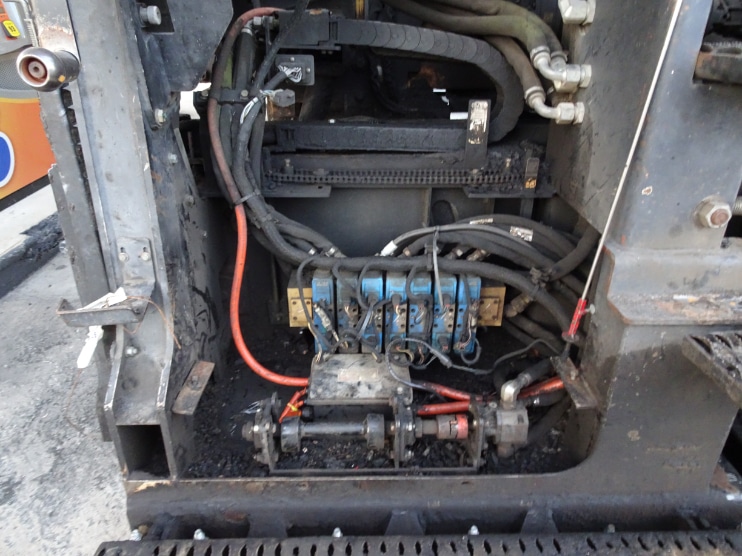
In this picture, we see an uncovered electrical section on the back of a paver, which was sent out to the field for a day of paving. You’ll notice the eccentrics at the lower center of the “box” are caked with asphalt and unable to spin, but what’s worse is this uncovered area is a shock hazard for the screed operator and any other worker who reaches into it. The seven blue boxes are 240-volt electrical connections for the screed.

There’s no excuse for this to go into the field without its panel cover. Don’t let mistakes like this cost someone their life. Instill care and knowledge in your crew.


John Ball is the proprietor of Top Quality Paving & Training, Manchester, New Hampshire. For more information, contact him at (603) 493-1458.

Stop Struck-Bys, the American Pavement Specialists Way

I got hit by a car the other day.

We were paving a country road just off a busy highway that’s a popular shortcut for area commuters—despite being barely wide enough for two cars at 18 feet wide. Not only is the road narrow and busy, but there’s also an S curve right at the top of a hill.

As I often do on jobs with complicated traffic control, I was directing traffic when a driver going 40 in the 25 mph zone struck me. Whether or not the driver noticed (though I’m sure he heard the thump), he certainly didn’t stop! Thankfully, my years of experience have taught me which drivers require extra attention and I’d backed up further than I otherwise might have, so he only grazed my wrist.

Anyone working in our industry for a while probably has at least one close call story like this. Struck-bys are a leading cause of injury and death in our industry, and it feels like it’s only getting worse. It used to be that people wouldn’t pay attention to anything beyond their bumper; now, they barely pay attention to anything beyond their phone.

That’s why teaching your crew how to function safely on the job site is one of the most important lessons that can be taught—because it’s literally a matter of life and death.

Struck-by incidents are the second leading cause of death among construction workers, accounting for 150 deaths and 14,000 nonfatal construction sector injuries in 2020, according to the Center for Construction Research and Training (CPWR).

Prepare for Playoffs to Start Next Season Strong

Train for Situational Awareness

If I had to reduce all our safety training down to a single sentence, it would be, “Everyone has to watch everyone else’s back.” This is especially true for the new member of the crew. It isn’t that the new person on the crew lacks situational awareness, but they’re in a new situation where they don’t yet know all the threats to be aware of. And, believe me, there are a lot of threats to be aware of on our job site because there are so many moving parts!

That’s why we try to pair new crew members with experienced crew members who have strong situational awareness. We have a few people on our crew who always seem to be in the right spot at the right time. No matter what the circumstances of the job, they just know where to be and what’s around them. That’s the person I try to plant the new person next to.

We treat our jobs like an assembly line, the same way we unloaded groceries in our house when our kids were little. Everyone has their place in the line to get the job done. If I can put the new crew member between two workers with strong situational awareness, all the better!

We don’t have a formal toolbox talk every morning, but identifying hazards and communicating them to the whole crew is always the first thing we do at any job site. Maybe we’re paving around a corner and the cars are traveling fast. Maybe there are overhead wires or tree branches. We point out all the warning spots. Not only does this make everyone aware of the job’s threats, but it also sharpens that sense of situational awareness.

Avoid Internal Danger Zones

Although the traveling public is certainly a threat, so is the heavy equipment operating within the job site. A common trait among nearly all new crew members is the tendency to take the fastest route from A to B, even if it’s through a no-go zone.

In our industry, being between the paver and a backing truck is one of those no-go zones. New crew members want to be helpful, so they’ll go clean out the back of a truck or the front of the paver, and this has to be trained out of them. No one should ever walk between the paver and a backing truck!

New crew members also love to walk between machines and buildings. We train that out of them, too. I was once on a skid steer in front of a garage ripping out a tree stump when I hit a hornets’ nest. I got stung and my foot slipped off the brake. It took all of two seconds to find myself busting into the garage!

Such an event could happen to anyone on any job. What if the operator in that machine sneezes or coughs, what if they have a heart attack or have to itch their foot? You have to be prepared for the unexpected.

If you do find yourself working near heavy machinery, we train our workers to work in front of the machine (at a safe enough distance) so the operator has a good view of them. I don’t care what fancy technology might be on that machine—cameras, sensors, whatever—no one works behind or to the side of our equipment.

How to Get New Workers to Stick With It

Know When—and Where—to Train

On our crew, training never stops. I imagine this is true on every crew, because the job site is always changing. For example, 10 years ago we had one small mill and we used it once a week. Now, we’re milling every day. Material formulas change, and new formulas require different laydown procedures. Each of these changes to the job present new safety considerations. There’s no “graduation day” for training.

We train on the job, all day, every day. However, we also try to train wisely based on the conditions of the job. I would never train anyone on something new on a job like the one where I recently got hit. On a job like that, I would (and did) tell any new member of the crew to stay on the shoulder, well away from the cone line. They’re just not ready for that.

Instead, I’ll wait until we’re paving a parking lot that isn’t very busy to train new skills. Somewhere the conditions are easy to control, somewhere there’s plenty of space between them and the rest of the crew. I want to teach a new operator on a football field, not in a shoebox!

Know Your Worth to Get Paid Your Worth

Don’t Get Complacent

Despite all the years I’ve spent on job sites, despite the sixth sense I’ve honed, I still got hit the other day. It isn’t the first time I’ve been hit, and it isn’t even the scariest struck-by near miss I’ve witnessed.

That title belongs to a job on Route 9 in New York when a car ripped down four barrels to breach our construction zone going 60 mph, punched the gas and exited our construction zone doing 80 mph on the grass. He missed my flagger by two inches and crashed a few miles down the road. We are very lucky nobody was killed.

It’s important to remember that no matter how many years of experience you may have on the job site, an event like this can happen at any moment. Even with a well trained crew and exceptional traffic control, we cannot always control the traveling public. A key part of any training program is teaching your crew to expect the unexpected, remain aware of their surroundings, and watch each other’s backs.


Bill Stanley owns American Pavement Specialists, Danbury, Connecticut, with his wife, Colleen. Stanley has more than 50 years of experience in the asphalt industry.

How to Train an Equipment Operator

From maintenance to safety to proper equipment operation, training takes priority

Each autumn, we present the annual AsphaltPro Training Directory to help the industry identify events or entities that offer education for new and veteran employees. And each summer, as I prepare the content, I find myself repeating how important training is. This year is no different, but I’ve found myself aware of a renewed need to discuss the safety element behind training.

I don’t limit that concept to safety training. I mean teaching and reminding everyone of best practices for the purpose of executing a quality project safely. I also mean enticing an ample stable of workers into the fold with encouragement and education so they can be shown best practices for safe and quality work.

The mechanics for these crews have added reflective tape to the screed decks, which offer extra safety for the paving crews on night projects. Adding this reflectivity along with strobe lights not only makes the paver stand out for the traveling public, but also makes it stand out for approaching haul truck drivers who are looking for their entry to the work zone and their target for delivering material. That extra reflectivity helps roller operators who might be getting hypnotized by their repetitive passes at night. Every bit of this is a help to everyone who sees it out there on the project but only if it’s clean and visible. Photos courtesy of John Ball, proprietor of Top Quality Paving & Training, Manchester, New Hampshire

Engineer a Solution

As I was finishing this article for you, the American Council of Engineering Companies (ACEC) dropped a press release announcing the results of its Q3 2024 Engineering Business Sentiment Study. The report showed that optimism in our industry is high.

“For the first time since the Institute began its quarterly surveys, industry executives are optimistic across all market sectors for future growth,” they wrote. But there’s a problem with that growth.

An area of concern is the lack of well-qualified candidates for employment across the industry. ACEC said 71% of the respondents predicted an increase in hiring over the next 12 months, but 78% of them believe the lack of qualified, trained, educated workers is a barrier to the growth they’re excited about. Basically, 9 out of 10 (89%) of firm leaders told ACEC that it’s difficult to find qualified engineers and 62% told ACEC that it’s challenging to find non-engineering staff.

“We’re simply not graduating enough engineers, and many of those who do graduate are international students who have difficulty staying in the country to apply the skills learned in American universities,” said Daphne Bryant, executive director of the ACEC Research Institute. “The workforce challenge remains one of the most pressing barriers to growth in our industry, which has significant implications for America’s economic growth and the future of our critical infrastructure.”

How to Get New Workers to Stick With It

The good news is ACEC and the ACEC Research Institute aren’t letting this slide. They are among the entities we’ll talk about in this year’s training directory that offer opportunities to fix the problem.

In April, ACEC held its first Engineering and Public Works Workforce Summit with its partners, the American Public Works Association (APWA) and the American Society of Civil Engineers (ASCE). This launched an Engineering Workforce Consortium to come up with potential policy solutions to our workforce problem. The Institute is engaged in a research project looking at the engineering “Firm of the Future” to explore what talent and skills will be needed to staff the firm of 2035. You can get more information about the program and training opportunities for engineers at https://www.acec.org/research-institute/.

Now let’s look at other entities and reasons behind training in the niche industry of asphalt paving and production.

You can get free tailgate talks from AsphaltPro Magazine to use in teaching new and veteran crewmembers. Safety, equipment operation, back-to-basics, plant concept, lab & QC/QA tips and more quick ideas arrive in your inbox Sunday night in time for the Monday morning tailgate talk. Sign up for these free nuggets of how-to info here.

Cross Training: Because the Job Must Go On

The “Why” of Operator Training

Most of the equipment-operation seminars you attend at a state asphalt pavement association (SAPA) lunch-and-learn or annual meeting or at a national convention like the National Pavement Expo (NPE) or CONEXPO-CON/AGG begin with an instructor reminding students to clean and maintain the machine. Almost every article I prepare with paving consultant John Ball includes a mention of cleaning the machine and I find myself curbing Ball’s enthusiasm for that topic.

The reason for the cleanliness topic’s popularity is its importance to the rest of equipment operation and safety. A dirty, gunked-up paver track isn’t going to roll smoothly along, thus isn’t going to allow smooth mat placement. This offers a quality control issue. If you have a worker reaching in to get a chunk of material out of the bogies during the forward motion of the paver, you have a setup for an accident.

Something more obvious for a team to recognize as dangerous is a broken strobe light atop the operator platform or forward conveyor of the milling machine. If the haul truck driver can’t see the mill at night, he’s more likely to back into the conveyor arm. If the traveling public can’t see the mill, something more catastrophic could happen.

Train Operators to Reverse Right

Look to the condition of the reflective tape on every piece of equipment on your paving train. From the skid steers to the haul trucks to the distributor truck to the finish roller in the lonely dark so far behind the main action, these machines need clean and visible reflective tape that catches the light from oncoming traffic and makes it abundantly clear that your workspace is right in front of them. A warning sign that’s been smeared out by grease and asphalt on a haul truck is no longer of any use to you.

Clean and maintain your equipment for safety’s sake. Teach the newcomers to your team why it’s important to stop and clean a machine at the end of the shift. Train them on taking safety seriously.

Give Technology a Fighting Chance

You also want to train workers on the “why” behind newfangled technology on their equipment. We’ve all heard the stories of operators switching off automation and new controls systems at the paver or screed. This negative practice can be attributed to fear of the unknown, fear of technology in general, fear of the machine taking over the operator’s role or job, fear of looking foolish if the operator pushes the “wrong” button, fear of making a costly mistake if pushing the “wrong” button, and so on. What do you see as a common thread there?

How to Pave on a Moving Surface

As company owners, managers and trainers, it is up to the operators’ supervisors and upper management to alleviate fear through proper training. When someone is made to feel comfortable with new technology, that fear factor recedes, and confidence takes its place. Confidence in the equipment and technology means best and safest practices can be followed. Sometimes that means you need a team manager or leader who’s supporting the new tech—cheerleading the implementation—and helping the others learn.

There’s wisdom in appointing a person whom you train to be the trainer. There are entire programs set up to “train the trainer” who then goes back to the crew and makes sure each member of the crew is performing at peak efficiency.

One example of this is the Smith Systems driving instruction program that Woman of Asphalt Tracy Richard participates in for Aggregate Industries Northeast Region Inc., a division of Holcim. While she is the quality control technician for the company, she has been trained in the driving school and uses the down season each winter to train members of the Aggregate Industries team in the Smith Systems program.

How to Pave on a Curve

Check out the WofA article featuring Tracy Richard in the May 2022 issue.

Another great example of building up trainers in your company is the First Aid program that Vince Hafeli, president of Ajax Paving Industries of Florida, has championed. While this human resources and safety related program isn’t training crew members on equipment operation, it is teaching personnel the importance of whole-body wellness and how to help one another on the job. It’s giving workers permission to say “I’m not okay” on those days or in those situations that could compromise personal and crew safety. It’s giving workers permission to help themselves and one another through the difficult conversations that surround mental health wellness in our industry. At this time, Ajax Paving has an in-house certified mental health first aid trainer who has trained approximately 50 employees.

Many Partners, Training Opportunities

When you look around your paving and production operation, what technologies and systems do you see where a trainer would be beneficial? Original equipment manufacturers (OEMs) and software developers like Astec Industries, Blaw-Knox, Command Alkon, Gencor, Stansteel and Wirtgen not only partner with AsphaltPro Magazine to keep technical, how-to information coming to you every month, but they also provide training opportunities for your personnel.

Meet a Woman of Asphalt: Aggregate Industries’ Tracy Richard

Look at the Astec schools for starters. The OEM has multiple divisions under one roof and boasts on the training website: “Astec experts have hundreds of years of combined technical and application experience. We invest in your people who operate, maintain and service your Astec equipment for maximum production and decreased downtime. Our training solutions are offered throughout the year via factory training, on-site training, virtual online training, on-demand training and custom programs.”

Even though the company offers year ’round training opportunities, it also offers hands-on training during the scheduled Asphalt Customer Schools, Asphalt Burner School, a plant controls school, a paving professionals school and others too numerous to list.

The Blaw-Knox University, now in its 58th season, is dedicated to training paver operators and foremen on proper paver operation and maintenance, paver hydraulic and electrical systems, and applied best paving practices through several classroom-style and hands-on application courses. Check out their four-day university where paving professionals learn such topics as:

  • paving safety on the job site;
  • material quality;
  • paving principles;
  • hands-on paver preparation;
  • paver and screed operation;
  • joint construction;
  • troubleshooting mat defects;
  • automatic grade & slope operation with Blaw-Kontrol, Topcon or Moba; and
  • daily maintenance.

Command Alkon offers a learning opportunity each autumn called the Elevate Conference and attaches training days to it to make travel and education one easy package for attendees.

Train Proper Straight Edge Use for Bonus Quality Paving

Gencor Industries offers its four-day training courses in plant operation and maintenance to teach self-sufficiency. Years ago, Gencor adopted the philosophy of “self-help” when it came to plant-downs because the OEM felt no one but the plant personnel could respond fast enough to minimize the costly experience and be able to get up and running quickly, even if the OEM had a serviceman nearby. At Gencor University, expert instructors provide step-by-step comprehensive and concentrated training on a state-of-the-art control simulation and plant equipment to share the science and technology of hot-mix asphalt production. Gencor also offers custom training; contact them for more information.

Also check out Stansteel’s Hotmix University, which offers annually a four-day course for plant managers called the Managers Exchange and two four-day sessions for operators called Operators Course.

Wirtgen Group also offers training in their state-side training center, a robust facility with classroom and outdoor demonstration areas for attendees. The company’s Center for Training and Technology (CTT) is located outside Nashville and hosts multiple courses. Because the courses include crushing, screening, cold planing, paving, compaction and more, customers have options for training.

How to Dump the Haul Truck (Without Making A Mess)

Of course, there are many OEMs and service providers beyond these six who offer in-house training, dealer-sponsored training, customized training at your facility and other forms of education to help you build the confidence and skills of your workforce. It is as easy as picking up the phone to call your dealer to ask about what training help is available. If you’ve purchased equipment second-hand or at an auction, you might not have a relationship with the local dealer, but you shouldn’t let that stop you from inquiring. Most dealers will be happy to begin and build a relationship with you if you have a piece of equipment they know and understand—and know you’ll want to replace someday.

Also look to our industry for consultants who can assist you in training the basics that go beyond the piece of equipment in front of your worker. If you’re a regular reader of AsphaltPro, you know we often feature back-to-basic, how-to articles from paving consultant John Ball, who has been in the industry for decades. You can reach out to him by phone or email and see where in his crowded schedule you might fit for some one-on-one, in-person help for your crew.

The mechanics for these crews have added reflective tape to the screed decks, which offer extra safety for the paving crews on night projects. Adding this reflectivity along with strobe lights not only makes the paver stand out for the traveling public, but also makes it stand out for approaching haul truck drivers who are looking for their entry to the work zone and their target for delivering material. That extra reflectivity helps roller operators who might be getting hypnotized by their repetitive passes at night. Every bit of this is a help to everyone who sees it out there on the project but only if it’s clean and visible. Photos courtesy of John Ball, proprietor of Top Quality Paving & Training, Manchester, New Hampshire

Also look to those entities offering online training that you can accomplish during rainy days and the down season. AsphaltPro Magazine has an online training course with eight modules, each containing separate lessons, to help your new workers get their feet on the ground. We also recommend the course for veteran employees who’ve been away all winter and are looking for a refresher on the basics that will keep them performing efficiently and safely.

You can train your paving crew online as many times as you want, for one set price. AsphaltPro Magazine offers Asphalt Paving 101. This back-to-basics course is available to everyone on your crew with the purchase of only one subscription. Take the online course as many times as you need to with as many crewmembers as you need to for life with that one purchase. Visit here.

Beyond the OEMs and service providers, there are associations—like the aforementioned SAPAs—that offer education for free, as part of your annual dues or for a nominal fee if you aren’t a member. Definitely look into the opportunities the industry associations offer. And don’t forget that entities like the National Center for Asphalt Technology (NCAT) at Auburn University, Transportation Research Board (TRB) and The Center for Construction Research and Training (CPWR) offer in-person and online seminars and webinars for a variety of educational opportunities.

Training is all around you all the time. Take advantage of continuing education and focused training to bring your workers up to speed on not only equipment operation, but also best practices for top quality project execution and their safest work environments.

Prevent Fatalities with Better Truck Driver Training, Best Practices

A safe and quality job site starts with well-trained truck drivers delivering HMA to the paver

The haul truck is not just the vessel that brings vital, perishable material to our job sites throughout each shift. It’s a large and lumbering piece of equipment. The unladen truck can be 50,000 pounds by itself. Add 18 to 23 tons of hot-mix asphalt (HMA), and you have a heavy vehicle for the driver to control. The heaviest one I’ve seen arrive on a job was about 50 tons. That was on a project in Montreal where it’s not uncommon for larger live-bottom trailers to bring heavy loads to the paving project.

Get AsphaltPro’s 12 Safe Steps for Haul Truck Driver Training white paper! Click here to download now.

No matter what size of truck they’re driving, if the driver hasn’t been properly trained and shown best practices for every aspect of loading and delivery, they can be a liability for their company, the general contractor and the traveling public. Let’s look at the main areas where they need training:

  • Cleaning out the truck bed and getting out of the work zone
  • At the plant and during loadout
  • On the road, routes to and from the job
  • Getting into the work zone and to the paver
  • Charging the hopper

Before we look at some tips for training in each of these areas, let me share an example of why they’re all vital. During the 2024 construction season, I was helping a crew on a night project that involved paving one 12-foot lane of a five-lane highway. We followed the MUTCD and had barrels delineating the work zone; four state troopers were assisting with traffic control.

A subcontracted haul truck driver completed charging the hopper of the Shuttle Buggy around 3:15 a.m. and pulled away from the paving train. We didn’t know it, but the driver pulled over about a half of a mile ahead to clean out the bed of his triaxle while still within the safe confines of the work zone. He raised the body to clean it out and returned to traffic with the body still up.

Use a Sunroof to Spot Overhead Obstructions

About a quarter of a mile from his self-appointed cleanout area—still in the work zone—the elevated body struck and knocked down an overhead highway sign, resulting in debris in the road. The driver didn’t tell anyone what had happened, but continued to the plant, where he parked his damaged truck, signed out and went home.

Back at the debris field, tragedy was about to unfold. A motorcyclist entered the closed work zone at highway speeds and encountered the mangled signage. The tack truck driver saw this accident happen and was able to call for help, but the motorcyclist didn’t survive his injuries.

Training haul truck drivers for the niche job of delivering HMA sometimes falls to the asphalt contractor. Here are a dozen tips to help keep drivers and crew members safe and perishable material on-spec.

This loss of life could have been prevented if the driver had been trained on proper cleanout practices, if he had an alarm that alerted him when his truck body was elevated when moving at travel speeds, if he had stopped and asked for help after striking the highway sign, if the motorcyclist had heeded the signs telling him the highway was closed, and so on. A series of mistakes and lapses in judgment led to a terrible accident that we can only learn from now. Let’s look at a few lessons we can take away from this awful scene.

In this picture we have a bad practice in play. You can see turn marks on the fresh mat in the background. This is where one of the haul trucks made a U-turn on the uncompacted mat. No haul truck driver should be driving on the new mat, much less turning on it. Those tire marks represent an area that won’t achieve good density but will achieve potholes and raveling with weather events this winter. This is a sign of an untrained or apathetic truck driver who needs to be removed from the project.

Clean out the bed and get out of the work zone safely

The main training category for this article is that of assigning a dedicated cleanout area for trucks and making sure all drivers understand where it is and how to use it safely. Each driver who will be bringing material to the site should know a designated cleanout area exists and should know where that area is.

If the work zone is exceptionally long and the cleanout area will “move” before the job is complete, then each area designated on a map should be pointed out to each truck driver. Each area should be highlighted with the date and/or time it will be available for drivers to use. This type of update is easy to indicate in today’s work zone apps. Check with your app provider to ensure all members of the team—including subcontracted drivers—have access to the information in real time.

Tips to Maintain your Haul Truck

When the cleanout area is available for drivers, it should have clear, legible signage in the languages your team members read. Lights and arrows should designate how to access the area and where cleaning can happen. Tools and safety equipment should be easy to use. Then additional lights and arrows should designate how to leave the area safely.

For nighttime work zones, the cleanout area needs additional lighting to not only give the truck drivers a well-lit work area, but also to make it painfully obvious to motorists that this is a dangerous construction area off to the side of the road and not a rest stop or place where the traveling public is welcome. Signage and arrows should make it clear this is a lighted area for large trucks/heavy equipment only. The last thing you want is for confused motorists to think they’ve come to the end of the work zone “early” and enter this well-lit area where a haul truck driver might be outside of his or her cab.

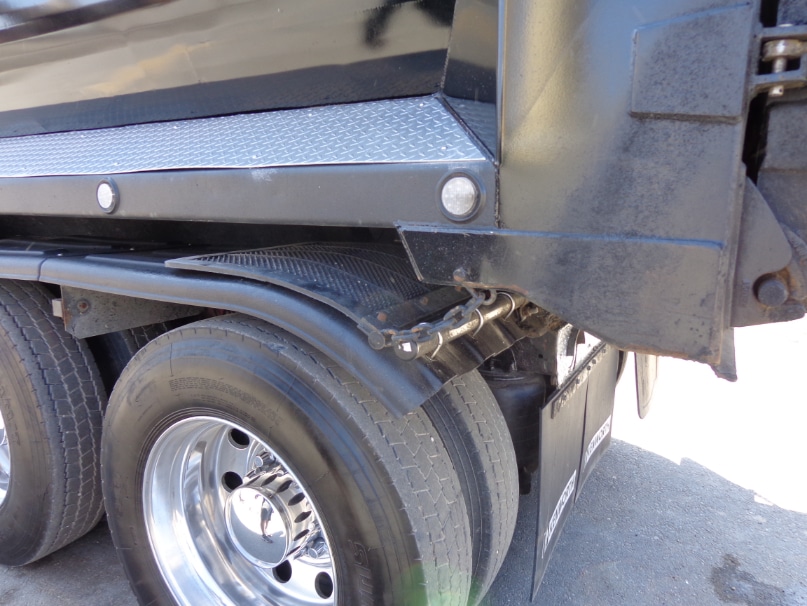
The driver uses a 3-inch putty knife or scraper to maneuver around the tailgate and hinges/dog ears to clean. This is also the time to reposition the mud flaps. They were lifted out of the way of the paver’s push rollers—now lower them back where they need to be for legal travel.

As cumbersome as it may seem, setting up a mechanical flagging system that clears the haul truck for return to traffic at the end of the cleanout area could prevent the type of accidents that happen from raised truck bodies. A system that prevents the truck from leaving the area if it can’t fit under a mechanical flagger’s arm will keep drivers from hitting bridges, overpasses, highway signs and other overhead obstructions. (Check out the Federal Highway Administration’s technical report “Review of Low-Clearance Early Device Warning Options for Illinois” for ideas on how LCDW systems are being used on bridges and other structures to reduce collisions here.)

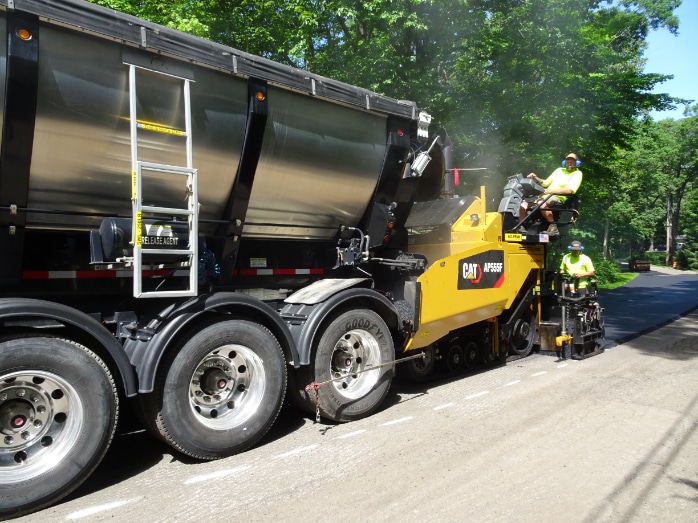
Notice a host of best practices in play here. First, the crew members are using headsets for clear communication. The guidebar on the paver is clean and follows a marked line for the paver operator to guide off of. The haul truck’s mud flap is up out of the way of the push rollers, which the back tires are snuggled against so the live-bottom can feed the hopper without dribbling mix in front of the paver.

Implement Procedures

The other training points mentioned at the beginning of this article can be covered when a company implements procedures and makes it clear those procedures are to be followed.

There absolutely should be a procedure in place for drivers to sign in, do a walk-around of the truck in a safe and well-lit location at the plant site, ensure previous maintenance items have been addressed, and check out the vehicle for the shift. When a shift is complete, there should be a procedure for the driver to do a walk-around of the truck in that same safe and well-lit location as before, perform cleaning of the equipment, ensure an easy and well-documented way to inform mechanics of any maintenance issues or worries, and to check in the vehicle at the end of the shift.

Have you cleaned the reflective tape, taillights, safety placards and other lighting lately? Make sure reflective tape, safety signs and lights on your haul truck aren’t obscured by grease or asphalt build-up. You want headlights hitting the tape to reflect light to the motoring public. You want them to see you. Your lights cannot do their job of protecting you, the crew and the public if they’re filthy and covered with grime. Get these and other training tips in this white paper from AsphaltPro.

Save on Costs with Your Professional Guide to Asphalt Mix Delivery, Part 5—Haul Truck Safety Pays Dividends

To make truck traffic safer at the plant, to make loadout safer under the silos, to make travel safer along designated routes to and from the job site, to make backing to the paver a safer operation and to make charging the hopper safer, drivers should be aware of the proper procedures at each step. And they need to be told why.

The reason for using the three-drop method of loadout at the silo makes perfect sense to the seasoned plant operator and the paving superintendent out on the job site. But the subcontracted driver who’s been hauling asphalt for two hours has no idea why he must stop the truck, receive a drop, back it up, receive another drop, and so on. This may feel like wasted time to him when he could center the bed under the silo gate and receive one lump stockpile of 20 tons, then get on with delivering the load. He doesn’t understand—yet—that taking one lumped load leads to material segregation and contributes to problems when charging the hopper. This isn’t something he’s born knowing—he has to learn it, like each one of us had to learn it. (Watch the November issue for an article on how to load out different types of trucks most efficiently.)

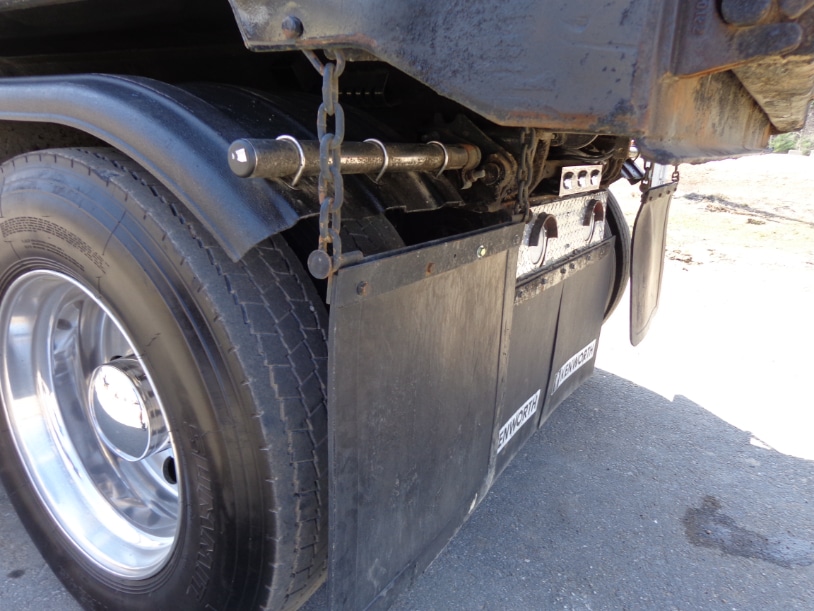
The mud flaps lay on the back tires, out of the way. | When the haul truck backs to the paver, either the dump man or the truck driver will want to position the mud flaps over the back tires. There are systems available for trucks today that allow the driver to press a button and have the mud flaps retract or lift without anyone having to physically touch them. This means there’s nothing between the truck tires and the paver’s push rollers. When the truck is ready to leave the paver, the mud flaps need to be returned to their proper position not only for traffic safety but also to be “street legal.” If the driver has a button he can press in the cab to lower the flaps back in place, that’s great. Otherwise, he can ensure they’re hanging properly when he stops at the designated cleanout area.

The mud flaps are returned to hanging position for safe travel. | When the haul truck backs to the paver, either the dump man or the truck driver will want to position the mud flaps over the back tires. There are systems available for trucks today that allow the driver to press a button and have the mud flaps retract or lift without anyone having to physically touch them. This means there’s nothing between the truck tires and the paver’s push rollers. When the truck is ready to leave the paver, the mud flaps need to be returned to their proper position not only for traffic safety but also to be “street legal.” If the driver has a button he can press in the cab to lower the flaps back in place, that’s great. Otherwise, he can ensure they’re hanging properly when he stops at the designated cleanout area.

When the driver gets to the paving site, depending on the type of project, he’ll have a variety of options for backing to the paver. The first and most important procedure is to locate the dump man when he gets to the job. In the pre-job meeting or tailgate talk, he’ll be told who the dump man is for the job—and that might be the paver operator or the foreman. (See the sidebar titled “You Can’t Skip the Tailgate Talk” for information.)

No matter what kind of project the driver is delivering to, the dump man will be the person who guides him and helps him get lined up to the paver’s push rollers. That person, normally, will be wearing a different colored shirt, vest and/or hat. He should have a safety baton or a safety whistle, as well, to acknowledge the driver and direct him. (See the article “Save on Costs with Your Professional Guide to Asphalt Mix Delivery, Part 3—An Independent Look at Best Haul Truck Practices” here for a detailed discussion of how to get to the job and deliver material to the hopper efficiently.)

Save on Costs with Your Professional Guide to Asphalt Mix Delivery, Part 3—An Independent Look at Best Haul Truck Practices

For drivers who will be receiving millings in an empty bed, locating the ground man is just as important. This person is the driver’s second set of eyes; both driver and ground man must trust one another but this doesn’t leave room to forget good training. On a recent parking lot project, a haul truck driver watching the milling machine via his side mirror neglected to watch where he was going and ran into a parked work truck (See the sidebar titled “Train Drivers to Watch Where They’re Going” for details). This accident proves we need to keep all our senses on alert when in the field.

The haul truck driver can’t be expected to handle everything that’s happening around his truck when he gets to the job site, but we can give him a fighting chance at safe success when we train him on the proper, safe procedures expected of him. We must train the drivers who are controlling these large and lumbering vehicles that come so close to our co-workers, pricy equipment and motoring public if we want to have quality jobs with safe records.


John Ball is the proprietor of Top Quality Paving & Training, Manchester, New Hampshire. For more information, contact him at (603) 493-1458.