
Jackson Uses RePlay to Rejuvenate High‑Altitude Asphalt
BY Jeff Davis
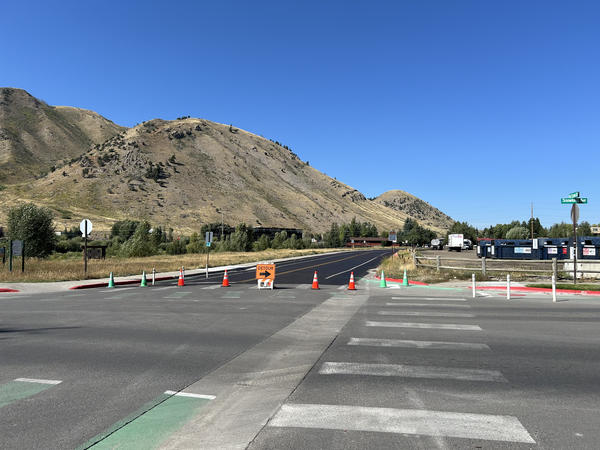
High-altitude preservation with soy-based RePlay restores binder to 1.25 inches
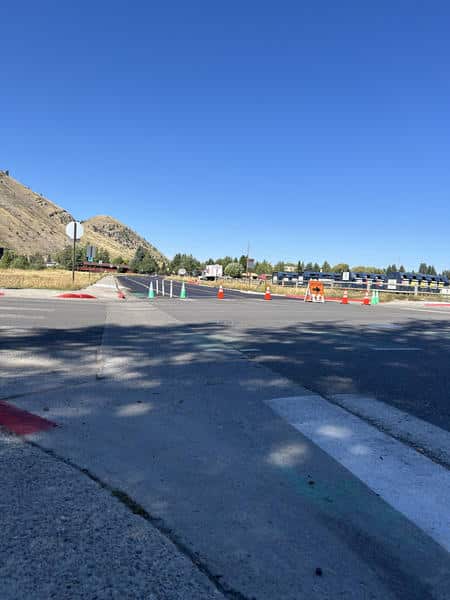
At 6,200 feet at the gateway to the Yellowstone and Grand Teton National Parks, the pavements in the Town of Jackson face the pendulum of 90-degree summers and intense UV, to subzero winters and freeze-thaw conditions.
“Traditional fog seals give us a couple of years of color, but not real structural help,” explained Senior Engineer Scott Mohror, P.E. “We needed a treatment that actually puts binder back into the asphalt pavement, not just on top.”
The town turned to BioSpan Technologies’ RePlay® Agricultural-Oil Seal & Preservation Agent.
“RePlay soaks in deeper to replenish lost oils, bond with aging binder, and lift binder content,” explained Lindsey Hermes, president and COO of BioSpan Technologies. “That rebuilt flexibility keeps roads in service years longer.”
RePlay checked three boxes for the town:
- Deep penetration. Lab work later confirmed movement to 1¼ inches.
- Faster cure time, which is essential during summer tourist season.
- Carbon-negative profile that advances Jackson’s Net-Zero 2030 plan.
And they discovered an added bonus. According to Mohror, “It smells like aromatherapy—citronella and orange instead of hot [asphalt].” This novelty even drew a curious black bear to one freshly treated block.
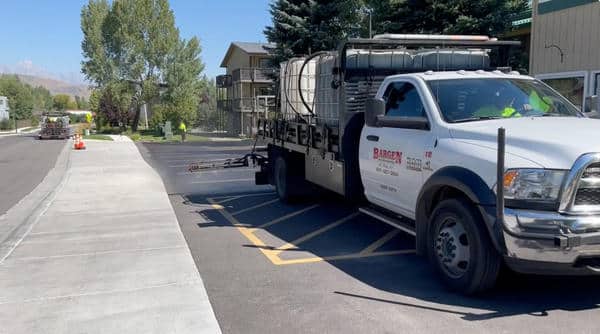
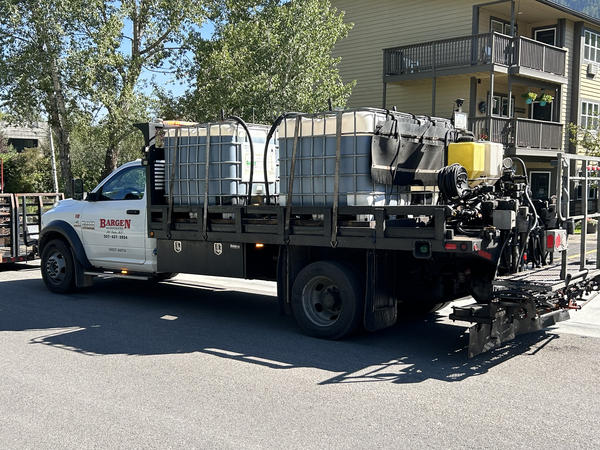
Bargen Inc. sprayed the RePlay Agricultural-Oil Seal at a rate of 0.020 gallons per square yard. The product is transparent, offering a stainless application that allows pavement markings to remain visible.
How Crews Applied RePlay
During an August 2024 window of clear weather, applicator Bargen Inc., Mountain Lake, Minnesota, treated five residential streets—Lodgepole Lane, Rancher Street, Flat Creek Drive, Bar-Y Road and Simpson Avenue.
The equipment Bargen used alternated between a flatbed carrying a 16-foot adjustable spray boom and a Toro compact utility vehicle (CUV) with an 11-foot boom. Both BioSpan spray systems are computer-controlled; the pump output is automatically calibrated to truck speed, with GPS used as a backup to prevent over- or under-application.
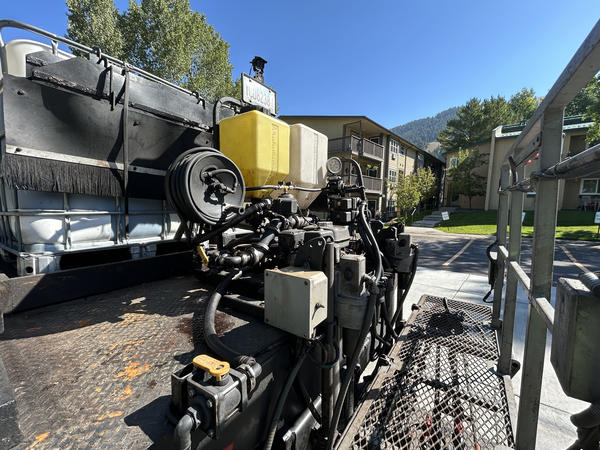
For the application rate, Bargen averaged 0.020 gallons per square yard (≈ 96.8 gallons per acre), which is Bargen’s standard “2-0” rate for pavements that already contain relatively high virgin-oil content. The crew used a hand sprayer to test strips at curb, crown and turn radii, which sometimes told them to adjust the rate or allow extra cure time on dense, high-traffic edges.
To prepare the surface, crews took care to sweep the pavement so that nothing stood in the way of RePlay achieving maximum penetration. Because it is a clear product, there were no staining worries. RePlay cures transparent, so Bargen didn’t have to worry about cleaning up a mess afterwards where the spray met the concrete curb; overspray isn’t visually objectionable once it dries.
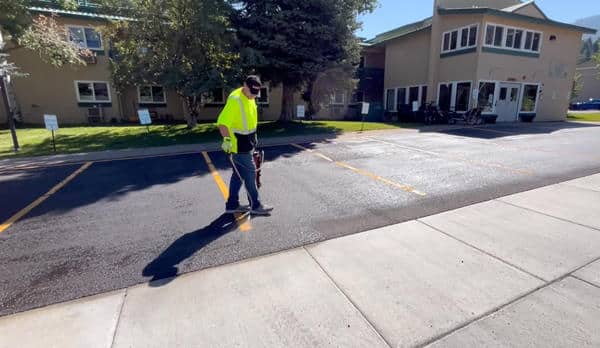
Bargen’s crew normally sprays at about 38 psi but lessens the intensity along sensitive edges to prevent misting and overspray.
Core-Sample Results Confirm Rejuvenation
- Lodgepole Lane (PCI 77, 25+ years old): RePlay increased binder content by 5.47% ¼ inch from the surface and 5.69% at 1 ¼ inches depth, showing a positive effect on aging asphalt.
- Flat Creek Drive (PCI 58, 15+ years old): Binder content increased 4.75% at ¼ inch and 5.31% at 1 ¼ inches.
- Rancher Street (2-3 years old): Binder content grew 6.13% at ¼ inch and 6.19% at 1 inch, demonstrating the efficiency of RePlay on newer streets as well.
The overall project average was a +5.9% binder increase across the five streets. Viscosity testing showed lower stiffness, indicating renewed flexibility before winter freeze.
We learned from this to validate with cores. Deep-core binder testing created hard data that won Public Works approval for expansion.
We also learned that surface preparation is an important best practice. A backpack-blower and spot sweeping helped ensure maximum penetration.
It’s also best practice to dial back nozzle pressure near curbs, houses and parked vehicles. Bargen’s crew normally sprays at about 38 psi but lessens the intensity along sensitive edges to prevent misting and overspray.
“RePlay didn’t just seal the surface—it restored binder through the top inch of pavement. That’s the metric that moves a preservation program from ‘nice idea’ to a budget line,” Mohror said.
Looking Ahead
Earlier in 2025, armed with core data and positive neighborhood feedback, the Town of Jackson brought Bargen back to apply RePlay to another 30,600 square yards of pavement.
With measurable binder gains, faster reopening and a net-negative carbon footprint, Jackson’s pilot positions soy-based RePlay as an essential tool for high-altitude municipalities striving for both fiscal prudence and environmental stewardship.
Jeff Davis is the communications manager for BioSpan Technologies, specializing in bio-based pavement solutions, infrastructure and sustainability.