
Building the USA’s Tallest Asphalt Core Dam
BY Sandy Lender
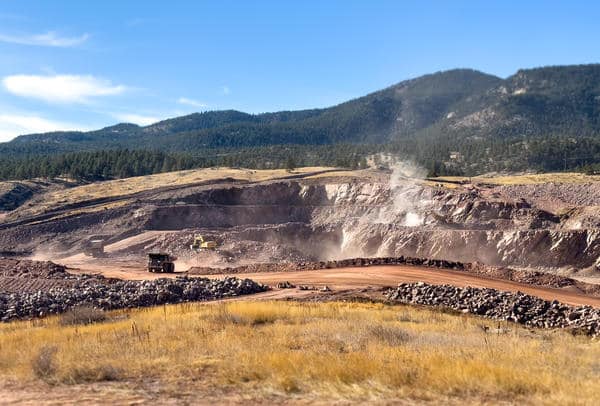
Barnard Construction and partners use an on-site quarry, crushers and plant to build a 350-foot-tall asphalt core dam for Northern Water in Colorado as part of the Chimney Hollow Reservoir Project
At peak production between 2021 and 2025, an on-site rock quarry supplied an average of 62,000 tons of material per day for the construction of the Chimney Hollow Reservoir main dam, making it one of the largest mining operations in Colorado. On Friday, July 18, 2025, crews had completed paving the core of the rockfill gravity dam, thus completing the largest asphalt dam in the United States.
In a video produced for the Chimney Hollow Reservoir website, Joe Donnelly, who is the principal project engineer for Northern Water, Berthoud, Colorado, shared the purpose of this monumental undertaking.
“We have eight of the ten fastest growing cities in northern Colorado in our service area, and Chimney Hollow is part of our regional solution to our water supply gap,” Donnelly explained on camera. “We have the Windy Gap Reservoir and Windy Gap water rights on the West Slope. Those are existing water rights that have been in place since 1967. To make the most out of our Windy Gap water rights and to ultimately see the yield that we need from those water rights, we needed dedicated storage. The Chimney Hollow Reservoir project provides that dedicated storage for those Windy Gap water rights so that we can reliably provide 30,000 acre-feet per year to people in northern Colorado.”
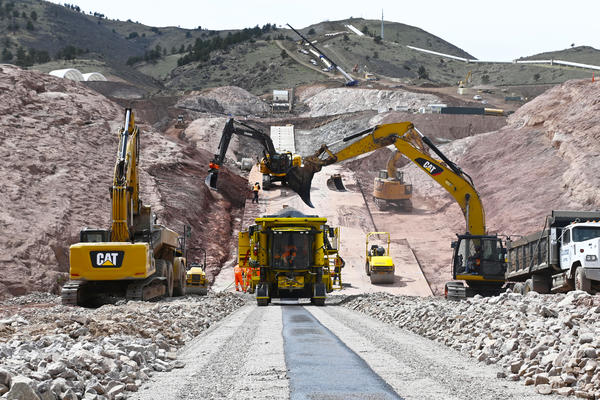
Each day that a 9-inch lift of asphalt was placed in zone 1 and stone placed in zones 2, the teams also brought up the rock embankment at the same time. In total, there were 512 lifts of asphalt to complete the main dam.
To that end, Northern Water facilitated the construction of a reservoir with 90,000-acre-feet capacity covering 740 acres and its attendant infrastructure. While the main feature of the Chimney Hollow Reservoir project is the 350-foot-tall asphalt core dam, Barnard Construction Company Inc., Bozeman, Montana, which served as the general contractor, and the other teams tracked many moving parts over the four years of active construction.
The Teams
General contractor = Barnard Construction Company
Engineering team = Stantec
Construction management team = Black & Veatch
Owner = Northern Water
R.J. Roos, Barnard operations manager and vice president, told The Asphalt Pro of those moving parts. “The dam gets a lot of recognition, as it should, but the complexity of this project and other work associated with it should not be understated,” Roos shared. “We constructed a tunnel to transfer water in and out of the reservoir, over 2 miles of large-diameter steel pipeline to transfer water, a valve house structure that consisted of over 50 valves to control the water movement in/out of the reservoir along with other BOR facilities, and a clay core Saddle Dam at the Southern point of the property.”
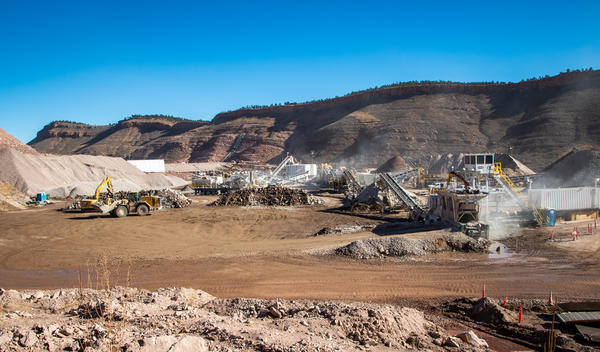
Material was blasted from the on-site quarry and processed on-site via cone, jaw and VSI crushers. The last quarry blast took place in April 2025. By July 2025, final testing wrapped up and the crusher was demobilized.
Every detail required on-site expertise and equipment, starting with the quarry operation.
Stones for Zones
Barnard set up and operated the rock quarry operation while their subcontractor Fred Weber set up a material processing plant, both south of the main dam, yet still within the reservoir footprint. The material processing plant included a jaw crusher, cone crusher, vertical shaft impactor (VSI) and wash plant. The sized material was used in the mix design for the asphalt core, in hydraulic filters and aggregates for the structural concrete, and in different zones of the main dam.
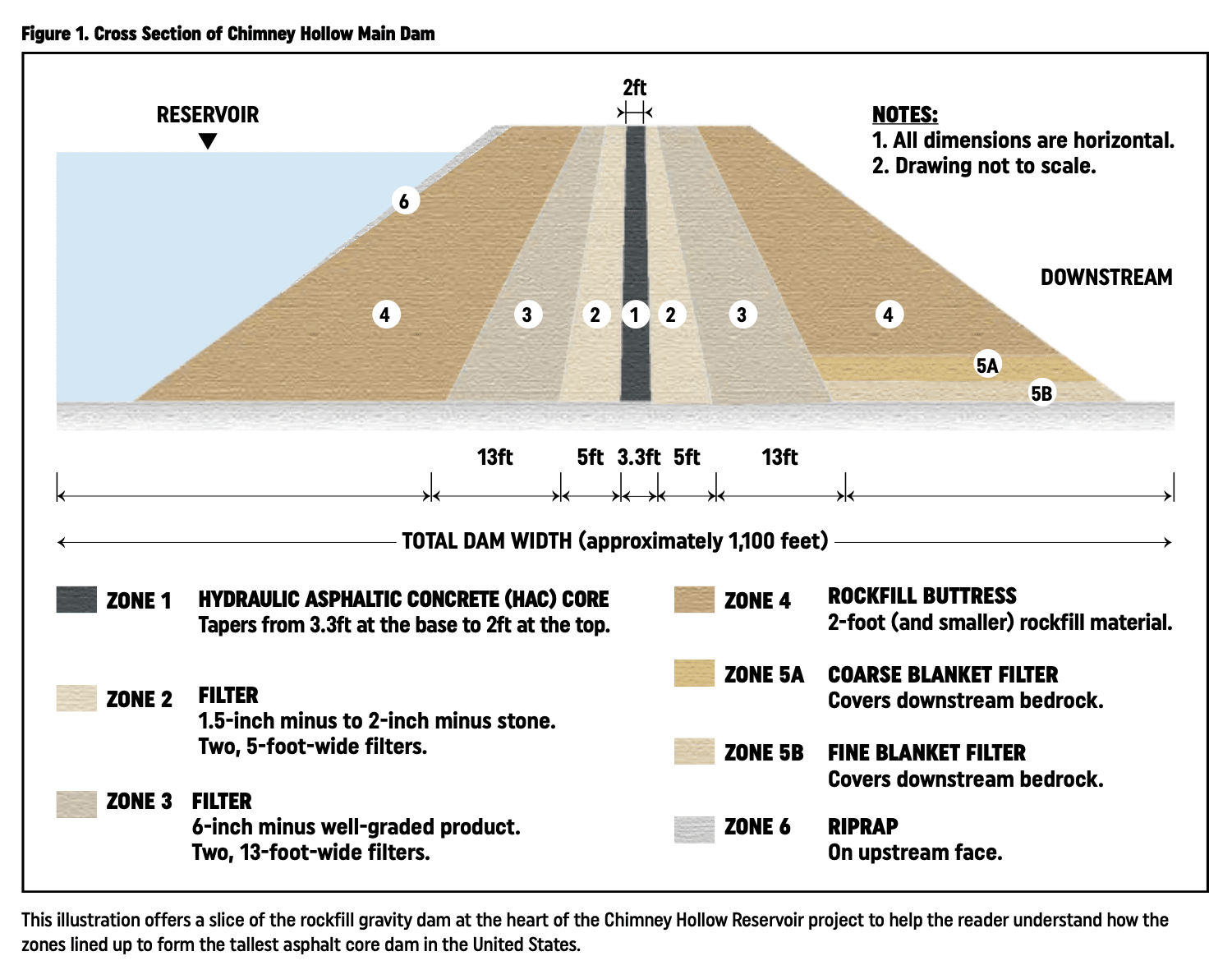
We can identify the zones by placement. Zone 1 was the vertical asphalt core in the center of the dam, which we’ll discuss in detail later. Five-foot-wide zone 2 filters were built against either side of zone 1, using a 1.5-inch minus to 2-inch minus stone all the way from the bottom of the dam to the crest. Thirteen-foot-wide zone 3 filters were built on either side of zone 2, using a 6-inch minus well-graded product. The two zone 4 sections were the buttress of rockfill material and the largest amount of material placed on the main dam. The downstream bedrock was covered with blanket filters that featured a coarse and fine filter of zones 5a and 5b. Zone 6 consisted of riprap placed on the upstream face from elevation 5790′ up to the top of the embankment. (See Figure 1.)
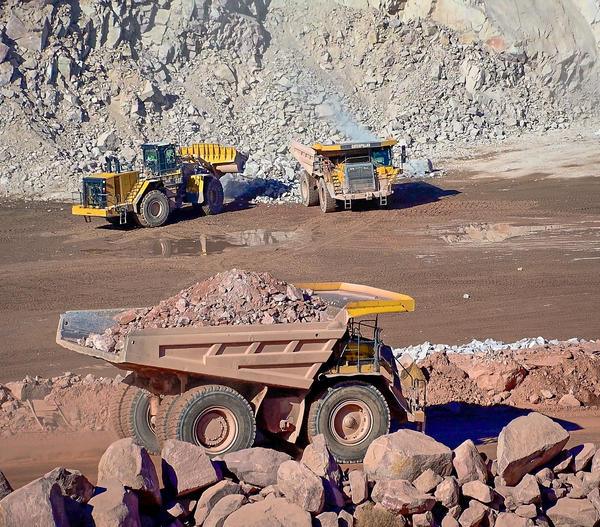
The quarry equipment was also used to produce 2-foot and smaller material that was distributed in two ways: some went to the crushers to become aggregate, and some was hauled to the zone 4 rockfill portions of the main and saddle dams to surround and support the cores.
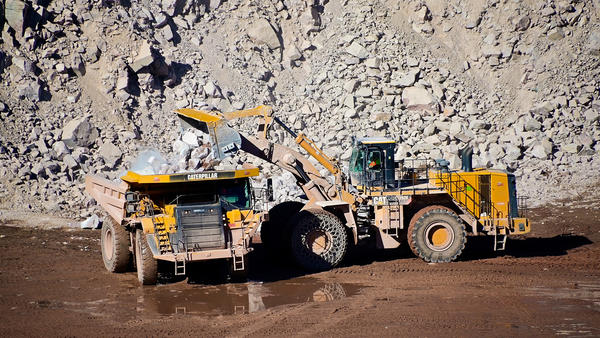
For the construction of the main dam, crews dumped a 100-ton load every two minutes, 20 hours a day, six days a week, for two-and-a-half years.
Considering the workers were moving so much material per day, the wisdom of having an on-site quarry is clear. It not only minimized construction traffic and disturbances to the local community, but also minimized hauling emissions and fuel use that would otherwise have stacked up over the course of the project if material had to be brought from any distance. And now that the project is complete, the quarry site serves as a portion of the reservoir.
Of course, completing the project took more than blasting and moving rock. Multiple thousands of tons went into asphalt.
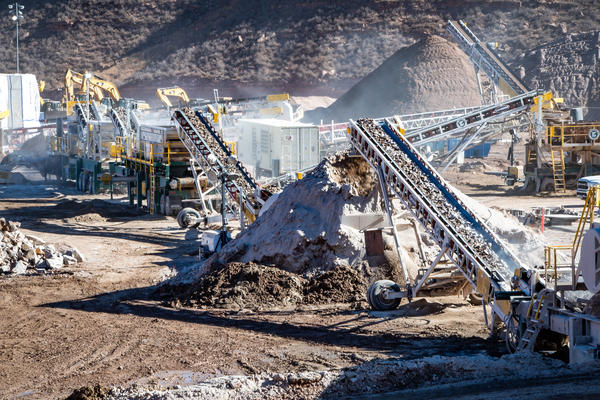
Material was blasted from the on-site quarry and processed on-site via cone, jaw and VSI crushers. The last quarry blast took place in April 2025. By July 2025, final testing wrapped up and the crusher was demobilized.
Vertical Asphalt Design and Creativity
This was no ordinary asphalt mix design. Instead of the typical paving mix readers are familiar with, the project required a hydraulic asphaltic concrete (HAC) that could adhere to the concrete plinth at the base of the dam, flex to accommodate settling and deformation, and create an impermeable barrier. To that end, Barnard’s Roos said the aggregate gradation included a dense, ¾-inch nominal maximum aggregate size (NMAS) and a high proportion of fines passing 0.075 mm.
The asphalt binder made up 6.7% to ensure full coating of the aggregate and near-zero air voids. The binder type, a PG58-28, was selected for temperature stability, resistance to aging and ductility at low temperatures.
To produce and place the mix, Barnard subcontracted this work to Walo Bertschinger (WALO), Dietikon, Switzerland. With 21 locations in three countries, the contractor offers a variety of engineering specialties, including hydraulic asphalt engineering, and has constructed asphalt-core dams worldwide. The WALO team set up its asphalt batch plant on-site and used the aggregate produced from the quarry and crushing facilities to make the HAC for the main dam’s core.
The WALO team produced and placed 68,809.62 cubic yards of asphalt, which equaled about 200 miles (placed in 9-inch lifts), for the dam.
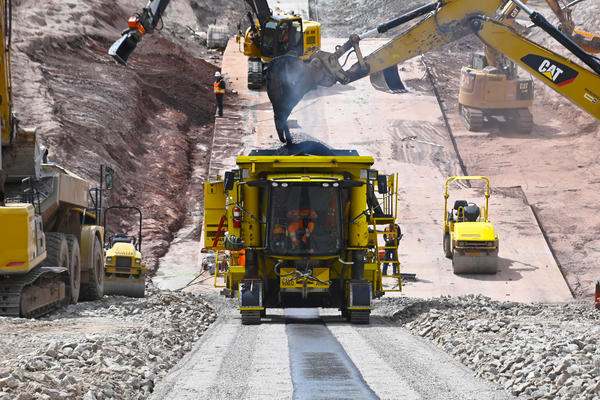
Placing an asphalt core took creativity, and WALO had the answer. The crew brought a modified paving machine from Switzerland for the job. Northern Water Project Engineer Becky Brush described how it functioned.
“It’s a specialty machine that was custom-built to place zone 1 and zone 2 at the same time with two separate hoppers that are loaded from either side,” Brush explained. “It had blowers and an infrared heater on the front to clean off and heat up the previous lift of asphalt before paving on top.”
The first lift, 3.3-feet wide (1 meter), was placed by hand. Then, an operator drove the WALO paver back and forth along the site to build up the core that would become the dam. A spokesperson for Barnard explained, “WALO was able to change the width of the paver utilizing steel forms within the paver itself. In the past, WALO has utilized ‘machine control,’ coupled with their GPS guidance system, to automate the change in width. However, this process slows the machine…WALO and Barnard worked together to identify elevations in which each form needed to be changed out to ensure the proper width was placed. Ultimately, the asphalt core is shaped like a stacked cake.”
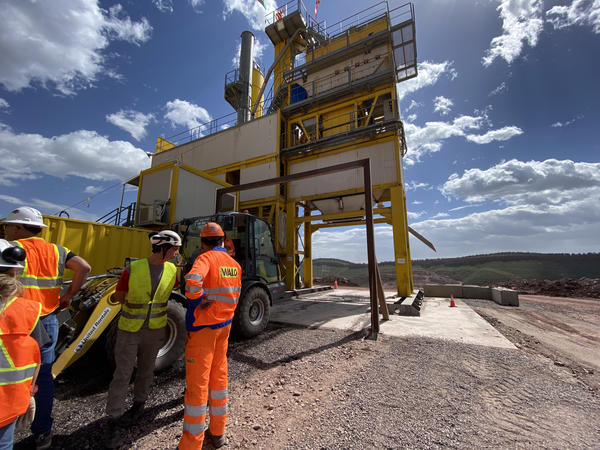
WALO set up its batch plant on-site.
Roos clarified that as the machine worked, a Cat 336 excavator delivered HAC mix from the beds of tandem haul trucks to one hopper while another Cat 336 excavator delivered the 2-inch minus stone from the back of Cat 740B haulers. The HAC paver placed the zone 1 and the two 5-foot-wide zone 2 sections concurrently in 9-inch lifts. Cat 740Bs and Cat 777s also delivered zones 3 and 4 material, respectively, to build up the dam as the paver traveled. Small rollers compacted behind the modified paver.
At the outset, moving equipment along the rising crest required building a simple crossover bridge over the zone 1 core to prevent dust and rock contamination from hauler tires transferring to the asphalt layer, but as the dam rose toward its 350-foot height, the crest became narrower and more difficult for equipment to traverse. The base or maximum section, according to Brush, is about 1,100 feet wide whereas the crest is only 30 feet wide.
Near the end of paving, haulers were reversing much of the time and finally the team switched from Cat haulers to Morooka tracked dumpers, which can “spin” in place. The Morooka operator could drive to the top, spin the chassis around, dump their zone 3 material where needed, spin around again, and drive back down.
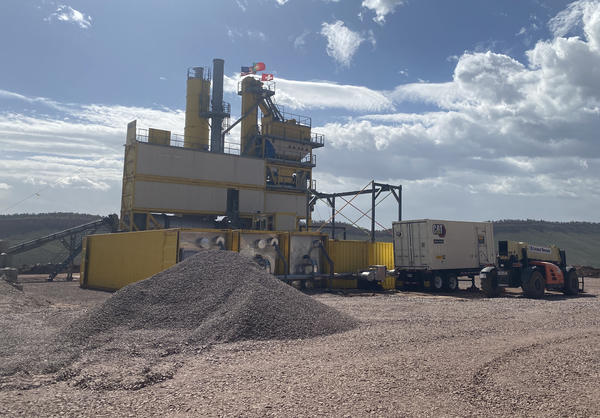
WALO set up its batch plant on-site.
WALO placed the first lift of asphalt on Oct. 15, 2022. It was 1,000 days (or 3.3 million work hours) later, when they completed lift number 512. Roos stated all that paving came to 135,000 tons of the special asphalt mix. Next, the team topped the dam with a protective roadway built out of road base and lined with boulders.
While completing the main dam wasn’t the end of the whole project, it signified a huge milestone amid the many moving parts requiring so much advance planning and setup.
Additional Temporary Infrastructure
An on-site materials testing lab provided real-time testing results for work. It was outfitted with all of the testing equipment necessary to test geotechnical, concrete and asphalt materials used during construction.
Barnard set up its own on-site concrete batch plant to eliminate the need for concrete deliveries by truck. Grant Jamison, the project close-out manager for Barnard, shared for a Chimney Hollow Reservoir video: “To make up all the structures and foundations on the job site, our batch plant has produced over 80,000 cubic yards of concrete.”
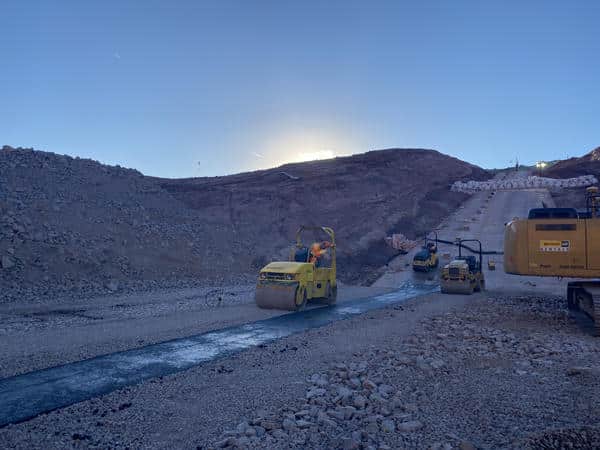
Small rollers compacted behind the modified paver.
Another temporary structure during the project was the cofferdam, which was built in about five months, to prevent water from entering the reservoir before the main dam was complete. The Northern Water site states: “A temporary clay-core, earth embankment, 50-foot-tall, 1,000-foot-long cofferdam was constructed upstream of the main dam to block runoff and stormwater from entering the dam site during construction. It was sized to hold a 25-year, 24-hour storm event. In any other project, a dam this size would be a main component. To put it in perspective, the saddle dam at the south end of the reservoir is 10 feet shorter than the cofferdam.” Before the initial fill of approximately 488 million gallons in April 2026, the cofferdam was removed.
A Proud Safety Record
The initial fill is being used to analyze and address a situation Northern Water discovered during construction. In July 2025, Northern Water teams found naturally occurring uranium in the granite rock that was quarried for the project, and all the appropriate scientists and engineers have been studying and monitoring the levels and implications since.
“After the discovery of naturally occurring uranium at Chimney Hollow Reservoir, many avenues of data collection have been initiated to learn more about this situation and inform management decisions,” Brush said. “Northern Water moved approximately 1,500 acre-feet of water into Chimney Hollow Reservoir in April [2026]. Water quality data is being collected and used to evaluate the performance of model simulations that have been used to predict uranium concentrations in the reservoir. We will not place more water into the reservoir until more data has been collected with the water in the reservoir now.”
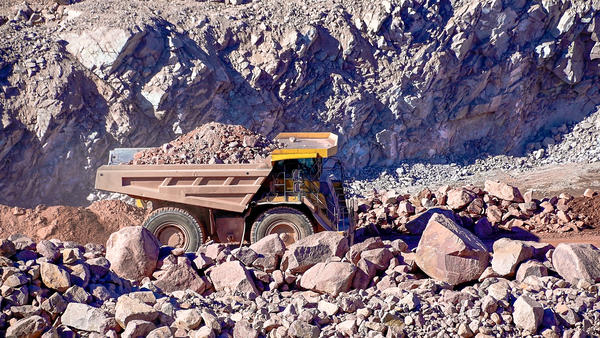
About 22 million tons of embankment rock buttress the asphalt core.
Northern Water and the Chimney Hollow Reservoir participants are working to finalize a uranium management plan. No water will be delivered from Chimney Hollow Reservoir until assessments are complete, and a management plan is developed to ensure a safe water supply for downstream water delivery. There is a list of frequently asked questions on the Chimney Hollow website. But another facet of safety to be celebrated is what took place over the course of the project.
The Chimney Hollow Reservoir website spelled out perfectly how the general contractor performed: “Barnard demonstrated an unwavering commitment to safety throughout four years of construction on Chimney Hollow. With over 3.4 million work hours logged, the project achieved an average Total Recordable Incident Rate (TRIR) of 1.4, significantly lower than the industry average of 2.6. Impressively, Barnard maintained a TRIR of less than 1.0 for the last two years, with no fatalities and only one lost-time injury during the entire project. These results reflect a culture where safety is not just a priority—it’s a core value.”
It’s easy to see the safety and quality culture at Barnard in the way Roos spoke of not only the project, but also of the people involved.
“The success of this project is a direct reflection of the men and women who worked in the field to construct it,” Roos shared. “As one of the first high hazard hydraulic asphalt core dams in the United States, the safety and quality of the construction activities were at the forefront of all the work completed. During the peak of construction season, we had the largest operating quarry in the state of Colorado. Once the foundation excavation and preparation were completed, the dam was constructed in 26 months, which is a major undertaking for such a project of this size.”
The team at Northern Water also spoke with pride about this monumental infrastructure development project.
“Being part of this world-class project is both an honor and a responsibility,” Brush shared. “It is incredibly rewarding to see our work positively affect the community I grew up in and still call my home today, while also laying the groundwork for the future. Knowing that our work will have a lasting impact is something I take great pride in.”
Milestones
Over the four years of construction, the project hit several milestones worth celebrating:
- 5 million cubic yards of material from the quarry (that’s four times the volume for the Hoover Dam)
- Over two miles of steel pipe installed and welded
- 80,000 cubic yards of concrete produced at batch plant
- 512 lifts of asphalt laid to create the main dam’s impermeable barrier
- At peak production, over 500 employees on site per day
- An average Total Recordable Incident Rate (TRIR) of 1.4 over the 3.4 million work hours logged, which is significantly lower than the industry average of 2.6