
How to Load Different Asphalt Haul Truck Bodies
BY John Ball
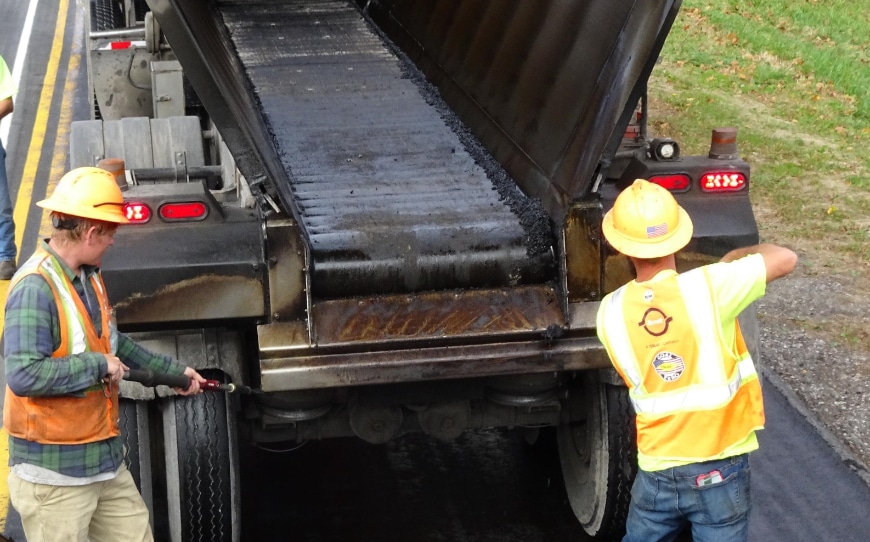
Editor’s Note: For 2024, AsphaltPro Magazine allows experts in the industry to share how to expand your operations to the next phase of business. Are you ready to start making your own hot-mix asphalt? Let’s turn to some professionals who have equipment, services, software and tenure to help you expand efficiently to mix design, production, hauling and more. This month’s installment from Top Quality Paving & Training, Manchester, New Hampshire, delves into the mechanics of safe loadout for the new plant operator and new haul truck driver, no matter the type of truck.
Not all haul trucks are built the same. They shouldn’t all be loaded the same to deliver our perishable hot-mix asphalt (HMA) to the job site. Something I noticed while helping a crew in 2023 made me reconsider offering the same old advice of the three-drop method for loading all trucks at the silo.
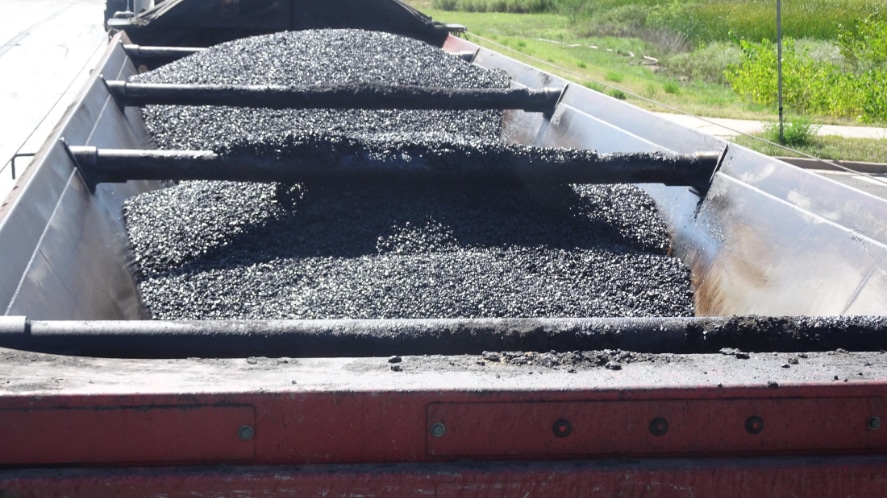
In the first picture, we can clearly see the support frame of the live body trailer with material loaded properly beneath and between the supports. In the next picture, we can see where the material was loaded too high and dropped over the supports. Mix has piled on top of the frame where it has cooled. The next load of mix will knock these cooled chunks into the bed where they will contribute to segregation.
We had a live-bottom trailer on its second round-robin to the job site and as the material slid into the hopper, chunks of cooled hot-mix asphalt (HMA) plopped in, too. When I investigated, I discovered the railings across the top of the truck’s bed were acting as a shelf for mix that had dropped from the silo.
Mix sitting on the support structures cooled as the perishable material was delivered to the job. The material cooled more as the truck returned to the plant. Then new mix knocked the cold chunks into the bed. Let’s talk about how to avoid this problem and how to best use different truck bodies for asphalt delivery.
Conventional Trucks
Think about your tandem haul trucks. They’re typically square-bodied. They haul about 20 to 24 tons on average. It’s smart to put a plastic liner in them to create curves in the corners so mix isn’t lodging and building up in the corners. Make sure to stop and spray a release agent in the bed before approaching the scale.
When you get to the scale, follow the marks or lights that the plant has in place to help you line up under the gate correctly. Many plant loadout controls these days won’t let the silo gate open until the operator sees that you’re in the correct position and presses a button “unlocking” the system. This is for your safety. (See the sidebar about AI Loadout Technology for more information.)
The plant operator will want to use the three-drop method to load in three “hills” in the truck to minimize material segregation. You start with the first drop at the very front of the bed; pull forward so the second drop lands in the back of the bed; then back up so the third drop lands in the center. Pull forward, raise the tarp, and proceed directly to the job site. When charging the paver’s hopper, you can raise the bed in a manner that helps the material move as a mass, but the mix tends to roll. (See the article “Save on Costs with Your Professional Guide to Asphalt Mix Delivery, Part 3—An Independent Look at Best Haul Truck Practices” on TheAsphaltPro site for best practices when approaching the job site and backing to the paver.)
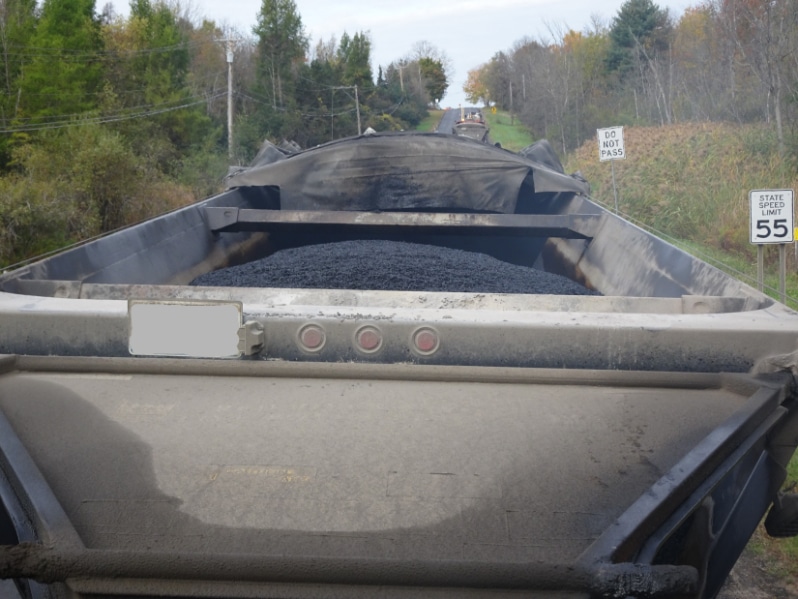
In the first picture, we can clearly see the support frame of the live body trailer with material loaded properly beneath and between the supports. In the next picture, we can see where the material was loaded too high and dropped over the supports. Mix has piled on top of the frame where it has cooled. The next load of mix will knock these cooled chunks into the bed where they will contribute to segregation.
U-Shaped Truck Bodies
U-shaped bodies have no corners or crevices for material to build up in. They haul about 20 to 24 tons on average. You’ll want to use the same three-drop method for these trucks. When you charge the hopper at the job site, the mix won’t roll as much as it slides. Be aware, it’ll slide out quickly.
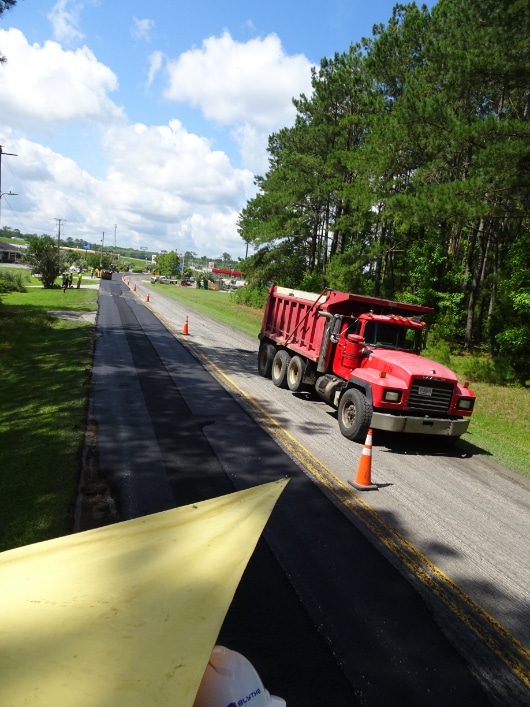
Loading mix correctly at the plant is only one step in preventing material segregation. Maximize loadout efficiency by considering truck body style. All photos courtesy of John Ball, Top Quality Paving & Training
Live-body Trucks
The live-body trucks are typically v-shaped with a chain, like a lattice, or a conveyor belt at the bottom of the V. This conveyor moves the whole load in a mass to help eliminate material segregation; the mix doesn’t roll at all, but moves as a mass. These trucks haul anywhere from 20 to 28 tons, although I’ve seen ones in Canada capable of hauling 35 tons.
For this type of truck body, you want to load in four 5-ton dumps instead of three larger dumps. It’s smart to line the truck up under the silo so you center the gate between the support bars of the truck body. You want to keep each of the “hills” lower than the rafters so the material can’t collect up there and begin to cool.
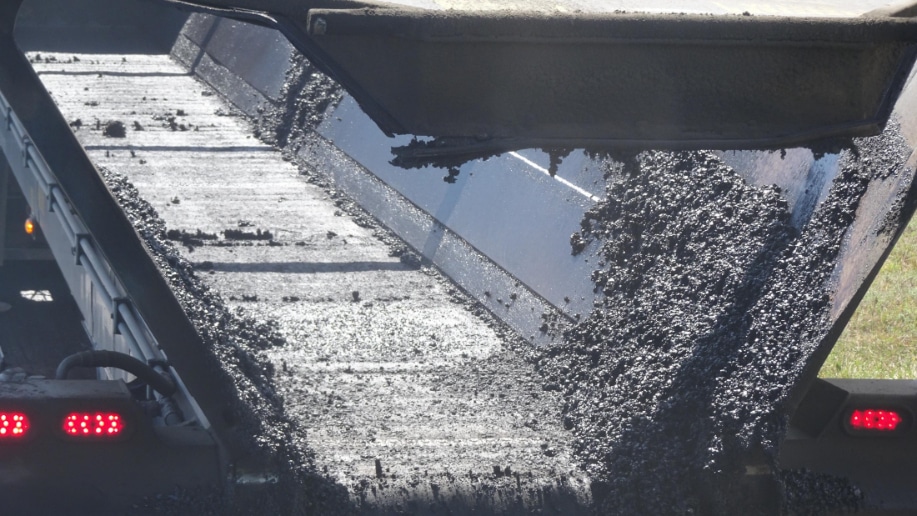
When drivers fail to clean the truck beds, material can build up on the sloped walls of the live-body trailers as easily as it can build up in the corners of tandem bodies. Spraying beds with a release agent at the plant prior to loadout will only go so far to help with charging the hopper smoothly and with cleanout. Make sure you get to a designated cleanout area and take care of issues like this before they can cool and become a material segregation problem in the next load of material.
Conclusion
Getting the mix loaded correctly at the plant is only one step in preventing material segregation. You can maximize the efficiency of that loadout if you take your truck body style into consideration.
John Ball is the proprietor of Top Quality Paving & Training, Manchester, New Hampshire. For more information, contact him at (603) 493-1458 or tqpaving@yahoo.com.