Save Money by Tracking Assets

Companies offer new tags and technology to help asphalt professionals track tools, equipment, costs

New research reveals a multi-million-dollar impact from asset loss, and it’s not just from the physical item itself. David Gal, vice president of connected equipment at Samsara Inc., San Francisco, listed lost productivity and project delays among the costs that add to the expense of lost or stolen tools and equipment. In asphalt paving, even small assets play a big role in completing a project, but tracking every little thing hasn’t always been an easy task. Apply that same logic to vertical construction, and the whole industry has sought to address the challenge.

Samsara’s “State of Connected Operations: Asset Theft & Loss” report1 shows that in the past year, 77% of organizations say a missing critical asset has resulted in a significant operational shutdown or delay. Asset shrinkage costs the average organization without an asset tracking solution more than $13 million annually, with smaller assets driving more than 70% of that cost.

Here are three companies, discussed in alphabetical order, who have asset tracking devices, ideas and technology to offer contractors.

Footnote1 “State of Connected Operations: Asset Theft & Loss” report methodology: This survey was conducted by the independent research firm, Wakefield Research, between Feb. 5 and 17, 2026. This was a general market survey of 1,500 executives across seven countries. Respondents are not necessarily Samsara customers and were surveyed online. Global results have been aggregated across all responses to provide an average. Full report information here.

J. J. Keller Encompasses Full Visibility

The expanded Encompass® Fleet Safety & Compliance Platform from J. J. Keller & Associates now includes the newly launched Asset Tracking Solution, giving fleets a streamlined way to monitor assets that are critical to daily operations but often difficult to locate.

The expanded Encompass® Fleet Safety & Compliance Platform from J. J. Keller & Associates, Inc., Neenah, Wisconsin, now includes global positioning. In April, the company launched its new Asset Tracking Solution, giving fleets a streamlined way to monitor assets that are critical to daily operations but often difficult to locate, such as:

  • Trailers
  • Dumpsters
  • Construction equipment
  • Other mobile assets

“For many fleets, knowing where vehicles are is only part of the picture because it’s the equipment and assets around them that can be hardest to manage,” said Jason Hartwig, associate director of product management at J. J. Keller. “Our new Asset Tracking Solution helps customers maintain visibility into those assets. This allows them to reduce time spent searching, improve utilization and keep operations moving.”

Fully integrated with the Encompass® Fleet Safety & Compliance Platform, the Asset Tracking Solution enables users to view asset locations on a map, review historical movement and manage multiple devices within a single system. Configurable ping frequency and motion‑based reporting allow fleets to tailor tracking behavior based on how their assets are used.

According to Hartwig, the Asset Tracking Solution further strengthens Encompass as a central hub for fleet visibility and becomes even more valuable when paired with the company’s recently released Vehicle Tracking Solution featuring J. J. Keller’s VT100 Vehicle Telematics Device. Together, they allow customers to track both assets and vehicles within a single platform, delivering a more complete operational view and supporting improved efficiency across the fleet.

The Encompass® Vehicle Tracking helps the customer:

  • Ensure employee productivity through mapping, engine status, and GPS speed;
  • Plan trips effectively using current traffic and weather;
  • Automate IFTA fuel tax reporting;
  • Communicate with shippers using geofencing features;
  • Recover stolen or abandoned vehicles; and
  • Optimize vehicle use.

The J. J. Keller Tags

  • AT100: The AT100 Asset Tracking Device is a weather-resistant, IP69K-rated tracker, engineered for long-term use across a wide range of environments. It has a battery life of up to eight years. Dimensions are 4-11/16 x 2-7/16 x 1-1/8 inches (1-¼-inch with magnets attached). Weight is 6 ounces. The AT100 delivers motion-based GPS updates.
  • VT100: The VT100 Vehicle Telematics Device plugs directly into your vehicle’s diagnostic port. The unit installs quickly, updates over the air and doesn’t require an externally-mounted antennae. Its dimensions are 2.63 x 1.49 x 1.06 inches. Weight is 0.125 pounds.

“By pairing asset and vehicle visibility with the robust compliance features within Encompass, we’re helping customers manage their operations and compliance in one place,” Hartwig added. “This visibility supports smarter decisions and more efficient day‑to‑day operations.”

For more information, visit KellerEncompass.com

Motive Maximizes Bluetooth Alerts
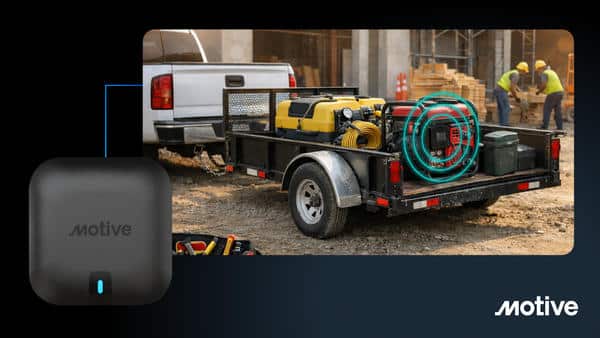
Motive Beacon is a compact tracking device that can help operations teams quickly locate containers and small equipment often overlooked by traditional GPS tracking devices.

Motive, San Francisco, is an AI platform offering the Motive Beacon, which is a compact device powered by the Motive Mesh Network. This network uses Motive Vehicle Gateways and devices running the Motive Fleet App and Driver App to detect the devices via Bluetooth and help securely report their last seen location. Motive Beacon is designed to support industries including construction, landscaping, roadway maintenance and more.

Robert Higdon, director of product at Motive, said, “With Motive Beacon, we’re helping give customers the visibility they need to locate equipment and assets within the Motive platform, the same platform they’re already using to manage the most critical pieces of their operations including vehicles, drivers, fleet-related spend, and heavy equipment.”

Higdon introduced the Motive Beacon to AsphaltPro during CONEXPO-CON/AGG, sharing the device provides visibility for smaller or lower-value assets that typically aren’t tracked by GPS devices. He listed some key features and benefits as:

  • Asset tracking: The beacon is detected by Motive Vehicle Gateways and apps, reporting its last known location to a dashboard.
  • Comprehensive visibility: It allows companies to track essential assets like signage, air compressors or portable generators, as well as larger equipment and vehicles, within a single interface.
  • Operational efficiency: By knowing the location of all assets, companies can prevent underutilization, misallocation, misrouting, and equipment being left behind.
  • AI Vision integration: Motive leverages an AI-powered platform to empower people in the physical economy, helping to make their work safer, more profitable and more productive. Additionally, Motive enhances many layers of its operations with AI Vision.

The Motive Tag

  • Motive Beacon: Beacon’s waterproof design and flexible mounting make it simple to attach to the equipment teams rely on most. It offers organizations a cost-effective way to track assets that were previously too small or too costly to track. It has a four-year replaceable battery and offers seamless integration into the Motive Fleet Dashboard.

For more information, watch the AsphaltPro interview with Higdon at YouTube and visit: https://gomotive.com/products/beacon/.

Samsara Doubles Network, Releases Compact Tag
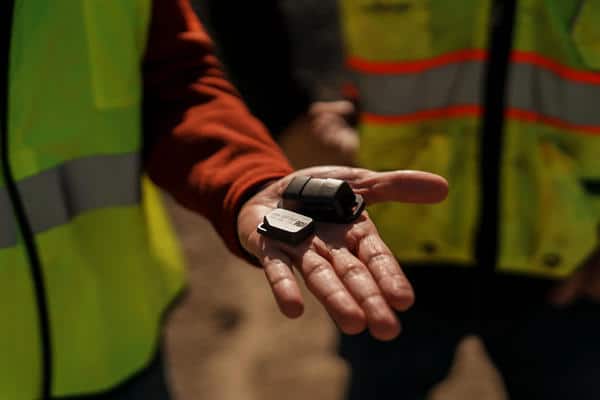
The Asset Tag and Asset Tag XS from Samsara offer a six-year and three-year battery life, respectively.

Samsara Inc., San Francisco, announced ahead of CONEXPO not only its latest-generation Asset Tag and new Asset Tag XS, but also the expansion of its Connected Operations® Platform. Over the last two years, Samara’s industrial-grade Bluetooth network has doubled in density. This expansive mesh network leverages millions of Samsara-connected devices that travel on 99% of major U.S. roads, according to the manufacturer. By using industrial-grade Bluetooth signals to continuously “listen” for Asset Tags, a single Asset Tag can be detected in real time.

Samsara has integrated Hubble’s terrestrial network, comprised of 90 million consumer smartphones. This integration builds on Samsara’s presence on roads, at job sites and in residential areas by extending visibility into buildings.

“This integration with Hubble complements Samara’s existing network,” Gal said. “The Samsara Network leverages millions of gateways on assets from construction sites to highways to garbage trucks, while Hubble’s network uses primarily consumer smartphones, ensuring no lost or stolen asset can hide, even inside buildings.”

The new tags Samsara launched this year are equipped with an AI-powered theft and loss workflow to help customers identify, investigate and recover mission-critical assets in record time. One of Samsara’s customers spoke to their efficacy.

“Since we started using the Asset Tags, our recovery rate on thefts of everything from $1,000 gas-powered saws to $2.8 million heavy machinery is 100%,” said Rich Poppoff, the equipment superintendent for DeSilva Gates. “I didn’t think the devices could be better than they were, but the enhanced features on the Asset Tags, like the even more precise ‘find nearby’ capabilities, make finding assets in congested areas even simpler.”

Benefits include:

  • Proactively identify at-risk equipment: With the new Left Behind Incident feature, managers are immediately notified when an asset is separated from its vehicle outside a trusted geofence.
  • Investigate with real-time information: Customers can mark an asset as missing and see critical context, such as photos of who last had the asset, which vehicle it was last seen with, and more, powered by StreetSense. This rich context helps determine the most efficient recovery method and allocates the resources needed for retrieval.
  • Rapidly recover assets: Customers can coordinate quick asset recovery by dispatching a driver or sharing asset location with law enforcement. Once dispatched, crews can quickly pinpoint an asset’s exact location using Compass Mode.
  • Demonstrate return on investment: The new Asset Tag Overview page analyzes asset photos with AI to calculate the value of the assets protected and recovered.

Two Samsara Tags

The new Asset Tags are ruggedized devices engineered to operate in extreme and remote environments. With the compact Asset Tag and ultra-compact Asset Tag XS, equipment managers can mix and match devices based on the equipment’s size and shape.

  • Asset Tag: Designed for both large and small equipment, the Asset Tag provides up to six years of maintenance-free battery life—a 50% increase over the previous generation.
  • Asset Tag XS: Designed for smaller, high-value handheld tools or specialized equipment like density gauges, the ultra-compact Asset Tag XS offers three years of battery life and flexible mounting options for the most obscure equipment.

“The scale of equipment loss in physical operations goes far beyond the cost of the tools themselves—it’s about lost productivity and project delays,” Gal said. “To solve this, we’re doubling down on innovation, laying the foundation for new use cases. We’ve supercharged the network, the hardware, and the recovery workflow, and with the Asset Tag XS, now even the smallest assets stay within reach.”

For more information on Samsara’s offerings, visit https://www.samsara.com/products/equipment-tracking/asset-tag.
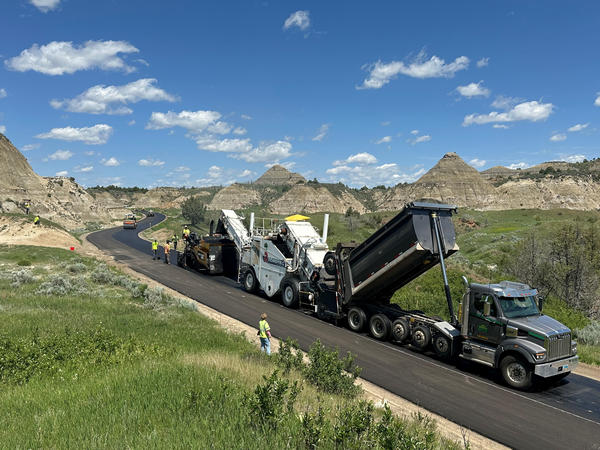
Northern Improvement Smooths Out National Park Paving Challenge

Northern Improvement smooths out Theodore Roosevelt National Park paving challenge

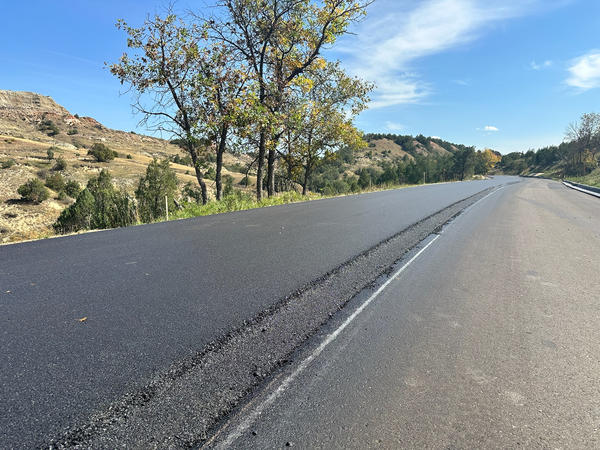
From accommodating a prairie dog town to discovering soft subgrades, the team at Northern Improvement Company, Dickinson, North Dakota, had their work cut out for them when they got the go-ahead to pave a winding path up and down 6 miles of South Unit Scenic Loop. With incredible patience and skill, they put down two 2-inch lifts of Superpave mix with 1% lime to provide a new road for visitors to the Theodore Roosevelt National Park.

As our nation celebrates its 250th birthday this year, it’s an honor to highlight a challenging yet successful project in one of our national parks. Congratulations to the Wagner and Northern Improvement Company teams for making the South Unit Scenic Loop in the Theodore Roosevelt National Park a lovely and safer route for visitors.

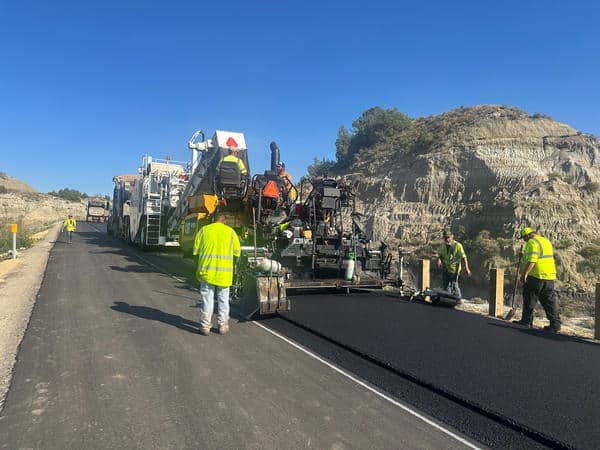
Trucking had to be coordinated to deliver enough material to “pave through” curves when the crew was coming up on an area where they recognized trucks wouldn’t be able to drive past the paver. Conditions were often tight. Photo courtesy of Northern Improvement

Challenging Subbase Sets Up Delays

The project was let in 2022 with Wagner taking the role of prime contractor. The scope of the project included, but was not limited to, widening, adding slope, and performing soil-cement treatment (CTB) and full-depth reclamation (FDR) of the base in many areas, according to Bryce Wuori, CEO of Pavewise Inc., Bismarck, North Dakota. Wuori served as a consultant to Northern Improvement on this project.

“The cement-treated base was 4 inches thick in most areas but needed to be more than 6-7 inches, which halted everything,” Wuori said. “The base lift became a patching project. It didn’t turn into a mainline paving project. We put in a change-order for a prime coat on top of the gravel on the hills.”

“The soils in the Badlands are very challenging,” Cassandra Tobin said. She’s the quality control manager at Northern Improvement and worked from Day 1 on the project, preparing the mix design and seeing it placed. “Retaining walls had to be built to hold up the road structure.”

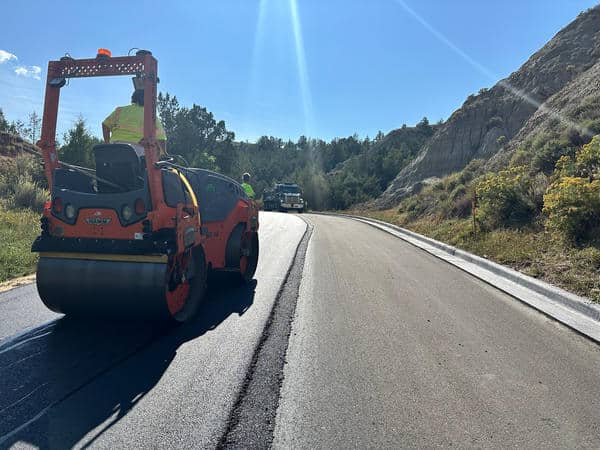
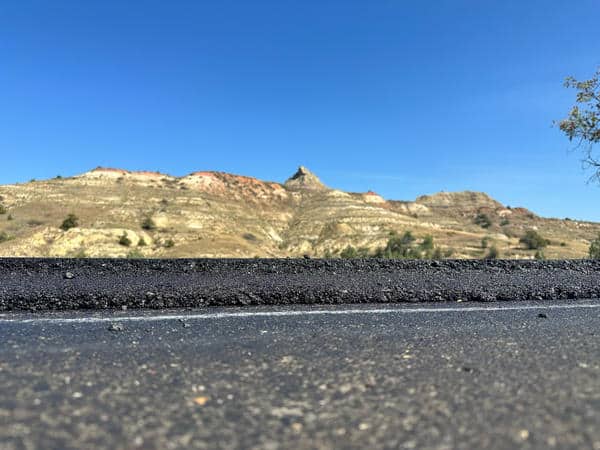
The Northern Improvement paving crew placed a 2-inch lift with the notched wedge joint system from Willow Designs on the centerline joint and a safety edge roller on the shoulder side. Photo courtesy of Northern Improvement

She explained that shortly after Wagner began work in 2022, the project became complex. “They encountered weather challenges; wet winter, wet spring, so the road collapsed in a couple places,” Tobin said. “The original paving plan didn’t happen during 2024 because of the subgrade issues.”

When it came time for Northern to begin paving in 2025, their plan was thwarted again by subgrade issues. “We started paving in June and started encountering issues with the subgrade almost immediately.”

If you’re in Vegas, meet with Bryce Wuori during his Ask the Expert session, Thursday, March 5, from 9:30-11:30 at Booth GL30901 during CONEXPO-CON/AGG.

They demobilized before the July 4 holiday, so the prime could repair a section of the cement-treated base. Northern returned to pave in August 2025.

Tobin said the use of a material transfer vehicle on this project helped immensely with improving the ride results. Photo courtesy of Northern Improvement

“A lot of it was only 4 inches of CTB, and it just wasn’t enough structurally to hold up construction traffic, especially with those types of soils,” Tobin said. The first section of roadway had thicker portions of CTB and FDR, she explained, but the paving crew ran into a problem when they got past that first section.

“Once we got to the top of the first hill, we found soft spot after soft spot. Our equipment would sink. Wagner would dig down, put fabric in, rework it. We ended up putting some asphalt in the patches in the subgrade itself. We had to do a lot of skipping around and changing where we were going to pave that day…”

She described the first lift’s execution as paving a quilt, rather than one ribbon of highway.

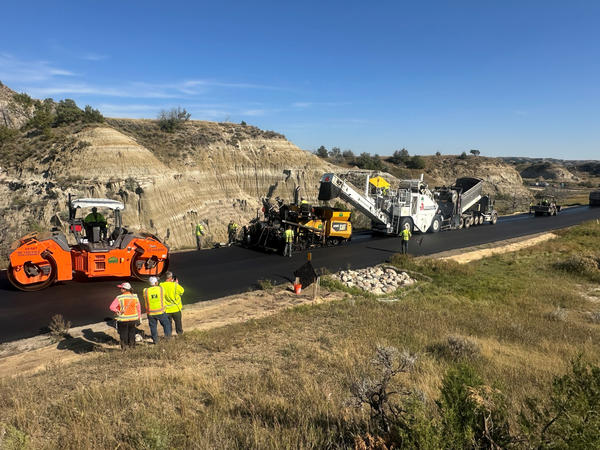
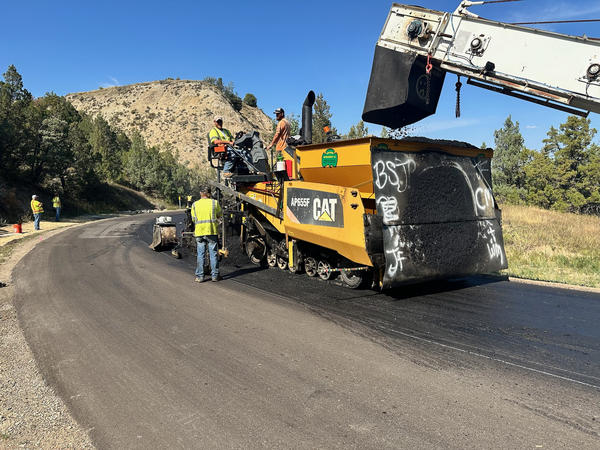
Prime Contractor Wagner built retaining walls in addition to treating the subbase prior to turning the project over to Northern Improvement for paving. Here we see the paving train, which included a Shuttle Buggy to deliver material to the tracked paver. Photo courtesy of Bryce Wuori

“We had different sizes of patches spread out all over the place.”

As you can imagine, this start-and-stop patching was frustrating for a paving crew who planned to get in and pave. “It was very hard on our crew. We’re very quality oriented. It does wear on you, day in and day out to skip a section, or we’d try a section, and it would fail.”

Because of the initial approach they had to take, “a lot of the days were patching days,” she said. “There were multiple patch areas that we ended up having to pave multiple times. That type of paving is labor-intensive. It tied up our plant at the same time. This is a lime mix design. A lot of the projects wouldn’t approve that same mix.”

To create the Superpave ½-inch virgin mix with 58S-34 asphalt binder and 1% lime, the parallel flow hot-mix asphalt (HMA) plant needed some modification. “We had to add a lime silo and pugmill to our normal set up for this project,” Tobin said.

But there was a light at the end of the tunnel.

“Once we got that bottom lift down, everything started looking a lot better. Once it was covered in asphalt, the top lift went so much easier.”

Haul truck drivers were taking it slow and being extra careful delivering mix to the paving train due to the curvy road interrupting communications and the presence of visitor and pedestrian traffic in peak tourist season. Photo courtesy of Bryce Wuori

Coordinated Trucking

The mobile plant providing the specialized mix was set up at Northern Improvement’s South Heart, North Dakota location. Plant Operator Paul Byron, who has worked for the company for almost 25 years, was averaging 180-200 tons per hour at production temperatures of 318-335°F.

This location gave the haul trucks a travel time to the beginning of the project of just over an hour. But their journey at that point was far from over.

“Our plant site is fairly close, but it takes the trucks about an hour to get in there,” Tobin said. “It was peak season for tourists, and you never knew when you’re going to come around a corner and someone’s going to be standing in the middle of the road taking a picture.”

The terrain, coupled with tourist and pedestrian traffic, meant coordinated communication was essential for mix delivery. Due to the sharp buttes and twisting curves, radio signals were often interrupted, making it difficult to get messages back and forth. To combat this, the team set up a relay system for communication. Tobin called it “traffic control for our construction traffic only.” They placed one person at the front of the construction zone, someone in the middle, and someone at the moving paving train to keep the one-way truck traffic in motion. Tobin explained that the team would plan ahead to have enough trucks deliver material to let them pave through winding sections when it was obvious space would be tight.

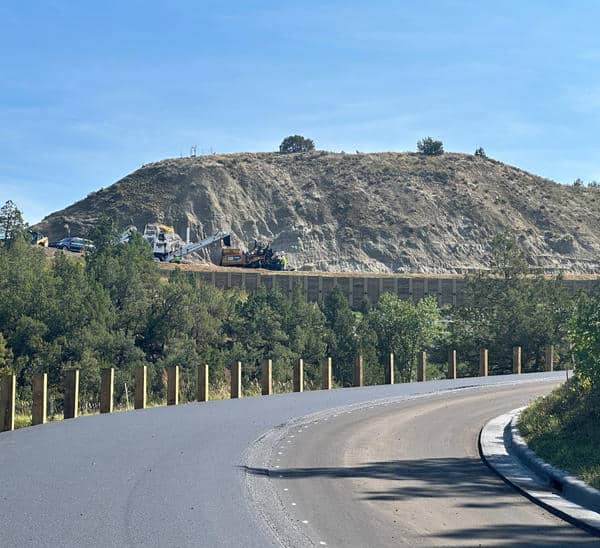
It took incredible coordination and communication to bring material to the paving zone amid the hills and curves. Photo courtesy of Bryce Wuori

“Sneaking trucks by the paver was sometimes not possible,” she said. “There’s nowhere to turn around. Radio traffic was difficult because of the terrain, so we were keeping track of where everything was at all times. Some areas did have curb-and-gutter. We had to plan out to have enough trucks to get us through an area of curves if we knew we couldn’t get trucks past the paver.”

It came down to communication, caution, and planning. “It was an existing low-speed road, but the amount of coordination it took was like a racetrack project,” Wuori said.

“There was a lot of walking—you parked where you started the day—there’s not much for parking, not much for turning around, not much room for extra,” Tobin said.

Due to the terrain, the rolling train didn’t use intelligent compaction with the Hamm HD 120i V10-2 breakdown roller. Cassandra Tobin shared, “With jumping around so much, it just wasn’t feasible. We used Density+ by Pavewise to track our density results from our nuclear and non-nuclear density gauges.” Photo courtesy of Bryce Wuori

Smooth Paving

When trucks reached the paving train, they fed a Roadtec SB-2500e material transfer vehicle (MTV), which fed a CAT AP655F paver equipped with the notch wedge joint maker from Willow Designs. They placed two 2-inch lifts across the total top roadway width of 22 feet in 11-foot pulls.

The mix temperature coming off the screed averaged 280-300°F and performed well for the crew. “The mix was easy to work with, but challenging in areas that were difficult to roll (tight curves, steep grades),” Tobin shared.

To achieve compaction, the team used a Hamm HD+ 120i VIO-2-HF with both drums in oscillation mode in the breakdown position. Tobin reported average densities of 89-90% in the breakdown zone, which was essential for achieving the percent within limits (PWL) spec on the project.

“The PWL density spec was challenging,” Tobin shared. “We had to achieve similar densities on the base lift and top lift, as well as the edges and center of the mat. Generally, you see a lot of variability in density on tight curves and up/down hills. We were able to keep consistent density throughout the project using a combination of technology and technique. We had a quality control technician, Kim Bumgardner, monitoring density with a nuclear density gauge throughout the project. She is a great roller operator herself, and using her experience and the data she was collecting, she was able to see when any changes needed to be made to the rolling operation.”

The Shuttle Buggy delivers material to the paver, helping the crew maintain smooth production around tight curves and hills. Photo courtesy of Bryce Wuori

One technology, intelligent compaction (IC), wasn’t feasible on the project due to the terrain, thus good equipment, best practices, and other technologies came into play.

“The big part of technology was that Hamm roller itself,” Tobin explained. “We could adjust the drums if we needed to either oscillate or vibrate, and the settings can easily be swapped around if needed. It is kind of like having several rollers in one. We didn’t set up Intelligent Compaction on this project because of the terrain. With jumping around so much, it just wasn’t feasible. We used Density+ by Pavewise to track our density results from our nuclear and non-nuclear density gauges.”

A combination, smaller, intermediate roller with rubber tires on the back was used in the intermediate position; a smaller, steel drum was in the finish position.

“The Hamm oscillation in breakdown was key in this terrain,” Tobin said. “It was still challenging getting up close to the curbs on such tight curves. The guys had their work cut out for them…The smaller rollers were very beneficial to us in this terrain.”

In addition to the PWL spec, the team had a two-part ride spec to consider and random core sampling to arrange.

“The ride spec for this job was especially difficult considering it is a 25-mph road with very tight curves and a lot of curb transitions,” Tobin shared. “That was further complicated by all the soft spots and subgrade repair areas. The spec includes two parts. One for the overall ride and the other for localized roughness (each bump). The use of the [MTV] helped immensely with improving the ride results.

“The asphalt sampling for testing was truly a group effort that required quick coordination,” she continued. “The inspectors would give us short notice when coming up on a sample. The logistics of getting the testers and the people needed to be able to pull the sample from the mat behind the paver was very difficult given the challenging terrain, lack of cellular coverage, and the congested narrow roadway with extremely limited parking. Terracon had a QC team made up of multiple testers, which were always on site or transporting samples back to the lab during paving to make this happen. It was an impressive, coordinated team effort.”

Side view and detail of the notch wedge joint build. Both photos courtesy of Bryce Wuori

“They did a really good job, especially with the level of difficulty,” Wuori said. “They held to all FHWA specs of density and ride.”

The result was approximately $200,000 bonus on material and density for Northern Improvement, and a fresh new road for the National Park Service and the visitors to the Badlands National Park.


Prairie Dog Chatter

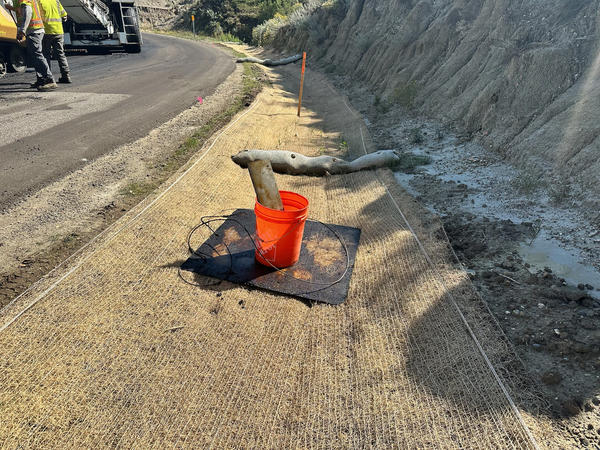
Wagner, the prime contractor for the project, placed a rodent barrier along the shoulder at the outset of the project, for the crew from Northern Improvement Company, Dickinson, North Dakota, to pave over; the goal of this system is to keep the prairie dog population from burrowing under the road, thus causing damage. When rolled out, the netting is quite flexible, making it a challenge to place an asphalt lift on top of.

Northern Improvement Quality Control Manager Cassandra Tobin described it as a “flexible wire, folded back across the shoulder.”

She explained that even though the mesh was fastened down, it tended to flex when being paved over. “It flexed and that caused some cracks. The top lift covered that.”

The flexible netting also impeded the paving sensors. “They picked up some of that chatter,” Tobin said.

But the professional crew understands paving basics and could guide the CAT AP655F smoothly through the beginning of the project. In the end, the rodent barrier was successfully installed and covered for both the pavement system’s and the prairie dog town’s protection.

MasTec Enhances Safety, Efficiency with Zonar Coach Technology

Reducing liability, training up better skills with fleet monitoring technology

Imagine you’re driving between job sites and approaching a construction zone, where a three-lane highway narrows into a single lane in a matter of yards. Traffic slows ahead. Suddenly, a car swerves between lanes, darts onto the shoulder and cuts in front of you. The inevitable happens—metal meets metal in a jarring, violent crunch. Later, that car’s driver tells the police you were the one driving erratically.

That was the scenario faced by one driver for MasTec, Coral Gables, Florida.

MasTec specializes in hardscapes and other infrastructure for a variety of industries. The company employs nearly 22,000 skilled professionals and has been involved in some of the largest and most complex infrastructure construction projects across the country, but even industry giants face challenges protecting drivers from fraudulent insurance claims.

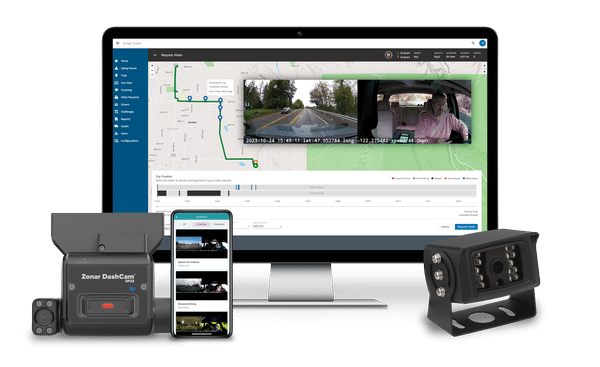
Fortunately for MasTec drivers, this scenario no longer means automatic blame or costly settlements. Over the last year, the company partnered with Zonar, Seattle, Washington, to implement Zonar Coach, a dual-facing dashcam solution that uses AI to detect and capture specific safety events inside and outside the cab.

MasTec uses the in-cab video footage to train and retain drivers, develop safety scorecards and streamline coaching workflows.

To successfully implement Zonar Coach, MasTec focused on reinforcing how much the company values drivers, making it clear that the technology is designed to support them. Management explained that tracking driving patterns wasn’t for chastising drivers; it was about correcting risky behaviors before “bad actors” outside of the company could take advantage of them.

Another Set of Eyes on the Road

“We were able to back [the video] up from when that driver first left his shop to when the collision happened,” said Tony Cruz, desert southwest regional fleet manager at MasTec Communications Group, during a joint webinar featuring MasTec and Zonar.

This lets them avoid legal expenses and false insurance claims with the power of video exoneration. The cameras provide multiple viewpoints out the front of the windshield and one inside the cab. The system also provides a “panic button” for the driver to utilize if they need to capture a specific incident instantly. “I’ll be able to see what the driver was experiencing when they felt they needed to push the panic button,” Cruz said.

The implementation of Zonar Coach had already helped MasTec keep drivers safe, clear multiple claims and avoid countless legal expenses as of December 2024.

Zonar SightIQ Provides Aggregate Operations Analytics

During the webinar, Cruz also stated the industry faces an insurance fraud phenomenon called the swoop-and-squat. This tactic involves individuals targeting company vehicles, intending to provoke accidents by suddenly merging in front of them and then braking sharply.

“We’ve observed significant benefits from using dashcams in these situations,” he said.

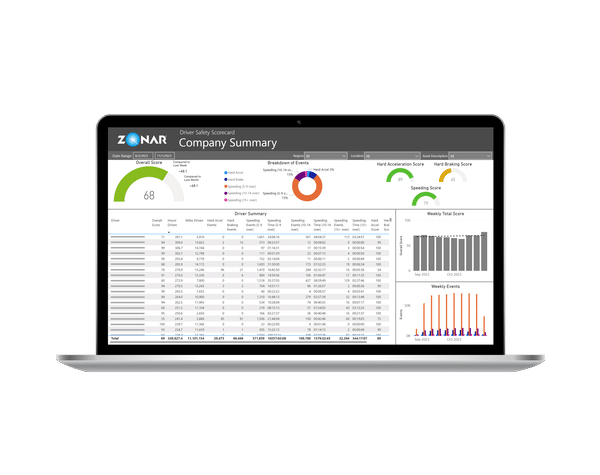
In addition to safety benefits, Zonar Coach also offers custom reporting using Microsoft Power BI, providing added situational insight through data visualization that supplements recorded video. This can be set up to automatically deliver a report to the fleet’s back office for management to review and have a record of the incident.

The driver scorecard report leverages Zonar TCU and video data to create an overall company safety score, breaking down to individual driver behavior and safety events.

Protection Outside and Inside the Cab

The Zonar Coach cameras help to prevent incidents before they happen with real-time, in-cab alerts. MasTec uses the in-cab video footage to train and retain drivers, develop safety scorecards and streamline coaching workflows. Through this system, supervisors can see different events—labeled as low, medium, high or catastrophic—such as where they’re coming from or the intended destination. Zonar helped them identify what were low, medium and high-risk metrics in the driver behaviors and what needed to be high priority versus lower priority for coaching.

Zonar’s solution helps MasTec supervisors pinpoint poor driver behaviors and patterns of hard cornering, hard acceleration, hard braking, lane drift, drowsy driving, rollover detection, tailgating or speed infractions, providing personalized feedback for future trips.

“Everybody’s human,” Cruz said. “What I may consider tailgating, someone else may not consider tailgating. The camera’s reading speed [and] distance of the vehicle in front of me and determining collision potential.”

Something as simple as checking your phone at a red light may seem like a low priority item but should be prohibited for all drivers. In many states, having your phone in your hand while driving can lead to a ticketed offense. As of September 2024, 29 states, including the District of Columbia, prohibit all drivers from using handheld cell phones while driving.

The AI-detected safety event features help MasTec with training drivers for new laws. By monitoring what’s happening inside and outside the cab, MasTec has been able to coach and correct such behaviors.

Mobile Fleet Inspections Offer Efficiency

Driver Buy-In

Not every employee was initially excited to have recording devices monitoring their driving behaviors, but Cruz shared how MasTec supervisors introduced the program.

“For driver buy-in, we explained we were testing it for safety,” Cruz said. “We had some drivers who felt like we were putting it in to keep tabs on them. We have to abide by the federal government and federal laws on that. But no one’s going to be tapping into a camera to see what you’re doing or listen in on your conversations. This is here to catch if something else happens to you.”

To successfully implement Zonar Coach, MasTec focused on reinforcing how much the company values them as drivers and employees, making it clear that the technology is designed to support their driving and day-to-day activities. As Cruz explained, tracking driving patterns isn’t about chastising drivers; it’s about correcting risky behaviors before “bad actors” outside of your company can take advantage of them.

“There are people out there who will try to take advantage of you or your company,” he said, so self-correcting and coaching suboptimal driver behavior can make it more difficult for the bad actors to take advantage of your company.

This not only helps reduce risks and prevent accidents, but as drivers became more familiar with this system, they recognized its benefits—particularly the value of having video evidence to clarify situations where hard driving resulted from external factors beyond drivers’ control.

“A lot of my big-rig drivers would tell me they couldn’t say how many times they’ve had someone cut them off and then slow down and they have to slam on their brakes,” Cruz said. Now that MasTec drivers have dashcams recording non-employee driver behavior, they have proof of reality.

Fleet Management Tech Drives Savings at RJ Daigle

Turning Liability into Reliability

Insurance scams and individuals attempting to cover up mistakes often leave company drivers at an unfair disadvantage. As Cruz put it, “You’re either [in] an at-fault collision or a not-at-fault collision. It’s awesome that we’re able to pull up that on-demand video clip.”

Since implementing Zonar Coach technology, MasTec has not only seen improvements in driver safety, but also significant savings in claims costs. This data-centric approach to fleet management has enhanced both efficiency and safety. For MasTec drivers, Zonar Coach has transformed uncertainty into irrefutable evidence—proving that sometimes, the best defense is simply the truth.

Strategies to Maximize Equipment Lifespans in Harsh Mining Conditions

Whether underground or above, haul trucks face corrosive degradation that can be mitigated

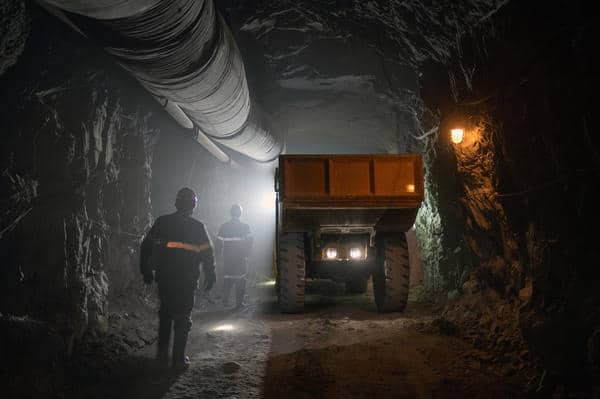
How long can a new front-end loader last in a limestone mine? Just three months would not be a wrong answer, given the corrosive atmosphere present one mile underground. How about the articulated hauler that moves between underground and above? For mining and quarrying operations, equipment wear equals money, and replacing assets that cost hundreds of thousands of dollars every few months is not an economical option.

Moreover, heavy equipment is not the only victim as corrosion eats through any metal in its path—from electricals to lunch boxes. While it is impossible to completely stop corrosion, it is possible to slow it down and start minimizing the consequences immediately with best maintenance practices. The research and development team at Cortec® Corporation offers the following advice.

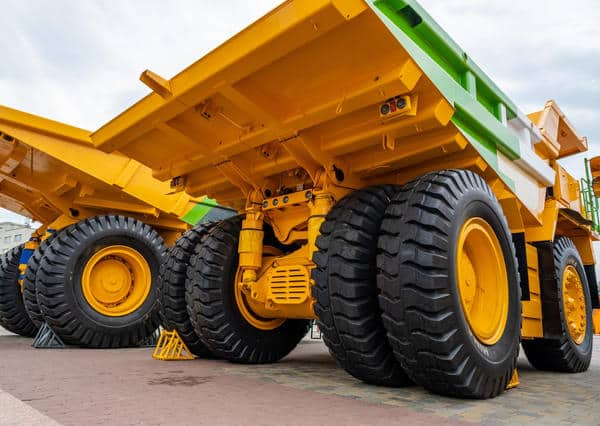
Articulated haul trucks and front-end loaders used in underground mining or quarrying scenarios face unique corrosion challenges. Mechanics and operators can head off expensive repairs—or replacements—by coating surfaces in anticorrosion topcoats and performing other preventive measures. Both photos courtesy of Cortec Advertising

Loosen the Hold of Existing Rust

One of the challenges of rust is that it can lock moving parts—such as nuts, bolts and hinges—into place, making it difficult to do maintenance. VpCI® Super Penetrant allows mechanics to penetrate through deep rust and loosen frozen parts so they can move freely. This can be a lifesaver in a corrosive mining environment.

Start Protecting Electricals 

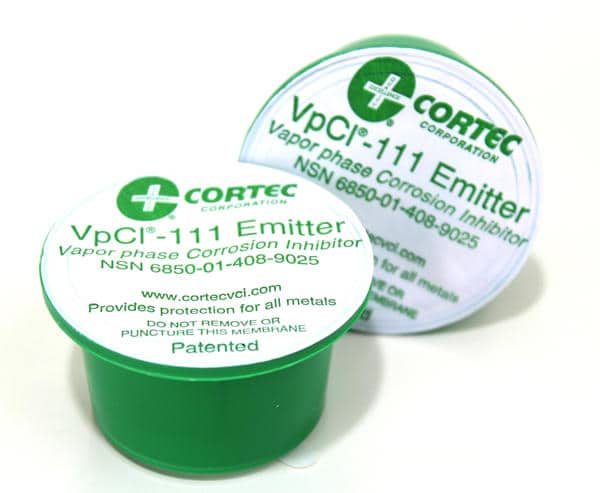
Electrical wiring and boxes in underground offices and throughout the mine are also vulnerable. One way to slow down the corrosion process is by placing VpCI®-105 or 111 Emitters inside electrical panels. These self-stick cups release corrosion-inhibiting vapors through a breathable membrane, conditioning the enclosure with chemistry that forms a protective molecular layer on metal surfaces such as electrical contacts. Exposed wires and contact points can be sprayed with ElectriCorr™ VpCI®-239 to clean away existing corrosion products and/or to leave behind a thin protective layer.

Peckham Quarries the Surface, Crushes Underground

Extend Equipment Service Life

If a mining truck has already spent three months underground, it may be too late to undo the corrosion damage. However, if only a little surface rust has formed, CorrVerter® Rust Converter Primer can be used (along with good surface prep) to passivate and slow it down.

With the high frequency of truck replacements, it is likely that miners and quarry operators will also see new equipment before long. The day the equipment arrives is the ideal time to perform preventive corrosion maintenance by fortifying each truck with an extra layer of protection.

This can be done with a water-based anticorrosion acrylic topcoat (such as EcoShield® VpCI®-386). Epoxy and urethane coatings that provide greater hardness are also available for additional mechanical protection against the heavy wear and tear of a mining environment. Unpainted metal surfaces in some cases may be protected with a layer of VpCI®-368, a tough waxlike film for stationary surfaces, or VpCI®-369, a wet film for moving parts. Since abrasion can wear away the coatings over time, it is important for maintenance crews to perform periodic inspection and coating touchup as needed. This is a small investment compared to the cost of replacing a truck.

Self-stick cups of VpCI®-111 Emitter release corrosion-inhibiting vapors through a breathable membrane, conditioning electrical panel enclosures with chemistry that forms a protective molecular layer on metal surfaces such as electrical contacts.

Take Time to Slow Corrosion

Corrosion is an aggressive force in underground mines. While it seems unstoppable, there are a variety of ways to slow it down and diminish the negative effects on mining assets.

For more information, visit www.ecocortec.hr/eng/index.

Fleet Management Tech Drives Savings at RJ Daigle

Third generation paving company cuts costs with fleet management technology

Editor’s Note: The Focus on Performance series from AsphaltPro Magazine allows OEMs and service providers to highlight professionals in the industry who have improved efficiencies and the bottom line through best practices and performance. This month’s installment, featuring RJ Daigle, focuses on fleet management strategies.

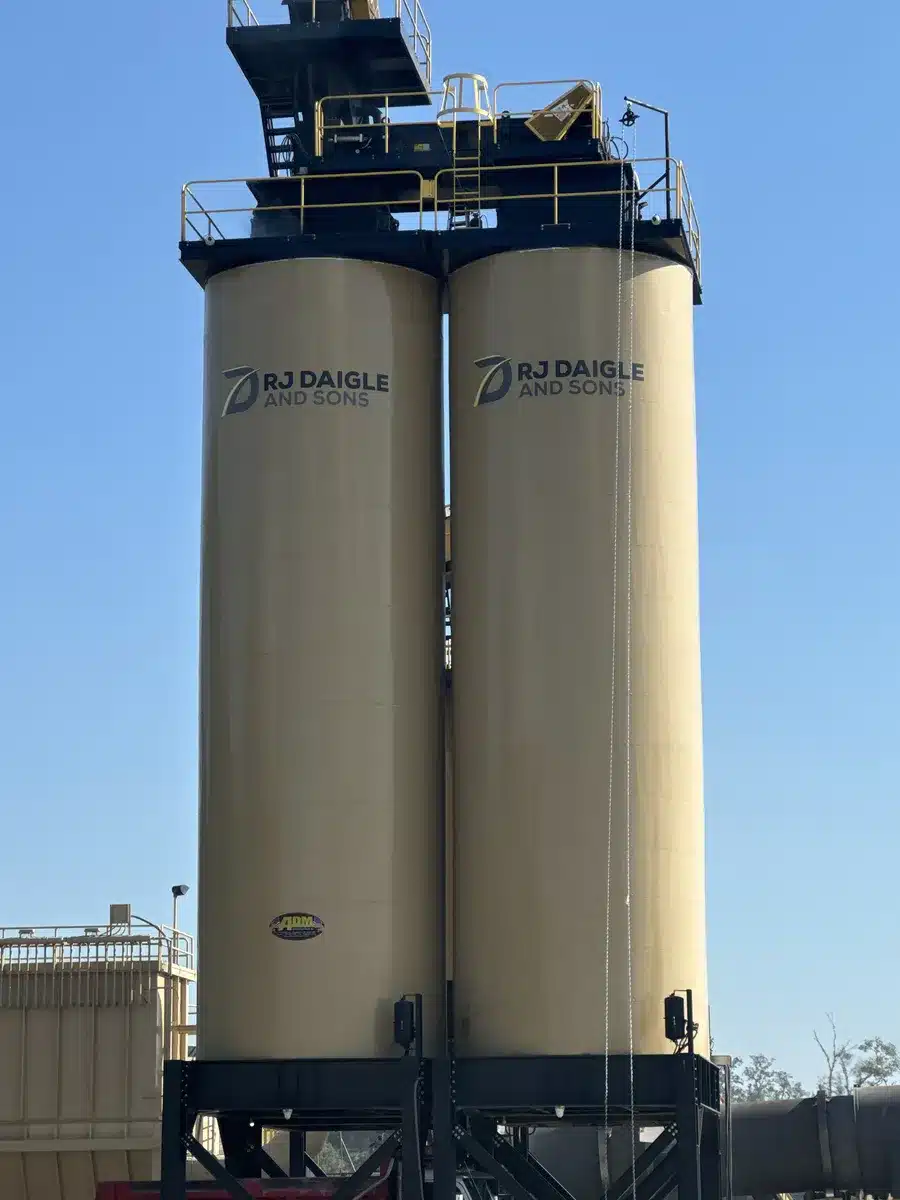
As the third generation takes the reins at RJ Daigle and Sons in Baton Rouge, Louisiana, they are keenly aware of the company’s focus on integrity, dedication and quality. Those three pillars have helped the company grow from a single steel wheel roller to over 175 employees operating from two asphalt plants and a fleet of equipment worth millions of dollars. While traditions are great, they are also using technology to better manage their 10 crews. FleetWatcher by AlignOps helps them streamline production, enhance efficiency and control costs.

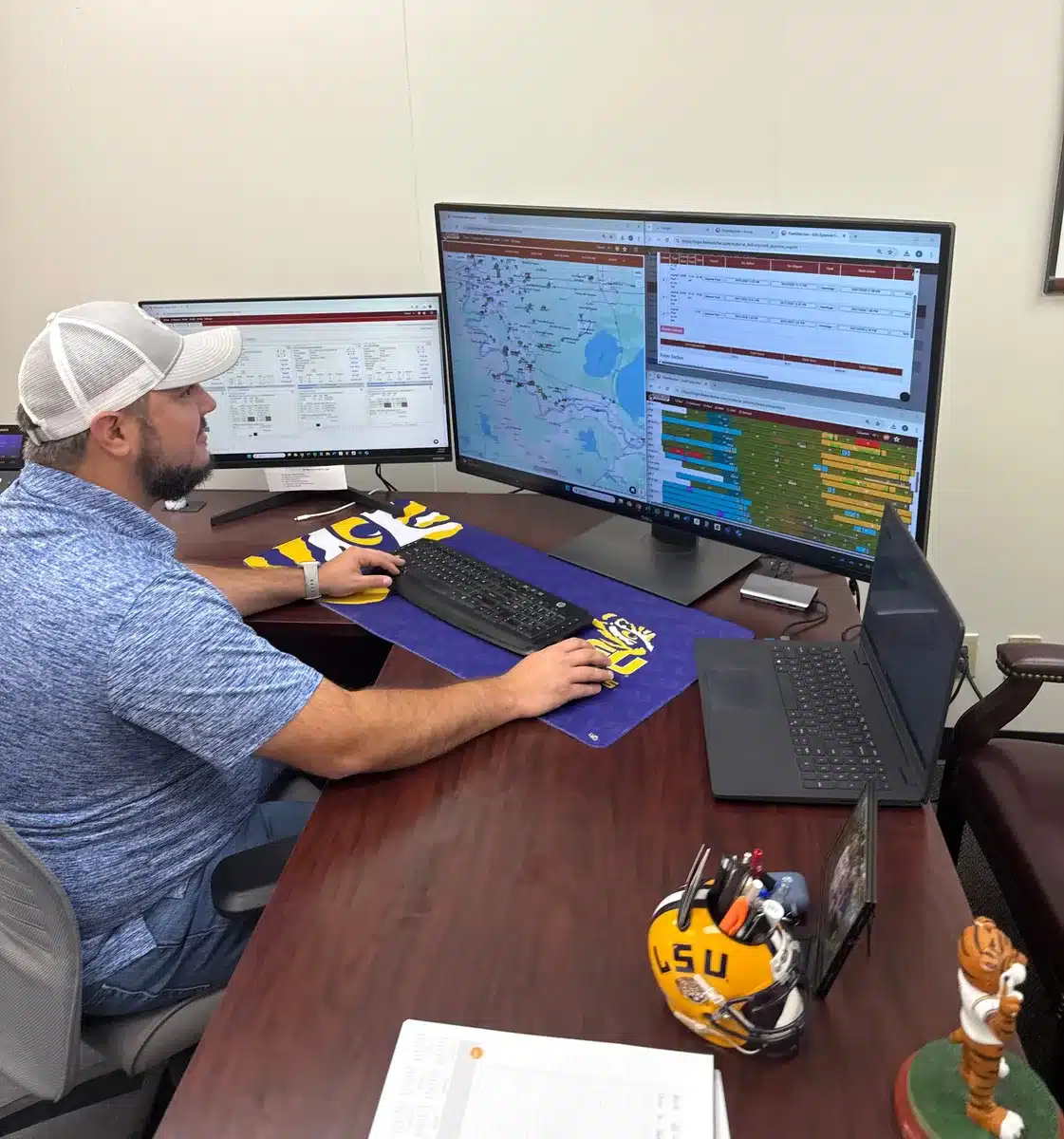
FleetWatcher aggregates data from the connected assets as well as other software programs to provide transparency into a company’s fleet operations. Users can see where rolling assets are, divert them around traffic problems, ensure that trucks are not waiting either at the asphalt plant or at the paver, and more. This allows users to make real-time decisions that have immediate results. If there are too many trucks on a job, one or more can be diverted to other tasks; if cycle times are too long, dispatch can re-route trucks or determine the cause of the slowdown, and more. The team at Daigle uses it for these functions and much more, including accurately paying third-party trucks and eliminating “truck burn.” That alone has saved countless hours and thousands of dollars.

RJ Daigle’s team running its two asphalt plants can now use the FleetWatcher platform to adjust production based on real-time trucking information. All photos courtesy of FleetWatcher by AlignOps

Paying Trucks Accurately Saves Time and Money

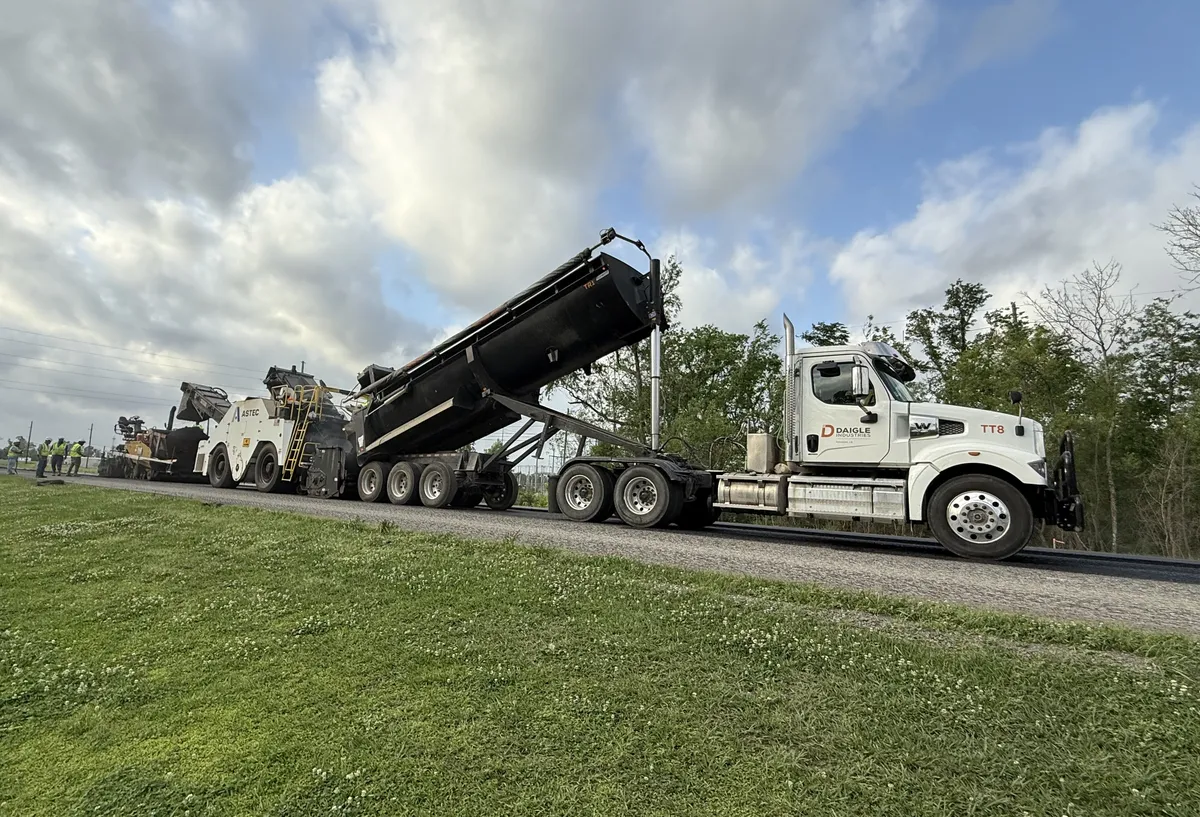
Daigle operates 16 of their own trucks including 10 tri-axles, a pair of quad axles, and four dump trailers, all with Samsara installed. Since FleetWatcher integrates with Samsara, there is no need for an additional device in those vehicles. Depending on their workload they typically hire 35-40 additional trucks, most of which use the FleetWatcher app.

Logistics Manager Ryan Marciante starts each day with a look backward, paying those third-party trucks accurately for yesterday’s work. Rather than relying on estimates on when trucks showed up, or whatever the foreman said, he has accurate data from the virtual shift tickets, so he knows when trucks started, when they finished, what jobs they were on, and more.

“I go back to the LCAs and I create shift tickets for the jobs that ran the day before,” Marciante said. “Using the LCAs, I make sure they were at the plant on time, and where they ended the day. I’m able to put in exactly what jobs they were on, and the exact times.”

With the volume of projects going through Daigle daily, Marciante spends about three hours a day on this task, a far cry from what they used to go through. “Previously someone in accounting would have to track down all the information, which was all scrambled—it might take a day and a half to do so,” and it was not always accurate. Now trucks are being paid fairly, and timelier, thanks to FleetWatcher.

There are still times when technology needs a human touch. “In the mornings, I check the shifts to see who’s supposed to be where, and if I don’t see their GPS logged in, I’m on the phone calling them, ‘hey you need to turn your GPS on, you need to log in to the app.’ We let these guys know that this is how they’re being paid, so if you’re not logged on, I can’t pay you.”

“They enjoy it because all their scale tickets are there, so they can see all their tickets on their phone. They can see how much they’ve hauled that day, when they’re clocking in and out,” Marciante sad.

Middlesex Bolsters Customer Service with Tech

Eliminate Overtrucking

In addition to paying trucks accurately, FleetWatcher is helping to determine the optimum number of trucks for each project. Marciante recalled how the telematics platform helped them streamline trucking on a recent project in Gramercy, Louisiana. The project called for milling, patching and overlaying asphalt on 13 miles of LA-3152. Cycle time was about 30 minutes in each direction from the Geismer asphalt plant.

“The job itself is holding the trucks up because it is so long,” said Marciante. “We’re closing down lanes, and with some increased dwell time on site, a cycle is running about an hour and a half.”

In the days before FleetWatcher, they’d likely have budgeted 25 trucks for the project. Now they are consistently hitting their production goals with fewer trucks, by eliminating excessive waiting at both ends—no more waiting at the plant, nor waiting at the paver.

“If we cut, say five trucks from a job, we’re saving close to $5,000 a day just on trucking,” Marciante said.

If they have somewhere to send the trucks that are not needed on a particular project, they’ll pull them immediately. If not, they’ll finish the day and correct it tomorrow. The information is helpful for future projects as well.

“We have pre-construction meetings before every project,” Marciante said. “I’ll look through the completed shifts tab to see if we’ve done similar projects nearby and use those to better estimate the project at hand.”

Ryan Marciante can assign trucks to projects in advance and notify drivers of their assignments with the FleetWatcher platform. “If I need 12 trucks at our Geismer plant for 6:30, I can assign which trucks I want there, click one button and it notifies all 12 of those trucks at the same time.”

Fast and Efficient Dispatch

As the day moves towards completion, Marciante looks ahead and begins to dispatch trucks for the next day’s projects. The process is simple and straightforward, saving him roughly an hour a day over the way it was done previously.

“Before using FleetWatcher dispatch, it was all done manually. I’d put the information in a notebook, writing truck names under the foreman, and then text each one individually, ‘hey I need you to go here tomorrow, here are the directions.’ It was an individual text to 30 or more people.”

With the FleetWatcher dispatch program, it is much simpler and faster. “If I need 12 trucks at our Geismer plant for 6:30, I can assign which trucks I want there, click one button and it notifies all 12 of those trucks at the same time. They all get the same message, with the pin drop so they know who they’re working for, and what the job is. It has sped the process tremendously.”

In addition to extensive use by Marciante, FleetWatcher is also used by the team running RJ Daigle’s two asphalt plants. They can see where the trucks are and when they are due back at the plant, so that they can adjust production accordingly.

Marciante, who had managed FleetWatcher for another company before joining Daigle, appreciates not only the value of the telematics platform, but the service he receives as well. When he first started, he and Rick Jennings, his customer success representative, would have weekly Teams meetings to go over the platform and have small training sessions.

“Rick is always just a phone call away,” Marciante said. “I can text him on the side and say, ‘I’ll send a formal request but here’s what I have going on, do you have a solution or something I can try?’  He’s been great to work with, as has the whole FleetWatcher team.”

RJ Daigle is a great example of a paving contractor that has continued to adhere to the three pillars that built the company. But adhering to tradition doesn’t mean they are stuck in the old ways. Technology, including the FleetWatcher telematics platform, is helping them to enhance efficiency and cut costs in many areas. Those savings allow the company to deliver on their core principles of integrity, dedication, and quality, as they build the company for the next generation.

How Lubrication Strategies Cut Costs at the Plant

Subpar lubrication costs producers in industrial settings


Editor’s Note: The Focus on Performance series from AsphaltPro Magazine allows OEMs and service providers to highlight professionals in the industry who have improved efficiencies and the bottom line through best practices and performance. This month’s installment, featuring Peak Oilfield Service Company, Prudhoe Bay, Alaska, focuses on predictive maintenance strategies.

Industrial facilities face many lubrication-related challenges, particularly with the demanding conditions found in industries such as mining or construction. The biggest challenges are contamination from dirt, infiltration of moisture and incorrect lubricant choice for the application. Failure to deal with these issues increases wear on mechanical equipment, resulting in greater rates of equipment downtime and higher maintenance expenses. Proper lubrication practices, with examples below, lead to better equipment performance and ultimately result in substantial cost savings.

Analyze More Fluids for More Uptime

3 Common Challenges

About 75% of mechanical wear on industrial equipment is due to contamination from outside dirt. Internal friction and outside particles are destructive to metal. Circulating solid particulates in the lubricant risks damaging the base oil, stripping away additives and harming critical components. The best practice is to begin by filtering the lubricant—even when new—because newly delivered lubricants in pails, drums or totes tend to have elevated particle counts.

Before and after filtration, oil samples should be sent to the lab for two reasons.

  • First, to verify that the product inside the container matches the label and product type ordered.
  • Second, to confirm that filtration is effectively accomplishing the specific ISO Cleanliness Codes for the assets these new oils are going in.

The second biggest challenge is water or moisture. Ridding the oil of moisture is critical to provide the best overall performance. Moisture can lead to lubricant degradation and equipment damage, particularly in environments like surface mining and construction where equipment is frequently exposed to water and humidity.

The third challenge is making sure plant personnel are storing the lubricants properly and putting the right lubricant into the right application. Lubrication Engineers has conducted surveys that examine lubricants used in assets and cross references them with original equipment manufacturer (OEM) instructions and manuals. The studies have found that about 12-14% of lubricants being used are either the wrong type or the wrong viscosity, which may lead to more frequent oil changes or speed up the oil’s rate of oxidation. Once the lubricant film is ruptured, it cannot protect the critical component of the asset and may result in faster mean time between failure (MTBF).

Reviewing the health of the asset and the oil, and conducting an analysis that includes fluid properties, wear metals, particle count, contaminants (fuel, soot and moisture) and contaminant metals (silica and coolant) will ensure the asset’s integrity is not being jeopardized. Failing to do this will contribute to the need for more frequent oil changes or repairs.

Within 18 months, they had achieved 50% total savings in cost per run hour.

9 Tips for Asphalt Plant Maintenance

Extend Equipment Lifespan

To meet the challenges, facilities should consider the use of higher quality lubricants, which maintain the integrity of oil so it will last longer. Maintaining oil’s viscosity without breaking down is key; once you lose the integrity of lubricating oil, you are risking more wear on metal. With a higher quality lubricant, viscosity is maintained for a much longer period of time.

Using high-quality lubricants will result in fewer oil changes, repairs, reactive labor and unplanned downtime. Implementing best practices and protecting assets by using higher quality lubricants will result in greater savings across repairs, because they happen less frequently. Facilities achieve lower overall costs with higher quality lubricants paired with preventive and predictive maintenance strategies.

Using the right lubricants and lubrication strategies will allow oil to maintain its health for the longest period. This maximizes return on that lubricated asset by reducing labor, parts in the storeroom, and the cost associated with asset availability and downtime.

In addition to the use of quality lubrication products, the use of predictive or preventive maintenance plays a key role in optimizing lubrication efficiency. Strategies should be developed to predict when a piece of equipment is expected to fail, then schedule and plan maintenance on the asset to avoid that failure. Many industries are trending toward scheduling oil changes with predictive condition-based methods versus older time-based methods.

These strategies can be helped by a thorough evaluation of a facility’s lubrication program. For example, Lubrication Engineers offers its Xpert Lubrication Benchmark Audit, a one-day walkthrough that looks at a facility’s lubrication program and ranks it compared to industry standards and best practices. Audit categories include lubrication best practices, asset and lubricant identification, storage and handling, oil analysis and sampling, contamination control, filtration, training, skill development and certifications, software, CMMS and EAM, and safety and accessibility.

Education and technical support are critical. Facilities should ensure their staff is properly trained in lubrication fundamentals, so they can understand and respond to OEM lubrication recommendations and specifications.

Maintain Control

Peak Improvements

Often budget is brought up as the reason higher quality lubricants are not used. In fact, in many cases, switching lubricants may lead to a reduced need for electrical energy or reduced temperature, yielding electricity savings. Here are two examples that showcase the ROI achieved from investment in higher quality lubricants.

Example – Fleet maintenance program

Peak Oilfield Service Company, located on Prudhoe Bay, Alaska, partnered with Lubrication Engineers to evaluate the company’s fleet maintenance program with a goal of implementing a more proactive predictive maintenance program. The evaluation included benchmarking the current program to understand the overall cost per mile to operate the fleet.

Peak’s fleet is comprised of more than 2,000 pieces of equipment, including service trucks; wheel loaders; haul, vacuum and water trucks; snow blowers; diesel generators; and more. Prior to its new reliability program, Peak performed all service truck engine oil changes every 200 hours, and all heavy-duty, off-road equipment engine oil changes every 300 hours. Repeated trials and evaluation of LE’s Monolec® Engine Oils showed that the new product extended drains out to 1,500+ hours. Some equipment had extended oil drains as far out as 2,200 hours, and oil analysis demonstrated that the Monolec Engine oil still maintained its viscosity and TBN.

Following consistent trial successes, Peak switched all its engines to LE’s Monolec Engine Oils, establishing 1,200-hour drain intervals for all mobile equipment. Within 18 months, they had achieved 50% total savings in cost per run hour; 46% savings in engine oil usage costs; 67% savings in engine oil disposal costs; 76% savings in annual engine oil change labor costs; and 76% savings in annual oil change downtime costs.

Example – Drill rig transportation vehicles

Peak Oil also used enhanced lubrication to solve a problem with frequent costly bearing failures in its custom-made John Deere Rolligons, responsible for transporting drill rigs to remote drill sites in Alaska. Due to the harsh environmental conditions, these roller bearings are subject to -60°F temperatures, extreme high loading, low RPMs (8-10), dirt, moisture and idle time.

The lubricant in use was a mineral grade lithium-thickened NLGI 2 EP grease that would wax up when exposed to freezing temperatures, allowing the oil to run out of the thickener and bearing, while at the same time allowing the ingress of dirt and moisture. The complete saturation of the bearing and housing caused excessive rust, lubricant degradation, bearing starvation, and frequent bearing failures.

Lubrication Engineers recommended its heavy-duty synthetic NLGI 2 EP grease containing proprietary additives. Almaplex Ultra-Syn Lubricant (1299) is designed for optimum performance under extreme operating conditions. In 2017, Peak had experienced a total of 114 roller bearing failures in its Rolligon fleet with the previous commercial grease. After switching, that number was reduced to only 24 failures in 2018—a 73% reduction. At a cost of $1,450 per bearing and considering parts and labor, Peak saved approximately $196,200.

Proper lubrication practices are crucial for facilities to achieve cost savings and improve equipment performance. The challenges of contamination, moisture and incorrect lubricant usage can lead to downtime and maintenance expenses. However, by implementing best practices such as using higher quality lubricants, maintaining proper storage and handling, and integrating predictive maintenance strategies, facilities can significantly reduce these costs. This approach not only improves equipment reliability but also contributes to a more efficient and sustainable operation.

Clay Calk is the director of market development for Lubrication Engineers.