
Fleet Management Tech Drives Savings at RJ Daigle
BY Evan Triggs
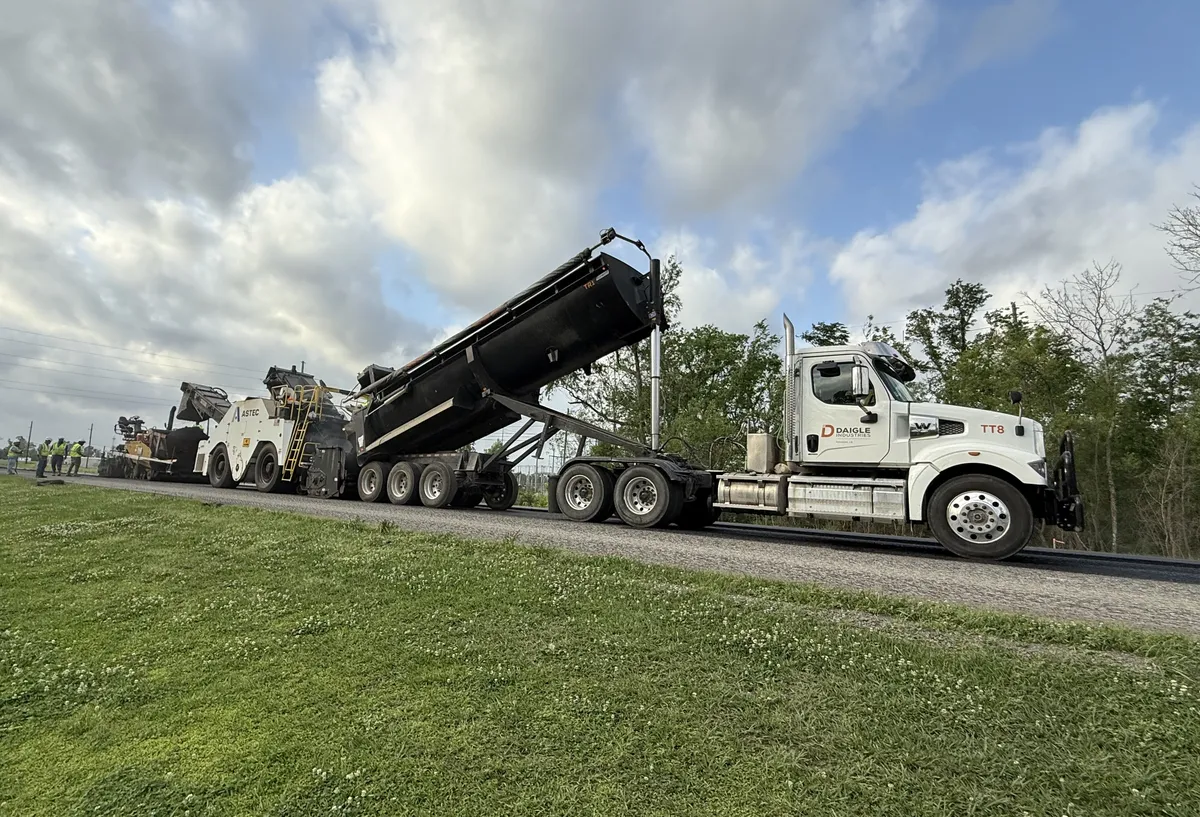
Third generation paving company cuts costs with fleet management technology
Editor’s Note: The Focus on Performance series from AsphaltPro Magazine allows OEMs and service providers to highlight professionals in the industry who have improved efficiencies and the bottom line through best practices and performance. This month’s installment, featuring RJ Daigle, focuses on fleet management strategies.
As the third generation takes the reins at RJ Daigle and Sons in Baton Rouge, Louisiana, they are keenly aware of the company’s focus on integrity, dedication and quality. Those three pillars have helped the company grow from a single steel wheel roller to over 175 employees operating from two asphalt plants and a fleet of equipment worth millions of dollars. While traditions are great, they are also using technology to better manage their 10 crews. FleetWatcher by AlignOps helps them streamline production, enhance efficiency and control costs.
FleetWatcher aggregates data from the connected assets as well as other software programs to provide transparency into a company’s fleet operations. Users can see where rolling assets are, divert them around traffic problems, ensure that trucks are not waiting either at the asphalt plant or at the paver, and more. This allows users to make real-time decisions that have immediate results. If there are too many trucks on a job, one or more can be diverted to other tasks; if cycle times are too long, dispatch can re-route trucks or determine the cause of the slowdown, and more. The team at Daigle uses it for these functions and much more, including accurately paying third-party trucks and eliminating “truck burn.” That alone has saved countless hours and thousands of dollars.
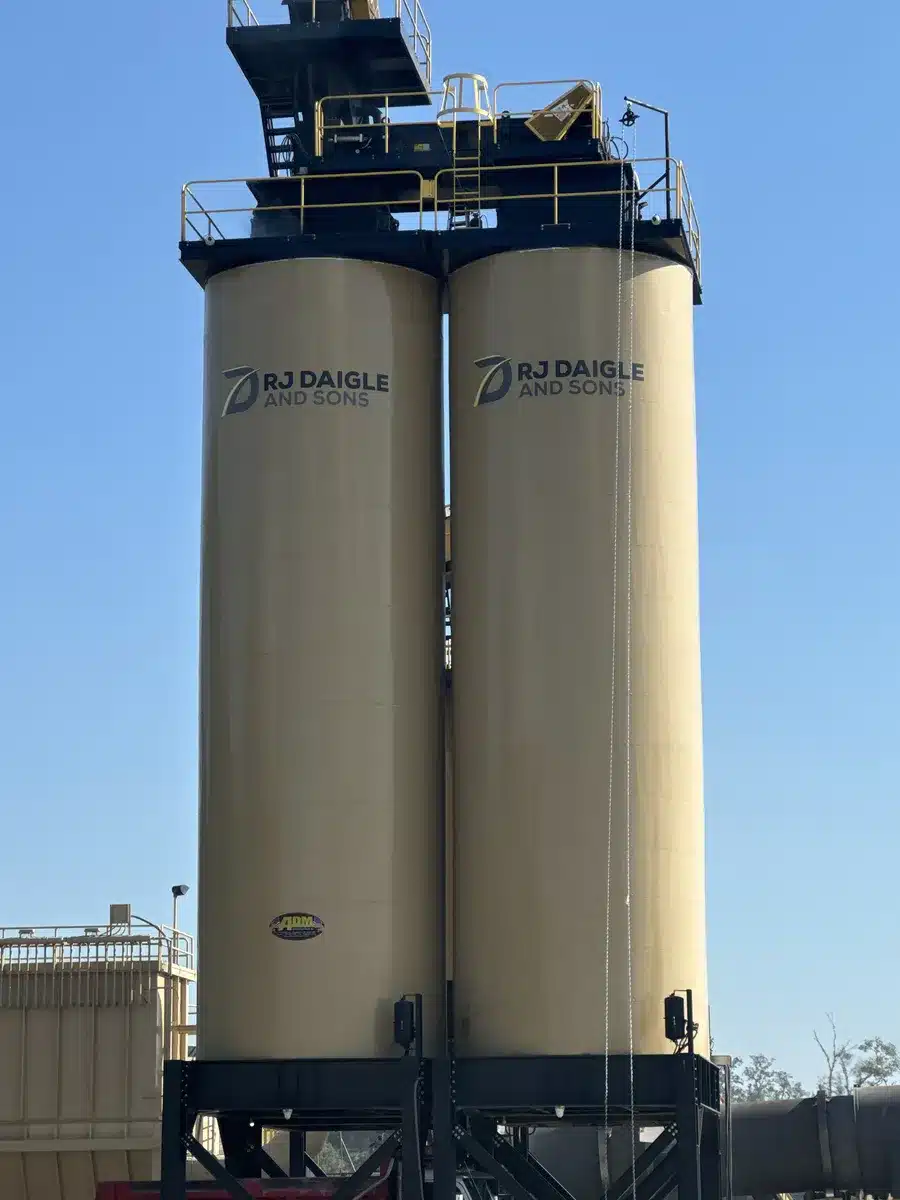
RJ Daigle’s team running its two asphalt plants can now use the FleetWatcher platform to adjust production based on real-time trucking information. All photos courtesy of FleetWatcher by AlignOps
Paying Trucks Accurately Saves Time and Money
Daigle operates 16 of their own trucks including 10 tri-axles, a pair of quad axles, and four dump trailers, all with Samsara installed. Since FleetWatcher integrates with Samsara, there is no need for an additional device in those vehicles. Depending on their workload they typically hire 35-40 additional trucks, most of which use the FleetWatcher app.
Logistics Manager Ryan Marciante starts each day with a look backward, paying those third-party trucks accurately for yesterday’s work. Rather than relying on estimates on when trucks showed up, or whatever the foreman said, he has accurate data from the virtual shift tickets, so he knows when trucks started, when they finished, what jobs they were on, and more.
“I go back to the LCAs and I create shift tickets for the jobs that ran the day before,” Marciante said. “Using the LCAs, I make sure they were at the plant on time, and where they ended the day. I’m able to put in exactly what jobs they were on, and the exact times.”
With the volume of projects going through Daigle daily, Marciante spends about three hours a day on this task, a far cry from what they used to go through. “Previously someone in accounting would have to track down all the information, which was all scrambled—it might take a day and a half to do so,” and it was not always accurate. Now trucks are being paid fairly, and timelier, thanks to FleetWatcher.
There are still times when technology needs a human touch. “In the mornings, I check the shifts to see who’s supposed to be where, and if I don’t see their GPS logged in, I’m on the phone calling them, ‘hey you need to turn your GPS on, you need to log in to the app.’ We let these guys know that this is how they’re being paid, so if you’re not logged on, I can’t pay you.”
“They enjoy it because all their scale tickets are there, so they can see all their tickets on their phone. They can see how much they’ve hauled that day, when they’re clocking in and out,” Marciante sad.
Eliminate Overtrucking
In addition to paying trucks accurately, FleetWatcher is helping to determine the optimum number of trucks for each project. Marciante recalled how the telematics platform helped them streamline trucking on a recent project in Gramercy, Louisiana. The project called for milling, patching and overlaying asphalt on 13 miles of LA-3152. Cycle time was about 30 minutes in each direction from the Geismer asphalt plant.
“The job itself is holding the trucks up because it is so long,” said Marciante. “We’re closing down lanes, and with some increased dwell time on site, a cycle is running about an hour and a half.”
In the days before FleetWatcher, they’d likely have budgeted 25 trucks for the project. Now they are consistently hitting their production goals with fewer trucks, by eliminating excessive waiting at both ends—no more waiting at the plant, nor waiting at the paver.
“If we cut, say five trucks from a job, we’re saving close to $5,000 a day just on trucking,” Marciante said.
If they have somewhere to send the trucks that are not needed on a particular project, they’ll pull them immediately. If not, they’ll finish the day and correct it tomorrow. The information is helpful for future projects as well.
“We have pre-construction meetings before every project,” Marciante said. “I’ll look through the completed shifts tab to see if we’ve done similar projects nearby and use those to better estimate the project at hand.”
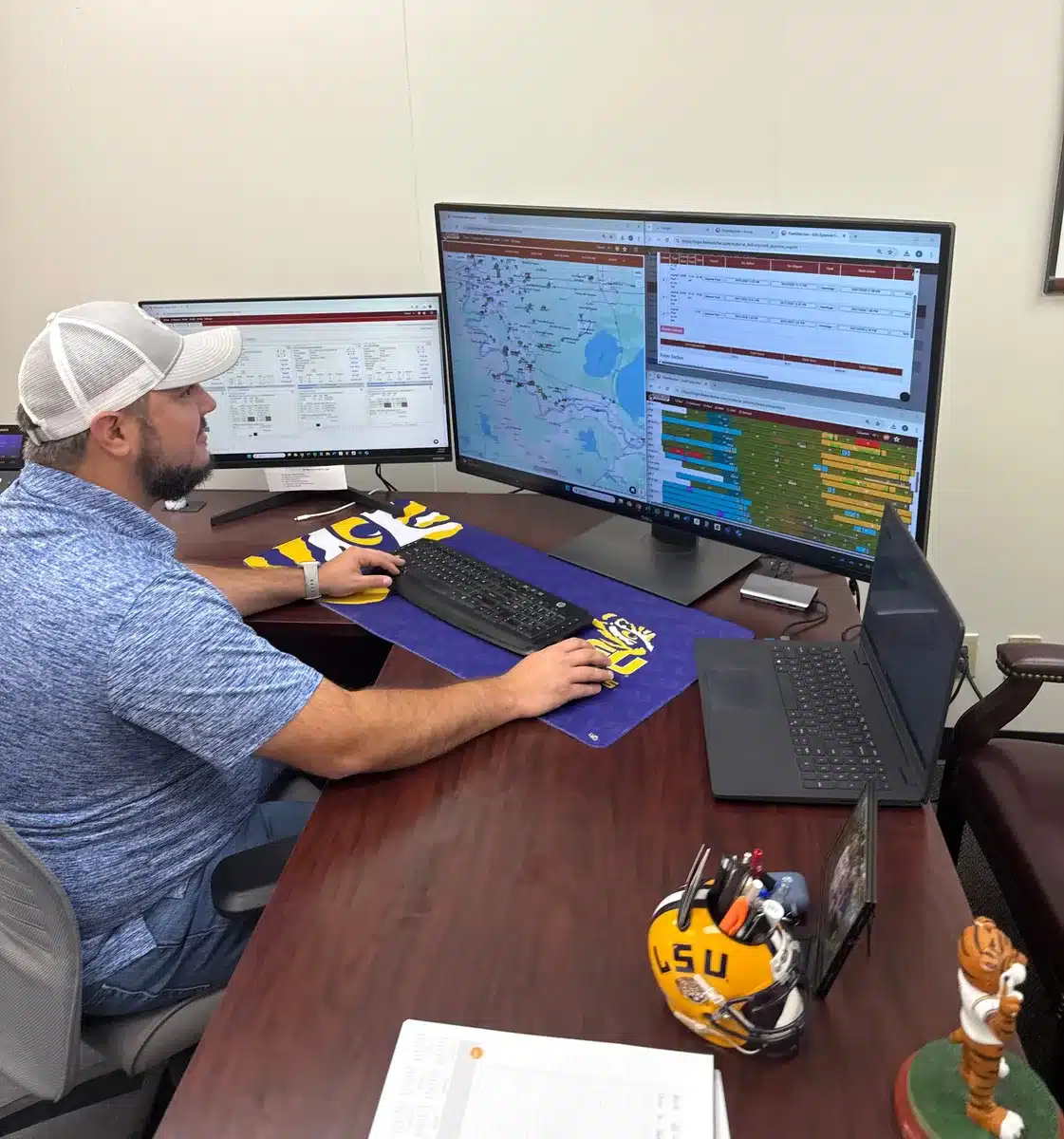
Ryan Marciante can assign trucks to projects in advance and notify drivers of their assignments with the FleetWatcher platform. “If I need 12 trucks at our Geismer plant for 6:30, I can assign which trucks I want there, click one button and it notifies all 12 of those trucks at the same time.”
Fast and Efficient Dispatch
As the day moves towards completion, Marciante looks ahead and begins to dispatch trucks for the next day’s projects. The process is simple and straightforward, saving him roughly an hour a day over the way it was done previously.
“Before using FleetWatcher dispatch, it was all done manually. I’d put the information in a notebook, writing truck names under the foreman, and then text each one individually, ‘hey I need you to go here tomorrow, here are the directions.’ It was an individual text to 30 or more people.”
With the FleetWatcher dispatch program, it is much simpler and faster. “If I need 12 trucks at our Geismer plant for 6:30, I can assign which trucks I want there, click one button and it notifies all 12 of those trucks at the same time. They all get the same message, with the pin drop so they know who they’re working for, and what the job is. It has sped the process tremendously.”
In addition to extensive use by Marciante, FleetWatcher is also used by the team running RJ Daigle’s two asphalt plants. They can see where the trucks are and when they are due back at the plant, so that they can adjust production accordingly.
Marciante, who had managed FleetWatcher for another company before joining Daigle, appreciates not only the value of the telematics platform, but the service he receives as well. When he first started, he and Rick Jennings, his customer success representative, would have weekly Teams meetings to go over the platform and have small training sessions.
“Rick is always just a phone call away,” Marciante said. “I can text him on the side and say, ‘I’ll send a formal request but here’s what I have going on, do you have a solution or something I can try?’ He’s been great to work with, as has the whole FleetWatcher team.”
RJ Daigle is a great example of a paving contractor that has continued to adhere to the three pillars that built the company. But adhering to tradition doesn’t mean they are stuck in the old ways. Technology, including the FleetWatcher telematics platform, is helping them to enhance efficiency and cut costs in many areas. Those savings allow the company to deliver on their core principles of integrity, dedication, and quality, as they build the company for the next generation.