
How to Pave, Surface and Stripe a Pickleball Court
BY AsphaltPro Staff
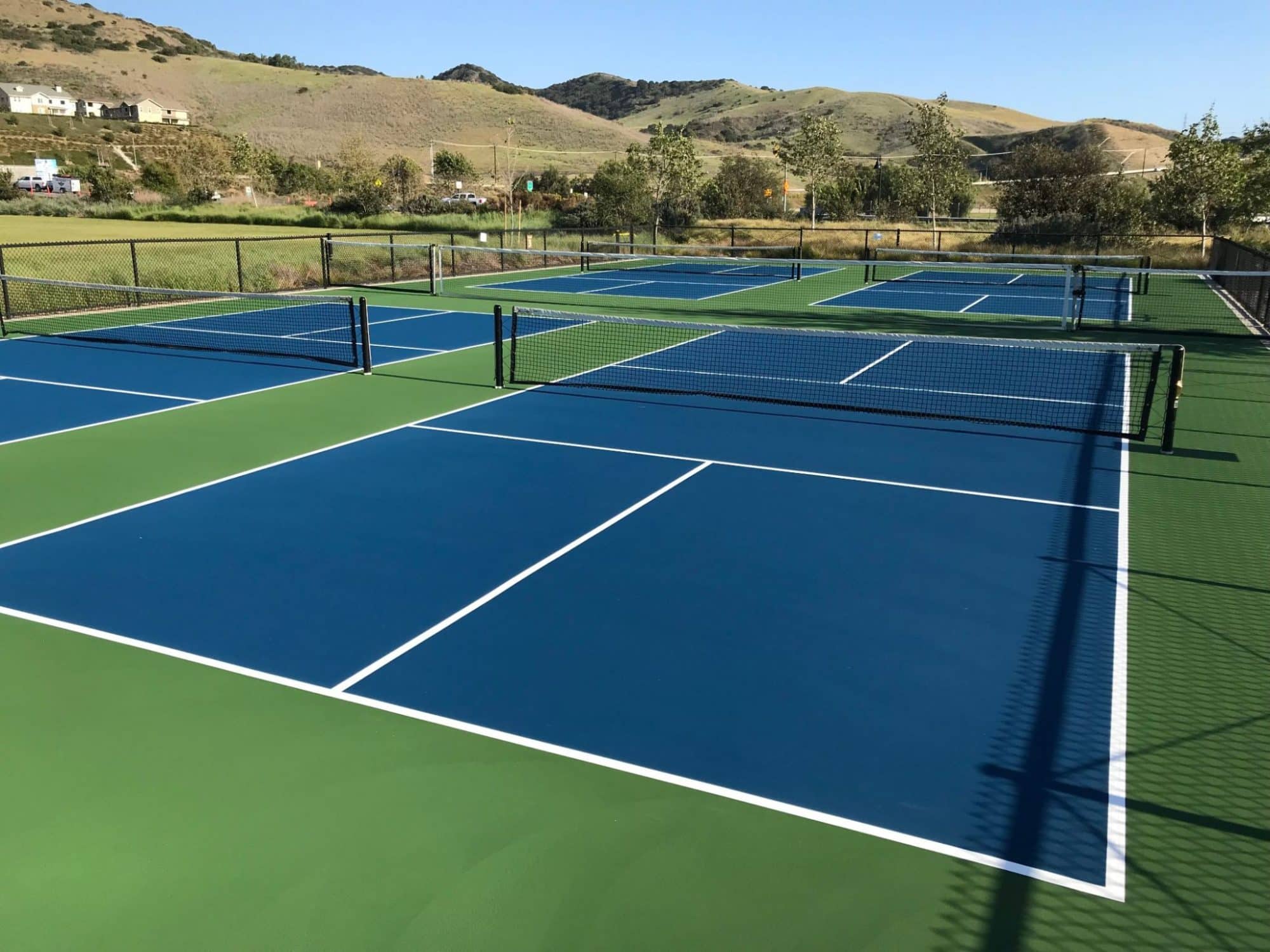
As pickleball participation explodes across the United States, asphalt contractors continue to see demand for new court construction and conversions. Here’s what contractors need to know about grading, surfacing, coating and striping to build a quality pickleball court.
According to the Sports & Fitness Industry Association (SFIA), pickleball has remained America’s fastest-growing sport for five consecutive years. Participation jumped 22.8% between 2024 and 2025, with nearly 25 million Americans now playing the sport annually.
That surge in participation translates directly into infrastructure demand. Reporting cited by CNBC noted that the number of outdoor pickleball courts in major U.S. cities increased roughly 650% over a seven-year period as municipalities, parks departments, HOAs, schools and private facilities race to keep up with player demand.
These are your next customers. They need asphalt contractors to provide them with brand-new court construction and with conversion of underused tennis courts, parking lots and recreational spaces.
But paving a pickleball court isn’t as simple as striping a few extra lines on a flat surface. Court dimensions, slope, surface smoothness, drainage, color coatings and striping accuracy all play a role in delivering a court that performs well and holds up over time. Here are the basics of paving, surfacing and striping a quality pickleball court.
Pickleball Court Dimensions and Layout
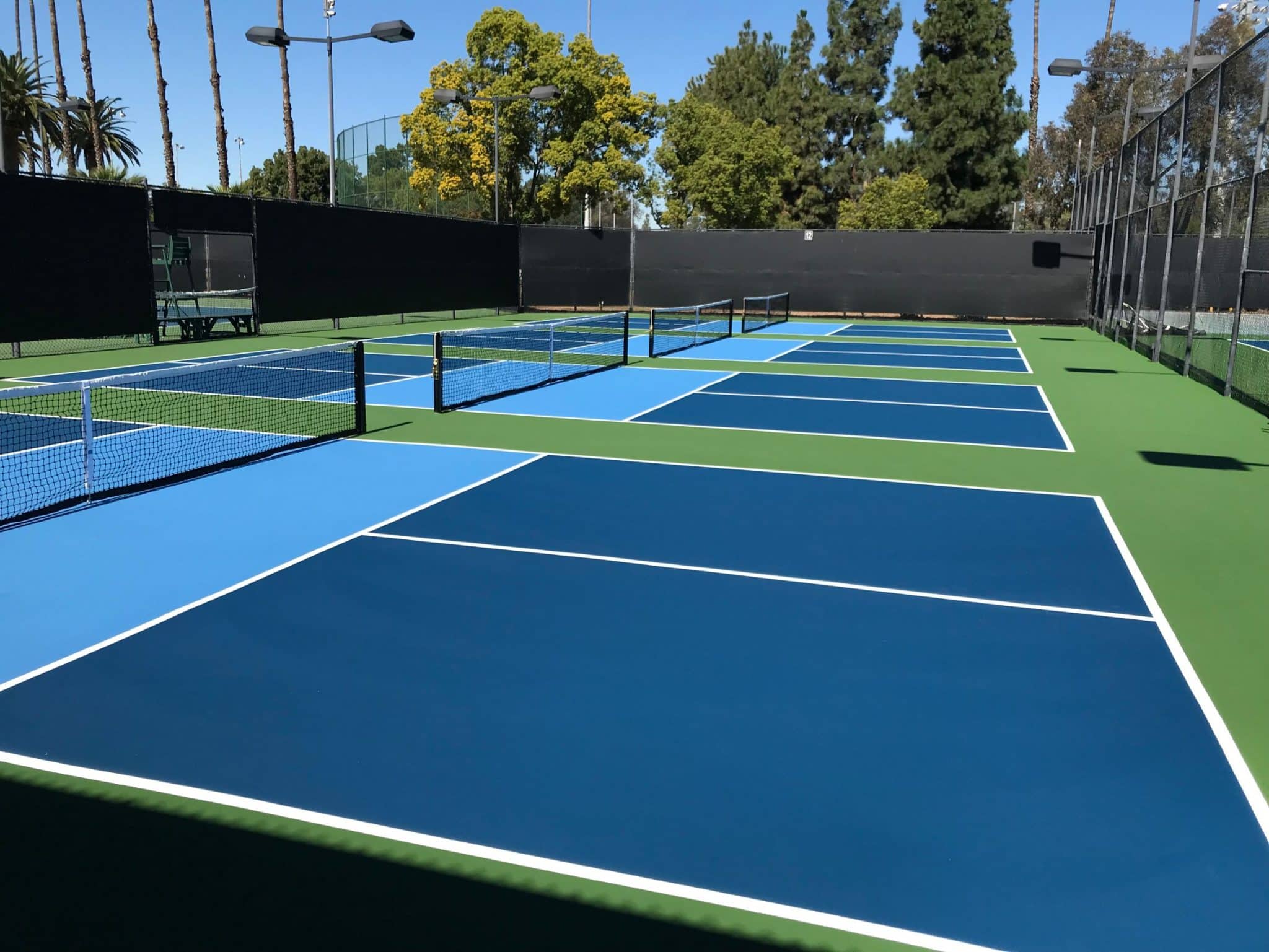
Before breaking ground, understand the precise dimensions required. Pickleball courts measure 44 feet long and 20 feet wide, including boundary lines. However, the total playing surface must be larger to provide adequate space for player movement.
One major advantage of pickleball’s compact footprint is the ability to maximize existing spaces. Up to four pickleball courts can fit within the footprint of a single tennis court, making this an attractive upsell for facilities looking to expand recreational options without significant construction costs.
Like tennis courts, orient your pickleball court north-south whenever possible. This orientation limits sun obstruction to players’ vision and reduces the impact of shadows on the playing surface during peak playing hours.
Subgrade Preparation and Grading for Slope and Drainage
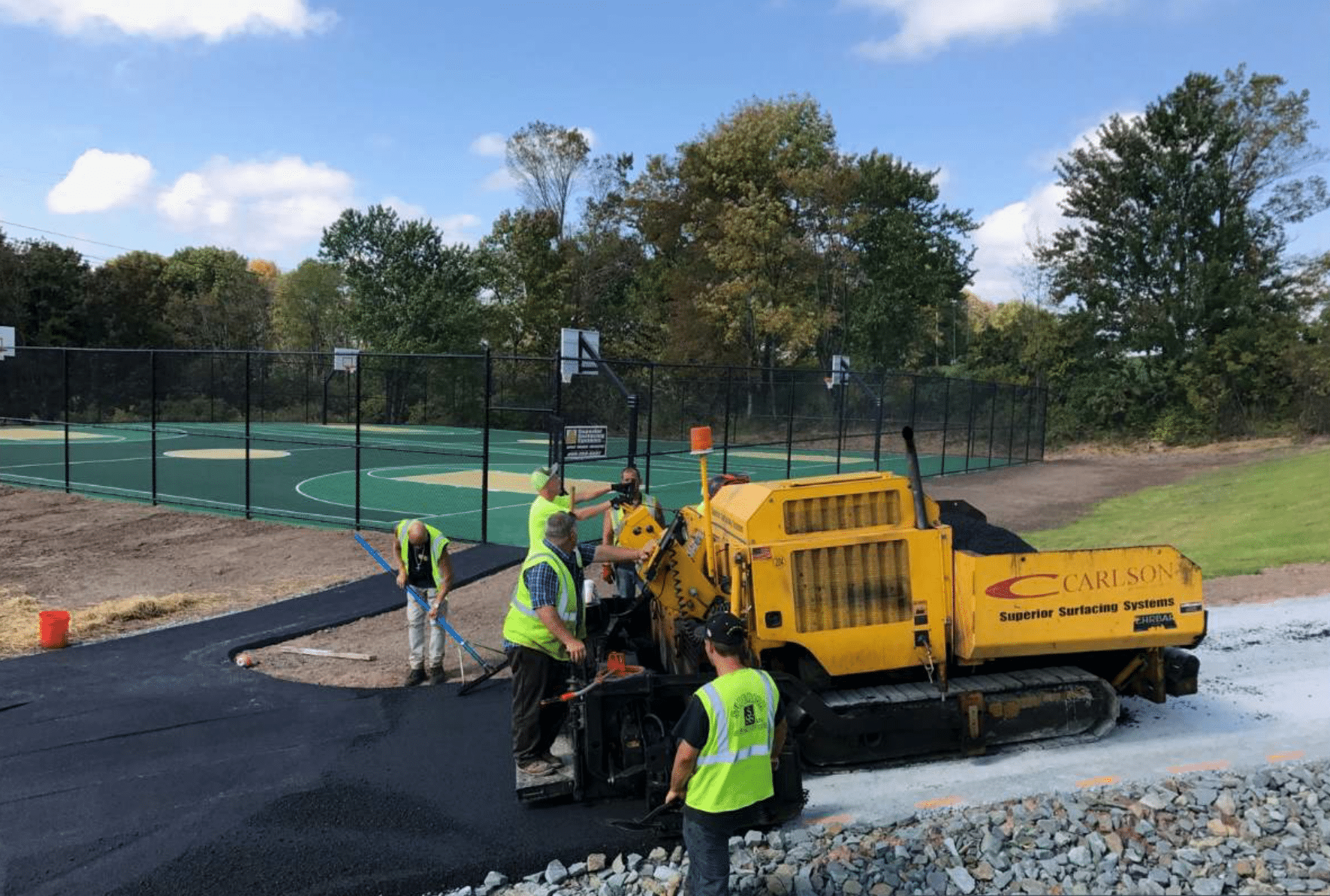
Proper subgrade preparation is the foundation of any quality sport court. The grading phase requires precision and patience. Sport courts typically require a consistent slope for drainage—usually around 1%—but more aggressive slopes may be necessary depending on site conditions.
Standing water is the enemy of sport court surfaces. Any low spots will collect water, which not only breaks down the acrylic surface coating and underlying pavement but also forces players to wait longer before they can use the court after rain events.
Sport courts require tight tolerances because players will immediately notice puddles, uneven bounce or surface imperfections. In “How to Surface & Stripe a Pickleball Court,” Jeff Gearheart of SportMaster Sport Surfaces explained that courts are “normally built with a 1% slope for drainage,” adding that “water will collect in any bird baths.” That means contractors need to pay close attention to grade consistency during both paving and finish work.
For contractors bidding pickleball courts, that level of precision means the project should be approached differently than traditional paving work. Crews may need to slow paving speeds, pay closer attention to rolling patterns and spend more time checking grades throughout the process.
Surface Preparation Before Coating
Because pickleball players notice inconsistent ball bounce and surface irregularities quickly, smoothness and uniformity are especially important during prep work.
Before coatings are applied, the pavement needs to be evaluated for cracks, low spots, bird baths and other surface defects that could affect playability. Any imperfections should be repaired beforehand because sport court coatings will not mask pavement issues.
The surface should also be thoroughly cleaned to remove dirt, dust and loose material that could interfere with adhesion. Contractors typically use blowers, brooms or pressure washing before moving into the coating process.
Upsell Recreational Site Managers with Multi-Purpose Sport Courts
Surface Application and Color Coatings
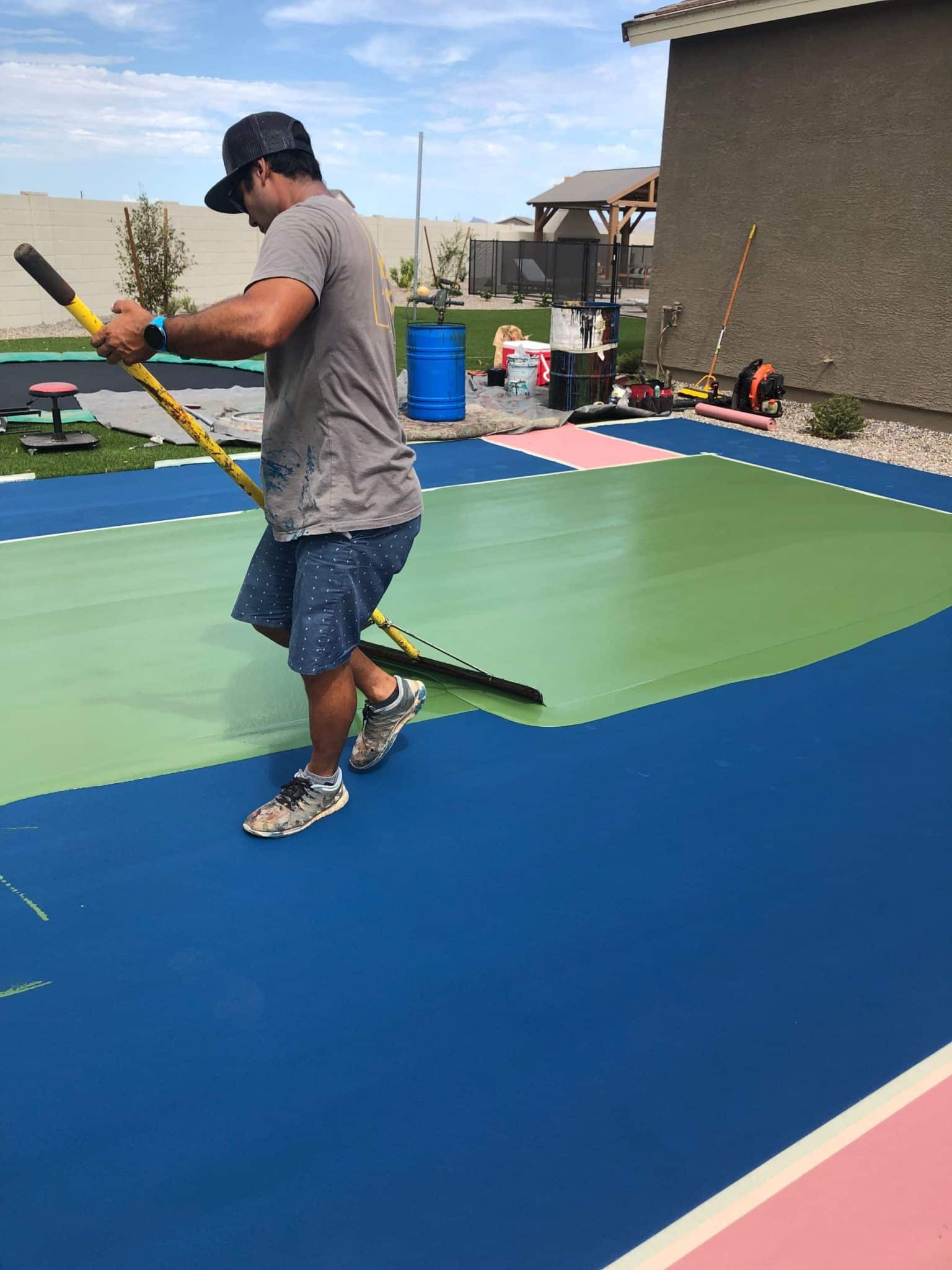
After repairs and cleaning are complete, contractors can begin applying the resurfacer, cushion system and color coatings. An acrylic resurfacer is typically applied first to fill small pavement voids and create the textured profile needed for additional coatings to bond properly.
“It won’t fill cracks, but it will fill any voids in the pavement and it will hide any repairs you’ve made,” Gearheart said. “And, most importantly, it sets a nice sandpapery texture that cushion and color can more easily adhere to.”
For cushioned courts, multiple layers of acrylic mixed with rubber granules are applied using a soft rubber squeegee. Pour the material in smaller amounts to prevent rubber from piling at the end of the squeegee pull and being gentle when scraping high spots to maintain an even surface.
Color coatings are typically installed in at least two coats. Because pickleball players repeatedly move within smaller areas of the court, adding an extra coat can help extend surface life in high-wear zones. Apply acrylic coatings when ambient temperatures fall between 60 and 90°F for optimal results.
Striping the Court
The total dimensions of the pickleball court should include the boundary lines themselves. Since all court lines should be 2 inches wide, contractors will need to measure from the outside edge of the painted line to maintain accurate court dimensions.
Straight, consistent lines are critical not only for appearance, but also for fair play. The most common installation method is to tape the lines first, then apply the paint with a roller or brush.
Line striping machines can create overspray issues, and thinner traffic paints are more likely to bleed beneath the tape edges while also providing less texture and shorter wear life. Instead, textured white line paint is often recommended so the striping matches the feel of the playing surface.
Because textured courts create tiny voids beneath the tape edge, applying a clear-drying anti-bleed primer after taping—but before painting the lines—can help contractors achieve cleaner, sharper edges.
For multi-purpose courts, line color selection becomes especially important. Dedicated pickleball courts typically use white lines, but on shared courts, striping should contrast with the playing surface while remaining visually secondary to the primary sport markings. Where lines intersect, leaving a 3-inch gap can help reduce confusion for players.
How to Pave a Sport Court: Practice Really Does Make Perfect
The Bottom Line
As pickleball participation continues to surge, demand for quality courts will only increase. For asphalt contractors, that creates an opportunity to expand into a growing niche market. Success depends on precision. From proper grading and smoothness to coating application and striping accuracy, every step affects how the court performs and how long it lasts.