
IDIQ for Residential Preservation
BY Jon Young
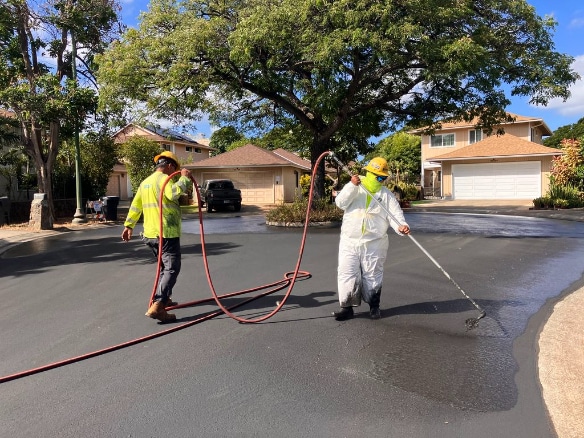
Indefinite Delivery Indefinite Quantity for seal coating pavement preservation in residential Hawaiian project
In Hawaii, Indefinite Delivery/Indefinite Quantity (IDIQ) contracts are used by the city, Hawaii Department of Transportation (HDOT) and the military. G P Roadway Solutions (GPRS), Honolulu, performed seal coating in West Loch residential streets for the pavement preservation of streets as part of an IDIQ contract for the City and County of Honolulu, Department of Facility Maintenance. The project started in early January 2023 and was completed in late July 2024.
A seal coat provides a protective layer that shields the underlying pavement from the damaging effects of water, ultraviolet rays and oxidation. This helps in prolonging the lifespan of the pavement.
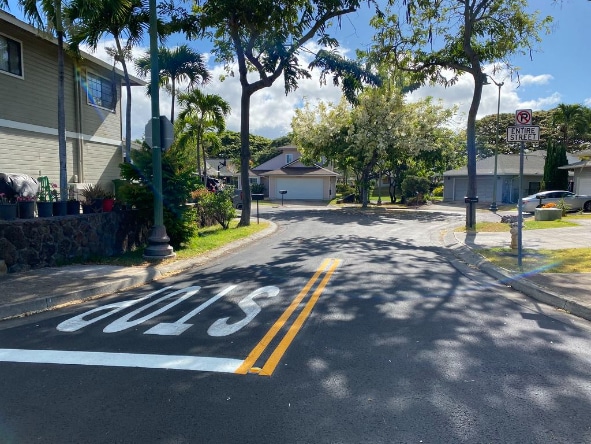
A challenge to overcome on this project was detritus on the pavement. To address leaves constantly falling on the ground while applying the seal coat, GPRS had a person with an air blower removing any debris prior to the application of the material. In the second photo, you can see the shadows from the trees on the beautiful, finished product.
Set It Up For Safety
Any time work is being done on an existing roadway, traffic control is going to be a major concern to the commuting public. GPRS used in-house traffic control to perform their roadway safety requirements. GPRS Traffic Control Division displays true professionalism when performing their tasks. They ensured the work zone was safe and secure for their personnel and the general public.
Asphalt Improves Waikiki Thoroughfare in Road Builders Rehabilitation Project
GPRS deployed a two-person traffic control team to flag and control the roadways while they performed work. The work zone was secured by using advanced warning signs, safety cones, directional arrows and personnel controlling street traffic in both directions using stop/slow signs.
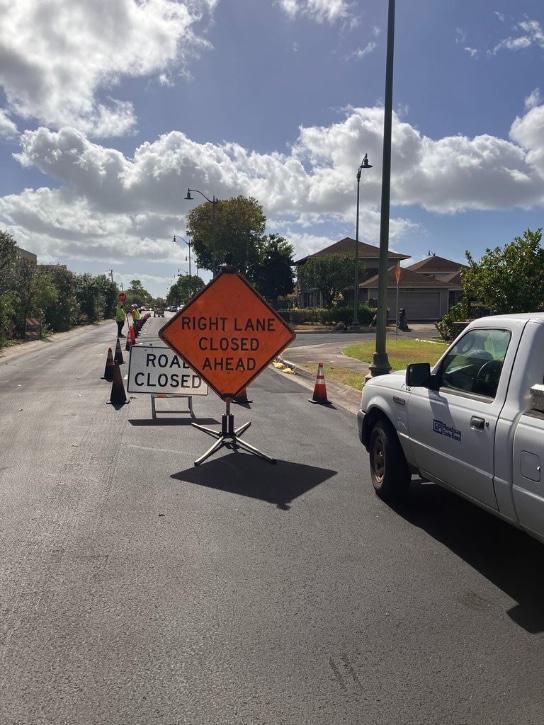
GPRS deployed a two-person traffic control team to flag and control the roadways while they performed work.
Seal in Definite Quality
Another IDIQ contract, begun in the summer of 2022, had cleaned and sealed cracks in the pavement, so the first step for GPRS on this project was to remove all existing pavement markings. They used an eradication machine to remove existing double yellow lines and stop bars.
GPRS prepared each area of the project by installing BMPs, cleaning each area and taping off items such as maintenance holes. Once the preparation work was completed, they applied two coats of seal coat material for each area for maximum protection of the asphalt pavement.
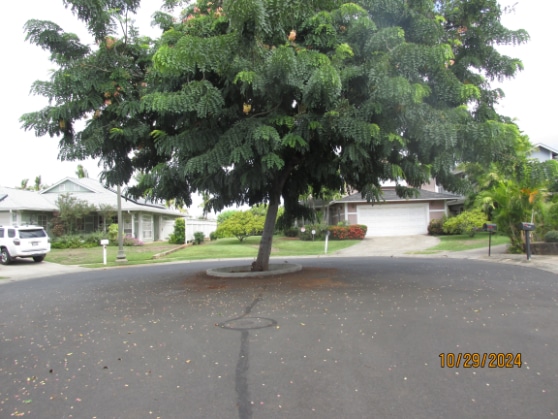
A challenge to overcome on this project was detritus on the pavement. To address leaves constantly falling on the ground while applying the seal coat, GPRS had a person with an air blower removing any debris prior to the application of the material. In the second photo, you can see the shadows from the trees on the beautiful, finished product.
A seal coat machine was used to apply the material; a wand was also used. The size of the area determined the specific technique they used on each section of the project.
The roads had to be opened by 3:30 p.m., so GPRS took curing time of the seal coat material into consideration to ensure they could meet this requirement. Preservation is critical to maintain the integrity and functionality of asphalt pavement by preventing moisture from destroying the city’s roads. It is anticipated that the application of a seal coat will extend the lifespan of the asphalt pavement by five to seven years.
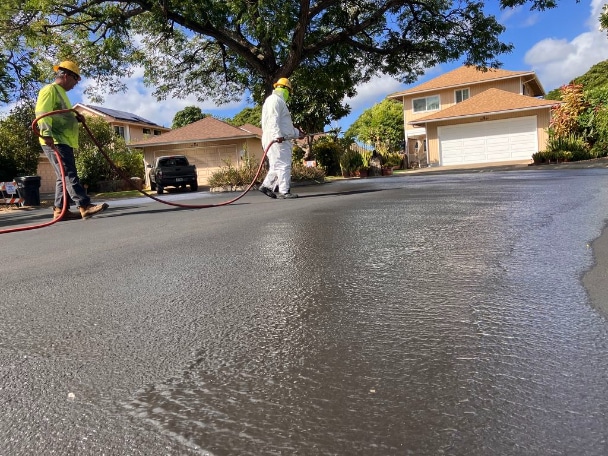
Once preparation work was completed, crew members used both a seal coat machine and a hand wand to apply two coats of material for each area for maximum protection of the asphalt pavement.
For the final step of the project, GPRS used a Thermo Striping Machine to re-apply the double yellow lines and stop bars, using Ennis Thermo material.
IDIQ BASICS
The website for United States Federal Contractor Registration (USFCR) provided a blog post explaining the basics of Indefinite Delivery/Indefinite Quantity (IDIQ) contracts, describing them as providing “for an indefinite quantity of supplies or services during a fixed period. They are ideal for situations where the exact quantities and delivery times are not known upfront, allowing for flexibility to meet varying needs.”
Among the key components of the IDIQ contract—base contract, task orders and ceiling limit—the task orders should protect contractors from having surprise responsibilities added to their to-do list during the contract’s life. Other benefits for contractors, listed on the USFCR blog, include:
- A steady or reliable workload;
- A reduction in paperwork and time spent on negotiating contract items; and
- Strengthened partnerships.
The West Loch and Ewa Villages residential development in Honolulu also benefited from the City and County of Honolulu’s IDIQ contract with Miller’s Paving LLC, Oahu, with work that began in 2022. Hawaii Asphalt Paving Industry (HAPI) Executive Director Jon Young wrote in the association’s August newsletter of the contractor’s success using a new Crack Pro 260 gravity flow machine for the sealing of cracks over hundreds of streets before the next phase of preservation: the seal coat project detailed in the adjacent article.