
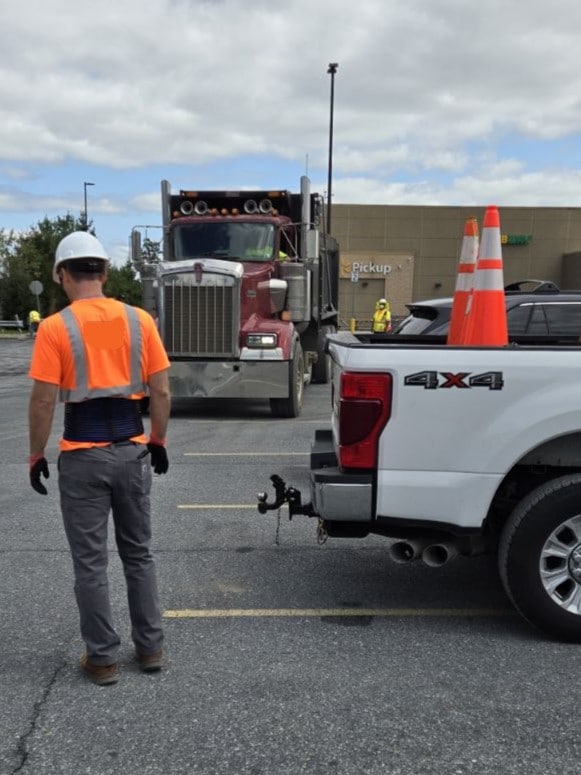
Shouldn’t it be obvious that a driver must keep his or her eyes on the road when driving a 50,000-pound haul truck? Sadly, attention can get divided on the job site and this is where we need clearly defined rules and roles for drivers, ground personnel and safety buddies as well as the use of proximity alarms, whistles, headsets and other safety equipment that can prevent accidents and/or sound the alarm when something is about to go terribly wrong.
In the example I’ll outline here, a subcontracted driver in control of a 10-wheeler backed to the mill on a parking lot project. He watched that piece of equipment out the right-hand side mirror. Moving forward slowly, he continued to keep his eye on the mill, continuing to monitor the right-hand side mirror.
The groundman was also on the right-hand side of the mill, directing the operation.
From half the parking lot away, I realized, too late, that the driver wasn’t going to notice his truck getting dangerously close to parked vehicles. I couldn’t shout loud enough to get his attention before he hit the parked work truck’s pendle hook (trailer hitch) and dragged the work truck about 2 feet into the neighboring parking stall before noticing me yelling and waving and the crunching sound beside him.
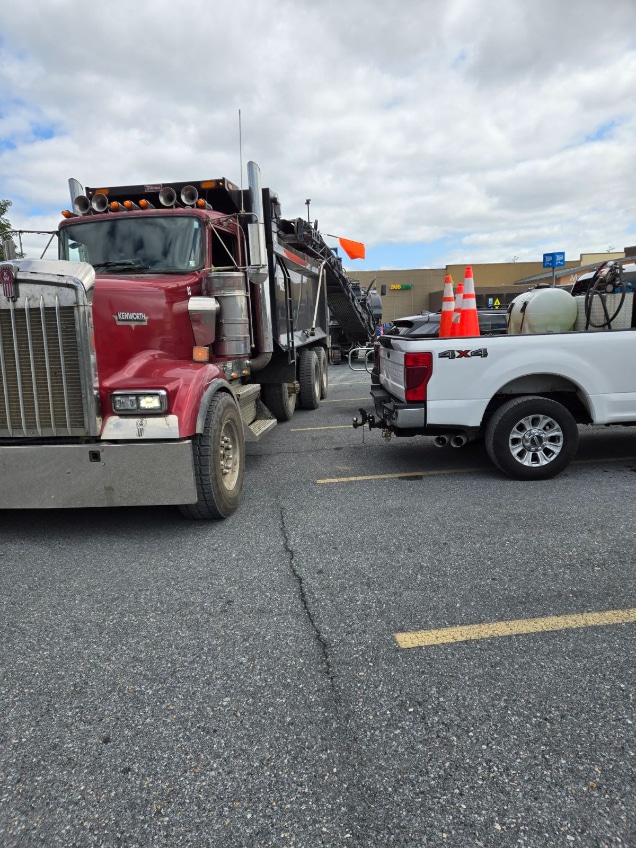
To make the situation worse, after hitting the tow hitch and dragging the work truck a few feet into its neighboring parking stall, the haul truck driver backed up and continued working as if nothing had happened. If not for me waving at him and calling for someone to assess any damage, he wouldn’t have alerted anyone to the problem. We must work together in the field for accountability and safety.
Thank God no one was unloading the back of the work truck. Thank goodness this truck belonged to the boss and not a litigious member of the traveling public.
It takes training and all hands on deck to avoid pricy mistakes like this. If I’d had a safety whistle around my neck that morning, I could’ve blasted the shrill sound to get the driver’s attention—of course, the driver would have to know that the sound of the whistle means to stop in your tracks and look for the safety problem. If the team had assigned safety buddies at the start of the job, someone would’ve been looking out for the driver. Someone would’ve been keeping an eye on the mill operator. Someone would’ve been keeping an eye on the groundman beside the mill. Someone would’ve noticed the truck veering too close to parked vehicles.
Luckily, this is the kind of accident that only damages equipment and results in a few minutes of delay. It’s something the crew can learn from and then move on with the day, working smarter and with heightened senses. But it’s the kind of accident we can avoid if we train truck drivers to pay close attention to their driving skills when on the job. If your foot isn’t on the brake, your truck is moving. Watch where it’s going.
This article originally appeared in the October 2024 issue of AsphaltPro, alongside this article, “Prevent Fatalities with Better Truck Driver Training, Best Practices.”