Improve community relations and stay in operation when you knock out odorous emissions at the HMA plant with plant-based molecular neutralization strategies.
Asphalt production and paving are essential foundations for modern infrastructure. Despite its indispensable nature, when the production of asphalt generates pungent odors, it negatively impacts surrounding communities and potentially creates operational disruptions. This problem is widespread due to asphalt’s global demand, as well as increasing urban development in areas surrounding production facilities.
The volatile organic compounds (VOCs) in asphalt binders create emissions, which can cause concerns from neighbors and passersby smelling the offgas. If left unaddressed, these concerns can become complaints, which can lead to regulatory restrictions.
This article explains the intricacies of odor control in asphalt production, particularly at the stack and baghouse. It also examines modern and effective solutions using plant-based formulations and delivery systems, mitigating emissions and fostering positive neighborly relations.

In many cases, plant neutralizers are blended directly into the asphalt mix, but for odor control at stack and baghouse outlets, vapor phase systems provide a simple and precise methodology for delivery. These systems disperse product as a vapor, maximizing contact with airborne VOC key emission points. Ecosorb vapor phase dispersion systems are designed to distribute plant-based odor neutralizer as a vapor at VOC key emission points, maximizing contact with odorous air without the need for water dilution.
Understanding Stack and Baghouse Operations
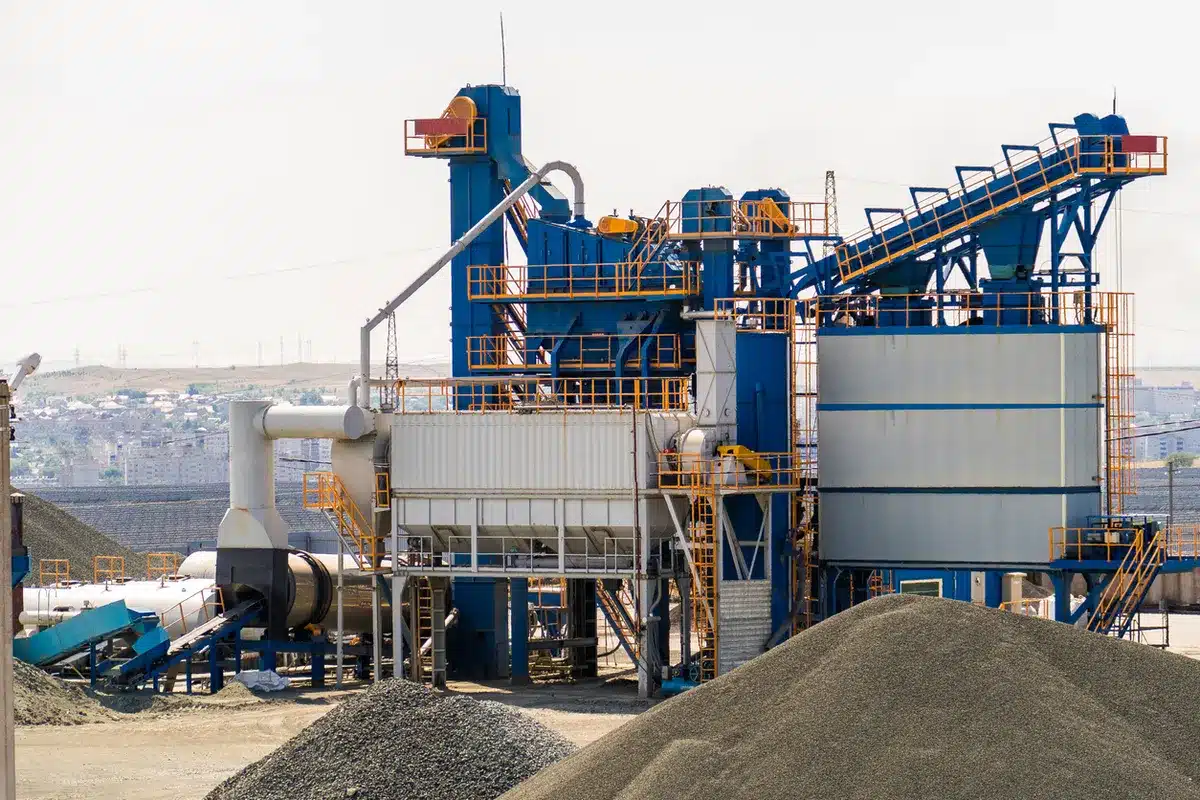
In asphalt production facilities, both the stack and baghouse play a distinct role in managing emissions. Understanding their functions and how they influence odor release, while rudimentary to most readers, is necessary for implementing effective odor control strategies.
Readers will recognize, the stack vents exhaust gases generated during various stages of production, including:
- Aggregate drying,
- Asphalt binder heating, and
- Aggregates and binder mixing.
The stack’s primary function is to vent these hot gases and direct them away from the facility and surrounding areas. Stack height and design play a key role in dispersion, reducing the concentration of odors at ground level.
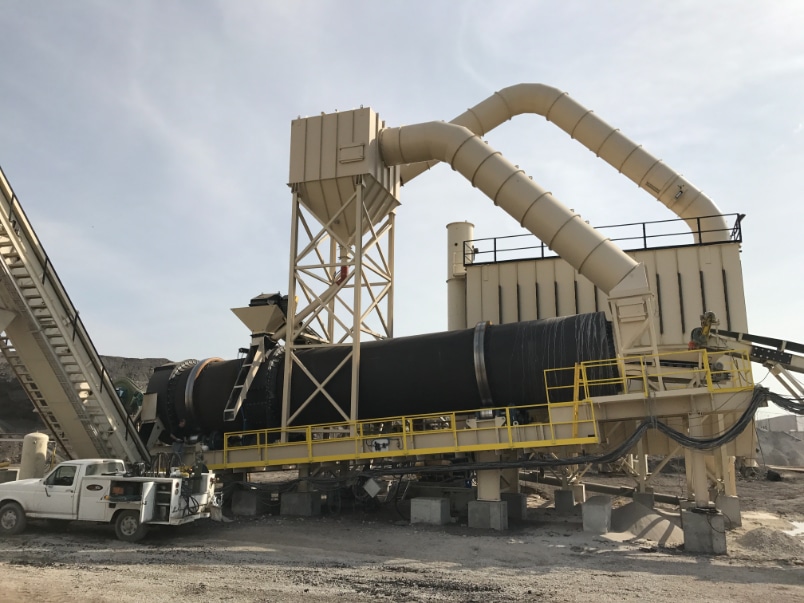
Readers will also recognize, the baghouse is an air pollution control device that removes particulate matter, such as dust, from the exhaust streams before they are released through the stack. It functions as a large filtration system, trapping particles in fabric bags, while cleaner air passes through.
While effective for removing particulates, the baghouse does not inherently remove VOCs, which are the primary odorous offenders. These malodors pass through baghouse filters in the clean air streams and are typically released into the atmosphere. While optimizing baghouse operation and maintenance improves overall air quality and indirectly contributes to odor reduction by minimizing dust emissions, absolving the issue adequately requires addressing VOCs more comprehensively with additional processing.
Solve Asphalt Plant Odor Issues
Chemical Complexity and Variability
The variable chemical composition of asphalt fumes is a leading challenge in asphalt production odor control, as it creates a dynamic mix of VOCs that fluctuates based on several factors.
Crude oil variability—Asphalt, a byproduct of crude oil refining, inherits the variability of its feedstock. Different crude oils have distinct chemical compositions, influencing the types and concentrations of VOCs produced during asphalt production. The use of “opportunity crudes,” which are lower quality and higher in sulfur content, further complicates odor management.
Asphalt binder grades—Different asphalt binder grades have varying viscosities and chemical makeups, causing variations in VOC emissions during heating and mixing. In particular, asphalts with higher viscosities require higher temperatures for processing, which increases volatilization of odorous compounds.
Recycled asphalt pavement (RAP)—The incorporation of RAP, while a sustainable practice, introduces additional complexity. RAP contains residual binders from previous asphalt mixes of varying age and source, which release their own unique malodors not found in the base asphalt.
Additives and polymer modification—Additives and polymer-modified asphalt binders are designed to enhance pavement performance. However, in addition to releasing their own VOCs when heated, the additives and binder can react with each other, further diversifying the odor profile.
Regional and seasonal variations—Crude oil sources and refining processes vary geographically, leading to regional differences in asphalt binder composition and odor profiles. Seasonal weather changes also influence VOC volatilization rates, affecting odor intensity.
Beyond commonly recognized hydrogen sulfide (H2S) offgas, other VOCs play a significant role in the overall odor profile. Mercaptans, for example, are potent sulfur-containing compounds with a garlic-like odor, and they are frequently present alongside H2S. A wide range of hydrocarbons—including aldehydes, ketones and aromatics—also contribute petroleum-like notes to the mix.
Operational factors further influence odor emissions. Processing temperatures impact VOC volatilization, with higher temperatures intensifying odors. Additionally, wind speed and direction affect odor dispersion, influencing the perceived intensity and impact on surrounding areas. Even plant layout and surrounding topography affect airflow and odor dispersion patterns.
Effectively controlling odors in asphalt production requires a holistic understanding of operational factors and all odorous components’ chemical composition. Addressing only H2S, for instance, is insufficient, because it overlooks the contributions of other VOCs and the dynamic nature of asphalt odors. Successful mitigation strategies must target and neutralize the specific odor-causing compounds in each mix, considering multiple contributing factors.
The baghouse functions as a large filtration system, trapping particles in fabric bags, while cleaner air passes through.

An Ecosorb field scientist collects air samples around a facility to ascertain an odor profile.
Effective and Safe Odor Neutralization Solutions
To address these and other challenges, modern and eco-friendly plant-based formulations leverage scientific advancements to neutralize odor-causing compounds at their source. These blends utilize natural plant oils and other biodegradable ingredients to effectively neutralize a broad spectrum of VOCs, including H2S, mercaptans and other hydrocarbons.
These products do not merely mask odors, but instead chemically react with and break down odor-causing molecules, significantly reducing the smell. This targeted approach provides both greater efficacy and environmental responsibility compared to traditional methods that rely on harsh chemicals and masking agents.
Recognizing the inherent variability in asphalt odor profiles, specialized suppliers offer both standard and custom solutions. Standard blends provide convenient and cost-effective odor control, covering a variety of compounds common in asphalt mixes. This approach increases implementation speed and simplifies startup.
For more complex or unique odor profiles, custom formulations offer a tailored tactic. In these cases, a specialized supplier employs advanced analytical techniques, including gas chromatography-mass spectrometry (GC-MS), to pinpoint the specific VOCs responsible for the odor at a particular plant. This type of detailed analysis guides the development of a customized blend of plant-based ingredients, optimized to react with the facility’s specific odor profile.
Effective application of these plant-based solutions is as important as the formulations themselves. In many cases, plant neutralizers are blended directly into the asphalt mix, but for odor control at stack and baghouse outlets, vapor phase systems provide a simple and precise methodology for delivery. These systems disperse product as a vapor, maximizing contact with airborne VOC key emission points. Their low-maintenance design is comprised of nozzles that are designed not to clog.
Vapor phase systems provide flexibility, adapting to multiple airflow rates. Leading suppliers use computational fluid dynamics modeling to optimize dosing, a sophisticated technique that simulates airflow patterns within the stack and baghouse. This enables precise placement of injectors to ensure thorough mixing, maximizing the interaction between neutralizer and targeted VOCs.
Controlling Blue Smoke and VOCs at HMA Plants
An Example From the Field
At one hot-mix asphalt (HMA) manufacturing facility situated near a residential area, frequent community complaints about strong and persistent odors posed shutdown risk. The plant served numerous contractors and construction firms, producing over 1,500 tons of asphalt daily.
The facility previously relied on a standard odor-mitigating additive, but changes in asphalt mix composition—including increased use of RAP—and the introduction of a new polymer-modified asphalt, rendered the existing solution ineffective. Recognizing the urgency of addressing the odor issue to avoid regulatory action and improve community relations, the plant approached Ecosorb, a leading supplier of plant-based odor control solutions, to assess the situation and develop a targeted solution.
The first step entailed comprehensive air sampling at various locations around the facility, including the stack, baghouse outlet and storage areas.
Kokosing Materials Inc. is a Good Neighbor
Using Markes thermal desorption tubes, the supplier collected samples over multiple production runs, providing a comprehensive understanding of the plant’s odor profile with different operating conditions and asphalt mixes. The samples were then analyzed using GC-MS at the supplier’s lab to identify and quantify the odor-causing compounds present in each sample, providing a detailed breakdown of the facility’s odor profile. The GC-MS data revealed not only the presence of H2S and mercaptans, but also a host of other contributing VOCs.
The team then formulated a customized blend of plant oils to neutralize the identified odor-causing compounds at a molecular level. The blend was dispersed at the sampling locations as a vapor, maximizing contact with the odorous air without the need for water dilution.
In the subsequent months after the solution was installed, the plant noticed a significant reduction in odor complaints from the surrounding community, enabling it to preserve operations and improve community relations. This outcome highlights the power of a targeted, data-driven approach to odor control, utilizing plant-based solutions to effectively and sustainably address complex odor challenges.
Successful mitigation strategies must target and neutralize the specific odor-causing compounds in each mix, considering multiple contributing factors.
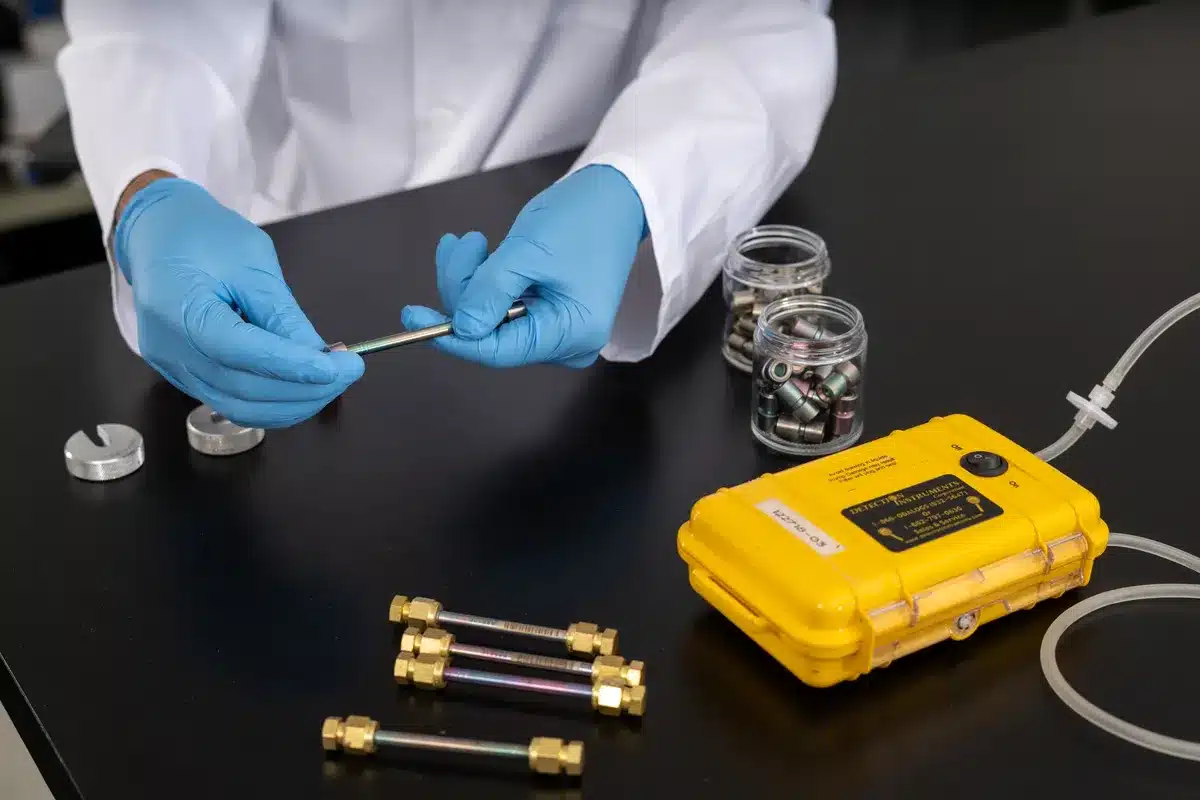
Markes thermal desorption tubes contain sorbent material designed to efficiently capture airborne odor molecules during sampling, and to preserve them at representative concentrations for lab analysis up to several weeks after collection.
Eco-Friendly Products Drive Asphalt Production Potential
Odor control is an integral component of responsible asphalt production. While conventional masking agents are inadequate in addressing this issue, leading suppliers with application expertise offer standardized and customized solutions for manufacturers, providing optimal odor control with formulations that fit each specific application.
By applying plant-based odor neutralizers at the stack and baghouse, producers can effectively mitigate foul odors using safe, environmentally friendly and cost-efficient methods. These formulations do not mask smells but instead neutralize them by breaking down and nullifying odor-causing VOCs present in the offgas.
These solutions empower asphalt manufacturers to proactively manage odor challenges, ensuring compliance, fostering positive community relationships and facilitating focus on core business operations.
Glenn B. Crisler II, Ph. D., is the senior research and development scientist for Ecosorb, where he manages the research & development laboratory.


 Reena Mistry is the director, sales & marketing for DCC Propane.