Asphalt Improves Waikiki Thoroughfare in Road Builders Rehabilitation Project

The asphalt professionals at Road Builders paved approximately 200 tons a day on a Waikiki mill-n-fill project amid heavy tourist traffic

Performing a pavement maintenance project in paradise may sound like a dream job, but it takes the same dedication from the crew and commitment to best practices that paving anywhere else in the world requires. In fact, the rehabilitation of Kalakaua Avenue on Waikiki also required strategic work zone setup and safety vigilance to keep foot-traffic off the fresh mat—a mat that met specs for the City & County of Honolulu Department of Design and Construction (DDC). Let’s take a look at how an experienced team from Road Builders Corporation, Honolulu, handled it all.

Project Manager Jennifer Gallego-Nakamoto shared the team worked together to ensure the project could “flow as we go,” with communication between crew members, foremen, engineer, superintendent, project manager, city inspector, safety officer, traffic control technicians and special duty officers. Operational Manager Mike Park said the company hired six Hawaii Police Department officers to assist in traffic control and used common courtesy as part of standard operating procedures. “You have to be humble,” Park said. “You can’t have arrogant people coming in. We have to be gentlemen,” he said of the way everyone carefully directed tourists around the site. “They did a great job out there.”

Hawaiian Project Specs

For the 2024 Rehabilitation of Streets, Unit 76A Kalakaua Avenue project, Road Builders milling and paving crews began in May, milling at a depth of 4 inches. The width, varying from 19 to 24 feet, depended on the lane structure. You see, Kalakaua is a four-lane thoroughfare with bike lanes along its ocean side and multiple four-way intersections with turn lanes. Mike Park, VP of operations, said “every day presented different challenges” even though every day the crew milled and paved back at least two lanes of an 800- to 1,000-foot section between 8:30 a.m. and 3:00 p.m.

To accomplish all this, they used a Wirtgen W 210 Fi cold planer and Astec’s Roadtec RP-195 10-foot tracked paver. Seven haul trucks delivered a State IV mix from the ADM EX 8844 Series plant located about an hour from the job site. Production averaged 160 to 180 tons per hour at a temperature of 330°F.
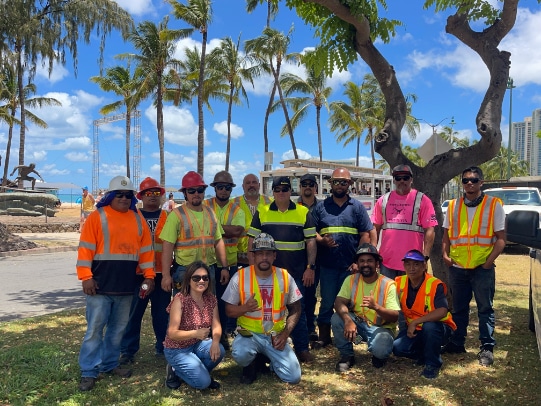
Back row, from left: Alani, Larry, Noah, Mana, Lewis, Johnny, Pana, Mike, Derek, Vinny. Front row, from left: Jennifer, Aaron, Jay, Edgar. This is the Road Builders paving crew that achieved paving and safety success along Kalakaua Ave. in the summer of 2024.

“Kawika Ishikawa has been in the asphalt industry for about 19 years and has worked as a plant operator for 16 of those 19 years,” Project Manager Jennifer Gallego-Nakamoto shared. “He currently is the plant manager/operator at Ala Imua LLC, which supplies the hot mix for Road Builders Corporation. We are fortunate to have him on our team. He’s not just the operator, he’s also our troubleshooter and will work tirelessly to find solutions whenever challenges arise. His expertise has been instrumental in continuing to keep our plant in operation.”

Paver Operator Aaron Manuel is a veteran asphalt industry professional as well. Gallego-Nakamoto shared Manuel “has worked in the asphalt industry for 16 years with 8 years as a paver operator with Road Builders.” She remarked that his positive, “do-whatever-I-have-to-do” attitude makes him a valuable part of the team.

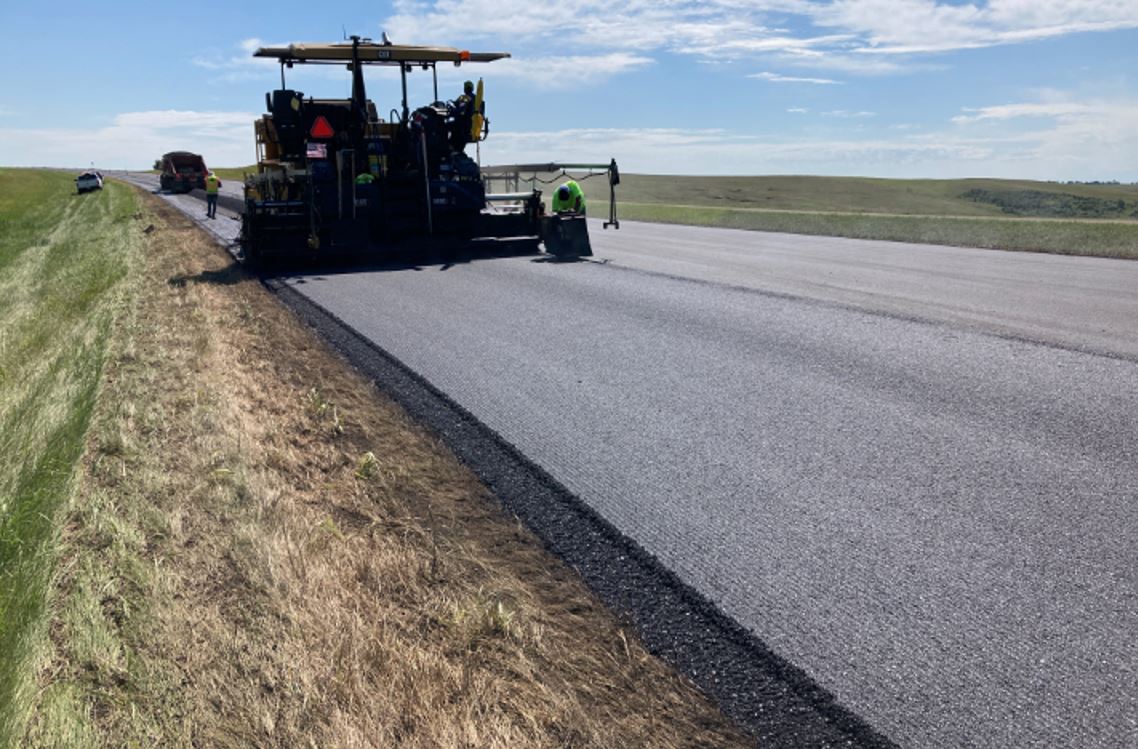
As one of seven haul trucks brought State IV hot mix to the Roadtec RP-195 10-foot tracked paver, multiple Road Builders workers handled traffic control on the Kalakaua Ave. rehabilitation project. If you look closely, you can see one worker in PPE near the “top” of this photo drawing attention to a sandwich-board sign. A multitude of safety cones delineated the lengthy work area and yellow caution tape was tied to trees as one more “flag” to pedestrians to pay attention and prevent them walking into danger. Photo courtesy of Project Manager Jennifer Gallego-Nakamoto, who took a number of these photos from the rooftops of Outrigger Hotel and Waikiki Circle Hotel

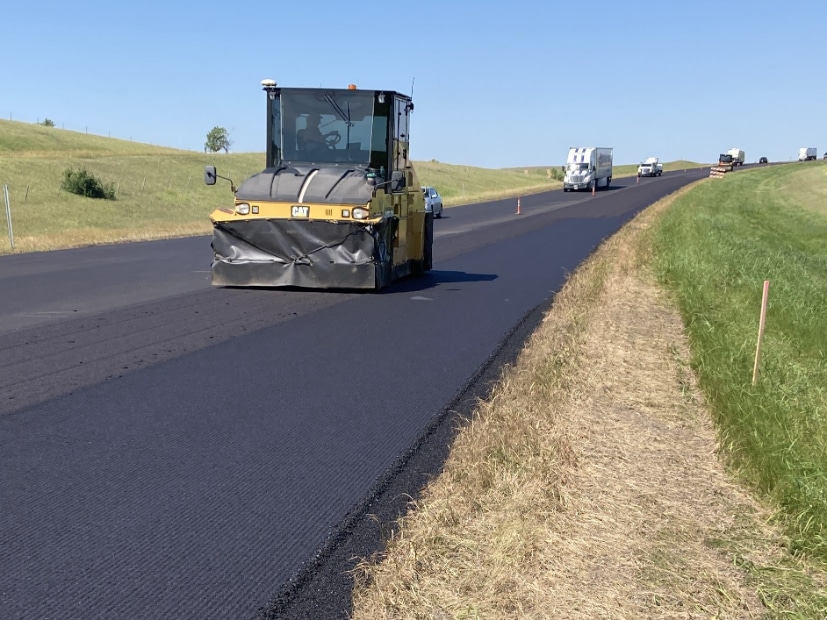
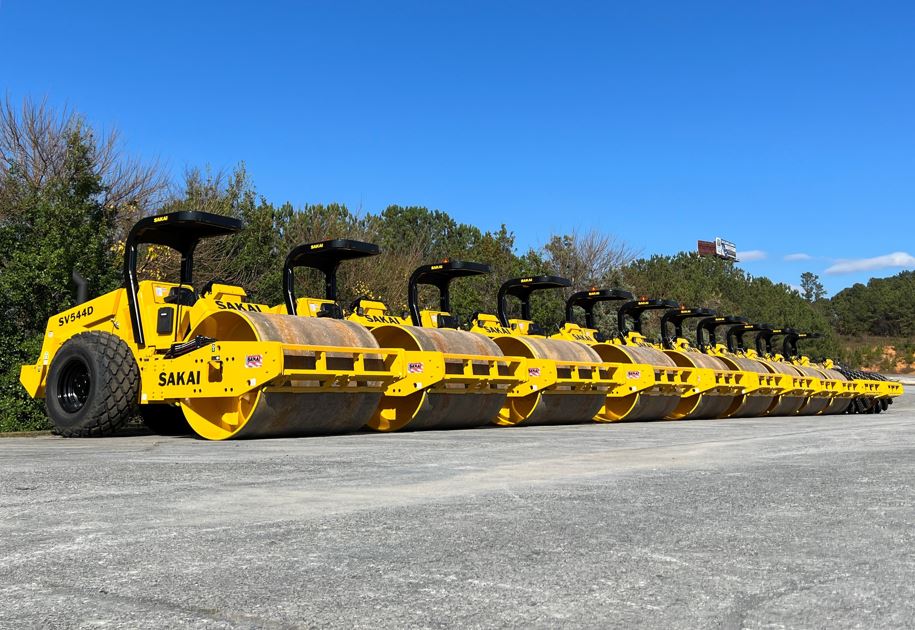
Behind the paver, the team ran a SW654ND Sakai roller. The 8-ton roller with 58-inch drum achieved 91% compaction and a Sakai 5-ton roller took care of finishing and final compaction of 94%.

Gallego-Nakamoto explained they built transverse joints by trimming the cold joint each day, applying tack coat and paving into the edge of the joint. In fact, she spoke of the crew’s performance on the joints with pride. “Our crew did a good job with the transverse joints. Roller operator John Dorser thoroughly compacted the transverse joint, ensuring a smooth transition. John did a great job achieving his rolling pattern to reach the required compaction.”

The 4.5 lane miles of Kalakaua Ave. to be rehabilitated were between Olohana St. to Monsarrat Ave. and Dillingham Fountain to Poni Moi St. Currently there are four, one-way lanes that reduce to three lanes toward the end of the roadway. The avenue is the main thoroughfare to Waikiki connecting tourists to shops, restaurants, entertainment venues and, of course, the beach. “Originally it was called Waikiki Road, and later changed to Kalakaua Ave., which was named after King Kalakaua, the last male monarch of the Hawaiian Kingdom in 1905,” Gallego-Nakamoto explained.

This EX 8844 Series plant by Asphalt Drum Mixers (ADM) features three 150-ton silos. It’s owned and operated by Ala Imua LLC, which is part of the Road Builders Corporation family and supplies three Road Builders’ paving crews. In this image, you can see the spray platform where drivers can stop to spray release agent in the beds prior to loadout. Photo courtesy of John Ball, Top Quality Paving & Training, Manchester, New Hampshire

Managing Foot Traffic

Getting a smooth transition despite all the stops is something to take note of. Both Park and Gallego-Nakamoto spoke of the challenges the general public posed on this job.

As stated above, milling started in May and paving ended early July, according to Gallego-Nakamoto, with a total of about 6,300 tons of asphalt placed in two 2-inch lifts while the team kept tourists, surfers and shoppers from walking between machines. The scope of work included new concrete curbs and gutters; adjustment of utility manholes; and restoration of pavement striping, marking and markers, which were subcontracted.

The daily closure for milling and paving was two lanes, but when the crew cut from the gutter side to the center of the road, the last pass of the milling impacted the third lane, which was the live lane. They took extra precautions to safeguard workers and the traveling public.

Due to heavy traffic along the work area, the city denied Road Builders’ request to close three lanes and only allowed the closure of two lanes at a time, leaving vehicular and foot traffic moving around their work zone in what could have been a safety nightmare if not for careful planning and diligent execution. Gallego-Nakamoto explained the traffic control plan (TCP) in detail, saying it was a challenge to get it approved prior to the start of the project due to the limitations of lane closures:

“Because it’s a busy road, we could only close two lanes at a time. However, three-lane closure would be ideal, that way we could work on two lanes each day and have one lane as a buffer of safety precautions for both public and crew members. As a result, we made adjustments to work safely for both public and crew members. Our daily closure for cold planing and paving was two lanes; and when we cut from the gutter side to the center of the road, the last pass of the cold planing always impacted the third lane, which was the live lane. As a result, we made our last pass 3 to 5 feet so we had less impact on traffic. Time was sensitive to the project, we had 270 calendar days to complete the project. With the delays we had from getting traffic control plan approved and rainout days, we were able to get a time extension.” An additional 204 calendar days were added to the contract, with a total of 474 calendar days to complete the work.

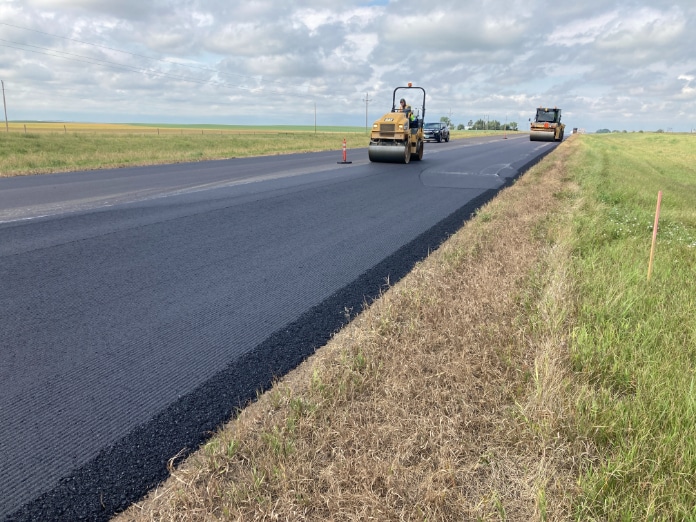
The rolling train included an 8-ton SW654ND Sakai roller in the breakdown position.

Gallego-Nakamoto gave credit to Derek Samson, the foreman, for clever planning. “He played an important role because he mapped it all out for us.”

The general public doesn’t necessarily understand the dangers an active work zone presents or the importance of staying off an uncompacted mat. To that end, the team had to communicate with shops and hotels along the route and stay one step ahead of the work zone closure as the crews progressed. Just because the paver had passed an area didn’t mean pedestrians could safely walk past an orange cone or drivers could pull a vehicle out of a hotel’s driveway. They still had to wait for the roller operator to compact the fresh mat and meet compaction requirements. Signage and communication were key, and crew members had to keep their heads on a swivel.

The blending control screen shows the operator his five cold feed bin and two RAP bin levels with a popup screen in the corner showing production targets. Key elements are shown as illustrations with PG grade, capacities, temperatures and other metrics specified on one screen. The corresponding bins outside are prepped for production, complete with berms to prevent aggregate sizes from bleeding into the wrong bin. Both photos courtesy of Ball


The blending control screen shows the operator his five cold feed bin and two RAP bin levels with a popup screen in the corner showing production targets. Key elements are shown as illustrations with PG grade, capacities, temperatures and other metrics specified on one screen. The corresponding bins outside are prepped for production, complete with berms to prevent aggregate sizes from bleeding into the wrong bin. Both photos courtesy of Ball

Jade Richardson, the president of Road Builders, spoke of the safety team’s efforts on site. “This project was challenging due to its high visibility and popularity as a tourist destination. When I say all eyes were on us, I mean literally. Our safety manager, Lewis Boucher, sometimes doubled as traffic control to keep the pedestrians from crossing through our cut and in between the equipment just to avoid walking around the project.”

As Park stated, a typical paving job requires everyone to be vigilant, but this project required everyone’s senses to be on high alert. “While you’re working, you’re also watching everything around you,” he said, estimating thousands of tourists walked past their work zone. “Jennifer was in constant communication with all the vendors and businesses in Waikiki. She knows the tonnage and how far it’s going to pave. All our engineers do a great job, but she was on top of it.”

The paving train included the Roadtec RP-195, now from Astec Industries. This tracked, 10-foot paver was equipped with an extendible screed to accommodate the changing widths the crew handled from day to day, extending up to 21 feet wide.

As the paving crews moved down the avenue, the work zone delineation moved as well. Gallego-Nakamoto explained: “We placed precaution tape along our work areas every day. Our safety officer, special duty officers and traffic control technicians played an important role in keeping the work area safe. We tried our best to keep pedestrians crossing the road away from the work area.

“Coordination with hotel personnel was also a challenge. We needed to stay ahead of the paving work to ensure hotels were informed when we would close their driveways.”

Keeping the bike lane “safe” was another piece of the puzzle. “The bike lanes were also a challenge,” Gallego-Nakamoto said. “We needed to pave bottom and top lifts each day when paving the bike lanes to avoid any tripping hazard when opening the work area.”

Note in this image the material charging the hopper was sliding as a homogeneous mass, leaving a clean truck bed behind.

Smooth Crew Makes A Smoother Finish

Along with the personnel mentioned above, Gallego-Nakamoto pointed to the importance of Pana Widemann’s contributions to a successful project. Widemann has been in the paving industry for 15 years. She listed Widemann as an asset to the project, saying, “He was always working with the pedestrians, hotels and businesses ensuring projects would flow. He works well with the public and ensures the safety of everyone is met. He works with the foreman and project manager as far as daily production schedule.”

Richardson spoke of the effort her team put into making the project run smoothly. “Jennifer is an outstanding project manager,” Richardson said. “She wants to avoid attracting attention to herself, although I can say that this project went well because she was at the helm. Tiny but mighty, her attention to detail and her ability to communicate effectively with the crew and the city inspector are contributing factors to the success of this project. She earned and was given the respect of others who towered over her 4-foot, 11-inch frame.”

The quality control team took readings with a nuclear density gauge, showing an average 91% compaction behind the breakdown roller, and achieved a gorgeous mat over the project.

Gallego-Nakamoto has been in the industry 20 years, the past three have been with Road Builders. For this specific project, she was in charge of running the project, ensuring the scope of work was met, and working directly with subcontractors and the city agency. As Park noted above, she was on top of the details, keeping meticulous paperwork. She explained part of her responsibilities were “making sure specs were met and proper submittals were submitted before, during and after project. Communicating with Waikiki personnel was important so that businesses were aware of our closure each day.” She sent the weekly schedule to notify all businesses and worked with the foreman and engineer to ensure the project was flowing.

The collaborative atmosphere shone through the discussions with the Road Builders team. From communication to best practices, the crew kept everyone’s safety top of mind for a lengthy and high-profile mission.

The quality control team took readings with a nuclear density gauge, showing an average 91% compaction behind the breakdown roller, and achieved a gorgeous mat over the project.

“I am equally proud of this crew and their exceptional ability to work as a team,” Richardson said. “With Derek as their foreman and Pana as their QC/project engineer, they effectively communicated the daily production rates; everyone knew their task and performed it well. It was beautiful.”

Repairing Little Things on the Paver Saves Big

Focusing on the paver, we look at tips to clean and maintain the iron to achieve top quality paving every season

This is the time of year when crews are rushing to fit in as many projects as they can before snow flies and even daytime temperatures could prevent top quality paving. As much as your team wants to dive in and start paving at the beginning of the shift to get the job done, you must ensure all the equipment is in working order first.

There’s no point in paving with a warped screed. There’s no point in spraying tack with a distributor that has gummed up nozzles. Instead, let’s look at a few routine maintenance items that can keep your crew working efficiently into this hurry-it-up part of the construction season.

How to Set the Augers

As Sandy and I pointed out in the September article “Increase Quality on Any Job,” we should start with the all-important paver. And we should start with adjusting the attitude of the workers who are responsible for its upkeep.

There are members of the workforce who don’t yet understand why we’re telling them to take time out of their day to clean a machine. They don’t yet know why it’s important to wipe down vital components with release agent and a rag while the paver is still warm. We have to educate them so they understand:

  • a clean machine will work better;
  • a clean machine will make their job tomorrow easier;
  • a clean machine will make it possible to notice if a component is out of order;
  • a clean machine is safer to work around; and
  • a clean machine will help them get better quality for full pay on the final job.

All these things come into play because the equipment is clean enough to work properly. It’s up to each crew member to help keep it clean and in good working order.

How to Train an Equipment Operator

Get Smooth Forward Motion

Starting at the very front of the tractor, if you see material buildup on the push rollers, you want to get at that and scrape it off. When the push rollers stick or fail to roll smoothly against the haul truck tires, the tractor will experience a jerking or shuddering motion as it drives forward. Even when this shuddering is slight, it affects the performance of the screed, thus the smoothness of the mat.

If you have globs of material built up anywhere else on the tractor or screed, this jerking motion might knock some of that loose, causing it to drop onto the surface and create cooled areas of material segregation. Your roller operators won’t be able to roll that out and you’ll have potholes in your finished project some day or you’ll have an inspector deducting your pay.

Top 10 Paving Don’ts

All of this can be avoided if you clean the push rollers at the end of each paving shift. While they’re still warm, take a rag and some release agent and wipe them off. It’ll only take one or two minutes to do while the components are warm. If you wait until morning when the paver is cool and stray material has hardened, it’ll require a putty knife, more release agent, more elbow grease and more time.

Another area to watch for material buildup to maintain smooth forward motion is the wheels—or track—of the tractor. We’ve talked about this in AsphaltPro before, but it bears repeating. Check the bogies and track at the end of the shift and clean out any asphalt you see starting to get caked in there. Do it while the components are still hot to make the job easier on yourself.

Ways to prevent the material from getting into the bogies include:

  • avoid overfeeding the head of material;
  • avoid flooding the endgates; and
  • avoid driving over piles of spilled material.

Let’s talk about driving over piles of spilled material for a moment. One way to prevent spills is through haul truck management and communicating with drivers. A good dump man who can get drivers to employ brakes, raise beds and charge the hopper properly is worth his weight in gold. See the article “Save on Costs with Your Professional Guide to Asphalt Mix Delivery—An Independent Look at Best Haul Truck Practices Part 3” for a tutorial on mix delivery.

Save on Costs with Your Professional Guide to Asphalt Mix Delivery, Part 3—An Independent Look at Best Haul Truck Practices

Another way to prevent spills is to maintain the front of the hopper properly.

Look at the front left and right side of the hopper in these pictures. In the main picture, you can see that the rubbers have been replaced from what you see in the inset picture. The center panel will also be replaced but must come from the Caterpillar parts distributor. The conveyor belt material had become worn and torn, allowing mix to consistently fall out of the hopper during the paving day. This made extra handwork for the laborers to shovel material out of the way and often resulted in segregated areas in the mat. This does not lead to top quality paving results. On a state job, it could lead to failed lots or deducts.

By replacing torn or missing rubbers on the hopper, you can prevent some of the spillage that causes extra handwork for your crew and piles of mess that your tractor’s wheels end up running over. When the bogies pick up that material, it’s a mess to remove later.

Your roller operators won’t be able to roll that out and you’ll have potholes in your finished project some day or you’ll have an inspector deducting your pay.

How to Maintain Your Screed

Focus on the Screed

The areas between the front and the screed are important to clean at the end of the shift, of course, and I’m not trying to minimize them by jumping to the back of the tractor. But let’s concentrate on the screed, nose and plates for a few minutes. The screed is your hot iron that will smooth the material into a flat, gorgeous mat. If you have material stuck to the bottom of the screed or caked against different elements, you lessen your chances for success.

In the picture at right (0571 gapping from warping), we can see a gap between the endgate and screed. We see mess and material all over the warped metal. This has happened for a number of reasons, including poor loading onto and off of the lowboy, but also because built up material was allowed to prevent good extension and retraction of the endgate and tunnels.

The result is warped metal that can’t line up correctly. If the endgates aren’t flush with your screed, you can’t build a good joint. That spells disaster for a pavement and deducts for your pay.

The buildup of material on the screed or its nose can change your angle of attack. It can degrade the wiring or disrupt the electronics. For example, if the electric heat is disrupted, the screed will not heat evenly all the way across, leaving you with uneven paving results. Look at this picture for some of the problems we’re talking about.

On the right side of the picture, the white stones indicate the endgate is too tight. That causes the shadow you’re seeing halfway into the main screed. The screed is cold there and it’s too high, causing the line.

The second area of shading is occurring because the endgate is forcing pressure on the extension. The mis-matched screed sections between the extendible and the main angle of attack isn’t the same, either. You can see this in the mat behind the paver.

The center section is tight and is screeding off correctly. This is good and offers the nice, left-hand side of the picture, which is what we’d like to see across the entire width of the mat. Instead, we’re seeing the uneven results of a screed that hasn’t been maintained properly or double-checked prior to the day’s paving start.

Your crew can prevent this uneven performance by:

  • maintaining all components of the screed;
  • cleaning the different elements of the screed and the underneath side of the screed/screed plate;
  • removing asphalt material from the nose of the screed at the end of the paving shift;
  • check to ensure the screed and extensions are parallel;
  • checking the straightness of the screed plate with a straightedge prior to paving; and
  • double-checking the electronics to ensure even heating all the way across.

When you see this article appear online, share some of your screed cleaning and maintenance tips, too.

Catch Up Over Winter

With the end of paving season upon us in many parts of North America, now is the time to schedule winter maintenance for all our paving equipment. You can download a paver maintenance checklist from TheAsphaltPro.com white paper repository and make a plan for your mechanic to address this all-important machine before season start-up 2025.

How to Maintain Your Paver

Also make a plan to incorporate equipment cleaning in your new-hire training and worker refresher training over the winter. I worked on an online training course with AsphaltPro a few years ago—Asphalt Paving 101, available here and one of the modules in that course outlines each worker’s job on the paving crew.

Don’t let your downtime go by without encouraging workers to do their jobs to the fullest. Some of these men and women come to our industry without any knowledge of the equipment or basics of paving. If we let them flounder and fail, allowing their daily performance to be hindered by gummed-up machines, they’ll have no pride in either the work or the equipment. They’ll leave as soon as something more enticing comes along.

To help the newcomers feel valued, we must show them the “why” behind the things we do. We must help them understand that the task of cleaning a machine at the end of the shift today saves them time and energy tomorrow, makes their job easier and more productive tomorrow, and gives them a top quality paving job with a better chance at full pay tomorrow.

We’ll dive into more equipment upkeep and tips in future articles, so keep an eye out for that in upcoming issues of AsphaltPro.


This Should be Covered

Make sure the mechanics and the crew members not only understand their jobs but also care about what they’re doing.

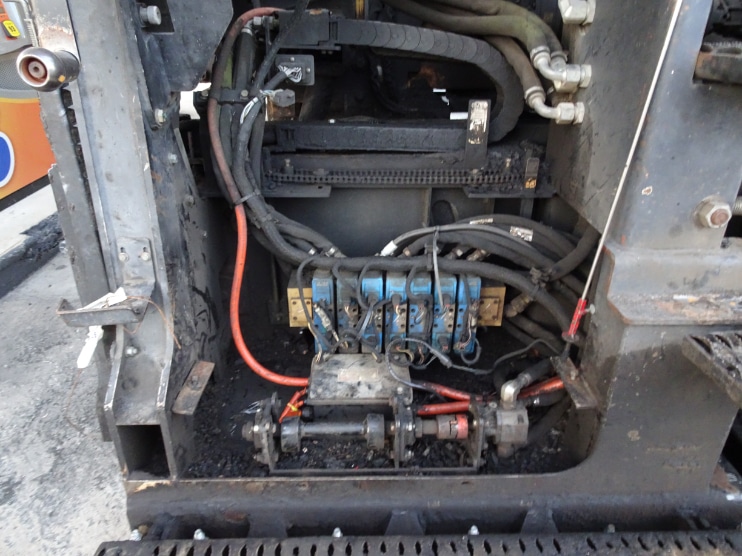
In this picture, we see an uncovered electrical section on the back of a paver, which was sent out to the field for a day of paving. You’ll notice the eccentrics at the lower center of the “box” are caked with asphalt and unable to spin, but what’s worse is this uncovered area is a shock hazard for the screed operator and any other worker who reaches into it. The seven blue boxes are 240-volt electrical connections for the screed.

There’s no excuse for this to go into the field without its panel cover. Don’t let mistakes like this cost someone their life. Instill care and knowledge in your crew.


John Ball is the proprietor of Top Quality Paving & Training, Manchester, New Hampshire. For more information, contact him at (603) 493-1458.

Ultrathin Bonded Wearing Courses, Explained

An ultrathin bonded wearing course is a single-process application of an ultra-thin overlay, typically ¾ inches thick or less, designed to improve pavement performance on high-speed, high-traffic roadways.

Initially introduced to the U.S. market from Europe in the early 1990s as NovaChip, the use of bonded wearing courses has evolved alongside advancements in materials, equipment and construction practices, allowing it to be applied effectively across diverse traffic conditions and climates.

“The use of [bonded wearing courses] has really boomed in the past five or 10 years, particularly in the northeast,” said Robert Betsold, director of marketing at All States Materials Group (ASMG), Sunderland, Massachusetts, during a presentation about the process at World of Asphalt/AGG1 2024. “It’s really become a workhorse application for a lot of the interstates throughout the northeast.”

During his presentation, Betsold discussed how the process compares to traditional thin-lift paving; the materials, equipment and construction methods used; and the best practices of selecting projects for this application. Let’s take a closer look.

Prevent Callbacks for Pavement Slippage

Ultrathin Bonded Wearing Course vs. Thin Lift Overlays

The key differences between this treatment and a conventional thin lift overlay are the reduced thickness and the higher tack coat application rate. “When we talk about hot mix overlays, we’re usually talking 1.5 inches or less,” he said. “With [bonded wearing courses], we’re talking about ¾ inches or less.”

The application is designed for high-speed, high-volume roadways, Betsold said, attributing bonded wearing courses’ performance in those conditions to the increased tack application. Betsold estimates a typical tack application for an overlay in the northeast to be 0.05 gallons per square yard, while a bonded wearing course sees an average of 0.2 gallons of tack per square yard.

“The tack is the basis for the performance of this treatment and the ability to pave thin without the typical challenge of delamination,” Betsold said. “If the materials are made right and the application is done right, you don’t have that concern. The material is locked in place.”

Although the process looks similar to conventional paving, there are also differences in application. “If you tried to spray out 0.2 gallons of tack per square yard and tried to drive trucks over it and pave over it, you’d have a mess,” Betsold said. That’s why this process relies on the use of a spray paver with an onboard emulsion tank for the tack and strategically placed spray nozzles that apply the tack immediately before the mix is applied atop it. “The tack is never touched by anything other than the mix going on top of it.”

“This is a great process for agencies looking to get into preservation, because it looks like conventional paving to the driving public,” Betsold said. “They see dump trucks, they see a paver, they see rollers and they see a smooth paved surface. The performance of the application is different, but the outward appearance is the same.”

APS Uses Vögele’s SprayJet Paver for Route 8 NJDOT Project 

According to Betsold, the tack most commonly used in the northeast is a polymer modified tack (usually CRS1P). “We get the performance of that polymer modified liquid,” he said, “but it’s really the thickness of the application that gets us the adhesion we need without delamination.”

However, such a thick tack application brings concerns about flushing. That’s why Betsold said the process usually uses a gap graded mix. “This falls in between dense graded and open graded mixes, which allows for the wicking of that 0.2 gallons of tack up into the mix to get that really strong bond,” Betsold said.

“If you have a thickness of ¾ of an inch, you’re typically going to get about ⅜ of an inch (about half the cross section) that will be flooded with the tack coat,” he said. “When you take cores and look at a cross section of it, you’ll see that there are pretty much no air voids. By filling those in, you’re sealing it/waterproofing it.”

Betsold said polymer-modified mix is also often used on these projects, particularly higher volume state roads in the northeast, but that he’s also seen asphalt rubber used successfully. “In the local agencies, the traffic doesn’t warrant [polymer-modified mix] in terms of the upcharge, so the majority of the municipalities are still using conventional hot mix with this application.”

The American Association of State Highway and Transportation Officials (AASHTO) is in the process of finalizing specifications for ultrathin bonded wearing courses, Betsold said. In addition to his role at ASMG, Betsold is a member of AASHTO Emulsion Task Force, serves on the board of FP2, and is an industry representative on the board of the Northeast Pavement Preservation Partnership. “Soon, we’ll have a national specification from AASHTO to be a guideline for local agencies,” he said.

One difference a conventional thin lift overlay and a ultrathin bonded wearing course is the higher tack coat application rate, applied immediately before the asphalt using a spray paver like Vogele’s S18003i SprayJet.

Right Treatment, Right Place, Right Time

The ultrathin bonded wearing course put down in 2015 on Massachusetts’ Route 3 has become a poster child of success for this application, Betsold said. Route 3 is the main north-south route from Boston to New Hampshire, seeing more than 100,000 vehicles each day, he added.

The project consisted of nearly 1,000,000 square yards of mainline bonded wearing course application with fog seals on the shoulder as a trial project through the SHARP program for high volume preservation. The project was divided into three test sections, one using conventional hot mix, one polymer-modified mix, and one mix with asphalt rubber.

It was estimated that a typical mill-and-fill application would take two to three years, whereas the application of a bonded wearing course could be completed in one construction season. Ultimately, the project was paved in 51 night shifts, starting the first lane at 10 p.m., the second at midnight, and opening the road to traffic by 5 or 6 a.m.

MassDOT was hoping to get seven to 10 years, and eight years later Betsold said the treatment is performing “far beyond their expectations. This was really the project that springboarded [the use of this application] in the northeast.”

Betsold said that although the performance of the bonded wearing course on Route 3 has been very good across the board, the polymer-modified and asphalt rubber sections of the project have outperformed the conventional hot mix section, “which is what we would expect if we were putting a traditional hot mix overlay out there compared to polymer-modified and rubber.”

The Route 3 project illustrates the types of applications for which ultrathin bonded wearing courses shine: high speed, high volume, demanding applications. “It’s really going to perform when you get into those applications where you’ve got truck traffic or more than 100,000 vehicles per day,” Betsold said.

However, the treatment can be used on a variety of applications, from high volume roads down to low volume municipal roads. “New York is doing a lot of neighborhoods and subdivisions with it,” Betsold said.

In municipal settings, Betsold said, the treatment is most often used in urban environments with higher traffic counts. He provided the city of Newton, Massachusetts, population 100,000 just outside Boston, as an example. “They’ve been using this in a variety of applications with a lot of success,” Betsold said. “It’s really become a workhorse for them in their preservation program.”

Thinlay Success in the Sooner State

Newton’s first use of bonded wearing courses was a standard preservation overlay in 2018. “Based on the performance of that project, they started looking at how they could use it in other applications and it’s really expanded into some unique applications,” Betsold said. For example, to treat approximately 10 miles of exposed concrete roads “they were paying a tremendous amount to maintain and remove.”

Working with the city, a consultant engineer and various contractors, Newton established a process for applying ultrathin bonded wearing courses to those concrete roads. “They’re typically doing a ¾-inch mill of that existing concrete, doing mastic on any joints or larger cracks, patching if necessary, putting down an asphalt rubber chip seal as an interlayer to get that sealing and crack resistance, then surfacing it with that bonded wearing course as the final surface,” Betsold said. “The first was done in 2020 and to date is performing very well with some minor cracking.”

Ultrathin bonded wearing courses can be placed over asphalt or concrete, atop existing surface or a milled surface, with tweaks to tack application based on the existing surface and traffic type. “If you’ve got a drier surface, you may bump that tack application rate up a bit,” Betsold said. “If you have a richer surface, you might back that application down a little.”

Despite the success of ultrathin bonded wearing courses in a variety of applications, Betsold stresses the importance of understanding its benefits and potential drawbacks. “By no means is this the best application for everywhere,” he said. “I’m a big proponent of using the right treatment, in the right place, at the right time.”

Equipment to Pave Thick and Thin

For example, as with any polymer-modified mix, it’s important to minimize handwork. “I was on a project in metro Boston a few years back that had 300 utility structures and trying to rake out the polymer-modified mix was not fun for the crew,” Betsold said. The polymer-modified mix also results in a shorter potential construction season.

The gap graded mix design is also less ideal for projects with significant handwork, for example, cul-de-sacs, sharp turns or variable width roads. “There aren’t a lot of fines with that gap graded mix, so raking it too much can result in shadowing,” Betsold said. “Your better bet may be to mill those out and pave them with a traditional hot mix and then do your main line with the bonded wearing course.”

Betsold said candidates for ultrathin bonded wearing courses must still be in good structural condition. “If it’s new to the agency and you use it [on that kind of a pavement] and it fails, it’s going to be a whole lot more difficult to get them to let you do it again. We need to make sure we’re setting our projects up for success.”

Betsold also cautions against what he calls “scope creep” on bonded wearing courses. “This process was developed to be a quick in-and-out application, not a full-blown construction project,” he said. However, he’s seen some projects in the northeast “where there’s been some scope creep and they’ve turned a process that’s meant to save time and money (while extending the roadway) into a full-blown construction project, which drives up the cost tremendously.”

Why You Need to Tack Before Paving

Best Construction Practices

Although the ultrathin bonded wearing course paving process may look similar to conventional paving to the untrained eye, Betsold outlined some differences it’s important to understand. This begins with prep work.

“Ultrathin bonded wearing courses will fix some minor defects in your profile, but this is not a thick overlay,” Betsold said. He recommends filling any cracks ¼ inch or wider. “Crack sealing creates a tremendous increase in the performance of all types of pavement preservation treatments including overlays, because we’re preventing water intrusion for pennies on the dollar.”

In Betsold’s experience, many state projects using bonded wearing courses are micro milling ahead of treatment. Although milling often isn’t necessary because the lift is so thin, he said it isn’t uncommon for bonded wearing course projects to be milled full-width or gutter milled to maintain curb reveal.

The use of a gap graded mix also has benefits in terms of tire spray, Betsold said. “We all know when we drive on a dense graded mix, we get that tire spray. With gap graded mix, you are going to see reduced tire spray due to that water shedding, although not to the extent of what you’d see with open graded mix.”

“A lot of state projects in the Northeast (and even some municipal settings) have utilized a milled fog line,” Betsold said. This is when they apply a fog seal on the shoulder. “That allows them to handle the shoulders with a less expensive treatment…while tying the surfaces right in together so you don’t have any drop off.”

Then comes the spray paver, which applies both the tack and the hot mix in a single pass. “The only thing that goes on top of that [tack] is the mix,” Betsold said. Calibration here is exceedingly important. “Everything is metered and controlled. You need to make sure your equipment is calibrated correctly so you’re actually getting what the system is telling you you’re getting.”

Areas that require extra attention include takeoffs and joints. “I’ve seen the tack be a bit skinny on the takeoff, which is a potential point of failure,” Besold said. “Using the hand hose allows you to get that consistent heavy application of tack.”

“If you don’t have that tack out there or your application is off, and you’re trying to get ¾ of an inch to adhere without that wicking action, you’re setting yourself up for potential issues,” he said.

Vögele Super 1800-3i SprayJet Offers Ultrathin Bonded Overlay Options

Betsold said overlapping at the centerline joint can be a material solution to a persistent industry problem. “A slight overspray as you pave that joint allows for that adhesion and waterproofs that joint to address some of those issues,” Betsold said. However, he added, “we need to be careful we aren’t overspraying too much and causing flushing.” The exact right amount of overspray depends on the balance between the mix design, the gradation of the mix, the existing surface of the roadway and the tack application rate, he said.

The rollers play a significant role in the wicking action Betsold describes. “We aren’t rolling for density, but to bond that material to the tack and to provide a smooth final surface.”

Usually, these projects require just one roller, though Betsold said two may be used on some state projects. Regardless of the number of rollers, Betsold recommends the roller(s) be immediately behind the paver.

“You can cover a lot of ground really fast at ¾ inches thick,” he said, which also increases the speed of the rollers. “Because we don’t need to hit that traditional density, the speed you can get traffic back on the road is certainly a benefit to the application.”

This benefit was put to the test on one of the first bonded wearing course projects Betsold was ever on. It was a municipal paving project in a Vermont subdivision with just three houses. “Not a single car had come out all day,” Betsold said. The paver was ¾ of the way done when an impatient driver in a Porsche rolled up. “The roller took two passes, and the Porsche drove over it, no problem.”

Ultrathin bonded wearing courses can be used successively, Betsold said, but the existing surface must be considered as always. “If we have a bonded thin lift out there and put a second one on seven to 10 years later, there are a couple things that come into play,” he said. “You have extra air voids [with the gap graded mix], so when you put the tack on there, you’re going to lose some of it down into the previous lift, so you aren’t getting as much wicking action up into the successive lift.” This, like many other factors, must be considered when determining the tack application rate.

On another municipal project near a fire station, the paver was ¾ of the way done when the fire alarm went off. “The roller went over it, then the fire trucks immediately after, and that pavement is still there five years later,” Betsold said.

The key to such a successful project, as with any treatment, is quality control. “Quality control is at the forefront of everything that we do,” Betsold said. He stressed the importance of a quality control plan, “especially if an agency is new to the process.”

“There are agencies out there who think they’re inspecting this the same way they’d inspect traditional hot mix,” he said. “Yes, it’s paving, but it isn’t the same as paving. There are nuances you need to understand in terms of materials, gradation, application rates. Those little nuances can have a big impact on the performance of that application. When we’re talking about such a thin pavement layer, if we’re off by a little bit, that can have a significant impact on the long-term performance of that treatment.”

Central Specialties Wins Excellent IRI

The team at Central Specialties Inc., headquartered in Alexandria, Minnesota, isn’t new to achieving quality with its work. With the motto of “It’s on Us,” the full-service general road contractor has received accolades from various departments of transportation and recently expanded operations to handle the additional work that comes with success.

As demonstrated in the Highway 85 project we discussed in the October issue, they’re open to trying out new technology and they put innovation into their day-to-day business for continuing success. Let’s look specifically at an award-winning project CSI performed on Interstate 94 (I-94) in Stark County in 2023 for another example of their innovation and quality workmanship, and how it all contributes to the expansion.

SDX Trial Success

I-94 Project

The mill-and-overlay project called for two 1.5-inch lifts along 9.6 miles of two-lane interstate. Operations Manager Joey Johnson shared that it involved concrete removal and repair, as well as hot-mix asphalt (HMA) repairs before the team mobilized their HMA plant for mainline paving to the tune of 38,000 total tons—about 18,500 per lift.

The plant they used for the project is a parallel flow drum plant from CWMF, Waite Park, Minnesota, which can produce up to 700 tons per hour (TPH). CSI positioned their plant about 14 miles from the project and produced the RAP Superpave FAA 45 with a PG58H-34 asphalt cement at 295°F.

Here we can see the SDX screed pattern on the mat and the roller operators performing their passes. All photos provided by CSI

CWMF Vice President Travis Mick spoke in glowing terms of the team. “Partnering with Central Specialties has been a rewarding experience due to their dedication to excellence and integrity, which perfectly complements our own values at CWMF. Their ‘get it done attitude’ and commitment to building the best road infrastructure ensure our equipment is utilized to its fullest potential, resulting in outstanding outcomes for their projects.”

While the crew used state of the art equipment and new technology like infrared thermal mapping and the patterned SDX screed, Johnson also credits the people who take the time for best practices for a stunning finish. You see, the I-94 project won a North Dakota Pavement Quality Award for ride and density. Johnson reported the bonus-worthy overall total international ride index (IRI) was 25.8 and the average density was 98.7%.

Preferred Materials Executes the Plan to Get the Best IRI in Florida

Those are numbers worth emulating. Here’s how they did it.

On I-94, the team was getting good density right off the bat. Immediately behind the breakdown roller, which was a CAT CB 15 with VersaVibe, purchased in 2020, they were getting a density of 92.5. In the intermediate position, on the bottom lift, they ran a CAT CW34 pneumatic purchased in 2017. In the intermediate position, on the top lift, they ran a CAT CB 15 purchased in 2018. The finish roller was a CAT CB 34.

Laying the first lift was straightforward. It was a standard mill-and-fill. On the second lift, they used the notched wedge joint system from Willow Designs LLC on the center seam to increase longitudinal joint density.

Now that the company has expanded operations to Western North Dakota, they’ve hired additional mechanics to maintain equipment rather than hauling heavy machinery to and from headquarters about 450 miles away.

First of all, they were getting good density numbers behind the screed. Johnson shared: “The Trimble infrared thermal imaging camera was used for tracking mat temperature. Combined with VETA data and analysis software it gave us good confidence with our rolling pattern coverage which resulted in good densities.” As mentioned above, they were seeing densities of 92.5 behind the breakdown roller.

“To be honest, this [thermal mapping] is a very helpful tool to be able to better help get density and ride, seeing issues and ways to improve rolling patterns,” Johnson shared.

The crew wasn’t using a material transfer vehicle on this project—just best practices and a cohesive team. The paver operator, Tomas Chavez, has been with the company for two years and was at the helm of a CAT AP 1055F paver equipped with the new SDX screed CSI is testing for Caterpillar.

Highly Modified Asphalt (HiMA) Offers Results on I-40

Johnson shared that the paving widths varied along the project from 10 to 12 to 16 feet, yet the crew handled the changes smoothly. The dump man on the project was Jose Becerra, and the screed operator, Carlos Pasillas, has nine years of experience.

“Carlos is a very strong leader for our main line crew and a positive person,” Johnson shared. “I believe the reason we won the award was that the crew works together to make the best road possible. There is really a team atmosphere when it comes to Plant 4 crew for CSI. It really starts with John Fales leading the crew and developing them and then the crew taking ownership of the paving. At the end of every job the crew is always asking how they did on ride and density, which shows they have pride in their work.”

Jill O’Brien operates the intermediate roller toward the award-winning density and ride numbers on I-94.

Winning Against Challenges

CSI began the I-94 project April 4, 2023, and finished it Aug. 14. During those four months, the crew had challenges to overcome to hit an award-winning completion.

“There was a lot of concrete removal, and the state would only close down a certain amount of interstate at a time,” Johnson explained. “Then we would have to go out and patch back in to let traffic back on it. It was difficult scheduling to keep subs on track working and getting a crew deployed on a short window to get the patching done.”

He gave credit to Dave Winkler, the project manager, and John Fales, the paving superintendent for their leadership and expertise on the job. “The project manager really kept a close eye on the subs on when they would be completed with their phases and lining up our paving crew to come in and patch in mix, then move the subs to the next phase to complete to stay on track for the job.”

Supervisor John Fales and Dump Man Jose Becerra—in the foreground—work on the I-94 project.

One aspect of the project that the crew gave extra attention to was the centerline joint. “Making sure centerline is clean after the milling machine,” he shared. “On the bottom lift we had some longitudinal joint failures that we had to mill out and repair because we did not get centerline completely clean but after finding the issue the crew took ownership and got the project back on track.”

At the end of the day, the crew handled best practices and challenges with professionalism that Johnson’s proud of. “I like the fact that when there were issues the crew stuck together to get the job done. They never pointed the finger; they owned the issue and moved on. That is what makes a great crew.”

The completed side of I-94 looks gorgeous and won a 2023 Hot Mix Asphalt Quality Award.

New Location

If you think the logistics of the I-94 project look complex on paper, consider what it was like in the field. With the amount of work available across North Dakota, CSI management decided it was time to expand operations. They purchased a building to start a shop and office in Watford City, North Dakota.

“We expanded with offices and a shop in Watford City, North Dakota, in January of 2024,” Johnson said. The team then used the office space to hold interviews every two to three weeks and set up the offices and a conference room for the project managers to use during the 2024 construction season for both a home base and for meetings with local agencies when needed.

Joey Johnson is the operations manager for Central Specialties.

Immediately behind the breakdown roller, they were getting a density of 92.5.

“The shop is running well,” Johnson shared. “We have three current mechanics working out there and are looking to staff up to four to six full-time mechanics in the future. That will really save us time and money in the future not hauling our equipment in the area all the way back to our main shop in Alexandria, Minnesota.”

Fleet maintenance, whether in Watford City or Alexandria, is another key to CSI’s success. “We really feel that we keep our equipment up to date and have some of the best technology. We swap out our mainline pavers every three years and we send our crews to paving classes every year to keep them up to date on new methods and ideas. We are constantly trying innovation to see what works, such as the new SDX screed CAT has us trying out.”

With updated technology and innovation for a fully trained workforce, CSI takes ownership of its success on every project. The award-winning I-94 project exemplifies this attitude and aptitude and offers a great example of the company’s motto “It’s On Us.”

SDX Trial Success

Testing screed types side-by-side in the badlands of North Dakota proves industry can increase density, improve ride with patterned screed, innovation, best practices.

By paving in echelon up and down the hills of Highway 85 in the North Unit of Theodore Roosevelt National Park (TRNP), the award-winning team of Central Specialties Inc., headquartered in Alexandria, Minnesota, tested densities and smoothness achieved behind the SDX screed plate design from Caterpillar alongside the traditional SE60 screed plate design. The crew performed this 10.214-lane-mile build in spring of 2024, achieving an average density improvement on the SDX lanes of 1.7% directly behind the screed and 1.2% after the finish rollers. The overall smoothness results paint a sustainable picture for the asphalt industry.

Two Weiler windrow elevator pickup machines and two Cat AP1055F pavers with SE60 V-XW screeds worked in echelon to place two lifts. One screed was equipped with a traditional screed plate while the other was equipped with the SDX patterned screed plate.

“We increased the density by 1 to 1.5% and ride by 10% behind the paver equipped with the SDX screed compared to the traditional one,” Bryce Wuori said. He’s the proprietor of Pavewise, headquartered in Bismarck, North Dakota, and was hired by Caterpillar to serve as a consultant on the project. “We saw a 25% decrease in standard deviation. The 10,000-foot view on this project was innovation and technologies that are pushing the industry forward can be proved with this data.”

The Theodore Roosevelt National Park is divided into three parts in western North Dakota, which include a South Unit and Elkhorn Ranch Unit. CSI paved in the North Unit in the spring of 2024.

The crew built longitudinal joints during echelon paving with the notch wedge joint system from Willow Designs LLC, East Berlin, Pennsylvania.

Innovation Everywhere

Not only was the team using the innovative SDX screed plates on one of the pavers, but they also employed thermal mapping, intelligent compaction (IC) and multiple data-collection technologies to assess quality control/quality assurance (QC/QA) along the way.

One of the newer tools on hand was the GroundTruth system from Pavewise, which helped monitor environmental conditions in real time. This solar-powered, mini weather station was situated at the project site to communicate with the Pavewise software when inclement weather was rolling in. It also documented conditions for the team. For example, during southbound paving on May 29, the average ambient temperature was 64°F with an average wind speed of 9 miles per hour (MPH). That night, the area experienced 1.2 inches of rain. During northbound paving on May 30, the average ambient temperature was 57°F with an average wind speed of 11 MPH.

The crew set up Pavewise’s GroundTruth system, which helped monitor environmental conditions in real time. Here you see the solar-powered mini weather station, which communicated with the Pavewise software to alert the crew when inclement weather was rolling in and documented weather conditions.

The CSI team executed paving both lifts of more than 12,000 total tons along the 10+ lane miles in two days.

The TRNP project in McKenzie County required paving 10+ total miles from the park entrance to County Road 30 (23rd Street NW). The crew was responsible for grading, aggregate base, hot-mix asphalt (HMA), culverts, box culvert, a pedestrian walking trail, the retaining wall, signage, pavement markings and incidentals. The mix design used on the project was North Dakota’s FAA45, which uses a PG64-34H binder. The CSI team produced the mix at its parallel-flow drum plant from CWMF, Waite Park, Minnesota, which was located outside Watford City. Typical production was 610 tons per hour with a propane-fueled Hauck Eco Star 200 burner. The average mix temperature out of the trucks was 306°F.

How to Use DPS for QC in Paving

Belly-dump, live-bottom and tandem trailers delivered material ahead of two Weiler windrow elevator pickup machines, which in turn fed the two Cat AP1055F pavers with SE60 V-XW screeds vibrating at 1,200-1,400 VPM, and working in echelon.

“The paving widths were 18 feet behind the traditional screed AP1055 and 20 feet with 4-foot slough behind the 1055 with the SDX screed,” Wuori shared. See Figure 1 for more detail.

The base course was 2 inches compacted; the wearing course 1.5 inches compacted. Longitudinal joints were created with the notch wedge joint system from Willow Designs LLC, East Berlin, Pennsylvania. Jerod Willow, proprietor of Willow Designs, spoke to the efficacy of using a joint-making system with a vibrating screed.

“Screed vibration has no effect on the notch wedge device or produces no damage to the joint itself,” he said. “Willow Designs actually has options for electric vibrators on the notch wedge devices themselves because I believe using screed vibration is a good thing to a certain extent.”

Thanks to the GroundTruth system from Pavewise, the team collected environmental conditions data during the project. On May 29, while paving southbound, the average ambient temperature was 64°F with an average wind speed of 9 miles per hour (MPH). That night, the area experienced 1.2 inches of rain. The seasoned professionals at CSI have excellent stockpile management practices and know how to handle a heavy rain event. Paving northbound on May 30 saw an average ambient temperature of 57°F with an average wind speed of 11 MPH and consistently good data points in the northbound lanes.

Willow expanded on his theory and offered a tip for vibe settings. “Having screed vibration set at a moderate and manageable speed is key to help manipulate, turn and lock the aggregate in the asphalt mix together as it is protruded under the screed. A way to find manageable screed vibration per minute (VPM): stand a shovel on the catwalk of the paver screed. If it vibrates off and falls down, the VPM is too high.

“I believe too high screed VPM just causes excessive wear and tear on equipment with minimal results in increased mat density,” Willow continued. “Think about it like this: we are trying to keep the screed of the paver planted to the ground to assure a good ride quality of the pavement we are placing, but now using vibration at a high VPM is like having the screed of the paver do all these ‘micro jumps.’ Think about how vibration impacts work on roller drums. High VPM on the screed seems counterintuitive. From a highly technical standpoint, paver screeds should oscillate to be effective and produce minimal deviations of mat quality as far as smoothness and rideability.”

Shilling Construction’s Proven Screed

To assess mat temperature behind the screeds, the crew employed paver-mounted thermal profiling (PMTP). The SDX-equipped paver employed the Caterpillar thermal camera system, and it collected data showing the average lot temperature behind that screed was 267°F. It also showed a low to moderate incidence of thermal segregation. The traditional paver employed the MOBA thermal camera system, and it collected data showing the average lot temperature behind the traditional screed was 259°F. It also showed a moderate to high incidence of thermal segregation. Wuori indicated: “Thermal consistency behind the SDX produced a lower thermal segregation index than the traditional screed.”

He explained: “The 3D textured surface of the SDX screed kneads the aggregate together, forcing it to move into position. This action develops more density and thermal consistency behind the screed with this manipulation.”

Here you can see the pattern on the underneath of the SDX screed plate. The straight edge shows the “wave” or side view of the patterned plate.

Here you can see the pattern on the underneath of the SDX screed plate. The straight edge shows the “wave” or side view of the patterned plate.

Multiple steel drum Cat rollers equipped with intelligent compaction (IC) and Versa-Vibe worked in breakdown, intermediate and finish positions to achieve compaction. The IC used included a CB-460 display with Trimble Systems, VRS positioning data and WorksOS. Each of these provided the operator with a means to track passes, temperatures and impacts-per-foot to ensure the highest quality of rolling was being achieved on the project.

For the SDX-equipped paver, the rollers were a Cat CB15 in breakdown position and another Cat CB15 in the intermediate position. For the traditional-screed paver, the rollers were a Cat CB66 in breakdown position and another Cat CB66 in the intermediate position. Both paving lanes shared a Cat CB15 in static mode in the finish position.

Paving team Bradley and Jill O’Brien are a married couple who handled compaction behind the SDX screed plate. Jill operates the breakdown roller while Brad operates the intermediate and finish.

Mississippi NCHRP 10-106 Testing Shows Repeatability of Zero-Speed Inertial Profiling

They shared that the mat behind the SDX, “takes fewer passes to get density compared to the conventional screed; less water consumption. When following a rubber-tire roller, the turn around spots are smoother and all-around marks less visible. The SDX screed also prevents less mat tear marks from the steel rollers.”

Using IC was a benefit for the O’Briens as well. They explained the system allowed them to see how many passes they’d completed and where they’d already rolled. “Just like flying an airplane at night—you know where the runway is.”

The team gathered thousands of data points during and after paving to prove the award-winning team of Central Specialties Inc. executed a stellar roadway project for the Theodore Roosevelt National Park with both traditional and patterned screed plates. The data also showed overall smoothness results that paint a sustainable picture for the asphalt industry, proving the innovative use of the SDX patterned screed offers a quality option for contractors.

Smooth Results

With compactors working on the rolling pattern, the team could start gathering density data. They used a NoNuke density gauge from Instrotek Inc., Research Triangle Park, North Carolina, to collect 360 points—97 of those behind the screed—before rolling. They used the PaveScan 2.0 RDM from Geophysical Survey Systems Inc., Nashua, New Hampshire, to gather 19,609 DPS data points—9,932 of those behind the SDX screed. An operator from Robison Grinding & Profiling LLC, Gillette, Wyoming, drove the SSI Zero-Speed Inertial Profiler along the project’s base and surface/wear courses.

The results showed a high-quality job. Starting with the non-nuclear density gauge results, Wuori reported the average density directly behind the SDX screed was 91.5%; the average behind the traditional screed was 89.8%. Notice that’s not a bad number. The CSI paving crew was handling mix delivery and paving with best practices. But they were seeing a 1.7% density increase immediately behind the screed with the patterned plate.

AXENOX’s OXCLAW Screed System Creates Buzz in Asphalt Industry

John Fales, CSI paving superintendent on the project, said, “This paving crew is like a well-oiled machine. They take pride in the work they do every day and pave some of the best asphalt roads in the Midwest.”

The non-nuclear density gauge numbers behind the finish roller told a similar story. The CSI paving and rolling train was knocking it out of the park, achieving 93.6% average density in the traditional-screed-plate lane. They hit an average density of 94.8% in the SDX lane, which is a density increase of 1.2%.

Moving to the DPS data on the SDX section, both northbound and southbound driving lanes offered a dielectric value of 4.50 with a standard deviation of only 0.11. This converts to a density of 94-94.5%.

This is the gorgeous mat behind the screed equipped with the SDX patterned screed plate.

This is the gorgeous mat behind the screed equipped with the traditional screed plate.

Here you see the two mats side by side with the hot joint created down the center.

“To CSI’s credit, this was the lowest STD ever collected with the PaveScan DPS unit on an asphalt surface,” Wuori shared. “A decrease in standard deviation equals more consistent average densities. A lower standard deviation is better for percent-within-limit (PWL) projects and decreases the chances of lower/higher cores or dropping the average of a lot down to less of a pay factor.”

The DPS data on the traditional section, both northbound and southbound passing lanes, offered a dielectric value of 4.40 with a standard deviation of 0.15. This converts to a density of 93.5-94%.

The zero-speed inertial profile data is in Table 1 below. Wuori summarized the results, showing the driving lane average difference—with the SDX—was 25.77 with a decrease in roughness of 2.61. The passing lane average difference—with the traditional screed—was 23.26. “This shows us a 10% improvement with the SDX,” he shared.

Patterned Screed Plate, Smooth Mat

Despite its destructive nature, the team had to take some cores—11 random cores behind the SDX screed, 11 random cores behind the traditional screed and 10 randomly along the joint. The engineers Kadramas Lee & Jackson shared that none of the cores behind the SDX screed failed and only one of the cores behind the traditional screed failed to get above the required 92%. This testing showed a 0.44% density increase behind the SDX screed.

The CSI crew used paver-mounted thermal profiling (PMTP) to assess mat temperatures immediately behind the screeds. The SDX-equipped paver employed the Caterpillar thermal camera system, and it collected data showing the average lot temperature behind that screed was 267°F. It also showed a low to moderate incidence of thermal segregation. Consultant Bryce Wuori shared: “Thermal consistency behind the SDX produced a lower thermal segregation index than the traditional screed.”

What the pilot project on Hwy. 85 showed is the use of innovation and best practices brought a slew of data to the industry. This data proves the innovative use of the patterned screed plate, PMTP and IC can offer improved densities and a smoother ride for the taxpayer. When asphalt pavements have a solid and sound foundation, they last longer and offer not only a quality driving experience for the end user, but also a more sustainable option for agencies/owners. The use of such innovative technologies is a win all the way around.

Analysis Service Offers UK Construction Market Forecast with U.S. Snapshot Included

Interact Analysis Construction Barometer data visualization service suggests a tough year for the UK construction machinery market.

Interact Analysis sees a positive outlook for road building—perhaps more than construction equipment—because, globally, there is still significant investment in roads in emerging economies and the US Infrastructure bill is supporting the repair of roads in the United States. The market research firm estimates the total number of road building vehicles to be sold globally will grow by 3.6% in 2024 versus the previous year, slightly less than the growth rate experienced in 2023, which was 4.3%.

The UK construction industry is facing a gloomy outlook for 2024, despite tentative signs that the economy is improving. Inflation is still above the Bank of England’s target and so, for the time being, we don’t expect the Monetary Policy Committee to vote for lower rates. This is making mortgages expensive and pushing up costs for new construction projects, serving to deter people from buying houses and to discourage companies from borrowing to build. This building slump is having a negative impact on sales of construction vehicles. (Activity could potentially increase by the end of this year.)

Construction Output and Materials

In five of the past six months, construction output has decreased compared with the previous month. For the month of March 2024, UK Construction Output was valued at £15.16 billion—this was a 0.4% decrease compared with February 2024 and a 2.2% decrease compared with March of the previous year (adjusting for seasonality and price changes).

Monthly deliveries of bricks data can be a useful leading indicator for the number of new houses planned to be built. Looking at the 12-month rolling average, month-on-month deliveries have decreased every month from October 2022 to March 2024—that’s a year and a half of consecutive decline. It’s a similar story for other building materials like sand and gravel. Assuming further reductions to inflation, and subsequent moves to decrease interest rates, there is a chance that house-building activity may start to pick up again by the end of the year.

High material prices are another dampener on the construction industry, as they impact margins and the general health of businesses’ cash flows. It is one of the main reasons behind the increased insolvency rates affecting the construction industry. In March 2024, 310 construction businesses became insolvent, while in the 12-month period leading up to March 2024, this figure was 4,274—the highest of any of the major industries in the UK.

Other reasons for these startling figures include persistent labor shortages and companies taking on more business than they are equipped to handle, leading to eventual loss of contracts. To survive in this market, operators must make choices about where to deploy capital. They may decide to hold off purchasing/renting new machinery or may decide to switch from their preferred brands, purchasing cheaper equipment and shifting the dynamic of the market.

Impact on the Construction Machinery Market

Finning, a major supplier of construction equipment to rental companies and big contractors, announced a Q1 year-on-year net revenue increase of 3% in the UK and Ireland. This was driven primarily by used equipment sales (which nearly doubled), while new equipment sales remained level. Finning’s product support revenue was down by 7% over the quarter, due to a combination of lower customer activity levels and reduced machine utilization hours.

Ashtead Group, a large equipment rental company, had a rental-only revenue increase of 9% in the UK, of which 7% was organic. This was driven by both increased rental prices and higher sales volume, allowing the company to gain market share.

A generally tough 2024 for the construction industry will negatively impact the number of construction vehicles sold. According to the latest edition of Interact Analysis’s Off-Highway Vehicles Market Study, the construction machinery market (in unit terms) is expected to fall by 6.6% in 2024 versus 2023, with just over 30,100 vehicles forecast to be sold. This includes vehicle categories such as bulldozers, excavators and loaders.

Beyond 2024, we anticipate a small improvement in sales, with 30,600 units projected to be sold in 2025—a year-on-year increase of 1.6%. However, we’re not expecting sales of construction machinery to match 2023 levels until at least 2027.

For more information, visit our webpage contact Alexander Jones directly.