Bridge Sustainability and Performance Within Asphalt

The full picture of cradle-to-grave emissions reduction includes wise use of quality recycled asphalt materials

As we look toward the future of surface transportation construction specifications, one thing is certain: change is coming. Specifically, environmental product declarations (EPDs) and product category rules (PCRs) are going to be critical components of change in the road-building process. When, where and exactly how are the big unknowns for many of us, whether we are owners, suppliers, producers or other industry-connected organizations and individuals. Specifically, the initial focus on cradle-to-gate metrics rather than a complete cradle-to-grave analysis has many of us pausing and wondering how this will translate into durability and quality of our roads.

The EPD Rundown from AsphaltPro Magazine

However, one encouraging aspect of this otherwise uncertain future is the many existing products available to asphalt road builders and raw material suppliers that bridge the gap between these sustainability goals and legitimate long-term durability concerns. These products are often as cost neutral as they are carbon neutral, and in almost all circumstances, they provide net benefits to the performance and durability of our asphalt pavements.

Bio-based modifiers and recycling agents (often referred to as rejuvenators) are good examples of this, such as the Invigorate® and Invigorate Plus® lines of products offered by Colorbiotics, a Sika Company. These products—and products like them—have been part of our pavement ecosystem for the better part of a decade and have demonstrated the ability for pavement designers and builders to maximize recycled asphalt materials (RAM) without sacrificing performance. Many of these products, including Invigorate and Invigorate Plus, are USDA Certified Biobased.

“Change is about the narrowest and hardest groove a man can get into.”—GK Chesterton

What’s interesting about the development of these products is that they sprang up largely as rheology modifiers for asphalt refiners and suppliers, chosen solely for their efficiency and overall effectiveness in improving performance properties of asphalt binders.

Let me reiterate that point another way.

Pennsylvania to Implement EPDs by 2028

Refiners and asphalt suppliers, already entrenched in the supply chain for petrochemical products like aromatic and paraffinic oils—long used as asphalt binder extenders—looked outside that sector to explore new ways to improve their binders. At the time, due to the emergence of cokers, variability in crude supply and the resulting refinery economics, producing consistent, high-quality, performance-grade asphalt began to be more difficult.

Faced with these challenges, they turned to other petroleum-based modifiers to help them manage the quality of their asphalt. As I will detail shortly, those were not always ideal options, so they kept searching for alternatives, some of which were these bio-based modifiers.

They discovered very quickly that these bio-based modifiers were the answer they had been searching for. In most cases, the bio-based alternatives were more cost-effective and also avoided several health, safety and environmental (HSE) concerns that came along with these petrochemical oils, most notably their effect on mass loss.

On top of this, binder performance most often decreased by using these traditional petroleum-based products. Sure, you could soften binders and provide a more diverse product slate, but a quick analysis of binders—whether it be by Delta TC or Glover Rowe—often showed the resultant binders to be of lesser quality. Further aging studies even pointed to the susceptibility of worse long-term aging with binders containing these additives.

The Relationship Between EPDs, BMD, RAP & Plastic

With bio-based modifiers, not only could you safely drop grades, but you could do it in a way that binder properties improved, even in long-term aging studies. Furthermore, these bio-based modifiers were found to be extremely compatible with the growing variety of asphalt streams around the country, as well as popular modification materials like SBS polymers. In fact, studies showed polymer solubility and crosslinking improved when these modifiers were present in the asphalt cement.

The more efficiently modified AC binder also delivered cost savings to suppliers, and by extension, producers and owners. A single supply point that could only provide one grade prior to modification was now providing several. That saved on freight and improved the quality of the asphalt stream since there was no longer a concern about the negative effect on quality of petrochemical modifiers.

All of this, of course, led to improved performance properties of the overall asphalt pavement. As you improve binder quality and overall softness, it helps counteract the embrittlement that occurs when you raise RAM content in a mix, effectively inundating it with age-hardened binder. This allowed users to start designing more sustainable and cost-effective roadways by boosting RAM content in their specification, while mitigating any performance issues they would see without the use of these bio-based additives.

This was all a result of basic business optimization by suppliers and refiners. The entire innovation occurred before anyone in the paving industry was using acronyms like EPDs or PCRs. However, since those two acronyms seem to come up in any conversation about asphalt pavements, it is comforting to know that in these additives there exists an opportunity for a massive win-win situation.

Enhance EPDs with Burner Tech

That win-win situation also fits nicely into the cradle-to-gate PCR the National Asphalt Pavement Association (NAPA) has put together. Let me briefly explain how:

  • As noted, these additives are engineered from by-products of renewable energy technologies, lowering the carbon footprint of any asphalt mix where they are incorporated.
  • With products like Invigorate and Invigorate Plus, producers can use them as warm mix additives as well, decreasing carbon emissions at plants by dropping production temperatures by as much as 50°F.
  • Emissions are further reduced because the asphalt binder doesn’t have to be transported as far due to the supplier’s ability to use these bio-based modifiers to expand their product slate in closer terminal locations.
  • These additives enable the use of more RAM, reducing the amount of virgin aggregate that has to be excavated, processed and transported to the plant site. This also contributes to a reduction in emissions.
  • Additives like Invigorate and Invigorate Plus aid in compaction and obtaining density in pavements at lower ambient and mat temperatures, which increases the haul distance from fixed and mobile plants. That eliminates the carbon-laden mobilizations of these plants.

All these benefits can be realized in this first phase of NAPA’s PCR, a phase that has not yet weighed in on the environmental impact from the gate-to-grave, but their benefits extend far past that first milestone. Again, that stage is of particular concern to owners who are justifiably worried about the long-term durability of new pavements that were designed to meet these sustainability and reduced carbon emissions goals. As it turns out, they need not worry, as that is where these bio-based modifiers like Invigorate and Invigorate Plus shine as well.

Where You Process Your RAP Affects Your EPD

Largely due to balanced mix design (BMD) efforts, but also due to the past innovation plays by refiners and suppliers, we have a very good idea of how these pavements—with increasing amounts of RAM, bio-based modifiers and recycling agents—truly perform. Tens of millions of hot-mix asphalt (HMA) pavements already contain these additives. And we have lab and field performance data from a variety of locations.

In all circumstances, testing with methods like Hamburg Wheel or IDEAL-CT on aged mixes shows increased performance versus control mixes not containing these bio-based modifiers. Extracted binder properties are improved as well, just as they are seen to improve virgin binder rheological testing. The National Center for Asphalt Technology has several sections containing these additives that show similar results.

So, as astonishing as it sounds, what we really have here is a “win-win-win” situation. Not only will these additives help us meet our sustainability goals, they will improve our pavements as well. Conveniently, the testing methodology innovations already being implemented into our industry are also extremely adept at evaluating the performance benefits these very additives provide.

It seems like we have a long way to go in bridging the expanse between a net zero carbon emissions future and the present need for upkeeping and even upgrading a surface transportation system. Our regulatory mechanisms and tools are still a long way from being finalized and implemented. Uncertainty, a bit of confusion and even an overall concern for the health of our roadways seems to be as prevalent today as it has been at any time in the past. Change always raises these types of concerns. It truly is the hardest and narrowest groove to enter. But enter we must.

Facing the understandable concern for the future, all of us in this industry—no matter our roles—can take comfort in the fact that we already possess the tools to bridge that gap between sustainability and performance. The difficult entry into this change has already been charted for us. We just need to decide as an industry to forge ahead, utilizing these innovative products confidently. The result is all but certain if we do: roads stretching through our environment, built with sustainability AND performance in mind.


Ryan Lynch

Ryan Lynch is the national sales manager, Colorbiotics Asphalt Solutions. He grew up in a family construction business and has spent his professional career in positions at every level of the asphalt industry.

PFAS Update

ATL offers guidance for potential PFAS contamination from airport millings out of New York

The subject matter experts at Atlantic Testing Laboratories (ATL), headquartered in New York, have examined the issue of per- and polyfluoroalkyl substances (PFAS) occurring in the pavements milled during pavement maintenance activities at airfields. As discussed in the January 2024 issue at this link, PFAS are a group of man-made chemicals, including perfluorooctanesulfonic acid (PFOS) and perfluorooctanoic acid (PFOA). The PFAS from firefighting foam is the specific concern for the asphalt maintenance and preservation industry that we’ll focus on here because the foam has been used in training operations at airfields and other locations where contractors now mill and overlay.

Cheyenne J. Dashnaw, P.E., is a senior engineer at ATL and wrote recently of the hazards contractors may encounter when milling at airports and other locations with a history of using firefighting foam. Contractors collecting contaminated recycled asphalt pavement (RAP) and/or recycled concrete aggregate (RCA) need to be aware of potential environmental and legal consequences.

“If contaminated RAP or RCA are relocated to a different site, the contractor could be considered a potential generator and transporter of hazardous materials,” Dashnaw wrote. He explained to AsphaltPro readers how the contractor could be seen as a “generator” in this circumstance.

“If you have a project that may require sampling for PFAS or any other environmental analyte, ATL, a WBE certified company, has experienced environmental professionals located throughout New York State to perform sampling and coordinate applicable analysis.”

“The definition for generator is ‘any person, by site, whose act or process produces hazardous waste…or whose act first causes a hazardous waste to become subject to regulation.’” In these cases, the United States Environmental Protection Agency (USEPA) and the New York State Department of Environmental Conservation (NYSDEC) “would generally view the site owner as generators for most hazardous wastes, but could consider site owner and contractor as co-generators of certain hazardous wastes, especially for the scenario of a material being relocated to a different site without yet knowing it is a hazardous waste,” Dashnaw shared. “Additionally, if the materials are used as fill or an ingredient in new pavements, there is a risk of contaminating multiple other sites.”

In Defense of Segregation

The New York State Department of Transportation (NYSDOT) allows up to 30% RAP in its mix designs, according to Materials Method 5.16. Of course, the RAP material must meet spec. The NYSDOT Standard Specifications section 703-09 states:

“The aggregate component of the RAP shall meet the requirements of section 703, Aggregates. The bitumen component of the RAP shall be asphalt cement and shall be free of significant contents of solvents, tars, or other contaminating substances that will make the RAP unacceptable for recycling as determined by the Department.”

Dashnaw shared that in January 2021, NYSDEC Division of Environmental Remediation (DER) released a technical guidance document titled, “Sampling, Analysis, and Assessment of Per and Polyfluoroalkyl Substances (PFAS),” requiring sampling and analysis of environmental media for PFAS as part of remedial programs under 6 NYCRR Part 375. This guidance document has since been updated, with the current version dated April 2023.

Currently, NYSDEC DER requires the use of EPA Method 1633 for analysis of PFAS in all environmental media (not including drinking water), Dashnaw wrote. The background on EPA Method 1633 and PFAS cleanup is found at this link.

“Guidance values for limits in soil have been developed for sites in New York State, but soil cleanup objectives (SCO) are not planned to be established until at least a proposal and approval in a future revision to 6 NYCRR Part 375-6. The current guidance gives limit values for PFOA and PFOS based on the anticipated site use for soil and groundwater. While regulations are in progress, it is important to rely on knowledgeable environmental scientists and engineers to ensure that sampling and analysis are completed reliably and in accordance with the most recent and updated regulatory standards.”

Only the Paranoid Survive

Dashnaw clarified: “While the guidelines include soil cleanup objectives based on site use conditions, these are not yet established as regulatory standards and future regulatory standards may differ. If millings are known to be contaminated with PFAS, disposal at a permitted facility should be considered to err on the side of caution. At the very least, I would recommend deferring to the guidance value for Unrestricted Use, which is 0.66 ppb for PFOA and 0.88 ppb for PFOS. If you have samples exceeding these concentrations, disposal should be strongly considered.

“It is important to note that there is a risk that SCO could end up being lower than the current guidance values (and SCO could be developed for additional PFAS compounds other than PFOA and PFOS), but should at least work within the bounds of existing guidance.”

If a contractor suspects PFAS contamination, it’s wise to keep those incoming materials in their own stockpile. “Being able to separate materials is always beneficial, albeit not always obvious or practical,” Dashnaw said. “If a material does end up being discovered as contaminated, and it was managed separately, it is more efficient to track and less costly for subsequent removal and disposal.”

For more information, contact Cheyenne Dashnaw at (315) 386-4578 or info@atlantictesting.com.

Add High-RAP to Your Production

Editor’s Note: For 2024, AsphaltPro Magazine allows experts in the industry to share how to expand your operations to the next phase of business. Are you ready to take the plunge and increase your recycling efforts? Let’s turn to some professionals who have equipment, services, software and tenure to help you expand to mix design, production, hauling and more. This month’s installment from Sripath Technologies takes a look at methods of increased recycle content with mini case studies of the company’s additive products.


A primer on how high-RAP mixes are made and used

When an asphalt pavement reaches the end of its life, it is milled off the roadway and crushed to create reclaimed asphalt pavement (RAP). Over time, mountains of RAP can accumulate—depending on the depth milled, just one lane-mile of pavement can generate several hundred tons.

For decades, RAP was considered a burden—waste material to be used on shoulders or stored in ever-growing piles. It was not until the 1970s that our industry began to realize its incredible potential for reuse and recycling. The National Asphalt Pavement Association (NAPA) reported in 2021, over 95% of RAP generated in the United States is reincorporated into new pavement. And it’s not hard to see why. The use of RAP presents a trifecta victory for business through cost-savings, sustainability and road performance.

Contractors champion recycling as it helps them save on raw materials like virgin asphalt binder, typically the greatest expense in mix production. Reuse also benefits the environment, as it keeps old pavement out of landfills and reduces demand for carbon-intensive virgin materials, thereby cutting greenhouse emissions. And many transportation agencies now recognize that high-RAP roadways made with proper ingredients and mix design can yield equivalent performance to virgin-material pavement. Given its growing popularity, understanding the fundamental steps involved in RAP recycling is important for anyone in the asphalt industry.
Best Practices for Mobile Asphalt Crushing

Sourcing and Preparing RAP

The first step is to source and prepare your RAP, which can come from anywhere there was once asphalt pavement, including waste material from production facilities. Many transportation authorities are indifferent to RAP sourcing, as long as final aggregate and mix characteristics meet their specifications. However, some agencies are more restrictive, allowing only RAP that can be traced back to a specific project.

RAP particle size varies significantly, ranging from fine to coarse particles. Variability must be addressed, as an improper ratio of small to large particles can lead to poor gradation. Too many large pieces will not pack together properly, leaving excessive space between particles. Too many small particles will make the mix overly dense and therefore susceptible to cracking. Thus, it is important to classify RAP into different size fractions, allowing contractors to produce high-performance mixes that incorporate RAP from many sources.

The key stages of RAP preparation are:

  • Screening: Mechanically screen RAP to separate large pieces and remove extraneous materials
  • Crushing: Break apart large pieces with a crushing machine. Avoid pulverizing particles that are already small, as it will create dust.
  • Fractionation: Separate and sort the crushed RAP into multiple size groups. Although this practice is not done in all asphalt recycling operations, it allows for a more flexible mix design and the use of higher RAP content.
  • Homogenization: Once sorted into piles of different sizes, turn over each pile several times to make a more homogenous feed stock for plant operations.

Step Up Hot-Mix Production with Your Facility’s Own Crushing Plant

Sampling and Mix Design

To design a high-performance mix, it’s important to properly characterize the RAP aggregate and binder. Start by sampling the crushed and homogenized RAP stock, making sure to retrieve several representative samples. Extract aggregates from the RAP sample using an ignition oven or solvent. Determine the size analysis of these aggregates. It is important to have an optimal balance of fine and coarse particles. Next, extract and determine characteristics of the aged binder, as its properties will affect the final mix.

Crucial for the success of high-RAP mixes is a carefully engineered and balanced mix design. Fortunately, designing a high-RAP mix is similar in many ways to designing a traditional mix, aside from a few key steps. First, you must account for binder content in the RAP when determining how much virgin bitumen to add. Without factoring this into your calculations, the mix will likely be too rich in binder content. Second, most mixes with more than 25% RAP content, will require an asphalt rejuvenator or recycling agent. Many recycling agents are available, and choosing the right one will make a substantial impact on the pavement’s performance and lifespan. It will also affect your manufacturing and paving efficiency.

An ideal rejuvenator should:

  • Soften the aged RAP binder,
  • Restore the functional properties of the aged binder,
  • Deliver excellent roadway performance and durability,
  • Help improve compactability of stiff RAP mixes.

Designing a high-RAP mix requires a careful balance between cracking and rutting resistance. Several methods exist to evaluate cracking, including the Disc-shaped Compact Tension (DCT) test, Semi-Circular Bend Test (SCB), IDEAL-CT, Texas Overlay, and I-FIT test. Some commonly used methods to evaluate rutting performance include: Hamburg Wheel Tracking (HWT) and Asphalt Pavement Analyzer (APA) rutting test. Contractors nationwide have used Balanced Mix Design protocols to reap the benefits of recycling while maintaining excellent road performance.

VDOT Demo Rejuvenates High-RAP

RAP In Action

One recent case study comes from the Virginia Transportation Research Council (VTRC), which organized a high-RAP demonstration trial in Ashburn, Virginia. Around 6,000 kg of PG64-22 binder dosed with ReLIXER®, an asphalt rejuvenator manufactured and marketed by Sripath®, was mixed with 40% RAP and fresh aggregates to produce about 2,000 metric tons of high-RAP mix. This mix was used to pave a 40 mm wearing course on an approximately 8 lane-km stretch of roadway in Ashburn, Virginia. As shown below, binder extracted from the high-RAP mix showed characteristics comparable to binder from the low-RAP control.

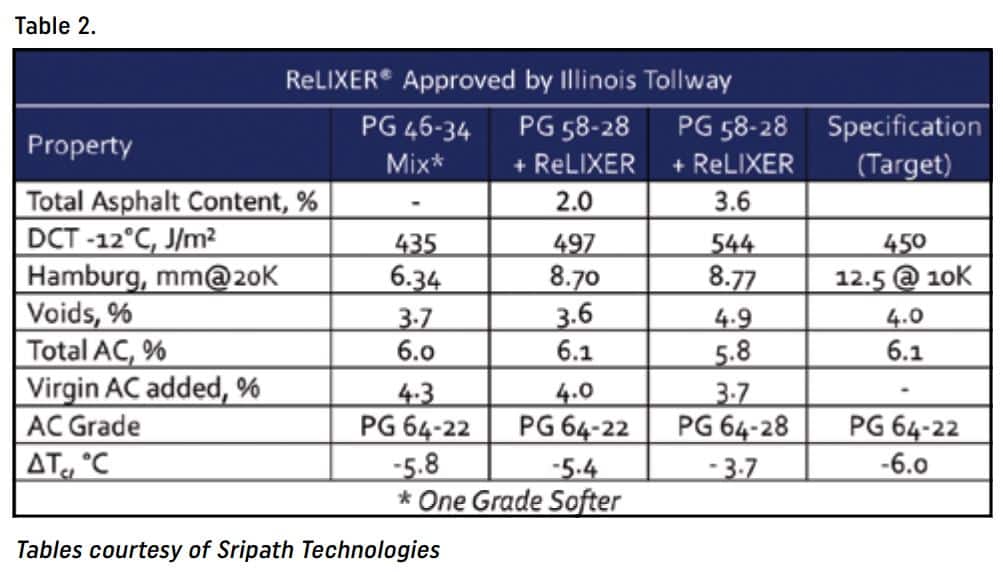
Another success story comes from the Illinois State Toll Highway Authority, which manages a 475 km network of highways across Illinois, subject to high traffic and extreme weather conditions. Close to 5,000 tons of a 40% ABR mix was produced to lay down 8 lane-km of wear, base, and shoulder courses on US Interstates I-88 and I-294. ReLIXER® additions at 2.0% and 3.6% of total bitumen content were evaluated. For comparison, a “softer” bitumen mix was also evaluated. As shown in the table, the properly designed and rejuvenated high-RAP mixes surpassed all local specifications for low temperature cracking, rutting and air voids.

Recycled asphalt has made a long journey from being a waste material to becoming a cornerstone of our national sustainable infrastructure, demonstrating our industry’s dedication to environmental sustainability. The journey has only just begun. With an increase in recycling and reuse of reclaimed asphalt, the industry is poised to take advantage of the trifecta that RAP offers; a positive impact on sustainability, improved roadway performance and durability, and the benefits of cost-savings.

Combining Tech Helps with AC Transloading

Automated scraper strainers paired with macerators eliminate high volumes of large, suspended solids from slurries for a “set it and forget it” approach. All photos courtesy of Acme Engineering

Automated scraper strainers paired with macerators eliminate high volumes of large, suspended solids from slurries

In the asphalt industry, industrial strainers are used to separate unwanted suspended solids from liquids and slurries for efficient transloading, in which asphalt is heated to a liquid form and transferred from tank cars to trucks or from trucks to tank cars at rail facilities. However, conventional strainer methods can be improved upon to keep debris or solids of substantial size or quantity out of the liquid.

A novel blend of industrial wastewater technologies now allows for the efficient removal of solids without the need for extensive manual labor and so on. Specifically, the design involves the combination of a macerator, which breaks down large solids into smaller fragments, and an automated scraper strainer flexible enough to filter out larger debris along with tiny particles. This innovative solution is even designed to accommodate high solids loading without clogging.

The combination of these two established technologies is already being applied to some of the toughest straining applications including asphalt transloading, wastewater debris, power plant boiler water slag and meat processing waste streams. Our interest here is asphalt transloading.

“Although the macerator cuts up the biggest solids, the strainer must still be able to separate both relatively large pieces and tiny particles while handling high solids loading without becoming obstructed.”—Robert Presser

Overcoming Traditional Limitations

Duplex strainers are often used in continuous flow processes that cannot be shut down for cleaning purposes. Duplex basket strainers employ two distinct chambers that function independently. When one chamber needs cleaning, the flow is diverted to the alternate chamber, enabling the removal and cleaning of the first basket.

Cleaning is a laborious process that involves equalizing pressure between the baskets, diverting flow to the off-line chamber, opening the cover, manually removing the clogged basket, and cleaning it before refitting the basket, ensuring the seal and tightening the fasteners.

An automated scraper strainer like that from Acme Engineering is designed to continually remove both large and small suspended solids from liquids and slurries.

If an operator fails to adequately clean the basket strainers for any reason, both strainers can become clogged at the same time. This compromises the filtration process, resulting in quality issues or unexpected downtime until the problem is resolved. For many processors, this can occur simply due to having insufficient personnel to keep basket strainers clean along with their other duties.

“As an alternative, a combination of established complimentary technologies such as a macerator and an automated scraper strainer can essentially ‘knock out’ even the toughest problems related to large solids and high solids loading in an automated way,” said Robert Presser, vice president of Acme Engineering Prod. Inc., a North American manufacturer of industrial self-cleaning strainers. The company is an ISO 9001:2015 certified manufacturer of environmental controls and systems with integrated mechanical, electrical and electronic capabilities.

In this configuration, a macerator would be installed upstream to reduce large solids down to a manageable size. The capabilities of the automated strainer are crucial to the process as well, according to Presser.

“Although the macerator cuts up the biggest solids, the strainer must still be able to separate both relatively large pieces and tiny particles while handling high solids loading without becoming obstructed,” Presser explained.

Adapting strainers for the specialized filtration of uncommon liquids and slurries requires not only expertise but also collaboration with the processor as well as some design iterations.

In the case of Acme, the OEM’s automated scraper strainer is designed to continually remove both very large and very small, suspended solids from liquids and slurries. Cleaning is accomplished by a spring-loaded blade and brush system, managed by a fully automatic control system.

Four scraper brushes rotate at 8 revolutions per minute (RPM), resulting in a cleaning rate of 32 strokes per minute. The scraper brushes get into wedge-wire slots and dislodge resistant particulates and solids. This approach enables the scraper strainers to resist clogging and fouling when faced with large solids and high solids concentration.

Blowdown typically occurs only at the end of the intermittent scraping cycle when a valve is opened for a few seconds to remove solids from the collector area. Liquid loss is well below 1% of total flow.

If additional pressure is required to clean the screen, Acme Engineering can add an inexpensive trash pump to the blowdown line to assist in removing the solids from the strainer sump.

How to Perform Pressure Aging of New Mix in the Lab

“Since the solids are small, a little trash pump can pressurize the blowdown line to evacuate solids from the strainer. The combination provides quick ROI because operators no longer have to monitor and clean out heavily loaded basket strainers, resulting in substantially less labor and downtime,” Presser said.

Alternatively, the sump can be replaced by a cylinder bracketed by two gate valves that open and close as needed to remove the solids waste.

“When you are ready to empty the cylinder, you close the top gate valve momentarily and open the bottom one by depressing a button to dump the accumulated solids into a receptacle like a dump truck or a conveyor bucket so there is no manual handling required,” Presser said.

According to Presser, Acme has worked with operators and managers at rail facility intermodal terminals to implement a wide range of specialized straining systems for difficult applications with exceptionally large solids or very high solids loading.

How to Perform Degassing of New Asphalt Samples in the Lab

In one example, the OEM installed equipment to strain asphalt slurries at intermodal terminals providing rail-to-truck and truck-to-rail transloading services. One application involved using multiple cylinders with gate valves to appropriately strain liquid asphalt to the correct specification for rail-to-truck loading.

According to Presser, adapting strainers for the specialized filtration of uncommon liquids and slurries requires expertise and collaboration with the processor and some design iterations.

“For unusual applications, it may take a few attempts to get it right. You may have to adjust the timing and frequency of cleaning as well as adjust the screen slot size. There are quite a few variables involved,” Presser concluded.

For more info, visit Acme Engineering Prod. Inc. at acmeprod.com.

Solve Asphalt Plant Odor Issues

Editor’s Note: For 2024, AsphaltPro Magazine allows experts in the industry to share how to expand your operations to the next phase of business. Are you ready to start making your own hot-mix asphalt? Let’s turn to some professionals who have equipment, services, software and tenure to help you expand to mix design, production, hauling and more. This month’s installment from Ecosorb takes a look at the permit line-item of odor control at the plant to ensure your community relations, sustainability initiatives and production efficiency are working hand-in-hand.

In the asphalt industry, maintaining neighborly relations and curtailing odor complaints before they arise is just as important as maximizing production for every company’s long-term business continuity.

Asphalt binders are complex mixtures of organic compounds produced as a byproduct of petroleum refining. With constantly changing feedstocks, staying on top of blends is critical to controlling odors. In recent years, “opportunity crudes” have become more prevalent industrywide, and it has become necessary to balance the lower cost of these crudes with extra processing and off-gas scrubbing requirements. Another factor to consider is increased equipment maintenance and premature failure because of accelerated corrosion caused by hydrogen sulfide in lower grade crudes.

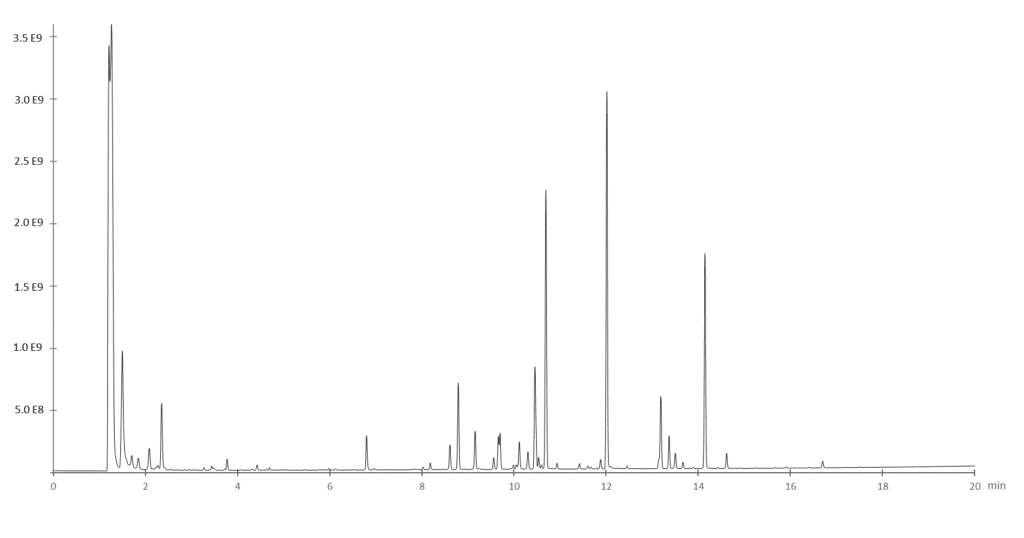
Each peak in a GC chromatogram represents the presence of a compound, identified and quantified on the x- and y-axes respectively.

During heating, mixing, transfer and application of asphalt binders, odors are often produced from volatile organic compound (VOC) emissions, which can lead to concerns from neighbors and passersby smelling the off-gas. If left unaddressed, concerns can become complaints, which can ultimately pave the way to regulation and operational restrictions.

Odor abatement is a historically difficult undertaking in the asphalt industry because of the complex makeup of bindings and numerous petrol products used in each hot mix. However, plants can now enlist the help of top suppliers with the knowledge and advanced laboratory technologies needed to chemically neutralize odor-causing components. These experts address this issue by identifying the problematic compounds, and by then creating and providing additives specially formulated to neutralize odors from various asphalt mixes.

Neutralization challenges with evolving mixes

Occupying a lower tier on the crude refining food chain, asphalt blends will always vary much more than higher-tier products, such as aviation fuels. Mixes can vary significantly from one season to the next—particularly with opportunity crudes—depending on the oil sources available and how they are processed. As a result, odor neutralization formulations must also adapt to the changing constituents of each season’s asphalt mixes.

Manufacturers, therefore, cannot always rely on the same odor-mitigating additives from one season to the next, even when producing the same end product. Additionally, since crude sources and refining processes vary by region and supplier, the nature and intensity of odors can differ even between batches of asphalt binders. Other factors for odor mitigation assessment include the temperature at which the plant is operated, geographical attributes—such as hills and valleys—humidity, temperature, wind speed and direction, and proximity of neighbors.

OMI Industries Introduces Ecosorb 1300

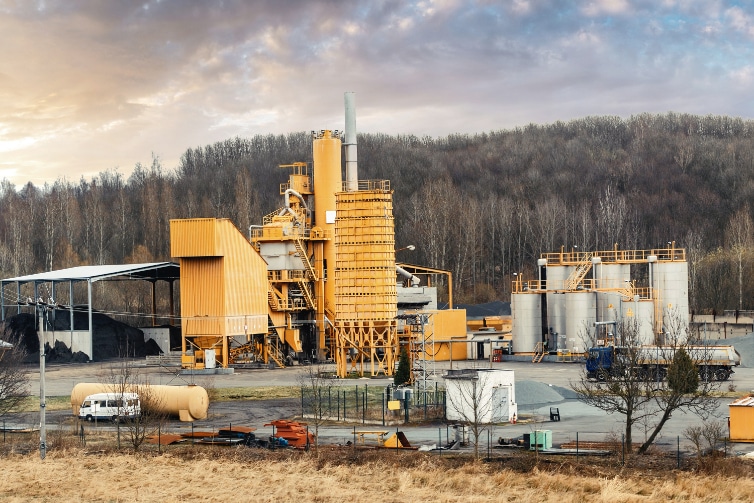
There are many potential VOC emission sources during the processes of refining the feedstock, manufacturing the mix, and storing the finished product. This is especially notable during the storage of bulk asphalt in a heated tank, in addition to stack emissions during production. Loading asphalt from one vessel to another—such as from the silos into trucks, and from trucks into a paver hopper—is another frequent odorous phase.

VOC concentrations increase significantly at higher temperatures. Below 150°C, few detectable VOCs are produced, but above this point, emissions increase. VOC prevalence is also dependent on the surface area of asphalt exposed to air over asphalt-coated aggregates. VOCs also increase substantially when these asphalt-coated aggregates are agitated.

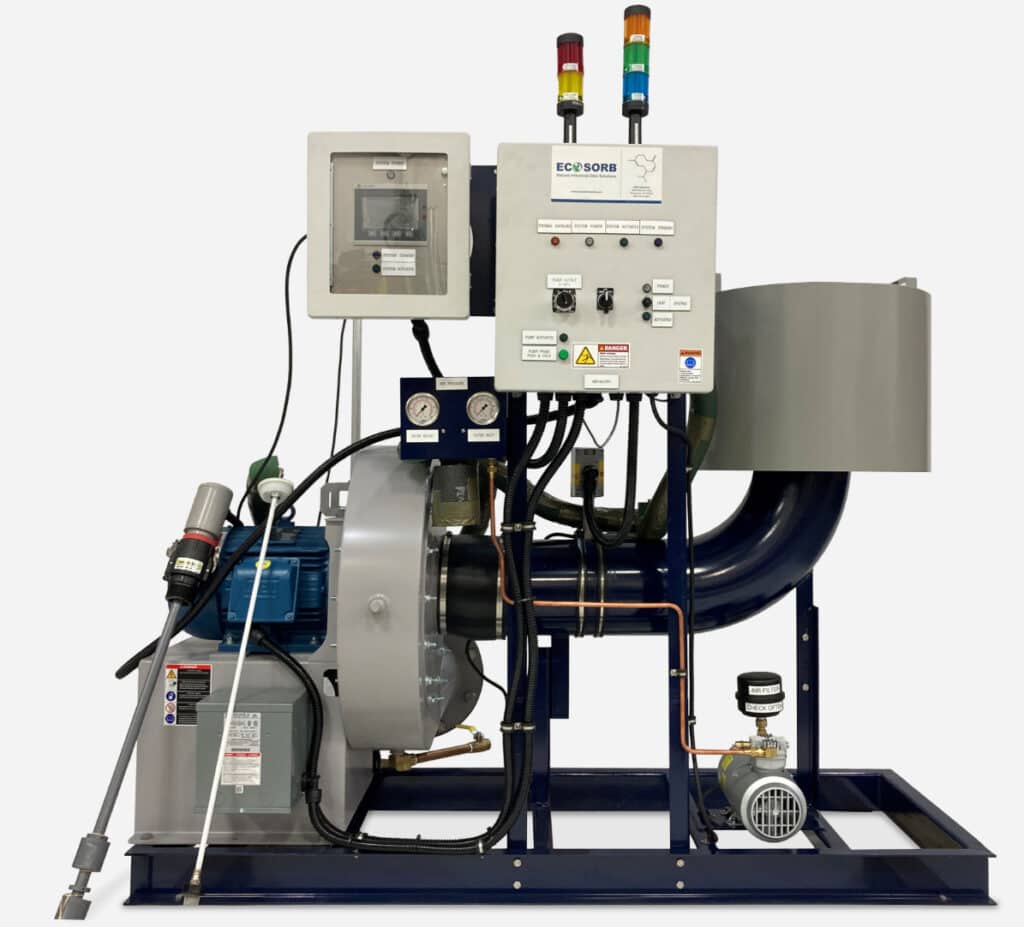
Ecosorb’s vapor phase delivery system is useful for mitigating odors in airborne particulate matter at a baghouse.

Research-driven and plant-based solutions

Asphalt production variability spawns the need for adaptive and sometimes customized blends. Although there is no one-size-fits-all solution, there are general formulations that bolster odor mitigation efforts for a variety of asphalt mixes. These general formulations are added to the mixes to neutralize several odor-causing constituents, like hydrogen sulfide, mercaptans and general hydrocarbons. Specialty suppliers update their additives from year to year based on aggregate samples taken at asphalt plants to maintain effectiveness.

Although general formulations are efficacious for many mixes, some plants require custom blends, and expert suppliers can help with these needs as well. In these situations, asphalt samples are taken from the plant during multiple stages of production. These samples are then studied in a lab using gas chromatography mass spectrometry (GC-MS) to determine the precise molecular makeup of odors, even those present in minute amounts.

A GC chromatogram is a visual output of the data recorded by the detector, and it is presented as a plot of detector response along the y-axis, versus retention time along the x-axis (See the graph in this article).

Blue Smoke Control Introduces X-VOCS™ to Eradicate Odor-Causing Emissions

Each compound detected appears as a single peak on the graph, with the corresponding retention time value used for identification. Once the odor-causing compounds are identified, scientists develop a formulation using plant oils to molecularly neutralize the odors when the additive is combined with the mix.

This results in versatile and cost-efficient solutions—specially crafted for maximum effectiveness in each application—with each solution leveraging customized concentrations of plant oils, biobased surfactants and water to eliminate odors. These additives are designed to be safe, non-toxic and biodegradable, and to be applied during any phase of the asphalt lifecycle: manufacturing, storage, transportation and use. When used in refineries, hot mix plants, transportation systems and paving operations, they are blended directly into the asphalt mix (Figure 3).

These additives are also useful for mitigating odors and blue smoke when dispersed via vapor phase during the capture of particulate matter in a baghouse.

Airborne vapor phase dispersion is also commonly deployed to control odors at storage terminals, where asphalt is kept prior to delivery.

Multi-mix odor neutralization with a single additive

One longtime Ecosorb end-user customer—a new and reclaimed asphalt pavement plant producing 1,500-2,000 tons of hot mix asphalt each day for contractors and construction firms—relied on a basic odor-mitigating additive for years. However, recent asphalt mix variability spurred the need for a specially targeted formulation. The different mix sources and grades began producing pungent odors in the areas surrounding the plant, and the standard additive was no longer effective.

Spring Startup: Keep an Eye out for Blue Smoke and Odors Before Your Neighbors Do!

The plant shipped samples of three different asphalt mixes to Ecosorb’s lab to assess the levels of hydrogen sulfide, mercaptans and general hydrocarbons in each. The data from one asphalt mix, before and after treatment at 150°C is shown in Table 1.

Although the levels were different in each mix, the team of scientists formulated a single blend to neutralize odors in all three mixes, eliminating the burden of correctly matching different additives with a specific mix. The plant added this single blend to all its mixes, which reduced airborne sulfurous release by over 90%.

Ecosorb uses GC-MS instrumentation to identify odor-causing substances in asphalt mixes, and then develops custom plant-based formulas to neutralize odors.

Effective eco-products enhance odor abatement

By adding plant-based odor removers to asphalt mixes, manufacturers can effectively mitigate odors using safe, environmentally friendly and cost-efficient methods. These custom formulations do not mask smells, but instead mitigate them by breaking down and neutralizing odor-causing molecules in the mixes.

These mitigation techniques empower asphalt manufacturers to redirect their time from odor control and complaint handling, to maximizing production and overcoming the steady stream of challenges posed by evolving feedstocks.

Laura Haupert, Ph.D., is the chief scientific officer for Ecosorb, where she leads research and development, regulatory, safety and quality control. She earned her B.S. in chemistry from Manchester College and Ph.D. in physical chemistry at Purdue University, working with bond energies of solvated clusters. Haupert also completed her post-doctoral research at Purdue.

The Solution for Blue Smoke Emissions in Europe’s Green Capital 2021

Not quite 50 years ago, the city of Lahti, Finland, was facing some hard truths brought about by a history of rapid industrial growth and urbanization. Nearby Lake Vesijärvi was polluted to the point of eutrophication, which is an increased concentration of minerals and plant nutrients in a body of water, due to erosion and mineral/industrial runoff, which essentially chokes off oxygen and animal life. In 1976, however, Lahti began working to reverse its environmental decline, starting with water conservation. Following regular advancements over the years, the city’s environmental efforts have paid off — to the point that the European Commission named Lahti the European Green Capital 2021.

As a partner with Lahti in its pursuit of this honor, asphalt paver and producer Peab Asfalt, along with its parent company, Sweden-based construction company Peab, have made it a mission of their own over the years to develop ecologically friendly products and practices. The company’s innovative ECO-Asfalt, introduced in 2015, uses climate-neutral biodiesel for drying and heating aggregate in its plants. Benefits of biofuel include the facts that it burns cleaner, and it is renewable.

With the 2019 Peab acquisition of paving operations of a separate Scandinavian company, YIT, Peab Asfalt today comprises a total of 70 stationary and 20 mobile plants in Scandinavia, with 37 of those plants located in Finland. In early 2021, Peab Asfalt launched ECO-Asfalt in its Lahti asphalt plant.

Making an Asphalt Plant Invisible (Environmentally)

“When we realized we would be introducing ECO-Asfalt in Finland, I knew we also needed to do something about the blue smoke that was produced by our asphalt plants,” said Eero Sorri, Peab Asfalt’s production and purchasing manager for Finland. “We had been receiving feedback about it from neighbors and truck drivers loading from the silos. Apart from our work with Lahti on the award, we knew we had to do something. For the past five years, we had more and more odor issues due to our increased use of RAP in our plants. It was becoming a problem for everyone.”

The Solution Found — in AsphaltPro

The odors created by blue smoke are the result of emissions consisting of sub-micron droplets and aerosols, created if super-heated during the production of hot-mix asphalt. Sorri knew that eliminating the blue smoke would also eliminate the associated odors. As he began to proactively research a solution to Peab’s blue smoke challenge, Sorri says he was struggling to find a good solution for eliminating blue smoke—until he ran across an article online that had been published in AsphaltPro magazine (October 2014).

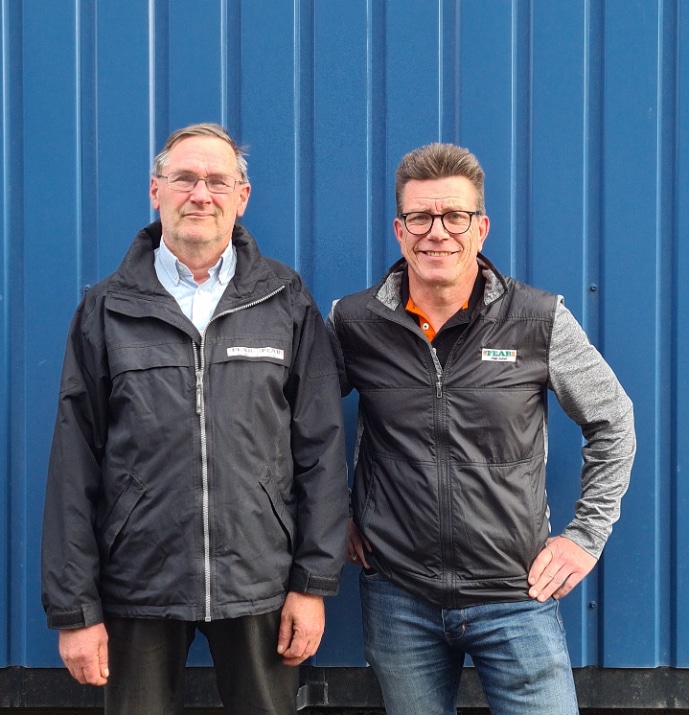
At left, Jari Mäkelä; at right, Arto Paavalainen

“I read that BoDean Company in California had found a solution to its blue smoke and odor issues by installing a system including the Blue Smoke Control collector, patented and produced by Butler-Justice Inc.,” Sorri said. “From there, I found the Blue Smoke Control website and a YouTube video that explained how the system worked.”

Sorri had already talked to numerous manufacturers in Europe and the United States. “After finding this system, I contacted Butler-Justice at the end of November 2020, and we began to work together on a solution. We had our first Teams meeting in January 2021. We’ve had hundreds of Teams meetings since.”

A Meeting of Minds

Blue Smoke Control is a division of Butler-Justice Inc., based in Anaheim, California. According to Butler-Justice President Mike Butler, he, Sorri and their respective teams collaborated on possible solutions. What seemed on the surface as though there might be a simple answer to Peab Asfalt’s blue smoke issues quickly turned into a challenge that required minds from both sides of the Atlantic Ocean to join forces and develop a custom remedy.

Harri Liimatainen

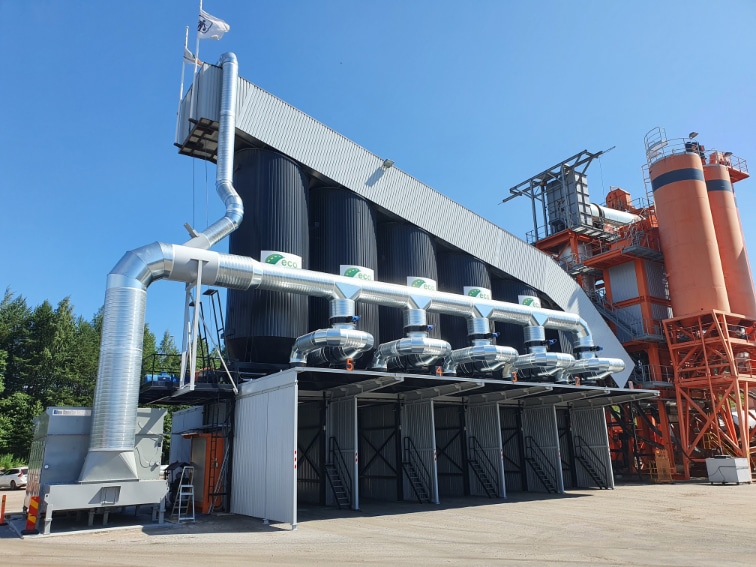
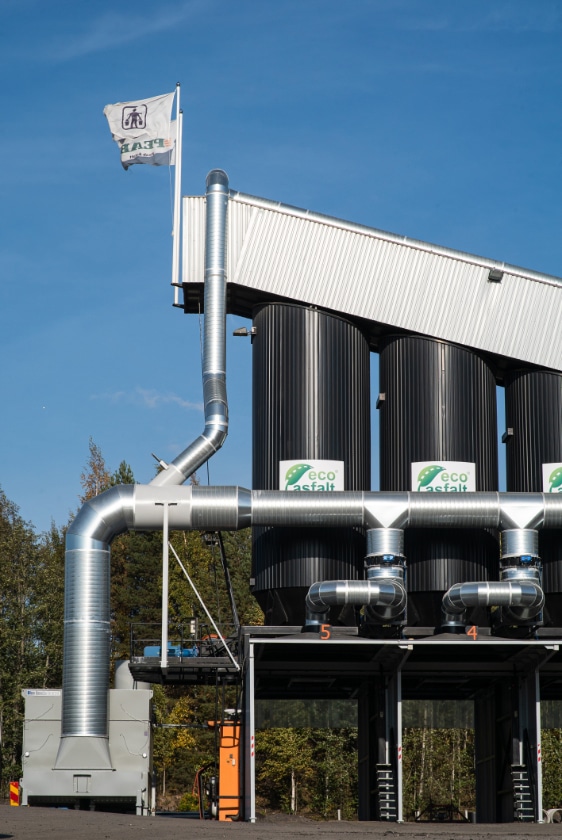
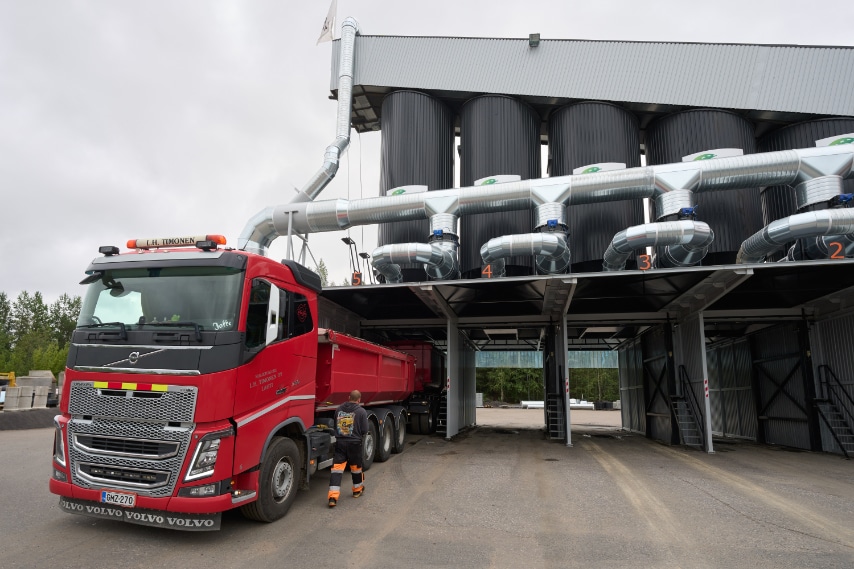
“Silos at asphalt plants in Europe are not set up the same way as they are in the United States,” Butler explained. “Where asphalt plants in the US typically load hot mix into trucks positioned on driveways and truck scales that are centered directly beneath a row of silos, most European plants have trucks that drive beneath individual silos from a perpendicular direction. In this way, multiple trucks can be loaded simultaneously. This required that we rethink the way our inlet headers at the truck load-out had to be configured to fit the European operations.” Butler says that the entire group from Peab was open to making minor concessions to plant operations. In fact, he believes that their teamwork, as well as give and take between the two companies, was the basis for the ultimate success of the common objective.

“The collector is only one part of the system,” he explained. “While the Blue Smoke Collector is most certainly the heart of the system, the ducting layout, pickup locations, and inlet header designs are paramount to the success of a responsible system.”

How the System Works

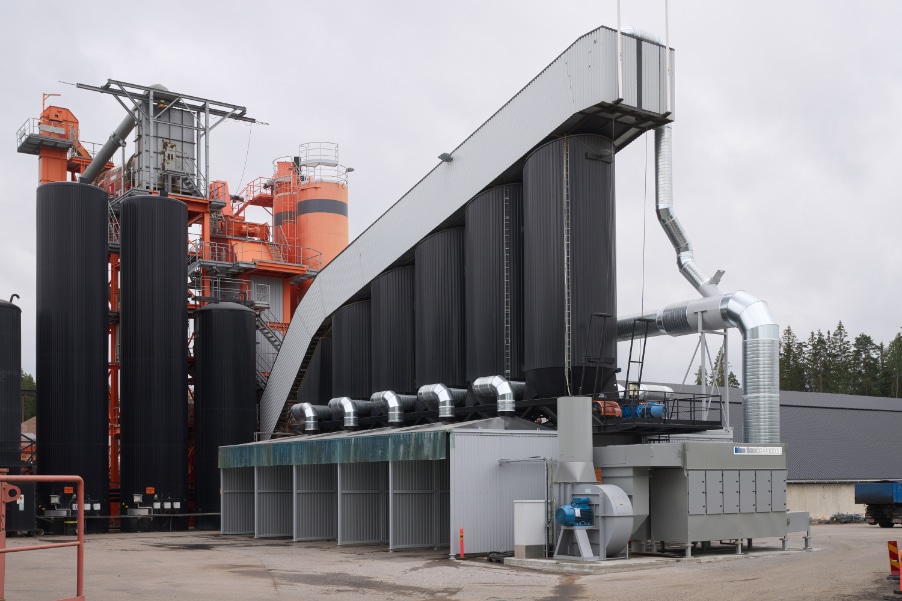
Blue Smoke Control, as a complete operation, is designed to capture blue smoke from key emission points in the asphalt production process—including transfer points, silo-filling operations, and truck-loading areas. Once the smoke is captured by a duct system, ambient air is drawn in at key points to help to begin the process of coalescing the sub-micron asphalt binder droplets and aerosols into larger droplets that are by then large enough to be filtered through the seven stages contained in the Blue Smoke collector. The droplets accumulate on the outside of the filters. When the droplets become heavy enough, the liquid effluent is drained to a collecting sump below the collector.

Ulrich Imboden Shows How to Pave in a Tunnel

The final filter in the Blue Smoke collector is produced from proprietary media developed exclusively for collecting oils and aerosols. This media, combined with a special outer wrap, allows the filter cartridge to drain and prevents the collected “blue smoke” from entering the clean air stream. Because the Blue Smoke Control filters are arranged vertically inside the collector, gravity aids in the draining process, where the most efficient filters drain onto the pre-filters, which are washable. The result is more complete capturing of the sub-micron droplets, easier maintenance, and higher filtration efficiency.

In some cases, the system can recover as much as five gallons of coalesced liquid asphalt binder per day from the plant operations.

This side of the Blue Smoke Collector system shows the collector fan that pulls fume into the filter system.

Learning Curves

“I knew I was taking a chance on a new technology manufactured in the US to be installed in Finland, but as I talked to Mike, I realized that he understood our system—the different types of silos we have and how we load trucks. Mike quickly understood the problem and started designing the ductwork that would work for our system. Mike and our engineers worked closely together to understand the intricacies of our asphalt plant and how to apply each other’s experience to reach the best solution,” Sorri said.

Eero Sorri is Peab Asfalt’s production and purchasing manager for Finland.

“Over the course of a couple months, Eero and his team worked with us almost daily, sending drawings back and forth, to complete the engineering for the ductwork and damper systems,” Butler said. “The whole group at Peab were so motivated and helpful, it was a truly refreshing meeting of the minds, aimed solely at accomplishing all of the company’s goals.”

Once the ducting, fan and damper designs were squared away for fabrication in Finland, Butler said he had a completed new Blue Smoke collector in his yard, which was being stored for a customer that did not need it for another several months. The system was ready to ship, but Butler’s team faced another learning curve—that of shipping the system internationally. With Sorri’s help, Butler contacted logistics company Kuehne+Nagel USA, which had experience in international shipping with oversize containers. The shipping specialist helped Butler’s team load and secure the collector in two containers—one high-cube and one standard height. The load left Butler’s yard in mid-March 2021.

Meantime, the Peab team was working to build the Blue Smoke Control system’s ductwork, based on the final design. “We worked together on the engineering for the ductwork, but they had to build it themselves,” Butler said. “Another part of the system that they supplied was the fan, which had to meet European CE standards, similar to our UL-Listed.” Butler had sent the fan specifications to Sorri, advising that a variable-frequency drive fan (VFD) was preferable. “Peab engineers ultimately chose to use a Ferrari fan,” he added.

“This was an expensive solution,” Sorri admitted. “We were a little nervous.”

The Blue Smoke collector, in its two containers, traveled with 20,000 other containers on a ship that first headed south from Long Beach, California, along the Pacific Ocean, through the Panama Canal, stopping in the Dominican Republic, and then across the Atlantic Ocean. Following another stop in Rotterdam, Netherlands, the Blue Smoke Control collector arrived in Helsinki, Finland, in mid-June, before reaching its final destination in Lahti. With the ductwork, fan and dampers already in place, Sorri’s team installed the collector by July 1. Peab Asfalt started up the system on July 12, 2021.

Mike Butler explained, “most European plants have trucks that drive beneath individual silos from a perpendicular direction. In this way, multiple trucks can be loaded simultaneously. This required that we rethink the way our inlet headers at the truck load-out had to be configured to fit the European operations.”

A Success Story

To the Peab team, the truck drivers and the plant’s neighbors, the benefits of the system were quickly apparent. “As one neighbor told us, ‘You can’t find the blue smoke,’” Sorri said. “And while it hasn’t removed the odors 100 percent, the visible blue smoke is gone. The odors that remain are at the molecular level. We are working with Mike on different technology to solve all of the remaining problems, such as odors coming from the main chimney. We will continue to work with Mike to find other solutions for the future,” he added.

Since the system’s startup, Peab Asfalt has ordered three additional Blue Smoke Control collectors—two for the Helsinki area and one for Hämeenlinna, all in southern Finland. Butler said, “These collectors are scheduled to ship in early January 2022 from the East Coast. Hopefully, delivery will take only three to four weeks to make the Atlantic crossing to Finland. Peab will be able to install them and have them ready when paving season starts in early spring.”

To Sorri, the greatest success of his partnership with Butler-Justice is that he has proven the Blue Smoke Control system will eliminate the blue smoke and the odors that go with it. “From feedback with neighbors and truck drivers, we feel this is a success. It is the first step to becoming the cleanest asphalt plant in Finland—or even all of Europe,” he said.