Harness Centrifuge Technology: A Smart Path to Water Conservation in Mining and Aggregates
Around the globe, businesses have been tasked with responding to climate change and increasingly stringent environmental regulations. Nowhere is this more evident than in the mining and aggregates sectors, where water is both a critical resource and a costly liability.

Historically, these industries have relied on conventional water treatment and waste management methods to stay operational. While effective in the past, many of these traditional approaches are now struggling to meet today’s challenges. Demand for raw materials like sand, gravel and limestone is climbing rapidly driven by urbanization, infrastructure development and consumer consumption. At the same time, the availability of clean water is dwindling, and disposal options for industrial sludge are becoming more limited and expensive.

Save Water When Washing Aggregate

In this evolving landscape, companies are being pushed to reimagine how they operate. The question is no longer whether change is necessary, but how quickly it can happen—and what technologies can lead the way. Among the emerging solutions, centrifuge technology has quietly begun to revolutionize how water is recovered and sludge is managed. By dramatically reducing freshwater usage and increasing process efficiency, this technology is proving itself to be a best practice.

This article explores a real-world case study from France, where a major aggregates producer not only met government-mandated water reduction targets but also improved operational efficiency using advanced centrifugation. It’s a story of persistence, partnership and technological progress that offers a glimpse into what could be the future of sustainable resource management worldwide.
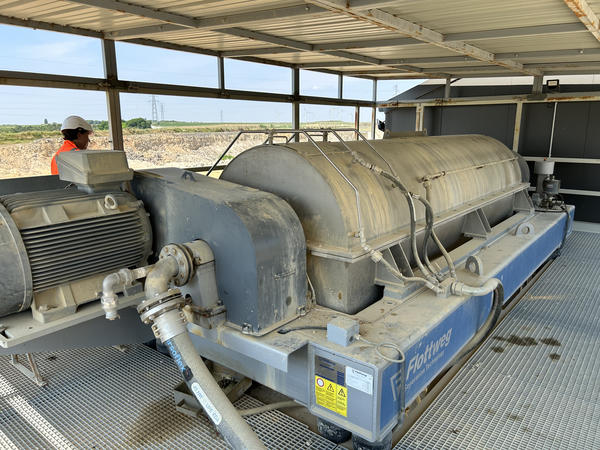
The Flottweg Z92 centrifuge spins the slurry at extremely high speeds, using centrifugal force to separate solids from water much more efficiently than gravity-based methods alone.

A French Case Study in Water Efficiency

Facing legislation that required a 33% reduction in water usage, a sand and gravel producer in France turned to a blend of conventional methods and cutting-edge centrifugation. The result was an 80 to 90% reduction in freshwater consumption—and a leaner operation that reduced staffing needs.

The story doesn’t end there. This was just one piece of a broader, long-term initiative by a global manufacturer of aggregates.

Over a decade, this manufacturer explored numerous solutions to a persistent challenge: how to recycle water more effectively during sludge dewatering. Their journey began with lab tests and small pilot studies, and by 2016, they were ready to trial a full-scale industrial project just south of Paris.

Initial tests with one centrifuge manufacturer didn’t yield the desired results. Undeterred, the company partnered with Flottweg, a recognized name in separation technology. By mid-2017, Flottweg France was on board, after a deeper analysis of first pilot tests results and ultimately recommending the Z92 centrifuge, equipped with a sophisticated control system. The project gained momentum to deliver a turnkey solution, especially after a close collaboration with partner Veolia Agriculture France—an offshoot of a major water technology company.
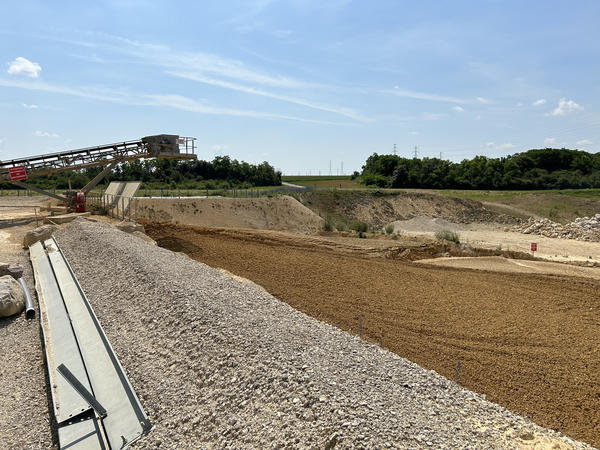
This centrifuge solids conveyor leads to the loading/transport preparation area.

The Gravel Washing Process

At the heart of this project lies a highly water-intensive operation: the washing and processing of gravel and aggregates. For decades, this process has depended on large volumes of fresh water to clean raw materials and remove fine particles. But with growing environmental pressures and local regulations tightening, producers are being forced to rethink how they manage water in every stage of production.

In this case, the end user faced a significant challenge. Their annual water consumption had reached 160,000 cubic meters, primarily drawn from local groundwater sources. However, due to new environmental directives, they were required to reduce their consumption to 105,000 cubic meters per year. This was a mandated cut of over 34%.

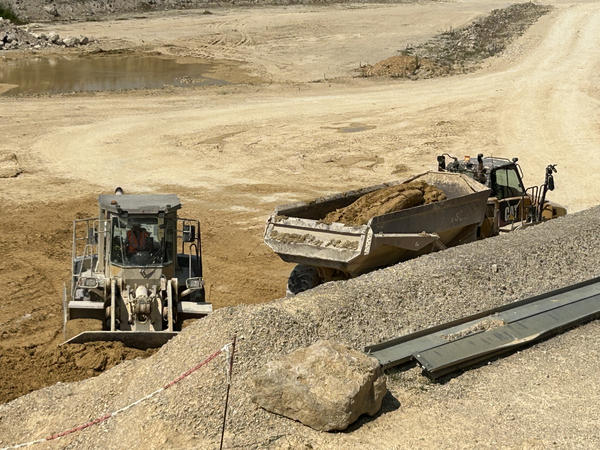
To achieve this, the company implemented a multi-step process centered on centrifuge technology, supported by traditional thickening methods. First, quarry sludge, which contains fine particles suspended in wash water, is routed to a clarifier, where gravity is used to settle the heavier solids. This initial thickening step concentrates the sludge and reduces the volume that must be treated downstream.

Economic Aggregate Quality Requirements for Pavements

The thickened sludge is then transferred to a dehydration unit, where a high-performance Flottweg Z92 centrifuge takes over. This powerful machine spins the slurry at extremely high speeds, using centrifugal force to separate solids from water more efficiently than gravity-based methods alone. The result is a drier sludge and a clarified centrate that can be reused within the system.

The goal was clear: achieve a water recovery of at least 62,500 cubic meters per year—a 46% reduction in fresh groundwater withdrawal. The centrifuge not only helped meet this target but did so with minimal chemical input, maintaining a focus on cost-efficiency and environmental stewardship. By recovering water directly from the sludge, the company retained the flexibility to maintain production volumes without over-reliance on groundwater, even during dry months or times of restricted water access.

In essence, the gravel washing process was transformed from a high-consumption, high-waste operation into a far more sustainable, closed-loop system—one that’s better equipped to meet both environmental goals and long-term operational needs.
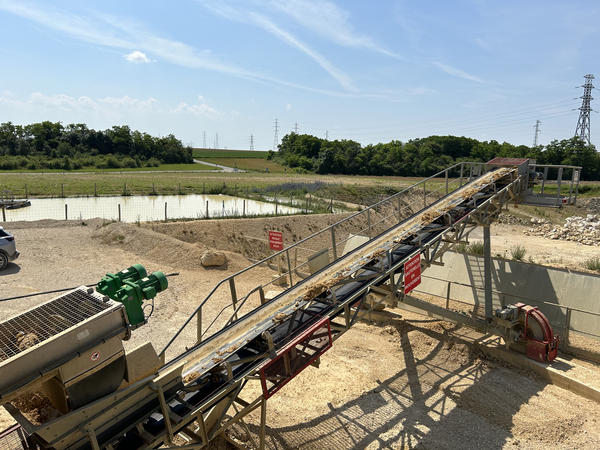
Here the solids conveyor belt is receiving solids from the single screw conveyor.

Strengths, Challenges and a Centrifugal Shift in Sustainability

The project wasn’t without its challenges. Here’s a breakdown of the SWOT analysis:

Strengths:

  • A decade-long trusted partnership
  • Strong lab and pilot testing and analysis support
  • A complete, turnkey solution from Flottweg and SEDE
  • Proven project management and local language support

Weaknesses:

  • Limited market presence and references
  • Higher energy consumption than filter presses
  • Higher upfront cost compared to some competitors

Opportunities:

  • Water management becoming mandatory in large quarries
  • Potential for government funding in eco-initiatives

Threats:

  • Power supply limitations in some regions
  • Strong local competition from filter press providers

As industries worldwide face growing scrutiny over their environmental impact, solutions like centrifuge technology are proving to be more than just effective—they’re essential.
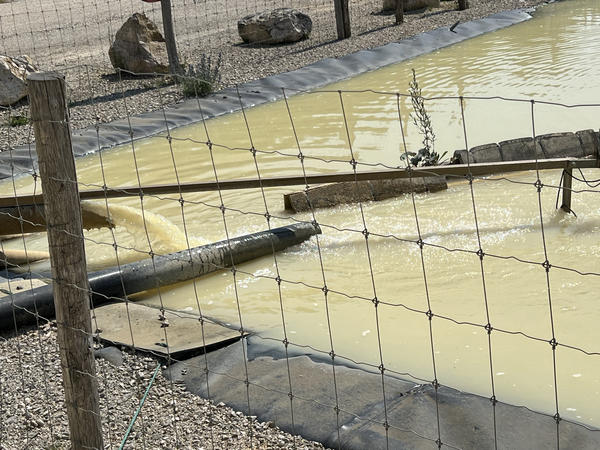
The client wanted to decrease polymer cost, so the centrate is not clear, but the water is sufficient for their wash water re-use.

The story from France demonstrates how collaboration, innovation and a willingness to evolve can lead to significant environmental gains without compromising productivity. What started as a compliance challenge became an opportunity to lead in sustainable water management.

This is not just about sludge or water; it’s about mindset. The transition from traditional dewatering methods to high-performance centrifugation represents a broader shift that embraces efficiency, resilience and long-term thinking.

By investing in smarter infrastructure today, companies not only future-proof their operations against tightening regulations but also build trust with increasingly eco-conscious stakeholders.

Gradation Blender by Gradation.ai Unlocks Mix Designs in Seconds

Yet the story remains unfinished. North America has yet to fully embrace this proven innovation. The absence of permanent centrifuge installations across the continent signals both a challenge and a call to action.

With escalating environmental pressures and rising water scarcity, the time to act is now. Adopting these technologies can help shape the future of sustainable mining and aggregate production.

Stephen L. Benyo is a Global Mining executive for Flottweg Separation Technology,  engaged in placing the “puzzle-piece” of innovative technology in its most needed locations—striving toward more efficient utilization of our world’s natural resources.

Patrice Maillett has more than 25 years of experience in operational management within the industry, in France and internationally. For Flottweg, he aims to deploy resources and talents to accelerate performance by relying on teamwork.


System Specs and Performance

Here’s what the operation in France looks like in numbers.

General Operation:

  • Annual production: 800,000 tons of limestone aggregates
  • Dry matter produced annually: 75,000 tons
  • Feed flow: Up to 100 m³/hour
  • Max solids throughput: 25 tons of dry solids/hour
  • Sludge density: Between 1.25–1.3
  • Operating days/year: 210 out of 220 quarry days
  • Daily operation: 16 to 22 hours

Performance Highlights:

  • Process flow rate: 45-65 m³/hour
  • Mass flow rate: 20 TDS/hour
  • Solids content: 250–450 g/l
  • Centrate clarity: Average 45 NTU
  • Flocculant used: SNF 934 SEP, at 0.70 kg per ton of dry solids
  • Solids dryness: 58–65%
  • Weir diameter: 650 mm (in use since October 2018)

Importantly, the focus wasn’t just on dewatering but on maximizing water recovery with minimal use of flocculants. The company struck a balance between performance and sustainability.


WOA/AGG1 2025 Highlights Workforce and Equipment Advances

WOA/AGG1 wrap-up offers highlights from asphalt and aggregate trade show in St. Louis

Even if you attended the 2025 co-hosted World of Asphalt Show & Conference (WOA) and AGG1 Aggregates Academy & Expo in St. Louis March 25-27, you probably missed a technology or two due to the overwhelming number of offerings on site. This recap of the show won’t be able to summarize every single thing available to the asphalt and aggregates professional that week, but AsphaltPro Magazine has multiple product galleries coming up over the next few months in which you can find new product news straight from the combined shows. Let’s kick off the coverage with a look at some important updates.

Helping the Workforce

Asphalt professionals have sought solutions to the workforce challenge for years, with the introduction of proxy mechanics as far back as 2018 (see this discussion in the Training Directory 2018 on TheAsphaltPro.com) through the introduction of artificial intelligence (AI) assisting intelligent compaction (IC) in 2024 (see this discussion in the “NDDOT Trials New Technologies on Hwy. 14” article). Methods for training and assisting our evolving workforce dotted the WOA/AGG1 tradeshow floor.

NDDOT Trials New Technologies on Hwy 14

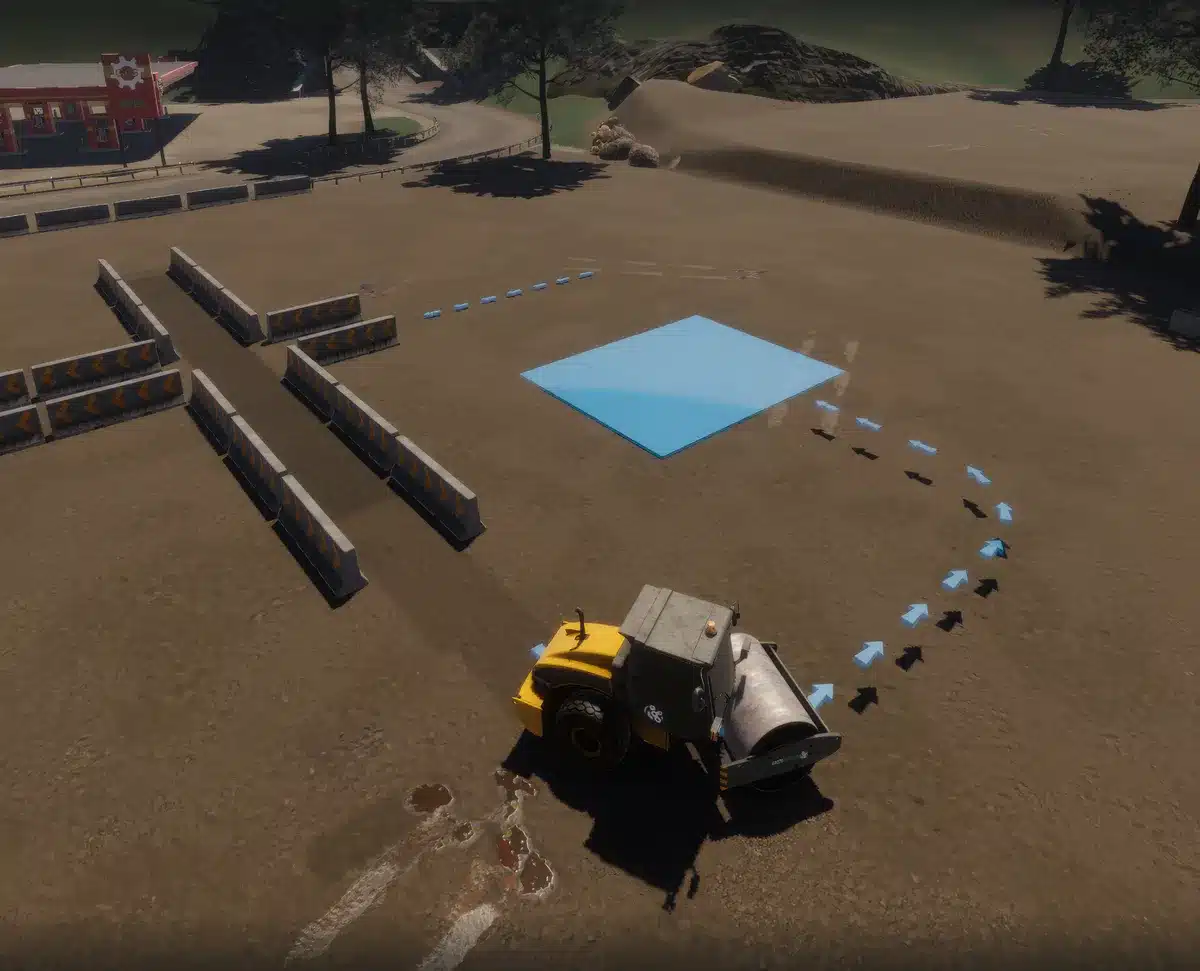
For example, the growing portfolio from CM Labs, a vendor for simulation-based training solutions in the construction, utilities and ports industries, announced prior to WOA the launch of its Intellia Single Drum Roller Simulator Training Pack, which it states is the industry’s first-ever single drum roller simulation training. It’s designed to address the growing labor shortage by delivering a highly realistic training experience tailored to beginners who have no prior experience operating heavy equipment. This training module was on display at WOA and is described in this month’s product gallery.

Training took place in the education sessions and around the show floor. AsphaltPro Magazine once again hosted its “Ask the Expert” with American Paving Specialists’ Bill Stanley in the hot seat. Attendees could stop by the AsphaltPro booth and fire their questions and quandaries at Stanley for the hour that he was available. That popular series returns to CONEXPO-CON/AGG 2026 with an impressive lineup already signing up over the five-day show to offer answers for paving, production, safety and QC/QA, so watch this space for details.

Asphalt Plant, Paving and QCQA Training in 2018

For contractors seeking a way to augment a “green” workforce, exhibitors had offerings in the AI space, as well. GSSI and Hamm have collaborated on aspects of the Hamm Smart Compact system to assist roller operators in perfecting compaction no matter the operator’s skill level. And the engineers at Sakai have added echelon rolling to its Guardman™ technology for safeguarding equipment and personnel. All of these teams were on hand to discuss the benefits of implementing these systems to help the new—and veteran—workers on the crew, and some of those benefits are outlined in this month’s product gallery.

Show management reported more than 11,500 industry professionals gathered in the America’s Center Convention Complex, stating in a March 27 press release that 59% of total attendees were under the age of 45, reflecting the positive future of the industry. Additionally, 10% of attendees were women, underscoring this growing segment of the industry. Visitors traveled from across the country and abroad, some traveling as far as Australia, England, Argentina and Mexico to take part in the leading asphalt and aggregates trade show and conference, including a special delegation from Nigeria.

The 2025 WOA/AGG1 event featured a record amount of square footage, including a new feature called the Community Zone. “This success is a direct result of the collaboration and hard work of all our partners, exhibitors and staff,” said World of Asphalt Show Director Brittany Schmidtke. “The momentum and growth in the asphalt and aggregates industry is evident by what we saw exhibited on the show floor and ultimately provided a richer experience for our attendees.” Photo courtesy of the Association of Equipment Manufacturers’ WOA website

Attendees engaged in more than 120 educational sessions through the People, Plants, and Paving and AGG1 Academy. These conferences covered a wide range of topics essential to the asphalt and aggregates industries. AEM reported a few of the most popular sessions included “Lean Principles: It’s About People, Process & Change,” “Unleashing the Power of Intentional Leadership: Leading Yourself to Lead Others,” “Autonomous Quarry Trucks 101,” “Extreme Ownership for Business and Life,” “Laydown Best Practices” and “Compaction 101: Doing the Right Things, the Right Way.”

Multi-Tasking at WOA

In addition to education and equipment, the co-located shows offered a venue for networking and business meetings. For example, a new feature of the show this year was the Community Zone, which provided a dedicated space for attendees to relax, work and network. The Community Zone included presentations, such as one from Ashley Batson of the Women of Asphalt, and a book signing by Ajax Paving’s Vince Hafeli.

“The 2025 AGG1 and World of Asphalt show offered the increased ability for exhibitors and attendees to connect—from the Community Zone area, to the larger show floor space and media one-on-one opportunities,” said Michele Stanley, interim CEO of NSSGA. “Every year the event becomes better with new innovations and updates. We are proud to offer our NSSGA members this unique meeting environment so they can continue to reach their own business goals.”

Show management shared 10% of show attendees were women, underscoring that growing demographic in our industry. On March 26-27, the Women of Asphalt organization hosted its Women of Asphalt Day, during which industry professionals presented career and motivational information for the men and women who’d registered to attend this conference-within-a-conference. Also at the show, the AsphaltPro staff had the opportunity to meet with WofA leadership to make plans to support the group’s important work into the future. From left: Cara Owings, media sales representative of AP; Sarah Redohl, digital editor for AP; Brittyn Heisler, national executive director of WofA; Sandy Lender, editor of AP; Ashley Batson, chair of the board of directors for WofA. Photo courtesy of Rapport Storytelling

And speaking of NSSGA, the association’s annual convention ran concurrently with AGG1. More than 600 aggregates industry leaders convened in St. Louis for the meeting, which featured the announcement of the 2025 NSSGA Leadership including Board Chair Ted Baker II of Blue Water Industries and the presentation of the Barry K. Wendt Memorial Commitment Award to Ward Nye of Martin Marietta. The annual membership meeting keynote was a moderated discussion by football legend Archie Manning. This year’s meeting comes as the association marks its 25th anniversary.

The first general session of the NSSGA Annual Convention March 23-26 featured Dr. Helena Boschi, an internationally recognized psychologist and neuroscientist specializing in the application of brain science to the workplace.

Women of Asphalt also hosted a conference-within-a-conference with the second annual Women of Asphalt Day. Women and allies from across the country participated in special programming and networking activities.

CM Labs’ Intellia Single Drum Roller Simulator Training Pack features a comprehensive nine-exercise curriculum designed to build a strong foundation in operating heavy equipment. Image courtesy of CM Labs

“We’ve talked to a lot of women,” said Silver Star Construction’s Trish Morris, who’s opening an Oklahoma branch of Women of Asphalt. “A lot of men have come by and grabbed our cards so they can get their team members signed up. I think it’s great they’re willing to take that step and get their ladies involved as well, even if they’re not here.”

Aside from conferences, attendees could multi-task with receptions and networking. For the second year in a row, Raised on Blacktop and WOA collaborated to host a sold-out kick-off party. Also sponsored by Wirtgen and a handful of others, the event brought together nearly 400 asphalt professionals at Busch Stadium, the iconic home to the St. Louis Cardinals, to build relationships and excitement the night before the show’s opening.

Contractor’s New Museum Offers Glimpse of Route 66 History

On the first day of the show, a handful of guests visited Campbell’s Service Station, owned by a local contractor and celebrating the historic Route 66. Check out the article “Contractor’s New Museum Offers Glimpse of Route 66 History” in the March issue for details and send your stories about preserving the iconic roadway to sandy@theasphaltpro.com.

Attendees enjoyed the Rock & Road Reception where a relaxed atmosphere allowed for networking on the show floor on Wednesday evening. It featured live music, mascots from the St. Louis Cardinals and St. Louis Blues, and treats from roaming characters. Another group of guests attended the EdgeVanta and Gearflow happy hour event at the nearby Buddy’s Wine Bar & Bistro. Everyone was welcome to attend the relaxed happy hour in the Stansteel Hotmix Parts & Service booth as well. Basically, attendees had ample opportunity to unwind with new and established friends amid the crush to gather information and business tips.

Save the Date for 2027! Next year CONEXPO-CON/AGG takes place in Las Vegas, but WOA and AGG1 co-locate in New Orleans March 15-17, 2027.

The Remix™ kiosk at the Astec Industries booth showed the almost imperceptible differences between Cold Central Plant Recycling (CCPR) and traditionally produced asphalt. Photo courtesy of AsphaltPro Staff

Get More Tons

Of course, the name of the game at a show like WOA/AGG1 is to see the iron and learn what new technology will help your bottom line. AEM reported the exhibitors unveiled new products, partnerships and advancements at a record 19 press events.

One of those unveilings took place at the ShoulderMaster booth on the first day of the show. This family-owned company introduced to the industry its center paving attachment for skid steers, the CP-1000, which is detailed in this month’s product gallery. Also check out the family’s story at the beginning of this month’s gallery.

Volvo Construction Equipment showcased during its press conference enhancements to its soil and asphalt compaction product lines with upgrades to multiple models and a forthcoming electric model. Show attendees also got the first look at a DD15 electric asphalt compactor.

IntelliShift unveiled its advanced asset-tracking technology. The system allows companies to monitor equipment location, track utilization and idle time, and mitigate theft and misuse.

Metso unveiled the Nordberg® HPe™ range expansion and aftermarket kits for the new HPe range. The company also celebrated a major milestone, the 40th anniversary of the Lokotrack® mobile crushers.

While the company didn’t host a press conference, Astec Industries had a few updates and official launches to share. Its SiteLine™ operator environmental awareness camera system for its cold planers was previewed at the 2024 WOA show and launched this year. Another stand-out item was the IntelliPac™ Moisture System, which is now compatible with RAP in addition to virgin aggregates.

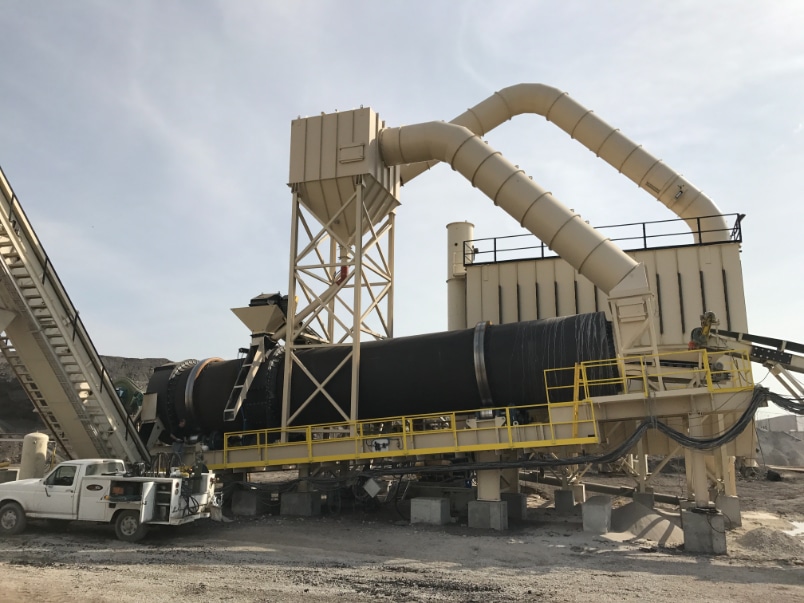
Asphalt Drum Mixers (ADM), Huntertown, Indiana, displayed a brand-new EX 8845 asphalt plant in its booth. Because bigger plants can bring bigger profits, ADM EX Series asphalt plants are designed to produce up to 425 TPH and handle up to 50% RAP to meet producers’ high-capacity production needs. The EX 8845 features an 88-inch drum diameter and 45-foot drum length. Like all EX Series plants, it provides long aggregates drying and mixing times to offer consistent, quality asphalt.

Across the aisle from ADM, fellow FAYAT family member BOMAG premiered its new BD 2000 asphalt distributor and new CR 820 T-2 rubber track paver. The distributor offers an automatic burner and computer-controlled distribution. The paver features a 173-horsepower diesel engine and a new operating system for each console to provide easy viewing of critical operations. The BOMAG WOA display also included:

  • BOMAG CR 1030 T-2 highway class paver with VERSA 20 front-mount screed
  • BM 2200/65 cold planer 2-meter class mill
  • BM1200/35-2 cold planer with maximum 13-in (330.2-mm) milling depth
  • BW 28 RH pneumatic tire roller with large ballast compartment
  • BW 120 AD e-5 Electric light tandem roller with electric drive

While WOA attendees could see the Honey Badger and Tremor Shaker from CWMF Corp., Waite Park, Minnesota, on display, they also had the chance to pick up information on CWMF’s newly branded Dust Pilot reverse-flow baghouse. This baghouse features precision airflow control, an advanced inertial separator and CWMF’s unique indexing wheel mechanism.

Eagle Crusher, Galion, Ohio, also introduced something new at the show: its next generation 1200-CC portable crushing and screening plant. Its new features include a redesigned return conveyor, a new fully hydraulic side discharge conveyor, a self-lowering control panel, and an available onboard cross-belt permanent magnet that stays on for transport.

This quick overview of WOA/AGG1 offerings showcases the vast array of iron and technology that was on display. We’ll have opportunities to share more in future issues of AsphaltPro and we look forward to hearing back from you on your favorite innovations.

For more information visit WorldOfAsphalt.com and www.agg1.org.

How Engineers Moved a Giant Crusher System 2.8 Miles Across a Chilean Mine

Engineering move takes enormous crushing operation from site A to site B in Chile

When Codelco, Chile’s state-owned copper mining company, needed to move key crusher parts from one site to another, management sought support from Mammoet. There were 16 components, including the “big six” largest items that made up the crusher system.

Codelco approached Mammoet for guidance on the best heavy lifting and heavy transport equipment, as well as engineering solutions to achieve its goal of transporting operations about 2.8 miles (4.5 kilometers) to its next mining site.

Lower Costs with Mobile Crushing Equipment

Planning the route, methodology and the heavy lifting and transport equipment to carry out the operation was the first step, with engineers at Mammoet supporting throughout every stage.

“We worked with Codelco for a year and a half on the planning,” explained Mammoet Sales Manager Vanessa Labana. The team created route plans and drawings to include the correct slope, turn ratios and width of the road to facilitate the fastest transport route.

One of the biggest challenges was sourcing and mobilizing all the equipment, and personnel, for a project of this scale from Mammoet’s branches. By pooling its global resources, Mammoet was able to meet this challenge. To bolster the equipment that was already available in Chile, self-propelled modular transporters (SPMTs) came from Malaysia, skidding systems from the United States, and additional equipment was sourced from Colombia.

Typically, this plant will stay in location for around 10 years before the inevitable move must happen. When it does, planning an efficient method of disassembly with the least number of cuttings is essential to ensure productivity stays as high as possible. Photos courtesy of Mammoet

There were six key components to relocate, and the method for removal and transporting was different for each. Most were lifted using climbing jacks and then relocated with SPMTs fitted with support beams.

For the drive system, this same approach was used, but with the addition of a skidding system. This was used to slide the component 39 feet (12 meters), before it could be jacked down into its final position.

The two heaviest items to perform heavy transport and heavy lifting for were the silo (1,100 tonnes) and crusher itself (1,300 tonnes), with the latter being the most complex of the six cargo movements.

Best Practices for Mobile Asphalt Crushing

“This was a big challenge,” Labana said. “We created a support beam that was especially adapted for this cargo. We had to make some alterations to our original beams by applying lead reinforcements on top, at the four lifting points, to prevent deformation.”

The crusher was extracted from its housing using skid tracks and skid shoes, before being lifted into the air high enough for SPMTs to move underneath. Lashing was used to add additional support and hold everything in position during the journey.

An area close to the demobilization location was created to allow the crusher to be rotated 180 degrees so it would be in the correct position for installation. Once it arrived at the installation site, the earlier process was repeated in reverse, with SPMT trailers lowering the cargo onto skid tracks to slide it back into its new position.

Where Does the Crusher Go?

The gallery unit was also a challenge, due to the ground soil not being completely level, with a 1% slope. As a result, two hydraulic jacks were used to perform heavy lifting on its back end at three different intervals to keep everything level as it was skidded forward.

The operation was completed in just over a month, taking less time than was expected, due to crusher parts being removed as complete units. This allowed the mine to get back up and running quickly.

First MT120J from MAGNA Heads to Australia

Mineral Processing Solutions orders up the MT120J from Terex’s MAGNA brand for large-scale operations

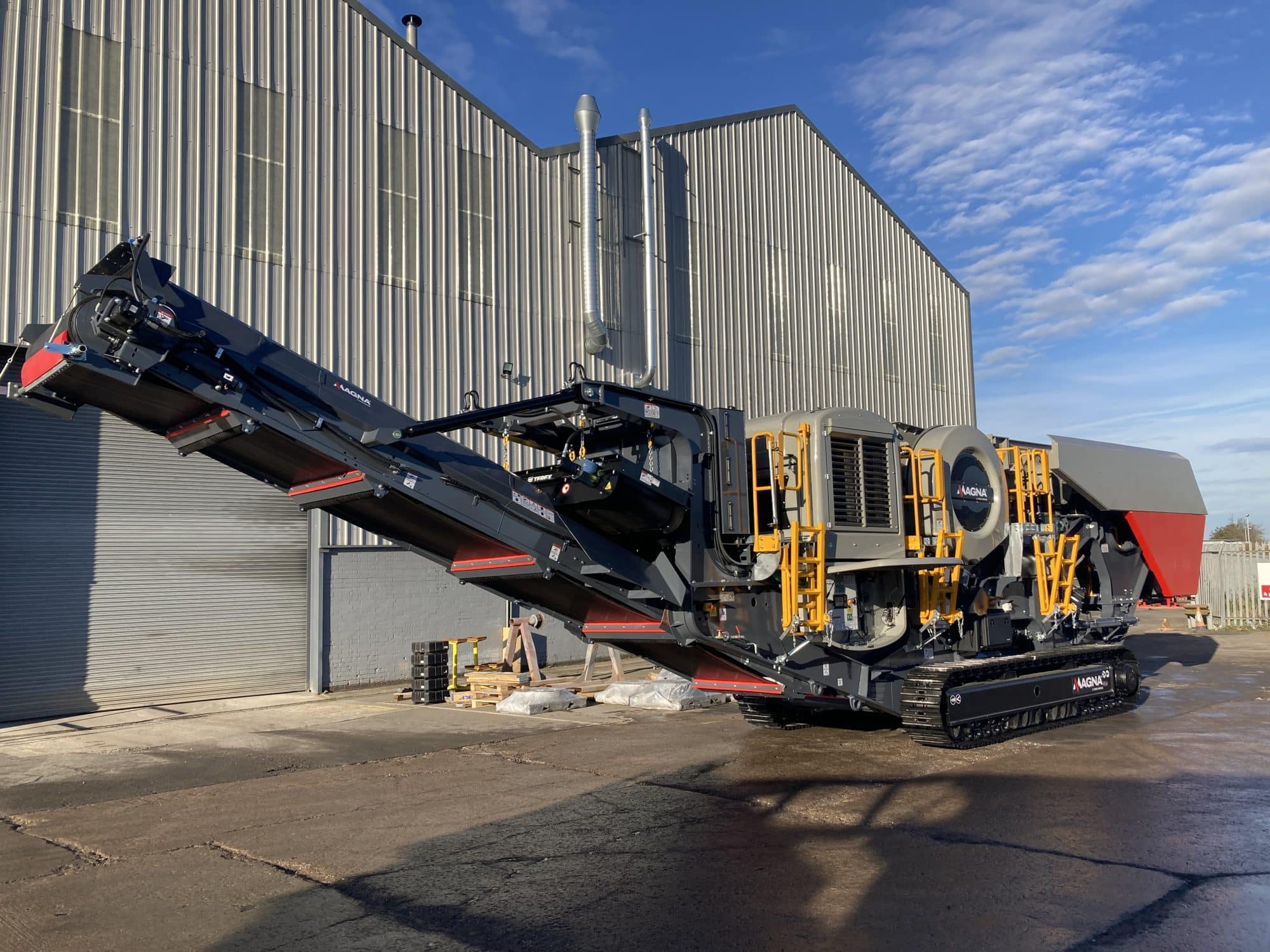
MAGNA™, a Terex brand, announced in December 2024 the completion of the first MT120J large jaw crusher, on its way to Mineral Processing Solutions in Australia. The heavy-duty jaw crusher plant is designed for large and medium-scale operators across quarrying, mining, demolition and recycling applications.

It is manufactured at the Terex Crushing Technology Centre of Excellence in Coalville, England, and features a chamber of 47.25 x 32.25 inches (1200 x 820 mm). The MT120J has an output potential of up to 661 U.S. tons per hour (600 tph), depending on material type and crusher settings.

The machine includes a ground-level hydraulic folding feed hopper with a hydraulic locking system. Additionally, the MT120J is equipped with a wide bypass chute to optimize material flow, while the crushing action of the high swing jaw encourages efficient material entry into the chamber.

The MT120J is fitted with a PLC control system that includes an auto start facility. It also comes with radio remote control and MAGNA telemetry as standard. The product conveyor is angle adjustable, which lowers for easy access and transport. The MT120J is also equipped with a dust suppression system to provide cleaner operations as well as straightforward access to the power unit canopy for maintenance and service.

“The MT120J is a solution built for high performance and maximum productivity,” said Neil McIlwaine, business line director for MAGNA. “It has advanced features and durability that make it the ideal crusher for Mineral Processing Solutions in Australia, who needs equipment that can keep pace with the demands of large-scale projects. We look forward to seeing it deliver exceptional performance and support their continued success in Australia.”

For more information, visit terex.com/magna

How to Make Your Plant Efficient, Part 1

Industry veterans offer real-world scenarios for planning or updating efficiencies to make your asphalt plant its most sustainable and cost-effective operation.


Editor’s Note: For 2024, AsphaltPro Magazine allows experts in the industry to share how to expand your operations to the next phase of business. Are you ready to build or update your own hot-mix asphalt (HMA) plant? Let’s turn to some professionals who have equipment, services, software and tenure to help you expand to mix design, production, hauling and more. This month’s installment takes a deep dive into the environmentally responsible task of finding and implementing tactics that reduce carbon and increase efficiencies throughout your HMA plant.

For our final two-part installment of 2024 in the series on expanding your asphalt business, we’re looking specifically at reducing your carbon and environmental footprint at the hot-mix asphalt (HMA) plant. No two plants are alike, but of course similarities abound. Those constants help us identify scenarios wherein problems can be averted and best practices implemented. For example, at one of the many National Asphalt Pavement Association (NAPA) environmental committee meetings I’ve attended, Ron Sines of CRH shared with the attendees his top “quick tip” of turning off the lights.

Every asphalt plant that runs past dusk will turn on the lights for safe operation. When the sun comes up, leaving the lights on is a waste of energy as well as utility budget. Doesn’t that sound simple? Sines has stated that it’s an easy fix for a plant manager to put lights on a timer but it’s not a fix that everyone stops and thinks about.

In the August 2020 issue of AsphaltPro, we reported on the ENERGY STAR program that NAPA and the U.S. Environmental Protection Agency (EPA) were introducing to the asphalt industry. The article here includes the “treasure hunt” concept that helps asphalt producers discover simple-to-complex energy savings like the one Sines starts with when decreasing a plant’s environmental footprint.

How to be an ENERGY STAR®

If you’re in the planning phase of setting up your plant, which is the spirit of the Expand Your Business series, you may not be ready to conduct a treasure hunt in a full-fledged ENERGY STAR capacity. Instead, let’s take a look at the laundry list of great ideas industry veterans like Greg Renegar of Astec Industries, James M. (Jay) Winford, Jr., and Troy Bollich of Prairie Contractors LLC, and Malcolm Swanson of E5 Engineers can add to Sines’ advice above. And as you read this article online, share on our social media platforms the tips you would add to this discussion to showcase your industry knowledge as well.

Prairie’s Plant Manager Troy Bollich explained, once the plant is running, you want to keep it running steadily. That takes communication between the foreman at the job site and the plant operator. “Every time the plant starts and stops, the company will lose, on average, 4 to 8 tons of material.”

What You Need to Know About Burner Size and Performance

Access Industry Resources

If you’re assembling your new HMA facility this winter, the asphalt industry has resources to assist you in making it an efficient operation. But how does the industry define efficiency? Over the past few years, you might have heard the word “efficiency” shifting in meaning to include the energy and sustainability discussion. Astec’s vice president, customer success, Renegar, wrote in Part 2 of this feature, “a second sustainability/energy efficiency revolution has started” whereby producers are focusing on where heat can be saved or used more effectively.

For Part 1 of this feature, we’ll look at all manner of energy savings, including heat, to explore areas where producers can improve operations while cutting down on wasteful “emissions.” Winford reminded readers of the brochure NAPA published in 2008. The “101 Ideas to Reduce Costs and Enhance Revenue,” written by Kent Hansen and Roger Sandberg, is available at the NAPA store and includes a list of common-sense tweaks and best practices that a committee of producers shared in the spirit of helping the industry during a fiscally challenging time.

While making upgrades and changes to an asphalt plant is certainly not a game, Winford shared that it doesn’t have to be drudgery either, saying it can be fun to find ways to save money at the plant. “Even if every little incremental change saves a nickel, that adds up to a large amount of savings over a decade because we run such volumes,” Winford said. “The best ways to learn are to visit a best-in-class peer, go to an Astec School and read the AsphaltPro Magazine.”

No matter which component you’ll put on a variable frequency drive (VFD), the electronics must be installed with care. The drives and their wiring must be located in a dust-free, cool environment. Photo courtesy Patrick Ahern of Ahern Industries

Top Tips

Of course, we think those are great tips from Winford! We also like this list of 10 items he prepared for industry peers:

  1. Eliminate air leaks.
  2. Pave stockpiles.
  3. Cover stockpiles where you can; especially the fine aggregate piles that are prone to higher moisture contents.
  4. Insulate everything!
  5. Use variable frequency drives where you can. (Editor’s note: Check out the in-depth article titled “Vary Your Energy Use, Increase Your Utility Savings” and see some of the non-traditional places you can make good use of VFDs from the January 2018 issue.) https://theasphaltpro.com/articles/vary-energy-use-increase-utility-savings/
  6. Use more RAP.
  7. Take advantage of excess sized materials at the quarry/pit.
  8. Maintain proper levels in the silos.
  9. Check aggregate/RAP moistures frequently and keep the plant moisture input accurate.
  10. Make sure the plant is properly calibrated.

Add High-RAP to Your Production

Winford expanded on the concept of RAP, specifically, sharing that not only is it good for the environment when we increase the percentages we use, but that increased use also gives us the opportunity to showcase that we’re engineering the stone back into a valuable product.

For example, Prairie Contractors is one of the producers in our industry that takes milled or fractured concrete and pays a nominal fee to have it crushed to be reused. Every recycled rock that finds its way to Prairie’s yard has a place in our infrastructure. And that’s a win for Prairie, for elected officials and for Louisiana DOT personnel to talk about.

Troy Bollich, the plants manager at Prairie Contractors, reminded readers that fractionating RAP also offers more opportunity. “The process of fractionating the RAP is very important to help in the plant’s efficiency and production.”

Industry Agrees on Efficiency Points

Swanson is the proprietor of e5 Engineers and shared the nuances of correct baghouse sizing in the December 2023 issue’s “Mix-and-Match Asphalt Plants” article, which you can read here.

Mix-and-Match Asphalt Plants

“As I wrote several months ago, mismatched components can stifle production,” Swanson said. “For instance, a baghouse that is too small for the dryer is the bottleneck to the whole plant system.” There’s even more insight on this concept in Part 2 of this feature, by Renegar, on page 46.

Bollich turned to baghouse efficiency when discussing shoring up areas against air leaks. When eliminating air leaks, also check the condition of the bags, Bollich suggested.

For the new plant site, you have the opportunity to slope and pave the area where you’ll build your stockpiles. Renegar shared, if your plant is in an area where rain is frequent, you can better manage aggregate moisture by sloping and paving under the wettest stockpiles. “The impact on energy efficiency and tons produced per day can be significant,” Renegar wrote. “The return on investment occurs quickly.”

Bollich suggested taking the extra time to slope the piles and training the wheel loader to pull material from the “higher” face. This leads into best practices for your loader operator—you’ll want to train him or her to load from the dry side above the moisture line.

“Take the time to explain to your loader man that he can make or break you on the day,” Bollich suggested. “Teaching the loader man to eat the material that is the driest even if it’s eating 2 feet or 3 feet up on the pile is important. A lot of them think it’s just their job to get the material from the pile to the bin. But explaining to them and including them in plant efficiency and operations is key. Remember, they sit in a loader all day without a lot of outside interaction.”

You also want to train incoming aggregate suppliers to dump material where it won’t contaminate the drier material. “This process goes hand in hand with trying to control plant moistures,” Bollich shared. “Moistures need to be checked at least twice a day, if possible. Incorrect moistures can cost you a lot in liquid if not input correctly.”

Step Up Hot-Mix Production with Your Facility’s Own Crushing Plant

Moisture will also affect fuel use, as will temperature loss. Winford listed insulation as one of his top 10 efficiency points, and Bollich echoed that idea. “Insulate all asphalt piping. Once piping is insulated, you will need to retune your heater burner so this is running efficiently. Also, while the tech is there, have him tune the drum burner.”

Swanson reminded readers to assess the burner’s age and condition. “Older burner types that have little control of excess air and combustion efficiency are also a detriment to plant productivity and profitability.”

“Calibration is another forgotten key factor in plant efficiency,” Bollich shared. “Not only is it a huge cost savings but also can eliminate the lab tech from having to spend a lot of time trying to figure out mix design issues.” He explained one of the common factors in deducts on jobs can be linked back to plant calibration.

Increasing the use of RAP also gives industry the opportunity to showcase that we’re engineering the stone back into a valuable product.

How to Be the Plant Everyone Buys From

Calibrate Efficiency

With equipment tuned and calibrated, make good use of the VFDs. Bollich explained that putting the drum on a VFD can help in reducing the drying costs of material. “By speeding it up when it’s dry to slowing it down when it’s wet can save a lot on fuel consumption.”

When you put the drag slat on a VFD, you can expand its wear life. “One of the greatest expenses on a drag is reflooring it,” Bollich shared. “On the average, to redo a drag from material and labor is around $250,000. Slowing the drag down will reduce the wear on the floor and extend the life of the drag floor.”

Swanson also spoke of the opportunity producers have to save on costs and energy when focusing on the dryer and parameters there. “There are many dryers in the industry—and I am including drum mixers in this context—that are not performing nearly as well as they could for a small variety of reasons. First, there really are not many good flight systems and some of the good ones are worn. Second, variable frequency drum drives are still not used on many drums and, actually, a VFD typically does not help with conventional flights. It usually only helps with the new generation of flights, the Astec V-Flight and the e5 Engineers FlexFlight, but, with those flights and some understanding of dewpoint temperature, the VFD offers big saving and production gains. It can be used to control baghouse temperature through an extreme range of mix designs including extremes of RAP content.”

Solve Asphalt Plant Odor Issues

One area the producer might overlook when it comes to improving the plant’s sustainability is communication and scheduling. Bollich shared that these elements are key to plant cost and efficiency. For example, you want to have enough trucks on hand to keep the plant running at a steady pace.

“Also let the plant know what is needed in the future,” Bollich said. “Because once the plant is running, it’s in the plant’s best interest to run as long and as much as possible. Like storing mix for the following day, which goes under silo usage. In order for that to happen the foreman on the job site has to communicate with the plant. Every time the plant starts and stops, the company will lose, on average, 4 to 8 tons of material.”

With the variety of components to double-check and best practices to implement, HMA producers have ample opportunity to enhance performance. Readers have myriad options for setting up a new facility, or updating an existing one, with efficiency in mind for their most sustainable operation.

Powerscreen Crushing and Screening Service Team Overcomes Extreme Conditions

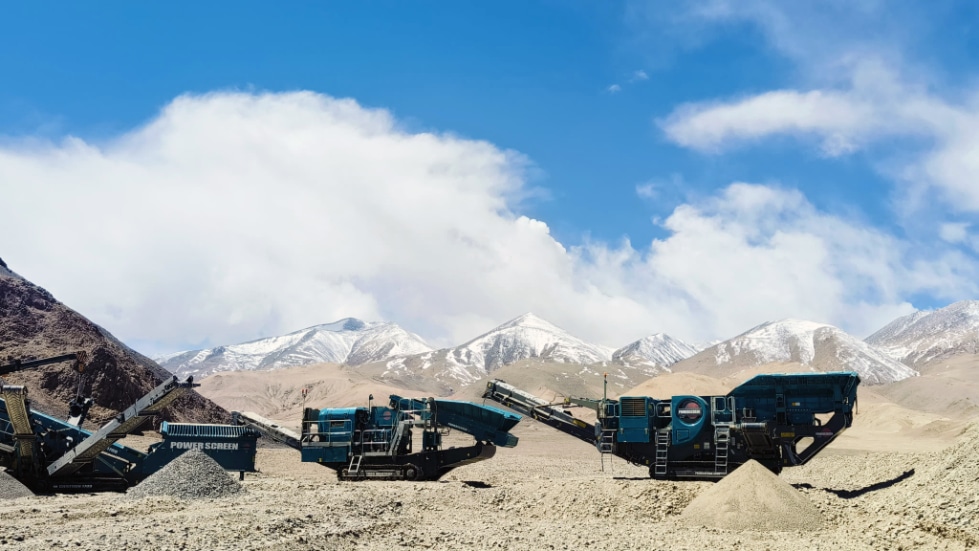
Delivering mobile crushing, screening and conveying equipment to remote locations isn’t always easy, but the result pays dividends for socioeconomic growth. The service team for Powerscreen®, a division of Terex Corporation, proudly announced in August the successful installation and operation of equipment in Ladakh, Northern India—one of the world’s most challenging environments.

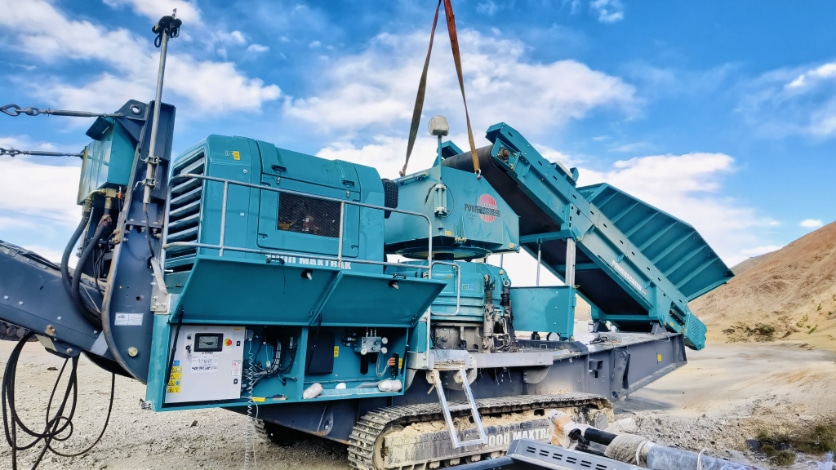
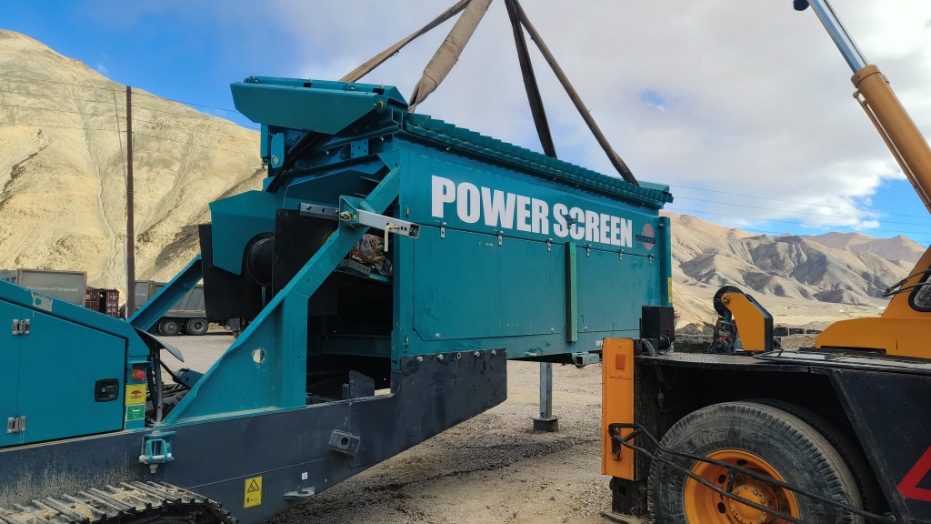
To navigate the rough terrain, the service team expertly dismantled the Powerscreen equipment for transport and reassembled it on site. Despite the extreme conditions, the service team completed the installation and commissioning in 15 days.

A Powerscreen PT400X Jaw Crusher, 1000 Maxtrak Cone Crusher and Chieftain 1700 Screen were commissioned to work on a Border Roads Organisation (BRO) project near Demchok, close to the China border, at Umling La, Leh Ladakh (UT). At an altitude of 19,024 feet, this project is at the world’s highest motorable pass and is set to produce road construction materials such as granular sub base (GSB), wet mix Macadam (WMM), and aggregates sized 5 mm, 10 mm and 20 mm.

The site’s high altitude presented significant challenges due to low oxygen levels and temperatures, which dropped to -23°C during the project. Additionally, the terrain was hilly with sharp bends and no feasible roads, complicating the transportation and installation of the equipment on site. Powerscreen equipment has been designed and tested to withstand harsh environments—including high-altitude conditions.

To navigate the rough terrain, the service team expertly dismantled the Powerscreen equipment for transport and reassembled it on site. Despite the extreme conditions, the service team completed the installation and commissioning in 15 days.

The successful deployment of Powerscreen equipment at Umling La has enabled the BRO to produce the necessary materials for their road project, ensuring the continuation of vital infrastructure development in the region. The infrastructure will improve access to remote villages, making it easier for residents to travel for medical care, education and other essential services. The road will also facilitate the delivery of goods and services, contributing to the region’s overall socioeconomic development. The enhanced connectivity also boosts local businesses and tourism, with many tourists attracted by the world’s highest motorable road providing new income opportunities for locals through homestays, guided tours and local crafts.

For more information, visit: www.powerscreen.com