Crusher Maintenance: Let’s Correct Abnormal Vibrations

Abnormal crusher vibrations can be corrected simply

During the winter downtime, there are all manner of plant maintenance items on the checklist. Not every asphalt plant site has a crushing plant as well, so not every member of your ground team may have experience maintaining this piece of equipment. Let’s tackle this key component of recycling, screening and aggregate processing operations by addressing a common occurrence: abnormal vibrations.

The key is to start with easy fixes first. Don’t assume the worst. Heavy equipment issues are inevitable, but not always a sign of catastrophic failure. It’s easy to assume every issue is major or expensive, but the truth is that many common heavy equipment problems have simple solutions if you know what to look for. Many times, if you catch and address issues when they are small, you can prevent them from becoming major issues that require extended down time. Understanding the difference between a major breakdown and a minor maintenance fix can save your team time, money and unnecessary headaches.

There are some common causes and solutions to abnormal vibrations that come from your machines.

When equipment is maintained regularly, troubleshooting becomes faster and more accurate. Routine inspections help catch the simple problems before they escalate into costly downtime.

Solve Your Abnormal Crusher Vibration Problem

Common causes of abnormal vibrations include feeding issues, improper wear and tear, loose components, and misalignment. Let’s take a look at each cause and how to resolve it.

Feeding Issues

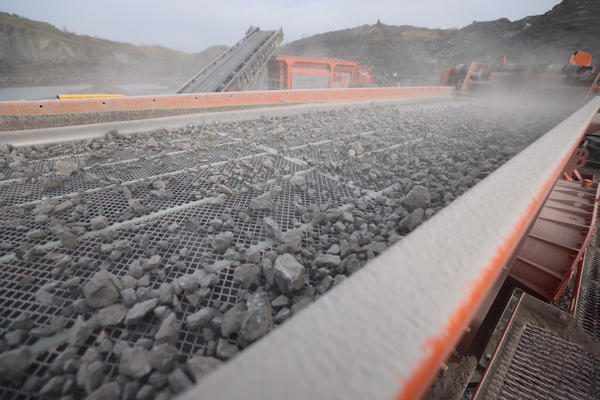
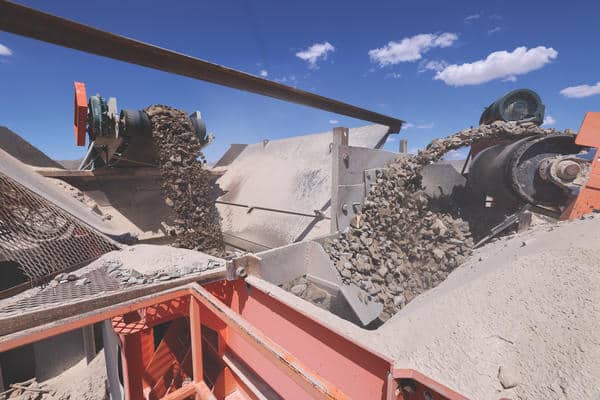
Oversized materials and uneven feeding can cause abnormal vibrations. While the machines will react to the addition of feed materials, it’s important to not add oversized materials and to evenly space out your feed loading. You can reach out to the manufacturer, or check the owner’s manual, for recommendations on feed size and timing.

Improper Wear and Tear

Impactor plates, jaw dies and blow bars in impact crushers are going to wear, but uneven wear on the liners can cause abnormal vibrations. Additionally, bearings that are worn can overheat and create noise. Add regular inspections to your schedule. The faster you can catch improper wear and tear, the less down time you will have in replacing the wear plates.

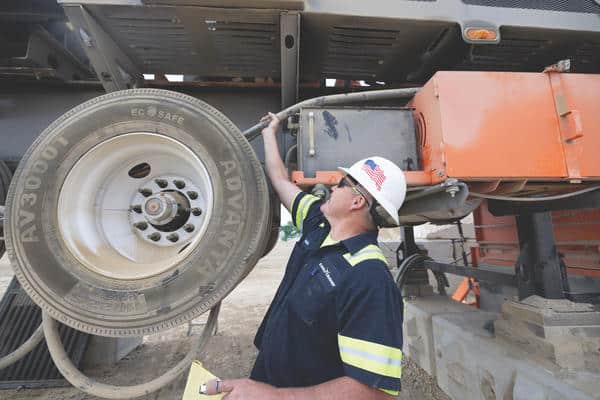
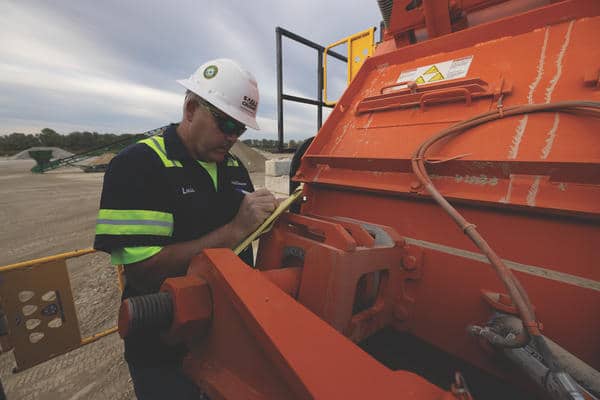
Louis Fitzpatrick was formerly a lead assembler and now is an Eagle Crusher field service technician. In this article, he offers guidance on how to troubleshoot abnormal vibrations.

Loose Components

After hours of use, bearings, shafts, fasteners and more can become loose. After completing your regular inspections, make sure to tighten or replace any components.

Misalignment

An imbalanced rotor can cause material buildup and uneven wear. Fluid couplings being misaligned can cause failure in the bearings, seals and the coupling itself. Clean any build up in the impactor or jaw crusher and replace wear parts in sets. An uneven replacement could cause more issues.

There are some common causes and solutions to abnormal vibrations that come from your machines. Your crushing and screening plant will have a sound and feel that your operator comes to recognize. If your operator or ground personnel notice any abnormal vibrations over time, as they would with any piece of heavy equipment, don’t assume you have a catastrophic failure on your hands. Starting with simple fixes first empowers your operators, minimizes downtime and keeps your equipment working hard on the job site.

Preventative Maintenance is Key

When equipment is maintained regularly, troubleshooting becomes faster and more accurate. Routine inspections help catch the simple problems before they escalate into costly downtime. Proper lubrication, timely filter changes, and a regular system check all reduce the chance of a small issue turning into a major failure. In fact, during your regular inspections, you want to make sure all items, such as hydraulic lines and bearings, are properly lubricated.

If you’re unsure what to include in your routine maintenance, reference the owner’s manual or call on your local authorized dealer or the original equipment manufacturer. For Eagle equipment, you can reach out to Eagle Crusher’s Service Team.

Oversized materials and uneven feeding can cause abnormal vibrations. This example of feeding shows material flowing freely.

When It’s Not Simple

While many equipment issues are simple, some problems truly require a trained technician. If you’ve worked through the basic checks and the machine is still malfunctioning, a deeper issue may be at play. The key is to start with the easy fixes first before assuming you have a catastrophic failure on your hands.

With a little knowledge, a keen eye and a structured approach to troubleshooting, your ground personnel can resolve many problems quickly and affordably. Understanding the difference between a major breakdown and a simple fix empowers your operators, minimizes downtime and keeps your equipment working hard on the job site.

Louis Fitzpatrick is an Eagle Crusher field service technician with 13 years of experience building and servicing crushing equipment. He was formerly a lead assembler. For more information, Eagle Crusher supports FAQs for rock crushing at EagleCrusher.com/blogs/servicequestions

SPT Recycles Asphalt to Reduce CO2

SPT recycles asphalt with diesel-electric hybrid power to reduce CO2 in Texas

Founded in 2008 and spearheaded by President John Collins, Sustainable Pavement Technologies (SPT) has grown to become a leader in providing sustainable solutions for the heavy highway industry. The company focuses on asphalt pavement, roofing shingle material and concrete demolition recycling while operating out of five key sites in Texas, in major cities like Dallas, Fort Worth, Austin, San Antonio, and Houston as well as two additional sites in California. With a dedicated team and a mobile fleet of crushing, grinding and screening equipment, SPT consistently delivers for its clients.

The reclaimed material that SPT receives is processed and repurposed to create high-quality aggregates for use in hot-mix asphalt (HMA), ready-mix concrete and road base. As a recycled product, this material boasts a lower CO2 output than virgin material, as much of the environmental impact is incurred on its initial creation. This is further enhanced by SPT’s choice of diesel-electric driven crushing and screening equipment—the Gladiator range from Powerscreen Texas.

Best Practices for Crushing, Screening RAP for HMA Production

“The Gladiator is a great addition to our fleet for many reasons, including its versatility,” Collins said. “Having the ability to move our Powerscreen Gladiator 320SR to any one of our sites and be up and running within 24 hours has been a game-changer for us.”

SPT’s mobile production capabilities allow the company to handle various commercial projects and State Department of Transportation contracts, ensuring that materials are sized according to strict specifications. Whether it’s handling demolition debris from a construction site or reprocessing broken road surface material, SPT’s Powerscreen equipment can transform waste into high-quality aggregates that contribute to new infrastructure projects across Texas.

At SPT’s Fort Worth site alone, the company produces between 350,000 and 500,000 tons of recycled asphalt and concrete annually. These materials are processed into various gradations, depending on the specific requirements of each project.

Collaboration

The success of SPT has been supported by its long-standing partnership with Powerscreen Texas since 2016. The relationship between SPT and Powerscreen Texas began when Collins purchased a Terex Ecotec Phoenix 2100 trommel at an auction. Soon after putting the trommel to use, the machine ran into an engine failure. However, Powerscreen Texas quickly stepped in to help.

“I called Powerscreen Texas, and within a few days, they brought out a new engine and installed it for us,” Collins recalled. “Within the next year after using our newly fixed Phoenix 2100, we expanded our fleet of machines from Powerscreen Texas and have purchased a machine from them each year since.”

Best Practices for Mobile Asphalt Crushing

Today, SPT operates several pieces of Powerscreen equipment, including the Powerscreen Gladiator 320SR, Trakpactor 320, Chieftain 1700, Chieftain 2100 and the Terex Ecotec Phoenix 2100 trommel. This robust lineup of machinery allows SPT to handle large volumes of recycled material with efficiency and ease.

According to Collins, the Powerscreen Gladiator 320SR has been a valuable asset to the company. This diesel-electric hybrid unit is capable of processing 2,000 tons of material per day, consistently meeting SPT’s production targets while maintaining fuel efficiency.

“We achieve a considerable uptime with the Gladiator…” Collins said. “It’s a diesel over electric unit, so it gives a really steady and low fuel burn along with a very consistent output.”

At SPT’s Fort Worth site alone, the company produces between 350,000 and 500,000 tons of recycled asphalt and concrete annually. These materials are processed into various gradations, depending on the specific requirements of each project.

Sustainable Operations and Contract Work

At SPT’s Fort Worth site alone, the company produces between 350,000 and 500,000 tons of recycled asphalt and concrete annually. These materials are processed into various gradations, depending on the specific requirements of each project. The recycled aggregates are then sold to commercial material producers or used in State DOT projects that demand precise material sizing for stringent specifications.

Step Up Hot-Mix Production with Your Facility’s Own Crushing Plant

In addition to their work at fixed sites, SPT also takes on a wide range of contract work across Texas. With mobile crushing, grinding and screening spreads, the company can deploy its fleet of Powerscreen machines to any site, providing on-demand solutions for contractors and subcontractors in need of reclaimed aggregate materials.

Collins is proud of the company’s ability to adapt to different project requirements and environments. “We’ve worked in various quarries, recycling shot rock and other materials. No matter what kind of project comes our way, we can provide a solution thanks to Powerscreen.”

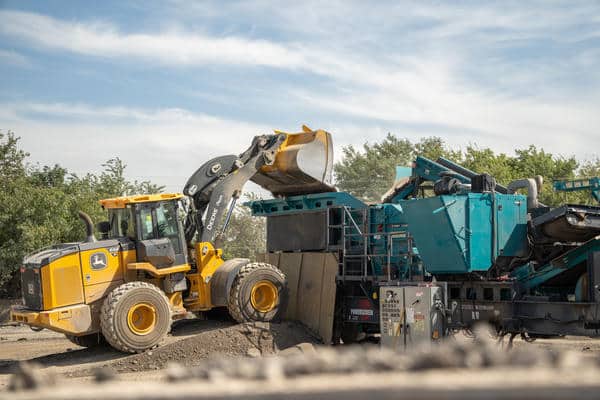
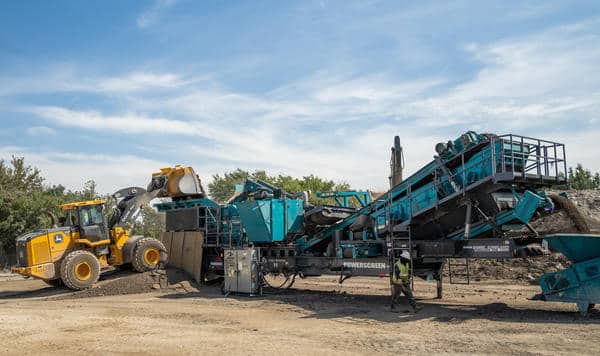
The Powerscreen Gladiator 320SR diesel-electric hybrid unit can process up to 2,000 tons of material per day for Sustainable Pavement Technologies (SPT). Photos courtesy of Powerscreen Texas

A Greener Future

As the demand for sustainable construction materials continues to grow, SPT remains at the forefront of asphalt recycling innovation. Their commitment to quality, sustainability and customer service has made them one of the most trusted names in the Texas recycling industry.

“Our relationship with Powerscreen Texas has been a crucial part of our success,” Collins said. “We’ve had great support from their team, and we’re continuing to grow that relationship as we identify what our customers demand and what machines will better elevate our business to better serve the State of Texas.”

When and How to Add a Magnet to Your Crushing Circuit

Looking ahead, SPT plans to expand its operations even further, ensuring that they continue to provide high-quality recycled materials for the construction industry. With more than 15 years of experience, the company is well-positioned to remain a leader in sustainable pavement solutions, helping to build a greener future for Texas and beyond.

CRH’s Sustainable Practices Give Preferred Results

Preferred Materials, A CRH Company exemplifies circularity with award-winning I-75 project

As CRH’s footprint has grown in the United States, the operating companies in its portfolio have brought a wealth of ideas and innovations to the multinational group. The team from Florida highlighted herein has added a host of quality paving awards alongside its contributions. President of CRH’s Americas Materials business, Jason Jackson, sat down with AsphaltPro to discuss Preferred Materials Inc., A CRH Company, Tampa, and the overall progress award-winning projects help bring to light.

The Dale Mabry Highway project was a resurfacing of a major thoroughfare with numerous businesses, side streets, signalized intersections, median turn lanes, acceleration and deceleration lanes, and high traffic count.

From Aug. 4, 2022, to July 21, 2023, the Preferred Materials team handled a range of technical and logistical challenges to repave the Dale Mabry Highway (State Road 597) in Tampa. The resurfacing of the busy urban corridor handling traffic to and from Tampa International Airport demanded coordination with MacDill Air Force Base, the Raymond James Stadium® ongoing event schedule, a dense network of local businesses, as well as the Florida Department of Transportation (FDOT). In the end, Preferred Materials achieved an average International Roughness Index (IRI) of 32 on this project and was awarded the 2024 A.P. Bolton Award and Florida’s Smoothest Pavement Award from the Asphalt Contractors Association of Florida, and FDOT’s 2023 Best in Construction Award.

Let’s examine the Dale Mabry project and the mindset that brings innovation and excellence to individual CRH companies.

Within its Americas Materials business alone, CRH has 1,660 locations and about 29,000 employees. CRH is comprised of hundreds of established local operating companies. Notable brands include MidSouth Aggregates, Preferred Materials, Tilcon, Mulzer Crushed Stone, Texas Materials, Staker Parson, Dufferin Construction, Callanan Industries and Bodean. According to the company’s 2024 Annual Report, CRH’s Americas Materials Solutions business reported $16bn in revenue in 2024, achieved an adjusted EBITDA of $3.7bn, up 22% year-over-year, with an adjusted EBITDA margin of 23.2%.

Meet a Woman of Aggregates: Capital Materials’ Ericka Baxter

Opening the AI Envelope

One of the ways CRH is innovating for the future is through leveraging digital technology, which the company sees as a key enabler of enhancing the way it does business and delivers for customers. This includes the exploration and adoption of Artificial Intelligence (AI).

“When we look at AI or we look at technology and innovation, we do that with an enterprise lens,” Jackson said. “When we think about innovation, it’s important that we leverage our scale.”

He listed asphalt, aggregates, ready mixed concrete, below-grade infrastructure solutions, water management and other elements of the construction industry where piloting AI technologies offer exciting options. The size and scale of the company means it’s well positioned to explore AI’s benefits.
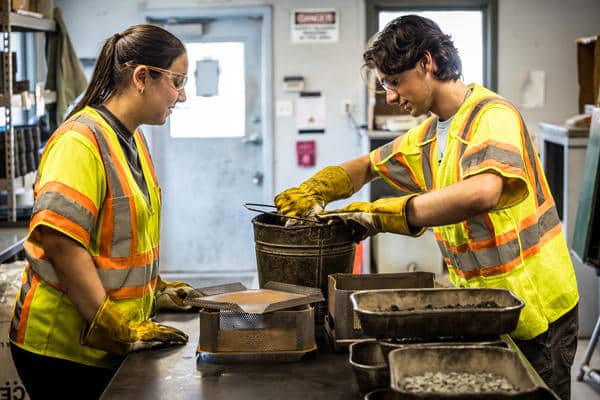
One of the ways CRH is optimizing mix design is by focusing on next-generation surfaces to stand up to extreme temperatures, heavy traffic weights and erosion. They’re designing specialty asphalt mixes that help reduce the road’s impact on the environment.

“CRH has been in this space in roads, in water, in aggregates and cementitious materials for many decades,” Jackson said. “We have a massive amount of expertise and data and so the big question that we challenge our teams and ourselves with is how do we take all that expertise that may exist in thousands of locations and leverage technology as a whole? Or, more specifically, how do we push the envelope to drive improvements utilizing technology?”

One of the areas where the company is leveraging that depth of knowledge is in mix design. “We’ve got a few things going on that are very exciting,” Jackson said. “Number one is around mix optimization.”

How to Make Your Plant Efficient, Part 1

With the decades of experience and thousands of locations, Jackson believes CRH stands out for the company’s ability to deliver both performance and quality through its approach to materials science. “This includes creating new attributes for products and materials that have been in place for many years. So, it’s about evolution, which is something we take very seriously in and around materials science.

“When we bring new businesses in, we’re consistently learning from folks that join our company through acquisition,” he continued. “We want to leverage what they’re working on, what their knowledge base is and when we combine that at scale, we have the opportunity to do wonderful things in and around materials science.
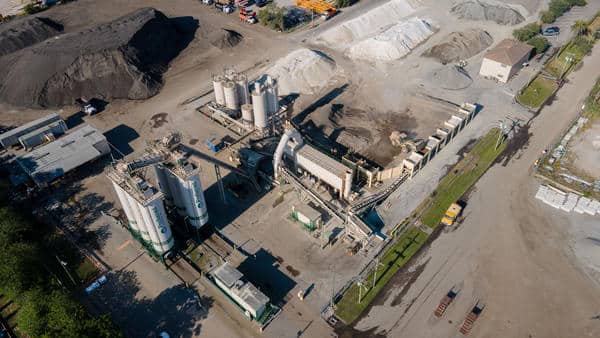
A Preferred Materials asphalt plant produced HMA for the Dale Mabry Highway project. The paving crew achieved an IRI of 32 placing and compacting it.

“We make sure to bring these teams together to really reimagine the art of the possible. When you think about new mixes—and that goes for asphalt mixes in particular—we’ve probably made the most significant strides in those areas by bringing those experienced, localized teams together to leverage high levels of technical knowledge.”

It’s not only CRH operating companies innovating, as Jackson mentions above. The company welcomes and encourages outside collaboration for problem-solving too.

“When you think CRH, we’re the largest building materials player in the market,” Jackson said. “And while our reach is international, we’re deeply committed to operating at a very local level.”

Consider how climate needs and geography influence state specs. Not only is this the foundation for making our industry’s asphalt mix designs more resilient, but it also gives companies like CRH the opportunity to work on solutions to local challenges.

Where You Process Your RAP Affects Your EPD

“Our local folks are very engaged in their local markets,” Jackson said. At the corporate level, CRH can take the connected portfolio of knowledge to prepare solutions “at scale,” but it takes boots on the ground at the local level to know where different solutions are best applied.

“CRH leverages its scale and connectivity to deploy innovation—whether it’s a higher percentage of RAP or innovative mixes with recycled shingles. But importantly, there is no one-size-fits-all approach. We pride ourselves on engaging with local authorities, DOTs and the traveling public to truly understand their challenges and design a solution specific to their needs. Scale is important, but customer connectivity, local knowledge and relationships are paramount.

One of the hallmarks of the Dale Mabry project for Jason Jackson, President of CRH’s Americas Materials business, was its circularity. The team maxed out the percentage of RAP allowed in the mix designs and still achieved an award-winning pavement with an IRI that spells resilience and longevity for FDOT.

“It’s really a team approach in problem identification and then we’re developing solutions in partnership with our customers. And I think that’s how you change specifications, that’s how you increase adoption. That’s how we’ve really taken a lot of these new and innovative solutions forward through a partnership approach—starting with the problem statement and then working to a solution.”

“I think we’ve probably made the most significant strides in the area of mix design by bringing those experienced, localized teams together to leverage high levels of technical knowledge to reimagine the art of the possible.”—Jason Jackson

Protecting the Team at the Speed of Business

Another area of AI implementation important to Jackson is that of safeguarding CRH’s most valuable asset: its workforce.

“The other area we focus on in terms of AI, and it’s important and near and dear to my heart, is the people and safety element,” Jackson shared. “If we think about how we make our locations safer, jobs easier, more efficient and therefore safer, AI is another way we have implemented new measures.”

CIR Revitalizes Colorado Mountain Pass

We see this in action in the trial of smart robotics. One of CRH’s first uses of Spot, the agile mobile robot from Boston Dynamics, Waltham, Massachusetts, was at the Ash Grove Cement Plant in Seattle, Washington. In a year-long pilot, the robodog performed proactive yet repetitive inspection routines. According to CRH, this sophisticated robot can operate in hot and dusty conditions, improving safety and freeing up skilled teams to solve complex issues elsewhere on site.

Jackson went on to say, “Spot helps do inspections at our cementitious plant locations, taking thousands of readings. The bot knows if there’s a motor running too hot or if a there’s a trip hazard or something that’s an upset condition, etc.”

According to CRH, this state-of-the-art machine is capable of navigating treacherous industrial terrain, taking on hazardous tasks, while its human counterparts stay safely at a distance. For example, at Ash Grove Cement, Spot uses laser scanning to take brick measurements inside the kiln, eliminating potential safety incidents among the workforce. In the early stages of the trial, the robot was able to detect a failing bearing in part of the site’s rotating equipment, which might have eventually led to unplanned downtime. This AI technology eliminates unnecessary downtime, decreases manufacturing site costs and drives efficiencies. Meanwhile, the data collected can be used to better enhance the overall efficiency of critical assets and maximize their uptime.
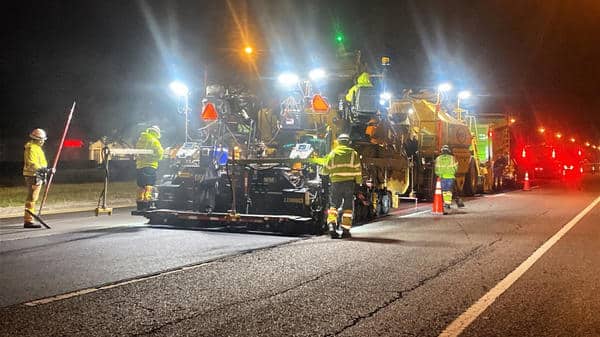
A Preferred Materials asphalt plant produced HMA for the Dale Mabry Highway project. The paving crew achieved an IRI of 32 placing and compacting it.

If Spot can handle the temperatures at a cement plant, imagine what it can handle at an asphalt plant to assist ground personnel and plant managers in assessing operations.

The implementation of AI for CRH is “taking the data and the expertise that we have over many, many decades of experience to try to optimize and create higher performing mixes and solutions that we can take to our customers to improve a number of things,” Jackson said. “But it’s also leveraging AI to help protect our teams and ensure that we’re producing the highest quality materials.

“I believe there’s a perception by some that our industry is slow to adopt change. I disagree with that. I think we are making improvements across [the construction industry]. This industry is implementing change at a very good pace, and leveraging these new technologies is something we should all be proud of. Whether it’s a bot that can help do inspections and identify issues that may cause safety or quality problems or it’s leveraging data to improve efficiency, we’re taking significant steps across our industry. CRH is positioned very well—having the size and scale—to lead the way in these new innovative ways of thinking.

“The beauty of our connected portfolio allows us to leverage data at varying positions of the construction value chain and when we do that right, we’re able to help solve our customers’ and our customers’ customers’ most pressing challenges.”
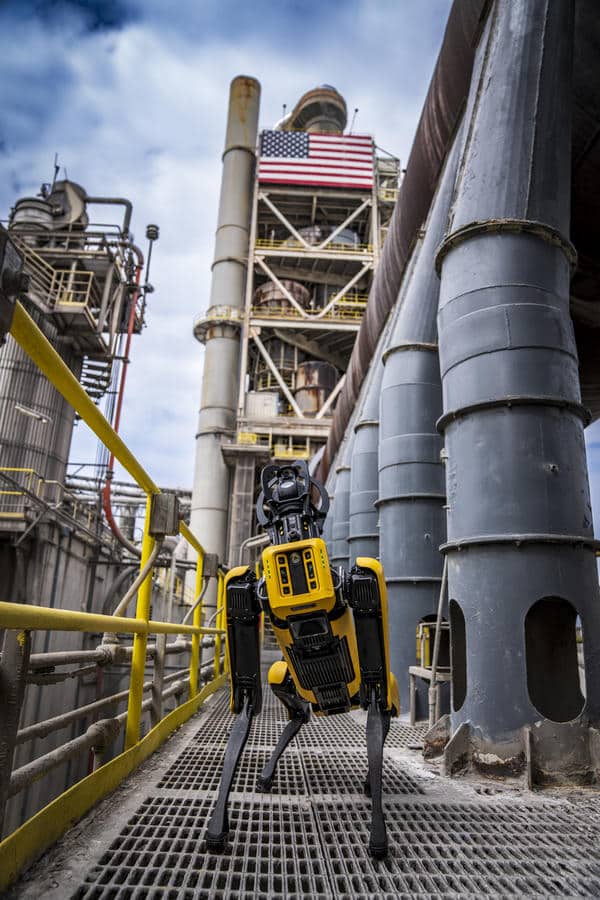
One of CRH’s first uses of Spot, the agile mobile robot from Boston Dynamics, was at the Ash Grove Cement Plant in Seattle. In a year-long pilot, the robodog performed proactive yet repetitive inspection routines, operating in hot and dusty conditions that freed up skilled teams to work elsewhere on site.

Satisfying the FDOT Customer

For the Dale Mabry project success story shared herein, FDOT is the customer whose pressing challenge was the resurfacing of a major thoroughfare with numerous businesses, side streets, signalized intersections, median turn lanes, multiple acceleration and deceleration lanes, and high traffic count. The Preferred Materials team stepped up to the task of protecting nesting eagles in the area and businesses along the route with ingenuity, smart equipment choices and the innovative mix design mentioned next.

Preferred’s Tampa plant is an Astec Double Barrel with 500 TPH capacity, located about 15.7 miles from the job. The crew ran three mixes for the project using a significant amount of reclaimed asphalt pavement (RAP) for each:

  • A structural course of SP12.5 with 40% RAP and PG52-28
  • A surface course of FC12.5 with 20% RAP and PG76-22 polymer-modified
  • A surface course of OGFC FC5 with PG76-22 polymer-modified

An anti-strip was added to each binder to help with mix properties and as a compaction aid. They used the oscillation technology of their Sakai rollers in place of traditional vibration. This technique is known to:

  • minimize vibrations that would otherwise affect nearby structures and underground utilities;
  • reduce disturbance to local wildlife; and
  • lower noise levels for surrounding neighborhoods.

The team achieved an average of 92.7% compaction on the structural mix; the friction course mixes were placed in density exception areas (intersections) and did not require density testing.

Preferred Materials Executes the Plan to Get the Best IRI in Florida

Jackson also shared his thoughts on the Preferred Materials crew. “This gives me an opportunity to highlight the most important element of CRH, which is our people and our teams. The Dale Mabry project example doesn’t happen without our teams.

“Across CRH, when we look at what we’re able to accomplish, it’s all because of our people. I mean, the project had its own unique challenges, including some of the things they had to contend with—the MacDill Air Force Base that was right there and Tampa International Airport. Don’t forget the Buccaneers. We had Raymond James Stadium right there, and we didn’t shut down during football season or game days. The amount of coordination and our team’s ability to partner with FDOT, who is an amazing customer and partner of ours, is so important to highlight.

“The awards are great, and I know our teams appreciate them and they’re very proud of them. And they should be because the elements of safety, quality, on-time delivery and performance, are hallmarks of what make CRH companies and crews so great. On the front lines, the team leaders and supervisors and the folks in the back office that are making sure everything’s coming together in the right way. I couldn’t be prouder of that team.”

Amid the accolades Preferred Materials received for a job well done, there is also a positive environmental component that should not be overlooked.

Scenic Mountain Road Gains Smoothness with CIR

“We are only scratching the surface when we talk about circularity,” Jackson said. “We can’t emphasize circularity enough through the broader construction value chain and specifically in and around roadway design and asphalt. I like to look at the roadway as an ecosystem that has a number of parts and pieces that come together to create that finished surface that the people in our communities drive on every single day.

“In 2024, we’ve recycled over 44 million tons of waste and byproduct that has been sourced either internally or from other industries,” Jackson continued. “This makes us the leading recycler in North America. If we think about what we’ve integrated from a recycled asphalt pavement and a recycled asphalt shingle aspect, we’ve used over 13 million tons of RAP and RAS just in 2024 alone and we are expanding this in 2025.

“Dale Mabry is a great example of how that came together. Not just the results and some of the awards that were won on that project, which are already amazing, but the fact that, just looking at the circularity element of what went into that roadway. That’s what gets me excited. We’ve built these positions where we are able to lead the way and really reinvent the way we look at circularity in road projects. We can 100% do more with less.”


One of the ways CRH is optimizing mix design is by focusing on next-generation surfaces to stand up to extreme temperatures, heavy traffic weights and erosion. “We design specialty asphalt mixes that help extend the lifespan of the road, reduce its maintenance costs, improve its strength and resilience, and reduce traffic noise, which reduces its impact on the environment,” Jackson shared. Examples include:

  • Super Sand Mix (SSM), which is a custom blend incorporating RAP, infused fibers, waste sand and used tire rubber;
  • A low-carbon, high-percentage RAP asphalt mix used on the Dale Mabry highway project;
  • Self-healing asphalt or warm-mix asphalt, which is engineered to repair cracks automatically.

Self-healing asphalt trials are still in early stages of maturity across the United States. The company is routinely using bio-based rejuvenators to improve asphalt mixture flexibility, which provides for a more durable, long-lasting pavement.

“Additionally, we are innovating with fibers (synthetic and natural) to distribute stress more evenly throughout the asphalt mix, helping to reduce fatigue cracking under heavy traffic loads. For example, Texas Materials, A CRH Company, has successfully pioneered the first large-scale use of an asphalt mix we call Super Sand Mix (SSM) in the city of Fort Worth. It’s an innovative, highly durable, fiber-reinforced asphalt, specially formulated to enhance the surface texture of city streets and rural country roads. With proper maintenance, SSM is expected to achieve double the lifespan of a traditional asphalt product.”

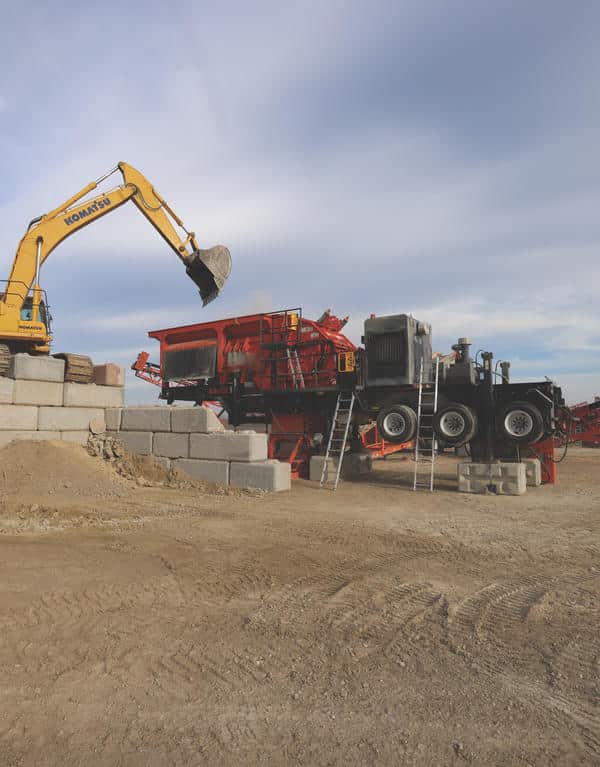
Epiroc and Luck Stone Deploy First Fully Autonomous Drill in U.S.

Marking a historic milestone, Epiroc, Stockholm, Sweden, has partnered with Luck Stone, a division of Luck Companies, headquartered in Richmond, Virginia, to deploy the first fully autonomous SmartROC D65 drill rig in the United States. The SmartROC D65 MKII is equipped with Epiroc’s advanced automation technology and is capable of executing complete drill patterns without an operator in the cab, according to the manufacturer.

Compliant with the Global Mining Guidelines Group (GMG) Level 4 standard for full autonomy, the rig operates under remote supervision via Epiroc’s Common Automation Panel (CAP) and Link Open Autonomy (LinkOA) platform, to enable seamless data integration and fleet management.

Luck Stone views automation as a strategic investment in safety, operational excellence and talent attraction.

“Luck Stone’s leadership and commitment demonstrate that autonomy in quarries isn’t future vision—it’s current reality,” said Ron Hankins, business line manager at Epiroc USA. “Our partnership is not about a proof-of-concept, it’s about meaningful operational gains that the next generation of drilling will bring in the U.S.”

Luck Companies Celebrates 100 Years

Luck Stone, which is known for over 100 years of innovations including its early adoption of autonomous plants and autonomous haulage systems (AHS), continues to set the pace for innovation in the industry, and the company views automation as a strategic investment in safety, operational excellence and talent attraction.

“Our philosophy has always been about doing the work in the best possible way,” said Chuck Stilson, senior director of engineering at Luck Stone. “Partnering with Epiroc on autonomous drilling aligns perfectly with that vision. We’re not only improving productivity and safety, we’re providing new opportunities for our associates and rethinking what’s possible in aggregates.”

James River Equipment, an Epiroc dealer, played a key role in facilitating delivery of the SmartROC D65 MKII and will be instrumental in providing the ongoing local service, training and technical support that are essential to ensuring the project’s long-term success.

Luck Stone Expands Presence in North Carolina

The U.S. aggregate market is the largest globally and presents significant growth potential for autonomous technologies. Utilizing the same automation platform proven in mining, the SmartROC D65 MKII makes it easy for any operation to scale toward full autonomy, according to the manufacturer. By enhancing operational safety, optimizing machine fleet size, and addressing skilled labor shortages, this deployment represents a transformative shift in how quarries can operate.

Both Epiroc and Luck Stone have committed to sharing performance data following the implementation period, offering valuable insights for the broader industry and paving the way for future advancements in automation.

Recycle Asphalt with a New Attachment

This month’s paving-related product gallery takes us to the job site where software, equipment, automation, attachments and more enhance safety, quality and efficiency in the asphalt work zone. We start with a look at something new for the contractor handling the world’s most recycled product at the maintenance or preservation project. The information about the ALLU asphalt bucket is courtesy of ALLU Finland Oy.

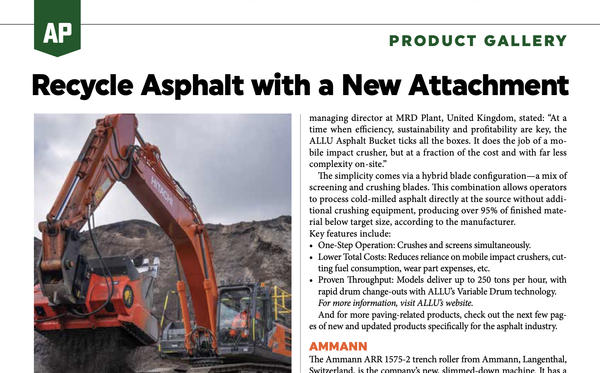
The team at ALLU, Pennala, Finland, introduced a new attachment for asphalt recycling in June. The ALLU asphalt bucket is marketed as helping close the gap between the tonnage of asphalt being recycled around the globe and what ALLU sees as “inefficient processing methods.” The new bucket works on site as a hybrid screening solution to process cold-milled asphalt and reclaimed asphalt pavement (RAP). It is available in several sizes for 25- to 45-ton excavators and 15- to 30-ton wheel loaders, and features nominal screen sizes of 0.47, 0.63 and 0.98 inches.

“Globally, there’s a clear shift toward sustainable infrastructure in construction business,” Peter Grönholm said. He’s the CEO of ALLU Finland Oy. “Asphalt recycling plays a major role in this movement, and our new ALLU Asphalt Bucket empowers contractors to turn reclaimed and cold-milled asphalt into high-quality, reusable material—directly on site.”

The ALLU asphalt bucket works as an attachment to crush and screen RAP in one pass with one piece of equipment. Here you can see the bucket processing RAP from a pile.

The attachment works by crushing clumps, screening fines and separating oversized particles in a single pass. Tom Chapman, the managing director at MRD Plant, United Kingdom, stated: “At a time when efficiency, sustainability and profitability are key, the ALLU Asphalt Bucket ticks all the boxes. It does the job of a mobile impact crusher, but at a fraction of the cost and with far less complexity on-site.”

The simplicity comes via a hybrid blade configuration—a mix of screening and crushing blades. This combination allows operators to process cold-milled asphalt directly at the source without additional crushing equipment, producing over 95% of finished material below target size, according to the manufacturer.

Key features include:

  • One-Step Operation: Crushes and screens simultaneously.
  • Lower Total Costs: Reduces reliance on mobile impact crushers, cutting fuel consumption, wear part expenses, etc.
  • Proven Throughput: Models deliver up to 250 tons per hour, with rapid drum change-outs with ALLU’s Variable Drum technology.

For more information, visit ALLU’s website.

And for more paving-related products, check out the next few pages of new and updated products specifically for the asphalt industry.


Ammann Debuts Slimmer ARR 1575-2 Trench Roller

Astec SmartEdge Tech Enhances Precision Joint Matching

https://theasphaltpro.com/blue-diamond-hdx-grapples/


BOMAG Debuts BD 2000 Asphalt Distributor in North America

ShoulderMaster ASB2400 Angle Broom Fits Any Skid Steer

Thunder Creek Expands Dealer Network in WI and MN

Topcon Expands Machine Control for Paving and Compaction

Volvo CE Expands Excavator, Loader Production in U.S.

When and How to Add a Magnet to Your Crushing Circuit

Remove deleterious material according to type, size, configuration and more

At first glance, selecting a magnet for your crusher might seem like a straightforward decision; get the magnet if you have metal in your material, and don’t get the magnet if you don’t. However, the reality is far more complex. Choosing the right magnet involves understanding your specific operational needs, material flow and the type of metal you’re trying to remove. Factors like installation location, maintenance requirements, and the nature of your crushing environment can all significantly impact magnet performance, and, ultimately, the efficiency and safety of your entire operation.

Self-cleaning magnets automatically discharge collected metal, which can be ideal for high-volume operations.

How Engineers Moved a Giant Crusher System 2.8 Miles Across a Chilean Mine

Magnetic Need

Determining if you need a magnet usually revolves around a few questions:

  • “Can my system tolerate metal contamination?”
  • “What’s the cost of a damaged rotor, jaw plate, or liner?”
  • “How long would an unexpected shutdown cost in terms of lost production?”

For most operations, even a single unplanned outage can cost tens of thousands of dollars, or more. Many operations have secondary and tertiary operations that may be more sensitive to metal that can damage your equipment. Another consideration is the use or specification of your product. Some specs do not allow for metal contamination in the end product.

However, you will want to start by evaluating the source of your material. If you are crushing recycled concrete or asphalt, these often contain rebar, wire mesh or other embedded metal. Demolition debris may include nails, screws, pipes and structural steel. Larger, uncrushable material should be removed from the source material before being introduced into the crusher. Many crushers in a primary position will be designed to accept a certain size, volume and type of metal, and will help liberate the metal from the concrete for better removal by magnets. Quarried rock or virgin aggregates are generally cleaner, but still not immune to occasional tramp metal from loader buckets or maintenance tools. If your feed material has any likelihood of containing metal, a magnet is more than likely a necessity.

Powerscreen Crushing and Screening Service Team Overcomes Extreme Conditions

The type, size and volume of metal in your material stream directly affects the kind of magnet you need. For instance, long lengths of rebar, or large, steel components require a stronger magnetic field and wider coverage area to ensure complete removal. In contrast, smaller fragments like nails, bolts or wire mesh may be captured by a lower-strength magnet, but could still accumulate quickly, and may be buried under product on the conveyor that will hinder the magnet’s ability to liberate it from the material, requiring a self-cleaning system to maintain efficiency. Ferrous metals like steel and iron are easily captured, but keep in mind that non-ferrous materials like aluminum or copper won’t be affected by standard magnets.

Understanding the specific metal contaminants in your feed helps determine not only the strength and placement of the magnet, but also whether you need a single unit or a combination of magnetic and metal detection systems for optimal protection.

It’s crucial to take the time to carefully evaluate your options, consult with experts, and choose a magnet that’s truly suited to your operation to ensure the health and longevity of your crushing system.

Your Most Attractive Magnet

Once you determine if a magnet benefits your operation, you next want to consider what type of magnet is best for the operation. Just like with any equipment, not all magnets are created equal.

Self-cleaning magnets automatically discharge collected metal, which can be ideal for high-volume operations. Manual-cleaning magnets are more cost-effective but require regular downtime for maintenance. Suspended magnets are mounted above the conveyor and remove metal from the material stream. Drum magnets are positioned within or at the end of conveyors for a more integrated solution.

Not only are you determining what type of magnet you might need, you also must choose the right configuration, depending on your throughput, material type, space availability, desired discharge point and budget. Magnets can be located at any point in your system from a cross-belt magnet at the bottom of your primary crusher’s discharge conveyor, to an inline magnet, attracting rebar, parallel with the conveyor it is sorting before your screening machine.

Best Practices for Mobile Asphalt Crushing

Once you decide on adding a magnet to your system, it’s important to let the experts help you. While adding the magnet on yourself may save money in the immediate time frame, it could end up causing you costly downtime or equipment failures. You should always work with the magnet manufacturer or your equipment manufacturer for proper installation instructions and support.

In the end, what may seem like a simple equipment choice can have major consequences for the performance, longevity and cost-effectiveness of your crushing system. A poorly selected magnet can lead to equipment damage, production downtime, and even safety hazards. That’s why it’s crucial to take the time to carefully evaluate your options, consult with experts, and choose a magnet that’s truly suited to your operation. With the right magnet in place, you’ll not only protect your crusher, but also ensure smoother, safer, and more efficient processing.

Sydney Princehorn is the senior marketing coordinator for Eagle Crusher Company, which is home to a team of experts and a network of magnet manufacturers. The company prides itself on customizing the perfect crushing system.