
The February 2025 Recycling edition of AsphaltPro Magazine delved fully into the State Route 236 project wherein companies within Heritage Research Group (HRG) participated in the successful completion of cold central plant recycling (CCPR) and full-depth reclamation (FDR). Here’s a snapshot of the process.
To minimize disruption, the SR 236 project was executed in phases to accommodate local traffic, which may be a concern for other agencies as well. Each segment followed a multi-step rehabilitation process lasting approximately two months.
Step 1: Get samples and design your mix.
Pavement engineers took samples of the existing roadway material. In a lab, they designed and tested the correct composition of materials to create the new paving mixes.
Step 2: Mill the existing pavement.
The asphalt was milled to a depth of 8 inches, and the RAP was transported to a central processing yard no more than 10 miles from the site, minimizing haul times and emissions.
Step 3: Reclaim and strengthen subbase, if necessary.
The team performed FDR, adding a nominal 3 inches of corrective aggregate to the exposed road base, then pulverizing to a depth of 10 inches and stabilizing with Portland cement.
Step 4: Produce CCPR mix at ambient temperatures.
The RAP was crushed, screened and sized to the required specs before being mixed with a specially formulated, engineered asphalt emulsion in a specially designed mobile mixing plant.
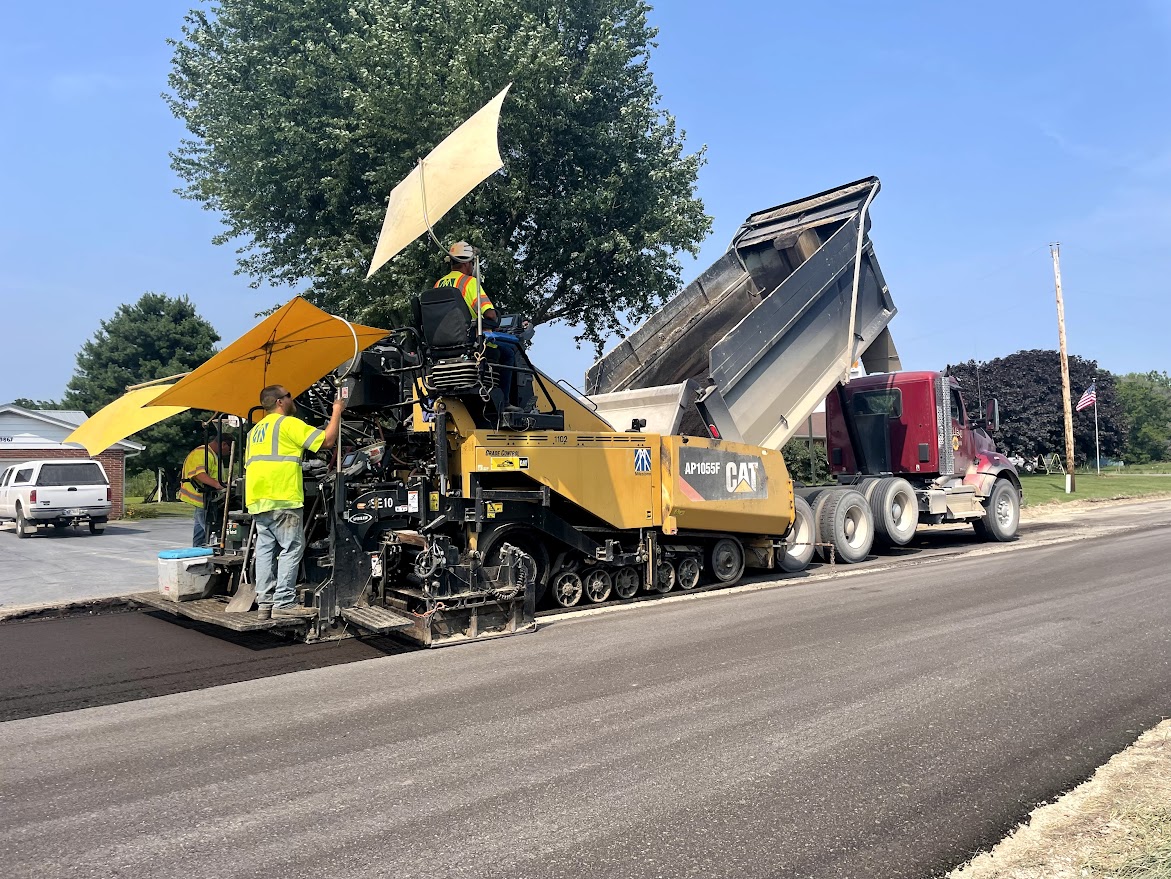
Step 5: Pave it black.
Trucks delivered the CCPR mix back to the job site, where it was laid in two 3-inch lifts using standard paving equipment. A 2-inch HMA lift was applied as the surface course, followed by permanent pavement markings.