
Aug 30, 2025
Build Stronger Asphalt Joints with Proper Endgate Control
BY AsphaltPro Staff
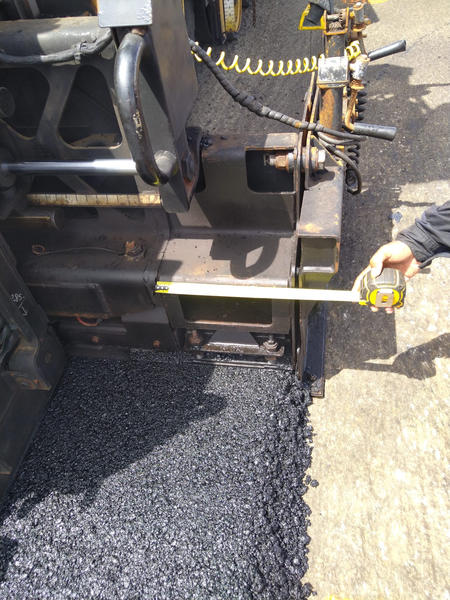
This picture shows the endgate lightly floating on the existing surface or grade. Consultant John Ball also describes it as “gliding” on the grade, which is a good analogy. Basically, the side plate or endgates need to lightly (but positively) contact the grade. This is to confine the unsupported edge, and it helps to build a nice, strong, square edge. We need that to build quality joints.
If you pave with the endgate raised up, what happens is the longitudinal joint becomes weak, segregated and it rolls over under the compactors. When you confine the edge by putting the endgates down, you build in some density and uniformity because there’s a wall there that defines the edge of the mat. When you match a hot joint, you also want the endgate down, lightly gliding on the previously placed hot mat you are precisely matching.
3 Key Points
1. Don’t force the endgates down “hard” on either an existing grade when placing the leading edge (the first pass or the open longitudinal joint) or when doing a hot joint match on a previous pass. Be sure it’s floating nicely.
2. Leave some room in the endgate springs so it has a couple of inches of float or travel to move up or down as the grade changes or you have a variable depth. If you have too much down-pressure on the endgate springs, it can interfere with the screed’s job of floating on the mat. That’s why it needs to gently glide.
3. On a hot joint match, you will soon figure out how much the sweet spot is for your down-pressure. If it’s down too hard it will dig into your uncompacted hot mat and scar it; if it’s not down enough you will get excess material bleeding out, creating a lot of unnecessary hand work to fix that excess up, not to mention likely a nasty line of bones.