
How AMIBIND Helps Crews Lower Temps Without Changing Plants
BY Dan Swiertz, PE
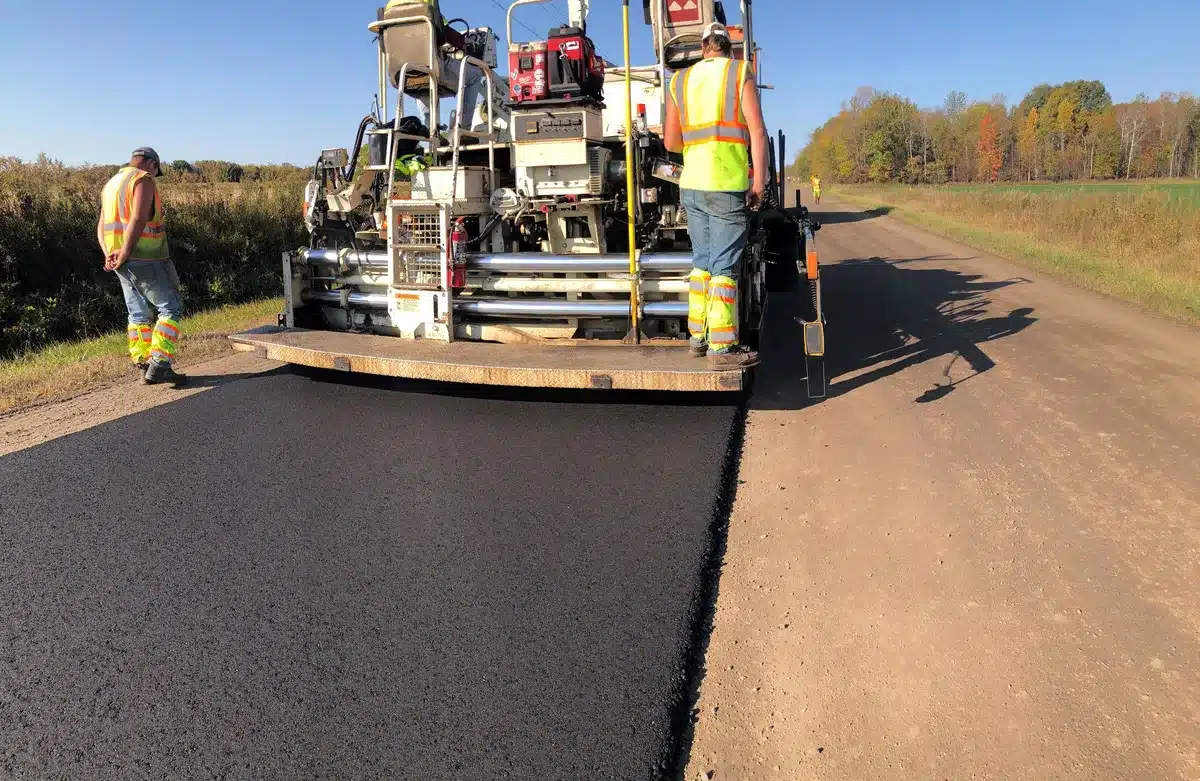
Considerations for producers to incorporate WMA technologies while remaining competitive
In the construction industry, the asphalt paving sector has consistently led the way in sustainability efforts. Warm-mix asphalt (WMA), loosely defined as asphalt mixtures produced with a significant temperature reduction, is a suite of technologies that allows the asphalt paving industry to gain even more ground on sustainability goals. Decades of laboratory research and field performance validate the effectiveness of WMA, making it a winner for pavement performance as well. As agencies adopt more sustainability-weighted purchasing practices, WMA technology will serve as a valuable tool for producers to remain competitive.
For asphalt mix producers, incorporating WMA technologies into daily practice is straightforward, but does require some additional consideration during the mix design and mix production processes. This article details how several Wisconsin agency-producers are leveraging WMA technology to meet paving demands locally while fostering responsible stewardship of resources within the industry at large.
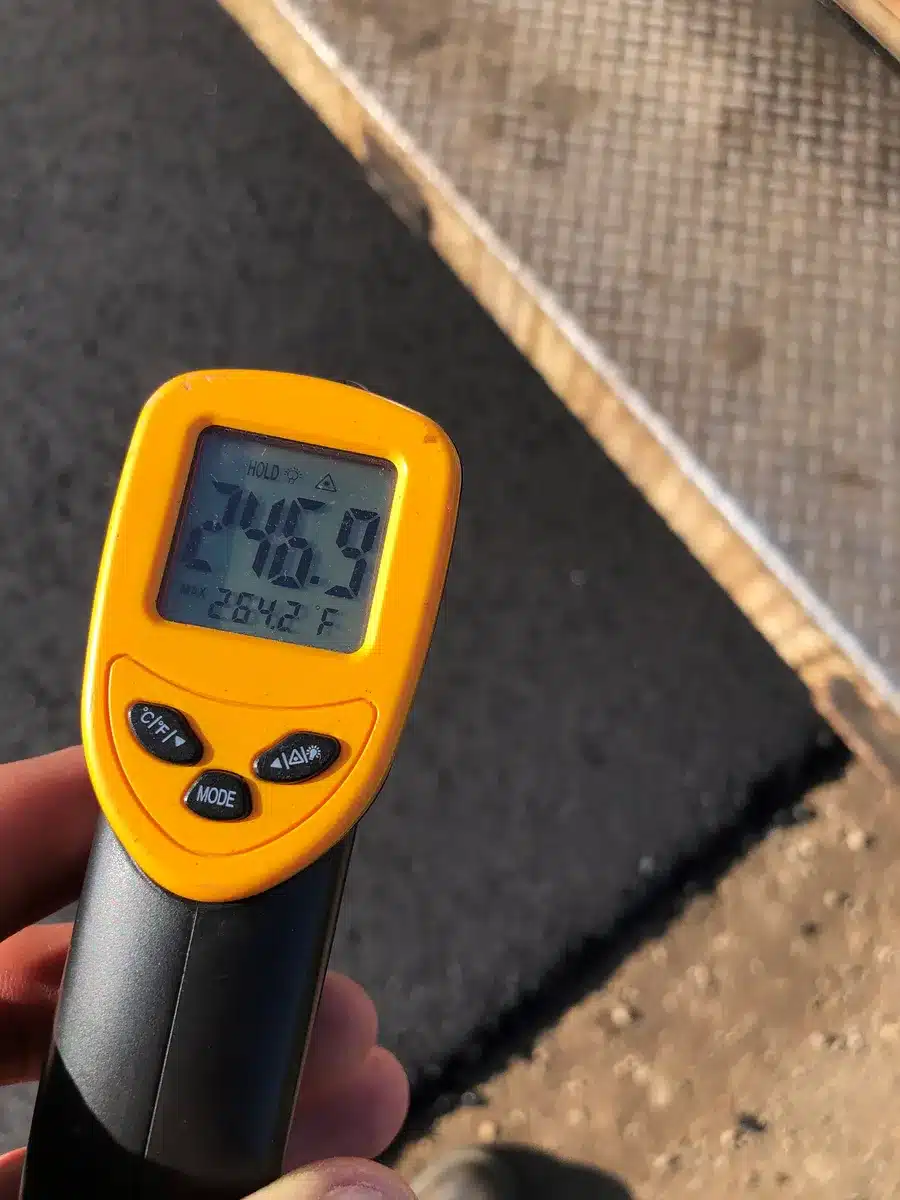
Temperature reductions at the screed of 30°F or more are common with AMIBIND™ WMA with good paving conditions and monitoring quality control in the field. Oconto County Wisconsin Highway Department
The Basics of WMA
There is consensus within the asphalt industry that the objective of WMA is to produce and place asphalt mixtures at temperatures below those used in standard hot-mix asphalt (HMA) without sacrificing performance. The National Asphalt Paving Association (NAPA) uses a temperature reduction of 10°F as a temperature reduction threshold when surveying mix producers, but temperature reductions of 25-50°F are common and reductions up to 90°F have been reported, according to “Asphalt Paving Industry Survey on Recycled Materials and Warm-Mix Asphalt Usage, 2022,” Information Series 138 (IS 138) from NAPA.
WMA technologies generally fall into two categories: additive technologies and asphalt plant-based foaming technology. Use of plant-based foaming technologies has steadily declined since about 2010, with additive technologies increasing in prevalence during the same timeframe. In 2022, chemical additives represented about 64% of all WMA technologies used, according to IS 138.
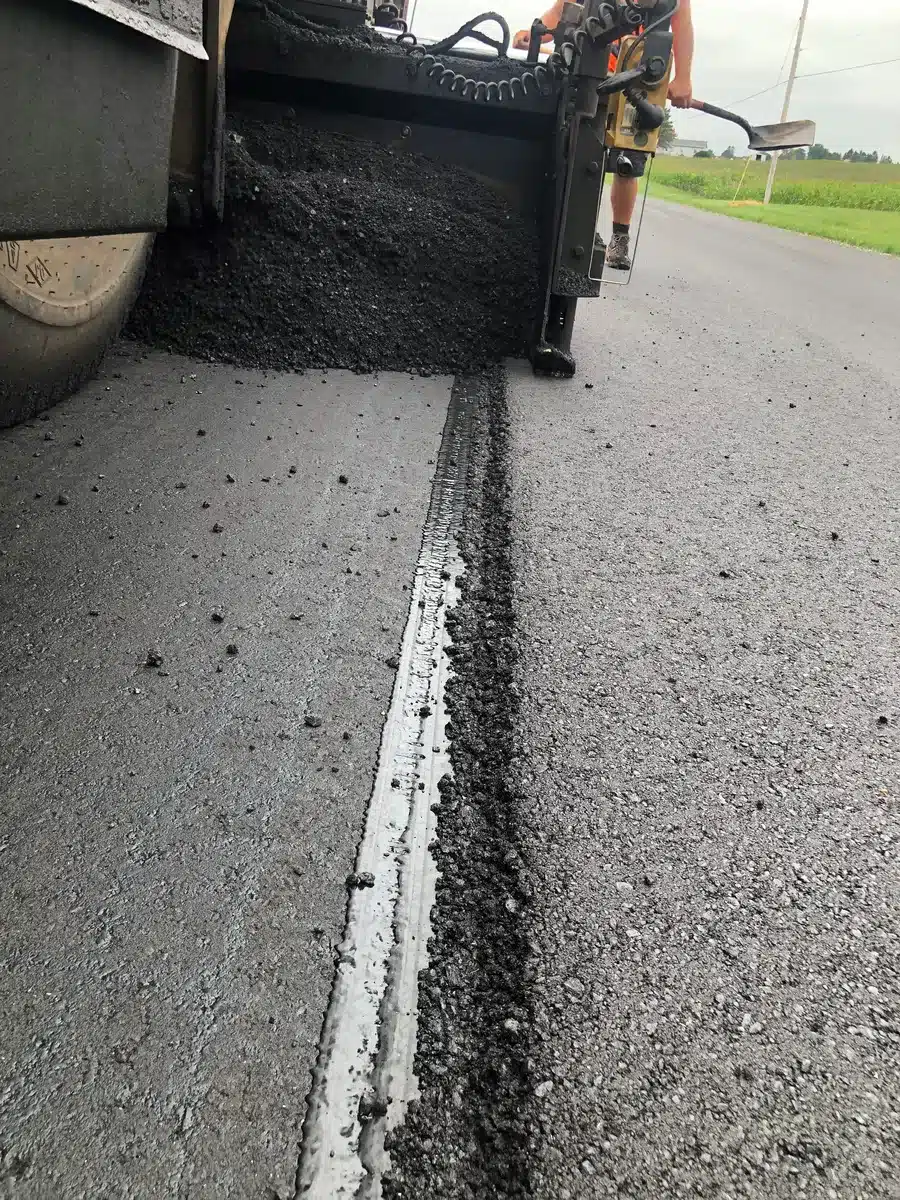
Paving a WMA mixture on VRAM follows standard practice during placement and compaction.
Asphalt Materials Inc.’s AMIBIND™ Performance Graded paving asphalts with WMA technology are an example of WMA chemical additive technologies that offer producers the flexibility of incorporating WMA into their existing practice without plant modification. For producers wishing to use WMA intermittently or on a trial basis, as was the case with the Oconto County Highway Department project, AMIBIND WMA is delivered and handled at the plant the same as standard PG asphalt.
Aside from the obvious fuel and energy savings during production, use of WMA technology has positive mixture performance impacts. Reducing production temperature lowers the rate of volatilization and oxidation (“aging”) of the asphalt binder during production, improving pavement durability. Many WMA technologies also function as compaction aids and anti-stripping agents even when used at standard hot mix temperatures. Lab and field studies show that WMA mixtures exhibit equivalent or even superior cracking performance to their HMA counterparts.
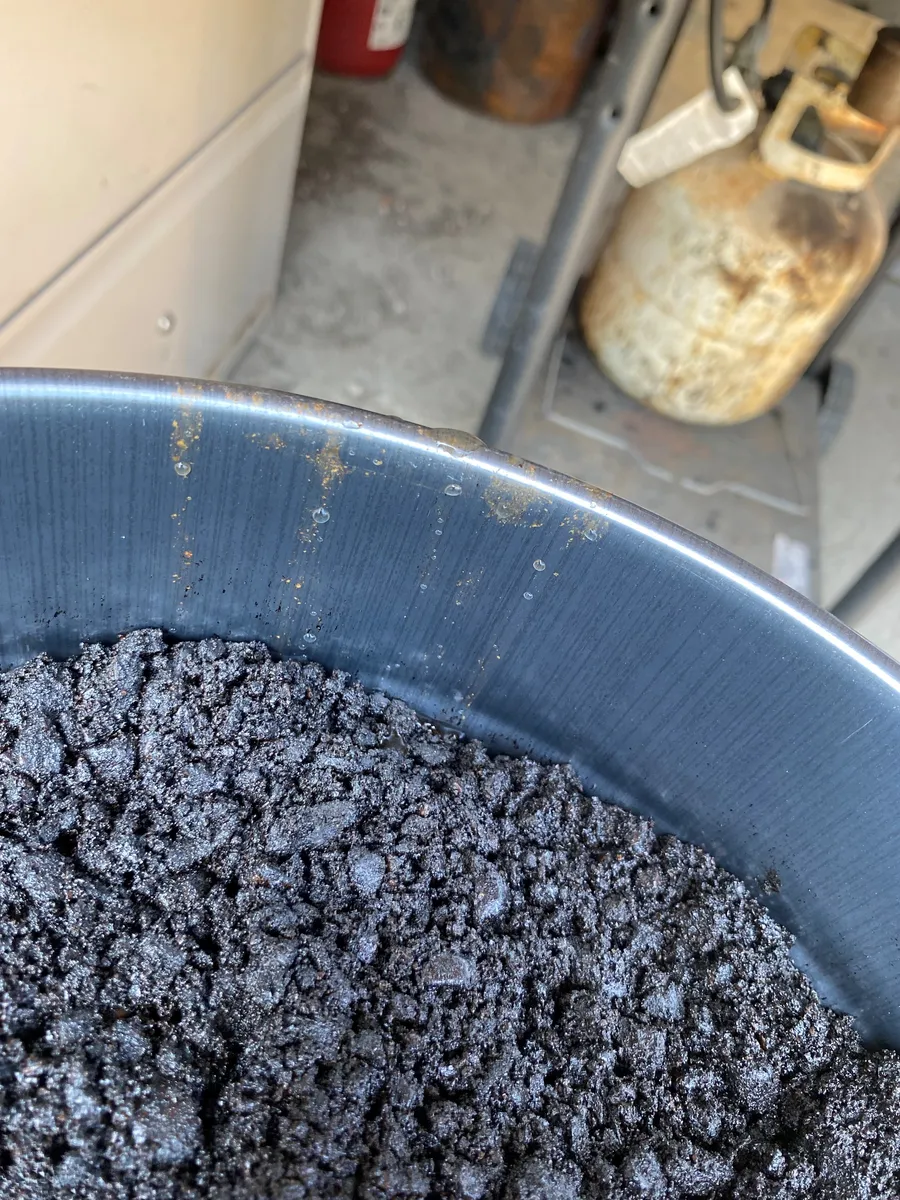
Residual moisture in a mix sample will be present as condensation on the underside of the sample lid and may drip down the side of the pail. Adjusting how stockpiles are managed and worked, along with fine-tuning plant production rate and temperature, can remedy the problem.
Mix Design Matters
The mix design process and materials used for WMA projects are the same as those used for HMA, except care must be taken in the design lab to simulate the lower plant temperatures expected in the field.
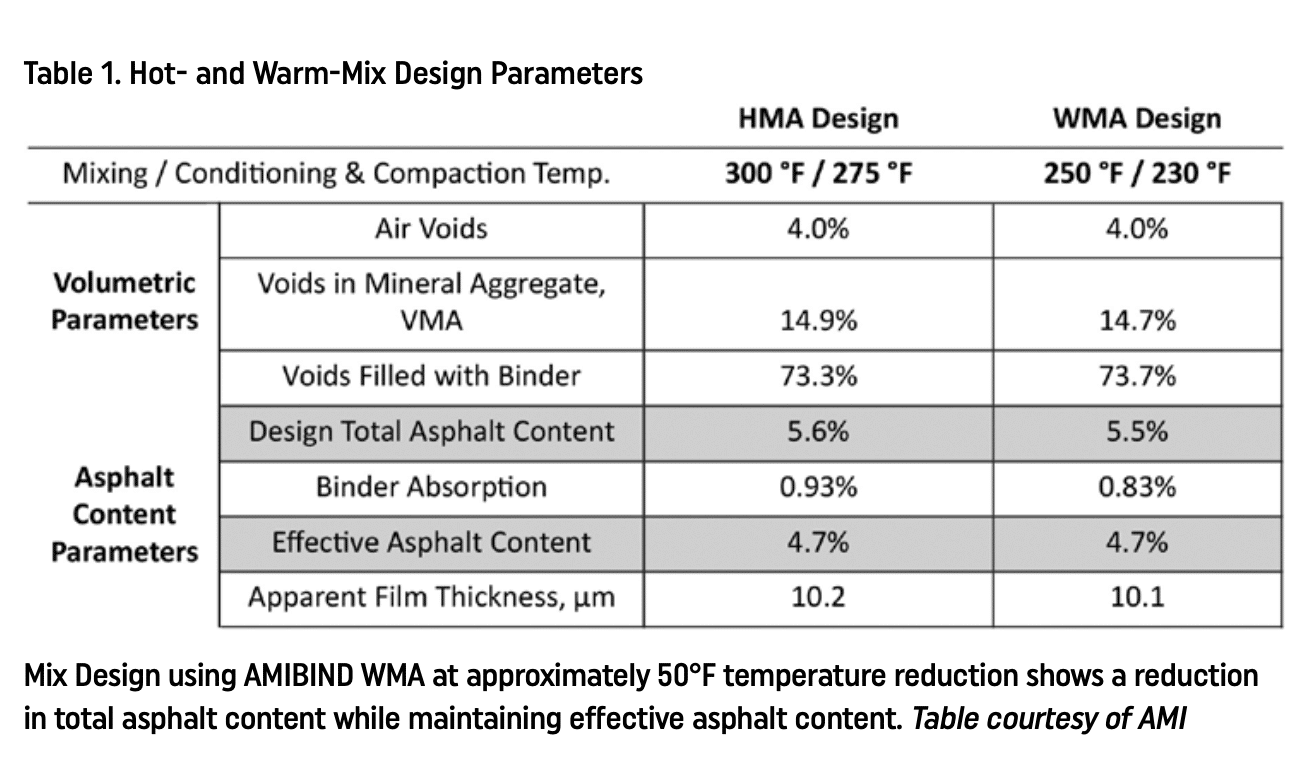
The amount of asphalt binder absorbed by the virgin aggregate during the mixing and conditioning process may decrease when lowering mixing and conditioning temperature. The result is a potentially lower total design asphalt content, but similar effective asphalt content relative to HMA. Since effective asphalt content drives Voids in Mineral Aggregate (VMA) and durability, mixture performance is not sacrificed. The mix design theory and process remain unchanged in all other aspects relative to HMA. An example of the mix design process targeting a specific temperature reduction for the Barron County Highway Department is shown in Table 1; the total effective asphalt content remains unchanged, while the total asphalt content is actually reduced slightly when using AMIBIND WMA. By reducing total asphalt content, this process ultimately yields additional cost reduction.
Agency specifications vary on how WMA additives are approved or allowed to be incorporated. Most agencies dictate that WMA additives may not substantially change the asphalt binder performance grade properties when used at the manufacturers’ recommended dosage levels. Some agencies allow the contractor to dose their asphalt binder with WMA additive at the mixture production facility, while others allow for asphalt binder terminal dosing only. Typically, the WMA additive and dosage used for a specific mix design is required to be listed on the mix design cover sheet.

Paving a WMA mixture on VRAM follows standard practice during placement and compaction.
Production & Placement Considerations
Mix plant operations remain mostly unchanged relative to standard practice when using AMIBIND WMA. The aggregate must still be dried and thoroughly coated with asphalt prior to loadout. With modern asphalt plants the primary concern with lowering the mixing temperature is that the baghouse dew point will also decrease, which can create clogging and reduced efficiency. To safeguard against this, a best practice is to start production for the day using standard HMA temperatures (usually running 50-100 tons is sufficient) and slowly lower the temperature until the desired target is reached while monitoring baghouse temperature and aggregate coating, and watching for signs of residual moisture in the mix. The plant temperature is again increased before shutdown to make sure the baghouse is completely dry for the next day.
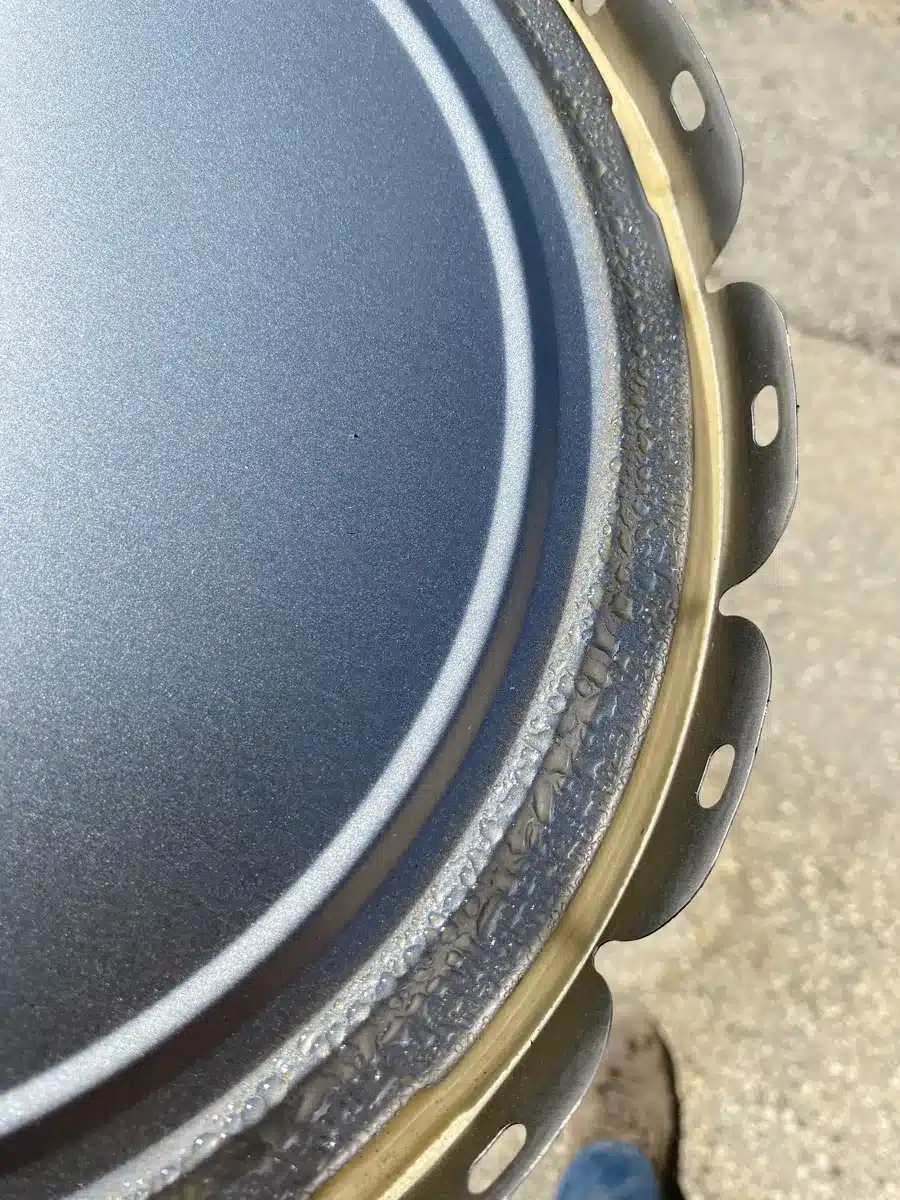
Residual moisture in a mix sample will be present as condensation on the underside of the sample lid and may drip down the side of the pail. Adjusting how stockpiles are managed and worked, along with fine-tuning plant production rate and temperature, can remedy the problem.
Residual moisture in the mixture is a common but easily remedied problem when significantly lowering plant temperature that can create significant challenges achieving compaction in the field. A simple test to check for residual moisture is to sample mix into a clean steel pail with a tight-fitting lid. After approximately half an hour check the underside of the lid for condensation. It should be completely dry, signaling complete removal of moisture from the mix. Checking again at the paver using the same test can help troubleshoot whether residual moisture is causing compaction problems. If moisture is present, adjusting how stockpiles are worked and sampled, adjusting plant production rate and increasing plant temperature are all variables that can be used to remediate the problem.
The ambient climate conditions, time of year, aggregate moisture, haul distance, paving substrate and planned layer thickness all have a hand in determining the magnitude of temperature reduction that can be successfully achieved. Communication between the plant operators, paving crew and onsite density technicians is critical to fine tuning the temperature ranges that work best for a prevailing set of conditions. Lowering plant temperatures does not need to come at the detriment of paving quality. Taking detailed notes in the field will, over time, build a database of conditions that operators can replicate successfully on future projects.
WMA also works seamlessly with other paving technologies. The Sheboygan County, Wisconsin Transportation Department had been utilizing J-Band®, a Void Reducing Asphalt Membrane (VRAM), to increase density at the longitudinal joint for several seasons before integrating AMIBIND WMA in 2024. Even with placement temperatures of 30°F or more below their standard practice, the WMA paving process incorporated VRAM at the centerline construction joint without issue and without changing mix placement or rolling practice significantly.
The Future is WMA
Agencies are finding creative ways to promote the use of WMA technology. The Minnesota Department of Transportation (MnDOT) is planning a WMA pilot program with seven projects in 2025 offering contractors up to 4% incentive for achieving various temperature reduction thresholds at the mixing plant. More widespread implementation of Environmental Product Declarations (EPDs) will also drive WMA usage as mix producers seek to lower their impacts and remain competitive in a new purchasing environment where using terminally blended WMA technologies allows producers to gain confidence with WMA in their system without investment in additional infrastructure.
Dan Swiertz is a specialty product technical manager for Asphalt Materials Inc., working out of the H.G. Meigs Portage Wisconsin location. For more information email dswiertz@asphalt-materials.com.