
Comparative Analysis of Hot Oil and Electric Heating
BY Iván Fernández Hevia
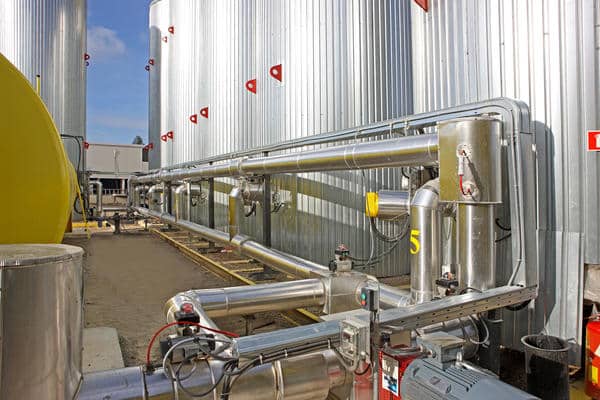
Editor’s Note: The Focus on Performance series from AsphaltPro Magazine allows OEMs and service providers to highlight professionals in the industry who have improved efficiencies and the bottom line through best practices and performance. This month’s installment features a case study with electric heat from Intrame.
This article explores the transition from traditional oil heating to electric heating systems for asphalt storage. With increasing focus on emissions reduction, energy efficiency and sustainability, electric heating offers operational and environmental advantages. Through technical analysis and real-world data, we evaluate the energy demands of maintaining asphalt temperature and compare the economic and environmental implications of both heating methods.
Of course, the data and figures presented in this article are intended to provide a general overview and to stimulate reflection on the potential benefits of transitioning to electric heating. They are based on typical conditions, and on theoretical calculations. However, actual values may vary significantly depending on many factors such as equipment design, meteorological conditions, electrical grid capacity, energy prices, fuels compositions, etc.
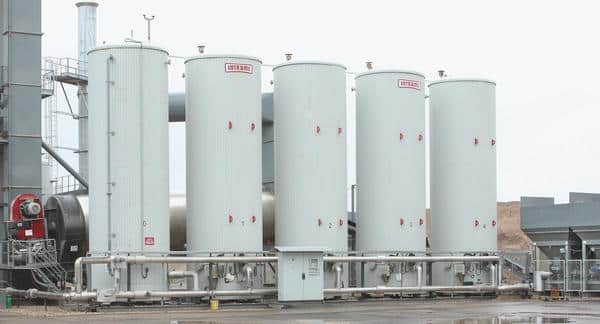
The most common tank size in Europe is 16,000 gallons.
Asphalt plants are continuously evolving to reduce environmental impacts and increase efficiency. Some key development areas include:
- Reduction of pollutant emissions
- Increased use of recycled materials in asphalt mixes
- Lower productions and storage temperatures
- Improving production energy efficiency per ton of hot-mix asphalt
Increasing efficiency by reducing the energy required to produce each ton of hot mix offers the two main benefits of lower operational costs and reduced pollutant emissions and carbon footprint. This results in greener, more environmentally friendly and sustainable asphalt plants.
One approach to achieve these goals is to use electrical heating instead of oil heating. Throughout this article, we will explore how electric heating can be one of the answers to reducing both costs and emissions.
A Case Study
This study is complex due to the numerous variables affecting the results. Some of these variables are the type and size of tanks, type and thickness of the thermal insulation, type and thickness of the tank cover/skin, filling level, medium ambient temperatures, average winds and storage temperature, among others.
As an initial approach to the energy required to maintain the temperature of liquid asphalt cement (AC) inside a tank, over a 24-hour period, we will use some heat transfer calculations, applied to a standard Intrame electrically heated tank, under the following conditions:
- Storage temperature of the liquid AC: 320ºF (160ºC)
- Tank capacity: 16,000 gallons (60m3)
- Tank filling level: 75% = 12,000 gallons (45m3)
- Liquid AC density: 60 lbs/ft3 (960kg/m3)
- Specific heat of the liquid AC: 0.501 BTU/Lb·ºF / 2.098 kJ/kg·ºK
- Average wind speed: 10 ft/s (6.82 MPH)
- Ambient Temperature: 50ºF
Meeker Spotlights Electric Heater & UL‑142 Tanks at World of Asphalt
Insulation:
- Material: mineral wool
- Thermic conductivity at 320ºF: 0.061W/(m·K)
- Thickness: 8 inches
External cover/skin:
- Material: aluminum
- Surface emissivity coefficient: 0.05
- Thickness: 1.2 mm
The theoretical energy required to maintain 12,000 gallons of liquid AC, at 320ºF, inside the tank, over 24 hours, under these conditions, using convection, conduction and radiation calculations, is approximately 200 kWh, which equals 16.7 Wh/gallon/day.
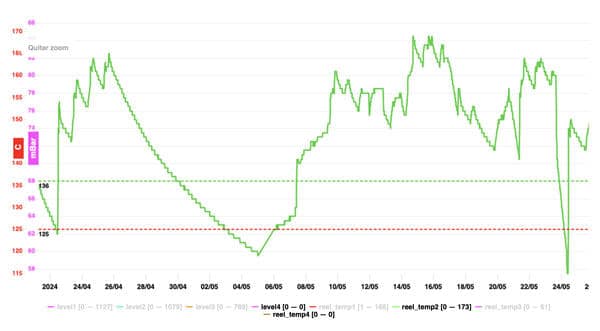
We have also remotely monitored the temperature drop of several tanks, when disconnecting the heating over a 24-hour period, at different times of the year, with different inside and outside temperatures and winds.
Process Heating Company Designs Lo-Density® Hot Oil for Auto Control, Even Temp
The first intuitive conclusions are:
- The fuller the tank, the slower temperature drop it has. An almost empty tank can lose temperature at a rate more than double that of a full tank.
- The hotter the AC is in the tanks, the faster it loses temperature.
After some field data analysis, we found an average temperature decrease in summer, from 11ºF to 14ºF per day, and from 14ºF to 18ºF per day in winter, when heating is disconnected at 320ºF.
With this information, we can calculate the energy required to maintain the temperature of the AC inside a tank, for a 24-hour period. This will be done using the most common tank size in Europe, which is 16,000 gallons (60m3), filled to ¾ capacity (12,000 gallons):

Assuming a total heating efficiency of 80% for the hot oil system, and 90% for the electric heating, the approximate energy output required for keeping the temperature in the tank at 320ºF is:
Hot oil system: 264 kWh = 22 Wh/gal
Electric system: 234 kWh = 19.5 Wh/gal
Please note that the figures above refer to 8-inch mineral wool insulated tanks. Electrically heated tanks are insulated with a minimum of 8 inches or even 12 inches of mineral wool, reducing thermal losses considerably.
According to EPA’s 2020 grid emission factors, CO2 emissions of U.S. power generation grid are 0.818 lbs/kWh. Therefore, maintaining 12,000 gallons of liquid AC, at 320ºF for 24 hours using electric heating, will require an energy of 234 kWh, and will generate approximately 0.096 tons of CO2/day.
Referencing the cost of the electrical energy according to the U.S. Energy Information Administration (EIA), the average cost in 2024 was $0.0844/kWh. Utilizing this cost factor, the cost of the electrical energy needed to maintain the temperature of the AC inside the tank at 320ºF is:

Depending on the geographical location and solar radiation availability, this cost may be further reduced by partially powering the electric heating system through photovoltaic energy, which also contributes to lowering overall emissions.
We have also collected field data from different plants, operating under diverse weather conditions, various tank specifications and AC types.
Based on this information, the average No.2 diesel oil consumption required to maintain the AC at target storage temperature is approximately 0.003 gallons of diesel per gallon of AC per day. Assuming an average fuel cost of $2.50 per gallon, this results in a daily heating cost of $0.0075 per gallon of AC, significantly higher than $0.0017 per gallon per day associated with electric heating.
In terms of emissions, maintaining the temperature of 12,000 gallons of AC using a hot oil heater would require burning: 0.003 x 12,000 = 36 gallons/day, which will emit 0.41 tons of CO2/day, further reinforcing the environmental benefits of electric heating solutions.
Equation graphic from page 3 of original article (Electricity Cost)
In addition to the figures above, burning fuel to heat oil has other associated costs and disadvantages that should be considered, such as oil changes and scheduled emissions testing. In some countries, a 24-hour custodian is required to ensure safe operation of hot oil systems. This norm is gaining ground in more and more countries as the emphasis on safety and lowering insurance costs becomes more predominant worldwide. In these cases, an auto-shutdown feature is required. An assigned custodian must go to the heater and inspect to be sure everything is operating properly, then press a reset button before the allotted time in order to keep the system running.
Hot oil heaters are reliable and essential for multiple applications, and they have served the industry for decades. However, with growing emphasis on sustainability and cost control, electric heating is gaining ground. In countries like France, Spain, the United Kingdom and Poland, nearly 100% of all new asphalt plants are equipped with electric heating.
Electric heating of AC storage tanks represents a forward-looking solution for the asphalt production industry. It offers a compelling combination of economic savings, operational simplicity and environmental responsibility. As energy prices and emissions regulations continue to evolve, the adoption of electric heating systems will likely become the new standard across global markets.
Iván Fernández Hevia is the international director at Intrame, managing operations across nearly 50 countries. He brings deep expertise in navigating the technical and regulatory specifications of diverse markets.