
E&B Paving Wins NAPA Award Using Real-Time Profiling and Density Tech
BY Tammy Apkarian
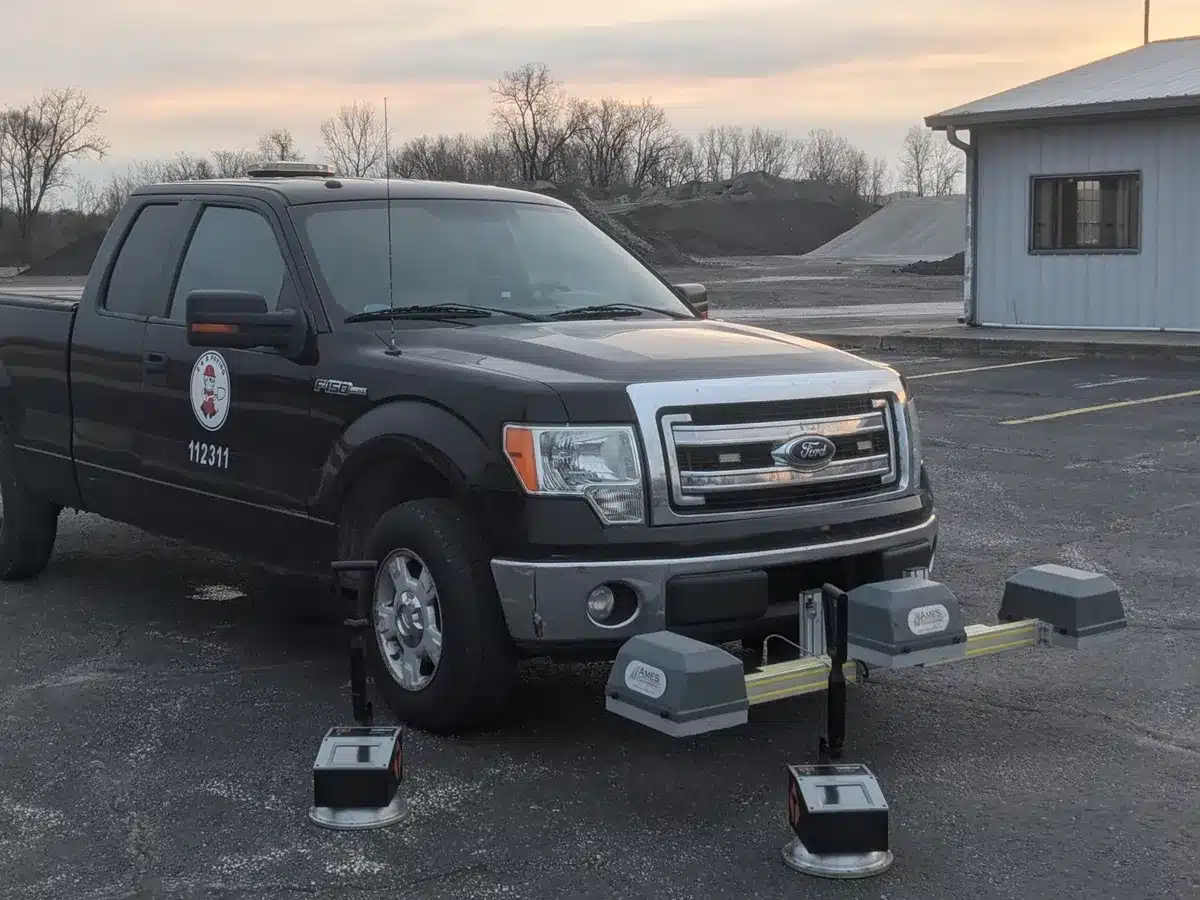
Award-winning project uses both profiling and density technologies in real time
Density and smoothness directly impact the quality, durability and performance of asphalt pavements. Overall, they’re both vital to a paving contractor’s success, impacting not only the functional and aesthetic quality of the pavement but also the financial outcomes of paving projects. The acquisition of AMES Engineering, Ames, Iowa, by TransTech Systems Inc., Latham, New York, in May 2024 was a significant milestone in the integration of two technologies that allows contractors to work with a single entity to monitor these important pavement conditions.
TransTech Systems provided the research and development of the first non-nuclear asphalt density gauge starting in 1996, cumulating in the latest model, the PQI 380. This technology uses electrical impedance to monitor in-place asphalt density. AMES Engineering has developed sensor technology for pavement measurements. Over the years, they have worked side-by-side with the paving industry and government agencies to develop high quality road profiling and measuring systems.
Companies such as E&B Paving, with headquarters in Anderson, Indiana, use these technologies and the experience of working with both companies has brought positive results to paving projects. Kendall Wright, QC manager of E&B Paving commented on the benefits of using both testing systems on a single project.
Set Yourself Apart from the Competition with QC/QA Best Practices
“To maximize pay, monitor and maintain quality, together these tools help build best paving practices and control quality on both density and smoothness to maximize the life of the pavement,” Wright said.
The single project he zeroed in on spanned two counties in Indiana. “On contract R-42373, which was SR-327 Dekalb County, Indiana, and SR-4 Steuben County, Indiana, we used the TransTech PQI380 non-nuclear gauge for checking all of our density and the Ames Inertial Profiler for checking smoothness.”

TransTech Systems provided the research and development of the first non-nuclear asphalt density gauge starting in 1996, cumulating in the latest model, the PQI 380, pictured in use here.
The crew accomplished R-42373 with best milling, stabilizing and paving practices. For example, on SR-327, they milled off all existing asphalt and performed soil stabilization and modification ahead of two lifts. The first was 2.5 inches of 19.0mm intermediate and 1.5 inches of surface course. On SR-4, the crew milled and filled 2.5 inches of 19.0mm intermediate and 1.5 inches of 9.5mm surface course. “The two state roads combined were 22 lane miles of pavement,” Wright said.
The team also monitored quality control/quality assurance (QC/QA) as part of their best practices, blending the use of the TransTech and Ames technologies.
TransTech Systems Model 380 PQI Builds on 25 Years of Non-Nuclear Tech
“On this project, the team was able to utilize both tools—the TransTech PQI380 density gauge and the Ames Inertial Profiler—to make well informed decisions,” Wright said. “As an example, using the inertial profiler allowed them to know what existing conditions were and if there were areas of concern as far as smoothness that needed to be addressed before each lift of asphalt. This in turn also helps with density and with using the PQI380 to monitor the field compaction, we could continuously adjust rollers to maintain optimum compaction.”
Optimum compaction was evident in the numbers. The average density on the project was reported at 93 to 95%. “The average MRI on this project for smoothness was 36 inches per mile,” Wright said.
This kind of success takes a desire to improve quality from all the entities involved. Wright spoke of the TransTech and Ames commitment to the paving industry:
“Yes, this in part to both being committed to quality and accurate equipment along with having excellent customer support. Together I can see them staying up on the ever-changing technology and delivering equipment to help improve the quality and best paving practices.”
He also spoke of the commitment and performance from his own E&B Paving team:
“The crews drew off the experience of the superintendent and general superintendent along with the quality control managers and utilized the experience and knowledge to their advantage. The crew had a first-year foreman who embraced good paving practices along with the technologies of today, which in turn earned a NAPA award on this project. Maintaining good communication and good paving practices was a key and vital role in the success of this project.”
From the award-winning experience of E&B Paving, it’s evident that benefits can be found by utilizing the technologies of TransTech Systems and AMES Engineering to bring improved quality to the asphalt paving operation. Blending QC/QA methods in the field can lift the team’s knowledge in real time, helping build smoother, more sustainable pavements.