
How to Use BMD with Airfield Mixes
BY Brett Williams
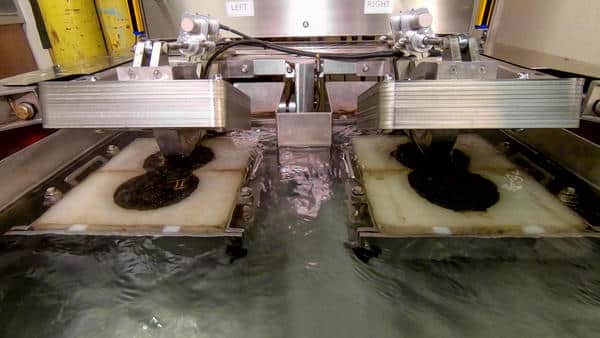
How to use BMD with airfield asphalt technology
Rutting is an important performance consideration in the design and evaluation of airfield asphalt because even small amounts of deformation can affect drainage, smoothness and operational safety. While existing Federal Aviation Administration (FAA) specifications include rutting evaluations, a recent study completed by the Airport Asphalt Pavement Technology Program (AAPTP), a cooperative agreement effort between the FAA and the National Asphalt Pavement Association (NAPA), focused on developing performance-based rutting tests and criteria that reflect the combined effects of aircraft loading, temperature and field conditions. These enhanced tests support the balanced mix design (BMD) approach to optimize durability and performance in airfield asphalt pavements.
The findings of the AAPTP report support potential updates to FAA P‑401.
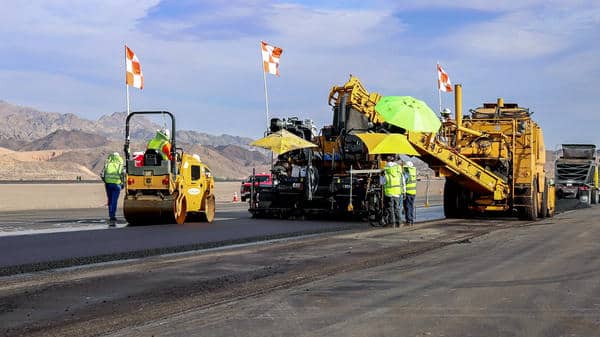
If you want to know how your asphalt mix will perform before it’s on the runway, using BMD can enhance traditional methods of testing by using performance tests to confirm which mixes will withstand rutting and cracking from aircraft loading. Photo courtesy of National Asphalt Pavement Association
Building a Practical Rutting Test Framework
The AAPTP study evaluated both laboratory- and plant-produced asphalt mixes from active airfield projects across the United States. The team included the University of Nevada, Reno (UNR), Rutgers University, the Texas A&M Transportation Institute, RDM International and Duval Engineering. Mixes represented a wide range of binder grades, aggregate properties, climatic regions and aircraft loading conditions.
Dr. Elie Hajj of UNR said the goal was to not only identify reliable rutting tests, but to determine how those tests could be implemented consistently throughout the project lifecycle.
“The aim was to move representative rutting mechanical tests beyond mix design and into verification and production to support a comprehensive BMD framework,” Hajj said.
The outcome is a framework agencies and contractors can use to standardize key test variables—such as air voids, temperature and specimen preparation—to improve consistency.
Balance Performance: BMD is not about maximizing one property at the expense of another. AAPTP paired the rutting study with a cracking study to support balanced performance across rutting, cracking and durability. That balance ultimately defines long-term pavement success.
Rethinking Aggregate Performance for Long-Term Friction Safety After One Million Cycles
Addressing Air Voids, Temperatures, 4 Tests
The study recommends running all rutting tests at 7% air voids (±0.5%). Traditionally, air void targets have varied by test method. For example, the Asphalt Pavement Analyzer (APA) is often run at design air voids, while the Hamburg Wheel-Track Test (HWTT) uses 7% per AASHTO procedures.
Evaluation of field density data from multiple airfields during the study supported the selection of a 7% target air-void level, as it captured a larger portion of the observed in-place air voids measurements. Importantly, the 7% target also enabled laboratory specimen preparation at practical heights, reducing the likelihood of aggregate damage associated with over‑compaction in the lab while remaining representative of densities measured in pavement mats and at longitudinal joints.
Why 7% Air Voids?
-
Consistent with observed in-place air voids.
-
Enables fabrication of specimens without inducing aggregate crushing.
-
Simplifies testing protocols across rutting test methods.
-
Eliminates confusion arising from different air-voids targets among test methods.
Current specifications typically require testing at 64°C for APA and 50°C for HWTT. Rather than testing all mixes at a single temperature, the framework selects test temperatures based on local climate using LTPPBind environmental PG values (50% reliability at the pavement surface, 12.5 mm rut depth). This results in temperatures typically ranging from 40°C to 64°C.
The study identified four rutting performance tests as reliable tools within a BMD framework, with calibrated criteria ensuring consistent mix design outcomes:
- Asphalt Pavement Analyzer (APA)
- Hamburg Wheel-Track Test (HWTT)
- High-Temperature Indirect Tensile Test (HT-IDT)
- Ideal Rutting Test (IDEAL-RT)
Together, these four tests provide agencies and contractors with a flexible toolkit that can be tailored to available equipment, project scale and the performance risk level of the airfield pavement area being paved.
Because HWTT combines rutting and moisture damage, the study recommends evaluating rut depth at 5,000 passes (instead of 20,000) to better isolate rutting behavior and improve correlation with other rutting tests.
Precise Specimen Prep: Specimen preparation had a measurable impact on results. Cutting or trimming specimens introduced variability, especially in HWTT under wet conditions. Using directly molded specimens will improve consistency across labs.
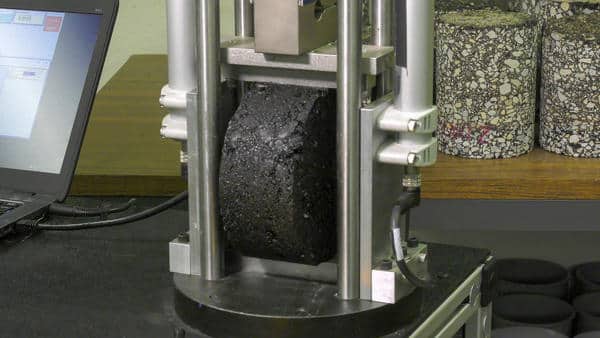
Monotonic tests, such as the IDEAL-RT shown here, help provide fast results with meaningful performance insight. Photo courtesy of the Federal Highway Administration
From Lab to Reality
To validate the criteria, pavement cores were collected from airfield sections with documented performance histories. Tests showed that mixes from sections with lower performance fell short of recommended criteria, while mixes from well-performing sections met them. This demonstrates that the framework can effectively identify mixes likely to deliver rut resistant, high-performing airfield pavements.
A multi-lab study showed most tests fall within about a 20% coefficient of variation. Monotonic tests showed less variability than repeated-load tests, and the project incorporated this variability into the established test criteria.
The study establishes rutting criteria tied to both climate and aircraft loading. Temperatures are climate-driven, while performance thresholds reflect aircraft weight and operational conditions. Although criteria vary by loading scenario, the recommendation is to design for the worst-case condition, which is slow or stationary loading.
Researchers also used mechanistic modeling (3D‑Move) to simulate aircraft stresses under realistic conditions, strengthening the link between lab results and field performance.
For contractors and agencies, the takeaway is that BMD provides a more reliable way to design asphalt mixes that perform in the field.
A Path to Implementation
The study outlines a phased approach to implementation, allowing contractors, labs and agencies to build confidence before full adoption.
Rutting performance testing can be incorporated into both mix design and verification processes. When the APA or HWTT is used for mix design, these tests can be paired with HT-IDT or IDEAL-RT for verification and acceptance. As agencies and producers gain experience with these methods, they can gradually introduce more reliance on HT-IDT and IDEAL-RT, allowing for higher testing frequency during production.
“The challenge with traditional rutting tests is that specimens have to be fabricated, conditioned and run over a long period of time,” said Adam Hand, PhD, of UNR. “You don’t want to keep paving for one or two days before getting an answer, so the index tests are going to be a good tool for getting an answer quickly or at least an indication of the anticipated performance.”
Asphalt Testing Solutions & Engineering Offers Asphalt Performance Testing and Mix Designs
Implications for FAA Specs
The findings support potential updates to FAA P‑401, including:
- Multiple approved rutting test options;
- Standardized air voids (7%);
- Climate-based test temperatures;
- Enhanced specimen preparation;
- Integration into quality control and acceptance; and
- Criteria tied to aircraft loading.
“BMD is a huge deal to bring to airfields,” Hand said. “The FAA specifications have not included these performance tests in the past, and with BMD, we’ll be able to assure better performance with a more reliable system.”
It’s important to note that the FAA already has rutting requirements in place: The AAPTP project was about advancing the science. The approach builds confidence in testing before full specification adoption and advances the readiness of BMD to support FAA and AAPTP goals for safer, more reliable and cost-efficient airfield pavements.
For contractors and agencies, the takeaway is that BMD provides a more reliable way to design asphalt mixes that perform in the field. Standardized air voids, climate-based temperatures, validated tests and consistent specimen preparation, combined with performance-based criteria, offer a practical path forward.
“Even when mixtures meet volumetric requirements, changes in binder source or formulation can affect performance,” Hajj said. “Communication between contractors, suppliers and agencies is critical.
“It will be important to monitor performance and continue refining as we learn more,” he added. “But this study gives us a strong foundation for moving forward.”
As airfield demands increase, that foundation will only become more important. “The Balanced Mix Design: Rutting Performance Tests” report is available from the AAPTP webpage. Visit airportasphalt.com to download the full report and supporting materials.
 Brett Williams is senior director, Engineering & Technical Services, for the National Asphalt Pavement Association. He is the NAPA liaison for the Committee for Engineering Application and Practice and the Pavement Economics Committee Mixture Quality and Performance Task Force.