
7 Steps to a Better Relationship with Your Hot Mix Supplier
BY Bill Stanley

Best Paving Practices (When Conditions Aren’t the Best)
Part 3: Issues at the Asphalt Plant
I was talking to one of our equipment suppliers the other day when I said something that shocked him. He’s sold paving equipment his whole life and he had no idea that anywhere from 50-90% of an asphalt paving contractor’s gross profit will go to the asphalt plant.
It’s the nature of our trade. We’re working with large quantities of a perishable product—and an expensive one, at that—so asphalt plants and asphalt paving contractors have to work hand-in-glove. When the quality of your projects and your bottom line are that closely tied to your supplier, it’s time to start thinking of the plant as your partner.
Here are a few of the lessons I’ve learned about how to make that partnership a successful one.
“There will always be guys who want the cheapest price. I want all my suppliers to be profitable. I don’t want them sitting around talking about how to pinch a penny versus talking about how they could better serve their customers.”
1) Call the Plant Every Day
Whether I’m paving four loads that day or 100, whether it’s a driveway or a state road, I call my asphalt plant every day. I tell them I’m coming, what material I’m taking, how much I need and when I’ll be there.
I do this because I know the plant likes to know what’s in store for them as much as I do, and because the situation at the plant can change daily. On Monday, I might call and hear, “You’re good, we’ve got nothing going on today,” so I’ll schedule six trucks. On Tuesday, I might call them and they’ll say, “We’re paving Route 83 today with 100 of our own trucks at the plant,” so I schedule 10 trucks.
In both cases, I plan my paving speed to match the speed of the plant. Why? Because I want to avoid stops and starts at the paver. Even a brief stop creates a dip in the mat where the screed settles, and if I’m waiting more than a few minutes, I’ll have a cold joint along that pull. That’s a big paving no-no!
Sometimes I’ll even pay for extra trucks to avoid waiting on mix from the plant. Paving continuously is worth that cost—but I’m not going to know I need this unless I ask.
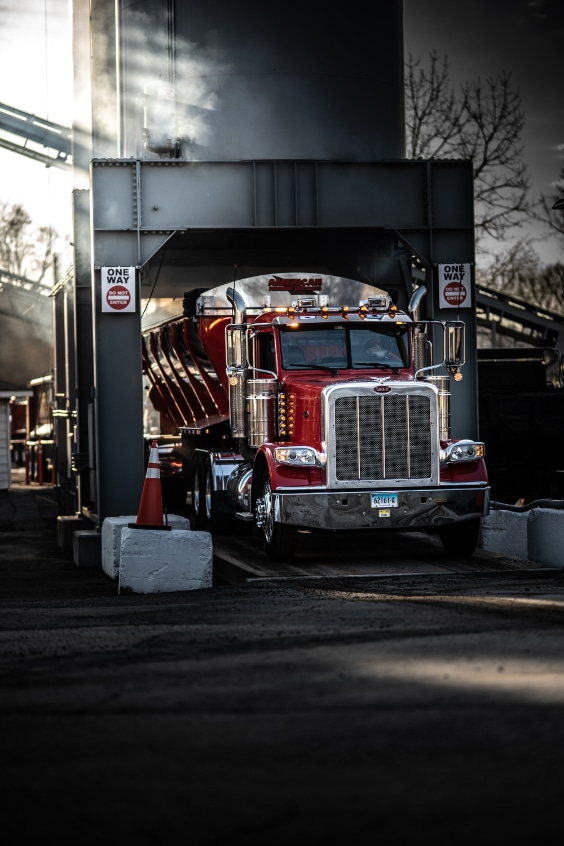
Stanley sees his relationship with his asphalt suppliers as a partnership.
2) Don’t Be “That Guy”
“That guy” is the one that shows up at the plant on any given day to buy mix without any warning. Nothing frustrates a plant operator more than someone rolling in with five trucks needing 100 tons of asphalt without so much as a heads-up.
Imagine this: the plant operator is already making Mix Design A when suddenly that guy shows up needing Mix Design B. The plant’s not very likely to change mix designs mid-morning for “that guy,” but if the operator does switch things up, chaos ensues. Do you really think the plant operator is going to want to clean out the silo and switch mix designs to handle a job they didn’t even know was coming?
Not only does this create a headache for the plant, but it also sets off a chain reaction of inefficiency that impacts every contractor going to that plant—not just “that guy.”
Suddenly, the day the plant operator told me would be quiet turns to chaos. There’s a huge line at the plant. The six trucks I scheduled aren’t enough. I’ve got 10 guys on the job waiting around for material. An eight-hour job just turned into a 12-hour grind. And, worst of all, the quality of the job is going to suffer.
This happens more than it should—especially during paving playoffs in late fall—and it’s entirely unnecessary. If the plant had known “that guy” was coming, they might have fired up earlier to get more mix ready. If I’d known, I might have scheduled extra trucks. Like I said: Don’t be “that guy.”
3) Adapt to Plant Conditions
If I know the wait time at the plant is three hours, I’m going to plan my passes differently.
Let’s say we have a parking lot broken up by islands into three sections. Maybe we complete Lot A and Lot B by 1 p.m. If the lines at the plant are long, I might not start Lot C even though we have a few hours of daylight left, because I might get my last load of the day at 2 p.m. and I don’t want a cold joint there. I might spend the rest of those daylight hours paving the loading docks behind the mall instead.
I use an app called Reveal to monitor my trucks, know where they are, and set our paving speed based on their ETAs.

4) Have a Plan in Case the Plant Breaks Down
I’ve got the plant on speed dial, but I also want the plant to have me on speed dial. If they break down, I want to know if they’ll be down for 30 minutes or the rest of the day. If the breakdown is likely to take awhile, we might head to another plant or we might use the mix we have left to button up the project the best we can and pick it up tomorrow when the plant’s back online.
We might change from paving right in front of the mall entrance, in the handicap stalls, or the fire lane to paving in a less conspicuous location like the back parking lot. It’s important that every job has someone on it who has enough experience to make this call, and quickly. I’m usually out on our projects, but if I’m ever in the office, I trust my guys on the ground to make a change when necessary.
5) Get the Right Material for the Job
Choosing the right asphalt mix is just as important as having enough trucks or a good paving plan. If I’ve tied up the plant with a big highway job, I can almost guarantee the driveway guys rolling in for mix that day will complain: “The mix was terrible!” The truth? The mix wasn’t terrible—it just wasn’t the right mix for their jobs (because it was the right mix for mine).
Sometimes I’m the guy tying up the plant with my mix design; sometimes I’m the guy stuck with whatever the plant’s making. This is another reason why communication with the plant is so important.
Recently, while working on waterline projects for the city of Danbury, I called my order in to the plant and they told me they’d be slammed making 1-inch Superpave for a highway project on the days I scheduled my waterline projects. Because I had called ahead, I was able to contact the city and delay opening the road until the Superpave work wrapped up, ensuring we’d get the right mix for the job.

6) Be Honest with Your Suppliers
Every winter, I sit down with my asphalt suppliers to review the past year and plan for the upcoming one. It’s a two-way street—we talk about how I can be a better customer and how they can be a better supplier. A lot of suppliers spend most of that meeting talking about price, but to me that’s much less important than quality and service.
Let’s talk a little about service. A plant might offer the lowest price in town, but if they’re not willing to fire up on a Saturday when I need mix, I’m going elsewhere. Being able to do the job when I need to do it is worth paying a little more.
We have one supplier in our area that just spent $50,000 on a new asphalt door [Bill, is this the same thing as the silo gate?] because he knows his customers roll in with nice, clean trucks and would like to keep it that way. Now, they don’t have to worry about anything from the silo dripping on their trucks. Talk about service!
Now, let’s talk about quality. A couple of years ago, I stopped buying from a plant that’s practically next door to my shop and instead started driving 20 miles out of my way to another supplier. The closer plant eventually reached out to ask why I’d stopped coming in. We set up a meeting and they started talking up their low prices, but my decision had nothing to do with their prices. I had to be honest and tell them what many area contractors had been talking about—their material had become stony, bony and cold. But none of the area contractors had talked to the plant about this complaint, so they had no idea what was wrong. They thanked me for my honesty.
What happened was Connecticut had switched to Superpave, which works great on highways, airports, etc., but it’s not great for driveways, parking lots or any jobs with hand work. So, those everyday contractors started going elsewhere so they could get mix they could rake easily. After we talked all this through, they brought me in to sit down with their QC staff and design a mix for contractors like me. I talked, they listened, and that year turned out to be one of their best ever because contractors like me started coming back to their plant.
If the material’s bad, I call the plant. But, I also call the plant when the material’s good. What plant operator doesn’t want to hear, “Joe, the mix is beautiful today. Keep doing what you’re doing!”
7) Be a Good Customer
Being a good customer starts with communication—but it doesn’t end there. Paying your bills on time is just as important.
One of the large asphalt suppliers I work with has a little internal system where they assign stars to every company that buys mix from them. The faster you pay your bills, the more stars you get by your name.
Why does this matter? Because when you call the plant and need a favor—a special mix, extended hours or Saturday production—having those stars by your name makes all the difference. If I’ve got $100,000 in unpaid bills sitting on their books, what are the chances they’ll jump at the opportunity to open the plant for me on a Saturday? Slim to none.
Remember at the beginning of this article when I said the plant is your partner? Well, a partnership is a two-way street. We need to pay them today so they can buy aggregate and AC to make asphalt for us tomorrow.
If I’m having the plant open on a Saturday or stay open late, you can bet I’m rewarding them with coffee, lunch or Raised on Blacktop swag.
Take care of the plant, and they’ll take care of you. Be communicative, be considerate, be honest and pay on time. Be prepared for long lines and breakdowns and plan accordingly. Know what type of mix you need for your job and speak up to get it.
Quality asphalt may start at the asphalt plant, but a quality pavement starts with you.
A Note for the Plant Folks
It’s important for plants to serve the needs of “everyday contractors” like me, not just the heavy highway contractors. The heavy highway contractor might buy 7,000 tons over a couple days, and those days will certainly be profitable for the plant. Maybe the plant gets a couple big projects like that each month—but who keeps the lights on at the plant between those jobs? It’s the contractors who come back to their plant day after day after day. There’s a tendency for large companies to forget the little guy, but there are a lot of us and together we mean big numbers.