
7 Habits of Highly Effective Safety Leadership
BY AsphaltPro Staff
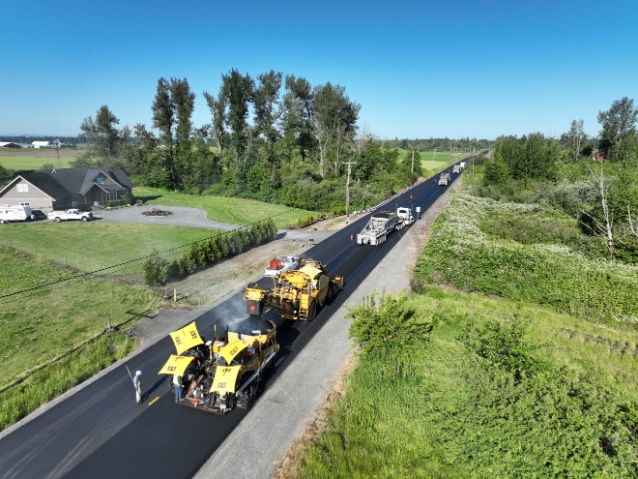
What does it take to be recognized as a leader in safety?
For Granite Construction, Watsonville, California, the answer lies in a commitment to continuous improvement and a culture that prioritizes safety across all levels of the organization. In 2024, Granite Construction was honored by the American Road & Transportation Builders Association (ARTBA) as the Grand Champion in the over 1 million personnel hours category of its Contractor Safety Awards.
“The judges were impressed with Granite’s empowerment of their workers to enhance safety on every work site, as well as its communicating safety concerns and solutions to its employees,” ARTBA wrote.
Let’s take a look at Granite’s award-winning approach to safety through these seven habits of highly effective safety leaders.

Granite crews participate in a search and rescue training program during Construction Safety Week. Granite Construction was a founding member of Construction Safety Week.
Safety leaders ensure employee buy-in from bottom to top.
Granite’s safety culture thrives on full organizational buy-in, from leadership to workers in the field. “From the C-suite to our craft professionals, everyone in our organization prioritizes the importance of both employee safety and motorist safety,” said Granite Senior Safety Manager Wendy Warner.
This is evidenced by Granite’s Craft Safety Connection concept, where employees from a variety of trades within the organization gather regionally each month to discuss events in the organization and provide feedback from the field.
“Craft Safety Connection is the platform through which our employees have a voice about the changes we’re making and can suggest changes themselves,” said Granite Corporate Compliance Safety Director Jesse Torres. “They usually know how to fix the issues they’re facing better than anyone.”
Another recent safety success story is the Granite Guard initiative, which introduced a minimum safety standard for small tools across the company. This includes a company webshop where Granite employees can select replacement equipment for their crews that has been thoroughly vetted to ensure it meets Granite’s safety standards for hand tools. Like the Craft Safety Connection, this initiative heavily relied on input from craft employees.
“In 2022, the equipment and safety departments came together to discuss the ongoing safety issue of lacerations on the construction site,” Torres said. Granite crews spent one year testing different tools and reporting their thoughts on various safety features. “Based on their experiences, we identified a group of tools—many from Milwaukee Tool—that have safety features our employees prefer, including dual handed triggers, rapid-stop features, anti-bind and auto-stop features, etc.”
In the future, Granite plans to expand Granite Guard to include a broader variety of hand tools, including plate compactors.
Granite was also recently recognized by the Associated General Contractors (AGC) of California with a Construction Safety Excellence Award (CSEA) with an award for general safety in the over 1 million personnel hours category, as well as an award for safety on a high-hazard project for its work on the BNSF Railway, San Bernardino Mt. Vernon Bridge Replacement Project.
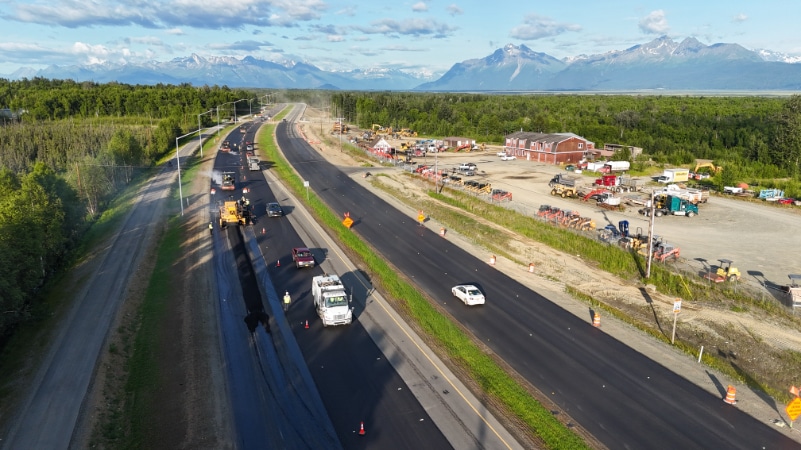
A Granite crew performs top lift paving on Knik-Goose Bay Road in Alaska.
Safety leaders prioritize safety beyond the safety team.
Safety is also a priority for all departments within Granite. “Safety isn’t just for the safety team,” Warner said. “It’s marketing, accounting, payroll. It’s everybody.”
For example, the marketing department is heavily involved in safety, producing safety-related content for daily toolbox talks as well as special initiatives such as Construction Safety Week.
“We put together videos with safety leaders across the company and got employees to write articles about specific safety efforts,” said Granite Marketing & Communications Manager Mark Philllips. “We’re constantly sharing safety messages through our social media posts, flyers that go out to our job sites, our quarterly employee magazine and more.”
Granite Construction Models Success with Intelligent Compaction
The benefits team is also involved in safety. In light of data showing high rates of suicide in the construction industry, Granite’s benefits team has expanded the company’s benefits package to include up to eight free and optional counseling and coaching sessions per year for each employee and covered family member through Spring Health.
Safety messages even come from the accounting team in the form of paycheck stuffers on safety subjects.
Granite plays an active role in promoting safety across the construction industry. The company was a founding member of Construction Safety Week in 2014 and continues to play a significant role in CSW each year. Granite employees also participate in the [Construction Industry Safety Initiative], where they regularly meet up with other construction companies to discuss safety topics. “It’s an opportunity for us to share what we’ve learned and push other companies to be better, and for them to share what they’ve learned and push us to be better,” Warner said.
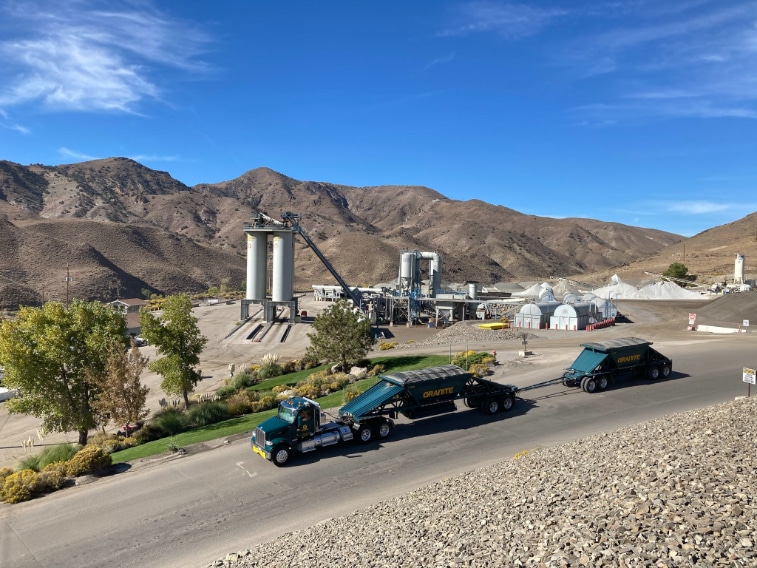
Granite’s Lockwood facility, pictured, is located near Reno, Nevada.
Safety leaders approach safety strategically.
“One of the most impactful initiatives was sitting down in 2018 to put together a safety strategic plan for the entire company,” Warner said. “That plan has allowed us to stay focused on our goals.”
The strategic planning process began by looking at the company’s safety data to identify areas of concern and opportunities for improvement. “We want to focus on leading indicators versus lagging indicators so we could be more proactive in our approach,” Warner said. To do so, the company utilized HCSS safety management software to record daily toolbox talks, employee observations, inspections, near misses, etc.
“All that data is captured, analyzed and organized into a scorecard of leading indicators and performance indicators,” Warner said. “Each region’s management team reviews their data with their frontline supervisors on a monthly basis to analyze and address those trends.”
Granite set a target to reduce its OSHA recordable incident rate from 1.07 in 2020 to 0.70 by 2023. Ultimately, Granite exceeded its target, achieving an OSHA recordable incident rate of 0.67 in 2023.
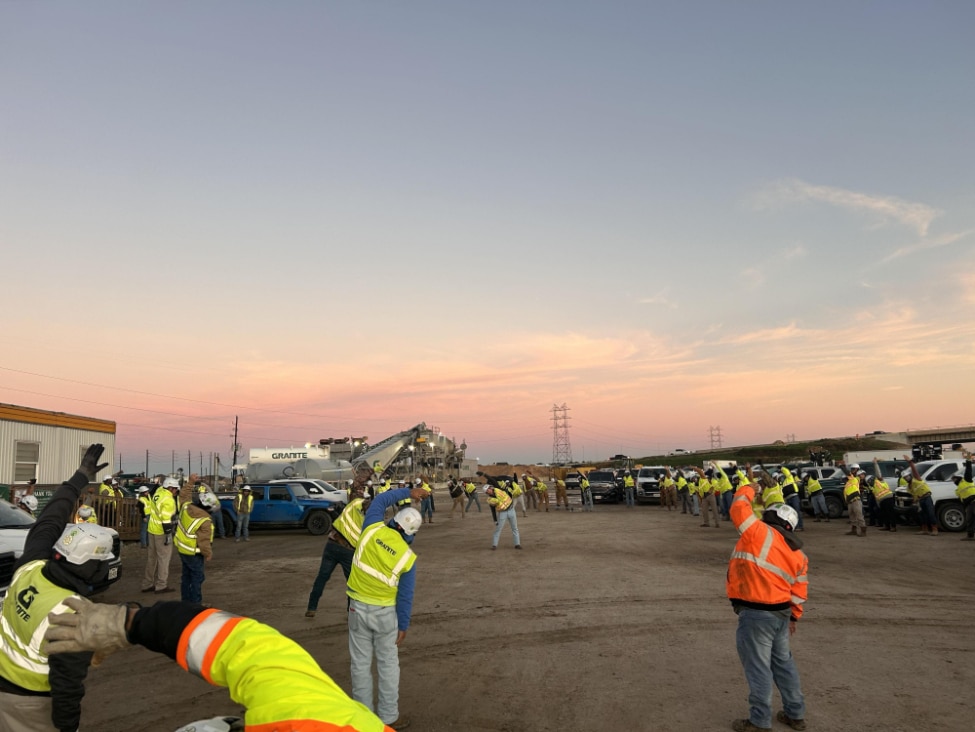
A Granite crew in Texas performs “Stretch and Flex” as part of its daily safety meeting.
Safety leaders make safety messages “stick.”
After reviewing historical safety data and discussing with employees, Granite was able to compile a list of activities with a high potential to cause employees harm. Rather than write and distribute this list, they decided to create a system that would stick with employees.
“We call it STCKY: Stuff that can kill you, other companies call it ‘High Energy Hazards,’” Torres said. “It’s not a new program, it’s just an enhancement of our existing program to keep it simpler than the usual 600-page Standard Operating Procedure rulebook.”
At the beginning of each shift, the crew meets for a toolbox talk and together identifies all the STCKY hazards on that day’s job site. “It’s a daily assessment of dangers,” Torres said. “The goal is to point out all the sticky hazards and discuss how they plan to handle them.”
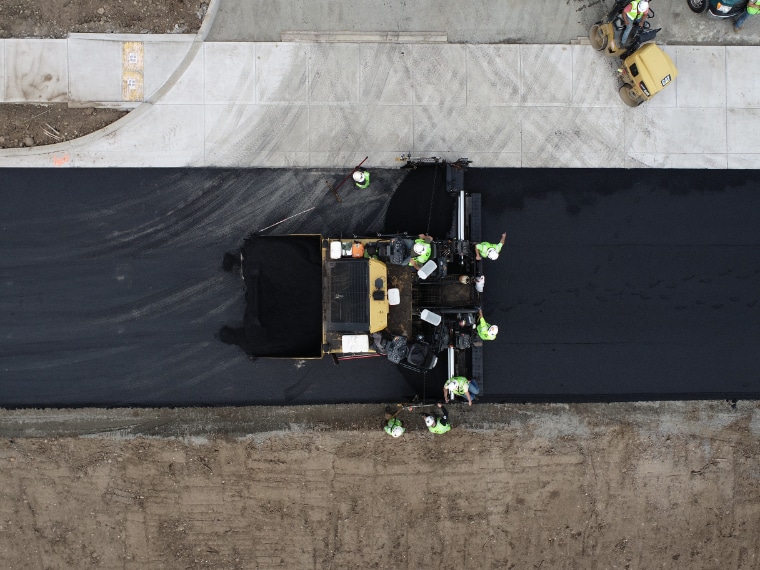
A Granite crew paves at a logistics center in the Pacific Northwest.
Safety leaders empower their employees.
Every employee on Granite’s crew has stop-work authority. Ensuring employees have the authority to speak up is one thing; Granite’s approach also prioritizes listening through its Speak Up, Listen Up initiative.
“That was a training module with Caterpillar Safety Services that we incorporated into our organization 10 years ago that continues to live on,” Torres said. “We want our employees to know they can speak up when they see something unsafe,” Torres said, “but also to listen when they’re getting feedback.”
Supervisors undergo training on the Speak Up, Listen Up initiative as part of Granite’s “robust supervisor training program,” Warner said, which includes training on Granite’s behavior-based safety approach. Behavior-based safety is an approach to workplace safety that focuses on observing, analyzing and modifying employee behavior for improved safety.
“Our supervisors are phenomenal at what they do, but they’re not trained public speakers,” Warner said. However, they are expected to lead toolbox talks at the start of each shift. That’s why Granite implemented Take 5 scorecards, where its safety professionals will go out in the field to provide feedback to supervisors on how to make their toolbox talks more effective and engaging.

A California-based Granite crew holds a “Take 5” meeting to discuss STCKY hazards.
Safety leaders don’t play the blame game when an incident occurs.
A few years ago, Granite changed the way it approached incidents. “We changed our process from one that was focused on fault-finding, where people felt as though the goal of the process was to get them in trouble, to a collaboration to figure out and fix the root cause,” Warner said. Instead of performing incident reviews, Granite now has a Collaborative Learning Event (CLE) after significant incidents. “That approach encourages people to come up with solutions rather than excuses.”
The difference between an incident review and a CLE, Torres said, is asking better questions. “All our safety leaders read the book Better Questions by Todd Conklin to try to get a picture of the full story, not just the event itself,” he added. “We’ve also done some micro learning training on the CLE process and how it’s more about helping each other versus blaming each other.”
Granite Guard, the webshop of safer hand tools, was an idea that began during a CLE.
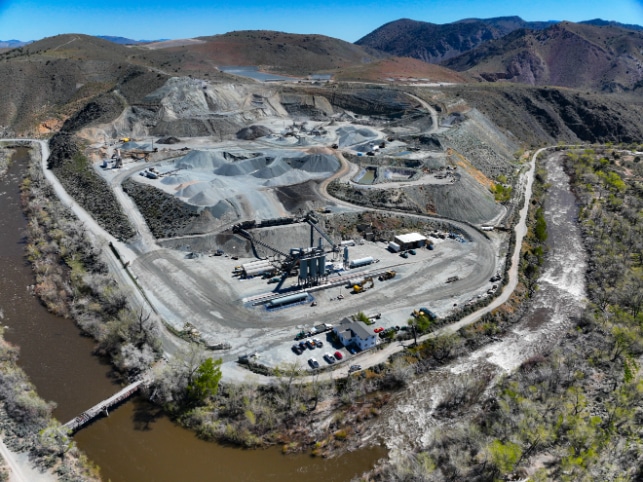
Granite’s Brunswick Canyon facility, pictured, is located near Carson City, Nevada.
Safety leaders evolve with the times.
“If I had to summarize Granite’s safety culture in one word, I’d choose ‘evolving’,” Warner said. “We are focused on continual improvement.”
Granite’s Construction Technology Team is heavily invested in trialing technology that can improve safety at the company. “Right now, they’re testing out various AI platforms that could assist with safety assessments and analyzing data,” Phillips said. “They’re looking at proximity sensors for work zone intrusions and about a dozen other cutting edge safety solutions.”
Investing in new technology is one part of it, but the other part of it is never remaining stagnant when improved safety is on the line. This approach is evident in Granite’s recent transition from hard hats to safety helmets for all its road construction crews.
“Hard hats haven’t been revamped in 50 years,” Warner said. “But, in that same period, football helmets have constantly changed and implemented new technology to reduce head injuries.” Unlike hard hats, helmets offer protection from side impacts and are more likely to remain on one’s head in the event of an accident.
Granite looked to its vertical construction crews, who had already been using helmets, for advice and best practices. They purchased some leading helmet options and let their heavy civil employees test them out. “We wanted to know how they fit, how they felt, does it stay on, is it too hot, too bulky,” Warner said.
“The idea to implement helmets was top-down, but we wanted the employees to have a say, too,” Torres added.
“We really tried to get the message across that this is an investment we’re making in our employees’ safety,” Torres said, adding that it wasn’t cheap at $100 per helmet times 10,000 employees. “But the brain is the most important part of our employees’ bodies, and it’s worth investing to protect them.”
Over the past 18 months, Granite has made an effort to identify women-specific PPE for its employees, “so women in the field can request PPE that actually fits them,” Warner said. This includes partnering with Zena Workwear so Granite’s employees can get a discount on the best steel-toed boots to fit their feet.
Granite Construction Makes Safety About Stories, Not Statistics
Good Habits Bring Big Honors
Ultimately, Granite hopes that its safety evolution will inspire other companies to take the next step in their safety journey. “I like to think that we’ve been able to positively influence work zone safety at a local and national level,” Warner said. “And I’m honored to have the opportunity to share some of the things that have worked for us at Granite.”