Protecting Workers from Fatigue-Induced Injuries

Fatigue monitoring devices offer solutions for safer, more efficient mining operations

Worker safety is one of the paramount concerns in the mining industry. Among the various threats faced by mining professionals, fatigue remains one of the most critical, often leading to accidents, decreased productivity and longer recovery times after injuries. As a result, the demand for mining fatigue monitoring systems has surged in recent years, as companies strive to ensure a safer and more efficient working environment.

The global mining fatigue monitoring market is expected to experience a robust compound annual growth rate (CAGR) of 10.1% from 2024 to 2031. This growth is projected to elevate the market value from US$ 1.4 billion in 2024 to US$ 2.8 billion by 2031.

This article explores the innovations and advancements in fatigue monitoring technology and how they are transforming the mining industry, driven by increasing awareness about safety and regulatory compliance.

Fatigue monitoring is becoming an integral part of this digital ecosystem, with systems that integrate seamlessly with other operational technologies such as fleet management systems and real-time asset tracking.

Prevent Injuries from Manual Materials Handling

The Need for Fatigue Monitoring Systems

Fatigue is a silent yet deadly force in the mining industry. Long working hours, harsh environmental conditions, and physically demanding tasks make miners particularly susceptible to fatigue. According to recent studies, fatigue is a major contributor to accidents in mining operations, impacting not only the health of workers but also the overall productivity of mining sites. Persistent fatigue among workers can lead to impaired judgment, slower reaction times and reduced decision-making capabilities.

This has prompted a growing interest in fatigue monitoring systems, designed to detect the early signs of fatigue in miners before they lead to accidents. These systems leverage cutting-edge technologies, such as wearable sensors, real-time data analytics and machine learning, to continuously monitor vital signs and cognitive functions. By doing so, they provide early warnings to management, allowing them to take proactive measures to prevent accidents and minimize downtime.

Calculate the Cost of Occupational Injuries & Illnesses with OSHA’s Safety Pays

Innovations in Fatigue Monitoring Technologies

The mining fatigue monitoring market has seen rapid advancements in technology over the past few years. Today, a variety of solutions are available to mine operators, ranging from wearable devices to in-vehicle monitoring systems. These devices measure a variety of physiological and behavioral indicators to assess fatigue levels in real time.

Wearable fatigue monitoring devices, such as smart helmets, wristbands and eye-tracking goggles, are among the most popular options in the industry. These wearables track heart rate variability, eye movement and body temperature, all of which are key indicators of fatigue. The data collected by these devices is sent to a central system, where it is analyzed to determine whether a worker is becoming fatigued. In some cases, workers are alerted in real time, giving them an opportunity to take a break before fatigue becomes a hazard.

Moreover, the use of machine learning algorithms is revolutionizing fatigue detection. These algorithms are trained to recognize subtle patterns in workers’ behavior that may indicate fatigue. By combining data from wearable devices with historical accident data and environmental conditions, these systems can provide more accurate predictions and even suggest the optimal times for breaks to ensure that workers remain alert throughout their shifts.

Be Prepared for Accidents and Injuries

Market Growth and Key Players

The demand for mining fatigue monitoring solutions is growing rapidly due to the increasing recognition of the dangers posed by fatigue in mining operations. Mining companies are becoming more proactive about worker safety, driven by stricter regulatory requirements and the need to reduce operational risks. This has led to a surge in the adoption of fatigue monitoring technologies, particularly in regions with large-scale mining operations such as North America, Australia and parts of Europe.

The market is also benefiting from the rising focus on digital transformation in the mining industry. Companies are increasingly adopting smart mining technologies, which use data analytics and automation to optimize operations. Fatigue monitoring is becoming an integral part of this digital ecosystem, with systems that integrate seamlessly with other operational technologies such as fleet management systems and real-time asset tracking.

Persistence Market Research forecasts steady growth in the mining fatigue monitoring market over the next several years. The market is expected to be driven by several factors, including increasing investments in safety technologies, growing regulatory pressures and the need for operational efficiency. The increasing availability of advanced wearable devices and their integration with mining equipment is also expected to fuel the market growth.

6 Tips to Prevent Simple Recordable Injuries Around the Plant

Regional Insights and Market Dynamics

The demand for mining fatigue monitoring systems is geographically diverse, with North America and Europe being key markets due to their strict safety regulations and advanced mining operations. In North America, mining companies are facing growing pressure to comply with occupational health and safety regulations, which has accelerated the adoption of fatigue management solutions. Additionally, the rising number of fatalities and injuries caused by fatigue in the region has created a strong market for these technologies.

In Australia, where mining is a critical industry, companies are also prioritizing worker safety, and fatigue monitoring systems are being deployed across many mining sites. The Australian government has also introduced new regulations, further driving the market for fatigue monitoring solutions. Meanwhile, in emerging markets such as Latin America and Asia-Pacific, the increasing expansion of the mining industry and a rising focus on safety are likely to lead to growing demand for fatigue monitoring systems.

Prevent Simple Recordable Injuries: Prevent Falls

Challenges and Future Outlook

While the mining fatigue monitoring market presents significant growth opportunities, there are also several challenges to overcome. One of the major obstacles is the high initial cost of implementing these systems, which can deter smaller mining companies from adopting them. Additionally, the need for extensive training and education to ensure that workers can effectively use fatigue monitoring devices adds to the cost and complexity of these systems.

Despite these challenges, the future outlook for the mining fatigue monitoring market is positive. Technological advancements, such as the development of more affordable and effective wearables, are expected to drive broader adoption. Moreover, the continued emphasis on health and safety, along with regulatory requirements, will likely push more mining companies to invest in these systems.

The mining fatigue monitoring market is poised for significant growth as industry leaders seek innovative solutions to improve worker safety and operational efficiency. With the introduction of advanced technologies such as wearable devices and machine learning algorithms, fatigue monitoring systems are becoming more effective at detecting early signs of fatigue and preventing accidents. As the industry embraces these solutions, mining operations will become safer, more efficient, and more sustainable, ultimately benefiting both workers and companies alike. Persistence Market Research anticipates strong growth in this market, driven by increasing investments in safety technologies and regulatory pressures aimed at reducing fatigue-related accidents.
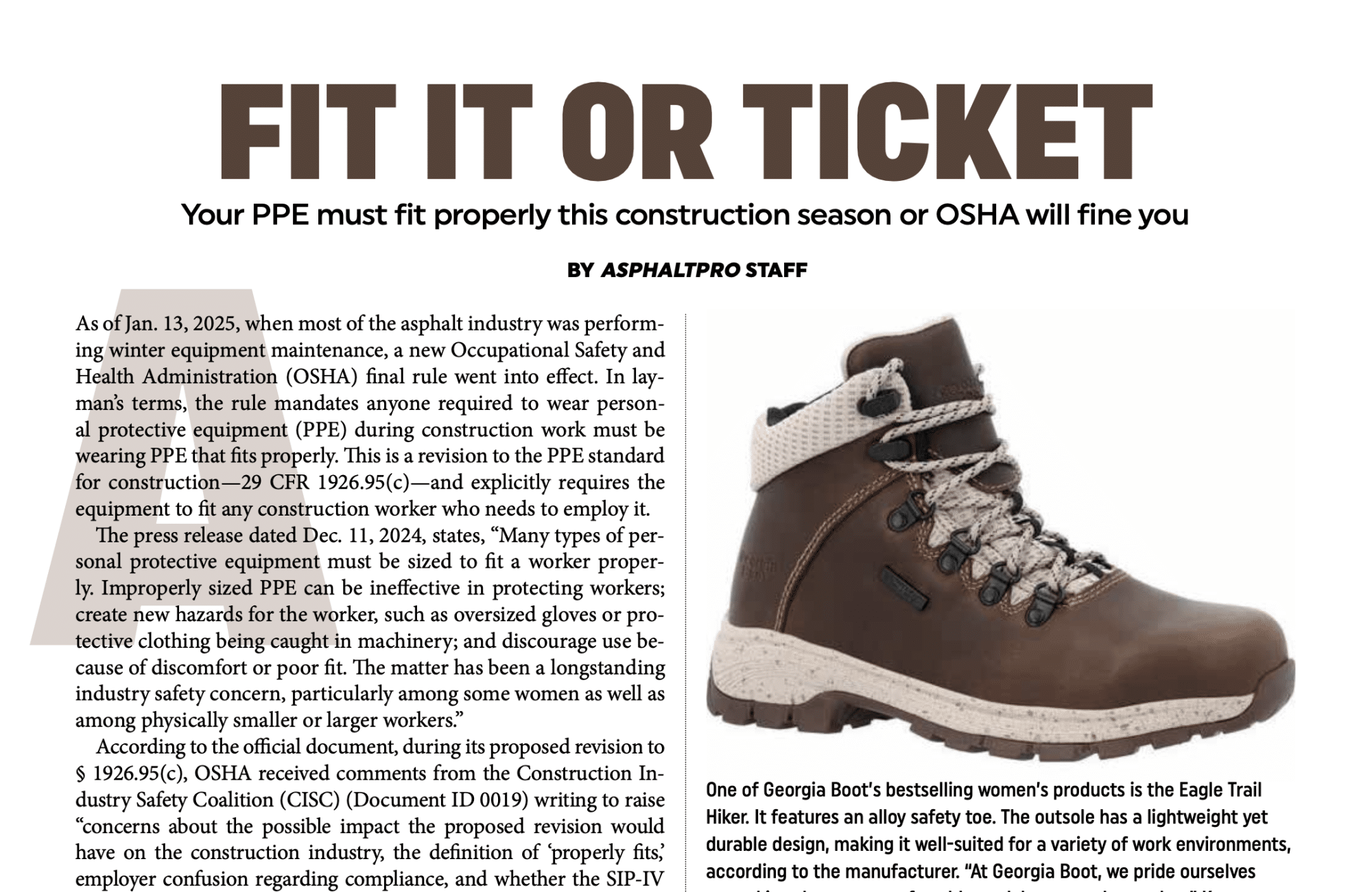
PPE Must Fit Properly (Or Else)

Ensure PPE fits workers properly this construction season or face OSHA fines

As of Jan. 13, 2025, when most of the asphalt industry was performing winter equipment maintenance, a new Occupational Safety and Health Administration (OSHA) final rule went into effect. In layman’s terms, the rule mandates anyone required to wear personal protective equipment (PPE) during construction work must be wearing PPE that fits properly. This is a revision to the PPE standard for construction—29 CFR 1926.95(c)—and explicitly requires the equipment to fit any construction worker who needs to employ it.

The press release dated Dec. 11, 2024, states, “Many types of personal protective equipment must be sized to fit a worker properly. Improperly sized PPE can be ineffective in protecting workers; create new hazards for the worker, such as oversized gloves or protective clothing being caught in machinery; and discourage use because of discomfort or poor fit. The matter has been a longstanding industry safety concern, particularly among some women as well as among physically smaller or larger workers.”

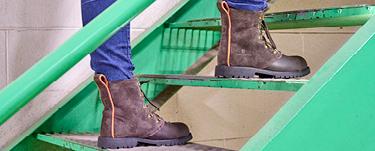
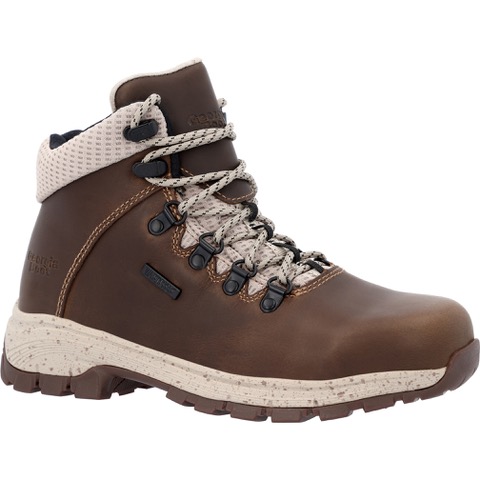
One of Georgia Boot’s bestselling women’s products is the Eagle Trail Hiker. It features an alloy safety toe. The outsole has a lightweight yet durable design, making it well-suited for a variety of work environments, according to the manufacturer. “At Georgia Boot, we pride ourselves on making the most comfortable work boots on the market,” Kasey LaCourse said. “We design each boot with comfort features like cushioned footbeds and different midsole technologies that absorb shock and reduce foot fatigue. Our women’s work boots fit the female foot better, offering improved arch support and a comfortable fit.”

According to the official document, during its proposed revision to § 1926.95(c), OSHA received comments from the Construction Industry Safety Coalition (CISC) (Document ID 0019) writing to raise “concerns about the possible impact the proposed revision would have on the construction industry, the definition of ‘properly fits,’ employer confusion regarding compliance, and whether the SIP-IV rulemaking was the appropriate means to revise the standard.”

AsphaltPro would like to focus on the concept OSHA spelled out, from CISC’s concerns, thus: “[t]he proposed revision does not simply clarify the standard, but ‘opens up construction employers to subjective standards of whether particular PPE fits properly and what steps employers must take to ensure that such PPE fits properly, particularly when most PPE does not come in exact sizing for employees’ (Document ID 0019). They added that, in many cases, whether PPE properly fits is subjective, and it would be difficult for employers in construction to assess PPE for many employees of varying sizes in every situation.”

How to Choose the Best Head Protection in 2025

One of the hallmarks of the asphalt industry, and the construction industry in general, is its innovative nature. In the asphalt community, original equipment manufacturers (OEMs) have worked side by side with contractors, associations and agencies to develop fume extraction and dust abatement devices ahead of safety regulations in the past

Anyone can see the common sense in ensuring a fall protection harness fits a worker properly, as an ill-fitting one could cause as much harm as no protection at all in the event of a slip or fall. Handing oversized work gloves to an employee who will be working near moving components could result in snagged fabric and ensuing damage to fingers or worse. Thus, accommodating differently sized workers with appropriate PPE shouldn’t be seen as a heavy lift but ensuring safety directors and other management know where to find it, how to distribute it to workers and so on, could be seen as problematic in an industry spread across an entire continent.

J. Keller and Juno Jones Collaborate to Provide Safety Footwear for Women in Construction

In addition to asking basic questions of local safety product suppliers, you could make this a topic of discussion at your next state asphalt pavement association (SAPA) meeting or lunch-and-learn program. Brainstorm resources with others who have found competitive pricing for the volume of safety devices you need. Think outside the box on what “properly fit” might mean for your team.

For example, in the Safety Spotlight column in our February issue, we shared the award-winning programs Granite Construction, Watsonville, California, has instituted for its teams, and spelled out how they moved from using hard hats to helmets with a focus on fit and comfort. Check out the article “7 Habits of Highly Effective Safety Leadership” from the February 2025 issue.

Kokosing Saves with Lone Worker Solution

The focus on fit and comfort is not only important for ensuring PPE can do its job but is also important for ensuring the worker uses it. Kasey LaCourse, the senior director of product development for Georgia Boot, said, “When work boots are comfortable, they promote consistent wear, which ensures that the boots provide the protection they are meant to offer.”

LaCourse provided: “All Georgia Boots in our product offering that feature a safety toe comply with OSHA regulations for impact and compression protection. Georgia Boot offers a variety of safety toe styles, including composite, steel and alloy options. Regardless of the material used for the toe, all of these boots meet the ASTM F2413 protective toe classification and the ASTM F2413 electrical hazard standard.”

From head to toe, getting the PPE sized properly for the worker is the first step in ensuring the worker uses it and complies with the new OSHA rule revision.

How to Choose the Best Head Protection in 2025

Hard hats have been worn since their invention in the early 1900s, with regulations requiring their use in the U.S. since the 1960s. Although the concept of head protection remains the same, the variety of solutions and our industry’s collective safety knowledge have grown.

To better understand the state of head protection, J. J. Keller & Associates, Inc., a provider of safety and compliance solutions, and the International Safety Equipment Association (ISEA) conducted a study on head protection practices and challenges. Its results were released in a report titled “A Turning Point for Head Protection.”

“The first step towards achieving this goal is to understand the challenges and usage patterns of safety professionals and head protection users,” said Bob Larsen, vice president of Research & Development with J. J. Keller. “We believe that the findings of this study will inspire meaningful discussions among regulators, safety professionals and industry experts, and ultimately contribute to enhanced worker safety and well-being.”

Let’s take a look at how to apply the study’s key findings to better protect your employees.

J. Keller and Juno Jones Collaborate to Provide Safety Footwear for Women in Construction

1) Understand the Terminology

Do you know the difference between hard hats and safety helmets, between Type I and Type II, between ANSI/ISEA Z89.1 and EN 397? While the variety of solutions illustrate important improvements in safety, this can also create confusion.

Hard hats are rigid protective helmets designed to shield the head from falling objects and impacts, while helmets provide enhanced protection against impacts, penetration and electrical hazards. Type I protects against vertical impacts while Type II offers protection from both vertical and lateral impacts.

ANSI/ISEA Z89.1 is a standard primarily used in the U.S. and focuses on industrial hard hats and helmets for a wide range of construction and general industry applications, while EN 397 is the European standard for industrial helmets.

79% of respondents know the difference between hard hats and helmets

61% know the difference between Type I and Type II

58% know the difference between ANSI/ISEA Z89.1 and EN 12492

Wear Safety on your Sleeve with Scan-Link

2) Choose the Right Protection

“While the growing variety of head protection options provides greater choice, it has also introduced some confusion for safety professionals and workers,” said Cam Mackey, president and CEO of ISEA. Nine out of 10 respondents said they find it challenging to select and implement head protection.

Of the 20% of respondents who reported an employee head injury within the past year, more than half of all injuries occurred when the employee was wearing head protection, citing the wrong protection being worn for the hazard involved and improper fit as the reasons.

The study reminds us that you can’t simply look at a piece of head protection and know the level of protection it offers, recommending to read the label to know if it’s best suited for the job at hand. “Distributors, suppliers, industry associations and third-party experts and consultants can all offer valuable information and support,” said Ray Chishti, senior EHS editor at J. J. Keller.

Chishti reminds us that head protection is not a “one size fits all” approach. “Instead, it’s important for employers to conduct a job hazard analysis and/or a personal protective equipment (PPE) assessment to determine which style of head protection is best for their workers.”

Hands-Free Construction Headsets Improve Crew Communication

3) Get Workers to Wear Them

In less than half of reported head injuries, the employee wasn’t wearing head protection.

On average, the study reports that safety professionals believe employees are wearing head protection correctly 75% of the time. In fact, only 15% of respondents said they thought head protection was being worn correctly 100% of the time.

“We give them the PPE, but I cannot stand there every day and force them to put it on,” reported one respondent. “Employees at times feel that where they are working hard hats are not necessarily needed,” reported another.

Finding head protection that’s comfortable for all workers and fits employees properly has been a challenge for safety managers, despite the variety of head protection options. “Effective protection requires wearing protective headgear correctly,” said Robin Marth, J. J. Keller EHS editor. “It must be worn appropriately, fit comfortably and be adjusted to the wearer’s head size and shape.”

“Workers complain about [head protection] being hot,” reported one respondent, and they are not alone. “Due to the hot climate, employees take off the hard hats to feel more comfortable,” said another. In fact, when respondents were asked about future innovations for head protection, 47% reported a self-cooling feature to be “very valuable.” Better impact and rotational protection followed close behind, followed by UV protection, built-in hearing protection and ambient air quality monitoring for silica dust.

Stay Cool During Summer Paving

4) Take Care of Your PPE

According to the study, only 54% of safety managers train workers how to maintain their head protection. The study reminds us that headgear should be inspected every day for cracks (even  hairline cracks), dents and wear. Any head protection that’s cracked or looks chalky or dull should be discarded.

You should also check the condition of the suspension system and look for torn cradle straps, broken sewing lines, loose rivets, defective lugs and other defects, repairing any issues or replacing the headgear.

The study also stresses the importance of washing head protection, especially the sweatbands and cradles, on a monthly basis with warm, soapy water and rinsing thoroughly. Sweatbands should be replaced, if needed.

You should also avoid painting or using stickers on your headgear, the study said, adding that paint contains solvents that may affect headgear and stickers can obscure cracks and damage. “OSHA allows stickers only if the manufacturer approves or if the employer proves the adhesive does not impact helmet reliability,” says the study.

How Seriously Does the New Crew Take Safety in the Work Zone?

Conclusion

“A head injury not only can impair an employee for life, but it can also be fatal,” Marth said, adding that in 2021-2022 nearly 96,000 private sector workers nationwide experienced an occupational head injury resulting in days away from work, job restriction or transfer. “The use of PPE… is essential in preventing head-related injuries.”

With the data from this study, J. J. Keller and ISEA “hope to inspire discussion that will further clarify effective head protection practices to keep workers safe and at home with their loved ones at the end of every shift,” Larsen said. “A critical first step toward that end is discovering what safety professionals and those who use head protection understand, where confusion lies, how they are using head protection and what challenges they face.”

J. Keller and Juno Jones Collaborate to Provide Safety Footwear for Women in Construction

Women and men in construction have form-fitting options in safety footwear from new collaboration

J. Keller & Associates, Inc., Neenah, Wisconsin, announced in August a strategic collaboration with Juno Jones Safety Boots, Philadelphia. This alliance aims to elevate workplace safety and comfort for workers across various industries.

Juno Jones makes award-winning safety footwear by working people, for working people. Founders Emily and Ryan Soloby, with roots in the trucking and footwear industries, created Juno Jones after they noticed a gap in the safety footwear market around issues of inclusivity. The brand launched with women’s footwear made especially for female foot measurements and style, and its viral popularity quickly grew the brand to include men’s durable safety footwear built for all day comfort.

Juno Jones Safety Boots has won the National Safety Council Award as a safety shoe company.

“The combination of Juno Jones, with roots in trucking and adjacent industries, and J. J. Keller & Associates, Inc., serving the safety needs of these industries, was a natural fit,” said Juno Jones CFO Ryan Soloby. “We look forward to helping J. J. Keller’s customers stay safe and comfortable, even when they’re on their feet all day.”

J. Keller and Juno Jones have teamed up to offer safe footwear options for women in construction, as well as men in our industry.

J. Keller, a family-owned company, has served the safety market since 1953, with a purpose of protecting people and the businesses they run. Today, the company serves more than 500,000 companies across North America, who rely on J. J. Keller’s expertise to safeguard workers, reduce risk and build operational confidence.

“At J. J. Keller, we’ve conducted studies on the challenges of finding safe, well-fitting PPE in women’s sizing, and it is clearly a challenge for those working every day on job sites and those who purchase PPE for their companies,” said Lisa Karpinski, executive vice president of marketing at J. J. Keller. “We were inspired by Juno Jones’ focus on inclusivity in safety footwear. And we’re excited to offer both the Juno Jones women’s and men’s lines.”

In addition to the new Juno Jones boots, J. J. Keller offers a wide selection of quality, comfortable personal protective equipment under its proprietary SAFEGEAR®️ line of PPE. SAFEGEAR offerings include high-visibility apparel and accessories; safety gloves; hard hats and helmets; safety glasses and goggles; and hearing protection, in both traditional and women’s sizing.

You can shop J. J. Keller and Associates’ products, including the new Juno Jones line, at www.jjkeller.com. To learn more about Juno Jones and its mission of diversity in safety, go to www.junojones.com.

6 OSHA Training Tips

We know Occupational Safety and Health Administration (OSHA) 10-hour and 30-hour training programs are set up as keystones for ensuring the safety and well-being of employees across various industries. The asphalt industry, like others, employs safety managers who ensure OSHA rules and regs are implemented correctly—among myriad other elements of an asphalt company’s safety culture. This month, we’re fortunate to hear from Elis Enano, a safety professional with six years of experience in both construction and manufacturing industries. She writes about OSHA compliance, safety standards, training procedures and other matters relevant to workplace safety and accident prevention. In the safety training realm, she has seen room for improvement.

Photo by Adam Birkett on Unsplash

“As a safety professional, I have observed many common mistakes that reduce the efficacy of workplace safety training programs,” she wrote.

She provided six areas to focus on when trying to educate your teams on safety and accident prevention:

  • Customization;
  • Comprehensiveness;
  • Presentation;
  • Interactive Learning;
  • Resource Availability; and
  • Reinforcement

Let’s take a quick look at each of these areas to see how Enano recommends improvement for your OSHA safety training in your asphalt operation.

Use a customized training approach

Enano suggests performing a needs assessment to pinpoint any gaps between existing and desired levels of knowledge, skills and attitudes about safety. If you fail to perform a comprehensive needs assessment before developing your training program, you could be wasting time and resources on topics not relevant to your team or overlooking areas your team needs help with.

“During my time in the field, I’ve observed managers, under pressure to meet tight deadlines, rushing through the needs assessment phase,” she shared. “Since the assessment creates the foundation of the training, the hasty approach resulted in training programs that missed out on many nuanced safety issues that were crucial for effective safety training….it is essential to analyze workplace hazards, risks, regulations, and performance metrics while engaging employees and stakeholders to identify their learning requisites and preferences.”

Common Mistakes to Avoid During an OSHA Inspection

Cover it all

Comprehensive training coverage in OSHA training means you’re addressing all mandatory topics and relevant aspects of workplace safety. Enano reminds us this includes covering a wide range of subjects such as hazard identification, emergency procedures, equipment use and regulatory compliance specific to the asphalt industry.

It’s how you say it

Different people learn in different ways, which makes your presentation “technique” crucial for communicating safety information to employees. By using engaging methods such as visual aids, interactive activities, and real-life examples, trainers have a better chance of conveying information to workers and helping them understand and retain it.

“Unfortunately, many trainers miss out on case studies and interactive techniques and create presentations that cannot keep the students engaged,” Enano wrote. “In my experience, the best training sessions are those where the trainer converses with the students instead of simply bombarding them with information.”

She also stresses the importance of providing plenty of time for a Q&A session during OSHA training. “Overall, mastering effective presentation techniques is essential for delivering impactful OSHA training that promotes a culture of safety in the workplace.”

OSHA’s On-Site Consultation Program, Explained

Get workers active in learning

As part of your presentation, consider how interactive you can make the training experience. This goes above and beyond an interactive Q&A session. The concept of interactive learning integration in OSHA training is designed to enhance learning for workers. You want to get everyone more engaged for a deeper understanding and to retain more information—have group discussions and exercises, include simulations, incorporate hands-on demonstrations.

Give them access to resources

It may seem obvious, but you want to make sure you provide access to resources and tools for effective learning. This includes safety manuals and reference materials but also includes personal protective equipment (PPE) and emergency response resources.

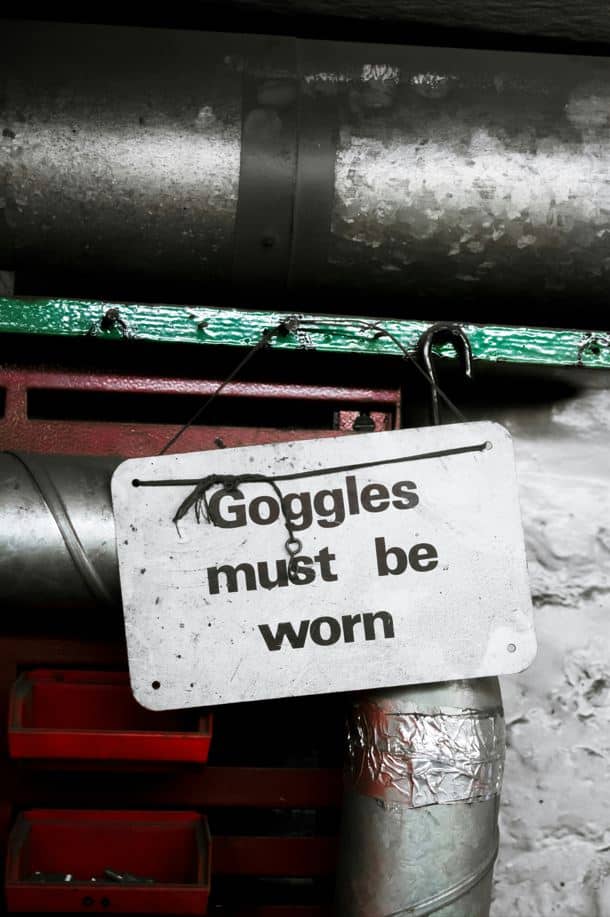
“In one of the sessions that I observed, the trainer overlooked ensuring that each participant had access to the required safety gear, such as gloves, goggles and helmets,” Enano shared. “This resulted in a disjointed and incomplete training experience.”

You want to prioritize training in a space with adequate space, lighting and equipment to facilitate learning and skill development.

New Online Portal Simplifies Application Process for OSHA’s Voluntary Protection Programs

Follow up for safety success

Don’t forget to reinforce workplace safety training with follow-up measures—such as consistent feedback, practical application, acknowledging workers’ achievements—post-training. If you fail to reinforce training, workers can forget new safety skills or revert to old, unsafe habits.

Through the six tips sketched here, you can improve your OSHA and other safety training programs to foster a safer work environment. Your effective training methods can cultivate a safety culture where all workers are equipped with the knowledge, skills and attitudes they need.


Enano would like to provide these important external sources for the audience as references:

https://www.oshaoutreachcourses.com/blog/health-hazards-and-the-importance-of-osha-training/

https://www.osha.gov/

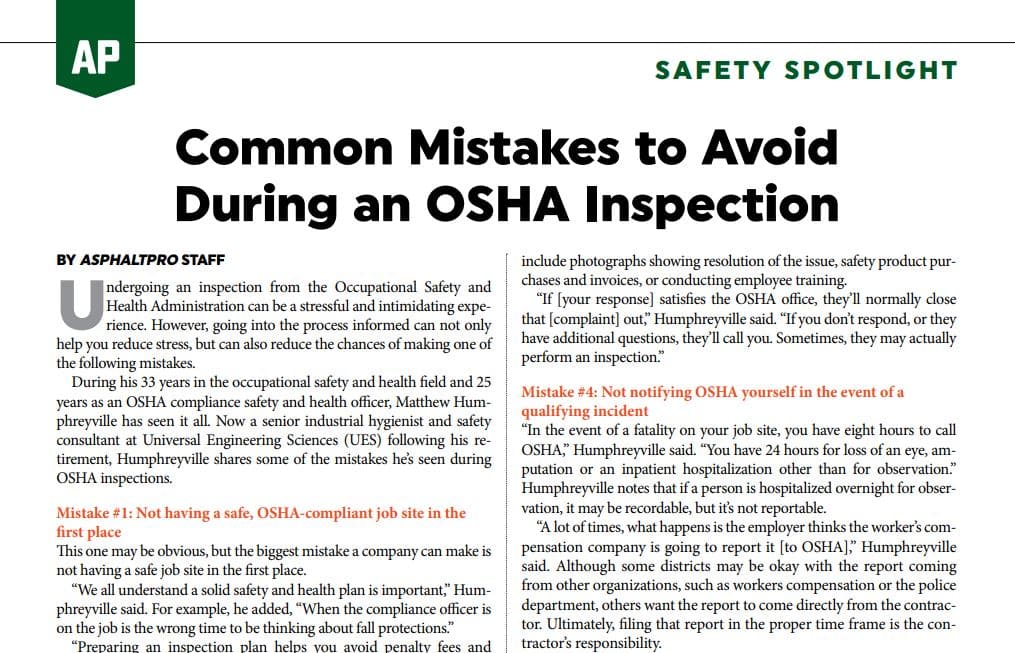
Common Mistakes to Avoid During an OSHA Inspection

Undergoing an inspection from the Occupational Safety and Health Administration can be a stressful and intimidating experience. However, going into the process informed can not only help you reduce stress, but can also reduce the chances of making one of the following mistakes.

During his 33 years in the occupational safety and health field and 25 years as an OSHA compliance safety and health officer, Matthew Humphreyville has seen it all. Now a senior industrial hygienist and safety consultant at Universal Engineering Sciences (UES) following his retirement, Humphreyville shares some of the mistakes he’s seen during OSHA inspections.

Mistake #1: Not having a safe, OSHA-compliant job site in the first place

This one may be obvious, but the biggest mistake a company can make is not having a safe job site in the first place.

“We all understand a solid safety and health plan is important,” Humphreyville said. For example, he added, “When the compliance officer is on the job is the wrong time to be thinking about fall protections.”

“Preparing an inspection plan helps you avoid penalty fees and abatement costs into the thousands of dollars,” Humphreyville said. In the example of fall protection, the gear, the procedures, and training should be purchased, discussed and implemented long before OSHA shows up. “The capital costs can be high getting these things figured out up front, but in the long term, you’re going to save yourself money,” he added.

Use OSHA’s NEP to Keep Workers from Overheating

Mistake #2: Not understanding what prompts an OSHA inspection

“A lot of people believe an inspector can just drive down the road, pick out a site, drive in there and do an inspection,” Humphreyville said. “But that’s not legal. If [an inspector] does that, you need to call their department on it.”

Reasons for an OSHA inspection include catastrophes, fatalities, complaints, referrals from other government agencies and program inspections for construction.

Under the plain view doctrine, a compliance officer can also cite any imminent dangers he or she may see. For example, if an officer is driving down the street and sees a 20-foot trench with type C soil with water in the bottom, spalling off the side, the spoil pile right on the side and three guys inside, Humphreyville said the officer can stop and inspect the site. “The plain view doctrine means that if I see a hazard not related to my inspection, I can start investigating that hazard,” he said.

Mistake #3: Not resolving citations by pre-inspection, when possible

When OSHA receives a report of a lower risk hazard, Humphreyville said OSHA may not send out an inspector. Instead, they might call, fax or email the employer to let them know they’ve received a complaint.

“They give [the employer] five working days to look into the issue and reply with a written response,” Humphreyville said. Some of the information that may be helpful in resolving a complaint without an inspection include photographs showing resolution of the issue, safety product purchases and invoices, or conducting employee training.

“If [your response] satisfies the OSHA office, they’ll normally close that [complaint] out,” Humphreyville said. “If you don’t respond, or they have additional questions, they’ll call you. Sometimes, they may actually perform an inspection.”

Mistake #4: Not notifying OSHA yourself in the event of a qualifying incident

“In the event of a fatality on your job site, you have eight hours to call OSHA,” Humphreyville said. “You have 24 hours for loss of an eye, amputation or an inpatient hospitalization other than for observation.” Humphreyville notes that if a person is hospitalized overnight for observation, it may be recordable, but it’s not reportable.

“A lot of times, what happens is the employer thinks the worker’s compensation company is going to report it [to OSHA],” Humphreyville said. Although some districts may be okay with the report coming from other organizations, such as workers compensation or the police department, others want the report to come directly from the contractor. Ultimately, filing that report in the proper time frame is the contractor’s responsibility.

Mistake #5: Not establishing a point of contact within your company to work with OSHA

“You should always have a point of contact with the company to deal with OSHA,” Humphreyville said. “I don’t know how many times I walked onto a site, introduced myself to the foreman, and they didn’t know who to call.”

When that would happen, he would usually suggest calling the person’s direct boss. “But instead of me walking that person through what I think is best, the company should have that process in place.”

The OSHA contact point should have information on the company’s safety program, injury/illness prevention program, the company’s safety manual, hazardous assessments, PPE requirements, logs, equipment records, daily inspection reports and the like. “You don’t have to give all this to the compliance officer right off the bat, but you should have them ready in case they ask for it,” Humphreyville said.

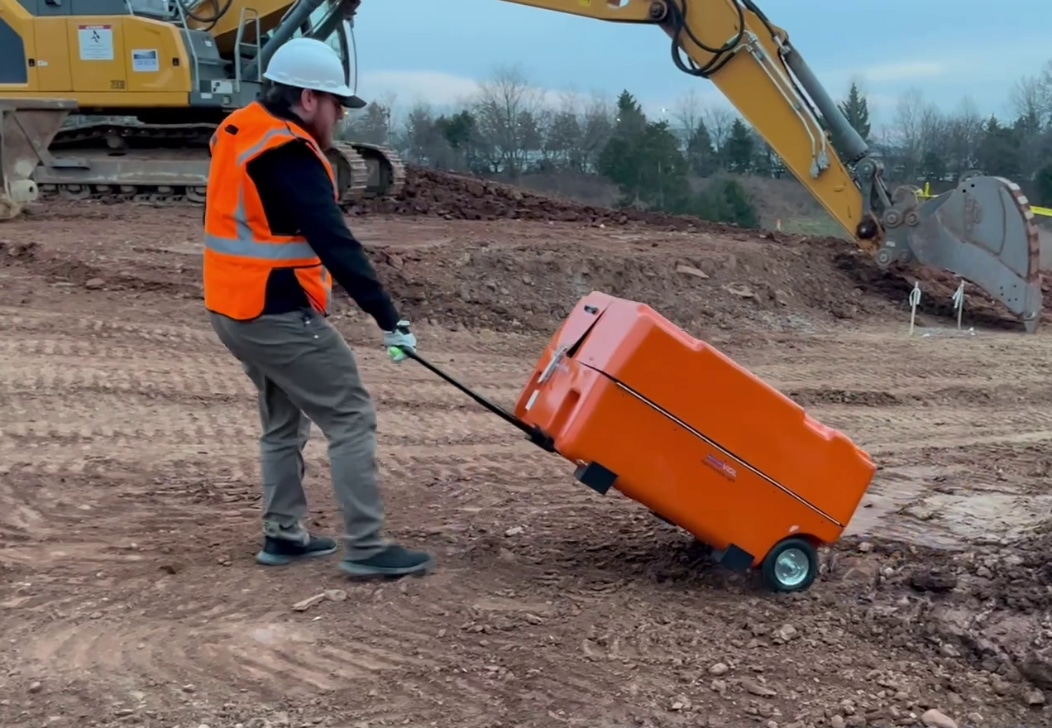
Each ALED unit is 75 pounds, so it can be transported in a pickup truck bed and rolled like a suitcase to where it’s needed.

Mistake #6: Not knowing your rights when OSHA shows up at your job site

“The first thing [an OSHA compliance officer] is supposed to do when they show up to your site is show you their credentials,” Humphreyville said. “They should also be able to tell you why they’re there. Always ask the reason for the visit.”

Humphreyville also recommends checking the officer’s paperwork during the opening conference to ensure the address listed is actually your address. It’s not unheard of for officers to show up at the wrong address; if you don’t check, you may undergo an unnecessary inspection. “It’s incumbent on you to ask those questions, to verify these things when they get there, to know your rights,” Humphreyville said. “They aren’t going to get mad at you; they expect you to ask questions.”

During the opening conference, the officer should provide you with a copy of any complaints and review the employer’s rights, including the right to refuse entry. Although Humphreyville was only refused entry once in his career, it is the employer’s right. In that event, he said OSHA must be granted a warrant before returning for the inspection, which can take anywhere from a few days to a few weeks.

“I don’t recommend this because, in the inspector’s mind, they’ll wonder why you’re refusing them,” Humphreyville said. Although officers aren’t supposed to treat a company differently, he said refusing entry could cast suspicion in the officer’s mind. “They might look a little closer than they normally would.”

During the opening conference, the officer will ask basic questions about the company, including number of employees, management structure, contact information and similar details. “They may ask if there’s a union representation, because the union has a right to be a part of [the inspection], either in the same opening conference or in a separate opening conference,” Humphreyville said.

Mistake #7: Being a jerk to the compliance officer

“Be respectful and courteous,” Humphreyville said. “Even if they’re a nitwit or act like a cop who wants to flex their muscles, just be professional. If you have a problem with a compliance officer, you can always take it up with the area office.”

Calculate the Cost of Occupational Injuries & Illnesses with OSHA’s Safety Pays

Mistake #8: Not following proper safety procedures during the inspection walk-around

Humphreyville said the officer may conduct a walk-around, if necessary. During the walk-around, be sure to wear the appropriate PPE and ensure the OSHA representative also has the appropriate PPE. “You want to show some initiative here,” he said.

If the compliance officer sees something during the walk-around, Humphreyville recommends taking some kind of immediate corrective action if possible. For example, taking the machine in question out of service.

Mistake #9: Not taking your own photos and notes during the inspection

“As the walk around occurs, if the [compliance officer] takes a picture, I recommend you take the same picture,” Humphreyville said. If they write down an issue, you should write it down, too, he continued.

Mistake #10: Giving the compliance officer more information than requested

“Don’t offer information unless the compliance officer requests it,” Humphreyville said. “Don’t be evasive and don’t lie, but don’t roll out the red carpet and start throwing information at them.”

Although it’s an obvious mistake to lie during an OSHA inspection, Humphreyville said the types of actions that are most likely to result in a criminal review include mail fraud, lying to investigators or sending false documents. “Those are the types of cases that tend to get picked up by the Department of Justice,” Humphreyville said.

There’s also some information you aren’t required to supply. For example, a copy of your incident report. Although this was something Humphreyville always asked for, he added that “the investigator is supposed to investigate that on his own. The reason I asked for it was I wanted to see what internal processes [a company] has in place to investigate these events for future improvement.”

Furthermore, Humphreyville stressed the importance of providing the officer with copies of any documentation you supply. “Don’t ever give them your original.”

Keep OSHA Away with Less Dusty Pavement Repair

Mistake #11: Not understanding your employees’ rights

According to Humphreyville, OSHA now performs employee interviews at almost every inspection. During these interviews, the officer will ask employees questions, write down his or her answers, and request that the worker sign his or her statement.

“Employees have the right to talk to the [compliance officer],” Humphreyville said. “They can request to talk to them and the employer cannot refuse the employee’s request.” If an employee cannot speak English but wants to speak to the officer, OSHA will get an interpreter.

If an employee brings up issues beyond the scope of the investigation, Humphreyville added, the officer is supposed to focus on the specific inspection. However, any additional information provided may be featured in the report or may instigate a separate complaint.

On the other hand, employees also have the right to refuse to talk to OSHA. They also don’t have to sign their statement if they don’t want to. Humphreyville said he’s seen some employers’ lawyers advise them never to sign a statement or even read it. “[These attorneys] look at [the statement] as if it’s notes on the conversation,” he said.

Humphreyville said it’s also relatively common for employers to try to oversee employee interviews. Although some employees may agree to this, he adds that the employee has the right to talk to OSHA by themselves or have their own designated representative with them.

“When you cross the line into management personnel, then you can have a company representative in there,” Humphreyville said.

Mistake #12: Not asking questions during the closing conference

After the inspection is concluded, the compliance officer is supposed to hold a closing conference. Humphreyville said this is an ideal time to ask any questions and request an abbreviated version of what they’ve found.

“I’d also ask if they think they’ll need to come back for more interviews, more walk-arounds, etc.” Humphreyville said, to get an idea of what’s to come. He said this also provides a time to review citations and even to request that serious citations be reduced to other than serious. “Sometimes that’s a way to settle [disputes],” Humphreyville said.

Mistake #13: Not following proper procedure in the event of a citation

“When you get a citation, you’re supposed to post that for employees to view,” he said, for three days or until the hazard is abated.

“Failure to abate is when you don’t abate a violation; a violation repeat is when you fix the violation but it reoccurs,” Humphreyville said, adding that OSHA can cite you for a repeat on a different standard so long as it’s closely related to the original citation.

New Online Portal Simplifies Application Process for OSHA’s Voluntary Protection Programs

Mistake #14: Promising corrective measures you can’t deliver on

In the event of OSHA proposing corrective measures, Humphreyville said it’s acceptable to request more time to research potential solutions “so long as it’s in good faith.”

“Take the time to look into solutions, to research them, to see if that’s really something you’re going to be able to do,” Humphreyville said. “You don’t want to tell OSHA something and then have to backtrack.”

Mistake #15: Not going above and beyond OSHA’s standards when necessary to maximize employees’ safety

“Remember, OSHA standards are minimal safety standards,” Humphreyville reminds us. There may be safety best practices above and beyond OSHA’s requirements, including state or local standards or even requirements from the general contractor on the job.

“OSHA can’t cite you for [breaking] an employer’s rule,” he said. For example, if a GC requires hardhats on a site where OSHA doesn’t require them and a subcontractor doesn’t follow the GC’s rule, that is not an OSHA issue. But, it may still be necessary to improve safety on that particular job site.

And we should all be doing our best to maximize employee safety—not only to avoid OSHA citations, but because it is the right thing to do.