C.W. Roberts Contracting Inc. Grows Innovation in Central Florida

Founded in 1976, C.W. Roberts Contracting Inc. (CWR), in Florida, specializes in asphalt paving. The company was acquired by Construction Partners Inc. (CPI) in 2001 and now operates as a wholly owned subsidiary of CPI with one terminal and 10 asphalt plants throughout South and Northwest Florida. That tenth plant started full production Dec. 19, 2022.

Bob Flowers, the president of CWR, explained the catalyst for setting up a tenth plant in the Rick Scott Industrial Park in Sumter County. “CWR has provided asphalt production services to Central Florida for nearly two decades. With a new facility strategically located near rail infrastructure, this division is now best positioned to meet the ever-growing demands of its customers for years to come. This state-of-the-art production facility is designed with robust capabilities and sustainability in mind, giving us the capability to deliver asphalt products of the highest quality.”

Plant Manager James Moller explained they started taking delivery of the plant June 2022. The grand opening was Nov. 15. “We did tentative testing in November of 2022 with great success,” Moller said. Full production began Dec. 19.

CWR also performs asphalt paving, milling, excavation, embankment, storm drain, stabilization, aggregate base, curb, sidewalk, grassing, signs, signals, and striping. CWR has successfully completed design-build projects with Florida Department of Transportation, U.S. Army Corp of Engineers and local counties. While asphalt paving is their specialty, CWR offers a variety of services, including:

  • highway and road construction;
  • residential and commercial sitework;
  • airport construction;
  • military base construction; and
  • parking lot and driveway construction/renovations.

“The Florida construction market provides a wealth of opportunity for growth and expansion for CWR, and we are eager to leverage it with our full roster of services,” Flowers said.

Hybrid Plant Increases D-Squared Growth

In fact, the Associated Builders and Contractors (ABC) announced in December, Florida is the top state for the fourth year in a row for construction in its Building America: The Merit Shop Scorecard, which rates state laws, programs, policies and statistics in the seven categories of project labor agreements, prevailing wage laws, right-to-work laws, public-private partnerships, workforce development, career and technical education, and job growth rate.

“We provide solutions to customers spanning a broad range of projects and contracts, including municipalities, commercial constructions, and government contracts,” Flowers said. “It is through this effort that we have been able to make a meaningful impact in the infrastructural landscape across Florida. CWR is proud to take part in helping build strong communities while connecting the citizens of Florida.”

While CWR is committed to building communities and being an active part of the Florida citizenry, management focuses in-house, as well. The company has five core values that they believe are critical to the success of company, employees and customers.

  • Safety—Safety is a top priority to ensure everyone goes home safe at the end of the day and night.
  • Quality—CWR team members pride themselves on delivering unparalleled asphalt material to every job.
  • Customer Satisfaction—The team consistently strives to exceed client expectations, seeing customers choose to work with the company time and time again.
  • Productivity—Members of the CWR team work effectively and efficiently, using cost-effective solutions to save clients money.
  • Management Information Systems—Management endeavors for accountability and ongoing performance assessment. As each department strives for continuous improvement, they employ the latest technology to produce quality results.

Marion County’s Gerald Hickman (at left), and CWR Project Manager Billy Joiner (not pictured), led the audience in blessing the new facility and its team. Area Manager Stuart Savoy (center) and President Bob Flowers also addressed the crowd to share their optimism for the new facility and its environmentally friendly attributes.

The safety core value listed above brought an award to the table in 2017. That year, CWR was awarded the Fleet Safety Award by the Florida Trucking Association. The company has also developed a safety committee—which is led by the president and safety director—which meets quarterly and includes representatives from all levels of the team. The CWR safety management team performs daily safety meetings and job hazard analysis reviews for each project, as well as tracks all near misses and accidents. They measure and analyze trends to continuously improve safety at CWR. CWR’s leadership team meets with its partners once a year for a two-day safety summit for continued training education and to share ideas and best practices.

Employee training is vital for maintaining a culture of safety on every project site. CWR provides its employees with the appropriate tools to keep themselves and others safe by offering continuous task/hazard-specific training both in the field and in formal meetings and seminars. New employees go through a safety orientation and training prior to entering the field. They train employees and give them the autonomy to stop work on a job if they see an unsafe working condition. Once a year, they shut down all operations and provide all employees with safety training specific to the type of work they perform.

Grade Foreman Zachariah Ashcraft (on the left) and Grading Superintendent Cody Skelton (on the right) share in the festivities of the grand opening Nov. 15.

The core value of management information systems is used to assess performance and excellence throughout the company. “At CWR, we pride ourselves on our performance-driven culture, which we refer to as ‘keeping score,’” Flowers shared. “To ensure this is done effectively, staying up to date with the best Management Information Systems (MIS) available is essential. We are continuously investing in initiatives and using IT-powered data solutions to enhance our operations and provide accurate results. As a result, by putting an emphasis on measuring our performance, keeping score allows us to remain ahead of the competition and meet our goals consistently.”

To help meet such goals, a new asphalt plant would need to have innovations and technologies that fit the CWR culture.

“At our company, we recognized the need for improved production capabilities and energy efficiency to remain competitive and move forward in our industry,” Flowers said. “To that end, we identified specific goals such as raising production levels, increasing utilization of reclaimed asphalt pavement (RAP), updating the design of our burners, enhancing combustion efficiency, and integrating all plant components via plant controls. Several of these strategies lead to broader impacts including reducing our environmental footprint. We are making great strides toward each objective by implementing cutting-edge strategies and technologies to create value for our stakeholders and ensure long-term success.”

This lattice boom crawler crane, manufactured by American Cranes, is at least 30 years old, so the operator was innovative in setting up some air conditioning during the summer 2022 work season.

James Moller, the plant manager who has been with CWR for 14 years, shared some of the technologies that are keeping their environmental footprint low: “The ASTEC Whisper Jet burner provides a clean-burning solution to the plant, relying on natural gas for an efficient and low emission output. WMA is an option, and it is something we are looking into for future production.” He explained that educating other contractors in the past has been one challenge to implementing WMA previously.

“CWR is committed to understanding the environmental footprint of its products and practices. Through technology and training, we’re always looking for ways to make our work more sustainable, whether it’s building roads that are more resilient to weather events or using recycled materials that help us create a more sustainable future. As a proud sponsor of NAPA’s Road Forward initiative and a committed EPA Energy Star Partner, CWR is proud to be the leader in this initiative, committed to setting the standard for other businesses to follow.”

Moller explained they make mix for both customers and their own crews at a pretty even ratio. “Realistically, the last three to four years, we were typically about 50/50; intercompany and outside sales.”

Astec M-Pack Relocatable Plant Offers Quick Setup

Moller also spoke of the technologies keeping production optimum. “By leveraging modern technology, our plant professionals can tailor our new plant’s specifications to meet the unique demands of production.

“We have remote monitoring. We have Fleet Watcher for the loadout system and Team Viewer for the plant’s blending system. We can remotely keep track of how the plant is running its production and help with any necessary troubleshooting. Our facility is equipped with a state-of-the-art lab, providing our team and clients access to the latest in modern equipment.”

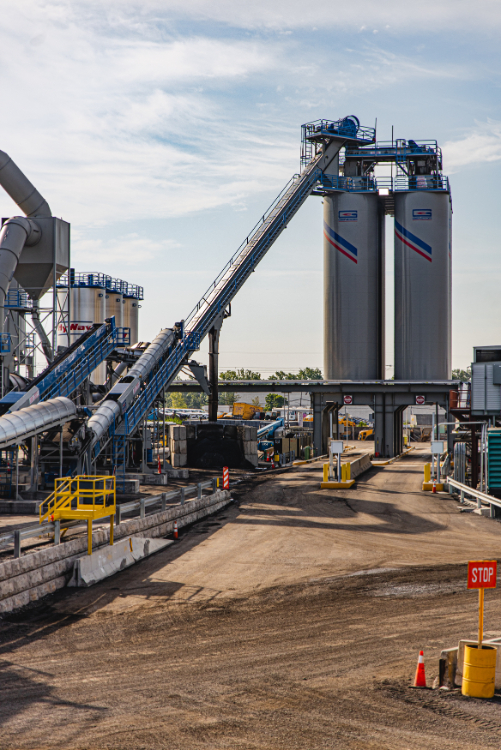
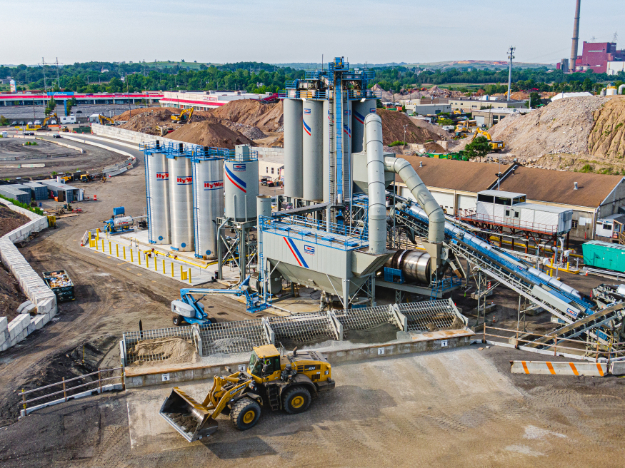
At the opening of the new 400 TPH Astec plant, Flowers shared with the attendees that the new facility has “a lot of” features that match up to CWR’s sustainability initiatives, including high capacity for recycle, electric heat, a long drum for running recycle mix with virgin material, the Astec Whisper Jet burner, and so on. “We’ve got more rail infrastructure coming in here,” Flowers told the crowd. “We’ll be bringing all our aggregate in by rail here in the next 12 months or so. That right there is a money saver as well as more energy efficient.”

You can see a video of the day from the Asphalt Contractors Association of Florida (ACAF) at this link: https://youtu.be/MgXpLol2mgU

Flowers shared that the gentlemen offering invocations and blessings at the ceremony were Gerald Hickman, with Marion County, and Billy Joiner, a project manager for CWR.

Update Your Plant for Spring Startup

“As we gathered at the new asphalt plant, our hearts were filled with anticipation and excitement,” Flowers said. “Billy Joiner, our project manager, stepped forward to lead us in prayer. It was a moment of great unity that infused everyone with positive energy and sense of purpose. Together, we formed a strong bond and laid the foundation for a successful endeavor as we began on this new journey.”

As CWR dives into the 2023 season with a new plant up and running in Central Florida, they’re poised to serve customers trending southward in Florida. The new journey is off to an environmentally friendly start with the technologies Flowers highlighted for the audience enjoying the grand opening in November and with the infrastructure to come.


The 2023 Construction Hike for Hope takes place April 15 in five cities (and counting) in Florida. CWR Contracting is one of the first companies that joined the roster to participate in the fundraising event to raise awareness of the epidemic of suicide in the construction industry and to help save lives.

“To raise awareness about the concerning levels of suicide in the construction industry, CWR Contracting is proud to join Vince Hafeli’s Construction Hike for Hope event with American Foundation for Suicide Prevention,” CWR President Bob Flowers said. “Together, we endeavor on a mission not only to be informed and prevent these tragedies but also to support those who have been affected by mental health issues that may lead up to this point. As an organization dedicated to protecting our over 1,000 employees’ well-being, CWR stands firm against any risk at hand; together let us make it count! Join us on Saturday, April 15, at 10 a.m. CST as we demonstrate solidarity at St. Andrew State Park in Panama City Florida.”

For more information on participating or becoming a sponsor, visit https://supporting.afsp.org/index.cfm?fuseaction=donorDrive.event&eventID=8868.
Super Asphalt Expands Asphalt Production South

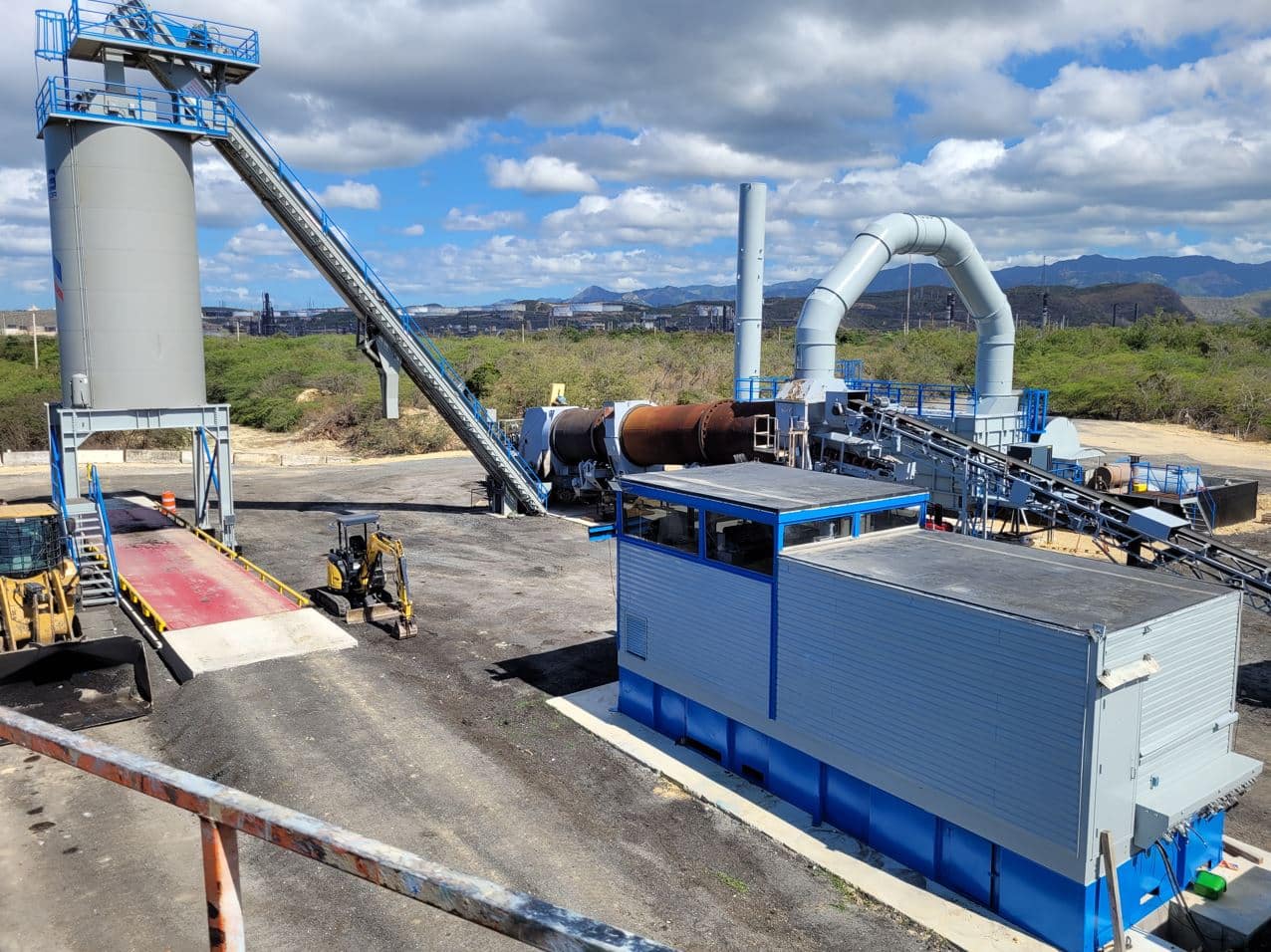
By combining used and new plant equipment, Super Asphalt has expanded its Puerto Rican asphalt production business to the southernmost part of the island.

Miguel Suria, Super Asphalt’s operation manager, has been with the company from the beginning in 1999. Under his guidance, the island-based asphalt producer has grown to seven plants in the past 23 years. Suria came to Super Asphalt with a wealth of plant knowledge and experience. Over the years, he has often recommended that Super Asphalt purchase gently used equipment to meet their needs. For this plant project, Reliable Asphalt Products had a plant that met Super Asphalt’s requirements.

Miguel Suria is proud of the latest Super Asphalt plant. Photos courtesy of Reliable Asphalt Products

Mike Mauzy, co-owner of Reliable Asphalt Products, has worked with Super Asphalt in the past so he was familiar with their requirements. “As I was seeing customers, I had in the back of my mind the need for a plant to go to Puerto Rico. Once I saw this plant, I felt like Super Asphalt would like it too.”

The plant combined components from several manufacturers. It was equipped with a Cedarapids E-300 counterflow drum, a portable Madsen baghouse, a set of portable cold feed bins and a portable HyWay tank. The plant also had a silo system with more storage than Super Asphalt required.

Suria mentioned, “We didn’t need more than one silo, so we bought a new silo system instead of paying for the freight to move the system to Puerto Rico.”

Even though this plant was not complete, the components that were available met the needs of Super Asphalt. Suria travelled to inspect the equipment shortly after Mauzy sent him the pictures and information. “The equipment was good, and the price was good,” so Super Asphalt proceeded to purchase it.

Reliable Asphalt Products worked with the previous owner to dismantle the equipment and prepare it for shipment. Reliable also acquired another plant nearby and when Suria was in the states inspecting the equipment, he also inspected the other site and utilized some of that equipment for this plant.

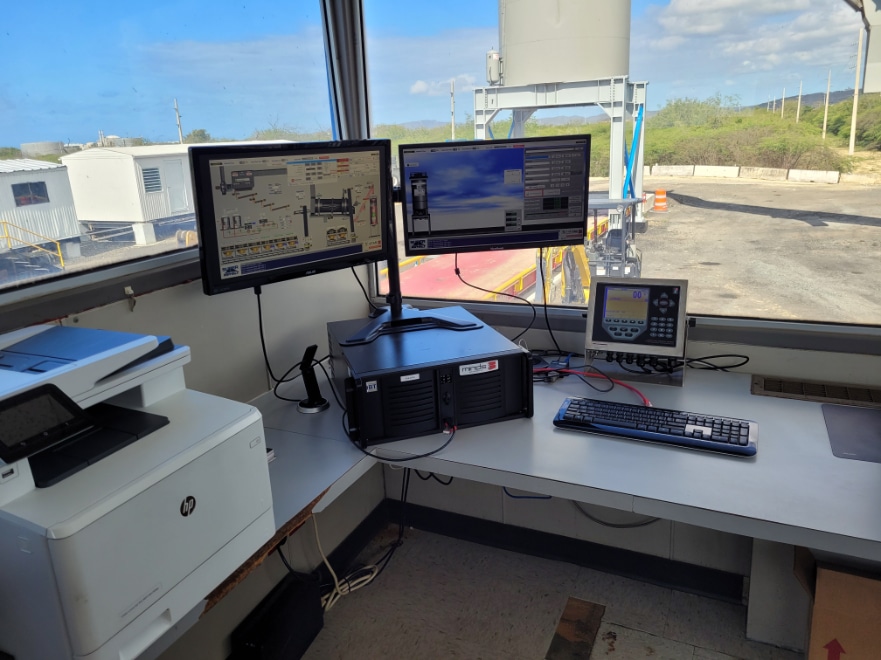
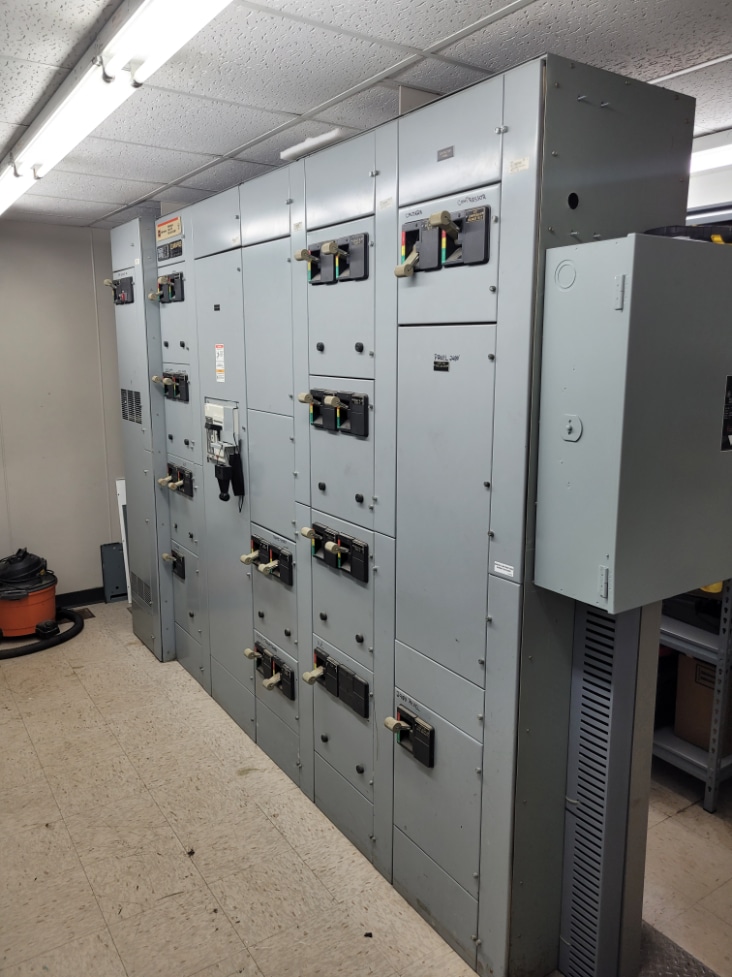
Reliable Asphalt Products located the used control house with a complete motor control center for the team. Miguel Suria is an electrical engineer and took care of installing the MINDS plant automation for the plant.

Reliable assisted Super Asphalt by getting the equipment to the Port of Jacksonsville. From there, Super Asphalt utilized its in-house ocean bound freight specialist to get the equipment shipped to the island. When Suria was asked how hard it is to get equipment from the states to the island, he responded, “It’s not difficult at all, but expensive.”

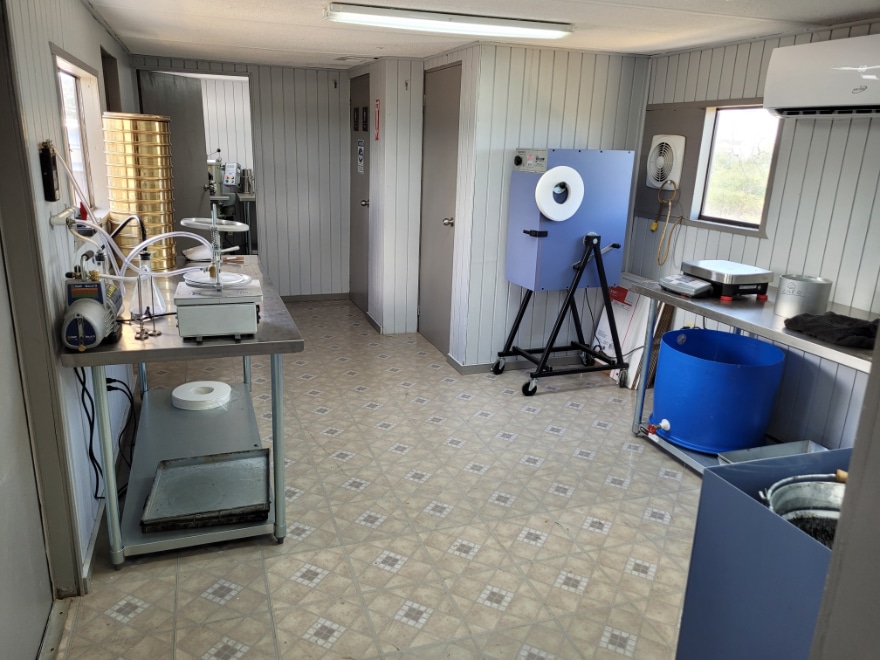
Super Asphalt has two complete labs on site. According to Suria, one is for his company, and the other is for the Puerto Rico Highway Authority’s use.

Although the plant was nearly complete and in Puerto Rico, the facility still needed a control house with motor control center, a hot oil heater and plant automation. Super Asphalt and Mauzy worked together to complete the plant.

Reliable Asphalt Products located a used control house with a complete motor control center shortly after the rest of the components were shipped to the island.

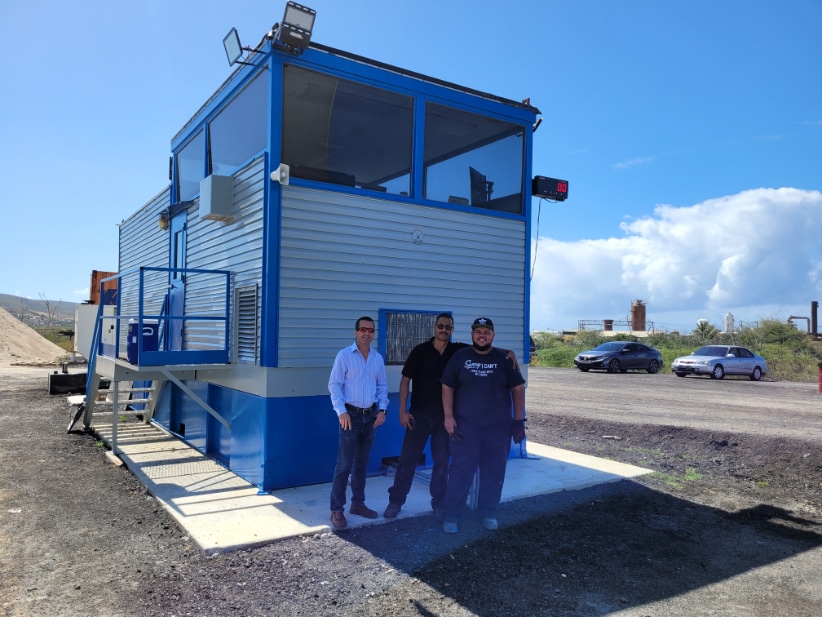
From left to right, Miguel Suria, Eduardo Enchautegui, Rawand Perez

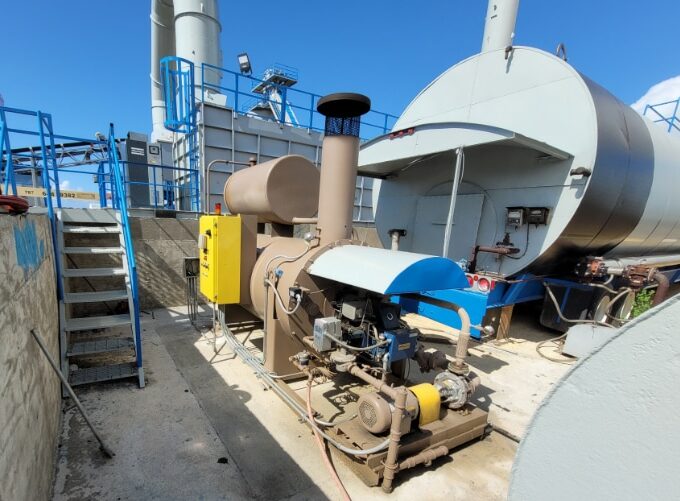
“The used control house that Reliable found for us was an excellent option. I did not inspect it myself but got a good report from Reliable and this has worked out really well,” Suria said. Upon Reliable’s recommendation, Super Asphalt elected to purchase a MINDS automation system for this plant. Reliable also supplied Super Asphalt with a reconditioned hot oil heater to complete the plant. Although it is not currently equipped with a RAP system, there are plans to install a RAP system in the future, according to Suria.

Once the plant arrived in Puerto Rico, Super Asphalt began the permitting process. As is the case many times, this took longer than expected. Their site was prepared; however, the plant was not allowed to be erected until the permit was secured. Upon securing the permit, Suria, along with the team of Eduardo Enchautegui, plant superintendent, and Rawand Perez, plant operator, began the process of erecting the plant at the Penuelas, Puerto Rico, site.

Because these components were sourced from several locations and included some new components, installation of a plant like this can be tricky. In order to meet the permit requirements, Super Asphalt had to install two complete labs on site. According to Suria, “One is for us, and the other is for the Puerto Rico Highway Authority.”

Among his many talents, Suria is an electrical engineer. He installed the MINDS plant automation. Once he completed the plant and automation installation, Len Newton, Reliable Asphalt Products’ leading automation technician, arrived to commission the plant. According to Newton, “Miguel did an excellent job installing the MINDS system. Because of his good work, we were able to commission the plant in a very short time.”

The plant was installed very close to Super Asphalts’ liquid AC supplier and close to the job site that justified this plant purchase. After a cross country plant move, ocean bound shipping and a lengthy permitting process, Super Asphalt’s latest plant is in full operation. “Even though this is partly used, with the controls and the hard work of all those involved, we have something that we can be very proud of,” stated Suria.

Three Tips for Successful Plant Calibration

Our asphalt plants produce many thousands of tons of asphalt each year, with few breaks in the action available during the peak season. Moving hard, dusty, and abrasive materials like virgin aggregates and reclaimed asphalt pavement (RAP) through a plant takes its toll on your equipment. Things naturally will change and move over time. It’s inevitable. Therefore, it is important to ensure your plant is calibrated properly to produce the consistent, quality product you are after. A well-executed calibration process not only saves you time, but it can also draw your focus to areas of your plant that need attention or items that need to be replaced. Before you start up your plant for the season (or shut down for routine maintenance in warmer climates) here are a few calibration tips to help keep your plant operating efficiently and effectively.

Check your virgin aggregate and weighbridge alignment.

It becomes an enormous, if not almost impossible task, to get a well calibrated and “dialed-in” plant if we aren’t certain our virgin aggregate and RAP weighbridges are in proper alignment. These weighbridges are the primary determining factor of a successful plant calibration and achieving your desired results.

Always start here and give this critical area an adequate amount of your time and focus.

Make sure to complete the work on your weighbridges before you start tackling your liquid asphalt cement (AC) flow calibration procedures. If you don’t, you may find yourself revisiting and reworking things on your plant and performing calibration procedures more times than you care to.

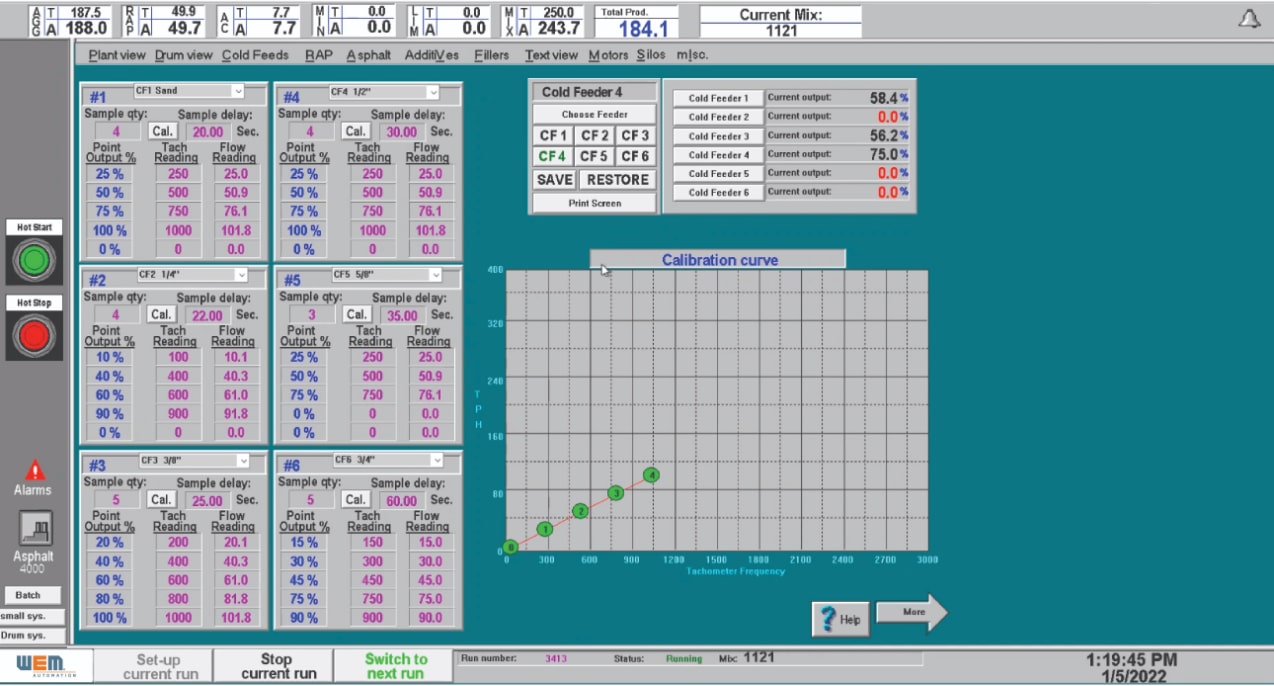
This image shows an example of four plot/test points on a calibration graph in the desired linear fashion.

Always make sure of your weighbridge zero values and calibration accuracy before chasing AC variances in production. Remember, all other materials and setpoints rely upon aggregate weighbridge accuracy.

At times, verifying that your idler roller alignment is within acceptable tolerances on your weighbridges can seem a bit tedious, but it is essential. Even a variation of 1/16 of an inch beyond the recommended settings can have a significant impact on proper flow and the composition of aggregate material reaching the drum.

Check for significant belt movement or your belt tracking from side to side as material goes up the belt. If you see this, it can be an indication you have a weighbridge alignment issue. A belt that lacks proper alignment, or isn’t trained properly, will not allow for an accurate reading by your loadcell(s). As we all know, bad or inaccurate loadcell readings equate to mix that is not made to your desired specifications.

How to Hack-proof Asphalt Plant Controls

Without getting too far into the weeds or specifics here on alignment procedures, the original equipment manufacturer (OEM) for your equipment should be able to provide you detailed, step-by-step instructions on the process of proper idler alignment for the specific model you use. If you don’t already have it readily available, we strongly recommend you contact them and get a copy of these instructions sent your way. There are also some good videos and tutorials available online if you are up for a little search.

Make sure your calibration points end up in a linear fashion on your graph.

Now it is time to get out your ruler and start to fine-tune those graph skills. When completing your calibration graph, it is recommended to use a minimum of three calibration points, although four is preferable (points 0 – 4).

All points on your graph should line up with your zero (initial) point. As long as your points on the line are within a pixel or two you are in good shape. Your midpoint reading should represent your typical running range (tons/hour) for the plant. Otherwise, your calibration could be off without you knowing it. We can’t stress enough that it is important to insure you have a linear line on your calibration graph. A non-linear line could indicate you have a loadcell or belt alignment issue, which we discussed above. Don’t settle for anything but a straight line.

During operation, if your cold feed’s gate opening runs off by as little as 1/8 of an inch from its previous setting, it can make a significant difference on the flow rate of a bin. Your numbers will reflect that—and not in a good way. Double-check and recalibrate as necessary.

Calibrate your bins.

When starting with the calibration of your virgin aggregate and RAP bins, you must maintain a consistent material bed depth throughout the process. Why? Changes in the bed depth on your belt, of course, mean a different aggregate flow rate. Thus, achieving an accurate, consistent measurement during the bin calibration process will elude you if material bed depth varies.

As an example, when you move or adjust your bin gate opening, your flow rate changes, so you will need to recalibrate your bin at that new opening level.

As a side note, at times, during the season, you may find a need to open up a gate and clear out a large piece of material or obstruction in a bin. Even if you mark the gate opening setting and “put the gate back to where it was,” you will want to recalibrate that bin, generally at the end of your run. Why should you recalibrate? If your gate opening is off even by as little as 1/8 of an inch from its previous setting, (which is hard to see and can be the width of your reference mark), it can make a significant difference on the flow rate of a bin and your numbers will reflect that accordingly.

5 Ways to Improve Asphalt Plant Control

Another important point regarding this part of the process is to check and verify your material no-flow indicators are all in place and functioning properly. These indicators play a very important role in ensuring a proper matrix of aggregate (versus just the proper amount of aggregate) reaches the weighbridge and your drum mixer.

These three tips are just a few out of the many important pieces to a successful and essential plant calibration procedure. We hope you find them useful. This process has many variables involved and is time consuming for sure. But if you “plan your work, then work your plan,” make sure you are precise and methodical with your methods, the overall time spent will be less and the results well worth the effort.


Joe Higgins, senior controls technician, has been with WEM for over 13 years, helping asphalt customers with their technical controls questions and support. Ted Christian, strategic account manager, has actively been involved within the asphalt industry for over 25 years.

5 Steps for Asphalt Plant Silo Repair

Making repairs to a worn asphalt plant silo is never fun or easy. For Dan Bowman with Tullis Inc., Redding, California, however, it was going to be an even bigger challenge. Bowman’s primary challenge came from the weigh hopper hanging directly beneath the worn silo cone, making access to the cone difficult and dangerous.

Silo repairs present a challenge starting with the choice of liner material. Do you use plate steel cut and rolled into the standard “pie” shaped kit? What about ceramics? For Bowman, the solution came in the form of the Kenco Engineering’s Modular Silo Liner Kit system from Kenco Engineering, Roseville, California.

9 Tips for Asphalt Plant Maintenance

A primary factor for Tullis’ choice was that Kenco’s unique Modular Silo Liner Kit is designed to be easier to install than OEM style liner kits. Custom designed for each installation, Kenco’s kits are comprised of trapezoidal wear plates cut from ½-inch thick, AR500 plate. These wear plates are less than 24 inches long and weigh less than 25 pounds each. This size and weight combination allows for covering the maximum amount of surface area while remaining small enough and light enough to easily handle. Each plate has recesses cut into the perimeter allowing simple plug welding for installation.

Step 1. Build a base

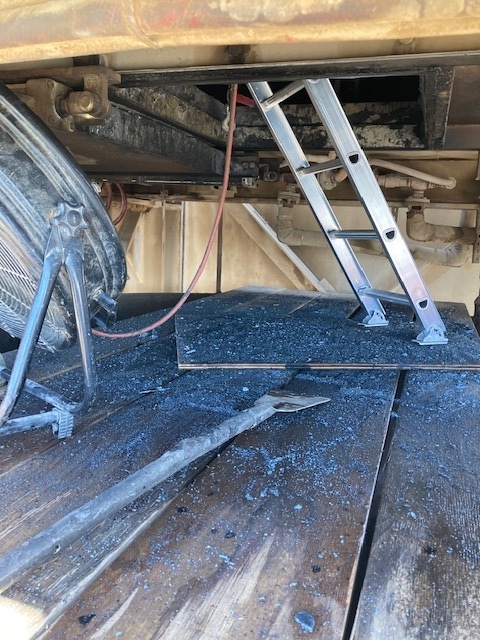
To start his project, Bowman began by building a platform on top of the weigh hopper. This platform formed a base from which to work in the silo. The small distance between the weigh hopper and the opening for the silo would have made working with long, pie-shaped liner pieces next to impossible. The smaller Kenco kit liners, however, fit easily in this reduced work space. This photo is courtesy of Tullis Inc.

Step 2. Separate your materials

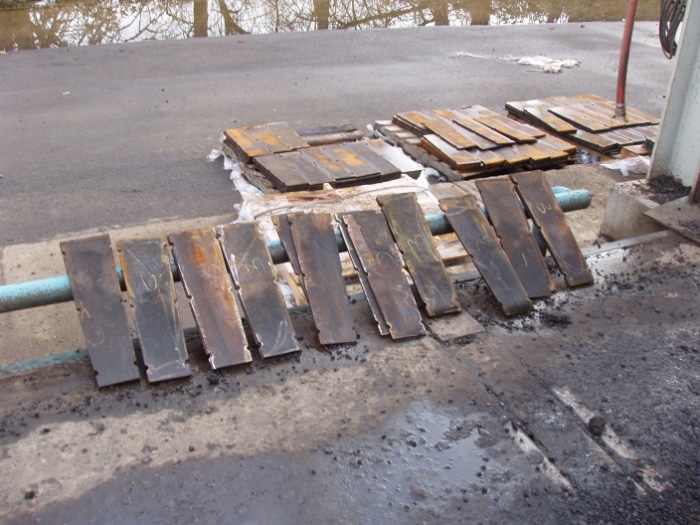
For simple round silos emptying from a round opening, the Kenco Modular Silo Liner kit consists of multiple rows of liners where each row consists of identical liners with each liner individually numbered. Bowman and his workers separated the liners according to their number and loaded them into a man basket, which they used to lift the liners up to the work platform. They built scaffolding in the silo as work progressed further up from the bottom. This photo is courtesy of Knife River Corporation.

Step 3. Weld a base ring

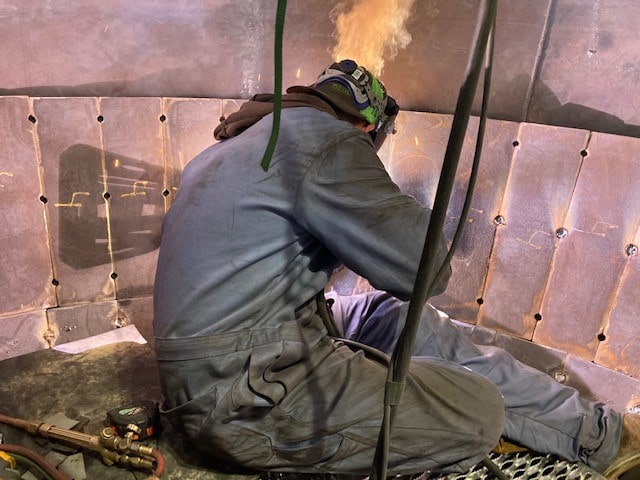
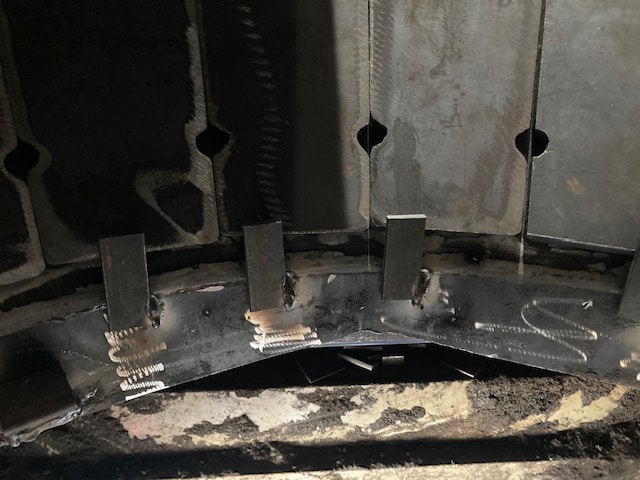
Installing the very first row took a little longer than expected because Bowman and his team first welded a base ring to the bottom of the silo to serve as the base support for the first row. This base ring, while taking quite a bit of time to build, ensured the first row could be properly positioned. This photo is courtesy of Tullis Inc.

Step 4. Tack weld

Once properly positioned, this first row was tack welded into place. At this point, the first row serves as the perfect base for all subsequent rows, which are simply stacked in place according to their row number and then tacked in place as well. This photo is courtesy of Tullis Inc.

Step 5. Build as you go

Another benefit of Kenco’s modular design is that it is not an “all or none” type of arrangement. Producers can install kits row by row over time. As an example, Bowman installed three rows of liner plates last season and plans on adding two more rows along with a cylinder band this year. All in all, Bowman was happy with the way the Kenco kit made a bad job much easier to handle.

Another asphalt producer who is happy with the performance of the Kenco Modular Silo Liner Kit is Pat Budlong with Knife River Corporation, Tangent, Oregon. At this point in his career, Budlong has been involved with installing more than 24 Kenco Modular Silo Liner kits.  Budlong’s primary motivations for using Kenco’s kits include ease of installation due to the custom design as well as the long wear life the liners provide.

How to Unclog the Asphalt Silo Safely

When discussing ease of installation, the Kenco kits go in fast. According to Budlong, the complete project, start to finish, will take about three days. That includes about one day to complete the Confined Space process, make the silo safe and install the scaffolding used to weld in the liners. Day two usually takes about 10-12 hours and is when the Kenco kit is welded into place including a full weld along the top edge to prevent material getting behind the liners to “hydraulic” them away from the wall. Day three will be for finishing up what is left and disassembly of the scaffolding. Budlong contends that when relining a silo in the air, the Kenco Modular Silo Liner kit is “faster to install and wears great.”

When looking at wear life, the Kenco Modular Silo Liner kit is also a long-term solution to a maintenance headache. Made from ½-inch-thick AR-500 plate, the Kenco kits have been found to outlast pie-shaped liner kits by more than 3-1. When compared to ceramic kits, Kenco’s system can be installed in a fraction of the time due to the reduced number of components, no need for adhesive and no need for weld washers. Kenco steel liners are not susceptible to breakage.

Budlong jokingly explained that he feels bad for Kenco’s Regional Sales Representative, Paul Weber.  “I feel bad so often having to tell Paul that I don’t need anything—nothing is worn out.”

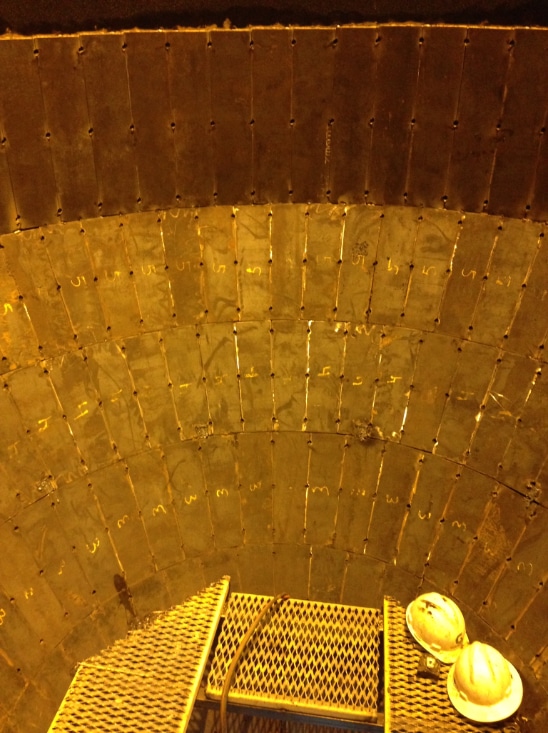
A few days of hard work result in a newly lined interior, ready for next season’s production. Photo courtesy of Kenco Engineering.

City Asphalt Celebrates Staten Island Plant

From the first day City Asphalt began to lease Vanbro Corporation’s asphalt plant property on Staten Island in 2018, company officials knew it was only a matter of time before they’d replace the 70-year-old batch plant on the property.

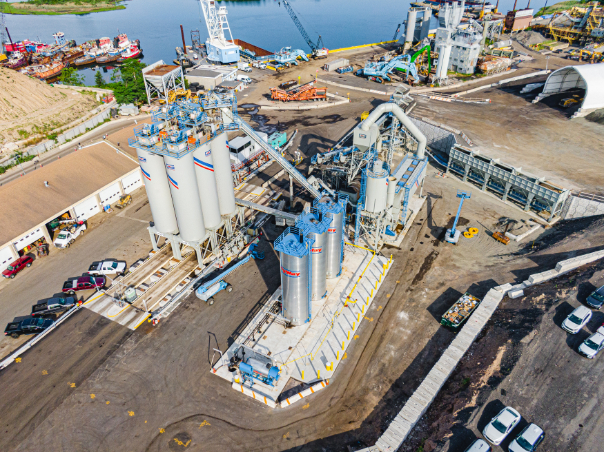
City Asphalt LLC, owned by the Cruz family and a leader in the New York City construction market, saw a shining opportunity beneath the rust of the old plant. Located along the west shore of Staten Island, the facility has barge and rail access and is also located just off the West Shore Expressway, making it an attractive supplier for paving contractors in Staten Island, Brooklyn and Manhattan.

Despite being rebuilt three times during its 70 years in operation, the batch plant had sat unused since around 2010 and was in need of major repairs when the Cruz family took over. Bringing the old plant back to life was no easy task. “It was much more expensive over the long term than buying a new plant,” said City Asphalt General Manager Matthew Cruz.

When City Asphalt began leasing the Vanbro Corporation’s asphalt plant property, they knew they’d have to replace the 70-year-old batch plant.

The Vanderbilt family, under the name of VANBRO Corporation, operated an asphalt plant on this 42-acre property as far back as 1947.

All of the wiring had to be replaced, much of the equipment was rusted out, the control room needed to be repaired and the computers replaced. “It was like playing Whac-A-Mole,” Cruz said. “When we fixed one thing, another thing would break. We ended up virtually rebuilding the entire plant from scratch.”

It was a necessary, albeit temporary, hardship.

“The plan was always to build a new plant once we could get through the arduous permitting process in New York City,” Cruz said. They immediately began working toward obtaining the necessary permits in 2015.

In the meantime, they had to rely on the old batch plant in order to serve their customers, including an annual supply contract to provide 150,000 to 200,000 tons of asphalt for the New York City Department of Transportation’s operations in Staten Island. That was in addition to another 50,000 to 100,000 tons for City Asphalt’s private customers.

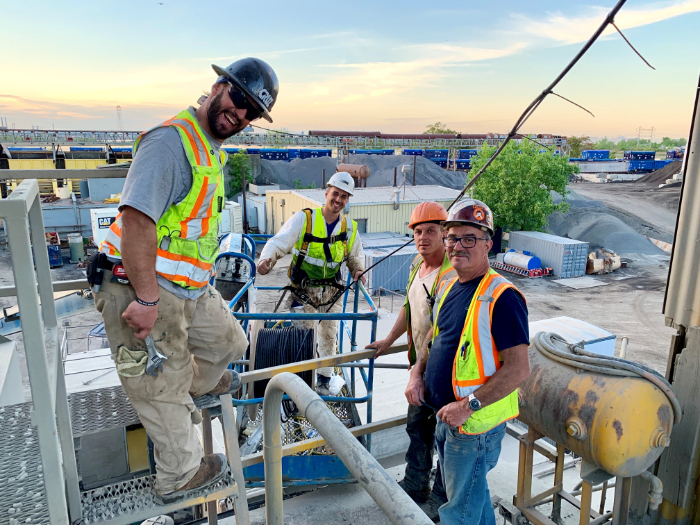
City Asphalt’s crew regularly had to repair the old batch plant.

The NYC DOT owns and operates two of its own asphalt plants, one in Brooklyn and one in Queens, contracting out mix supply for the other three boroughs of Manhattan, the Bronx, and Staten Island.

Despite their numerous improvements, the old batch plant was often a source of frustration and expense. For example, when the old batch plant’s gearbox broke down, they needed to immediately source a suitable replacement. Ultimately, they found a 40-year-old gearbox on eBay that had been sitting in a garage in Oregon. The gearbox itself cost only $800, but overnight shipping it to New York City cost more than $4,000. To add insult to injury, it was too heavy for a single shipment overnight so it had to be disassembled and sent as four separate packages then reassembled upon delivery.

“All of these breakdowns were transpiring under a penalty with our NYC DOT contract,” said City Asphalt’s Director of Business Development Tom Dooley. “If we couldn’t provide them with the material they needed, we’d get a violation that came with a significant penalty.”

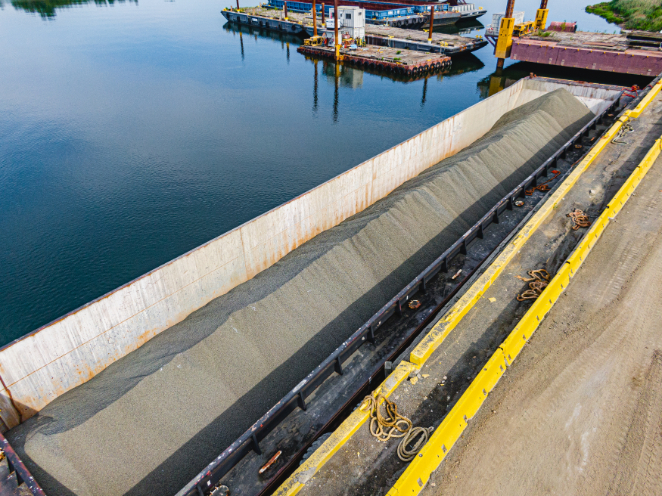
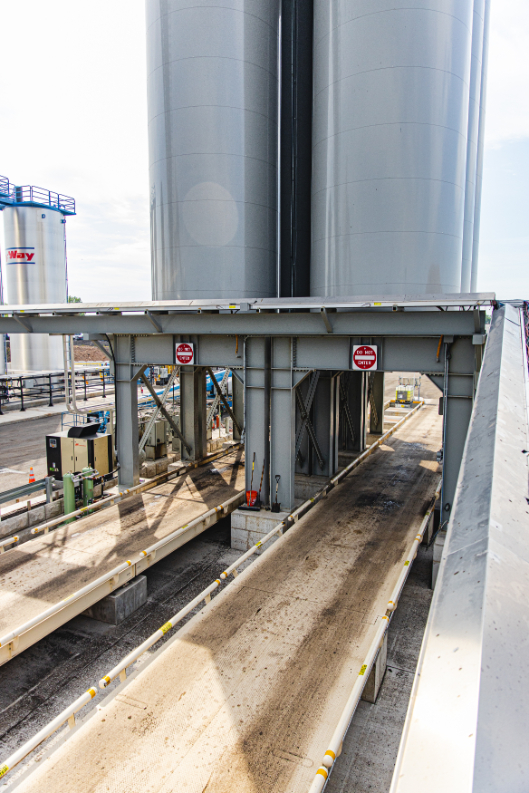
Located along the west shore of Staten Island, the facility has barge and rail access.

Naturally, City Asphalt was eager to get its new 400 tph Gencor Drum Mix Ultraplant up and running, and so was the NYC DOT.

And construction never stops in the city that never sleeps. In total, New York City resurfaces more than 6,000 miles of streets and highways, resulting in resurfacing that requires over 1,000,000 tons of asphalt annually, according to the NYC DOT. Not only does the city have high traffic density and allow for heavier truck tonnages than many other states, Dooley said, but its roads are often dug up to access water and gas lines, or, as is increasingly the case, to install technology infrastructure such as 5G.

“The NYC DOT saw the issues we were facing with our old plant in order to meet their demand,” Dooley said, adding that they were supportive throughout the process of permitting and building City Asphalt’s new plant. “They wanted to see our new plant operating on Staten Island because it’s easier for them and their crews to access asphalt in the local market, without having to traverse toll bridges to New Jersey or Brooklyn.”

Prepare to Permit

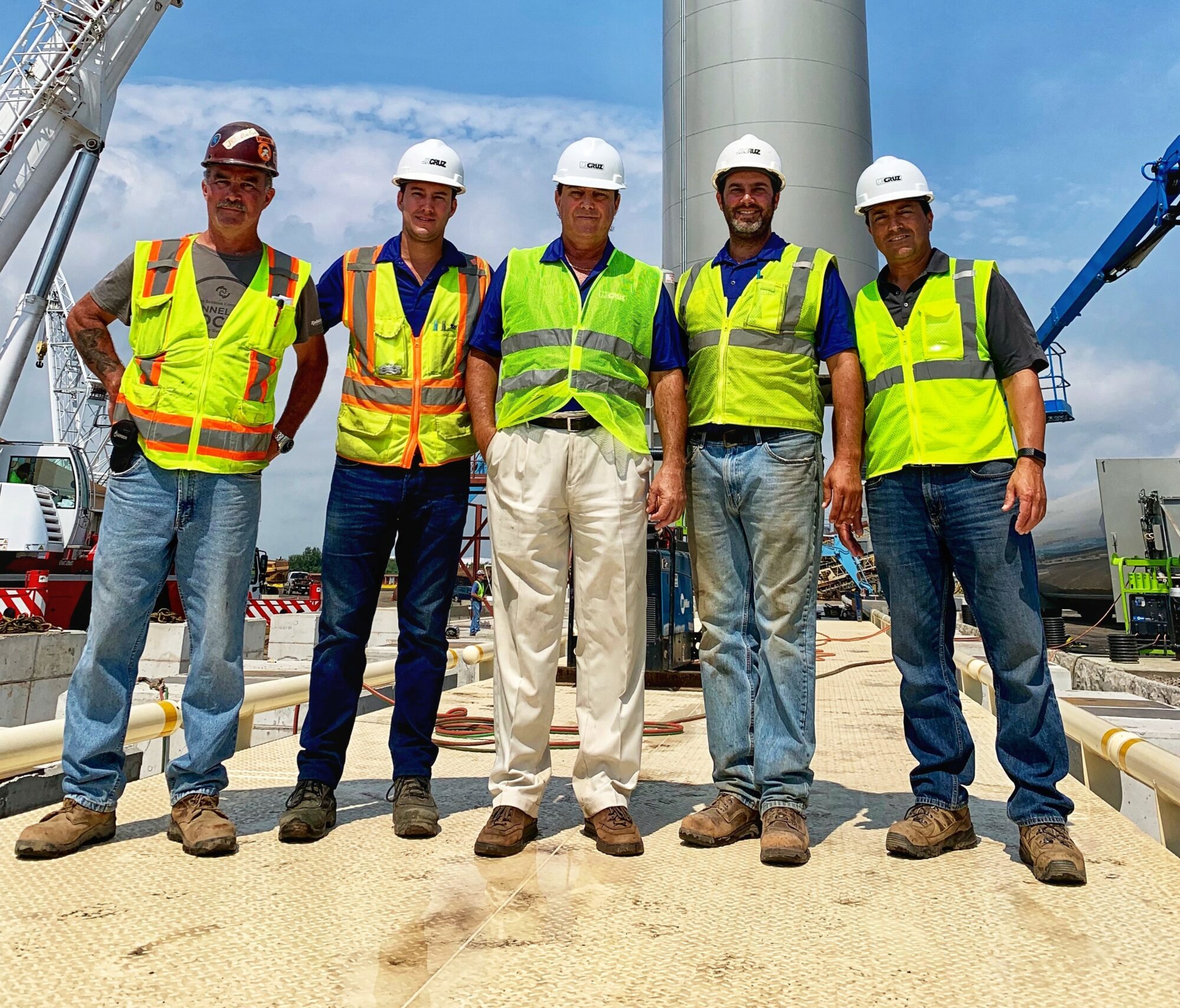
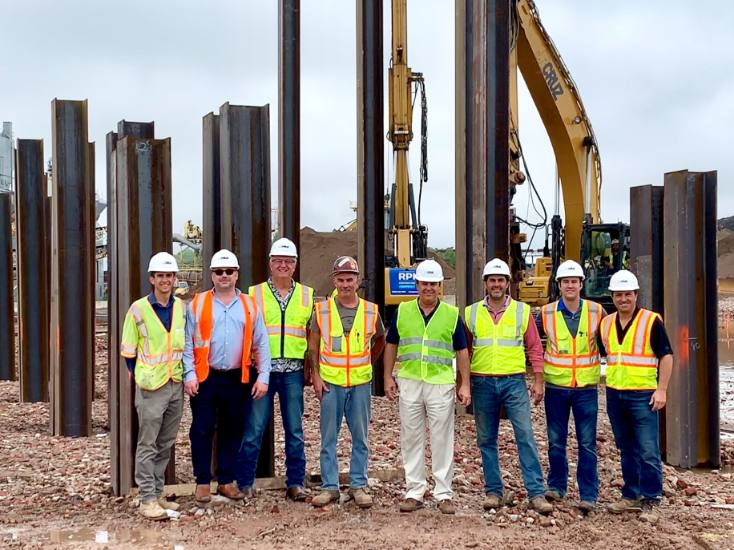
The Cruz family’s construction team breaks ground on the construction of the new plant. Due to the poor soil conditions, extensive piling was required to be driven to bedrock to support the weight of the new equipment. Pictured from left to right: Chris Lada, Peter Lauro, Chuck Lada, Grahame Turnbull, Evarett Cruz, David Cruz, Matthew Cruz and Carlos Catao

Despite NYC DOT’s support, there was a long road ahead. “It took about two years to obtain the required construction permits. We were going back and forth with engineers, design consultants, various NYC and New York State (NYS) agencies, and even simply choosing a location on the 42-acre property to build the new asphalt plant before we could break ground,” Cruz said.

At first, the design consultants identified that the location the company chose for the new plant would have required a modification to the tidal wetlands permit, which would have added three years to the permitting process. “Therefore, we took drone photos which we imported into AutoCAD to overlay the new plant in various locations of the property,” Cruz said. “This allowed us to perform feasibility studies to determine the most efficient use of space on the property.”

NYC Paves Bus Lanes with Red Asphalt

“We were able to determine the most effective traffic flow pattern, the widest turning radius for large dump trailers and stay away from various property limits and protected wetland areas,” Cruz said. After the feasibility study, it turned out that the best location to construct the new plant required City Asphalt to tear down the existing 5,000-square-foot office building. This involved yet another building permit. “In the interest of making the process as streamlined as possible we were forced to compromise on things.”

Located along the west shore of Staten Island, the facility has barge and rail access.

The property was low-lying, so City Asphalt needed to perform extensive work in order to comply with modern day regulations. One of the permits required the company to elevate its facility by four feet. After Hurricane Sandy in 2012, the Federal Emergency Management Agency (FEMA) required all new construction to be above an elevation of 12 feet above sea level, and City Asphalt’s old facility was only eight feet above sea level.

City Asphalt also had to install 280 piles in the foundation, requiring more than 1,000 cubic yards of concrete, and develop a plan to seismically engineer their plant in case of earthquakes. The company hired a structural engineer to work with Gencor to develop a plan in compliance with NYC Department of Buildings (NYC DOB) requirements.

Utilities presented another obstacle. City Asphalt had to run new natural gas lines to the plant, which required approval from the Fire Department of New York (FDNY). They also needed a stormwater pollution permit from the New York State Department of Environmental Conservation (DEC) and an air pollution permit from New York City Department of Environmental Protection (NYC DEP). Once everything was said and done, City Asphalt had worked with almost a dozen agencies, including the NYC DEP, FDNY, NYS DEC, NYC DOT, NYC Small Business Services (NYC SBS) and NYC DOB, among others.

The Cruz Family was able to self-perform the construction of their new plant, which expedited the construction schedule. They were able to advance the schedule to get the construction completed in 11 months.

Thankfully, the permitting process for the plant itself wasn’t as difficult. “Because we were able to shut down the old plant when we started using the new plant, that wasn’t too big of an issue,” Cruz said. All they needed was a permit modification from the old plant to the new. Plus, the new plant was more environmentally friendly to begin with and required less energy with its variable frequency drives (VFDs). “Our old plant required a 2000-kw generator, but the new one only needs 800 kw.”

Brooklyn Bridge Micro Surfaces for Success

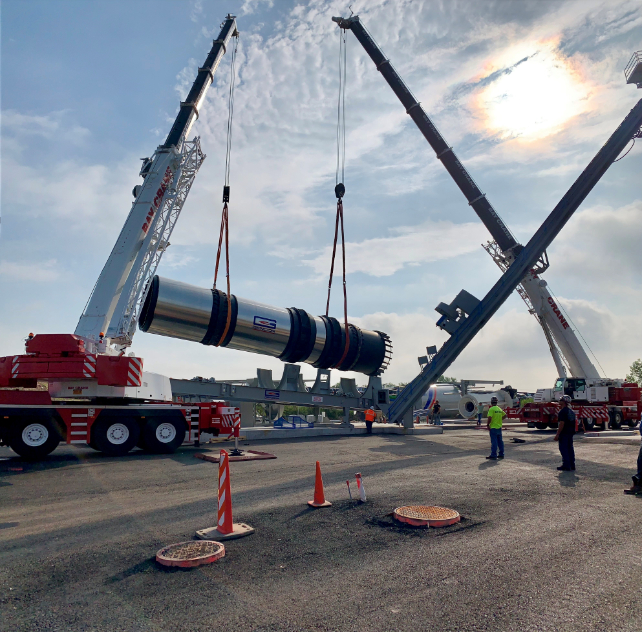
The plant itself was delivered in August 2019 and was erected throughout the fall. However, New York City’s crane permits presented an unexpected last-minute challenge. City Asphalt had to get multiple permits and get their cranes signed off by a master crane rigger before they could lift the silos and drag slats.

After the wiring was completed in early 2020, a Gencor representative was on site programming all the computers (the plant uses Gencor’s Ultralogic control system). By February, they could power up the plant, but they still had no gas.

City Asphalt decided to purchase their plant from Gencor, Orlando.

“The city doesn’t allow gas valves to be opened during the cold winter months, so we had to wait until March 1,” Cruz said. “We could spin the drum and turn the drag slats, but we couldn’t produce mix until March.”

Then, they hit another snag. The day before they were to open up the plant, the Gencor rep they’d had on site for months was called back to Gencor’s home offices because of the COVID-19 pandemic. “We basically opened up the plant by phone and FaceTime,” Cruz said. “Literally, we were FaceTiming our Gencor rep as he told us what buttons to press, what settings to change. We even calibrated our burner remotely via FaceTime.”

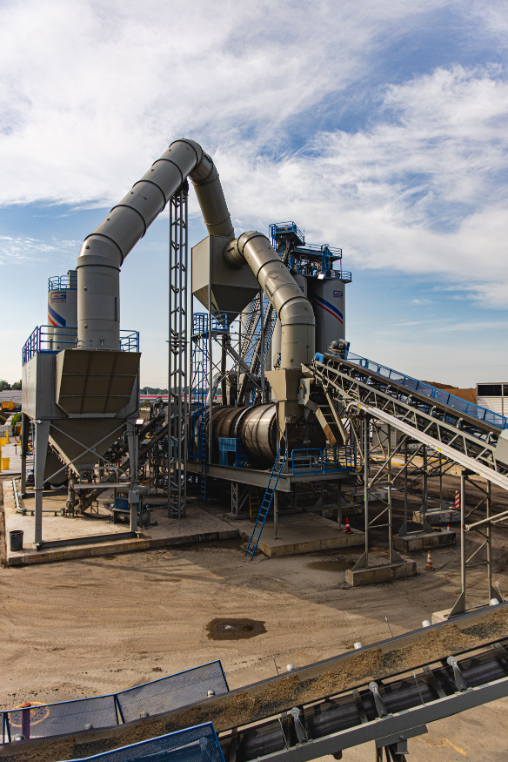
City Asphalt’s new 400 tph Gencor Drum Mix Ultraplant became operational in March 2020.

“Spare No Expense”

“When we constructed this plant, we spared no expense,” Cruz said. City Asphalt’s decision to purchase their plant from Gencor, Orlando, came down to word of mouth. “We’d been hearing their service and reliability was the best in the industry.”

Another benefit of the Gencor plant is its capacity to manufacture asphalt with a high recycled asphalt product (RAP) content of up to 60 or 70 percent. The NYC DOT requires a minimum of 40 percent RAP in its mixes.

City Asphalt has two wheel loaders at the plant, alternating between the two each month with one in use and one parked as a spare.

“RAP utilization is a huge issue in New York City because as part of our asphalt supply contract with the city, we are responsible for taking in the millings they produce before putting down fresh asphalt,” Dooley said. “That’s an expensive proposition because every acre of land we lease comes with a very high price tag.”

City Asphalt chose to invest in Gencor’s Advanced Rap Entry system, which allows the company to fractionate its RAP. The drum is equipped with two RAP collars, one for ¼-inch minus fine RAP and one for ⅝-inch minus coarse RAP. “We can make a much higher quality mix by using the correct percentage of those two separate products,” Cruz said. “This is particularly useful since using fractionated RAP allows for a more consistent product.”

The plant itself was delivered in August 2019 and was erected throughout the fall.

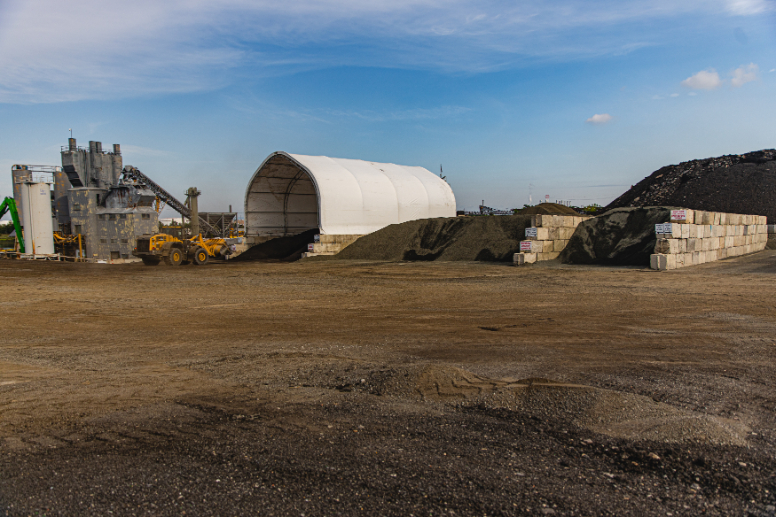
City Asphalt followed National Asphalt Pavement Association’s best practices by providing a tent to cover the RAP and additionally paved the entire RAP and virgin aggregate storage bins with 8 inches of asphalt with a significant back pitch slope so rainwater could easily drain through the aggregate. Using these methods, they were able to maximize the efficiency of their operation and significantly lower energy costs in heating aggregate. The plant is also equipped with a flue gas system, blue smoke recovery system, and VFDs in the drum, drag slat and baghouse.

Cruz said the new plant can make 5,000 tons per day without any issues.

The plant has six heated 300-ton capacity silos, organized into two lanes. One lane is dedicated to their biggest customer, NYC DOT, and the other is for private contractors.

“We can make 5,000 tons per day without any issues,” Cruz said. Dooley added that another asphalt plant in the city that can only accommodate one lane through the plant often sees trucks backed up onto city streets. “We have plenty of room on our 1,500-foot driveway for trucks to queue, if needed.”

Additionally, the ability to store 1,800 tons of asphalt in the air has helped the company minimize its labor cost.

The plant has six heated 300-ton capacity silos, organized into two lanes. One lane is dedicated to their biggest customer, NYC DOT, and the other for private contractors.

Its NYC DOT contract requires availability for day and night jobs. The old batch plant could only produce 120 tph and store a maximum of 500 tons, so City Asphalt required both a day and night crew. With the six silos at the new plant, they can produce product during the day and store whatever might be needed to serve those night contracts, which means they no longer need to staff a full second-shift crew.

To further improve loadout, City Asphalt invested in a Silo Safety System, which ensures that silos can only be opened once the truck below is in the proper position, and the Generation 3 Silo Loadout from Libra Systems, a subsidiary of Command Alkon, Harleysville, Pennsylvania.

City Asphalt’s new 400 tph Gencor Drum Mix Ultraplant became operational in March 2020.

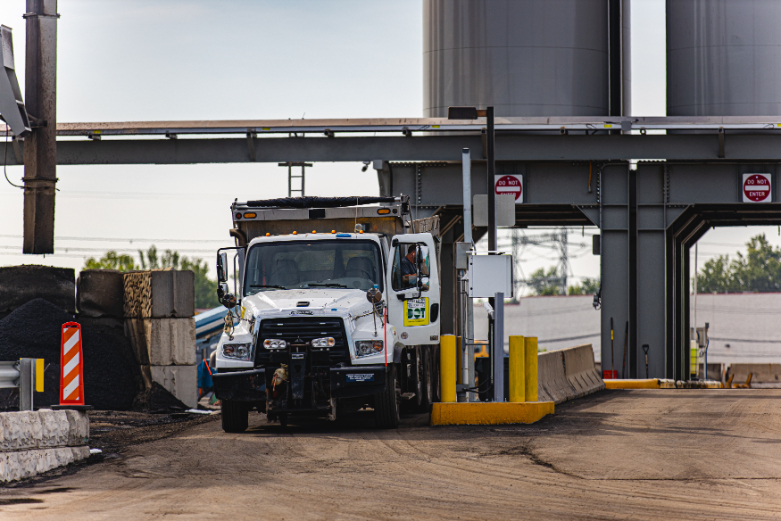
“This modern day technology really helps speed up traffic through our facility,” Cruz said, “especially with COVID-19, since trucks can drive in and out without physical contact with plant staff.”

City Asphalt also designed its operations with redundancy in mind. They have a spare electrical motor and gearbox for every single component of the plant. “It’s like having a spare asphalt plant sitting on the ground just in case something breaks down on the new plant,” Cruz said.

City Asphalt has an annual supply contract to provide 150,000 to 200,000 tons of asphalt for the New York City Department of Transportation’s operations in Staten Island.

Although the plant primarily runs on natural gas, the company invested in a diesel-powered generator as a backup. They also have two wheel loaders at the plant, alternating between the two each month with one in use and one parked as a spare.

City Asphalt’s new plant relies on the same lab that served the old batch plant, with some improvements to accommodate for increased production. In the future, they plan to build a new state-of-the-art lab and expand into different mixes, including Port Authority and Federal Aviation Administration (FAA) mixes.

City asphalt followed best practices by providing a tent to cover the RAP.

Other future plans include the addition of two to four additional silos, two cold feed systems and a fourth AC tank. “This will allow us to increase our production to meet demand, or to expand into other work like FAA or Port Authority paving,” Cruz said.

Despite plans for future growth, the team at City Asphalt is proud of what they’ve accomplished in the plant’s first season. “And that’s despite COVID-19,” Dooley said.

Martin Marietta Invests in Aerotropolis Asphalt Plant

Located 25 miles from downtown, Denver International Airport (DIA) has long been subject to complaints that it’s too far from the city. A quarter of a century after its construction, it seems the city is coming to the airport.

In 2016, the Federal Highway Administration (FHA) funded the Colorado Aerotropolis Visioning Study to identify infrastructure needed to support economic development around DIA. According to the Colorado Department of Transportation (CDOT), which administered the study, an aerotropolis is “an urban plan in which the layout, infrastructure, and economy are centered on and around an airport.”

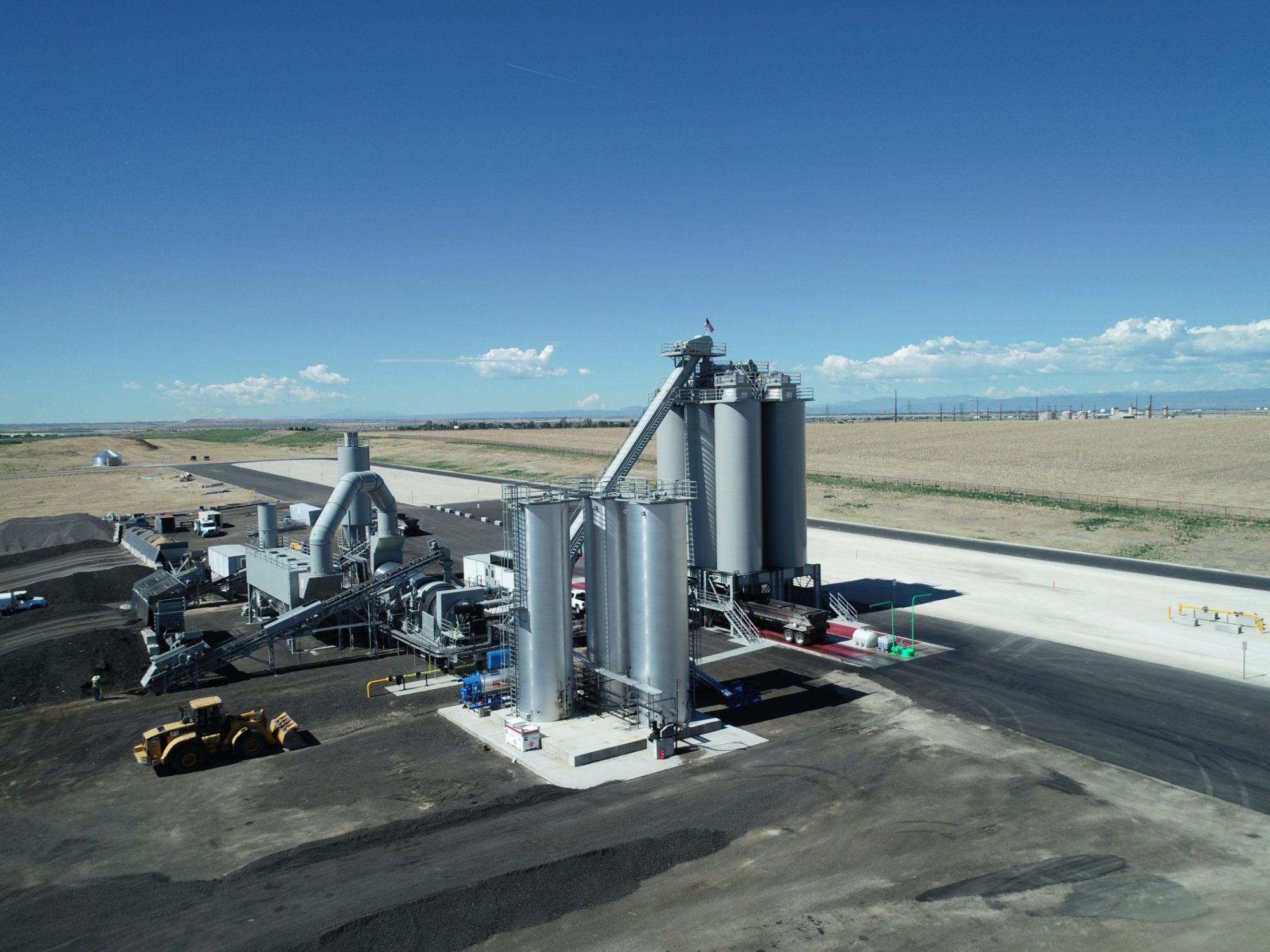
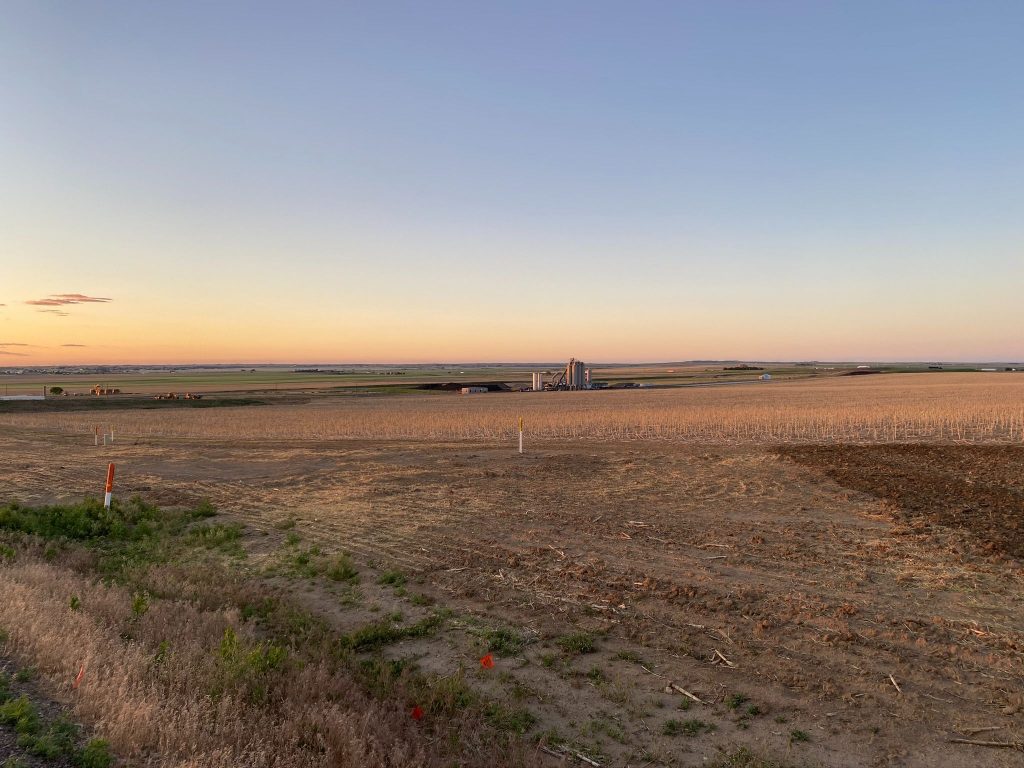
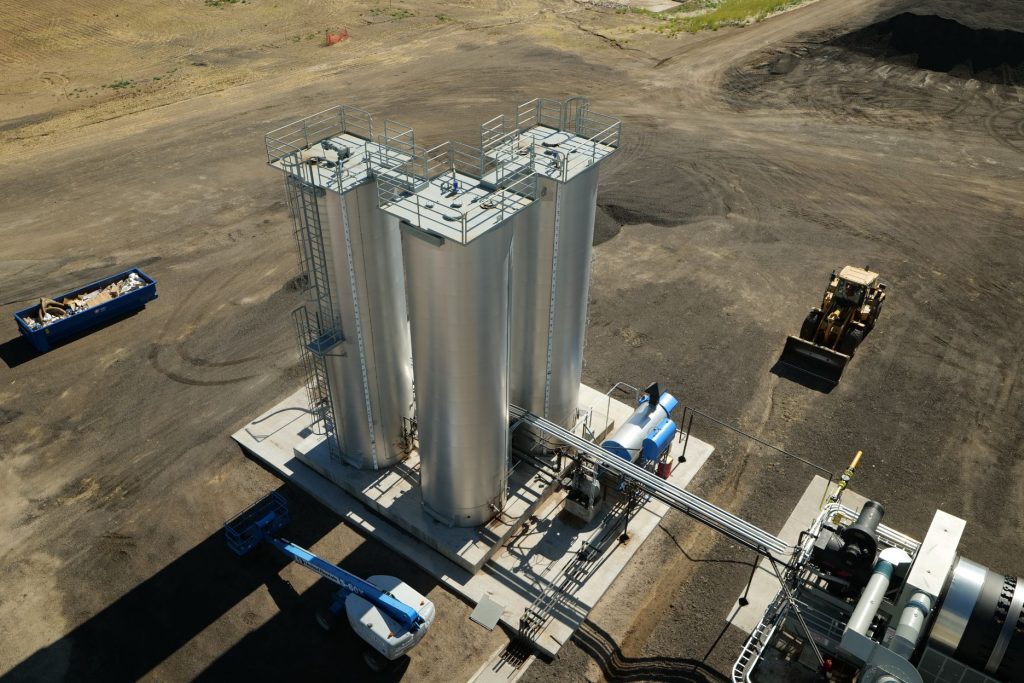
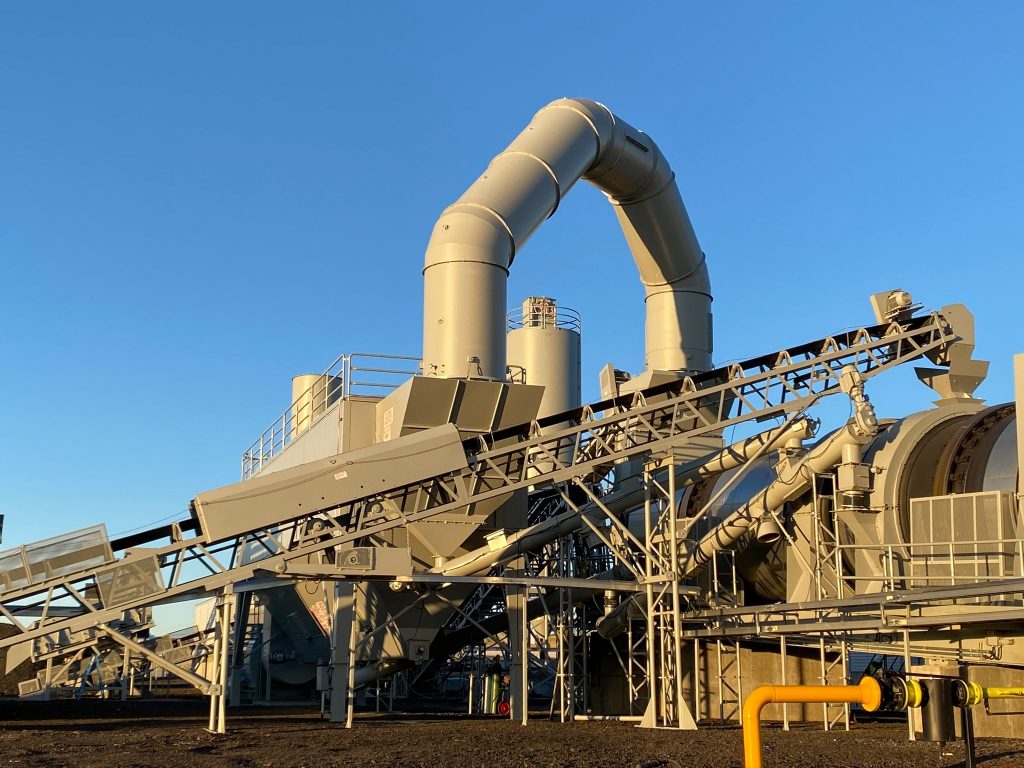
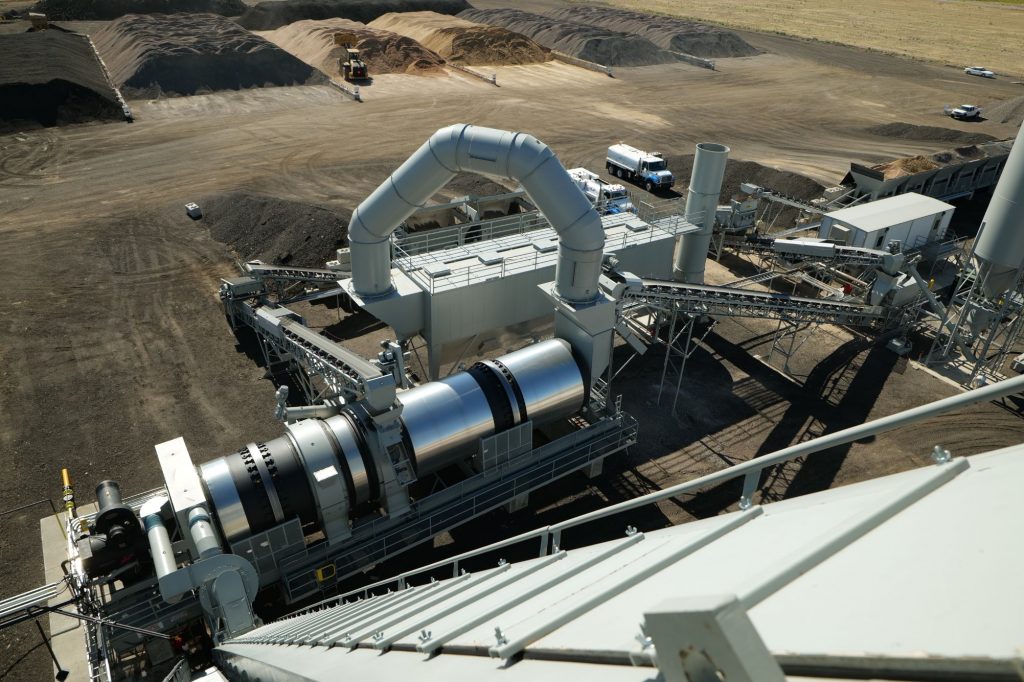
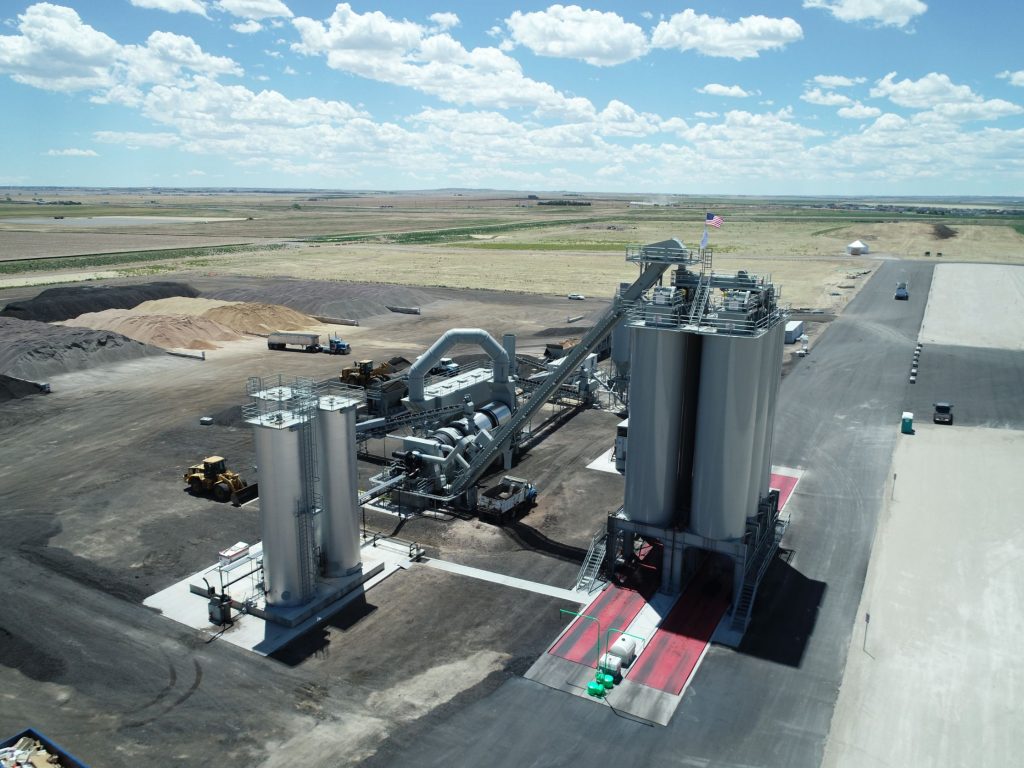
Although the plant is surrounded by fields for now, it’s only a matter of time before new home construction in the adjacent Aurora Highlands reaches the edge of the plant.

The plan is to populate the 21,000 mostly vacant acres of Aerotropolis’ land with 10 million square feet of retail space, 30 million square feet of office space, and 40 million square feet of industrial and commercial space, as well as numerous residential developments, according to the Denver Post. A recent Metrostudy housing market analysis estimates that nearly 30 percent of the 220,000 available lots left to build on around Denver are located in the E-470/I-70/DIA corridor, adding an average of 544 new homes to the area each year.

Aerotropolis will also be home to at least one asphalt plant. Martin Marietta, headquartered in Raleigh, North Carolina, opened its third asphalt plant in the Denver Metro Area 8.6 miles from DIA and right in the midst of Aerotropolis itself.

Martin Marietta Coordinates for Success on College Avenue Project in Fort Collins

“We’ve been running our other two plants in the Denver metro area at maximum capacity for five or six years,” said Martin Marietta General Manager Trevor Norton. “We’d been wanting to add another plant for a while now.” One of the existing plants was producing around one million tons of asphalt per year, and the other, nearly 700,000. “And we still had days where we needed more,” added Area Production Manager Pat Hartshorn.

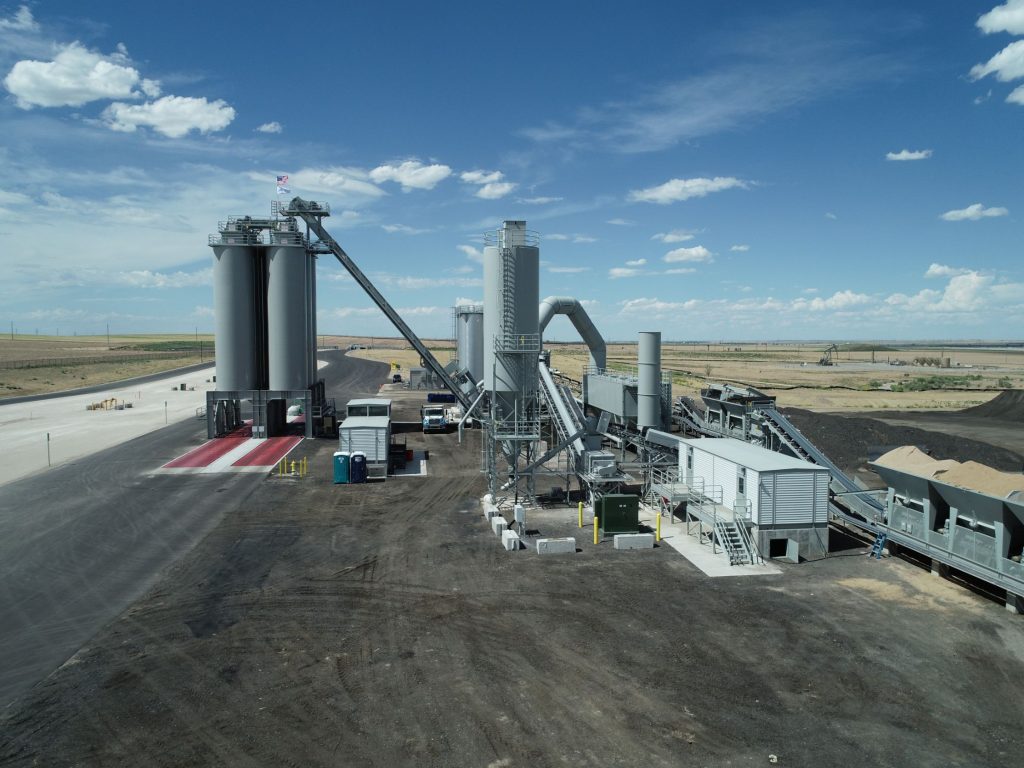
The company purchased the property for their third plant in February 2018. The 500 tph Gencor plant is capable of producing up to 800,000 tons per year, in addition to better-serving jobs east of Denver.
The company’s other plants in the Denver metro area include one on the west side of the city along I-70 and one plant right off I-25 and Highway 76 that covers central Denver. Putting their third plant east of the city was a natural progression, Norton said.

The new plant aims to reduce the burden on Martin Marietta’s existing asphalt plants in the Denver area, both of which have been operating at maximum capacity for years.

Martin Marietta’s asphalt plant in central Denver is also from Gencor, and its plant on the west side is the largest Astec Double Barrel plant in the world, Hartshorn said.

“That area is rapidly changing,” he added. “Subdivisions are going in, a commercial district is going in, there are warehouses being designed for mass transfer operations through the airport, distribution centers, and a new Gaylord convention center.”

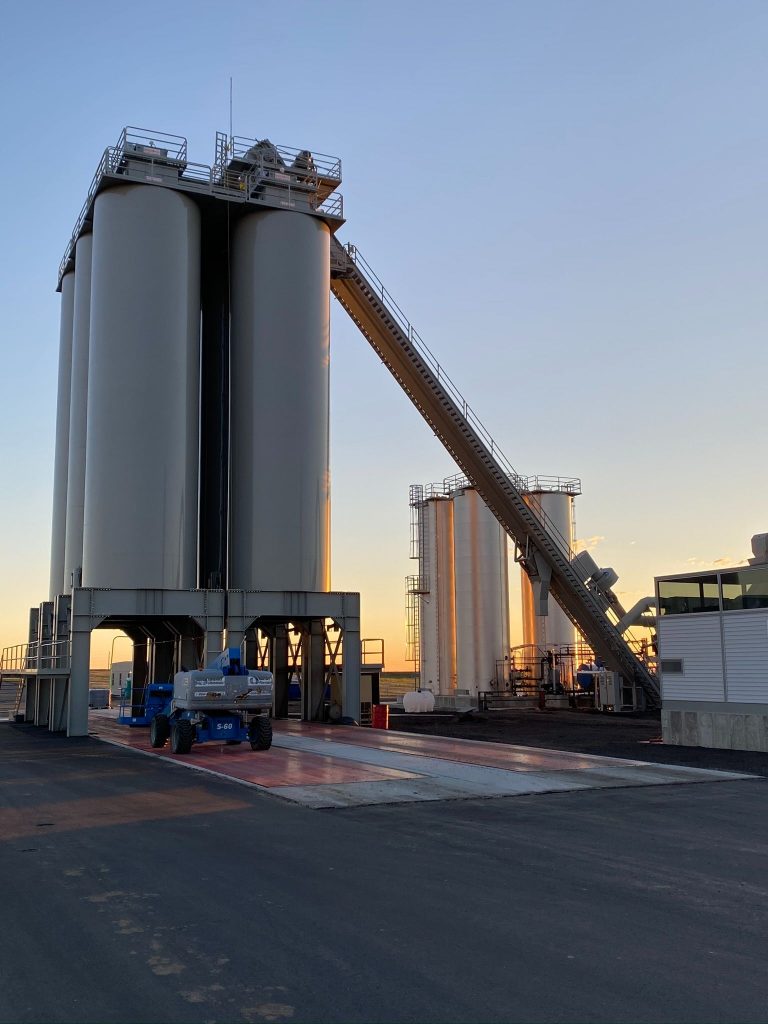
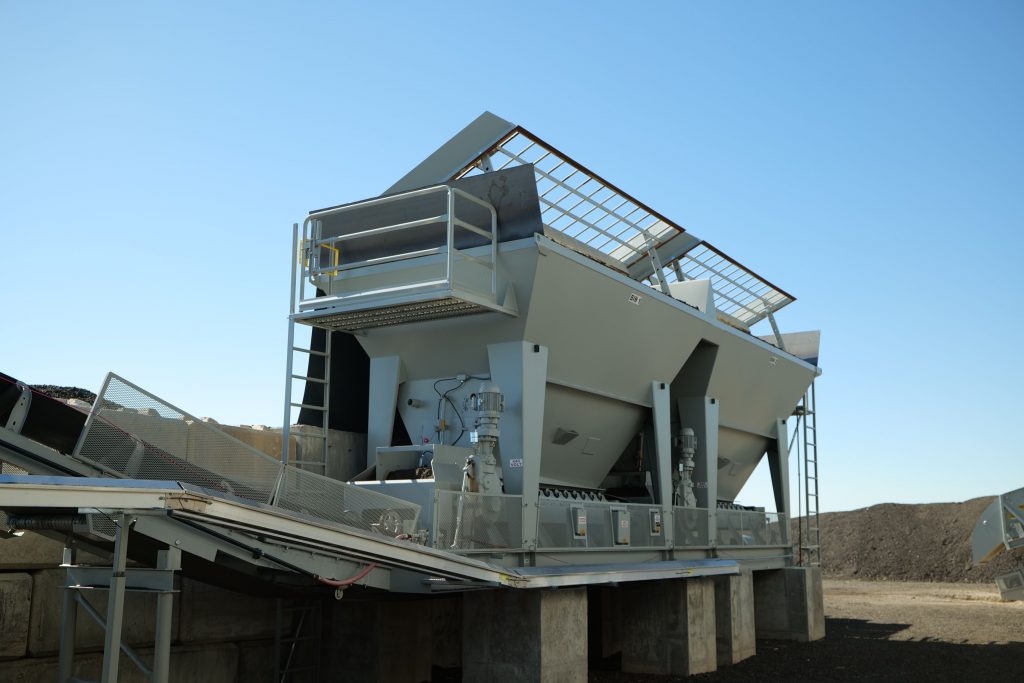
Because capacity was the catalyst for the new plant, Martin Marietta also chose to invest in six 300-ton silos for improved product flexibility.

Because capacity was the catalyst for the new plant, Martin Marietta also chose to invest in six 300-ton silos for improved product flexibility.

“Flexibility is a requirement in this business today,” Hartshorn said. “The asphalt industry used to be one, maybe two mixes per day. Now, things are more complex, and there are plenty of days when we need to produce six different mixes on a daily basis.”

Quality, Smoothness and Speed to Completion in Colorado

To supply increased demand for stone mastic asphalt (SMA) mixes, Martin Marietta plans to equip the plant with a Gencor mineral filler silo over the 2020/2021 winter and an additional Gencor AC tank for added flexibility.

Because Martin Marietta performs a lot of cold-weather paving–more than 300,000 tons in some years–it was also important that the use of additives at the plant was easy and effective. To accomplish this goal, the plant will be equipped with an additive injection system in the future.

In the winter of 2020/2021, Martin Marietta added another AC tank for additional flexibility.

The plant also has its own lab prepared for just about any testing CDOT requires.

The biggest challenge to the plant build was turning a grass pasture into industrial land for an asphalt plant. They had to bring in all utilities. “Our gas and electric providers had to run several miles of pipe,” Norton said. However, they knew this part of the project wouldn’t be ready in time for the new plant’s first few months of operation, so they developed a plan to run the plant on compressed natural gas (CNG) from Certarus until the gas pipeline was operational. In the end, the plant ran on CNG for 1.5 months.

Martin Marietta plans to build a rail facility so they can ship aggregate into Denver.

Even now that they have the pipeline hooked up, Hartshorn said it’s nice to have the plant set up for CNG in case of emergencies like a burst pipe. “We can be running again on CNG within 24 hours,” he said. “It’s more expensive, but it’s nice to have that flexibility if we ever needed it.”

There was also the planning and permitting process that took much longer than anticipated. “Those were the two bottlenecks: utilities and plant permitting,” Hartshorn said. “Getting the plant from Gencor was easy compared to those.”

The plant’s first day of operation was June 5, 2020. “The plant has already produced 280,000 tons,” Norton said.

“Another roadblock was when the local fire department said we had to have fire systems out there before we could operate,” Hartshorn said. Since it will be three years before the plant has running water, the company had to place a 50,000-gallon water tank and pumps out at the new plant. “It’s like we have our own little fire department out there.”

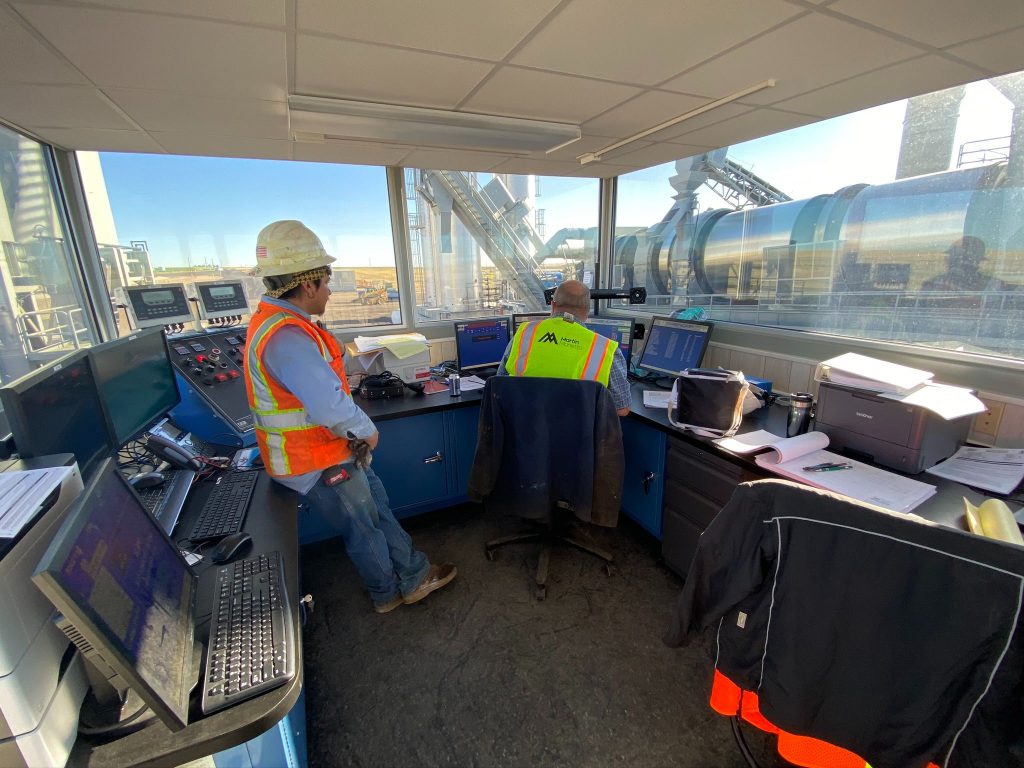
The plant operator at the new plant, Bernardo Estrada, had worked as a systems operator at Martin Marietta’s plant west of Denver for four years and worked on one of the company’s paving crews for four years prior to that. “He was the perfect candidate to go run the new plant,” Norton said. Bill Oetken, one of Martin Marietta’s construction managers, was also integral to the new plant. He and his team oversaw the site development work and utility installations.

Martin Marietta also made sure to design the plant with its neighbors in mind. Aurora Highlands, a large residential development, is located across the street from the plant. Although there are no homes there now, it’s only a matter of time. “It’s growing in our direction as it’s developed,” Norton said.

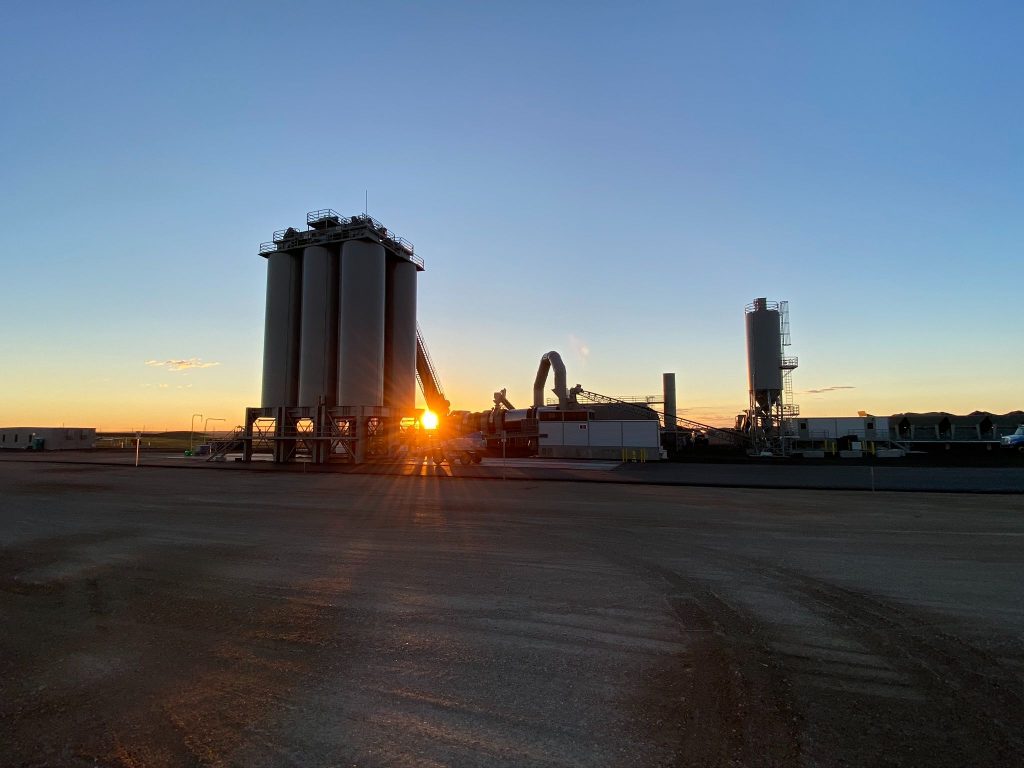
“It’s the quietest plant I’ve ever been around,” Hartshorn said, using variable frequency drives on its fan motors as well as drum insulation and air system silencers. “It’s hard to tell the plant is running unless you’re right there at it.”

Although they don’t have to worry so much about their other neighbors–a solar panel field is in the works next door–it’s also a matter of environmental stewardship.

The plant’s first day of operation was June 5, 2020. Immediately out of the gate, the plant was doing exactly what it was supposed to do: serving a key infrastructure project supporting the growth of east Denver and taking on some of the burden from Martin Marietta’s other Denver plants.

Martin Marietta Maximizes Million-Dollar Weekends

“An immediate relief was felt at the other two plants and in the field, reduced truck lines resulted in an increase in productivity at the paver,” Norton said. “In early November we were able to place 9900 tons in a single day, which previously wouldn’t have been a possibility with only two plants on a short November day.”

Although Martin Marietta had already completed a significant amount of paving on a nearby project on E-470, they still had about 70,000 tons to go. Having the plant located just 5 miles from the project had a major impact and enabled the company’s crews to pave up to 7,200 tons in a single weekend.

They also used the plant on a large project for Adams County, even further east of Denver than the plant, as well as a J.A. Green Development project as part of the Aerotropolis growth, and a bit of work within the Aurora Highlands residential development.

“The plant has already produced 280,000 tons,” Norton said.

In May of 2019, the Aerotropolis Regional Transportation Authority issued bonds toward what will amount to $200 million in transportation improvements over the next decade or so.

On average, about two-thirds of the tonnage produced at Martin Marietta’s plants is used on the company’s own paving projects. However, about 90 percent of the tons produced at its new plant were used internally.

Despite the uncertainty in the world right now, Norton isn’t worried about the new plant. “With all the growth out there, it might even become our second-biggest producing plant in Denver metro pretty easily.”

In addition to the asphalt plant, the company plans to build a concrete production facility and a rail facility where Martin Marietta will be able to ship aggregate into Denver. They plan to build a spur onto an existing rail line adjacent to the south side of the plant in the next few years.

“We have quarries in Wyoming, in Colorado Springs,” Norton said. “The rail facility gives us more flexibility to transport aggregate up and down the front range.”