How to Become Your Own Hot-Mix Supplier

Editor’s Note: For 2024, AsphaltPro Magazine allows experts in the industry to share how to expand your operations to the next phase of business. Are you ready to take the plunge and start making your own mix? Let’s turn to some professionals who have equipment, services, software and tenure to help you expand to mix design, production, hauling and more. This month’s installment from Asphalt Drum Mixers (ADM) takes an overarching look at the whole plant purchase; upcoming installments drill down into the points raised herein.

At some point in the life cycle of any successful asphalt paving business the question of whether a company should purchase an asphalt plant to begin supplying its own hot-mix asphalt (HMA) is likely to come up. There are clearly many benefits for asphalt paving businesses to add mix production to the company’s list of services. From savings in labor, material and truck expense, to the ability to lay more asphalt and complete more projects, to increased return on investment (ROI), the purchase of a paving company’s own asphalt plant can be an all-around positive experience for any paving business.

There are numerous considerations, however, for helping determine whether paving companies will benefit from the purchase of their own asphalt plant. This article outlines some of the reasons purchasing an asphalt plant might be right for paving companies’ businesses, the key considerations to help in making the decision, and one asphalt paving company’s journey to becoming its own HMA supplier.

Mix-and-Match Asphalt Plants

French Broad Paving is a medium-sized asphalt pavement company located in Madison County, North Carolina. The company is family owned and operated by Donnie and Regina Reed and T.J. Reed and has been in the paving business for the past 26 years. The parents-and-son team recently made the decision to purchase their own HMA plant. Regina Reed was instrumental in the company’s decision to purchase the plant and put her heart and soul into the project to help it come to fruition.

Since the 2022 season, French Broad Paving has been producing asphalt for its own paving company’s use, as well as selling asphalt to outside paving companies under the name of Madison Asphalt. French Broad Paving runs the gamut in types of paving jobs including federal and state contracts, department of transportation (DOT) projects, city projects, infrastructure projects, and private projects including residential and commercial.

There are many reasons for buying your own asphalt plant and for deciding on the particular manufacturer and plant model to purchase. T.J. Reed is the president, French Broad Paving and its asphalt production company, Madison Asphalt. According to T.J., the main reason for deciding to purchase their company’s own plant was availability. They also liked the idea of controlling their own mix.

T.J. explained, “Having your own plant adds a lot of benefits to your company especially when you own your own pavement company. Having your own plant, you control the mix that you want, when you want it, the type of mix you want, the material that goes into your mix, how you want your mix done. If you want virgin mix, you can fire it up and make virgin mix. If you’re doing infrastructure city jobs, you can add RAP (reclaimed asphalt pavement) percentages to your mix to save money on your mix.”

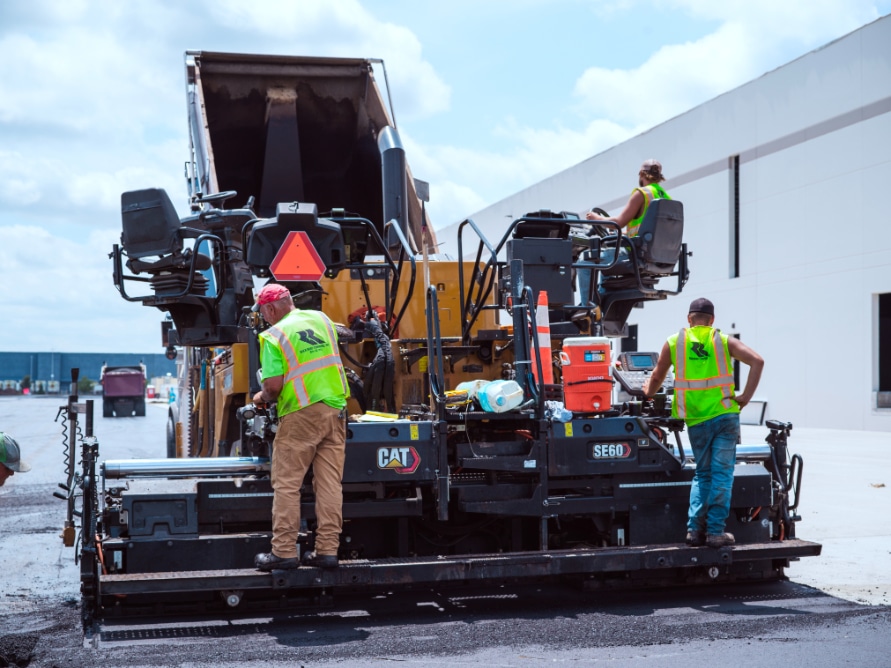
French Broad Paving President T.J. Reed explained the company recently won its first state job for 16,000 tons of asphalt because the company now has full control of its mix design, production and laydown. This photo is of a past paving project the crew is proud of.

French Broad Paving purchased their specific plant, the ADM EX 7636 counterflow drum plant, because they felt it offered the best technology and was the most efficient for their county of operation due to the county’s many regulations.

When it came to choosing a particular asphalt plant manufacturer, T.J. said, “One of the reasons that we chose ADM was that it was a turnkey project for us… We wanted somebody that could handle everything from the silos to the cold feed bins, to the storage tanks, to the RAP, and grizzly, to the control house, the control panels, the wiring, the scales, everything comes as a total package. It was really easy because we just had to contact one person or a couple of people, and all our questions were answered.”

According to ADM, the manufacturer, determining if a paving business would benefit from owning an asphalt plant may seem overwhelming. Breaking the task into smaller chunks by evaluating each of several factors, one at a time, can make the task much more manageable and lead to an informed decision. Many considerations come into play to help in deciding whether the purchase of an asphalt plant is right for a particular asphalt paving business. Some considerations include:

  • Market size
  • Asphalt plant location
  • Initial investment and start-up costs
  • Asphalt plant features
  • ROI expectations

Market Size

ADM recommends that paving contractors put themselves to task to uncover the following to see if owning their own asphalt plants may be lucrative to the bottom line.

  • Determine your business’ total annual asphalt usage and the attendant cost to your business.
  • Consider how many additional jobs your business could accommodate annually without the wait time buying asphalt from outside sources.
  • Assess the potential for asphalt sales to competitive paving companies (and not just making HMA for your own contracts).
  • Check the availability of aggregates in your area, ensuring that there are nearby aggregate sources available to fulfill your production needs through peak paving months.
  • Determine if there are large asphalt producers already in your marketing area who may consume the bulk of available aggregates supplies, thus impairing your ability to obtain adequate aggregate to manufacture your own asphalt.
  • Determine the number and size of paving companies that already work in the area.
  • Determine the number of contracts that are awarded in your locale each year.

According to T.J., consideration of several of the above market-size factors helped lead French Broad Paving to its asphalt plant purchase decision. T.J. and his team were able to determine that there was enough raw material available in their area to be able to make their own asphalt and fulfill their asphalt production needs during peak months.

Enhance EPDs with Burner Tech

T.J. said, “We also knew we could sell more paving jobs since mix availability wouldn’t be a problem. We would no longer be at the mercy of the local asphalt suppliers who were bidding the same jobs against us, and with whom it was hard to compete, and to get asphalt to suit our needs, instead of getting just whatever the supplier had that day to sell.”

“Beyond that,” T.J. explained, “We could also do more paving jobs because we could abide by our own asphalt production timelines, getting our asphalt when we needed it for night jobs, and not being cut off by having to pick it up on outside suppliers’ hours.”

T.J. and his team also knew there was a market to sell to other pavers. He said, “Our market area has a lot of mom-and-pop paving businesses in the same position as we were, having trouble getting asphalt from the local suppliers when they needed it. Madison Asphalt sells about 25% of the asphalt we make to other pavers, and provide them a more cost-effective solution for their asphalt.”

Sizing the plant for immediate and future capacity is important. If the company purchases a plant that is too small, they may not be able to effectively support in-house and customer demand. Purchasing a bigger plant with a capacity that greatly exceeds demand is wasteful and unprofitable. While price is certainly a large factor in choosing a plant, focusing on what type of plant makes the most sense for the current market situation and future potential is the best approach.

Asphalt Plant Location

Where your company’s plant will be located is another key consideration and one that should be determined very early on in the process. Location is a broad term, pertaining to several factors, from how your locale impacts permitting, to transport of an asphalt plant, to the appropriate plant type you buy. Consider these factors relative to location.

Permitting rules and fees vary greatly from one locality to another and are different state by state, as well. Where one state may list exact permit fees for various activities, another will calculate fees based on asphalt production quantity, diesel generator kilowatt hours, and gallons of diesel fuel burned. Acquiring a permit can take six to 12 months, so it’s important to plan ahead and start the process early.

Local environmental regulations may affect a company’s ability to obtain a permit, depending on the specific plant design for which the business is applying. Modern HMA plants burn much cleaner than older ones, but it’s always best to check with a company’s locality for which plant designs could pose permitting concerns.

Transport restrictions may apply to the selected area. As a new producer, it’s important to establish trucking provisions to transport material from the plant to the job site if that hasn’t already been established.

The type of plant a company purchases will also impact the location of the plant. Plants may be portable or relocatable. Portable plants are the best choice in areas where jobs are a considerable distance apart, a market has minimal growth and small population density, and where workloads shift from one area to another due to seasonal factors.

Top Plant Fixes to Plan for Winter Downtime

Typically, it is easier to get a permit for a portable plant location than for a relocatable unit. Portable permits may be granted for one main location, and then, depending upon the state, subsequent temporary permits for operating locations will be easier to obtain or may not even be required.

French Broad Paving decided to purchase a relocatable plant. T.J. said, “It can be relocated, it can be moved, but it sits on footers at the moment, and we chose that for numerous reasons. One reason was the size of our lot. We’re inside of a rock quarry, so our lot is only so big. ADM helped us with the size, helped us with locating where our bins go, where our material goes, where everything is, helped us maximize the size available to us, which was a great help.”

Regarding the acquisition of a permit, T.J. said, “Getting a permit was the hardest part of installing our own asphalt plant. It was a long, hard road, but once we got operating, the cost was well worth it. No more sleepless nights wondering if we’d be able to get the hot mix we needed to fulfill our contracts.”

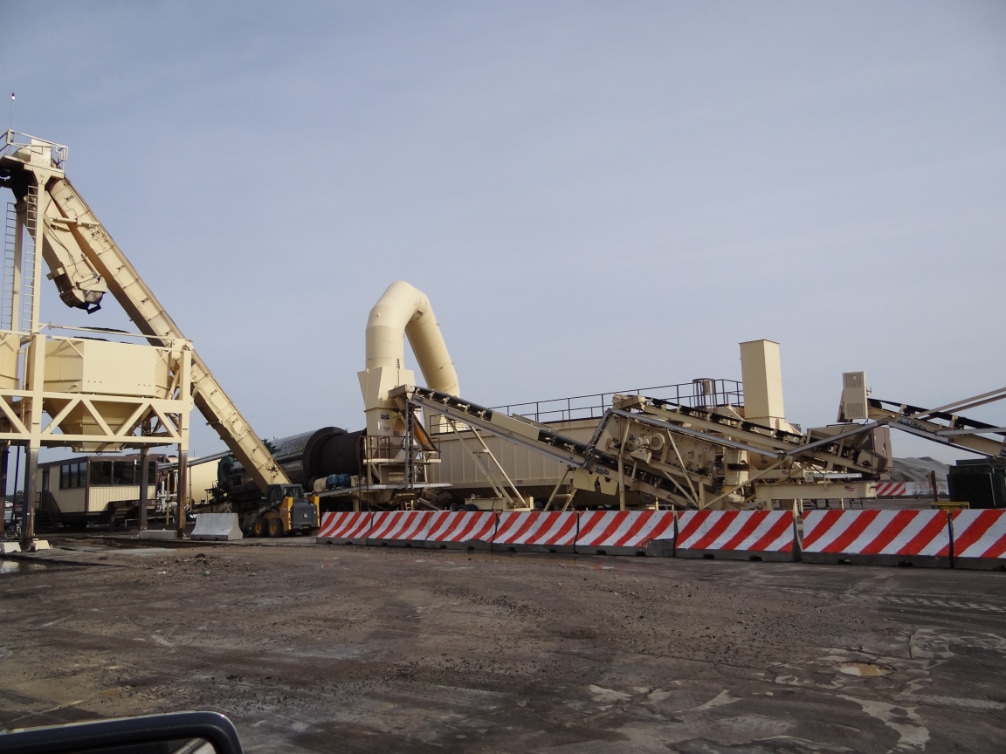
French Broad Paving purchased an ADM EX 7636 counterflow drum plant for its expansion into hot-mix asphalt production. Photos courtesy of ADM

Initial Investment and Start-up Costs

Purchasing an asphalt plant is a serious investment for any company, large or small. Consideration should be given to the size of the plant to purchase. A first-time buyer will often make the mistake of letting the price of the plant dictate the decision and end up purchasing a plant that isn’t the ideal size. Once a company has control of its own asphalt supply, it will be able to sell mix and lay down considerably more material. If the company purchases a plant that is too small, they may not be able to effectively support the demand.

Purchasing a bigger plant won’t necessarily be the right decision either. A plant with a capacity that greatly exceeds demand is wasteful and unprofitable. While price is certainly a large factor in choosing a plant, focusing on what type of plant makes the most sense for the current market situation and future potential is the best approach.

Beyond plant cost, it is also important to look at how much the total start-up investment will be. The first start-up consideration is the cost of plant installation. T.J. Reed sheds light on the many factors that go into installing a plant. “When it came to installation, we got lots of prices through plumbers, electricians, all kinds of people from different aspects that would have to be involved with bringing up the plant from the ground up.”

Maintain it Before it Breaks

J. continued, “This being our first plant, we didn’t really realize what we were getting into. I knew there would be some environmental, I knew there would be some zoning issues. I knew there would be people who weren’t happy that the plant was going (in). We were up in a rural area, and it takes a lot of different aspects when your plant first goes up, whether it’s air modeling, whether it’s stack testing.”

T.J. added, “We weren’t prepared for those things. You have to have special companies that are prepared for those things. The sales team at ADM guided us in what to look for in finding companies for our needs and helped us pick cost-effective companies that were worth our time and budget, because cheaper is not always better and vice versa.”

According to ADM, once installation is priced and meets budgetary constraints, consideration must then be given to the coordination and scheduling of plant installation to make the process go as smoothly and cost efficiently as possible.

T.J. illustrated, “ADM designed our plant layout. When we poured the footers, everything was laid out exactly how it needed to be. When the deliveries or the trucks came, they came in certain orders, so we had to start in certain positions to make sure everything lined up and fit exactly right. ADM was just a great help all the way through. From the plumbing, they had diagrams, electrical, they had diagrams, everything that had to be done, they were there on the spot to help us.”

Start-up investment extends beyond physical costs, to an investment in company-management’s time. T.J. explained, “When we began building out our own plant, it was quite an undertaking… We’d never done it before, so it came at us from lots of different angles. It involved permitting, environmental, it involved dealing with the public, it involved all kinds of different aspects that we’d just never done before, weren’t prepared for, so ADM was a huge help.”

T.J. said, “When I called ADM and I told them about the permitting process, and how I needed professionals that are in the industry to come down and speak with the boards, agencies, and the people that we had to go in front of, they sent down representatives, they sat through hearings, they went to board meetings, they went to commissioner’s meetings… They went out of their way for us, which really earned our respect and our business.”

Start-up investment also includes such costs as labor and mix components cost. This will help paving companies calculate how much they will need to charge per ton to turn a profit (if selling to competitive paving businesses), and how much they will save on their own material costs, using asphalt they produce instead of purchasing it from an outside source.

Five Recycle Pain Points You Can Resolve

Asphalt Plant Features

A variety of asphalt plant features can greatly impact a paving company’s bottom line, so it’s important as paving businesses research plant models to know the characteristics that can help guarantee a better ROI.

ADM suggests considering the following to help in selecting asphalt plant features that will benefit a particular asphalt paving company’s business the most.

  • Modern plants burn much cleaner, and newer components provide superior emissions control and dust handling, than plants of the past.
  • Plants with counterflow technology, like the ADM EX Series, will maximize fuel efficiency while minimizing hydrocarbon pollution. Clean-burning plants will also extend the life of the baghouse, and the efficiency of counterflow technology will result in increased production.
  • A plant with an isolated mixing zone, such as the ADM MileMaker Series, will allow more mix flexibility, a benefit that will pay off in the long run. By using this type of plant, additives and RAP can be introduced into the drum mixer while remaining isolated from the drying and combustion zones.
  • Easy calibration lowers the risk of drifting out of spec, which in turn gives producers confidence in the product they are producing while helping to guarantee customer satisfaction. Easy calibration is especially important when producing mix for Superpave jobs.

5 Ways to Improve Asphalt Plant Control

ADM also suggests, as companies compare plant prices and determine what is included with each model, to consider the plant’s operating costs and production capacities. A plant may cost less initially, but if it isn’t fuel-efficient or doesn’t produce enough tons per hour for efficient operation, it will cost more over the course of its lifetime. In the case of Madison Asphalt, T.J. said, “We don’t really have accessibility to natural gas, so we chose a plant that was fuel efficient for the fuel that we use in the plant and for our product.”

According to ADM, an initial consultation at the onset of considering an asphalt plant purchase is helpful to the process of determining the features a company will need in a potential purchase. When French Broad Paving first decided to take on the project of purchasing and installing their own asphalt plant, they called a lot of different manufacturers.

Relative to the consultation process, T.J. said, “ADM was really quick to answer our phone calls, answer our questions, and even flew someone out to sit and talk to us about what we wanted to do, how we wanted to do it, and what they said that we needed in a plant. Whether it came from bin size to a tons per hour rating on a plant, the whole size of the plant.”

As companies compare plants and prices, it is also helpful to visit asphalt plant facilities to see these kinds of plants/features in operation. T.J. said, “ADM went so far as to help set up a trip for us to look at some other ADM plants that they’d already set up. We really liked those plants. They have been up for years, running good in our area, in our asphalt business. We’ve been in an asphalt paving business for more than 25 years. In those years I’ve been to lots of asphalt plants all over North Carolina, Tennessee, Virginia, South Carolina. I’ve seen lots of asphalt plants. I was impressed with the product. I was impressed with how clean it still was, how it was well taken care of, well-maintained. I was just impressed with the whole deal.”

Beyond plant features, another key consideration in choosing a plant manufacturer, is the manufacturer’s service after the sale. T.J. said, “I had high expectations when we built this plant. ADM went far and beyond, but one thing that you’re never prepared for is breakdowns, parts. Whether you’re buying a brand new RV or you’re buying a brand new house, there’s always going to be something that’s not right when it’s up and finalized.”

T.J. continued, “Throughout the process, after running so much mix and so many hours of work and laying down thousands of tons of asphalt and putting it out, there’s things that are going to go wrong, from maintenance to parts. We’ve had problems and we’ve called ADM. They’ve had parts overnight, RedBox shipped to us, all kinds of things right there. As soon as I have a problem, they’re a phone call away with parts availability to ship to us. They have large technical support, large customer service.”

How to Control Dust During Production

ROI Expectations

While some paving companies will produce enough asphalt to cover their plant and start-up costs within a year, it may take other producers several years. According to ADM, most contractors who are able to consistently produce around 50,000 tons per year, or even less for some, will find that the benefits will quickly outweigh the costs. A number of money-saving factors contribute to a relatively fast ROI.

Paving companies that get their hot mix from an outside source understand labor costs, traveling to get the mix, waiting in long and time-consuming lines for the asphalt to be loaded (especially during peak season), the time delivering the asphalt to the job site, the crew’s time waiting for delivery, and the expense of operating trucks.

ADM said, other cost-savings in supplying your own asphalt includes:

  • Contractors’ ability to lay more asphalt and complete more projects, faster.
  • Less transport time contributing to increased efficiency. Rather than having to commute to a competitor’s plant, a contractor with a portable plant can place it where it’s most convenient for their operation.
  • Shorter hauls also mean fewer trucks to get a sufficient amount of asphalt to crews.

The combination of these factors usually results in at least a 50% better truck utilization for a paving contractor who enters the production market. T.J. said, “We have saved a lot on haul costs by having our own plant. We have also saved a lot of man hours, having to previously wait in line behind 20 trucks to get asphalt from a supplier, and the man hours for workers waiting on the site for the mix. Then, there’s the fact that our day is no longer cut short. We can get more projects done in a day.”

Also, according to ADM, a paving company that moves into its own asphalt production will have greater efficiency through control of their own asphalt supply and material cost. Add in the fact that the company is now producing a product to sell (if it so chooses), the ROI typically will occur quickly. Every plant will be different, but the majority of new asphalt plants will realize a return in just a few years.

T.J. said, “Selling asphalt to other paving companies in the area through Madison Asphalt, our asphalt production company side of the business, has not only added to our businesses’ revenues because we are able to supply them cheaper than competitive asphalt suppliers and improve our ROI overall, but I have pride in the projects other pavers are doing with our asphalt.”

According to T.J., the purchase of their asphalt plant met their expectations. Madison Asphalt’s ROI in just the second season of producing mix enabled them to build a lab, which in turn enabled French Broad Paving’s ability to start winning state projects. T.J. said, “We were recently awarded our first state job for 16,000 tons of asphalt, all because we now have full control of our mix, and that’s really the only way you can meet the state’s spec requirements and be a player.”

In summary, the benefits to paving companies owning and operating their own asphalt plants are measurable, and clearly show how much productivity can increase and costs can decrease for an improved bottom line.

For those paving companies that have made the decision to purchase an asphalt plant and aren’t sure what asphalt plant is right for their operation, look to a manufacturer that offers fast response, expert advice and customized solutions to help improve ROI.

In addition to ADM, French Broad Paving received quotes from two other manufacturers. At the end of the day, according to T.J., they felt ADM had the best price for the money, the best technology, the best plant to fit their needs, and the best customer service.

He stated, “People answered the phone right when we called. Somebody was always available, no matter what questions I had. If somebody wasn’t available or away from the phone when we called, they were prompt to call us right back and quick to respond to us.”

Rock Road Rolls into 110th Year

The Wisconsin roots of Rock Road Companies Inc., Janesville, run deep—110 years deep, to be exact. The family business was founded by William J. Kennedy and Matthew Kennedy as a railroad grading company in 1913 before expanding into excavation in 1920 and construction in 1926 with the purchase of additional equipment.

Hubbard Construction Company Celebrates 100th Anniversary

After Robert J. Kennedy Sr. returned from World War II and completed college at the University of Wisconsin Whitewater, he joined the business with his father, William. The duo decided it was time to expand the business. These ambitions were well-timed; following the 1956 passage of legislation funding the construction of the U.S. Interstate Highway System, the company expanded its operations into Illinois, Indiana, Minnesota, Iowa, Kentucky and Tennessee.

In the 1960s, the company broke into the asphalt business with the formation of its subsidiary, Bituminous Materials Inc. In the ensuing decades, the company purchased several asphalt operations and the Rock Road name was born.

Earlier this year, Rock Roads invested in a Gencor Portable Ultra 400 Plant.

Rock Road Now

Today, Rock Road employs approximately 200 people during the construction season and offers asphalt paving, asphalt and aggregate sales, site excavation and grading, utility construction and general contracting throughout Wisconsin and northern Illinois.

Rock Road has nine asphalt plants and multiple pits and quarries, including its Monroe, Beloit, Airport Pit and Rockford facilities; two portable plants, Ultra and Bituma; and its Sun Prairie, Menomonee Falls and Jones Road plants acquired through the 2018 purchase of Wolf Paving.

Luck Companies Celebrates 100 Years

“Despite the many aspects of our business, we’re known primarily as an asphalt paving and production company,” said Vice President of Marketing Kelsey Kennedy, adding that the company’s bread and butter is heavy highway paving. “We’ve worked really hard to be seen as an expert in that area, hiring very skilled operators and project managers who are equipped to handle the diverse range of paving projects we take on.”

Kennedy said Rock Road is always looking for opportunities to expand its asphalt paving operations. “That’s why we acquired Wolf Paving a few years back,” she said, adding that the acquisition has enabled Rock Road to expand into the eastern region of the state. “Having Wolf Paving as a sister company has allowed us to better serve the residential market. It’s also been beneficial to be able to utilize one another’s resources. Rock Road also had the opportunity to purchase the paving assets of William Charles earlier this year, which is another acquisition we are proud to have completed.”

On the USH 12 job, Rock Road employed its Weiler material transfer vehicle, Cat AP1000 paver and three Cat rollers.

Some of the projects that most stand out in the company’s history include the reconstruction of Wisconsin’s Highway 140 and widening of Interstate 90 in 2008 and various projects for the Illinois State Toll Highway Authority. In fact, the company was recognized by the Authority as Contractor of the Year in 2003 and again in 2008.

Recent projects that stand out include the mill and overlay of 5.5 miles of Interstate 43 from Clinton to Darien and the reconstruction of 4.5 miles U.S. Highway 12 south of Fort Atkinson.

What made the I-43 project stand out was that it was one of the first Wisconsin DOT projects in the state’s southwestern region to receive a surface course of stone matrix asphalt (SMA). Rock Road won the bid to mill and overlay the four-lane divided highway connecting Illinois to Milwaukee with two lifts of asphalt sourced from its Beloit plant: 2 ¼ inches of 3HT PG58-28S and 1 ¾ inches of 4SMA PG58-28H.

“The results [of that project] were proved in the ride incentives and volumetric results,” said Rock Road Vice President Josh Biddick. “This project received many compliments from project staff and WisDOT.”

William J. Kennedy and Matthew Kennedy founded a railroad grading company in 1913 that eventually became Rock Road Companies Inc.

One of Rock Road’s recent investments in improving operations was transitioning from a physical control panel to automated plant control systems from MINDS in order to access cloud-based ticketing, attract younger talent to the industry and “see in detail what’s going on at the plant,” said Rock Road Vice President Josh Biddick.

Rock Road’s project on USH 12 was also a success for the company. “The existing roadway [on the project section USH 12] had reached its service life and was not up to safety standards,” Biddick said. “A full reconstruct provided the best, most viable option for the future roadway.”

One challenge Rock Road had to overcome on its I-43 project was the high P200 content of the existing soil, which did not react well with water. The crew made many improvements to the subgrade to eliminate the chance of supersaturation.

Rock Road was proud to be involved in every step of the reconstruction, including excavation, base placement, pipe, finishing and paving—all while maintaining access to surrounding communities.

“Although the roadway was closed to through traffic, there were many locals living on the stretch of USH 12,” Biddick said. This presented challenges throughout the duration of the project, requiring significant coordination between Rock Road, locals and emergency services. “Rock Road provided weekly (sometimes daily) updates to the school district, emergency services and locals. This alleviated many complaints and made the project flow smoothly.”

John Deere Celebrates 50 Years of Backhoe Loaders

The USH 12 project used 29,000 tons of hot mix asphalt and 162,000 tons of aggregate, with 35% of the base aggregate consisting of crushed asphalt and concrete—eliminating 2,500 truckloads of both fresh material and material disposal. The final pavement design included 16 inches of crushed and stabilized subgrade, 8 inches of 1 ¼-inch crushed aggregate base course, 3 inches of 3MT PG58-28S HMA and 2 ½ inches of 4MT PG58-28S HMA sourced from Rock Road’s Nabor Pit.

“The overall finished product looks and rides above specification,” Biddick said. “Many compliments were received on the pavement and overall look of the project.”

Robert J. Kennedy Sr.’s ambitions to grow the business were well-timed; following the 1956 passage of legislation funding the construction of the U.S. Interstate Highway System, the company expanded its operations into Illinois, Indiana, Minnesota, Iowa, Kentucky and Tennessee.

In 1995, Rock Road became the first company in the U.S. to warranty its roadwork.

“The projects of which we’re most proud are those that really show our strengths in heavy highway asphalt paving,” Kennedy said. “Over the years, we’ve become known for our infrastructure expertise. It’s incredibly moving to be trusted to build the infrastructure that connects community to community, state to state.”

On the I-43 project, Rock Road worked with project staff on start/end times to eliminate staged cold joints.

Building Communities

In fact, it was that sense of community that brought Kennedy back to Wisconsin from Chicago after college. “I think what called me back is the sense of community we have here,” she said. “I always had that feeling within my family, but whether or not a person is a Kennedy, we’re a family at Rock Road.”

Kennedy has now worked at Rock Road for 10 years, and is among the company’s fifth generation of Kennedys. “It’s exciting to be a part of helping the communities we serve grow from the ground up,” she said.

After breaking into the asphalt business in the 1960s, the company purchased several asphalt operations in the ensuing decades and the Rock Road name was born.

“There aren’t a lot of women in the construction industry, but this is beginning to change,” Kennedy said. Wendy Bloedow is one of the company’s newest paving foremen and one of the first woman paving foremen in the State of Wisconsin. “She has done an exceptional job encouraging women new to our industry. Whether a woman works in the office or on the crew, it’s important to know that these are great jobs and that they can make a good living in this industry.”

In 2013, in honor of Rock Road’s 100-year anniversary, the Kennedy family established the Kennedy Family Foundation. The foundation supports nonprofit charitable organizations in Rock County and its surrounding areas, ranging from religious, scientific and educational programs that “contribute to the betterment of our society and local community.” Each year, the foundation supports more than 100 different programs, including the Boys & Girls Club of Janesville, Rock County Youth Sports Programs, Janesville Performing Arts Center, Walworth County 4-H and Rock County First Responder Community Initiatives, among many others.

Today, Rock Road employs approximately 200 people during the construction season and offers asphalt paving, asphalt and aggregate sales, site excavation and grading, utility construction and general contracting throughout Wisconsin and northern Illinois.

“I think it’s only natural that when you’re in the business of building infrastructure that connects communities that a sense of community would be one of our core values,” Kennedy said. “We don’t just want to build our community, we don’t just want to be a part of our community. We want to serve it.”

One project that was a particularly good fit for the Foundation and Rock Road was developing a transportation system and fundraising to help children without means to get themselves to the Boys & Girls Club in Janesville. “We continue to support them year after year as one of their Be Great sponsors,” Kennedy said.

In 2002, Rock Road worked with the Wisconsin DOT on a Kid’s Quarry learning outreach program.

Leading the Industry

Not only has Rock Road been a longstanding member of its community, but the company has also been an enduring supporter of the asphalt industry in Wisconsin and nationwide.

Throughout the past few decades, Rock Road has racked up numerous state awards, including the 2001 Secretary’s Award from the WisDOT, WisDOT’s 2003 Outstanding Airport Construction Award, WisDOT’s 2004 Outstanding Construction Project Award, and the Wisconsin Department of Natural Resources’ Hot Mix Leadership Award in 2004 and 2017.

William J. Kennedy and Matthew Kennedy founded a railroad grading company in 1913 that eventually became Rock Road Companies Inc.

Rock Road has also supported the national asphalt industry. In 1988, Robert J. Kennedy Sr. received the Distinguished Service Award from the National Asphalt Pavement Association. In 2005, Rock Road received the NAPA Community Involvement Award.

Rock Road has also played a critical role in the Wisconsin Asphalt Pavement Association. When the Association was incorporated as the Wisconsin Bituminous Paving Association in December 1948 with the mission of promoting HMA pavement in the state and liaising between the private sector and government, L.M. Hayes, of the original Rock Road that was later purchased by the Kennedys, was among its founding members.

Rock Road has nine asphalt plants and multiple pits and quarries, including its Monroe, Beloit, Airport Pit and Rockford facilities; two portable plants, Ultra and Bituma; and its Sun Prairie, Menomonee Falls and Jones Road plants acquired through the 2018 purchase of Wolf Paving.

After the initiation of the Interstate Highway System under President Eisenhower in 1956, WBPA was reorganized to position the Wisconsin asphalt industry to take an active role in new highway construction in the state, with Mike Hayes as president from 1956 until 1963.

Even after WBPA changed its name to the Wisconsin Asphalt Pavement Association in 1965, Road Road continued to be a big part of the association. Robert Kennedy Sr. served as president from 1990 to 1991. Steve Kennedy served as president from 1995 to 1997, 2004 to 2005 and in 2015. In 2024, Rock Road’s president, Jacob Mrugacz, will serve as WAPA president—an honor of which Rock Road is very proud.

USH 12 provides a key transportation portal from Illinois to Minnesota. The AADT at time of design was 6,800.

“Rock Road feels lucky to be involved in WAPA and share innovative technologies with our competitors for the good of the quality of the HMA product,” said Rock Road Vice President Steve Kennedy

In 2023, WAPA celebrates 75 years of serving the asphalt industry of Wisconsin. WAPA’s Annual Conference and Business Meeting will be held Nov. 28 and 29 at the Kalahari Resort in Wisconsin Dells.

“Despite the many aspects of our business, we’re known primarily as an asphalt paving and production company,” said Vice President of Marketing Kelsey Kennedy, adding that the company’s bread and butter is heavy highway paving.


Start with Safety

In 2010, Rock Road and its director of risk management, Ryan Spies, received the National Safety Council’s Rising Star of Safety Award. “Safety has always been and will always be our top priority,” Kennedy said. “Some recent safety initiatives include the implementation of a two-day safety training session before each season begins and mandatory toolbox talks at the start of every shift to discuss challenges that might arise during the shift and how to safely overcome them.

One of Spies’ top initiatives recently has been a comprehensive program to mitigate injuries from working in the heat, in response to the extreme heat of recent summers and OSHA’s Outdoor and Indoor Heat National Emphasis Program. “Heat continues to be a hazard with our paving division working outdoors in the summer,” Spies said. The program involves continuous training, starting at Rock Road’s spring safety meeting, on the causes, symptoms, treatment and prevention methods for heat related illness. “During the season we identify forecasted episodes of extreme heat and respond through adjusted scheduling and using all resources available to support the employees working in the heat.” Since implementation of this approach, Rock Road has had no serious heat related illness events.

Top Plant Fixes to Plan for Winter Downtime

Plant components providers offer more than iron in this industry. These companies often employ salesmen and engineers who have been in the trenches alongside plant managers, operators and groundmen for years. Their combined knowledge is something we wanted to tap into as we head into the 2023-24 winter season to help producers make their best plans for most efficient use of seasonal downtime.

Before you shut down for the winter, give your facility a thorough inspection. Take a temperature gun or thermal camera, digital camera, and a can of spray paint with you as you and your safety spotter go around to each of the areas the experts have listed in this article. You’ll want the temperature gun to measure hot spots where the iron is wearing thin and to double-check electric panels. Use the camera(s) to document issues and then spray paint to mark “items” for the maintenance crew to address. Even with today’s software and apps to assist in documentation, tracking, scheduling and so on, these old-fashioned best practices can save some time and angst when it comes to sharing information and getting repairs underway efficiently.

5 Steps for Asphalt Plant Silo Repair

Even with sources not included here, a common theme was to “look for wear.” Overall, the trend was toward shoring up what you already have in place—when possible. After reviewing some of the areas and componentry listed below, you’ll see the need to perform a second inspection after the plant is shut off and systems are locked out/tagged out for best safety considerations. Even those hard-to-access areas need to be checked so they aren’t offering an unwelcome surprise in the middle of operations in 2024. Here’s the advice of seasoned professionals for mapping out this year’s plant maintenance for best use of your time and money, and best season start-up next spring.

Take a temperature gun or thermal camera, digital camera, and a can of spray paint with you as you and your safety spotter perform a thorough inspection of the plant.


Experts Recommend

Travis Sneed, the vice president of sales and operations at BROCK, Chattanooga, Tennessee, recommended specific components to inspect, including the cold feed bins, drum, drag, silos, baghouse and electrical systems.

  • At the cold feeds, look for wear on the bin walls, conveyor belts and idlers.
  • At the drum, look for hot spots and wear. Also check the tires/trunnions for unusual wear.
  • At the drag, check the chain and sprockets for wear.
  • At the silos, look at the bottom gate and cone for wear. Check for bulging skin, which will be a sign of holes in the silo.
  • At the baghouse, look closely at the ductwork for any visible hot spots or signs of wear. You’ll also look for hot spots in the baghouse itself. Check the baghouse bags, too. Check the fan blade for wear.
  • With the electrical systems, make sure cables and connections are still in good condition. Inspect switchgear for any abnormalities such as evidence of water or heat exposure.

Steve Klein of Clarence Richard Company shared, “While there are many items to look at, I like to think of systems points that are commonly overlooked.” Klein listed drives, aggregate wear surfaces, plant fluids, plant air systems, and plant cords and wires as the top five areas he’d recommend the plant maintenance personnel walk up to and inspect. When using the thermal camera, point it at the electrical system.

“When one plant I was at first got a thermal camera, they looked at the switch gear, which made sense,” Klein shared. “Then as we looked at the control terminal strips [we] had a large surprise to find how well a loose terminal showed up. Since then, control wiring was added to the list to check with switch gear, gear boxes, top of the baghouse and the ductwork with the camera. Thermal camera surveys recorded make a great reference to show wear in many areas of the plant. It can even show liners getting thin, plugged hot oil lines and the like.”

Alternatives Exist to Source Asphalt Plant Parts

Klein breaks down the maintenance list with the following:

  • Drives—Check the wear on V belts with a gauge. Also look for physical wear and glazing. Also check the V belt sheaves for wear due to slippage. Check sprocket wear on the chain drives. On the chain, look at the barrels of the links for wear. Measure 10 or 15 links to determine inside link wear. Check the fluid condition and level of reducers. Also look at the condition of their power cords.
  • Aggregate Wear Surfaces—Here you’re looking at thickness. Look at the thickness of bins, feeders, chutes, hoppers, flights, drum shell, drag slats, silo batchers, discharge gates and cones.
  • Plant Fluids—Not only will you look at fluid levels, but also look at their general condition. Are fluids gritty or is there water in the oil? You’ll want to perform fluid testing; get samples and send them out for analysis.
  • Plant Air Systems—Is the ductwork in good condition or are there leaks or plugs of dust buildup? Send bag and dust samples for analysis to determine bag wear and expected life left to them. Check the seals in the drum for all aggregate inlet and outlet; also check dryer rotary seals.
  • Plant Cords and Wires—Look for cuts or worn-out spots in cord coverings. Also look at cord and wire placement. Are they out of traffic, off the ground and or otherwise not in danger of getting hooked by equipment? It may be time to shore up the support of sagging wires.

The team at Kenco Engineering Inc., Roseville, California, also spelled out some of the areas plant managers and ground personnel tend to overlook. They called attention to RAP entry chutes, virgin material entry chutes and distribution flop gates at the top of the silos as examples of areas often ignored until it’s too late.

Brian Handshoe, vice president of operations for Kenco, explained that in each case, the reason these areas get ignored is due to their difficulty of access. “Since they are hard to access, the typical scenario is that the plant manager will continue running the plant until a large enough hole occurs to force the plant to shut down production,” Handshoe said. “The holes that occur create plant inefficiencies as well as lead to accelerated wear that makes the hole larger and larger until addressed.”

The way this mid-season wear is typically addressed, he lamented, is with short-term patching of the worn area or hole. “The temporary fix will last until it doesn’t, and the whole process repeats itself.”

9 Tips for Asphalt Plant Maintenance

He shared that the amount of time you can get out of the temporary fix will depend on how many tons per day you put through the drum and how abrasive the aggregate is. Getting wear spots shored up properly during the maintenance season is the less-stressful scenario.

Kenco’s Jim Alexander also highlighted the discharge ring as an area to double-check. “After speaking with multiple plant managers, the most common area they forget to check is the discharge ring,” Alexander shared. “They installed tungsten carbide (TC) discharge flights and didn’t look at the drum ring. They now use pieces of TC wear bar to protect the ring. The drum ring was being replaced annually, now the TC bars are checked annually and replaced approximately every three years. Most areas improve 3 to 5 times with TC strips in place.”

Alexander shared that, “Flop gates can be critical if they get a hole that goes unnoticed, they get contaminated product or unknown filling of an assumed empty silo. Other areas were also a result of extending primary wear problems such as recycle collar, flop gates, and chute transition points.”

No matter how the wear problems are creeping into your operation, performing a set of thorough inspections to find them before and after shutdown is the first step in preventing unplanned downtime next season. Make sure the areas the experts have listed for you here are added to your inspection map.


To contact the experts who assisted with this information:

Travis Sneed at BROCK

Tsneed@brock.llc

(423) 476-9900

Steve Klein at Clarence Richard Company

Shklein56@gmail.com

(952) 939-6000

Brian Handshoe and Jim Alexander at Kenco

www.kencoengineering.com

(800) 363-9859


Saving Downtime at the Belts

The Model DB belt rip detector from Conveyor Components Company is designed to minimize conveyor belt damage when a tear or piercing foreign object affects the belt.

Those readers with quarry operations in addition to plant facilities may be interested in the Model DB belt rip detector, manufactured by Conveyor Components Company, which operates on a cable pull concept.

When a belt flap or tear—or a foreign obstruction such as a piece of rebar—has pierced a conveyor belt, the cable releases the activation ball from its protective socket and trips the device. The outputs of the Model DB can control up to four separate circuits, depending on the model chosen. These alarms can include one for machinery shutdown, which minimizes further conveyor belt damage, and one for alarm.

This standard housing construction is corrosion-resistant cast aluminum, with an optional polyester or black epoxy powder coating. The protective rubber boot on the cable assembly is designed to keep the activation mechanism clean.

For more information, contact Conveyor Components Company at (800) 233-3233.

Mexican Firm Expands into Government Sector with Ammann ACM 140 Prime

It’s a period of growth for Leyca Asfaltos, based in Apodaca, Nuevo Leon, Mexico. First, the company’s core business—housing and industrial development—is booming in Mexico. In addition, Leyca Asfaltos is ready to enter a new business segment: governmental work. The growth plans have led Leyca Asfaltos to acquire a second Ammann asphalt-mixing plant, an Ammann ACM 140 Prime.

“The private market has experienced a 40% increase, and this second plant will make us competitive as we venture into the public works sector,” said Mario Levya, director of the company.

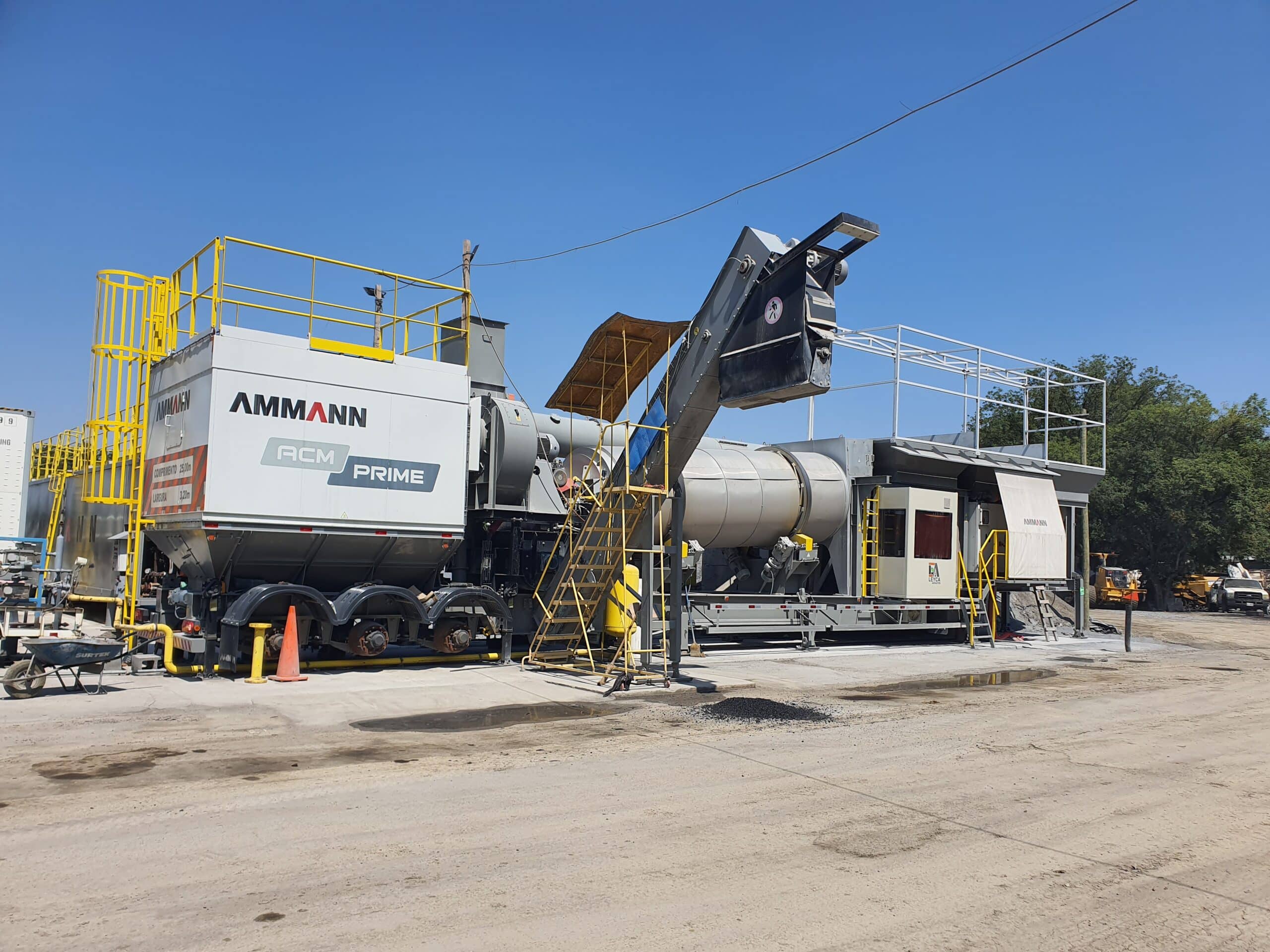
Leyca Asfaltos in Mexico purchased its second Ammann plant this summer, an Ammann ACM 140 Prime, as the company moved up to government projects.

Leyca Asfaltos in Mexico purchased its second Ammann plant this summer, an Ammann ACM 140 Prime, as the company moved up to government projects.

The growth is also impacting the company’s paving division. Leyca Asfaltos purchased a second Ammann AFT 600-3 asphalt paver, in addition to the Ammann plant.

“The private market has experienced a 40% increase, and this second plant will make us competitive as we venture into the public works sector.”—Mario Levya

Expanding business

Expanding into the public sector is a big step for Leyca Asfaltos. The company started as an earth-moving business. It then ventured into asphalt production—a move that led to the creation of Leyca Asfaltos. The name of the company was formed by combining the names of the owners, Mario Levya and Juan Carlos Cantu.

The company’s first plant purchase was an Ammann ACM 140 Prime. It has since added a number of Ammann products to its lineup: an AFT 600-3 asphalt paver, an ARX 110 tandem roller, and an AP 240 pneumatic-tired roller.


Moving toward sustainability

Leyca Asfaltos is reportedly the first asphalt producer in the state of Nuevo Leon to use natural gas as a fuel.

“It’s mainly about caring for the environment and giving back a better life,” Leyva said. “We are a company that wants to generate value by reducing our emissions in all processes. Using natural gas in our plant guarantees lower emissions.”

Choosing natural gas was a relatively easy decision. “It has low cost, good availability and the low emissions that will help us better conserve our planet,” Leyva said.

Using the fuel has been effortless, he said. The next environmental effort might well be using recycled asphalt in Leyca Asfaltos mixes. The company already processes waste materials for re-use at a later time. That commitment is making projects greener and helping Leyca Asfaltos’ business.

“End customers appreciate our commitment, and it has been the entry card to the government,” Leyva said. “In all government projects, we must disclose the environmental impact and mitigation activities.”

RAP Management LLC Does it First

Making quality mix

Sustainability is a good start for a plant, but other goals must also be met. The new plant had to be productive from day one. “The help of the new plant was instantaneous, as we respond very quickly to all our commitments,” Leyva said.

Quality is key for the company. “The mix is excellent,” Leyva said. “The recipe we put into the program is always exact to the design and control of the laboratory.”

The plant has not been relocated frequently, though it is designed for easy transport. If relocation is necessary in the future, Leyca Asfaltos will be ready.

The company also noted that the plant’s remote assistance is very helpful.

Ammann Group’s ACP ContiHRT

Paving projects

The success of the first Ammann plant led Leyca Asfaltos to choose the Ammann AFT 600-3 paver. “The plant gave us such good results that we had confidence to take an additional step with the Ammann brand,” Leyva said. “The results have been remarkable, and we are now purchasing a second Ammann paver.”

The paver offers stability through the grip its tracks provide and eases burdens on the operator through its PaveManager 2.0 control technology.

“It is very friendly and practical to use,” Leyva said. “The machine almost works alone. The longitudinal leveling is very friendly. Once it is configured, we leave it on automatic and the paver works alone.”

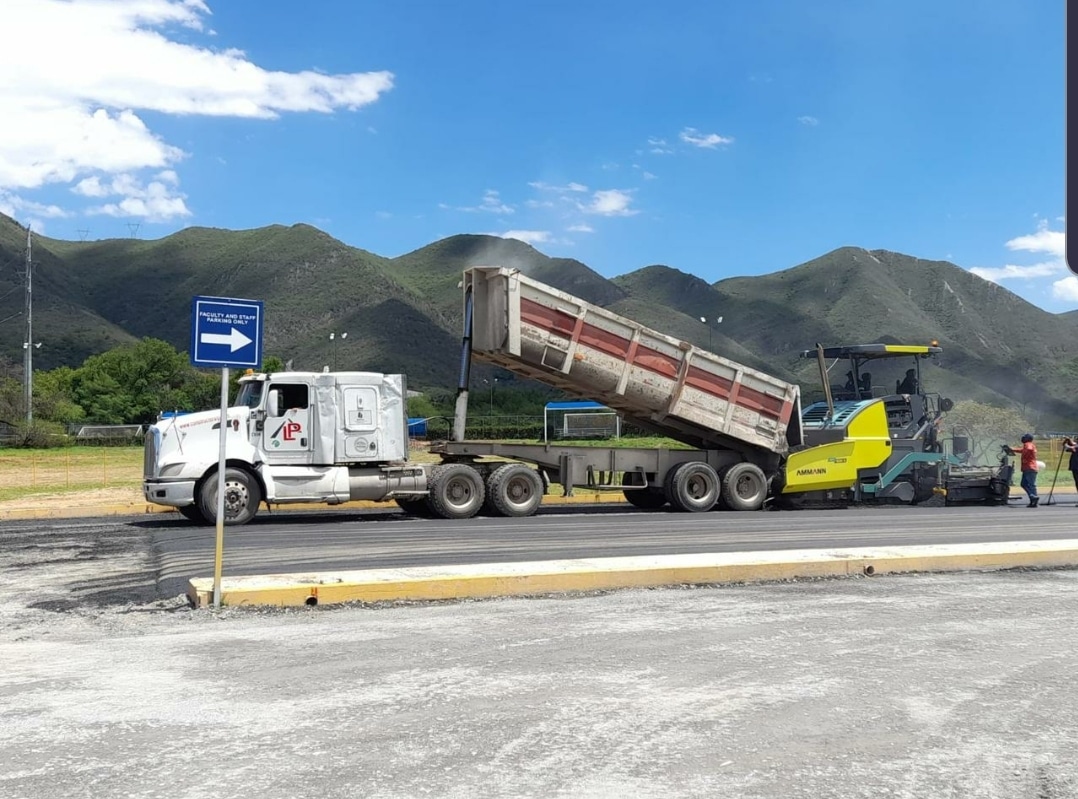
The Ammann AFT 600-3 asphalt paver is on a Leyca Asfaltos jobsite.

Quality is such that it has become a selling point for Leyca Asfaltos. “Our client portfolio is growing day by day because they trust our company and the equipment we have,” Leyva said.

Working behind the paver is an Ammann ARX 110 tandem roller. “It is a completely modern machine that allows the operator to generate quality compaction,” Leyva said. “Density is reached very efficiently.”

Operators appreciate the machine’s maneuverability and visibility, as well as the electric drive lever, which enables smooth starts and stops on the freshly placed mat.

Leyva sees the roller as a key component in the successful outcome of the projects. “The joint cutter and compactor make a difference in the finishing. The crab step is an option that provides a lot of maneuverability.”

The Ammann AP 240 provides what Leyva considers a great finish thanks in part to the air-on-the-run system. “We adjust the pressure so we can provide a better finish,” Leyva said.

Sraloong Construction Builds Thai Highways, with Help from Ammann EasyBatch Plant 

The Dealer

Leyca Asfaltos has an exceptional relationship with TMR, the local Ammann Dealer. “TMR is an excellent ally that has always trusted our group of companies,” Leyva said. “It has an excellent sales and support team.”

TMR is the final piece to the puzzle—from asphalt production, to paving, to compaction, to after sales. Leyca Asfaltos uses Ammann products every step of the way and has become so successful that it is expanding into a new sector.

Cherry Point Airfield Project Success Story for S.T. Wooten

Teamwork was the recipe for success on S.T. Wooten’s paving project at the Marine Corps Air Station (MCAS) Cherry Point in Havelock, North Carolina. Tasked with repaving several runways and taxiways at the airfield, crews collaborated closely to execute in the short turnaround between departure and arrival time for the finished job.

Crews from S.T. Wooten’s asphalt and commercial divisions along with various subcontractors worked together to ensure a smooth landing for the project. Thanks to their hard work, the project was recognized with a national honor for excellence in airport paving—the National Asphalt Pavement Association’s (NAPA) 2022 Ray Brown Asphalt Pavement Award.

Wooten Recycles with Open Graded Friction Course

S.T. Wooten was hired as the turnkey contractor to manage and execute all construction activities for the Cherry Point job. While the project was given a tight timeline, the company’s previous experience on runway mill and overlay projects at the same airfield was beneficial on this project.

Building the Itinerary

The military hires construction companies through a Multiple Award Construction Contract (MACC) process which calls upon larger, pre-qualified general contractors to submit for and oversee projects. This system helps streamline the paperwork and increase efficiency. Historically, it could be a tedious process to ensure contractors align with all the federal requirements to work on a military base.

Daniels and Daniels Construction was selected as the prime contractor to oversee the Cherry Point project and S.T. Wooten was hired as the turnkey subcontractor to manage and execute all construction activities. While the project was given a tight 570-day timeline, S.T. Wooten’s experience having previously worked on resurfacing projects at the same airfield came in handy.

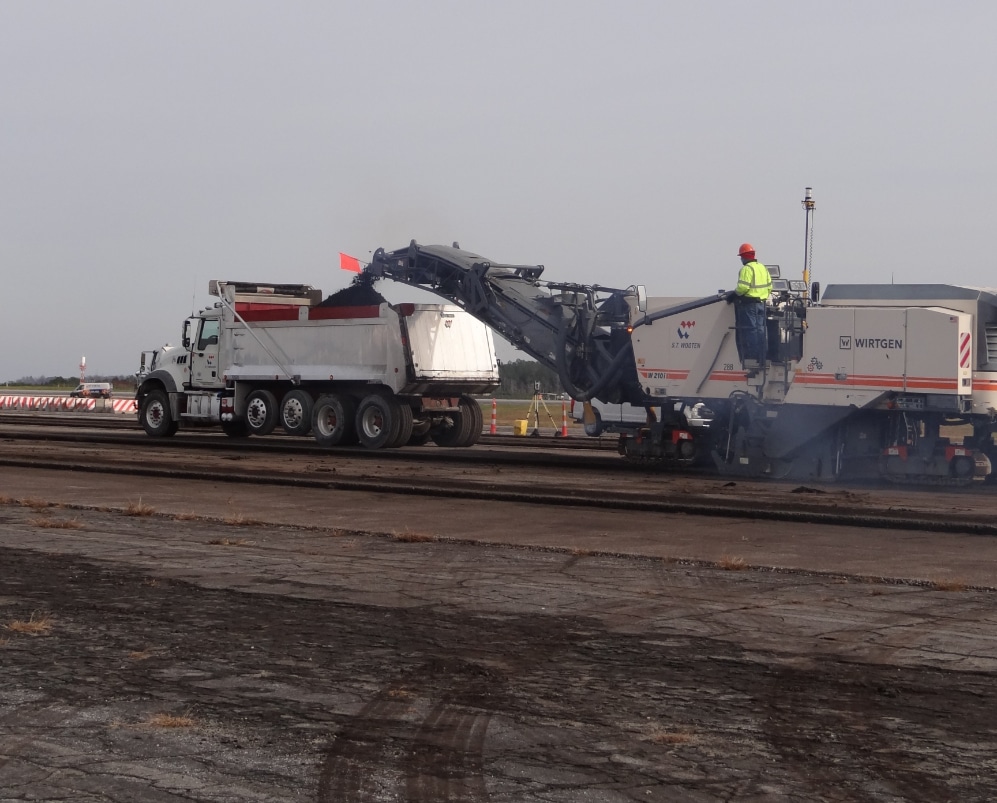
The Wirtgen machine-control technology used the 3D model to mill and cut to the proposed grade.

Readying for Takeoff

Crews understood that there was pressure to put the Cherry Point job on a fast track given the short timeframe to complete the project. Contracts were not finalized until mid-September 2021 and the base’s leaders wanted to get some paving done before the end of the year. Managers had to begin strategically developing schedules for not only milling and paving but also other subcontractors.

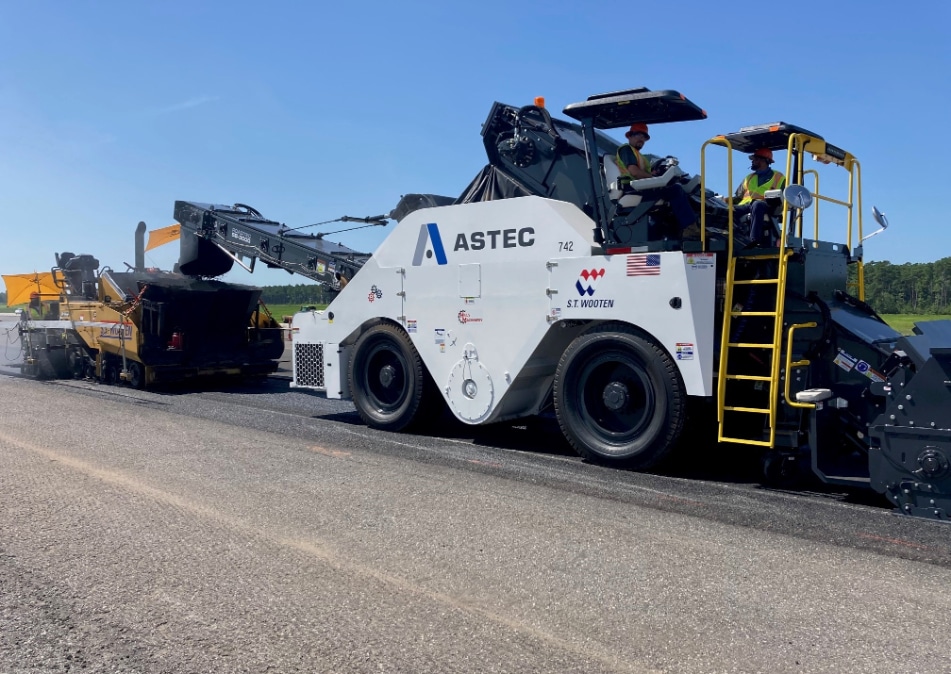
To expedite the process, S.T. Wooten moved a portable plant onto the base so crews could deliver asphalt as quickly as possible to the runways. A total of 53,470 tons of hot-mix asphalt was placed for the project. The asphalt plant came from the company’s Garner, North Carolina, location and was returned to that same site at the completion of the project. The same plant has been used to support the I-40 road widening project that is in the works between nearby Raleigh and Clayton.

Making the Shift on S.T. Wooten’s I-40 Road Widening Project 

Gaining Altitude

Paving work is always done with precise measurements in mind, but being exact is even more important for runways and airplanes. For Cherry Point, the military required that the finished pavement had to be within 3/100s of an inch of the plan’s elevations.

To help achieve such an exact standard, S.T. Wooten utilized a Wirtgen milling machine with 3D machine control. This is the same approach used in GPS-controlled grading and earthmoving equipment; here, those same 3D models were used for machine-controlled milling to both the exact grade and slope needed.

S.T. Wooten started by surveying the existing elevation on each runway.

  • The measurements were compared to the project plans, which proposed a new finished elevation. The crews couldn’t simply mill and replace the pavement in the exact same way; the entire runway needed to be reprofiled.
  • Senior GPS Engineer Danny Wrench used the project plan to create a 3D model of those new elevations.
  • The Wirtgen machine-control technology used the 3D model to mill and cut to the proposed grade. This helped ensure the milled surface matched both the new grade as well as milling down to the level required. In this case, that was two inches below the proposed finished elevation.

A second elevation survey was done to ensure the newly profiled and milled surface matched the project specs. This post-mill survey had to be submitted for approval by the government or architect/engineer before the next step.

Crews then paved the 2-inch surface course. A third and final survey confirmed that the final surface elevations were within the 3/100s of an inch of the plan’s specifications.

Crews paved the 2-inch surface course prior to a third and final survey confirming the final surface elevations were within the 3/100s of an inch of the plan’s specs.

Prepared for Turbulence

While 3D modeling helped crews ensure accuracy, the unexpected realities of a work zone can always throw a wrench into plans. One obstacle with the Cherry Point job emerged when it came time to change out the existing pavement profile, which consisted of an old layer of paving fabric that was installed between asphalt lifts. The fabric was not always in the exact location it was supposed to be, which caused milling and paving to take longer than expected.

The team took some troubleshooting measures to help clear the hurdle. Crews performed additional milling in locations of the runway where uncertainty existed to ensure any fabric they encountered was completely removed. Then they placed a new leveling layer of asphalt and re-milled the leveling course to the required pre-pave elevation per the 3D model.

Wooten Expands North Carolina’s I-95

Changes in Flight Path

In addition to some execution challenges, there were changes in the project plans that called for crews to pivot. For paving, a Michigan Wedge technique had traditionally been used for runway construction at the base—involving the creation of a 45-degree slope on the asphalt edge and joining lanes with a joint heater. The Cherry Point project had initially called for a similar strategy, but specs were updated to require a saw-cutting technique.

A subcontractor was hired to perform the saw cutting, which helps ensure a tight connection between lanes. However, the process—combining saw cutting and milling—was one that crews also had to monitor stringently as it can be somewhat messy. Crews were constantly cleaning up foreign object debris (FOD), which is airfield jargon for dust, bits of pavement and rocks. While these small bits might not seem like a big deal, they are especially important to manage on airfield projects where too much dust can cause costly problems for jet engines.

The Marine Corps Air Station Cherry Point project garnered a 2022 Ray Brown Asphalt Pavement Award for S.T. Wooten.

A Successful Landing

Despite a rushed start and some changes to the project specs, roughly half of the work was completed before Christmas 2021. That gave crews a long runway to finish the paving when the weather was warmer in the spring and summer 2022. It also meant that crews mostly had to deal with reinstalling the lights and finishing the lane markings toward the end of the project.

Having runway experience helped the team successfully fast-track this project and ensure they safely and successfully met each milestone along the way. Collaboration and hard work also propelled the project to its scheduled completion date. The results will allow a smoother landing for aircraft in the years to come at Cherry Point airfield.

And thanks to the great work conducted by all the crews involved with the project, S.T. Wooten was proud to put some new hardware in the trophy room with its NAPA Ray Brown Award recognition.


Chris Croom is the division manager; materials and quality control, S.T. Wooten Corporation.

Luck Companies Celebrates 100 Years

In 1923, Charles Luck Jr. opened a crushed stone operation, Sunnyside Granite Company, in Richmond, Virginia. One hundred years later, Luck Companies is the nation’s largest family-owned and operated producer of crushed stone, sand and gravel.

Today, Luck operates 30 locations across Virginia, North Carolina, South Carolina and Georgia and employs approximately 950 people across its divisions:

  • Luck Stone, the nation’s largest family-owned and operated producer of crushed stone, sand and gravel;
  • Luck Ecosystems, which transforms raw materials into environmental performance products;
  • Luck Real Estate Ventures, which specializes in the development of industrial and commercial land.

Throughout its 100-year history, Luck Companies has acquired numerous plants, including its Bull Run Plant in Loudoun County in 2002.

Although Luck Companies has experienced plenty of good fortune in its 100 years in business, its success has little to do with luck. Quite frankly, it doesn’t even have to do with rock. According to Charlie Luck IV, CEO of Luck Companies and grandson of the founder, the company focuses on the “how” rather than the “what” behind its operations. “We are in the crushed stone business,” Luck said. “This is the ‘what.’ Our values of leadership, integrity, commitment and creativity are the ‘how.’

“Our business is aggregates, but people are our purpose,” he continued. “As we mark our 100th year in business, our success has been fueled by people who embody tremendous pride, deep caring for each other, world class innovation, and a commitment to our values and beliefs.”

“We’ve learned that the two biggest reasons families do not make it from one generation to the next are lack of trust and communication. For [Richard] and I, communication and trust have been, and will continue to be, critical in leading a successful transition.”—Charlie Luck IV

Luck Stone Expands Presence in North Carolina

The History of Luck

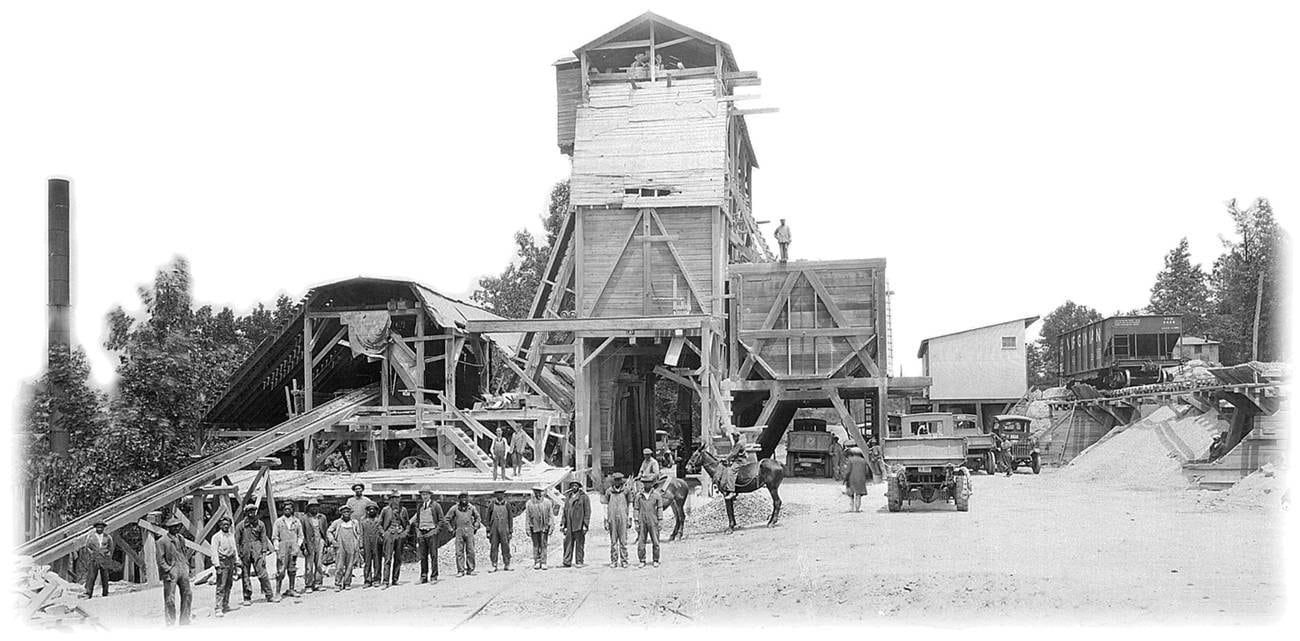
Luck Companies began as Sunnyside Granite Company in Richmond, in 1923. When the company began, production on a good day amounted to about 100 tons of stone—crushed by a mere seven employees with sledgehammers and loaded by hand onto mule-driven carts for transport out of the quarry to various construction projects.

Even in the early days of the company, its people were a priority for the company’s leaders.

“In the early 1900s, my great grandfather Charles S. Luck Sr.’s business, C.S. Luck & Sons, won a project to dig the foundation for the Pontiac Motor Company in Michigan,” Luck said. The Virginia-based company set out for the Midwest, transporting 100 associates to the site by locomotive. When the job was complete, the train’s cook car returned to Virginia, where Charles Luck Jr. served his employees meals from the car every day at Luck Companies’ first quarry, Sunnyside.

Charles Luck III, pictured at left at the company’s Boscobel Quarry, led Luck Companies from 1965 until 1999, when he passed the reins to his son, Charlie Luck IV, the company’s current CEO.

“The Sunnyside cook car is one of the earliest images in our company’s archives and has grown to symbolize the caring, people-focused approach to business that’s inspired our organization for 100 years,” Luck said.

This mentality has been evident in each of the company’s three generations of leadership. Charles Luck Jr. was known for saying, “If you take care of your people, they will take care of you.”

“This sentiment has served as the company’s North Star for a century,” Luck said. Charles Luck III, who led the company from 1965-1999, expressed that same belief through the company’s slogan and promise to people: “We care.”

Two Women of Asphalt: Meet Luck Stone’s Alicia Brooks and Mary Ann Clark

Charlie Luck IV broadened the scope of that belief under the company’s current mission statement, first announced in 2011: “We will ignite human potential through values-based leadership and positively impact the lives of people around the world.”

In celebration of the company’s 100-year anniversary, Luck Companies launched a “What is your Dream?” campaign where employees were asked to share their dreams: if they could do anything, what would it be? “We will always encourage associates to identify and pursue their passions, whether it’s professionally at the company or outside of work,” Luck said. “We were blown away by the responses and have learned so much about what inspires the incredible people that work at our company.”

“I think these quotes show that what we stand for hasn’t changed over time,” Luck said. “Our company has always been about people—the people who come to work each day to support what we believe in at Luck Companies, and the people who have chosen to partner with us: our customers and communities.”

Charlie Luck IV’s commitment to carry on and expand the legacy of his father’s and grandfather’s commitment to take care of people was cited as a reason for Luck being awarded the 2023 Barry K. Wendt Memorial Commitment Award by the National Stone, Sand and Gravel Association (NSSGA). The award recognizes individuals who exhibit dedication to family, community and the aggregates industry. Charles S. Luck III, Charlie Luck’s father, received the Barry K. Wendt Memorial Commitment Award in 2004.

In 2023, Charlie Luck IV was recognized by the National Stone, Sand and Gravel Association (NSSGA) with both the Barry K. Wendt Memorial Commitment Award and the ROCKPAC Paul Mellott Jr. Award for Political Excellence.

“[Luck’s] industry expertise and drive to help individuals succeed showcases he is an outstanding representation of the Barry K. Wendt Memorial Commitment Award,” said NSSGA President and CEO Michael Johnson.

Luck was also honored with the ROCKPAC Paul Mellott Jr. Award for Political Excellence, which recognizes industry leaders who work on behalf of the aggregates industry and promote the importance of political advocacy.

Culture & Community

According to Luck, the company’s culture has been integral to attracting the talent it needs to run such a large operation. “Our dedication to igniting human potential through values-based leadership really differentiates us, in addition to the personal development and technical training opportunities we provide to all associates throughout their entire career,” Luck said.

“As finding talent becomes more challenging, we rely on the strength of our culture,” Luck said. “The profitability of our business isn’t enough in attracting talent—we need to provide meaningful career paths and opportunities to contribute to the community.”

Here, Charlie Luck IV and Richard Luck celebrate the 100th anniversary of Luck Companies.

Luck Companies’ people-first mentality is also evidenced in the way the company supports and engages with the communities in which its 30 facilities operate. “At Luck Companies, we engrain ourselves in the communities where we work and live,” Luck said. “We take great pride in supporting communities and helping our neighbors, and we’ve always operated this way. I can remember the story of how my grandfather, Pop Pop, bought the first ambulance for the local fire department when they needed us. It’s in our DNA to give back.”

The Luck Foundation, founded in 1966, partners with nonprofits to lead work that results in long-term, positive outcomes for its communities.

“We always want to be seen as a supportive force in every community where we conduct business,” Luck said. “As we join new communities, our first step is to learn from and engage with the citizens so that we can work in tandem to achieve shared goals.”

Luck Stone Launches JobSight Digital Platform

As part of the company’s 100th anniversary celebration throughout 2023, Luck Companies launched a company-wide Gift of Giving campaign where every employee selects a nonprofit of their choice to receive a $1,000 donation from the Luck Foundation, for a total of $1 million in 2023. “This unique opportunity was a chance for associates to think deeply about their personal values and the causes that are closest to their hearts,” Luck said.

“We’re excited about the future, specifically the hands-on learning opportunity with the innovative technologies that make autonomous hauling possible. The partnership with Caterpillar represents an acceleration of autonomous technology for smaller mining operations, enabling a step change in safety and productivity for our industry.”—Charlie Luck IV

Luck Looks Ahead

Luck Companies is already looking ahead at the company’s next 100 years, in terms of leadership, innovation and expansion, to name just a few.

In the company’s 100 years, there have been only three presidents. Charles Luck Jr. led the company for about 40 years; Charles Luck III led the company for about 30 years; and Charlie Luck IV has led the company for 30 years so far. Luck’s son, Richard, currently serves as the vice president of Luck Stone’s Central South Region and is the fourth-generation family leader to join the company.

Luck Companies continues to innovate and invest in emerging technologies. In 2020, it launched JobSight, a digital platform allowing customers 24/7 accessibility to place orders, manage accounts, track deliveries and more.

“I think the most important factor for a successful transition is to be highly connected to one another and to the business,” Luck said. “Richard is highly committed to and passionate about our people-focused mission. [We’re] doing some great work together to ensure his transition to president in the next few years.”

Luck and his wife, Lisa, made it clear to their children that Luck Companies was big enough for all of them to have a role at the company, if they wanted to. They also made it clear that they would help their children pursue passions outside of the company.

Richard knew he wanted to be a part of the company so much so that he was ready to jump in immediately after graduating from college. However, Luck has a policy in place that family members need to spend three to five years working outside of the company before pursuing their careers with Luck. “Richard is the first to admit that he wasn’t a big fan of that rule at the time, but in hindsight it enabled him to grow and learn in valuable ways,” Luck said.

When his career path led him back to Luck Companies, Richard was put on a rotational series of assignments and his first stop was not in the field, but rather supporting human resources and InnerWill, a nonprofit leadership institute founded by Charlie Luck that works to bring values-based leadership to organizations outside of Luck Companies.

Luck Stone Corporation’s Drone Program Reveals New Efficiencies for Luck

“My dad took a lot of heat from me and my grandpa—we both wanted me out in the field,” Richard said. “But in hindsight it was the right place to start. When I got to the quarry, I was ready. I knew what was expected and would walk the talk.”

Richard then went on a series of rotations in the plants and other roles, spending nine to 18 months in each role. His first role was at Leesburg, where he was in the foreman training program, working in every aspect of the quarry. He went on to become a plant manager at one of Luck Stone’s quarries, where he led a team of Luck employees for the first time. He then served as a sales manager and interned with a Luck customer before serving as general manager of Luck’s Atlanta-Stephens Plant in Atlanta, as well as joining the Luck Companies’ leadership team.

Charlie Luck said his family is active in the family business community and strives to learn all they can about successful family businesses around the globe. “We’ve learned that the two biggest reasons families do not make it from one generation to the next are lack of trust and communication,” Luck said. For the last 15 or so years, these have been areas in which Luck has devoted significant attention.

“For [Richard] and I, communication and trust have been, and will continue to be, critical in leading a successful transition,” Luck said. “I want my son Richard to be the most successful he can be, so it’s about working with him to understand his biggest leadership and developmental opportunities and nurturing those areas. Through our work together, I’m continuing to listen, share the wisdom I’ve gained over the years, and ensure opportunities for him to lead alongside me and our leadership team. We want to equip him with all the tools he needs to succeed.”

During the Great Depression, Luck Companies set up an on-site kitchen in an old train car to provide hot meals to employees each day.

Innovation Ahead—and Behind

Luck Companies is also looking to the future by continuing to innovate and invest in emerging technologies. According to Luck, the company has a long history of innovation. In 1930, its Boscobel quarry became the first crushed stone operation in Virginia to convert from steam to electric power. The company was also an early adopter of computerized ticketing for the sales offices, introducing the technology in 1972. The company was also at the forefront of the safety culture conversation, launching its Value Safety initiative in 2001.

“We have always been driven to innovate and pioneer new technologies that advance our business and our industry, including automating our plants back in 1977,” Luck said. In 2020, the company quickly responded to the COVID-19 pandemic by rapidly enhancing its safety protocols and introducing digital ticketing for customers. It also launched JobSight, a digital platform allowing customers 24/7 accessibility to place orders, manage accounts, track deliveries and more.

“We’re not slowing down,” Luck said. In 2022, Luck Companies announced a partnership with Caterpillar to introduce autonomous haulers, beginning with a pilot at Luck’s Bull Run Plant. Luck said this initiative provides opportunities to develop and cross-train the company’s workforce and will enable Luck Companies to attract more talent to the company and the industry in general.

Filter with a Little Luck

“We’re excited about the future, specifically the hands-on learning opportunity with the innovative technologies that make autonomous hauling possible,” Luck said. “The partnership with Caterpillar represents an acceleration of autonomous technology for smaller mining operations, enabling a step change in safety and productivity for our industry.”

Luck said the company also intends to expand its use of data and technology in the decision-making process, improve communication and elevate performance.

“Additionally, we are implementing programs aimed at creating a diverse workforce and culture that prioritizes the mental, physical and financial well-being of our associates and ensures a sense of belonging for all,” Luck said. “The places that focus on the culture and creating connection for people will get the best talent.”

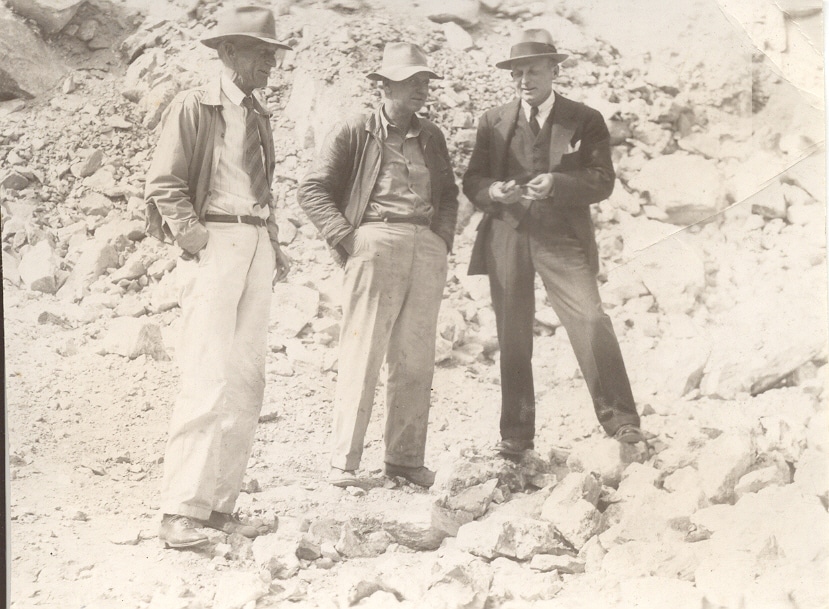
In 1927, Charles S. Luck Jr. (pictured) acquired Sunnyside Quarry from his father, beginning the formal separation of the quarrying and construction businesses.

In addition to offering a variety of free classes designed to help improve associates’ mental, physical and financial well-being, the company recently added five Well-Being Days to each associates’ PTO benefit.

“In the next 100 years, we will continue to focus on people because Luck Companies is more than a stone company; we are a people company,” Luck said. “We will continue to prioritize the development of our associates and bring on new team members to share their talents and perspectives with us.”

According to Luck, the company’s growth strategy is also people-focused. The company intends to build out its markets across the Southeast Region from Virginia to Georgia as part of its five-year vision cycle.

“For us, growing our footprint is about spreading the reach and impact of our mission to new associates we welcome, to new customers and vendors we partner with, and to the great new communities we get to be a part of,” Luck said.

To commemorate its centennial, Luck Companies has developed a series of interactive digital experiences to share the celebration with associates, retirees, customers and communities throughout the organization’s Virginia to Georgia footprint at LuckCompanies100.com.


Cat, Luck Collaborate on Autonomous Mining Solutions

This will be Caterpillar’s first autonomous deployment in the aggregates industry and will expand the company’s autonomous truck fleet to include the 100-ton-class Cat 777.

In December 2022, Caterpillar Inc. announced its collaboration with Luck Stone to deploy autonomous solutions at the company’s Bull Run Plant in Chantilly, Virginia. In an effort to accelerate its autonomous solutions beyond mining, the pilot project will implement the Cat MineStar Command for Hauling system on Luck’s fleet of 777G trucks at Bull Run.

“This will allow Caterpillar to gain greater insights on quarry operations in order to tailor the next generation of autonomous solutions specific to quarry and aggregate applications,” reads Caterpillar’s press release announcing the project. “This project supports the acceleration of autonomous technology for operations with fewer mobile assets to allow a step change in safety and productivity, as currently experienced at large mining operations.”


100 Years of Luck

The Sunnyside Quarry was purchased in 1923. In the quarry’s early days, seven associates crushed stone with sledgehammers and loaded it by hand onto mule-driven carts for transport out of Sunnyside Quarry. On a good day, production was about 100 tons.

  • 1923: Charles Samuel Luck Sr., owner of C.S. Luck and Sons Construction Company, purchases the Sunnyside Quarry, first mined in the 1890s, and Sunnyside Granite Company, incorporated in February 1907, to supply crushed stone for C.S. Luck and Sons’ construction and road-building needs.
  • 1926: Sunnyside Granite Company expands with the purchase of Boscobel Quarry.
  • 1930: Boscobel becomes the first crushed stone operation in Virginia to convert from steam to electric power.
  • 1933: Sunnyside Granite opens its Charlottesville Plant.
  • 1935: Sunnyside Granite opens its Burkeville Plant.
  • 1938: Sunnyside Granite opens its Fairfax Plant.
  • 1950: Sunnyside Granite opens its Augusta Plant.
  • 1955: Sunnyside Granite officially changes its name to Luck Quarries.
  • 1957: Luck Quarries prepares its first greenfield, which eventually becomes its Augusta Plant.
  • 1965: Luck Quarries purchases its Rockville Plant.
  • 1967: The Burroughs punch card machine is introduced at Rockville, the company’s first move to automate the billing process.
  • 1971: Luck Quarries launches a comprehensive safety program. The company also purchases its Leesburg Plant.
  • 1977: Luck Companies begins automating plants to increase production.
  • 1982: Luck Quarries becomes Luck Stone Corporation.
  • 1984: Luck Stone purchases its Elkton Quarry, which the company eventually trades with Vulcan Materials for the South Richmond Plant and the Gilmerton Distribution Yard. Luck Stone also purchases its Greene Plant.
  • 1985: Luck Stone installs a computerized truck weighing system for the company’s scale offices.
  • 1985: The Powhatan Plant opens.
  • 1988: Luck Stone purchases the Bealeton greenfield. Luck Stone also expands into North Carolina with the purchase of its Burlington Plant.
  • 1990: The company designs and constructs the industry’s first self-service stone loading system. The Louisa Plant starts production.
  • 1992: Luck Stone implements one of the industry’s first state-of-the-art computer monitoring systems for crushing operations.
  • 1993: Luck Stone purchases its Goose Creek Plant.
  • 1996: Luck Stone expands into the sand and gravel market with the purchase of the King William Sand and Gravel Plant. This plant ran until 2005.
  • 2000: Luck Stone launches AdvantageAccess, a digital customer portal.
  • 2001: The Value Safety initiative was launched to propel Luck associates’ dedication to safety. Luck Stone continues to grow in North Carolina with its Pittsboro Plant.
  • 2002: Luck Stone completes the purchase and swap of the Burlington Plant in North Carolina for two Northern Virginia Martin Marietta sites, now its Culpeper and Spotsylvania plants. Luck Stone also acquires its Bull Run Plant.
  • 2004: The Caroline Plant opens.
  • 2005: Luck Stone opens its Massaponax Plant.
  • 2008: Luck Stone purchases/trades its Augusta and Elkton quarries for Vulcan’s South Richmond Quarry and the Gilmerton Yard.
  • 2009: Luck Stone opens the Berkley Yard in Norfolk, Virginia.
  • 2010: Luck Stone acquires the Toano Yard near Williamsburg, Virginia.
  • 2011: Luck Companies is established. The company also introduces iPads and apps to contract haulers.
  • 2012: Luck Stone introduces the industry’s first unmanned pit loader.
  • 2013: Luck Stone acquires its first Unmanned Aerial Vehicles for plant inspections.
  • 2017: Luck Stone opens the Prince Edward Plant, the first greenfield site developed by the company in 10 years.
  • 2018: Luck Stone acquires Stephens Industries in Atlanta, Georgia, now known as its Atlanta-Stephens Plant. This marked the largest acquisition in the company’s history. Luck Stone acquires the Rivanna and Kershaw plants, opens Oyster Point Distribution Yard, and acquires a greenfield permit in Crewe, Virginia.
  • 2020: Luck responds to the COVID-19 pandemic with the introduction of digital ticketing and enhanced safety protocols. It also launches JobSight, a digital platform allowing customers 24/7 accessibility to place orders, manage accounts, track deliveries and more. The company also acquires a greenfield permit in Sanford, North Carolina.
  • 2021: The company acquires a greenfield permit in Enoree, South Carolina. Luck Stone acquires its Mount Airy and Luck Stone Eden plants.
  • 2022: Luck Companies partners with Caterpillar to introduce autonomous haulers, beginning with a pilot at its Bull Run plant. The company also acquires a greenfield permit in Fairfield, South Carolina.
  • 2023: Luck Companies celebrates 100 years in business.