PFAS Update

ATL offers guidance for potential PFAS contamination from airport millings out of New York

The subject matter experts at Atlantic Testing Laboratories (ATL), headquartered in New York, have examined the issue of per- and polyfluoroalkyl substances (PFAS) occurring in the pavements milled during pavement maintenance activities at airfields. As discussed in the January 2024 issue at this link, PFAS are a group of man-made chemicals, including perfluorooctanesulfonic acid (PFOS) and perfluorooctanoic acid (PFOA). The PFAS from firefighting foam is the specific concern for the asphalt maintenance and preservation industry that we’ll focus on here because the foam has been used in training operations at airfields and other locations where contractors now mill and overlay.

Cheyenne J. Dashnaw, P.E., is a senior engineer at ATL and wrote recently of the hazards contractors may encounter when milling at airports and other locations with a history of using firefighting foam. Contractors collecting contaminated recycled asphalt pavement (RAP) and/or recycled concrete aggregate (RCA) need to be aware of potential environmental and legal consequences.

“If contaminated RAP or RCA are relocated to a different site, the contractor could be considered a potential generator and transporter of hazardous materials,” Dashnaw wrote. He explained to AsphaltPro readers how the contractor could be seen as a “generator” in this circumstance.

“If you have a project that may require sampling for PFAS or any other environmental analyte, ATL, a WBE certified company, has experienced environmental professionals located throughout New York State to perform sampling and coordinate applicable analysis.”

“The definition for generator is ‘any person, by site, whose act or process produces hazardous waste…or whose act first causes a hazardous waste to become subject to regulation.’” In these cases, the United States Environmental Protection Agency (USEPA) and the New York State Department of Environmental Conservation (NYSDEC) “would generally view the site owner as generators for most hazardous wastes, but could consider site owner and contractor as co-generators of certain hazardous wastes, especially for the scenario of a material being relocated to a different site without yet knowing it is a hazardous waste,” Dashnaw shared. “Additionally, if the materials are used as fill or an ingredient in new pavements, there is a risk of contaminating multiple other sites.”

In Defense of Segregation

The New York State Department of Transportation (NYSDOT) allows up to 30% RAP in its mix designs, according to Materials Method 5.16. Of course, the RAP material must meet spec. The NYSDOT Standard Specifications section 703-09 states:

“The aggregate component of the RAP shall meet the requirements of section 703, Aggregates. The bitumen component of the RAP shall be asphalt cement and shall be free of significant contents of solvents, tars, or other contaminating substances that will make the RAP unacceptable for recycling as determined by the Department.”

Dashnaw shared that in January 2021, NYSDEC Division of Environmental Remediation (DER) released a technical guidance document titled, “Sampling, Analysis, and Assessment of Per and Polyfluoroalkyl Substances (PFAS),” requiring sampling and analysis of environmental media for PFAS as part of remedial programs under 6 NYCRR Part 375. This guidance document has since been updated, with the current version dated April 2023.

Currently, NYSDEC DER requires the use of EPA Method 1633 for analysis of PFAS in all environmental media (not including drinking water), Dashnaw wrote. The background on EPA Method 1633 and PFAS cleanup is found at this link.

“Guidance values for limits in soil have been developed for sites in New York State, but soil cleanup objectives (SCO) are not planned to be established until at least a proposal and approval in a future revision to 6 NYCRR Part 375-6. The current guidance gives limit values for PFOA and PFOS based on the anticipated site use for soil and groundwater. While regulations are in progress, it is important to rely on knowledgeable environmental scientists and engineers to ensure that sampling and analysis are completed reliably and in accordance with the most recent and updated regulatory standards.”

Only the Paranoid Survive

Dashnaw clarified: “While the guidelines include soil cleanup objectives based on site use conditions, these are not yet established as regulatory standards and future regulatory standards may differ. If millings are known to be contaminated with PFAS, disposal at a permitted facility should be considered to err on the side of caution. At the very least, I would recommend deferring to the guidance value for Unrestricted Use, which is 0.66 ppb for PFOA and 0.88 ppb for PFOS. If you have samples exceeding these concentrations, disposal should be strongly considered.

“It is important to note that there is a risk that SCO could end up being lower than the current guidance values (and SCO could be developed for additional PFAS compounds other than PFOA and PFOS), but should at least work within the bounds of existing guidance.”

If a contractor suspects PFAS contamination, it’s wise to keep those incoming materials in their own stockpile. “Being able to separate materials is always beneficial, albeit not always obvious or practical,” Dashnaw said. “If a material does end up being discovered as contaminated, and it was managed separately, it is more efficient to track and less costly for subsequent removal and disposal.”

For more information, contact Cheyenne Dashnaw at (315) 386-4578 or info@atlantictesting.com.

Terex Launches New Brand, MAGNA, for Aggregate Businesses

Terex® is proud to announce the launch of MAGNA, a new brand to address the demands of large-scale operations in the quarrying, mining, construction and recycling industries.

Readers will recognize Terex has heretofore provided compact and mid-size crushing and screening equipment.

With decades of experience and a reputation for excellence across its Powerscreen, Finlay and EvoQuip brands, Terex has been at the forefront of providing innovative, high-quality equipment solutions, according to the manufacturer. Under the strapline ‘Made for More,’ MAGNA will build on this legacy, offering a new range of high-capacity machinery tailored to meet the needs of customers requiring larger output and volumes.

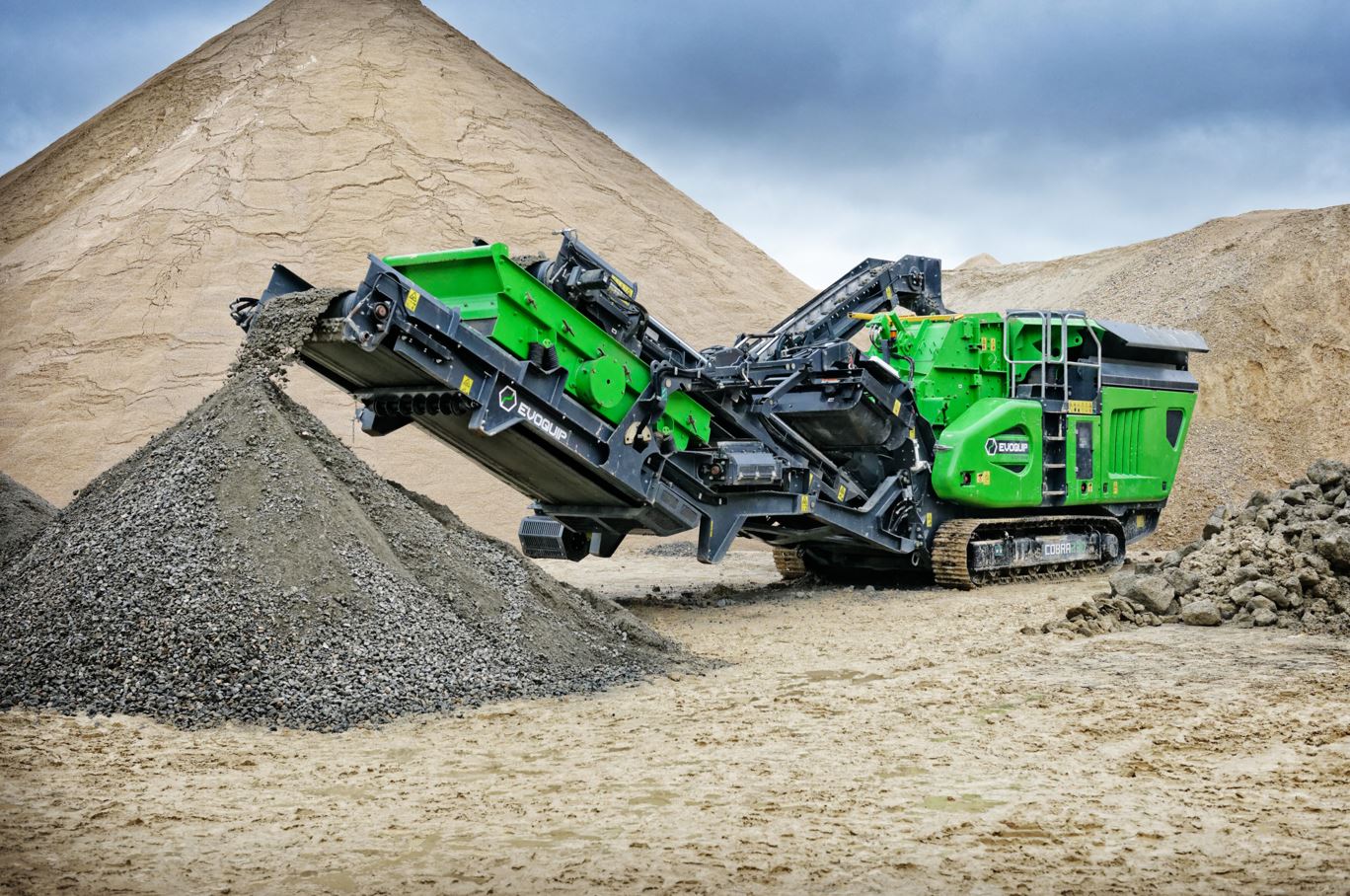
The MT130J features a Terex 51” by 39” single toggle jaw crusher. It’s one of many products in the MAGNA line, which includes crushing, screening, conveying and genset items.

The launch of MAGNA supports the growth of Terex by expanding its offering with products that complement its existing portfolio. MAGNA will leverage the global presence of Terex that spans across all continents, providing solutions supported by a global network of skilled distributors.

Neil McIlwaine brings 19 years’ experience in the global construction equipment industry with him to this role as business line director. Neil will be responsible for commercial, financial, sales, marketing and product development aspects of MAGNA, ensuring it achieves its growth and profitability targets.

Pat Brian, vice president of Terex Aggregates explained, “While we have a prominent position in the global market for compact and mid-sized materials processing equipment, MAGNA will position us to serve customers requiring higher output machines, via our renowned and extensive global distribution network. With an ambitious product roadmap and supported by Terex-wide engineering, manufacturing, marketing, parts and service capabilities, MAGNA will provide significant growth potential for Terex.”

Spearheading the launch of MAGNA is Neil McIlwaine, newly appointed business line director. Having previously worked for Finlay, McIlwaine completed several successful assignments in China and South Africa to establish and increase Finlay’s distribution footprint and continued growth strategy globally.

For more information, visit www.terex.com/magna.

Best Practices for Mobile Asphalt Crushing

Mobile asphalt crushing offers a range of benefits, from enhanced efficiency and flexibility to environmental benefits and lower costs. However, to harness these benefits, a crushing operation must operate efficiently or they risk wasting money on operating costs and limiting their production.

That’s why World of Asphalt 2024 brought together a panel of crushing contractors from around the country to discuss optimal crushing and screening setups, preventive maintenance processes, and common asphalt crushing problems.

Maintain it Before it Breaks

How to Set Up Your Mobile Crushing Site

When it comes to determining the setup of your mobile crushing operation, you must first know what you will be crushing, and what size you’ll be crushing it into. And, it largely comes down to reducing wear while maximizing production. “Your wear cost is very important,” said Ron Garofalo, president of DAG On-Site Crushing. “It’s not always about your production rate, it’s about your wear cost.”

For example, Allen Kurre of Kurre Contracting said, there’s no reason to run asphalt millings through the crusher. “It just causes unnecessary wear.” Eric Bruno, president at Midwest Crushing & Recycling, estimates 70% of asphalt millings won’t need to be crushed, so when he’s handling millings, he adds a scalper to screen out that material ahead of the crusher. “Scalpers are easy to set up, easy to move, and that 70% of material pays for the scalper real quick if you’re looking at large quantities.”

Garofalo provided another example that increases production and reduces wear by removing the screen deck and crushing 2-inch minus material when applicable. “It’s a very usable material for fill, because when I say 2-inch minus off an impact, there will be a lot of 1 ½ inch in there, a lot of ¾ inch in there,” he said.

Quick Tip: “With an impact crusher, you’re going to get very usable, symmetrical, compactable material,” Garofalo said. “With the jaw crusher, you might set it for 3 inches, but any material that can fit through the slot at the bottom is ‘done’ even if it’s 3×5 inches, so you’ll still need a secondary crusher when you’re running through a jaw.”

He uses a jaw crusher when crushing rock or as a primary crusher on large jobs. For example, they recently crushed 20,000 tons of concrete with rebar. “We ran it through the jaw, got the steel out with the magnet, and used our RM90 like a George Foreman grill,” Garofalo said. “We set it and forget it, because it’s getting fed 6-inch material all day from the jaw in front of it.”

Garofalo said using such a setup increased their production from 700 tons per day to 1,400 tons per day.

DJ Cavaliere of Cavaliere Industries has his own solution to maximize production. “We only make ¾-inch minus,” he said. “For years, we gave our customers whatever they wanted. Now, we’ve trained them that ¾-inch is all we do, so they bid their jobs knowing this. We aren’t going to change the screen deck or have a separate pile just because you want 200 tons of 1 ¼-inch.”

Cavaliere said this decision has been key to their business. “We do 25,000-30,000 tons on a yard the size of a postage stamp, where our waste bins hold 800 yards of material,” he said. “We probably have 500 yards of material on each end—finished and unfinished. What comes in goes right out.”

Bruno also makes only one product, ⅝-inch. They’ve configured a way to do so with a one-person operation. “I use my top screen as my finish deck and I don’t mess with my mids belt,” he said. “It looks funky, but it works.”

The operator feeds the scalper to size it, the finished product goes straight into the stacker and scale while the chunks go to the crusher. “I’ve got no material hitting the ground, it’s all hitting my stacker and my scale, so it’s making me money as fast as it can be processed,” Bruno said. “I’ve trained my customers that if that material hits the ground, it’s theirs to move. If I have to get a wheel loader out there, that’s going to increase their price.”

Garofalo has a different approach. “We’re a custom crushing company, so we crush what the people want,” he said. “We change our screens and we get paid to change our screens. It’s not for free. You have to get paid for what you do.”

Quick Tip: Garofalo told the audience to keep fines from getting into the crusher. “There’s less wear on an impact crusher crushing concrete all day than crushing fines.” He recommends taking care to minimize dirt and other fines when loading the crusher. For example, when striping slabs of concrete, the operator should avoid taking any dirt with the slab.

Peckham Quarries the Surface, Crushes Underground

Start with Good Material

One lesson every crushing operation must learn is ‘Garbage in, garbage out,’ Garofalo said. “We’re running impact crushers, not incinerators,” Bruno added.

He stresses the importance of looking at the piles your customers are asking you to crush. “If it’s going to be dirty, I’m going to have to budget this much more per hour because I’m going to have to clean, we need separation time, etc.” Bruno said. “We aren’t choosing what people bring us, but we charge accordingly based on what they bring us,” Cavaliere added.

If you can’t view the piles, Bruno recommends contractually protecting yourself. “It’s important in your contract that you say, ‘You’re liable for that, because I can’t show up to a job five hours away from my house and be expected to know what’s in that pile.’”

Quick Tip: Although most panelists reject petromat outright, Bruno has found a way to process it efficiently. “My crusher has a cross belt on the bottom so you can run your trash in the opposite direction, so I can spit the petromat back on the ground without getting out of my excavator,” he said. “We have a lot of petromat in southern Illinois, and the ability to handle petromat sets me apart in my area.”

There are some materials Bruno simply won’t touch. For example, if they spilt liquid AC at the asphalt plant and shove it up into the millings or the plant waste. “If I roll up and find that, I’m not touching that pile because once it gets in my crusher, it’s going to build up, stop up, and I’m going to spend hours chiseling,” he said. “I’m not there to clean my crusher, I’m there to crush material.”

Part of this approach requires empowering operators to make decisions about what goes in the crusher. “I tell my guys if they see something that shouldn’t be put in the crusher, shove it to the side. That’s the customer’s to deal with.”

Quick Tip: One material source that can be particularly problematic is demolition, Garofalo said. “I’m very picky when I go to a demolition job about how they demolish the building and what they’ve left in the building,” he said. Once, he walked away from a hotel demolition where the pile had telephones in it. “Years ago, buildings were knocked down and everything went into the landfill. You don’t demolish a building anymore, you dismantle it. Everything has a place today.”

Five Recycle Pain Points You Can Resolve

How to Choose the Best Blow Bars

“Selecting the right blow bars will depend on what you’re crushing and how you’re crushing it,” Garofalo said. The goal, of course, is to get optimal wear out of each set of blow bars regardless of the material from which they’re made.

Kurre prefers high chrome hammers for crushing asphalt, estimating they get 15,000-18,000 tons out of each set. Cavaliere also prefers high chrome hammers for crushing asphalt, adding that they have high wear resistance but can be brittle. “If you get something like a sledgehammer head that ends up going through the crusher, it will crack that hammer,” he said.

Since his company has moved away from supplying multiple types of material, they primarily use hammers with a ceramic inlay. “We get the best wear and minimal breakage with those,” he said, adding that they get roughly 250 hours out of each set.

Quick Tip: With a four blow bar system with two longs and two shorts, the operator is usually only changing two blow bars at a time. “Your longs become your shorts,” Garofalo said.

Bruno also prefers ceramic hammers. “They help take the heat off that steel and it increases our wear life,” he said, estimating they can get 20,000-25,000 tons per set in Illinois, where the rock is softer, but that the hard red rock they crush in Arkansas cuts that estimate in half.

Garofalo recommends high chrome hammers for crushing asphalt, but ceramic inlay hammers for concrete. Although his company crushes both materials, Garofalo said they don’t usually switch hammers if they are switching between asphalt and concrete regularly because of the time required—especially if they’ve been crushing asphalt due to potential AC buildup.

“If you have the choice and you’re doing both products, always run concrete through the machine a little bit before you’re going to change your blow bars because it loosens everything up,” Garofalo said. “That’s just one of those little things we just do because it saves half an hour or so.”

Ultimately, he said, it comes down to time and experience. “You have to watch, keep records, count hours, and you’ll learn for yourself what your optimum wear is out of what type of blow bar.”

Quick Tip: Pretty much all the panelists prefer square mesh screens and have minimal trouble with sticking. “Moisture kills everything in the material processing industry,” Bruno said, adding that if the material is wet, it’s going to stick. “If it sticks, we just go up there and tap the screen with a hammer and we’re good to go.”

Crush for Cubical Aggregate

How to Keep Components Clean

One challenge when crushing asphalt in particular is that some of the fines will become airborne. When they hit the radiator or any other hot component, the AC will reliquify and stick to that component.

To prevent this from happening, Kurre recommends paying attention to the way the wind is blowing to minimize dust circulating to these critical components. Cavaliere recommends doing all you can to keep the dust down. “Our philosophy is to add more water to drop those dust particles to the ground,” he said. They also try to mix plant waste, which can be warm, with older millings to let it cool.

Daily maintenance is also key. Garofalo has a service truck out with every crew every day to meet the crew’s maintenance needs.

“We find keeping our [radiator] blown out every day and paying attention to the way the wind blows is usually enough,” Bruno said. “When we do have some build up, I found that spraying the radiator with a citrus spray and pressure washing it with hot water will break that stuff down and melt it right off.”

For Kurre, radiator buildup has been a significant problem. In the past, they’ve had an extra radiator on site so they can swap them out when the buildup gets too bad. “We’d have one in the machine and the other in a tub of citrus,” he said. Then, they began using miner’s moss around the outside of the machine to protect internal components. “That works really well for us. We can take it off, clean it, reuse it, throw it away when it gets too bad.”

Quick Tip: Cavaliere recommends on cold nights putting antifreeze on the inside of your belts to prevent them from freezing overnight. Garofalo added that you should always run your belts to fully clear out your machine, especially in cold weather. “If you have debris left in there and there’s a rainstorm that night and it gets cold…you’re done,” he said. “There’s nothing you can do until it gets a little warmer. Or else you’ll be tarping it and heating it with space heaters and you won’t start working until 9 a.m.”

Four Steps for Cleaning Disc Springs

How to Load the Crusher

“Crushing is the easy part, as long as the material has been prepared correctly,” Garofalo said. When it comes to crushing, slow and steady wins the race, he added. “We sometimes get calls from customers who think we aren’t loading the crusher fast enough, but I tell them as long as material is coming out of the final belt, there’s no sense putting anymore in the crusher because it’s not going to crush any faster.”

That’s because it is so important to check materials before loading them into the crusher. The way Garofalo handles this is by training operators to maximize the number of opportunities they have to check the material. “The first point is your ground man, and he’s looking all the time,” Garofalo said. “The second is the excavator operator is pushing that pile out [to see what’s in it] and scooping up that same pile each time.”

The third is by loading the back of the feeder for more time to see if anything undesirable is headed into the crusher so you can stop the feeder and remove it. “If you go to feed undesirable material into the crusher, you’re going to be inside the chamber getting it out,” Garofalo said.

Cavaliere’s approach is to use a 2-foot bucket all day long. “I don’t care if the operator has to make an extra cycle,” he said. “[If you’re loading too much at a time] you may not know you’ve put a rock in there that’s way too big and they’re not getting material through because they’re overfeeding it and jamming it.”

“I’d rather do 100 tons an hour all day long than 200 tons an hour for two hours,” Cavaliere said. “You’ve got to reduce that black belt time, and that starts with the prepping and feeding.”

Bruno uses a 3-foot bucket for a similar reason, adding that versatility and the ability to use a smaller bucket is why he opts for excavators instead of wheel loaders to feed the crusher. He’ll sometimes use a 60-inch bucket on his excavators if he’s crushing asphalt and using his screens, “but we’re still watching what we’re putting in.”

“You have to understand somebody’s going to throw teeth in a pile and you’re going to run it through your brand new machine and ruin $8,000 worth of hammers,” Bruno said. “You have to be cautious.”

Garofalo hit this point home with an example from a job where they were crushing 4,000 tons of asphalt millings and chunk asphalt. “You’d think there’d be no steel in it, but we came across a 988 loader tooth,” he said. Knowing if there was one there was likely to be more, that two-day job turned into a full week. “But we found every tooth! I don’t know why a mechanic would throw teeth in the asphalt pile, because he probably could have gotten a nice dollar in scrap for those, but you can’t take anything for granted when you’re loading the crusher.”

These best practices ultimately come down to the operators. “The operator is the most important part of the equation,” Garofalo said. “They have to be looking, they have to be able to hear. They can’t be operating with earbuds in so they can hear a rock caught on the belt and stop the machine.”

Kurre recommends having the same operator run the same machine every day, even in mobile operations. “You don’t want to bring your crusher to the job and have just any operator start loading it because he’s going to try to load it as fast as possible like it’s magic.”


About the Panelists

Eric Bruno is president at Midwest Crushing & Recycling. The company started crushing in 2009 and last year crushed 100,000 tons of asphalt and 120,000 tons of concrete in southern Illinois, southeast Missouri and northeast Arkansas.

DJ Cavaliere is with Cavaliere Industries, Stamford, Connecticut, which is a site contracting company started in the 1950s.

Ron Garofalo is president of DAG On-Site Crushing in New Jersey. Originally a paving company, they purchased their first crusher in 2005 to recycle their own material, but the crushing business quickly grew to serve outside customers as well.

Allen Kurre of Kurre Contracting has been crushing since 2004. They used to crush rock, but today the company focuses on concrete and asphalt, crushing around 150,000 tons per year.

Step Up Hot-Mix Production with Your Facility’s Own Crushing Plant

Editor’s Note: For 2024, AsphaltPro Magazine allows experts in the industry to share how to expand your operations to the next phase of business. Are you ready to process your own recycled asphalt pavement (RAP) for your hot-mix asphalt (HMA) production? Let’s turn to some professionals who have equipment, services, software and tenure to help you expand to mix design, production, hauling and more. This month’s installment from Eagle Crusher takes an overarching look at the environmentally responsible task of adding recycling operations to your business.

If you don’t already have a recycled asphalt pavement (RAP) crushing plant to make your own crushed asphalt, you can take your production to the next level by adding a crusher to your operation. The benefits to your business can create a real boon for revenues and profits. Here, we outline the benefits and provide considerations to help determine if your own RAP crushing plant is right for you.

A primary consideration and a good starting point is the type of crusher that will be most beneficial to how your facility operates.

There are many benefits to adding your own RAP crushing plant to aid in the production of your hot mix. Adding a RAP crushing plant to your asphalt production facility can help:

  • save on material costs by producing RAP onsite compared to having a third-party deliver RAP to your facility, paying for an outside firm to crush RAP on your own site, or utilizing only virgin material;
  • improve production control and efficiency by not relying on outside vendors’ schedules;
  • increase revenues by accepting asphalt tear outs and millings from others; and
  • maintain control over your mix quality and mix specs with production of your own high-quality RAP based on having the right equipment for the job.

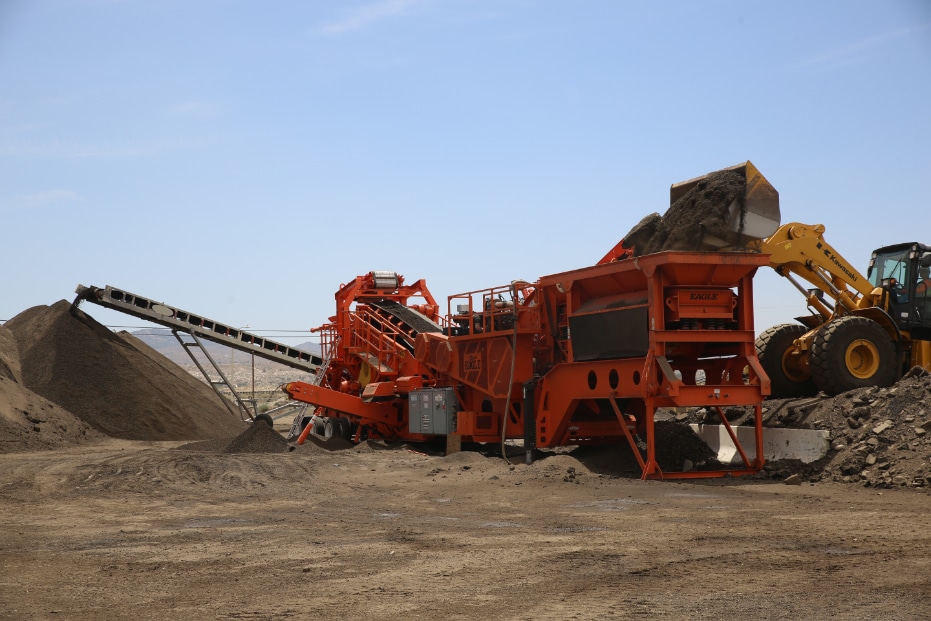
One of the benefits of having your own recycle processing operation is the ability to crush and screen material at your leisure and to your own specifications. Here a wheel loader feeds material for the E-Plant Triple Deck from Eagle Crusher.

Several factors play into the decision of whether adding your own RAP crushing plant makes sense for your business. These include:

  • Market size
  • Crusher location
  • Crusher types and features
  • Initial Investment and ROI

Market Size

Market size is important in considering whether you can realistically sell more asphalt. Are there enough commercial and residential paving companies in the area to buy the extra mix you may be able to produce? How many more contracts could you potentially be awarded by having better control and better quality of your hot-mix production? Is your market large enough that you can obtain the RAP you need to produce crushed asphalt for your own mix use? Is there enough current and future residential and commercial market growth, and therefore paving demand in the market, to help you sell more?

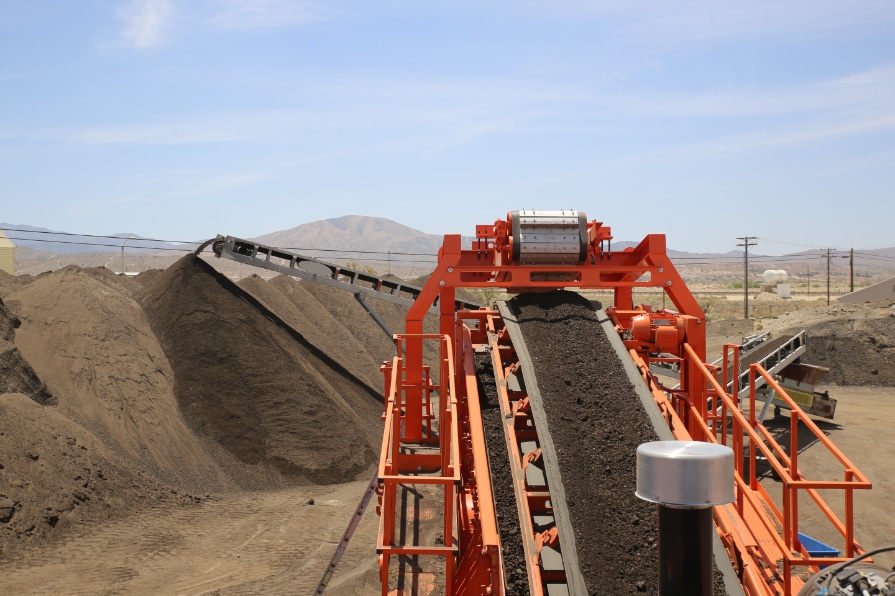
When setting up the RAP crusher, pay attention to the detail of skirting to mitigate dust. In these images you see the conveyor from under the UM-25 Impactor crusher. It feeds back onto the conveyor to be rescreened. All photos courtesy of Eagle Crusher

Crusher Location

You need to consider the location of your crushing plant should you decide to add a RAP crusher to your asphalt production operation. A primary consideration and a good starting point is the type of crusher that will be most beneficial to how your facility operates—such as whether your asphalt production uses stationary hot-mix plants to produce at one, on-site location or portable asphalt plants that move from site to site.

When deciding where to place the crusher in your yard, a good starting point is to consider the type of crusher that will be most beneficial to how your facility operates. Its size and configuration will help you decide where it should be located.

Other considerations are permitting and transport. Permitting rules and fees vary greatly from one locality to another and are different state-by-state, as well. Permit regulations may also differ based on whether you are opting for a stationary crusher permit or a portable crusher permit. Additionally, local environmental regulations may affect an operation’s ability to obtain a permit, depending on the specific crusher specifications for which a business is applying. Acquiring a permit can take time, so it’s important to plan ahead and start the process early.

When it comes to portable crushers leaving their first jobsite to go to another locale, crushers may be permitted for one main location, and then, depending on the state or locale, subsequent temporary permits to move the crusher to different sites may be more easily obtained or may not even be required. You will want to research all of this based on your location.

When setting up the RAP crusher, also pay attention to details like installing magnets to remove any last-minute deleterious material. In this image, you see a magnet affixed over the crusher discharge conveyor of the E-Plant. Material then falls onto the 5X16 triple-deck screen for precise sizing.

Crusher Types and Features

If you are a start-up asphalt production facility and deciding on whether your operation will use portable or stationary asphalt crushing plants, consider that portable asphalt operations are best in areas where jobs are a considerable distance apart, a market has minimal growth and small population density, and where workloads shift from one area to another due to seasonal factors.

It follows that the type of crusher you choose will match what you choose for your hot-mix production, either portable or stationary. Beyond portable and stationary crushers, choosing the perfect crusher type for RAP crushing comes down to the specific features of the available types of crushers—jaws, cones and impact crushers. Impact crushers are typically the best choice for RAP crushing to achieve the highest quality end-product and the necessary production capacity to keep high-quality hot mix flowing.

Impact crushers use a simpler design comprised of a rotor and two bearings that spin to launch the RAP against a curtain or apron. The simplicity of an impactor like the Eagle Crusher three-bar, solid-steel, sculptured rotor works to explode the RAP with the force of the blow bars and launching it into the primary curtain at the proper angle, then smashing it again with the secondary curtain liners to prepare it for its final reduction, creating a very consistent mix to be sent on to the drum as a more structurally sound cubical product.

Eagle Crusher’s RapidDeploy™

Jaw and cone crushers on the other hand utilize compression to crush, which can be advantageous when crushing hard rock from quarries. Asphalt crushing isn’t about crushing the rock, but instead about separating the asphalt bonds. When RAP is compressed, it can more easily fracture, exposing white rock and requiring more liquid asphalt to restore the full coating.

There are other issues with jaw and cone crushers, as well. Cone crushers have a significantly smaller feed material size range, meaning they can generally only be fed millings or material that has already been processed, like through a jaw crusher, requiring additional crushing equipment. Jaw crushers are limited on their final output size and cannot produce a cubical product, thus requiring further processing with another piece of equipment, like through a cone crusher.

Realizing that impact crushers are typically a producer’s best bet for crushing RAP, keep in mind that a properly sized and type of screen is critical to any RAP operation. Asphalt producers are typically making finer sizes than other types of aggregate and recycling production. For RAP, the screen is the determining factor for net production. If RAP can’t be screened, it probably can’t be used.

Eagle Crusher Company Displays UltraMax® 1600X-OC Portable Impactor Plant

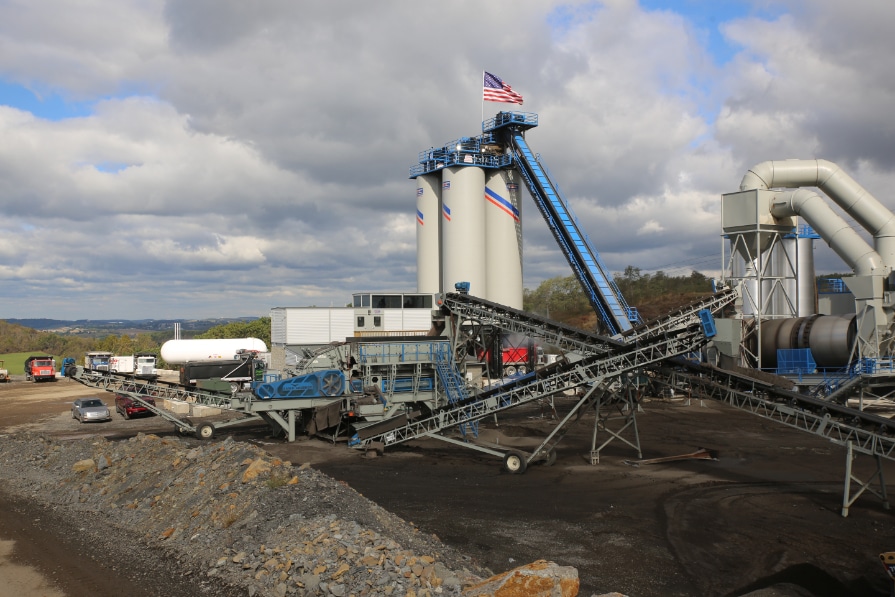
So, let’s explore the features of both stationary and portable RAP crushers. Consider looking for stationary crushers like the Eagle Crusher MaxRap® system, which is designed to crush and screen RAP for product consistency, productivity and profitability, using its UltraMax® impactor.

MaxRap can integrate with any asphalt plant automation. It allows operators to switch from top to base material production from the control house, and most importantly, it produces highly uniform cubicle spec product with a minimum of white rock and a minimum of fines.

Actuated diverter chute work allows multi-feature deck selection, blending, and bypass while the calibration chute for sampling verifies that the mix-design spec requirement is correct. The side discharge conveyor from the crusher may be used for stockpiling or returned to another conveyor for re-circulating back to the plant screen for resizing, and with the system’s ability to screen only, all material can be conveyed to stockpile. The under-screen product conveyor to cross conveyor feeds to the drum mix feed conveyor of the asphalt plant for final processing and mixing.

A versatile and reliable portable RAP crusher should be able to provide the same precision crushing of a stationary crusher, while allowing operators to crush RAP at multiple locations. Such is the case with Eagle Crusher’s new MaxRap 25 Portable.

The savvy asphalt mix supplier can be more precise in mix production when he directs crushed and screened product into specific stockpiles or when he conveys it directly to cold feed bins for production.

Initial Investment and ROI

How do all of these considerations factor together to determine if adding a RAP crusher to your asphalt production facility makes sense financially?

First, with a crusher like Eagle Crusher’s MaxRap or MaxRap 25 Portable, one crusher replaces jaw, cone and screen multi-unit systems for a lower initial investment while maintaining high production of cubical spec product. Choosing a jaw crusher instead of an impact crusher requires additional equipment, like a cone crusher following the jaw, and in some instances, a vertical shaft impactor (VSI) to make a spec final product. This is because using a jaw crusher in a RAP circuit is for primary reduction only, then prepping RAP for a cone crusher, whereas using an impact crusher for most RAP applications requires only one crusher. Two may be necessary where very high capacity or special products are required.

Even if the cost of one impact crusher or crushing system is more than the cost of a jaw, cone and vertical shaft impactor combined, more and different pieces of equipment opens the door for more mechanical issues and more down time, versus keeping production high, and as previously discussed, the higher quality mix and the ability to have spec product high, as well. In most cases, however, the initial investment for an impact crusher versus two to three different crusher types pays for itself more quickly and improves ROI based on fuel savings and maintenance costs, among other factors.

Eagle Crusher’s RapiDeploy 1000

The service friendly design of RAP crushers like the Eagle Crusher brand can help with time and labor costs and less down time while screening. The screening process can continue while the crusher is removed from the circuit. The screen chute system folds out of the way for ease of changing the screen cloth, and screen service platforms are positioned on both sides of the screen for ease of maintenance. All of this adds up to time and labor efficiencies and a better bottom line.

Additionally, quality hot mix via crushing your own RAP with an impact crusher leads to new customer potential and repeat customers, adding to greater revenues and increased products. This is because RAP impact crushers lead to higher quality mix by separating the binding matrix, airing out the material releasing moisture, making for a drier material going into the hot mix. Drier material saves energy as it eliminates the need for more fuel in the burner.

All things considered, it is worth considering whether it’s time to add a RAP crusher to your asphalt production facility. We hope this helps get you started.


Daniel C. Friedman is the vice president of marketing at Eagle Crusher Co. Inc., Galion, Ohio.

Masaba Introduces GEN2 Track Drive

During World of Asphalt/AGG1 2024, Masaba Inc., Vermillion, South Dakota, introduced its patented GEN2 track drive, showcasing the Masaba Magnum telescoping conveyor with the technology.

Available in single- or dual-drive, this design innovation improves engagement between the teeth and drive(s) for smooth stinger operation. The updated track drive now comes standard on all units.

Additional Magnum track drive benefits, according to the manufacturer:

  • Eliminates cable maintenance issues associated with winch systems, and the associated danger of cable breakage and uncontrolled rollback; and
  • Masaba’s load roller supports ensure equal load distribution on all support rollers, minimizing fatigue stress on critical components.

Ranging from 100 feet to 195 feet, Masaba offers standard Magnum models, or can custom engineer a solution to match your needs. Masaba stands behind all of its equipment with a five-year structural and two-year component warranty.

Stedman Introduces Grand-Slam Asphalt Recycler 

Stedman Machine Company, Aurora, Indiana, introduced the Grand-Slam™ Asphalt Recycler during World of Asphalt/AGG1 2024. The crusher is designed for asphalt recycling with a horizontal shaft impactor (HSI) rotor design and simplified apron adjustment system.

It comes in two model sizes, the Model SAR50™ with rated production capacity of 40-50 tons per hour (TPH) and the Model SAR100™ with rated production capacity of 90-100 TPH.