
Mental Health Wellness & Suicide Prevention
Aug 14, 2025
New Guidebook Facilitates Suicide Prevention Conversations
BY Sandy Lender
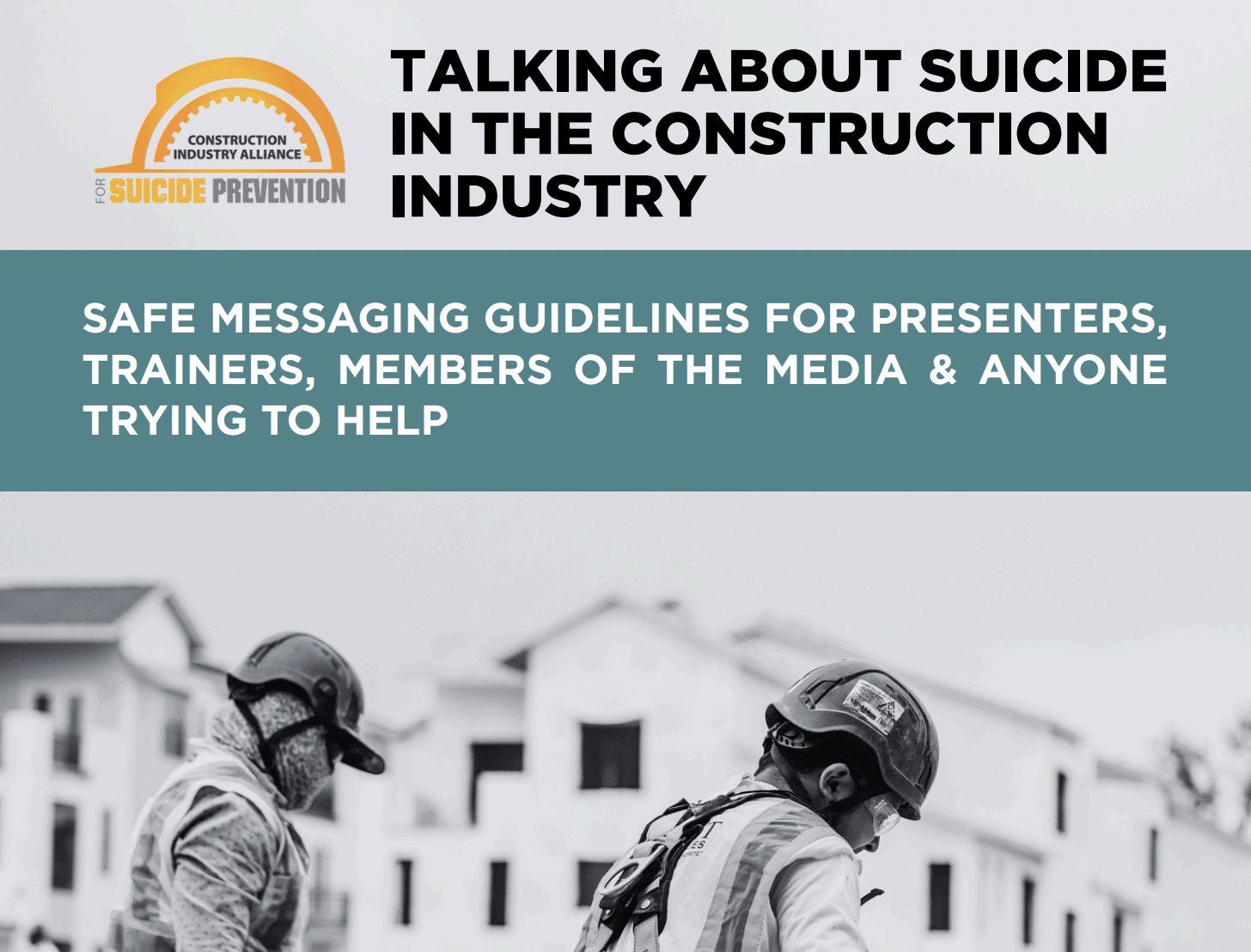
The Construction Industry Alliance for Suicide Prevention (CIASP) has published a guidebook to help members of the construction industry when initiating conversations about mental health wellness and suicide prevention. The 11-page booklet, titled “Talking About Suicide In The Construction Industry,” is designed to offer safe messaging guidelines for presenters, trainers, members of the media and anyone trying to help members of the construction industry.
The booklet is segmented into four main parts.
-
Safe Messaging Around Suicide in the Media
-
Safe Messaging Around Suicide in Group Trainings & Discussions
-
Safely Talking About Suicide with an Individual Who May Be at Risk, and
-
Post-conversation Self-care.
The whole booklet starts off with key tips to keep in mind in any setting, including excellent information two presenters shared during a webinar Aug. 13 introducing the guidebook’s points to an audience of over 200 attendees.
Sonya Bohmann, the executive director of CIASP, and Jessica Bunting, the research to practice (r2p) director for the Center for Construction Research and Training (CPWR), both spoke of the importance of bringing your authentic self to conversations with persons who might be struggling with mental health wellness or suicidal ideation. This message is stated clearly in the guidebook: “Bring your authentic, human self to the conversation and approach it with empathy and sincerity. Each person may need a different approach when they are struggling, so the most important thing is to be real and listen to express support.”
Bohmann shared during the first part of the presentation that “being compassionate, being yourself, showing up with empathy” is more important than getting every vocabulary word correct. The fact that you’re showing care and compassion for a colleague, friend, employee or other person is what’s important.
Having said that, the CIASP education committee prepared the guidebook for a reason. By offering a guidebook that supports other materials, the committee offers a baseline for kind and compassionate language, reporting, training and help.
For example, the first section reminds us, “The messaging used in media and news reporting has a significant influence on the way people talk about suicide and mental health. It is important for spokespeople and members of the media to discuss the issue responsibly.” The section offers a list of action steps and reminders for media and those who may be interviewed by the media or those who may be posting on forward-facing sites.
While each of the sections offers valuable and important guidance, reminders for leaders of group training stood out during the webinar. Bunting spoke of the role both discussion leaders and “helpers” placed within an audience play. “You will be looked at as a safe person if you’re leading the discussion. Or if you’re a helper in the room.” As a safe person, you can expect people to approach you with questions or concerns. By taking these roles seriously, performing research ahead of group training, and having resources ready for any struggling persons who may approach you during or after the session, you can be an effective leader (or helper) in group training.
The final section for self-care also offers a reminder of how important it is to take your own mental health wellness seriously when reaching out to help another.
Throughout the presentation and the perusal of the guidebook, it became clear that CIASP and CPWR have assembled a resource for individuals and companies within the construction industry to share a message of hope with one another. The guidebook is available now at this link https://www.cpwr.com/wp-content/uploads/GB-Suicide_Prevention_Safe_Messaging_Guide.pdf