
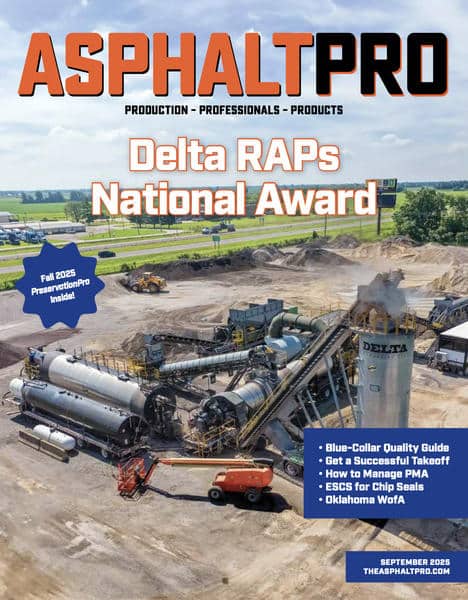
In this issue of AsphaltPro Magazine, we present topics and projects that are of interest to the asphalt industry. From hot-mix asphalt (HMA) to warm-mix asphalt (WMA) to preservation of pavements to use of green materials in asphalt pavement designs, we explore ways you can improve your bottom line as an asphalt supplier, producer, contractor or related business.
It irks me, as the editor of this magazine, to see legislation presented as beneficial to the asphalt industry when a brief investigation reveals it to be a boon to competing materials for improving their products while potentially lobbing more regulations at asphalt binders and mix designs. I’m talking about Senate Bill S. 1067 and what I see as undermining the road-building funding conversation.
Don’t get me wrong. I fully believe the concrete industry should continue its foray into becoming environmentally friendly. Cutting down emissions from the material used in about 30-50% of all vertical construction (wood framing remains dominant in residential building, according to National Association of Home Builders) can only be good for the planet. It is my opinion that seeking out funding for research is wise on their part, but I hesitate to encourage it coming at our industry’s expense.
The asphalt industry has been paying its way since the Macadam days with research fundraising, industry donations, the kindness of original equipment manufacturer (OEM) funding, and, yes, government grants, and the like. I don’t think we should be expected to accept additional regulations while the concrete industry steps up in 2025 to get funding from taxpayers for emissions reduction. I don’t think departments of transportation (DOTs) should be bribed to use one type of material over another, but should, instead, choose the material that’s going to work best for the conditions, traffic and taxpayers of the area in question.
I’ve oversimplified what I see happening with the Concrete and Asphalt Innovation Act (CAIA), which is a clean-energy bill disguised as a research and development program. It was introduced in March when most of us were prepping for World of Asphalt travel. As of press time, the bill had been referred to the Committee on Energy and Natural Resources, according to congress.gov. In four and a half months, nothing had happened with this bill. So is this a nothingburger we can ignore?
Or is it indicative of the entitlement mentality in society? The asphalt industry is organized and thoughtful in being good stewards of the air, land and water, so others wish to learn from us. That’s wonderful and we should be willing to share knowledge in a collaborative spirit. But should we be excited to devote taxpayer dollars and divert the funding conversation into turning our competition green?
Personally, I would like to shelve the environmental regulations of the funding conversation. Instead, let the concrete industry query its membership for donations to research and development of the tools and technologies necessary to cut emissions. “Concrete” has already worked with the Federal Highways Administration’s Every Day Counts program (see the EPIC2 research as one example), sought out partnerships with university research departments, prepared demo projects with DOTs, and so on.
This is the way “asphalt” did it, too. And I would say we’ve been highly successful.
Since 2001, the Asphalt Pavement Alliance has recognized more than 170 pavements that are over 35 years old with a Perpetual Pavement Award (PPA). The award program was so popular, it had to be augmented with categories. We now recognize these structures as perpetual pavement by performance, by design and by conversion. Asphalt pavements are proven long-lasting and our industry-initiated research and development has been improving their performance for decades.
Let me ask you: Do we need an act of Congress to share monies with the competition to encourage more research on our part? Do we need our funding to depend on a law demanding multi-departmental oversight that’s supported by the likes of CarbonCure, Center for Climate and Energy Solutions (C2ES), Clean Air Task Force, World Resources Institute and others? Because those entities are among the supporters of the CAIA listed at ClearpathAction.org.
It is my opinion that I would rather spend my energy convincing my representatives to fund a roads and bridges bill that helps us build economy-supporting infrastructure and maintain everything that’s in place, rather than hindering progress of the same. I would rather my tax dollars go to fixing highways and byways and connector streets than to research for greening up the competition.
Stay Safe,
Sandy Lender