
Recycled Wind Turbine Blades Offer Asphalt Fiber
BY AsphaltPro Staff
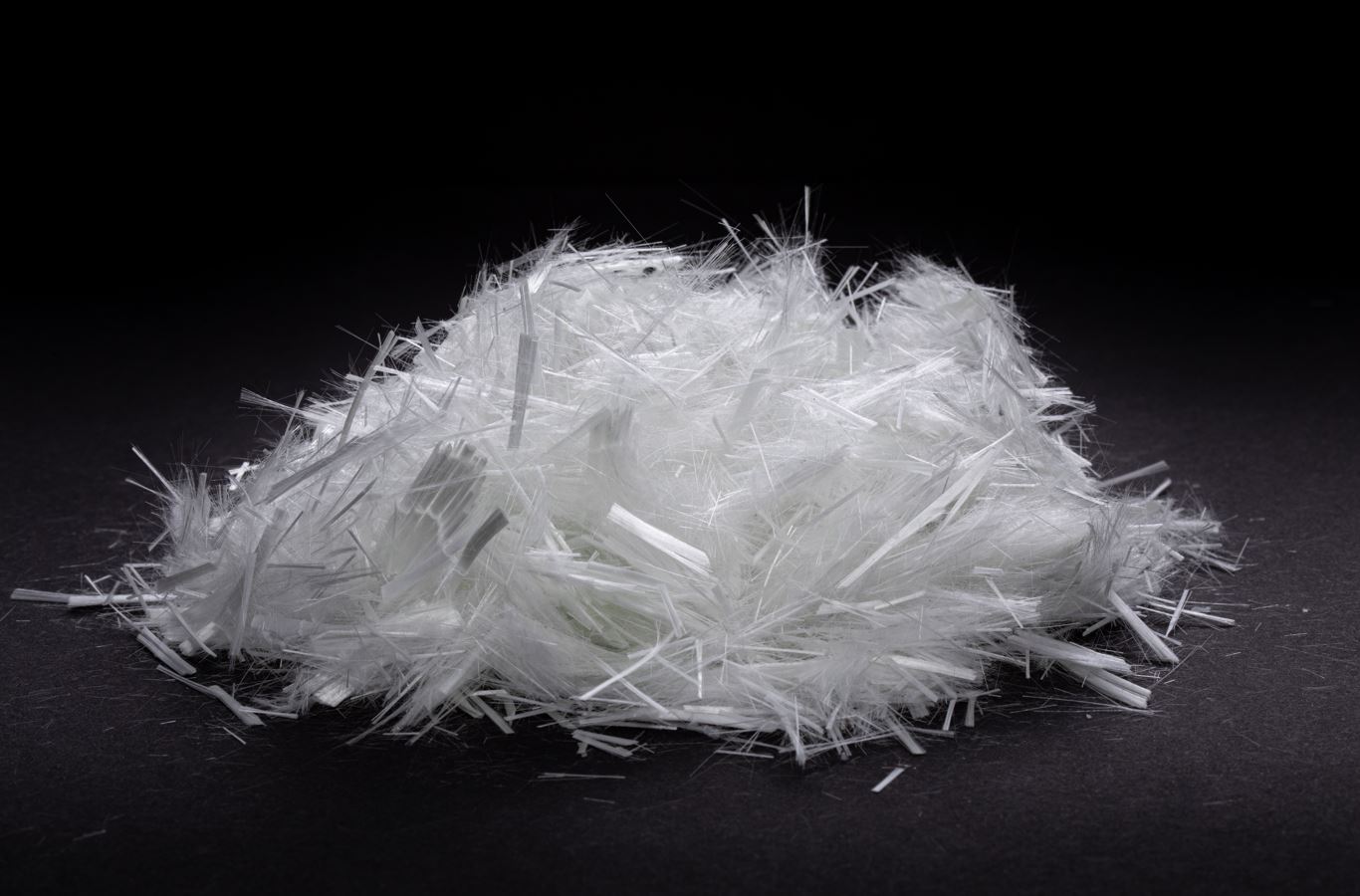
REGEN Fiber recycles wind turbine blades for asphalt fibers and pavement strength
REGEN Fiber, owned by Travero, a subsidiary of Alliant Energy, offers 100% recycled fibers for use in hot-mix asphalt (HMA) and other pavement mix designs from materials discarded by the wind turbine industry. REGEN Fiber produces its asphalt fibers out of a facility in Des Moines, Iowa. Jeff Woods, the director of business development and marketing at REGEN Fiber, explained the asphalt fibers and concrete fibers the company makes are created by two different recycling processes, although both processes are mechanical, avoiding heat or chemicals.
“REGEN Fiber’s asphalt fibers are made from 100% recycled fiberglass that is scrapped during the manufacturing of new wind turbine blades,” Woods shared. “Our process recycles and processes the fiberglass sheets into smaller fibers for asphalt reinforcement applications.”
REGEN Fiber’s concrete fibers and milled powders are made by recycling decommissioned wind turbine blades at the Fairfax, Iowa, facility, according to Woods.
If you research the production of wind turbine blades, you’ll discover their construction includes an epoxy resin to assist in strengthening the blades without adding tonnage to the structure. Asphalt producers don’t have to factor this resin into their mix design plans because REGEN Fiber receives the material for its asphalt application before resin has been applied.
Woods explained: “REGEN Fiber’s asphalt fibers don’t have epoxy resin. The recycling process of asphalt fibers involves pure fiberglass that is discarded in the new wind turbine blade manufacturing process and happens before the blade is hardened with epoxy resin. However, our concrete fibers do contain epoxy resin because they are made from a recycled blade, which contains epoxy coated fiberglass.”
Woods described the asphalt fiber process: “Epoxy coated fiberglass blankets are used in wind turbine blades to provide lightweight strength. During the manufacturing process of blades, sometimes the fiberglass gets discarded before it is hardened with epoxy. The fiberglass is discarded because it could be damaged, expired or just not the right size for the blade manufacturer. Instead of the fiberglass going to a landfill, we recycle it to create our asphalt fibers. The fiberglass blankets are delivered to a facility in Des Moines, where they are recycled and processed to create small fibers. The final product is packaged onsite and ready to use in asphalt paving applications.”
Forta Fibers Strengthen Mill and Fill Outside Kennedy Space Center
“We are thrilled to offer this innovative solution to concrete and asphalt producers both locally and nationwide,” said Lisha Coffey, president of Travero. “Our process not only provides a sustainable method of disposing of wind turbine blades but also supports businesses in achieving their sustainability goals and reducing the carbon footprint on construction projects that use our products.”
“Our process recycles 100% of the wind turbine blade and blade scrap material, creating fibers and additives that enhance the durability and environmental resistance of concrete and asphalt,” Woods said. “This improves the structural integrity of roads and buildings, making them more resilient.”
The company has performance data from third-party testing agencies, and is building out case studies of the fibers being used in construction projects. A recent paving project at a barge terminal in East Dubuque, Illinois, using the asphalt fibers can be viewed at this link.
“The fiberglass is discarded because it could be damaged, expired or just not the right size for the blade manufacturer. Instead of the fiberglass going to a landfill, we recycle it to create our asphalt fibers.”—Jeff Woods
Data includes that from Interstate Testing Services, St. Louis, Missouri, and Construction Materials Testing, Des Moines, Iowa, using AASHTO T 324 to assess rutting resistance and stripping potential, and AASHTO-D 7313 to assess cracking resistance, among other assessments. From the results of multiple lab and field tests, the company has shared the key benefits of asphalt fiber-infused mixes include: improved flexural toughness, ductility, energy absorption and fatigue resistance; increased resistance to pothole creation; maximum impression depth reduced 35%; increased cracking resistance by 30% compared to unreinforced; increased stripping inflection point by 20% compared to unreinforced; improved mechanical properties, modulus and dimensional stability; improved melt flow and minimal distortion under high temperatures; and asphalt that is 40% more durable compared to unreinforced.
At this time, the company offers dose bags of REGEN Fiber asphalt fibers in different sizes according to recommended dosage, which varies depending on the applicaton. “We are working with suppliers to be able to provide asphalt producers with a bulk solution,” Woods said.
For more information, visit www.regenfiber.com.