
Paving Parts
BY AsphaltPro Staff
January product gallery kicks off with a look at how the industrial hydraulic equipment market can unlock efficiency and innovation
To begin 2025’s product galleries, we focus on paving and pavement maintenance components, equipment, and services. SEO Executive Ganesh Dukare of Persistence Market Research, Brentford, London, starts the discussion this month looking at indicators of growth in the industrial hydraulic equipment market over the last few decades.
Dukare shared the growth has been driven by advancements in technology and an increasing demand for efficient, sustainable solutions across various industries and stated these hydraulic systems will remain indispensable in sectors such as manufacturing, construction, automotive and mining. Here’s what he provided.
The global industrial hydraulic equipment market is expected to grow at a compound annual growth rate (CAGR) of 5.2% from 2024 to 2031. The market value is projected to increase from US$28.5 billion in 2024 to a significant US$40.6 billion by 2031. The rising demand for hydraulic pumps, cylinders and valves in key sectors such as material handling, construction and industrial manufacturing is anticipated to drive this growth.
These systems rely on pressurized fluid to transmit energy, offering performance in heavy-duty applications. In this article, we explore the key trends, innovations and growth factors propelling the market forward, while also highlighting the industry’s shift towards more environmentally conscious solutions.
Market Overview and Key Drivers
The industrial hydraulic equipment market is currently experiencing a surge in demand due to several factors. One of the primary drivers is the continuous push for operational efficiency across industries. Hydraulic systems are known for their ability to deliver high power-to-weight ratios, making them ideal for use in environments where space and weight constraints are critical, such as in mobile machinery and construction equipment.
Additionally, the rise of automation in industrial operations has further fueled demand for hydraulic equipment. As industries continue to adopt automated processes, the need for reliable, precise and energy-efficient hydraulic solutions has become more pronounced. Hydraulics plays a key role in providing the necessary power and control for robots, assembly lines and other automated systems, driving market growth.
However, sustainability has emerged as one of the most important factors shaping the future of the industrial hydraulic equipment market. Companies are increasingly focused on reducing their environmental footprint, pushing the market to innovate with greener technologies. Environmental regulations, which mandate reduced emissions and improved energy efficiency, have also prompted a shift toward more sustainable hydraulic equipment solutions.
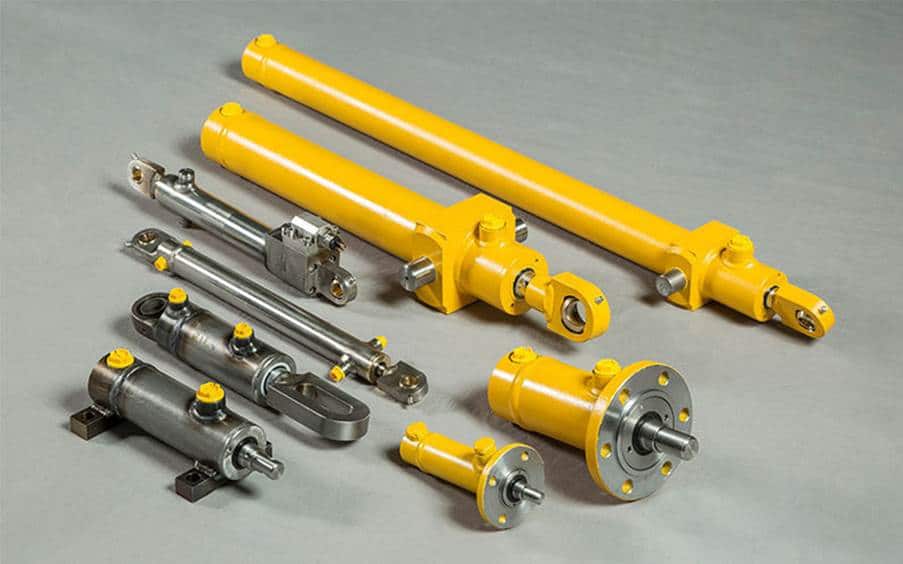
The industrial hydraulic equipment market is at the forefront of a transformation. Photo courtesy of Persistence Market Research
Key Market Trends
- Energy Efficiency and Eco-Friendly Solutions
One of the most significant trends in the market is the development of energy-efficient hydraulic systems. Traditional hydraulic systems often rely on large, sometimes inefficient pumps and motors. Newer systems focus on optimizing energy use by incorporating advanced technologies such as variable-speed drives, improved seals and low-friction components. These innovations help reduce energy consumption, making the systems more sustainable while simultaneously improving their performance.
- Smart and IoT-Integrated Hydraulic Systems
Another important development in the industrial hydraulic equipment market is the integration of smart technologies. With the rise of the Internet of Things (IoT), hydraulic systems are becoming more connected, offering real-time monitoring and diagnostics. Smart sensors embedded within hydraulic systems can track performance, detect potential issues, and provide valuable insights into system health.
IoT-enabled hydraulic equipment can alert operators about necessary maintenance before a failure occurs. These advancements in predictive maintenance are helping companies save on repair costs while extending the lifespan of their equipment.
- Compact and Lightweight Designs
With industries seeking to improve space utilization and portability, hydraulic equipment is becoming more compact and lightweight. Modern hydraulic systems are designed with smaller, more efficient components, allowing for easier integration into machines that require a small footprint. These innovations are particularly important in sectors like construction and agriculture, where machinery must be both powerful and mobile.
The trend toward lightweight design is also contributing to fuel efficiency in mobile equipment. Smaller and more efficient hydraulic systems reduce the weight of machines, resulting in lower fuel consumption, reduced emissions and increased operational efficiency.
- Adoption of Electric and Hybrid Systems
Electric and hybrid hydraulic systems are gaining traction as industries aim to reduce their reliance on traditional internal combustion engines. Hybrid systems combine the power of hydraulics with electric drives to optimize energy use. Electric actuators are being integrated into hydraulic systems to replace traditional hydraulic pumps, reducing noise levels, energy consumption and maintenance costs.
Training and upskilling the workforce is essential for companies to fully leverage the benefits of modern hydraulic technologies.
Market Challenges
While the industrial hydraulic equipment market continues to evolve, there are challenges companies must address. High initial costs for advanced technologies, such as IoT integration and electric-hydraulic systems, can be a barrier for smaller businesses looking to adopt these solutions. However, as demand grows and technology becomes more widespread, prices are expected to decrease, making these innovations more accessible.
Additionally, the complexity of system integration can also pose challenges. As hydraulic systems become more sophisticated, the need for skilled technicians to install, maintain and repair these systems increases. Training and upskilling the workforce is essential for companies to fully leverage the benefits of modern hydraulic technologies.
Future Outlook
The future of the industrial hydraulic equipment market looks promising, with continued growth expected as industries strive to improve efficiency and sustainability. The increasing adoption of green technologies, coupled with the rise of automation and IoT, will continue to drive innovation in the sector. Companies that invest in energy-efficient, smart, and eco-friendly hydraulic solutions will be well-positioned to thrive in this rapidly changing market.
As global industries become more environmentally conscious, hydraulic equipment manufacturers will need to focus on creating solutions that balance power and efficiency with sustainability. The industry is expected to embrace circular economy principles, where equipment is designed for longevity, recyclability and minimal environmental impact.
The industrial hydraulic equipment market is at the forefront of a transformation driven by sustainability, innovation and efficiency. From energy-saving designs to smart, connected systems, the future of hydraulics looks smarter than ever before. As industries continue to embrace these advancements, hydraulic systems will play a pivotal role in shaping the future of manufacturing, construction and beyond, helping businesses unlock new levels of performance while reducing their environmental footprint.
For more information, visit PersistenceMarketResearch.com.
Product Gallery: Aggreko Launches Flexible 250kW & 500kW Battery Energy Storage Systems
Product Gallery: Blue Diamond Launches Versatile Skid Steer Land Grader
Product Gallery: Thunder Creek Appoints David Bertino as Sales Manager for Southern U.S. Territory
Product Gallery: Trimble Launches Siteworks Machine Guidance for Compact Track Loaders