
Standardize the Striping Industry
BY Sandy Lender
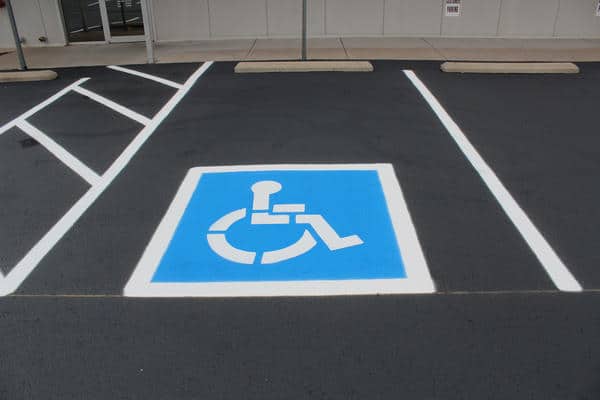
New council can bring structure and improved safety with striping standard and certification
Prior to June 2026, striping contractors, paint and thermoplastic manufacturers, and original equipment manufacturers (OEMs) of striping-related equipment had not had a unified professional body to prepare guidance in their niche of the industry. The Parking Lot Striping Industry Council™ (PLSIC™), headquartered in Wilmington, Delaware, launched June 2, opening membership to the trade. Its stated purpose is to develop and publish technical standards for parking lot striping, administer a professional certification program, and maintain a public directory connecting certified contractors with the property owners and facility managers who need them.
“A trade body that brings materials, equipment and the people doing the work into the same conversation is overdue.”—Kurt Gruenberg
An Industry Professional’s Vision
Jonathon Thompson is the executive director of PLSIC and the entrepreneur who recognized, during nearly two decades of work in the striping profession, that a lack of consistent practices posed quality and safety risks. His striping career started in the Detroit metro area in 2002 with a move to Colorado—where there was more opportunity for skiing—in 2007.
“That move alone opened my eyes to how differently two cities could approach the same job,” Thompson said.
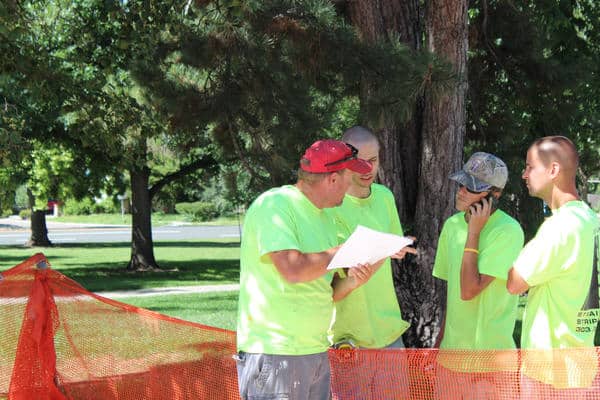
Tailgate talks and pre-job meetings ensure the crew understands what each job requires before it starts. The PLSIC will offer training and certification for crew members to better understand and execute their craft for the job.
The differences in how contractors viewed and handled this facet of pavement maintenance became even more apparent when Thompson began manufacturing stencils for his own use and then for local contractors around Denver.
“When I took stencils national as 1-800-Stencil, the variation only got bigger,” Thompson said. “Every region had its own answer, and every contractor was sure theirs was the right one.”
For example, what measured as a 30-inch accessibility stencil in one region would be accepted elsewhere at 42 inches. Letters could be 12 inches tall in one state, 10 inches in the next.
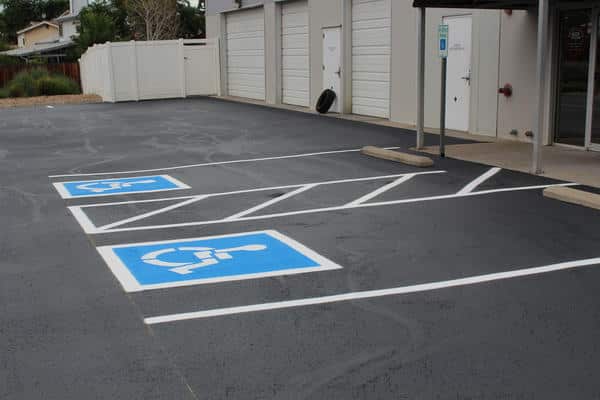
The professional certification program credential will give contractors a recognized qualification to carry. This credential proves a contractor knows the standards his or her work must meet. Three tiers cover foundational competence, ADA and specialty work, and master-level project management.
“It wasn’t just sizing, either,” Thompson continued. “I’ve seen fire lanes laid out that no fire truck could actually navigate. Accessible spaces placed to match a drawing on paper, not the real slope of the lot. I’ve seen hand-cut stencils where the letter spacing was so far off it changed how the sign read at a glance. None of these are style choices. They’re the result of nobody ever writing down what ‘right’ looks like.”
The CPLS-certified contractor credential is verifiable in the PLSIC directory and belongs to the individual, not the company he or she works for. It moves with them across employers.
Not having a consistent guide—a standard, if you will—could leave the striping contractor with a unique level of liability.
“I know exactly where the lack of consistency shows up, because for 15-plus years I was the guy who paid for it,” Thompson said. “Striping is the last trade on a job before it opens. Everyone else is already off the site, and the schedule has already slipped by the time the call comes to me. That’s the kind of pressure that makes ‘good enough’ start to look acceptable. It isn’t. A line that’s off, or a fire lane that doesn’t fit the truck it’s named for, isn’t cosmetic. It shows up later: a truck that can’t get through, someone hurt on a wet parking lot, an owner in litigation over a fall in a state where that’s a routine cost of doing business.
“What I eventually realized is that no one had ever written the standard down. So, the standard became whatever the contractor wanted, whatever looked right to them or whatever they could get away with under a deadline. That’s a fine way to make decisions in some areas of life, but it’s not how I think about pavement marking.”

Tailgate talks and pre-job meetings ensure the crew understands what each job requires before it starts. The PLSIC will offer training and certification for crew members to better understand and execute their craft for the job.
Building a Standard
The passion project Thompson is building to address and correct the gap is a veteran committee that will not only develop standards for striping professionals but will also assist those contractors with continuing education and certification, and connection to clients who require exacting and professional services. PLSIC is built as a member organization serving every side of the industry from the contractors, material suppliers, OEMs, property managers and municipalities.
“A trade body that brings materials, equipment and the people doing the work into the same conversation is overdue,” said Kurt Gruenberg, the vice president of sales for RAE Products & Chemicals Corp., Chicago, which celebrates its 50th anniversary in 2026. “When good paint goes down badly, the cost lands on the supply side as much as on the contractor. PLSIC gives the trade a shared place to define what good work requires, and we’re glad to support it.”
The council will operate as a standards-and-certification body, not a commercial vendor. Its positions are intended to reflect member consensus through open process, not the agenda of any single firm. The technical standards PLSIC develops will address issues that are vital to pavement maintenance quality:
- surface preparation
- material selection
- application methods
- ADA compliance and
- quality verification.
Its professional certification program, the Certified Parking Lot Striper™ (CPLS™) credential, will give contractors a recognized qualification to carry. This credential proves a contractor knows the standards his or her work has to meet. Three tiers cover foundational competence, ADA and specialty work, and master-level project management.
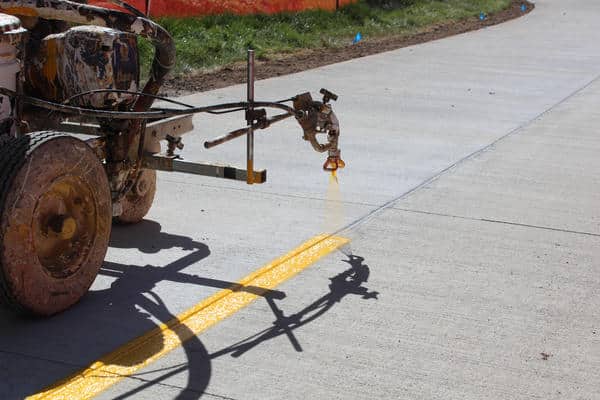
The striping contractor is the last professional on the job.
To become a CPLS-certified contractor, the professional will pass a standardized exam, meet continuing education requirements for renewal and agree to PLSIC’s professional standards. The credential is verifiable in the PLSIC directory and belongs to the individual, not the company he or she works for. It moves with them across employers. Each tier builds on the previous, advancing from Uniform Pavement Marking Standard (UPMS) master specification literacy and surface preparation through ADA layout and specialty markings to multi-site program management.
The PLSIC public directory will let property owners and facility managers find certified contractors and suppliers directly.
The council will be governed by a board of directors, with an independent standards committee of nine members drawn from across the industry and from the broader business community responsible for technical standards. There will be additional committees formed to address specific issues, member events where direction gets discussed openly, and an open commenting process for every specification the council develops.
As of press time, the first three confirmed board members, along with Thompson and his employees, had drafted the first standard with documentation, the Uniform Pavement Marking Standard (UPMS). This first comprehensive quality standard for commercial parking lot striping covers surface preparation, material specifications, ADA compliance, workmanship tolerances, inspection protocols and seasonal application guidelines. Readers can follow the PLSIC trajectory, see when public comments open for standards, and see when CPLS exam windows open at the website’s Roadmap page: parkinglotstriping.org/roadmap.
With open enrollment in the organization ongoing and council members being confirmed as this issue goes to press, the PLSIC is in its founding stages. Thompson has an ambitious yet organized vision to bring structure, quality and safety to this niche corner of the paving industry.
“Pavement marking is a safety and organizational task,” Thompson said. “It isn’t art, and it isn’t a matter of taste. A line is either straight, or it isn’t. A fire lane either works, or it doesn’t. It’s either right, or it’s wrong.”