
How to Protect the Bogies of a Tracked Paver
BY John Ball
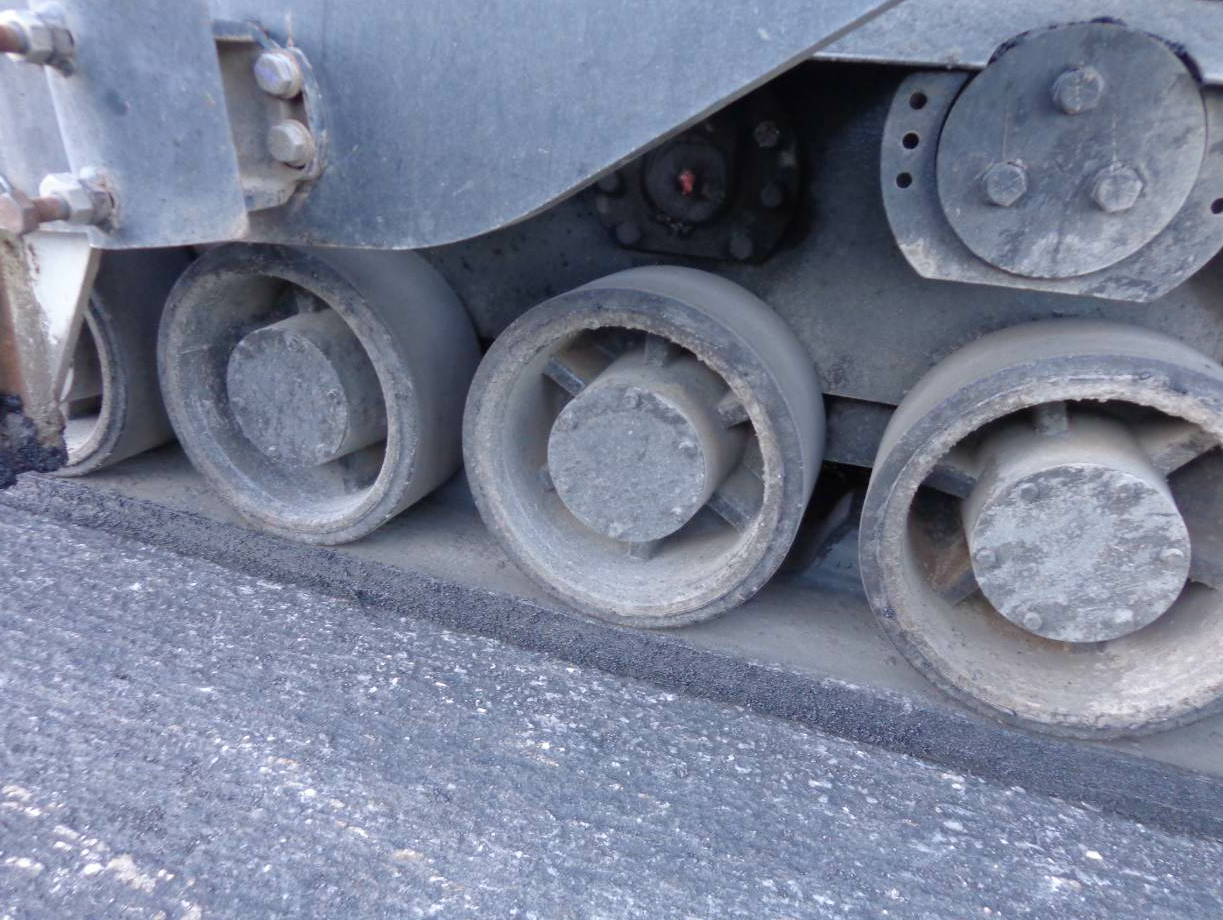
Overfeeding the head of material does more than bring mix up to hit the feed sensor and make it too dirty to work properly. When the team overfeeds material to the screed, they can get mix in the drive wheel of the tractor, causing a host of problems from poor mat quality to track wear. Here’s how to protect the bogies of a tracked paver, thus protect mat quality and your bottom line.
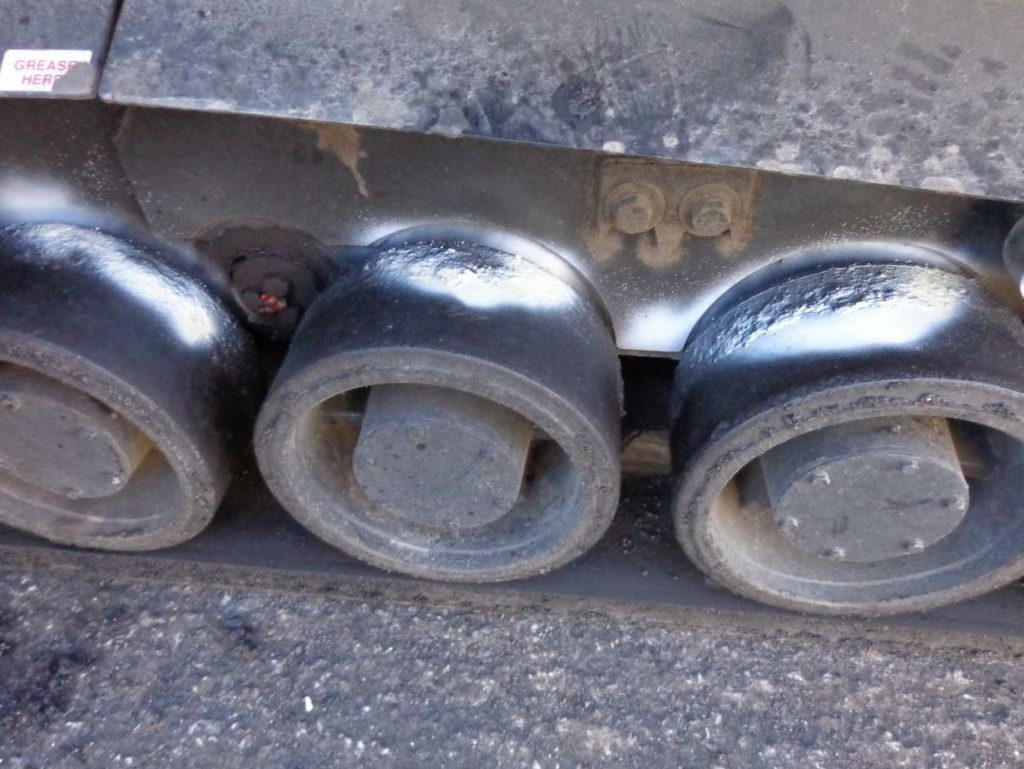
This is the right-hand side of this paver. You can see that material has gotten stuck to the wheels. This has happened because the screed operator on this side of the machine is not maintaining the correct head of material. He’s overfeeding the endgate. When he overfeeds this area, the material mushrooms out and gets caught up in the drive wheel. This lets it get onto the bogie wheels. This causes the screed to shake or bump as the wheels shake and bump along. Once the material has gotten onto the wheels, you must clean it off. To prevent material getting there in the first place, keep track of the feed sensor and maintain a consistent head of material.
The track is 19 inches wide, 9.5 feet long, and about $10,000 to replace. Each one includes a large drive wheel close to the screed-end of the tractor, a tension wheel down by the front of the hopper, and seven wheels in between. In a perfect world, your paver operator will include the track in his daily walk-around of the machine, checking it for any imperfections or material buildup.
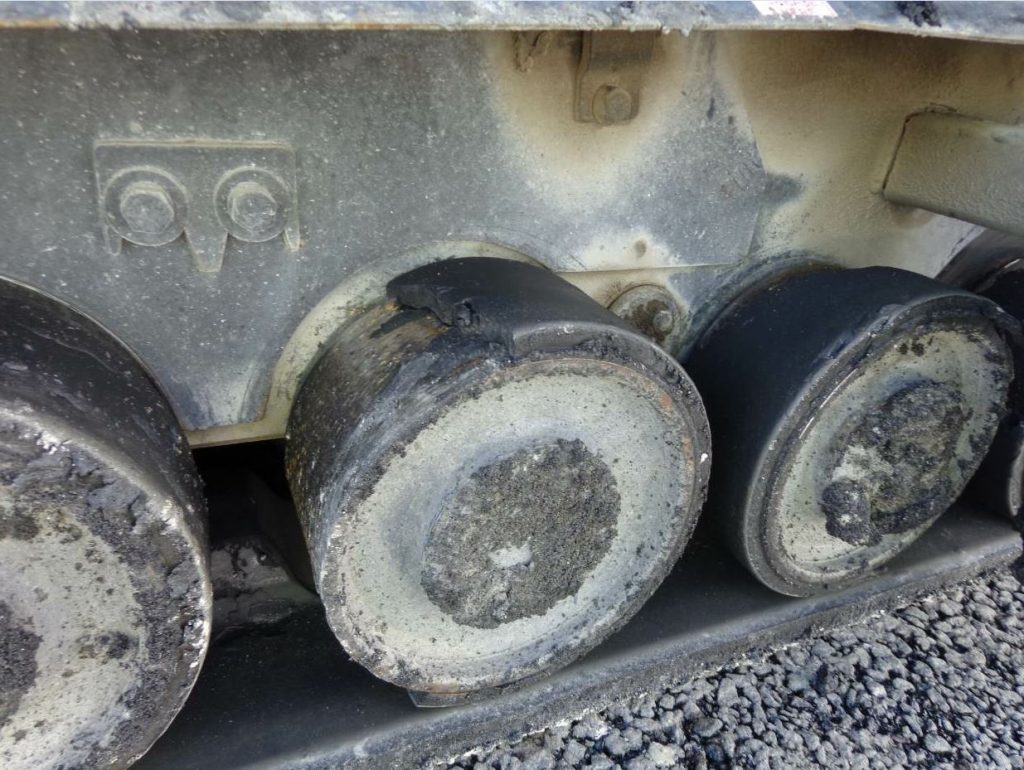
If you see the wheels aging, replace them.
If you notice the bogies have aged to the point of crumbling, as shown in the picture below, replace them immediately. You can’t expect a machine in this condition to float smoothly.
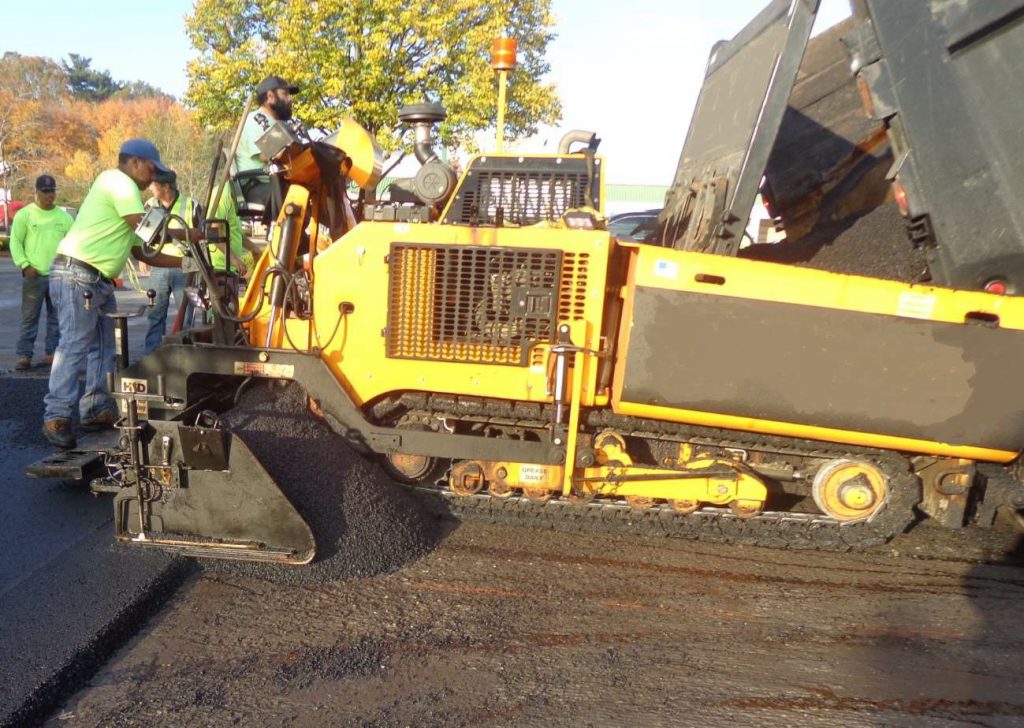
This team has overfed the endgate repeatedly. The material has wrapped around the track and will cause the tractor, thus the screed, to bounce. The way to fix this is to drive the paver to the side of the project, clean everything thoroughly, and start again with a fresh, clean track that can move smoothly.
If you notice asphalt has gotten on the wheels, use a biodegradable solution to dissolve it and clean it off before the shift begins. If mix builds up on the tension wheel, this puts pressure on the track and will cause problems with steering. If mix builds up on any of the bogies, it will cause bumps and ripples in the machine’s movement, which translates to bumps and ripples in the mat you lay. If you want smoothness in the road, you want the wheels to float smoothly.
During the shift, to keep material from overfeeding, monitor the feed sensor, the pile height and the auger speed. Extend the tunnels along with extensions to help keep material in line.
John Ball is the proprietor of Top Quality Paving and Training, Manchester, New Hampshire. He provides personal, on-site paving consulting services around the United States and into Canada. For more information, contact him at (603) 493-1458 or tqpaving@yahoo.com.